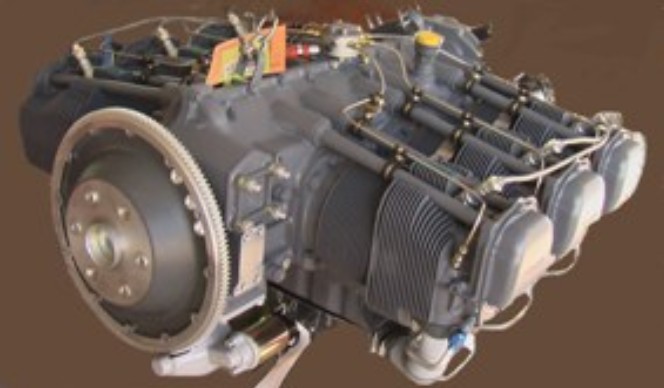
The Lycoming IO-720 engine is a large displacement, horizontally opposed, eight-cylinder aircraft engine featuring four cylinders per side, first run in 1961, manufactured by Lycoming Engines.
There is no carburetted version of the engine, which would have been designated O-720 and therefore the base model is the IO-720. The IO-720 and the Jabiru 5100 were the only flat-eight configuration aircraft engines in production in 2012.
The engine has a fuel injection system which schedules fuel flow proportionally to the airflow, with fuel vaporization occurring at the intake ports. The engine has a displacement of 722 cubic inches (11.8 litres) and produces 400 hp (298 kW). The cylinders have air-cooled heads cast from aluminum alloy with a fully machined combustion chamber.
The first IO-720 was type certified on 25 October 1961 to the CAR 13 standard as amended to 15 June 1956 including 13-1, 13-2, 13-3, 13-4.
In 2009 a new IO-720-A1B cost US$113,621, with a rebuilt engine retailing for US$75,435 and a factory overhaul priced at US$66,289.
Variants: IO-720-A1A Eight-cylinder, horizontally opposed, air-cooled direct drive, fuel injection, internal oil jet piston cooling, 722 cubic inches (11.8 litres), 400 hp (298 kW), certified 25 October 1961
IO-720-A1B fuel-injected, 722 cubic inches (11.8 litres), 400 hp (298 kW), same as -A1A except equipped with Bendix S8LN-1208 and S8LN-1209 magnetos, certified 22 February 1971
IO-720-A1BD fuel-injected, 722 cubic inches (11.8 litres), 400 hp (298 kW), same as -A1B except has a dual magneto, certified 30 December 1976
IO-720-B1A fuel-injected, 722 cubic inches (11.8 litres), 400 hp (298 kW), same as -A1A except for top exhaust cylinders and offset exhaust valve shroud tubes, certified 4 November 1965
IO-720-B1B fuel-injected, 722 cubic inches (11.8 litres), 400 hp (298 kW), same as -B1A except equipped with Bendix S8LN-1208 and S8LN-1209 magnetos and Bendix RSA-10ED1 fuel injection, certified 22 February 1971
IO-720-B1BD fuel-injected, 722 cubic inches (11.8 litres), 400 hp (298 kW), same as -B1B except has a dual magneto, certified 30 December 1976
IO-720-C1B fuel-injected, 722 cubic inches (11.8 litres), 400 hp (298 kW), same as -A1B except that it has up-exhaust cylinder heads, certified 22 December 1971
IO-720-C1BD fuel-injected, 722 cubic inches (11.8 litres), 400 hp (298 kW), same as -C1B except has a dual magneto, certified 28 January 1977
IO-720-D1B fuel-injected, 722 cubic inches (11.8 litres), 400 hp (298 kW), same as -A1B except has a rear type air inlet housing instead of a front inlet, certified 29 October 1973
IO-720-D1BD fuel-injected, 722 cubic inches (11.8 litres), 400 hp (298 kW), same as -D1B except has a dual magneto, certified 28 January 1977
IO-720-D1C fuel-injected, 722 cubic inches (11.8 litres), 400 hp (298 kW), same as -D1B except equipped with an angled fuel injector adapter, certified 15 April 1982
IO-720-D1CD fuel-injected, 722 cubic inches (11.8 litres), 400 hp (298 kW), same as -D1C except has a dual magneto, certified 10 June 1977
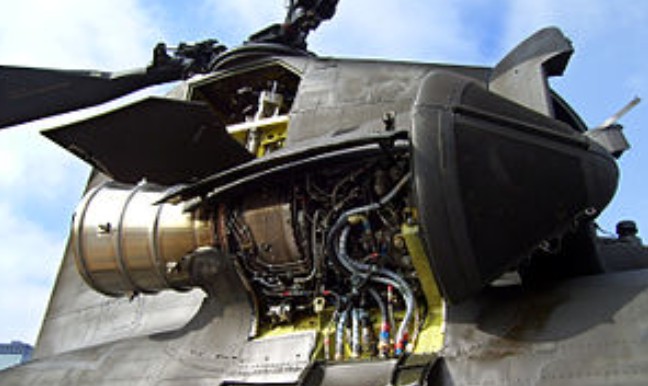
The Lycoming T55, (Company designation Lycoming LTC-4), is a turboshaft engine used on American helicopters and fixed-wing aircraft (in turboprop form), since the 1950s. It was designed at the Lycoming Turbine Engine Division in Stratford, Connecticut as a scaled-up version of the smaller Lycoming T53. Both engines are now produced by Honeywell Aerospace. The T55 also serves as the core of the Lycoming ALF 502 turbofan.
Applications: Bell 309 Boeing CH-47 Chinook Boeing Chinook (UK variants) Boeing Model 360 Curtiss-Wright X-19 North American YAT-28E Trojan Piper PA-48 Enforcer H1 Unlimited hydroplane
Specifications: T55-L-714A Type: Turboshaft Length: 1,196.3 mm (47.1 inches) Diameter: 615.9 mm (24.3 inches) Dry weight: 377kg (831 lbs) Compressor: 7-stage axial compressor and 1-stage centrifugal compressor Turbine: 2-stage gas producer and 2-stage free power Maximum power output: 4,867 shp (3,631 kW) Overall pressure ratio: 9.32 Turbine inlet temperature: 815C (power turbine inlet temperature) Power-to-weight ratio: (4,867 shp / 831 lbs) ~ 5.8568:1 shp/lb
The Lycoming T53, (company designation LTC-1) is a turboshaft engine used on helicopters and fixed-wing aircraft (in turboprop form) since the 1950s. It was designed at the Lycoming Turbine Engine Division in Stratford, Connecticut by a team headed by Anselm Franz, who was the chief designer of the Junkers Jumo 004 during World War II. A much larger engine, similar in overall design, became the Lycoming T55. Both engines are produced by Honeywell Aerospace.
Variants: Military designations:
T53-L-1B 860 hp (645 kW)
T53-L-11 825 hp (615 kW)
T53-L-13B 1400 shp (1044kW) improved L-11
T53-L-701 1,400 hp (1044 kW) Turboprop variant used on Mohawk and AIDC T-CH-1
T53-L-703 1,800 hp (1343 kW) improved durability variant of the L-13B
Civil designations
T5311A 1100 shp (820kW)
T5313A 1400 shp (1044kW) commercial variant of the L-13
T5313B 1400 shp (1044kW) commercial variant of the L-13
T5317A 1500 shp (1119kW) improved variant of the L-13
LTC1K-4K 1550 shp (1156kW) direct drive variant of the L-13B
Applications: AIDC T-CH-1 (T53-L-701) AIDC XC-2 Bell 204B (T5311A) Bell 205A (T5313B) Bell 205A-1 (T5313B and T5317A) Bell AH-1 Cobra (T53-L-703) Bell UH-1H Iroquois (T53-L-703) Bell XV-15 (LTC1K-4K) Boeing Vertol VZ-2 (YT53) Canadair CL-84 Doak VZ-4 F+W C-3605 Grumman OV-1D Mohawk (T53-L-701) Kaman HH-43 Huskie Kaman K-1200 (T5317A) Kaman K-MAX Ryan VZ-3 Vertiplane DB Class 210, diesel railway locomotive
The Lycoming GSO-580 is a family of eight-cylinder horizontally opposed, supercharged, carburetor-equipped aircraft engines for both airplanes and helicopters, manufactured by Lycoming Engines in the late 1950s and early 1960s.
The family includes the original GSO-580 fixed-wing aircraft engine series, as well as the later SO-580 and VSO-580 helicopter engines. There is no non-supercharged, non-geared version of the engine, which would have been designated O-580 and therefore the base model is the GSO-580.
The GSO-580 family of engines covers a range from 375 hp (280 kW) to 400 hp (298 kW). All have a displacement of 578 cubic inches (9.47 liters) and the cylinders have air-cooled heads. Compared to other horizontally opposed engines of similar displacement this family of engines produces high output power by supercharging and high maximum rpm, at the cost of higher weight.
The GSO-580 series was certified under Type Certificate 256, while the SO-580 and VSO-580 series were certified under type certificate 285. Both were manufactured under Production Certificate No. 3.
Variants: GSO-580 Eight-cylinder, horizontally opposed, geared-drive, supercharged, 578 cubic inches (9.47 litres), 375 hp (280 kW) at 3300 rpm for take-off, 320 hp (239 kW) at 3000 rpm continuous, dry weight 619 lb (281 kg), Bendix PSH-9BDE carburetor. Minimum fuel grade 91/98 avgas. Designation indicates Geared, Supercharged, Opposed.
GSO-580-B Eight-cylinder, horizontally opposed, geared-drive, supercharged, 578 cubic inches (9.47 litres), 400 hp (298 kW) at 3300 rpm for take-off, 350 hp (261 kW) at 3000 rpm continuous, dry weight 624 lb (283 kg), Bendix PSH-9BDE carburetor. Minimum fuel grade 100/130 avgas. Designation indicates Geared, Supercharged, Opposed.
GSO-580-C Eight-cylinder, horizontally opposed, geared-drive, supercharged, 578 cubic inches (9.47 litres), 375 hp (280 kW) at 3300 rpm for take-off, 320 hp (239 kW) at 3000 rpm continuous, dry weight 604 lb (274 kg), Bendix PS-9BDE carburetor. Minimum fuel grade 91/98 avgas. Designation indicates Geared, Supercharged, Opposed.
GSO-580-D Eight-cylinder, horizontally opposed, geared-drive, supercharged, 578 cubic inches (9.47 litres), 400 hp (298 kW) at 3300 rpm for take-off, 350 hp (261 kW) at 3000 rpm continuous, dry weight 608 lb (276 kg), Bendix PS-9BDE carburetor. Minimum fuel grade 100/130 avgas. Designation indicates Geared, Supercharged, Opposed.
SO-580-A1A Eight-cylinder, horizontally opposed, geared-drive, supercharged, 578 cubic inches (9.47 litres), 400 hp (298 kW) at 3300 rpm for take-off, 350 hp (261 kW) at 3000 rpm continuous, dry weight 596 lb (270 kg), Bendix PS-9BDE carburetor. Minimum fuel grade 100/130 avgas. Designation indicates Supercharged, Opposed. Designed for horizontal or up to 35 degrees nose-up helicopter installation.
SO-580-A1B Eight-cylinder, horizontally opposed, geared-drive, supercharged, 578 cubic inches (9.47 litres), 400 hp (298 kW) at 3300 rpm for take-off, 350 hp (261 kW) at 3000 rpm continuous, dry weight 578 lb (262 kg), Bendix PS-9BDE carburetor. Minimum fuel grade 100/130 avgas. Designation indicates Supercharged, Opposed. Designed for horizontal or up to 35 degrees nose-up helicopter installation.
VSO-580-A1A Eight-cylinder, horizontally opposed, geared-drive, supercharged, 578 cubic inches (9.47 litres), 400 hp (298 kW) at 3300 rpm for take-off, 350 hp (261 kW) at 3000 rpm continuous, dry weight 592 lb (269 kg), Bendix PS-9BDE carburetor. Minimum fuel grade 100/130 avgas. Designation indicates Vertical-mounted, Supercharged, Opposed. Designed for vertical helicopter installation.
Applications: GSO-580 Beechcraft Model 34 Cessna 308 Fairchild XNQ
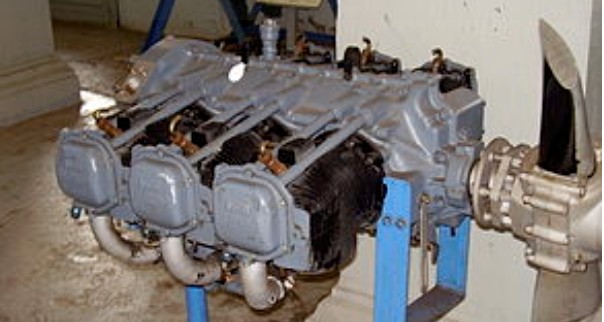
First run in 1957, the Lycoming O-540 is a family of six-cylinder, horizontally opposed fixed-wing aircraft and helicopter engines of 541.5 cubic inch (8,874 cc) displacement, made by Lycoming Engines. The engine is a six-cylinder version of the four-cylinder Lycoming O-360.
Generally these engines produce 230 to 350 horsepower. They are installed on a large number of different aircraft types. Their main competitive engine is the Continental IO-520 and IO-550 series. The AEIO version was developed for high-performance competition aerobatics aircraft. Starting at 260 hp (190 kW), the power was then improved to 300 hp (220 kW). The AEIO-540 family has achieved results in competition aircraft such as the Extra 300, CAP 232, and Zivko Edge 540.
O-540 Standard, direct-drive, normally aspirated Opposed engine, equipped with a carburetor.
IO-540 Normally aspirated engine with fuel Injection.
AEIO-540 Normally aspirated engine with fuel injection and inverted lubrication for Aerobatic use.
TIO-540 Turbocharged and fuel-injected.
TEO-540 Turbocharged with independent Electronic sensors and fuel injection controls for each cylinder which manage detonation and exhaust gas temperature making the engine compatible with a range of fuel compositions producing up to 350 horsepower.
LTIO-540 Left-hand (opposite-direction) rotation, turbocharged, fuel-injected; used as the right-hand engine on Piper PA-31-325 Navajo C/Rs and Piper PA-31-350 Chieftains to prevent critical engine control issues. Also used for the left hand side of the Aerostar 700P.
IGO-540 Gearbox at the front end of the crankshaft to drive the propeller fewer revolutions per minute than the engine, normally aspirated with fuel injection. Dry sump engine built specifically for the Aero Commander 560F.
IGSO-540 Supercharger driven by the engine, gearbox to drive propeller, and fuel injection (up to 380hp).
VO-540 Vertically mounted engine for use in a helicopter, normally aspirated and equipped with a carburetor.
IVO-540 Normally aspirated engine with fuel injection, mounted vertically for use in a helicopter.
TVO-540 Turbocharged engine equipped with a carburetor, mounted vertically for use in a helicopter.
TIVO-540 Turbocharged engine with fuel injection, mounted vertically for use in a helicopter.
HIO-540 Helicopter engine mounted horizontally as in fixed-wing aircraft, normally aspirated with fuel injection; not used in any fixed-wing aircraft.
The Lycoming O-480 is a family of six-cylinder, horizontally opposed fixed-wing aircraft engines of 479.6 cubic inch (7.86 l) displacement, made by Lycoming Engines. The engine is a six-cylinder version of the four-cylinder Lycoming O-320.
O-480 series engines are installed on a number of different aircraft types. Their main competitive engines are the Continental IO-520 and IO-550 series.
Variants: All engines have an additional prefix preceding the 480 to indicate the specific configuration of the engine. Although the series is known as the “O-480”, there are only geared engines in the series. There are also numerous engine suffixes, denoting different accessories such as different manufacturers’ carburetors, or different magnetos.
GO-480 Normally aspirated Opposed engine, equipped with a carburetor and Gearbox at the front end of the crankshaft to drive the propeller fewer revolutions per minute than the engine.
GSO-480 Supercharger driven by the engine, gearbox to drive propeller, and equipped with a carburetor. Designated the O-480-1 by the US military.
IGSO-480 Supercharger driven by the engine, gearbox to drive propeller, with fuel Injection. Designated the O-480-3 by the US military.
IGO-480 Gearbox to drive propeller, normally aspirated with fuel injection.
Applications: Aero Commander 560, 560A, 560E and 680, 680E and the pressurized 720 Alti-Cruiser. Aermacchi AM3CM (Bosbok) Beechcraft Twin Bonanza Beechcraft Queen Air Dornier Do 27 Helio Courier Soko J-20 Kraguj Temco 58 Utva 66
Specifications:
GSO-480-A1A6 Type: Six-cylinder air-cooled geared supercharged horizontally opposed engine Bore: 5.125 in (130 mm) Stroke: 3.875 in (98 mm) Displacement: 479.6 in³ (7.86 l) Dry weight: 498 lb dry Valvetrain: Two overhead valves per cylinder Supercharger: 11.27:1 ratio, providing 48″ Hg (1.6 atm / 8.8 psi) manifold pressure at sea level at maximum power Fuel type: 100 octane rating gasoline Cooling system: Air-cooled Reduction gear: 77:120 (.642:1) Power output: 340 hp at 3,400 rpm at sea level Compression ratio: 7.3:1
The Lycoming O-435 is a six-cylinder, horizontally opposed fixed-wing aircraft and helicopter engine made by Lycoming Engines, first run in the early 1940s. The engine is a six-cylinder version of the four-cylinder Lycoming O-290.
The powerplant is a horizontally opposed Lycoming six-cylinder design. It is a direct-drive or geared, air-cooled, and normally aspirated engine. The cylinders have steel barrels with aluminum heads, and the valves are operated by hydraulic lifters. The crankshaft is supported in an aluminum-alloy split case by four main bearings and one ball-thrust bearing, and lubricating oil is supplied from a 12 quart wet sump. The camshaft rides in journals that do not employ bearing inserts. The accessory housing supports two magnetos, a starter, a generator, and a dual tach drive. A spare mounting pad is included for a vacuum pump.
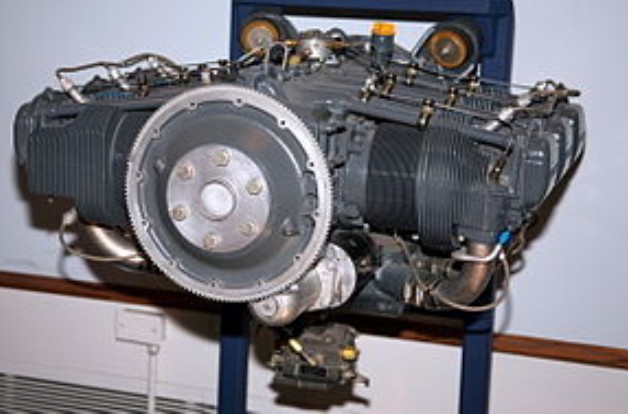
The Lycoming O-360 is a family of four-cylinder, direct-drive, horizontally opposed, air-cooled, piston aircraft engines. Engines in the O-360 series produce between 145 and 225 horsepower (109 to 168 kW), with the basic O-360 producing 180.
The engine family been installed in thousands of aircraft, including the Cessna 172, Piper Cherokee/Archer, Grumman Tiger, and many home-built craft. It has a factory rated time between overhaul (TBO) of 2000 hours or twelve years.
The first O-360 certified was the A1A model, certified on 20 July 1955 to United States CAR 13 effective March 5, 1952 as amended by 13-1 and 13-2. The Lycoming IO-390 is an O-360 which has had its cylinder bore increased by 3⁄16 inches, developing 210 hp (157 kW).
The O-360 family of engines comprise 167 different models with 12 different prefixes. All have a 361 cubic inch (5.9 liters) displacement and 5.125″ and 4.375″ (130 and 111 mm) bore and stroke.
O-360 carbureted series HO-360 vertically mounted series for helicopter installation LO-360 same as O-360, but with left-hand rotating crankshaft, for use in pairs on twin-engined aircraft TO-360 turbocharged series LTO-360 turbocharged left-hand rotation series IO-360 fuel-injected series LIO-360 same as IO-360, but with left-hand rotating crankshaft AIO-360 inverted mount fuel-injected series AEIO-360 aerobatic fuel-injected series HIO-360 vertically mounted fuel-injected series for helicopters LHIO-360 left-hand rotation, fuel-injected, vertically-mounted for helicopters TIO-360 turbocharged and fuel-injected series
Applications: O-360 Aer Lualdi L.55 Aero Boero AB-180 Aero Commander Lark Commander Aero Concepts Discovery American Aviation AA-2 Patriot Australian Lightwing SP-4000 Speed Aviamilano Nibbio Aviat Husky A-1C-180 Backcountry Super Cubs Mackey SQ2 Backcountry Super Cubs Supercruiser Backcountry Super Cubs Super Cub Barrows Bearhawk Barrows Bearhawk Patrol Beagle Airedale Beechcraft Duchess Beechcraft Musketeer Beechcraft Travel Air Bölkow Bo 207 Bushcaddy L-162 Max Bushcaddy L-164 Canadian Home Rotors Safari Cessna 172 Cessna 177 CubCrafters Carbon Cub EX Dakota Cub Super 18 Diamond DA40 Dyn’Aéro MCR R180 Falconar F12A Cruiser Glasair GlaStar Grinvalds Orion Grob G 115 Grumman American AA-5 Guimbal Cabri G2 Lambert Mission 212 Lancair 360 Lucas L8 Maule M-5 Mooney M20 Moynet 360-4 Jupiter MSW One Murphy Elite Mustang Aeronautics Mustang II Norman Dube Aerocruiser Plus PAC MFI-17 Mushshak Peña Bilouis Peña Dahu Peña Joker Piper PA-18 Super Cub Piper Cherokee 180 Piper PA-24-180 Comanche Piper PA-44-180 Seminole Robin Aiglon Robinson R22 Saab 91 Safir Schweizer SGM 2-37 Slepcev Storch Stoddard-Hamilton Glasair II Van’s Aircraft RV-6 Van’s Aircraft RV-7 Van’s Aircraft RV-8 VTOL Aircraft Phillicopter Wassmer WA-54 Atlantic Zenair CH 640 Zenith STOL CH 801
First run in 1954, the Lycoming O-340 is a family of four-cylinder horizontally opposed, carburetor-equipped aircraft engines, that was manufactured by Lycoming Engines in the mid-1950s.
The O-340 was designed by Lycoming specifically for the TEMCO-Riley D-16A Twin Navion project. Jack Riley, the designer of that aircraft was interested in an upgraded version of the Lycoming O-320 that would produce more power to give the Twin Navion a better single-engine service ceiling. The Lycoming O-360 was still years away in development and so a modification of the O-320 was undertaken by Lycoming. The O-320 received cylinder longer barrels and a crankshaft with longer stroke to increase displacement and different piston connecting rods. This increased the compression to 8.5:1 and boosted power output to 170 hp (127 kW) over the O-320’s 150 hp (112 kW). The engine was later used in a number of airplanes and helicopters and also in amateur-built aircraft designs.
The O-340 family of engines covers a range from 160 hp (119 kW) to 170 hp (127 kW). All have a displacement of 340.4 cubic inches (5.58 litres) and the cylinders have air-cooled heads.
The O-340 series was certified under Type Certificate E-277 and first approved on 20 July 1954. The engines are approved for both tractor and pusher applications.
Variants: O-340-A1A Four-cylinder, horizontally opposed, 340.4 cubic inches (5.58 litres), 170 hp (127 kW) at 2700, dry weight 250 lb (113 kg), Marvel-Schebler MA-4-5 carburetor, Scintilla S4LN-20 and S4LN-21 magneto. Minimum fuel grade 91/96 avgas. Certified on 13 January 1955.
O-340-A2A Four-cylinder, horizontally opposed, 340.4 cubic inches (5.58 litres), 170 hp (127 kW) at 2700, dry weight 250 lb (113 kg), Marvel-Schebler MA-4-5 carburetor, Scintilla S4LN-20 and S4LN-21 magneto. Minimum fuel grade 91/96 avgas. Identical to the A1A but with no provision for a hydraulic propeller control. Certified on 16 November 1956.
O-340-B1A Four-cylinder, horizontally opposed, 340.4 cubic inches (5.58 litres), 160 hp (119 kW) at 2700, dry weight 247 lb (112 kg), Marvel-Schebler MA-4-5 carburetor, Scintilla S4LN-20 and S4LN-21 magneto. Minimum fuel grade 80/87 avgas. Identical to the A1A except with a reduced 7.15:1 compression ratio and 160 hp to run on 80/87 fuel. Certified on 20 July 1954. The O-340-B1A was originally certified as just the “O-340”, but the designation was changed to “O-340-B1A” on 27 September 1956.
Applications: Brantly B-2 and B-2A helicopter Cessna 170 (modified under STC) Oakland Super V Piper Apache (modified under STC) TEMCO-Riley D-16A Twin Navion
Specifications: O-340-A1A Type: 4-cylinder horizontally opposed, aircraft engine Bore: 5.125 in (130 mm) Stroke: 4.125 (105 mm) Displacement: 340.4 cu.in (5.58 litres) Dry weight: 250 lb (113 kg) dry Fuel type: 91/96 avgas minimum Cooling system: air-cooled Power output: 170 hp (127 kW) at 2700 rpm Specific power: 0.50 hp/cu.in (22.7 kW/L) Compression ratio: 8.5:1 Power-to-weight ratio: 0.68hp/lb (1.11 kW/kg)
The Lycoming O-320 is a large family of 92 different normally aspirated, air-cooled, four-cylinder, direct-drive engines commonly used on light aircraft such as the Cessna 172 and Piper Cherokee. Different variants are rated for 150 or 160 horsepower (112 or 119 kilowatts). As implied by the engine’s name, its cylinders are arranged in horizontally opposed configuration and a displacement of 320 cubic inches (5.24 L).
The O-320 family of engines includes the carbureted O-320, the fuel-injected IO-320, the inverted mount, fuel-injected AIO-320 and the aerobatic, fuel-injected AEIO-320 series. The LIO-320 is a series of two models identical to the same model IO-320, but with the crankshaft rotating in the opposite direction for use on twin-engined aircraft to eliminate the critical engine.
First run in 1953, the first O-320 (with no suffix) was FAA certified on 28 July 1953 to CAR 13 effective 5 March 1952; this same engine was later re-designated, without change, as the O-320-A1A. The first IO-320 was certified on 10 April 1961, with the AIO-320 following on 23 June 1969 and the first aerobatic AEIO-320 on 12 April 1974. The LIO-320s were both certified on 28 August 1969.
The O-320 family of engines externally resembles the Lycoming O-235 and O-290 family from which they were derived. The O-320 shares the same 3.875 in (98 mm) stroke as the smaller engines, but produces more power with the bore increased to 5.125 in (130 mm). The design uses hydraulic tappets and incorporates the provisions for a hydraulically controlled propeller installation as well. The controllable pitch propeller models use a different crankshaft from those intended for fixed pitch propellers.
The O-320 uses a conventional wet sump system for lubrication. The main bearings, connecting rods, camshaft bearings, tappets and pushrods are all pressure lubricated, while the piston pins, cylinder walls and gears are all lubricated by spray. The oil system is pressurized by an accessory-drive mounted oil pump. A remotely mounted oil cooler is used, connected to the engine by flexible hoses.
The -A, -C and -E variants of carbureted O-320, but none of the high compression or fuel-injected versions, have available STCs that allow the use of automotive fuel as a replacement for more expensive avgas.
Lycoming O-320-D2A
The factory retail price of the O-320 varies by model. In 2010 the retail price of an O-320-B1A purchased outright was USD$47,076.
Variants: O-320 series
O-320 (No suffix) later redesignated O-320-A1A 150 hp (112 kW) at 2700 rpm, Minimum fuel grade 80/87 avgas, compression ratio 7.00:1. Provisions for a controllable pitch propeller and 25-degree spark advance.
O-320-A1B 150 hp (112 kW) at 2700 rpm, Minimum fuel grade 80/87 avgas, compression ratio 7.00:1. Same as A1A but with straight riser in oil sump and -32 carburetor.
O-320-A2A 150 hp (112 kW) at 2700 rpm, Minimum fuel grade 80/87 avgas, compression ratio 7.00:1. Same as A1A but with fixed pitch propeller.
O-320-A2B 150 hp (112 kW) at 2700 rpm, Minimum fuel grade 80/87 avgas, compression ratio 7.00:1. Same as A2A but with straight riser in oil sump and -32 carburetor.
O-320-A2C 150 hp (112 kW) at 2700 rpm, Minimum fuel grade 80/87 avgas, compression ratio 7.00:1. Same as A2B but with retard breaker magnetos.
O-320-A2D 150 hp (112 kW) at 2700 rpm, Minimum fuel grade 80/87 avgas, compression ratio 7.00:1. Same as E3D but with conical mounts.
O-320-A3A 150 hp (112 kW) at 2700 rpm, Minimum fuel grade 80/87 avgas, compression ratio 7.00:1. Same as A1A but with 7/16″ prop bolts.
O-320-A3B 150 hp (112 kW) at 2700 rpm, Minimum fuel grade 80/87 avgas, compression ratio 7.00:1. Same as A3A but with straight riser in oil sump and -32 carburetor.
O-320-A3C 150 hp (112 kW) at 2700 rpm, Minimum fuel grade 80/87 avgas, compression ratio 7.00:1. Same as A3B but with retard breaker magnetos.
O-320-B1A 160 hp (119 kW) at 2700 rpm, Minimum fuel grade 100/130 or 91/96 avgas, compression ratio 8.50:1. Same as A1A but with high compression pistons.
O-320-B1B 160 hp (119 kW) at 2700 rpm, Minimum fuel grade 100/130 or 91/96 avgas, compression ratio 8.50:1. Same as B1A but with straight riser in oil sump and -32 carburetor.
O-320-B2A 160 hp (119 kW) at 2700 rpm, Minimum fuel grade 100/130 or 91/96 avgas, compression ratio 8.50:1. Same as B1A but with fixed pitch propeller provisions.
O-320-B2B 160 hp (119 kW) at 2700 rpm, Minimum fuel grade 100/130 or 91/96 avgas, compression ratio 8.50:1. Same as B2A but with straight riser in oil sump and -32 carburetor.
O-320-B2C 160 hp (119 kW) at 2700 rpm, Minimum fuel grade 100/130 or 91/96 avgas, compression ratio 8.50:1. Same as B2B but with retard breaker magnetos.
O-320-B2D 160 hp (119 kW) at 2700 rpm, Minimum fuel grade 91/96 avgas, compression ratio 8.50:1. Same as D1D but with conical engine mounts and no propeller governor.
O-320-B2E 160 hp (119 kW) at 2700 rpm, Minimum fuel grade 91/96 avgas, compression ratio 8.50:1. Same as B2B except the carburetor is in the same location as the O-320-D models.
O-320-B3A 160 hp (119 kW) at 2700 rpm, Minimum fuel grade 100/130 or 91/96 avgas, compression ratio 8.50:1. Same as B1A but with 7/16 inch propeller bolts.
O-320-B3B 160 hp (119 kW) at 2700 rpm, Minimum fuel grade 100/130 or 91/96 avgas, compression ratio 8.50:1. Same as B1A but with 7/16 inch propellor bolts, a straight riser in oil sump, and -32 carburetor.
O-320-B3C 160 hp (119 kW) at 2700 rpm, Minimum fuel grade 100/130 or 91/96 avgas, compression ratio 8.50:1. Same as B3B but with retard breaker magnetos.
O-320-C1A 150 hp (112 kW) at 2700 rpm, Minimum fuel grade 80/87 avgas, compression ratio 7.00:1. Low compression version converted through field conversion of B1A.
O-320-C1B 150 hp (112 kW) at 2700 rpm, Minimum fuel grade 80/87 avgas, compression ratio 7.00:1. Low compression version converted through field conversion of B1B.
O-320-C2A 150 hp (112 kW) at 2700 rpm, Minimum fuel grade 80/87 avgas, compression ratio 7.00:1. Low compression version converted through field conversion of B2A.
O-320-C2B 150 hp (112 kW) at 2700 rpm, Minimum fuel grade 80/87 avgas, compression ratio 7.00:1. Low compression version converted through field conversion of B2B.
O-320-C2C 150 hp (112 kW) at 2700 rpm, Minimum fuel grade 80/87 avgas, compression ratio 7.00:1. Low compression version converted through field conversion of B2C.
O-320-C3A 150 hp (112 kW) at 2700 rpm, Minimum fuel grade 80/87 avgas, compression ratio 7.00:1. Low compression version converted through field conversion of B3A.
O-320-C3B 150 hp (112 kW) at 2700 rpm, Minimum fuel grade 80/87 avgas, compression ratio 7.00:1. Low compression version converted through field conversion of B3B.
O-320-C3C 150 hp (112 kW) at 2700 rpm, Minimum fuel grade 80/87 avgas, compression ratio 7.00:1. Low compression version converted through field conversion of B3C.
O-320-D1A 160 hp (119 kW) at 2700 rpm, Minimum fuel grade 100/130 or 91/96 avgas, compression ratio 8.50:1. Same as B3B but with Type 1 dynafocal mounts.
O-320-D1B 160 hp (119 kW) at 2700 rpm, Minimum fuel grade 100/130 or 91/96 avgas, compression ratio 8.50:1. Same as D1A but with retard breaker magnetos.
O-320-D1C 160 hp (119 kW) at 2700 rpm, Minimum fuel grade 100/130 or 91/96 avgas, compression ratio 8.50:1. Same as D2C but with provisions for a controllable propeller,
O-320-D1D 160 hp (119 kW) at 2700 rpm, Minimum fuel grade 91/96 avgas, compression ratio 8.50:1. Same as the D1A but with Slick instead of Bendix magnetos and a horizontal carburetor and induction housing. This model was used in the Gulfstream American GA-7 Cougar twin.
O-320-D1F 160 hp (119 kW) at 2700 rpm, Minimum fuel grade 80/87 avgas, compression ratio 7.00:1. Same as E1F except with high compression pistons.
O-320-D2A 160 hp (119 kW) at 2700 rpm, Minimum fuel grade 100/130 or 91/96 avgas, compression ratio 8.50:1. Same as D1A but with fixed pitch propeller provisions and 3/8 inch attaching bolts. Used in the Symphony SA-160.
O-320-D2B 160 hp (119 kW) at 2700 rpm, Minimum fuel grade 100/130 or 91/96 avgas, compression ratio 8.50:1. Same as D2A but retard breaker magnetos.
O-320-D2C 160 hp (119 kW) at 2700 rpm, Minimum fuel grade 100/130 or 91/96 avgas, compression ratio 8.50:1. Same as D2A except -1200 series magnetos.
O-320-D2F 160 hp (119 kW) at 2700 rpm, Minimum fuel grade 80/87 avgas, compression ratio 7.00:1. Same as E2F except with high compression pistons.
O-320-D2G 160 hp (119 kW) at 2700 rpm, Minimum fuel grade 91/96 avgas, compression ratio 8.50:1. Same as the D2A except with Slick instead of Bendix magnetos and 7/16 inch instead of 3/8 inch propeller flange bolts.
O-320-D2H 160 hp (119 kW) at 2700 rpm, Minimum fuel grade 91/96 avgas, compression ratio 8.50:1. Same as the D2G except with a O-320-B sump and intake pipes and with provisions for AC type fuel pump.
O-320-D2J 160 hp (119 kW) at 2700 rpm, Minimum fuel grade 91/96 avgas, compression ratio 8.50:1.Similar to the D2G but with two Slick impulse coupling magnetos and the propeller governor pad, fuel pump and governor pads on the accessory housing all not machined. Used in the Cessna 172P.
O-320-D3G 160 hp (119 kW) at 2700 rpm, Minimum fuel grade 91/96 avgas, compression ratio 8.50:1. Same as the D2G but with 3/8 inch propeller attaching bolts.
O-320-E1A 150 hp (112 kW) at 2700 rpm, Minimum fuel grade 80/87 avgas, compression ratio 7.00:1. Same as A3B but with Type 1 dynafocal mounts.
O-320-E1B 150 hp (112 kW) at 2700 rpm, Minimum fuel grade 80/87 avgas, compression ratio 7.00:1. Same as E1A but with retard breaker magnetos.
O-320-E1C 150 hp (112 kW) at 2700 rpm, Minimum fuel grade 80/87 avgas, compression ratio 7.00:1. Same as E1B.
O-320-E1F 150 hp (112 kW) at 2700 rpm, Minimum fuel grade 80/87 avgas, compression ratio 7.00:1. Same as E1C but with propeller governor drive on the left front of the crankcase.
O-320-E1J 150 hp (112 kW) at 2700 rpm, Minimum fuel grade 80/87 avgas, compression ratio 7.00:1. Same as the E1F but with Slick magnetos.
O-320-E2A 150 hp (112 kW) at 2700 rpm, or 140 hp (104 kW) at 2450 rpm Minimum fuel grade 80/87 avgas, compression ratio 7.00:1. Same as E1A but with fixed pitch propeller, 3/8 inch attaching bolts and an alternate power rating of 140 hp (104 kW).
O-320-E2B 150 hp (112 kW) at 2700 rpm, Minimum fuel grade 80/87 avgas, compression ratio 7.00:1. Same as E2A but with retard breaker magnetos.
O-320-E2C 150 hp (112 kW) at 2700 rpm, or 140 hp (104 kW) at 2450 rpm Minimum fuel grade 80/87 avgas, compression ratio 7.00:1. Same as E2A but -1200 series mags and an alternate power rating of 140 hp (104 kW).
O-320-E2D 150 hp (112 kW) at 2700 rpm, Minimum fuel grade 80/87 avgas, compression ratio 7.00:1. Similar to E2A but with Slick magnetos and 0-235 front. Used in the Cessna 172 I to M models.
O-320-E2F 150 hp (112 kW) at 2700 rpm, Minimum fuel grade 80/87 avgas, compression ratio 7.00:1. Same as E1F but with fixed pitch prop provisions.
O-320-E2G 150 hp (112 kW) at 2700 rpm, Minimum fuel grade 80/87 avgas, compression ratio 7.00:1. Same as E2D but with 0-320-A sump and intake pipes.
O-320-E2H 150 hp (112 kW) at 2700 rpm, Minimum fuel grade 80/87 avgas, compression ratio 7.00:1. Same as E2D but with S4LN-20 and -21 magnetos.
O-320-E3D 150 hp (112 kW) at 2700 rpm, Minimum fuel grade 80/87 avgas, compression ratio 7.00:1. Same as E2D but with 3/8 inch propeller flange bolts.
O-320-E3H 150 hp (112 kW) at 2700 rpm, Minimum fuel grade 80/87 avgas, compression ratio 7.00:1. Same as E3D but with S4LN-20 and -21 magnetos.
O-320-H1AD 160 hp (119 kW) at 2700 rpm, Minimum fuel grade 100LL avgas, compression ratio 9.00:1. Integral accessory section crankcase, front-mounted fuel pump external mounted oil pump and D4RN-2O21 impulse coupling dual magneto.
O-320-H1BD 160 hp (119 kW) at 2700 rpm, Minimum fuel grade 100LL avgas, compression ratio 9.00:1. Same as H1AD but with a D4RN-2200 retard breaker dual magneto.
O-320-H2AD 160 hp (119 kW) at 2700 rpm, Minimum fuel grade 100LL avgas, compression ratio 9.00:1. Same as H1AD but with provisions for a fixed pitch propeller. This was the troublesome engine that was installed on the Cessna 172N.
O-320-H2BD 160 hp (119 kW) at 2700 rpm, Minimum fuel grade 100LL avgas, compression ratio 9.00:1. Same as the H2AD but with a D4RN-2200 retard breaker dual magneto.
O-320-H3AD 160 hp (119 kW) at 2700 rpm, Minimum fuel grade 100LL avgas, compression ratio 9.00:1. Same as the H2AD but with 3/8 inch propeller flange bolts, in place of instead of 7/16 inch.
O-320-H3BD 160 hp (119 kW) at 2700 rpm, Minimum fuel grade 100LL avgas, compression ratio 9.00:1. Same as H3AD but with a D4RN-2200 retard breaker dual magneto.
IO-320 series
IO-320-A1A 150 hp (112 kW) at 2700 rpm, Minimum fuel grade 80/87 avgas, compression ratio 7.00:1. Base model with a Bendix RSA -5AD1 fuel injection system.
IO-320-A2A 150 hp (112 kW) at 2700 rpm, Minimum fuel grade 80/87 avgas, compression ratio 7.00:1. Same as A1A but with provisions for fixed pitch propeller.
IO-320-B1A 160 hp (119 kW) at 2700 rpm, Minimum fuel grade 91/96 or 100LL avgas, compression ratio 8.50:1. Same as the A1A but with the fuel injector offset toward the engine’s fore and aft centerline.
IO-320-B1B 160 hp (119 kW) at 2700 rpm, Minimum fuel grade 91/96 or 100LL avgas, compression ratio 8.50:1. Same as the A1A but with an AN fuel pump drive.
IO-320-B1C 160 hp (119 kW) at 2700 rpm, Minimum fuel grade 91/96 or 100LL avgas, compression ratio 8.50:1. Same as the B1A but with an adapter for mounting the fuel injector straight to the rear.
IO-320-B1D 160 hp (119 kW) at 2700 rpm, Minimum fuel grade 91/96 or 100LL avgas, compression ratio 8.50:1. Same as the B1C but with S-1200 series high altitude magnetos.
IO-320-B1E 160 hp (119 kW) at 2700 rpm, Minimum fuel grade 91/96 or 100LL avgas, compression ratio 8.50:1. Same as the D1C except with a horizontal fuel injector.
IO-320-B2A 160 hp (119 kW) at 2700 rpm, Minimum fuel grade 91/96 or 100LL avgas, compression ratio 8.50:1. Same as the BIA but with provision for a fixed pitch propeller.
IO-320-C1A 160 hp (119 kW) at 2700 rpm, Minimum fuel grade 91/96 or 100LL avgas, compression ratio 8.50:1. Same as the B1B except it has features making it suitable for adding a turbo-supercharger via a Supplemental Type Certificate This engine has internal piston cooling oil nozzles.
IO-320-C1B 160 hp (119 kW) at 2700 rpm, Minimum fuel grade 91/96 or 100LL avgas, compression ratio 8.50:1. Same as the C1A but with a horizontal rear-mounted fuel injector.
IO-320-D1A 160 hp (119 kW) at 2700 rpm, Minimum fuel grade 91/96 or 100LL avgas, compression ratio 8.50:1. Same as the B1D but with Type 1 dynafocal mounts, S4LN-1227 and S4LN-1209 magnetos and the fuel injector mounted vertically under the oil sump.
IO-320-D1B 160 hp (119 kW) at 2700 rpm, Minimum fuel grade 91/96 or 100LL avgas, compression ratio 8.50:1. Same as the D1A but with the propeller governor drive on the left front of crankcase instead of on the accessory housing.
IO-320-D1C 160 hp (119 kW) at 2700 rpm, Minimum fuel grade 91/96 or 100LL avgas, compression ratio 8.50:1. Same as the D1B but with Slick Magnetos.
IO-320-E1A 150 hp (112 kW) at 2700 rpm, Minimum fuel grade 80/87 avgas, compression ratio 7.00:1. Same as E2A but with provision for a controllable pitch propeller.
IO-320-E1B 150 hp (112 kW) at 2700 rpm, Minimum fuel grade 80/87 avgas, compression ratio 7.00:1. Same as E1A but with Slick 4050 and 4051 magnetos.
IO-320-E2A 150 hp (112 kW) at 2700 rpm, Minimum fuel grade 80/87 avgas, compression ratio 7.00:1. Same as A2A but with Scintilla S4LN-20 and S4LN-21 magnetos, straight conical mounts, and the fuel injector mounted under the oil sump.
IO-320-E2B 150 hp (112 kW) at 2700 rpm, Minimum fuel grade 80/87 avgas, compression ratio 7.00:1. Same as E2A but with Slick 4050 and 4051 magnetos.
IO-320-F1A 160 hp (119 kW) at 2700 rpm, Minimum fuel grade 91/96 or 100LL avgas, compression ratio 8.50:1. Same as the C1A except with a Type 1 (30 deg) dynafocal mount attachment instead of Type 2 (18 deg) mount attachment.
LIO-320 series
LIO-320-B1A 160 hp (119 kW) at 2700 rpm, Minimum fuel grade 91/96 or 100LL avgas, compression ratio 8.50:1. Same as B1A except with counter-clockwise engine rotation and reverse rotation of accessories. It uses a modified starter ring gear, crankshaft, cam shaft, accessory housing and oil pump body. This engine is usually paired with an IO-320-B1A on a twin-engined aircraft.
LIO-320-C1A 160 hp (119 kW) at 2700 rpm, Minimum fuel grade 91/96 or 100LL avgas, compression ratio 8.50:1. Same as C1A except with the same changes as the LIO-320-B1A. It has provisions for adding a turbo-supercharger. This engine is usually paired with an IO-320-C1A on a twin-engined aircraft.
AIO-320 series
AIO-320-A1A 160 hp (119 kW) at 2700 rpm, Minimum fuel grade 91/96 or 100LL avgas, compression ratio 8.50:1. Same as the IO-320-B1D but this model permits installation and operation of the engine in the inverted position. The differences include a front-mounted propeller governor, two dry oil sumps, dual external oil scavenge pumps, an oil tank, three options for the position of the fuel injector and a Type 1 dynafocal mount.
AIO-320-A1B 160 hp (119 kW) at 2700 rpm, Minimum fuel grade 91/96 or 100LL avgas, compression ratio 8.50:1. Same as the A1A but with one impulse coupling magneto.
AIO-320-A2A 160 hp (119 kW) at 2700 rpm, Minimum fuel grade 91/96 or 100LL avgas, compression ratio 8.50:1. Same as the A1A but with provision for a fixed pitch propeller.
AIO-320-A2B 160 hp (119 kW) at 2700 rpm, Minimum fuel grade 91/96 or 100LL avgas, compression ratio 8.50:1. Same as the A1A but has one impulse coupling magneto and a fixed pitch propeller.
AIO-320-B1B 160 hp (119 kW) at 2700 rpm, Minimum fuel grade 91/96 or 100LL avgas, compression ratio 8.50:1. Same as the A1B but with a front-mounted fuel injector
AIO-320-C1B 160 hp (119 kW) at 2700 rpm, Minimum fuel grade 91/96 or 100LL avgas, compression ratio 8.50:1. Same as the B1B but with the fuel injector vertically mounted on bottom of the oil sump in the front position.
AEIO-320 series
AEIO-320-D1B 160 hp (119 kW) at 2700 rpm, Minimum fuel grade 91/96 or 100LL avgas, compression ratio 8.50:1. Same as the IO-320-D1B but with an inverted oil system kit to allow aerobatic flight.
AEIO-320-D2B 160 hp (119 kW) at 2700 rpm, Minimum fuel grade 91/96 or 100LL avgas, compression ratio 8.50:1. Same as the AEIO-320-D1A but without provisions for a propeller governor.
AEIO-320-E1A 150 hp (112 kW) at 2700 rpm, Minimum fuel grade 80/87 avgas, compression ratio 7.00:1. Same as the IO-320-E1A but with an inverted oil system kit to allow aerobatic flight.
AEIO-320-E1B 150 hp (112 kW) at 2700 rpm, Minimum fuel grade 80/87 avgas, compression ratio 7.00:1. Same as the IO-320-E1B but with an inverted oil system kit to allow aerobatic flight.
AEIO-320-E2A 150 hp (112 kW) at 2700 rpm, Minimum fuel grade 80/87 avgas, compression ratio 7.00:1. Same as the IO-320-E2A but with an inverted oil system kit to allow aerobatic flight.
AEIO-320-E2B 150 hp (112 kW) at 2700 rpm, Minimum fuel grade 80/87 avgas, compression ratio 7.00:1. Same as the IO-320-E2B but with an inverted oil system kit to allow aerobatic flight.
Major Applications: Aviat Husky A-1B-160 Aero Commander 100 Alpha 160A American Champion Citabria Beechcraft Musketeer Bellanca Decathlon Canadian Home Rotors Safari Cessna 172 Grumman American AA-5 Gulfstream American GA-7 Cougar Hatz CB-1 Hollmann HA-2M MBB Bo 209 Mooney M20 Partenavia P66B Oscar 150 Piper Aztec Piper Apache Piper Twin Comanche Piper Cherokee Piper Tripacer PZL-110 Koliber Robin DR400 Robinson R22 Rutan Long-EZ SGP M-222 Flamingo Socata TB9 Tampico Symphony SA-160 Tapanee Levitation 2 Thorp T-18 Piper PA-18-150 Super Cub Van’s Aircraft RV-3 Van’s Aircraft RV-4 Van’s Aircraft RV-6 Van’s Aircraft RV-8 Van’s Aircraft RV-9 Varga Kachina Velocity V-Twin Vulcanair P-68C Wassmer WA 52 Wickham B Wittman Tailwind
Specifications: O-320-A1A Type: Four-cylinder air-cooled horizontally opposed engine Bore: 5.125 in (130.18 mm) Stroke: 3.875 in (98.43 mm) Displacement: 319.8 cu in (5.24 l) Dry weight: 244 lb (111 kg) ComponentsValvetrain: Two overhead valves per cylinder Fuel system: Updraft carburetor Fuel type: minimum grade of 80/87 avgas Oil system: Wet sump Cooling system: Air-cooled PerformancePower output: 150 hp (112 kW) Compression ratio: 7:1 Power-to-weight ratio: 1.63 lb/hp (0.99 kW/kg)

 All Aero