Harvey Mace & Alfred Trefethen
Sacramento CA.
USA
Circa 1959-80 airplane builder of the M-101 Macerschmitt / Could-Bee
Harvey Mace & Alfred Trefethen
Sacramento CA.
USA
Circa 1959-80 airplane builder of the M-101 Macerschmitt / Could-Bee
An all metal, low wing, fixed taildragger. The S-21 was designed to be easy to build and fly with good economy. Construction is all metal using pop riveting. Prototype designated S-20, plans built versions the S-21.
Gross Wt. 720 lb
Empty Wt. 456 lb
Wingspan 25’
Length 18’6”
Engine 1500cc Volkswagen.
Vmax 110 mph
Cruise 90 mph
Climb rate 850 fpm
Range 250 miles
The S-20 utilizes all-metal construction but keeps it simple by the extensive use of pop rivets. It features open-cockpit seating for one, low wings and conventional tail-wheel landing gear. The fuselage is of steel-tube truss construction with a light alloy skin. The constant-chord wings are also covered with the same light alloy skin.
First flight was made on March 9, 1972 by N106AB. S-21 was the designation for plan-built aircraft by home-builders.
Engine Volkswagen 1500cc, 53-hp
Wingspan 25 ft 0 in
Length 18 ft 6 in
Gross Wt. 720 lb
Empty Wt. 456 lb
Fuel capacity 10 USG
Top speed 162 mph
Cruise 90 mph.
Stall 38 mph.
Climb rate 850 fpm
Takeoff run 300 ft
Landing roll 300 ft
Range 250 miles
Seats: 1
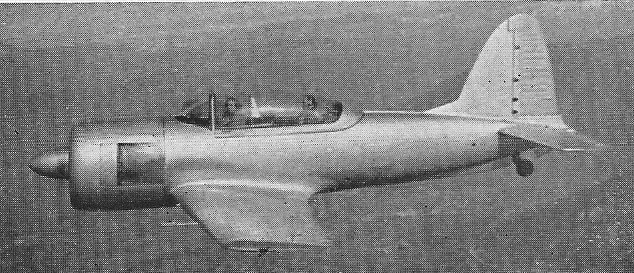
The 1952 Macchi MB.323 was designed to meet an Italian Air Force specification for a two-seat basic trainer. The first prototype was powered by a 610 hp Pratt & Whitney Wasp, and the second had an Alvis Leonides 502/5 Mk.24.
Engine: 610 hp Pratt & Whitney Wasp
Max speed: 242 mph at 5905 ft
Cruise: 199 mph at 9842 ft
ROC: 1436 fpm
Service ceiling: 21,325 ft
Range: 808 mi
Empty weight: 4409 lb
Loaded weight: 5575 lb
Wingspan: 39 ft 4.5 in
Length: 29 ft 11.5 in
Height: 13 ft 1.5 in
Wing area: 217u sq.ft
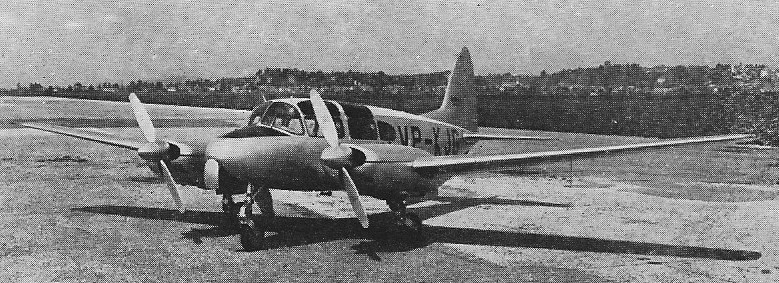
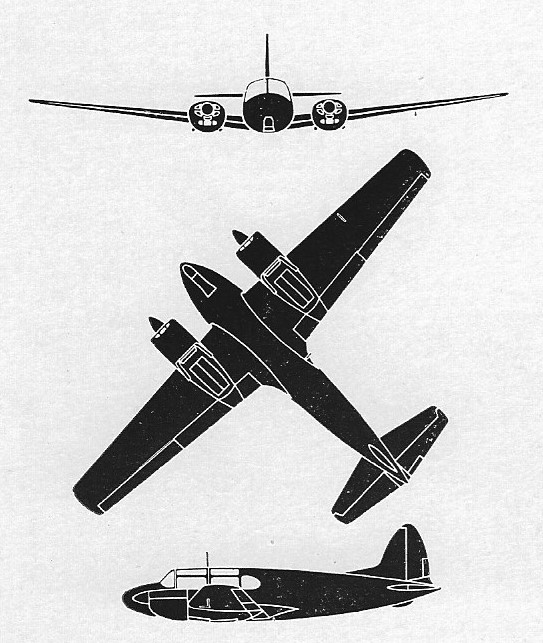
The MB.320 is a development of the post-war MB.314. Powered by two Continental E.185 engines of 185 hp driving Piaggio mechanical variable pitch or Aeromatic automatic constant speed propellers.
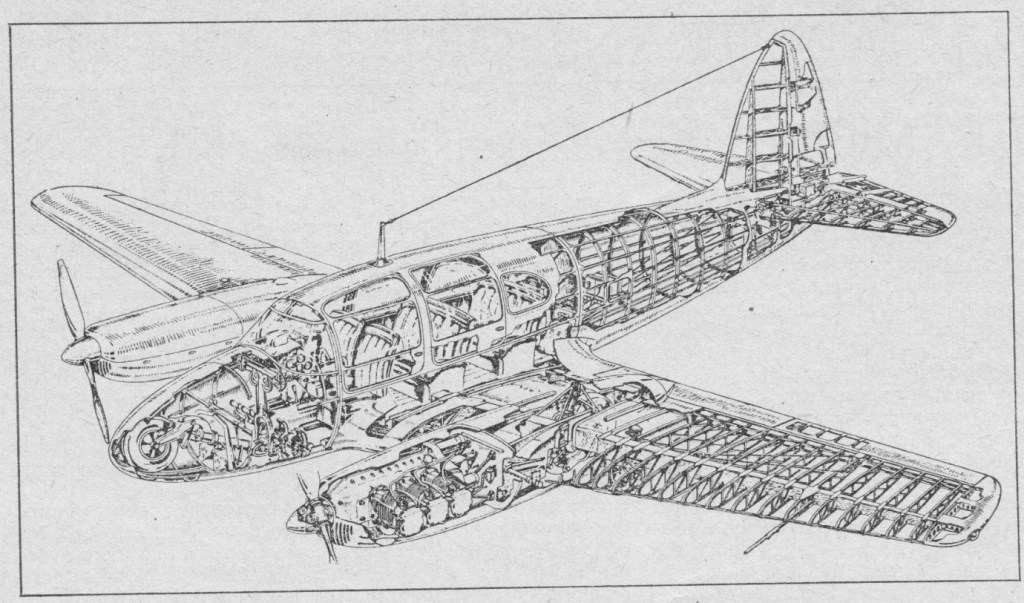
The cantilever low-wing has a NACA 2300 section and wooden single-spar covered by plywood, fitted with differential slotted ailerons and flaps. The fuselage is built in three sections with a detachable metal e cone and woo centre and rear with plywood skins. The centre section contains the cabin and baggage compartments. The wood tail section has trim tabs in the starboard elevator and rudder. The undercarriage is retractable with the fully swivelling nose wheel retracting backwards into the nacelles.
Sound proofed and air conditioned, the cabin seats six, two pilots side-by-side, and four passengers. A baggage compartment is aft of the rear seats.
Introduced in 1949, the MB.320 was produced in limited numbers.
A manufacturing licence was acquired by Societe Francaise de Constructions Aeronautiques Lignel, which planned manufacture as the VEMA-51. This licence was not taken up.
In addition to various Italian commercial concerns, three were sold to East African Airways.

Engines: 2 x Continental E-185, 185 hp
Wingspan: 42 ft 7 in
Wing area: 226 sq.ft
Length: 28 ft 4 in
Height: 10 ft 6 in
Empty weight: 3670 lb
Loaded weight: 5511 lb
Max speed: 186 mph at SL
Cruise: 156.6 mph
Min speed: 65 mph
ROC: 925 mph
Climb to 6500 ft: 5 min 5 sec
Service ceiling: 24,930 ft
Range: 665 mph
Seats: 6
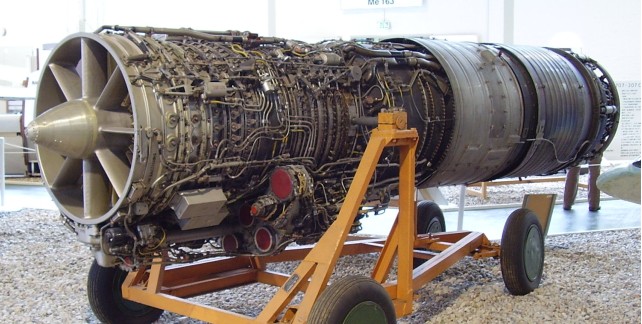
1961
Axial turbojet
Thrust: 11,000 kg
Applications:
Yakolov Yak-38
Tupolov Tu-28 / Tu-128
Sukhoi Su-17
Sukhoi Su-24
1949
7 stage axial flow turbojet
Thrust: 4600 kg at qualification in 1950
Applications:
Ilyushin IL-30
Ilyushin Il-46
Lavochkin Aircraft 190
Tupolov Tu-85
Yakolov Yak-1000
Sukhoi Su-17 (1949)
In May 1944 Arkhip Lyulka was ordered to begin development of a turbojet with a thrust of 12.3 kN (2,800 lbf). He demonstrated an eight-stage axial-flow engine in March 1945 called the S-18. In early 1946 the Council of Ministers ordered that the S-18 be developed into an operational engine with a thrust of 15.5 kN (3,500 lbf). The TR-1 was developed in early 1946 and had its first static run on 9 August. It was the first indigenous Soviet jet engine. It was tested in the air on a pylon fitted to a Lend-Lease B-25 Mitchell piston-engined bomber.
The TR-1 was not a success, proving to have less thrust and a higher specific fuel consumption than designed. Its failure led directly to the cancellation of the first Soviet jet bomber, the Ilyushin Il-22.
Lyulka further developed the engine into the TR-1A of 20.5 kN of thrust, but its specific fuel consumption was very high and it too was cancelled.
Applications:
Alekseyev I-21
Ilyushin Il-22
Sukhoi Su-10
Sukhoi Su-11
Specifications:
Type: Turbojet
Dry weight: 885 kg (1,951 lb)
Compressor: eight-stage axial-flow
Turbine: single stage
Maximum thrust: 12.8 kN (2,900 lbf)
Specific fuel consumption: 129 – 137 kg/kN·h (1.27-1.35 lb/lbf·h)
Thrust-to-weight ratio: 14.5 N/kg (1.47 lbf/lb)
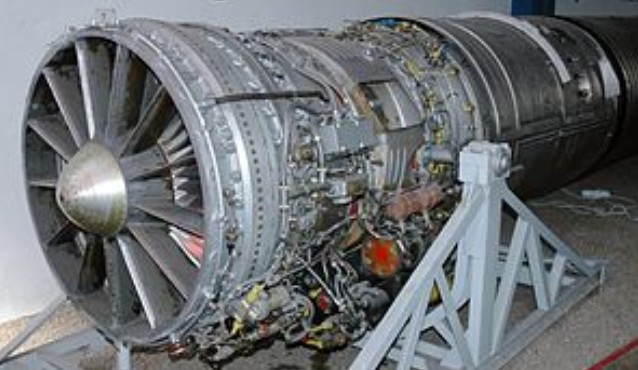
The Lyulka AL-7 was a 9 stage supersonic compressor turbojet designed by Arkhip Mikhailovich Lyulka and produced by his Lyulka design bureau. Produced between 1954 and 1970, the AL-7 had supersonic airflow through the first stage of the compressor. The TR-7 prototype developing 6,500 kgf (14,330 lbf, 63.7 kN) of thrust was tested in 1952, and the engine was initially intended for Ilyushin’s Il-54 bomber.
The afterburning version AL-7F was created in 1953. In April 1956, the Sukhoi S-1 prototype equipped with AL-7F exceeded Mach 2 at 18,000 m (70,900 ft), which lead to production of Su-7 ‘Fitter’ and Su-9 ‘Fishpot’ equipped with this engine. Later, the engine was adopted for Tu-128 ‘Fiddler’ in 1960, and for the AS-3 ‘Kangaroo’ cruise missile. The Beriev Be-10 jet flying boat used a non-afterburning AL-7PB with stainless steel compressor blades.
Applications:
Ilyushin Il-54
Sukhoi Su-7B
Tupolov Tu-98
Specifications:
AL-7F
Type: Afterburning turbojet
Dry weight: 2,010 kg (4,430 lb)
Compressor: 9-stage axial compressor
Maximum thrust:
67.1 kN (15,075 lbf) military power
98.1 kN (22,050 lbf) with afterburner
Overall pressure ratio: 9.5:1
Turbine inlet temperature: 860 deg C (1,580 deg F)
Specific fuel consumption:
95.0 kg/(h·kN) (0.94 lb/(h·lbf)) at idle
98.9 kg/(h·kN) (0.97 lb/(h·lbf)) military power
229.0 kg/(h·kN) with afterburner
Power-to-weight ratio: 3.4
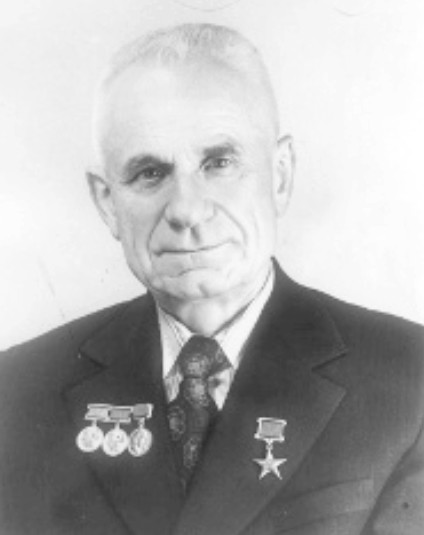
Born March 23, 1908, Kiev Oblast, Ukraine, Arkhip Mikhailovich Lyul’ka, was a Soviet scientist and designer of jet engines of Ukrainian origin, head of the OKB Lyulka, member of the USSR Academy of Sciences.
The Lyul’ka design bureau had its roots in the Kharkov Aviation Institute where Arkhip Mikhailovich Lyulka was working with a team designing the ATsN (Agregat Tsentralnovo Nadduva – Centralised supercharger) installation on the Petlyakov Pe-8 bomber. Lyul’ka was responsible for designing the first Soviet gas turbine engines. Preferring to steer away from copying captured German equipment, it succeeded in producing home grown engines.
Lyul’ka was a USSR aero-engine design bureau and manufacturer(OKB-165 started in 1946) from 1938 to the 1990s, when manufacturing and design elements were integrated as NPO Saturn based at Rybinsk.
Arkhip Lyulka died June 1, 1984, Moscow, Russia
 All Aero