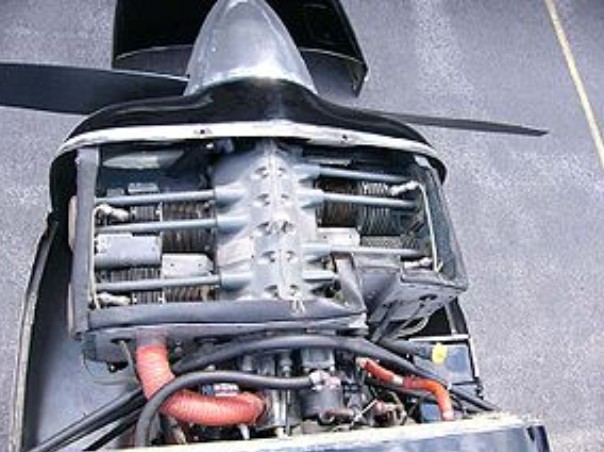
The Lycoming O-290 is a dual ignition, four-cylinder, air-cooled, horizontally opposed aircraft engine. It was first run in 1939, and entered production three years later.
A common variant of the type is the O-290-G, a single ignition model which was designed to drive a generator as part of a ground power unit.
Variants:
Civil models
O-290 Base model engine certified 27 July 1942. 125 hp (93 kW) at 2450 rpm, 6.25:1 compression ratio, dry weight 244 lb (111 kg)
O-290-A Certified 27 July 1942. 125 hp (93 kW) at 2600 rpm continuous, 130 hp (97 kW) at 2800 rpm for 5 minutes, 6.5:1 compression ratio, dry weight 251 lb (114 kg) with SR4L-8 or N-8 magnetos, 245 lb (111 kg) with N-20 or N-21 magnetos.
O-290-AP Certified 21 July 1944. 125 hp (93 kW) at 2600 rpm continuous, 130 hp (97 kW) at 2800 rpm for 5 minutes, 6.5:1 compression ratio, dry weight 251 lb (114 kg) with SR4L-8 or N-8 magnetos, 245 lb (111 kg) with N-20 or N-21 magnetos.
O-290-B Certified 22 January 1943. 125 hp (93 kW) at 2600 rpm continuous, 130 hp (97 kW) at 2800 rpm for 5 minutes, 6.5:1 compression ratio, dry weight 247 lb (112 kg).
O-290-C Certified 22 January 1943. 125 hp (93 kW) at 2600 rpm continuous, 130 hp (97 kW) at 2800 rpm for 5 minutes, 6.5:1 compression ratio, dry weight 238 lb (108 kg).
O-290-CP Certified 21 July 1944. 125 hp (93 kW) at 2600 rpm continuous, 130 hp (97 kW) at 2800 rpm for 5 minutes, 6.5:1 compression ratio, dry weight 238 lb (108 kg).
O-290-D Certified 13 December 1949. 125 hp (93 kW) at 2600 rpm continuous, 130 hp (97 kW) at 2800 rpm for 5 minutes, 6.5:1 compression ratio, dry weight 230 lb (104 kg).
O-290-D2 Certified 1 May 1952. 135 hp (101 kW) at 2600 rpm continuous, 140 hp (104 kW) at 2800 rpm for 5 minutes, 7.5:1 compression ratio, dry weight 233 lb (106 kg).
O-290-D2A Certified 20 April 1953. 135 hp (101 kW) at 2600 rpm continuous, 140 hp (104 kW) at 2800 rpm for 5 minutes, 7.5:1 compression ratio, dry weight 236 lb (107 kg).
O-290-D2B Certified 30 September 1954. 135 hp (101 kW) at 2600 rpm continuous, 140 hp (104 kW) at 2800 rpm for 5 minutes, 7.0:1 compression ratio, dry weight 236 lb (107 kg).
O-290-D2C Certified 8 May 1961. 135 hp (101 kW) at 2600 rpm continuous, 140 hp (104 kW) at 2800 rpm for 5 minutes, 7.0:1 compression ratio, dry weight 235 lb (107 kg).
O-290-G Non-certified, single ignition model intended for use driving a generator in a ground power unit, 125 hp (93 kW). Has been widely used in homebuilt aircraft, including the prototype Van’s Aircraft RV-3.
Military models
O-290-1 Identical to the O-290-B
O-290-3 Identical to the O-290-C
O-290-11 Identical to the O-290-D
Applications: Adkisson SJ-1 Head Skinner Aerocar Aero Commander 100 Aquaflight Aqua I Aydlett A-1 Chrislea Super Ace Falconar F11 Sporty Flying K Sky Raider Isaacs Fury Mk 1 Mustang Aeronautics Midget Mustang Pazmany PL-1 Pazmany PL-2 Piper PA-18 Super Cub Piper PA-20 Pacer Piper PA-22 TriPacer Rogers Sportaire Seibel S-4 Stolp Starduster Thorp T-18 Toyo T-T.10 VanGrunsven RV-1 Van Lith VI Van’s Aircraft RV-3 Warner Sportster
Specifications: O-290-D2A Type: 4-cylinder air-cooled horizontally opposed piston aircraft engine Bore: 4.875 in (124 mm) Stroke: 3.875 in (98 mm) Displacement: 289 cu in (4.74 L) Dry weight: 264 lbs (119.7 kg) Valvetrain: Pushrod-actuated valves Fuel system: Carburetor Cooling system: Air-cooled Power output: 140 hp (105 kW) at 2,800 rpm Specific power: 0.48 hp/cu.in (22.2 kW/L) Compression ratio: 7.5:1
The Lycoming O-235 is a family of four-cylinder, air-cooled, horizontally opposed piston aircraft engines that produce 100 to 135 hp (75 to 101 kW), derived from the earlier O-233 engine.
The engines are all carburetor-equipped, feature dual magneto ignition and have a displacement of 233 cubic inches (3.82 L). The first O-235 model was certified on 11 February 1942.
The O-235 was developed into the lighter-weight Lycoming IO-233 engine for light sport aircraft.
Variants: O-235-C1 Power 115 hp (86 kW) at 2800 rpm, dry weight 246 lb (112 kg) Provision for dual pump drives, tractor and pusher installation.
O-235-C1A Power 100 hp (75 kW) at 2450 rpm, dry weight 236 lb (107 kg) Similar to O-235-C1 except ignition timing, lower rpm and power. Optional 2 position or automatic propeller governor drive.
O-235-C1B Power 115 hp (86 kW) at 2800 rpm, dry weight 245 lb (111 kg) Similar to O-235-C1 except with retarded breaker magnetos.
O-235-C1C Power 108 hp (81 kW) at 2600 rpm, dry weight 243 lb (110 kg) Similar to O-235-C1 except with Slick magnetos.
O-235-C2A Power 115 hp (86 kW) at 2800 rpm, dry weight 246 lb (112 kg) Similar to O-235-C1 except with a type 1 propeller flange.
O-235-C2B Power 115 hp (86 kW) at 2800 rpm, dry weight 247 lb (112 kg) Similar to O-235-C2A but with two S-1200 series magnetos.
O-235-C2C Power 108 hp (81 kW) at 2600 rpm, alternate rated maximum continuous power rating of 100 hp at 2400 rpm, dry weight 244 lb (111 kg) Similar to O-235-C2B except with Slick magnetos and shielded ignition harness.
O-235-E1 Power 115 hp (86 kW) at 2800 rpm, dry weight 250 lb (113 kg) Similar to O-235-C1 except crankcase and crankshaft supply pressurized oil to a constant speed propeller. Accessory case changed to accommodate a standard propeller governor drive.
O-235-E1B Power 115 hp (86 kW) at 2800 rpm, dry weight 249 lb (113 kg) Similar to O-235-E1 except for S4LN-200 series retarded breaker magnetos.
O-235-E2A Power 115 hp (86 kW) at 2800 rpm, dry weight 250 lb (113 kg) Similar to O-235-E1 except Type 1 propeller flange.
O-235-E2B Power 115 hp (86 kW) at 2800 rpm, dry weight 251 lb (114 kg) Similar to O-235-E2A except incorporates S-1200 series magnetos.
O-235-F1 Power 125 hp (93 kW) at 2800 rpm, dry weight 250 lb (113 kg) Similar to O-235-C1 except compression ratio, fuel grade and rating.
O-235-F1B Power 125 hp (93 kW) at 2800 rpm, dry weight 249 lb (113 kg) Similar to O-235-F1 except retarded breaker magnetos.
O-235-F2A Power 125 hp (93 kW) at 2800 rpm, dry weight 250 lb (113 kg) Similar to O-235-F1 except a Type 1 propeller flange.
O-235-F2B Power 125 hp (93 kW) at 2800 rpm, dry weight 251 lb (114 kg) Similar to O-235-F2A but with S-1200 series magnetos.
O-235-G1 Power 125 hp (93 kW) at 2800 rpm, dry weight 253 lb (115 kg) Similar to O-235-F1 except provisions for using constant speed propeller.
O-235-G1B Power 125 hp (93 kW) at 2800 rpm, dry weight 252 lb (114 kg) Similar to O-235-G1 except has retarded breaker magnetos.
O-235-G2A Power 125 hp (93 kW) at 2800 rpm, dry weight 253 lb (115 kg) Similar to O-235-G1 except a Type 1 propeller flange.
O-235-G2B Power 125 hp (93 kW) at 2800 rpm, dry weight 254 lb (115 kg) Similar to O-235-G2A except S-1200 series magnetos.
O-235-H2C Power 108 hp (81 kW) at 2600 rpm, alternate rated maximum continuous power rating of 100 hp at 2400 rpm, dry weight 243 lb (110 kg) Similar to O-235-C2C except Type 1 dynafocal mounting.
O-235-J2A Power 125 hp (93 kW) at 2800 rpm, dry weight 252 lb (114 kg) Similar to O-235-J2B except magnetos.
O-235-J2B Power 125 hp (93 kW) at 2800 rpm, dry weight 253 lb (115 kg) Similar to O-235-F2B except Type 1 dynafocal mounting.
O-235-K2A Power 118 hp (88 kW) at 2800 rpm, dry weight 252 lb (114 kg) Similar to O-235-F2A except ignition timing, lower power and reduced compression ratio.
O-235-K2B Power 118 hp (88 kW) at 2800 rpm, dry weight 253 lb (115 kg) Similar to O-235-F2B except ignition timing, lower power and reduced compression ratio.
O-235-K2C Power 115 hp (86 kW) at 2700 rpm, dry weight 248 lb (112 kg) Similar to O-235-K2A except Slick magnetos.
O-235-L2A Power 118 hp (88 kW) at 2800 rpm, alternate ratings of 115 hp (86 kW) at 2700 rpm, 112 hp (84 kW) at 2600 rpm, 110 hp (82 kW) at 2550 rpm and 105 hp (78 kW) at 2400 rpm, dry weight 252 lb (114 kg) Similar to O-235-J2A except ignition timing, lower power and reduced compression ratio.
O-235-L2C Power 115 hp (86 kW) at 2700 rpm, alternate ratings of 115 hp (86 kW) at 2700 rpm, 112 hp (84 kW) at 2600 rpm, 110 hp (82 kW) at 2550 rpm and 105 hp (78 kW) at 2400 rpm, dry weight 249 lb (113 kg) Similar to O-235-L2A except Slick magnetos and lower maximum continuous rating.
O-235-M1 Power 118 hp (88 kW) at 2800 rpm, alternate ratings of 115 hp (86 kW) at 2700 rpm, 112 hp (84 kW) at 2600 rpm, 110 hp (82 kW) at 2550 rpm and 105 hp (78 kW) at 2400 rpm, dry weight 255 lb (116 kg) Similar to -L2A except provision for controllable propeller and has AS-127 Type 2 propeller flange.
O-235-M2C Power 118 hp (88 kW) at 2800 rpm, alternate ratings of 115 hp (86 kW) at 2700 rpm, 112 hp (84 kW) at 2600 rpm, 110 hp (82 kW) at 2550 rpm and 105 hp (78 kW) at 2400 rpm, dry weight 252 lb (114 kg) Similar to O-235-M1 except Slick 4200 series magnetos and Type 1 propeller flange.
O-235-M3C Power 118 hp (88 kW) at 2800 rpm, alternate ratings of 115 hp (86 kW) at 2700 rpm, 112 hp (84 kW) at 2600 rpm, 110 hp (82 kW) at 2550 rpm and 105 hp (78 kW) at 2400 rpm, dry weight 252 lb (114 kg) Similar to O-235-M1 except Slick 4200 series magnetos.
O-235-N2A Power 116 hp (87 kW) at 2800 rpm, alternate ratings of 113 hp (84 kW) at 2700 rpm, 110 hp (82 kW) at 2600 rpm, 108 hp (81 kW) at 2550 rpm and 103 hp (77 kW) at 2400 rpm, dry weight 252 lb (114 kg) Similar to O-235-L2A except reduced compression ratio and reduced power ratings.
O-235-N2C Power 116 hp (87 kW) at 2800 rpm, alternate ratings of 113 hp (84 kW) at 2700 rpm, 110 hp (82 kW) at 2600 rpm, 108 hp (81 kW) at 2550 rpm and 103 hp (77 kW) at 2400 rpm, dry weight 249 lb (113 kg) Similar to O-235-L2C except reduced compression ratio and reduced power ratings.
O-235-P1 Power 116 hp (87 kW) at 2800 rpm, alternate ratings of 113 hp (84 kW) at 2700 rpm, 110 hp (82 kW) at 2600 rpm, 108 hp (81 kW) at 2550 rpm and 103 hp (77 kW) at 2400 rpm, dry weight 255 lb (116 kg) Similar to O-235-M1 except reduced compression ratio and reduced power ratings.
O-235-P2A Power 116 hp (87 kW) at 2800 rpm, alternate ratings of 113 hp (84 kW) at 2700 rpm, 110 hp (82 kW) at 2600 rpm, 108 hp (81 kW) at 2550 rpm and 103 hp (77 kW) at 2400 rpm, dry weight 255 lb (116 kg) Similar to O-235-P1 except a Type 1 propeller flange.
O-235-P2C Power 116 hp (87 kW) at 2800 rpm, alternate ratings of 113 hp (84 kW) at 2700 rpm, 110 hp (82 kW) at 2600 rpm, 108 hp (81 kW) at 2550 rpm and 103 hp (77 kW) at 2400 rpm, dry weight 252 lb (114 kg) Similar to O-235-M2 except reduced compression ratio and reduced power ratings.
O-235-P3C Power 116 hp (87 kW) at 2800 rpm, alternate ratings of 113 hp (84 kW) at 2700 rpm, 110 hp (82 kW) at 2600 rpm, 108 hp (81 kW) at 2550 rpm and 103 hp (77 kW) at 2400 rpm, dry weight 252 lb (114 kg) Similar to O-235-M3C except reduced compression ratio and reduced power ratings.
Applications: Aero Boero AB-115 AMD Alarus Beechcraft Model 77 Skipper Bushcaddy R-120 CEA DR-221 Cessna 152 Criquet Storch Falconar F11 Sporty Fisher Celebrity Grumman American AA-1 Lucas L-6A Lucas L7 Murphy Elite Murphy Rebel Nexaer LS1 Peña Joker Piper PA-16 Clipper Piper PA-22-108 Colt Piper PA-29 Papoose Piper PA-38 Tomahawk Preceptor STOL King Smith Miniplane Van’s Aircraft RV-9
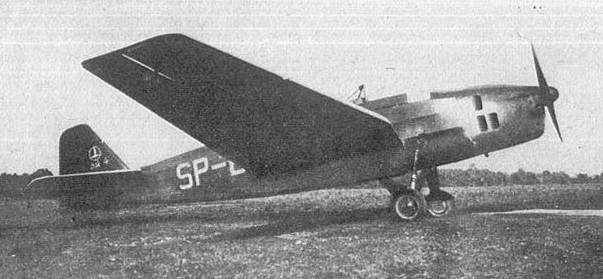
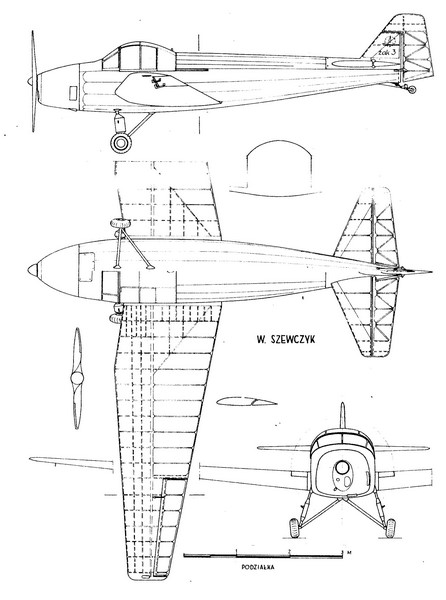
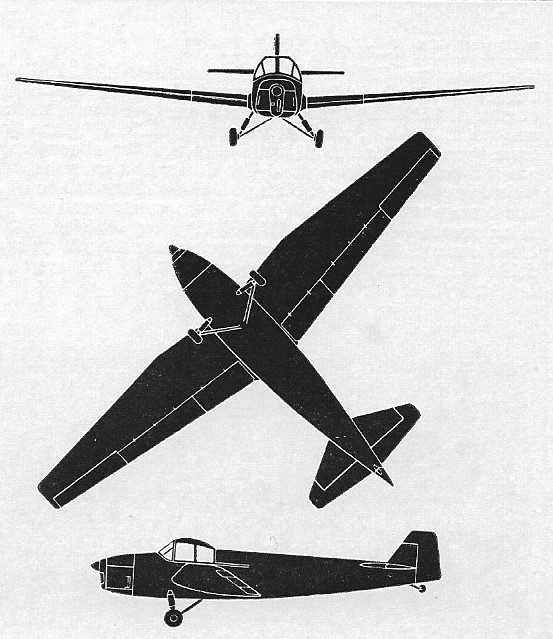
The SZPAK-2 was designed in Lubin, Poland, during the closing stages of the war, and later built by LWD / Lotnicze Warsztaty Doswiadczaine, first flying in November 1945 as SP-AAA. Limited production was undertaken by PZL Mielc.
The SZPAK-3 was an experimental modification with a fixed nose-wheel undercarriage, first flying on 23 December 1946.
The SZPAK-4 was developed from the SZPAK-2 and -3 as the SZPAK-4A two-seat, side-by-side, advanced trainer, and the SZPAK-4T four-seat tourer.
Spzak-2 Engine: 150 hp Siemens Sh 14 Wingspan: 11.3 m / 37 ft 1 in Length: 8.2 m / 26 ft 10.75 in Wing area: 18.1 sq.m / 194 sq.ft Empty weight: 650 kg / 1435 lb Gross weight: 1200 kg / 2645 lb Ruise: 150 kph / 93 mph Range: 650 km / 405 mi Ceiling: 4500 m / 14.760 ft Seats: 4
SZPAK-4T Engine: PZL-built Bramo Sh.14, 160 hp Wingspan: 37 ft Wing area: 189,5 sq.ft Length: 28 ft 2 in Height: 7 ft 8 in Empty weight: 1433 lb Loaded weight: 2645 lb Max speed: 121 mph Cruise: 100 mph ROC: 450 fpm Range: 435 mi Seats: 4
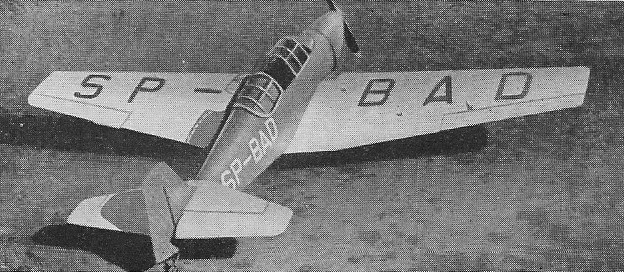
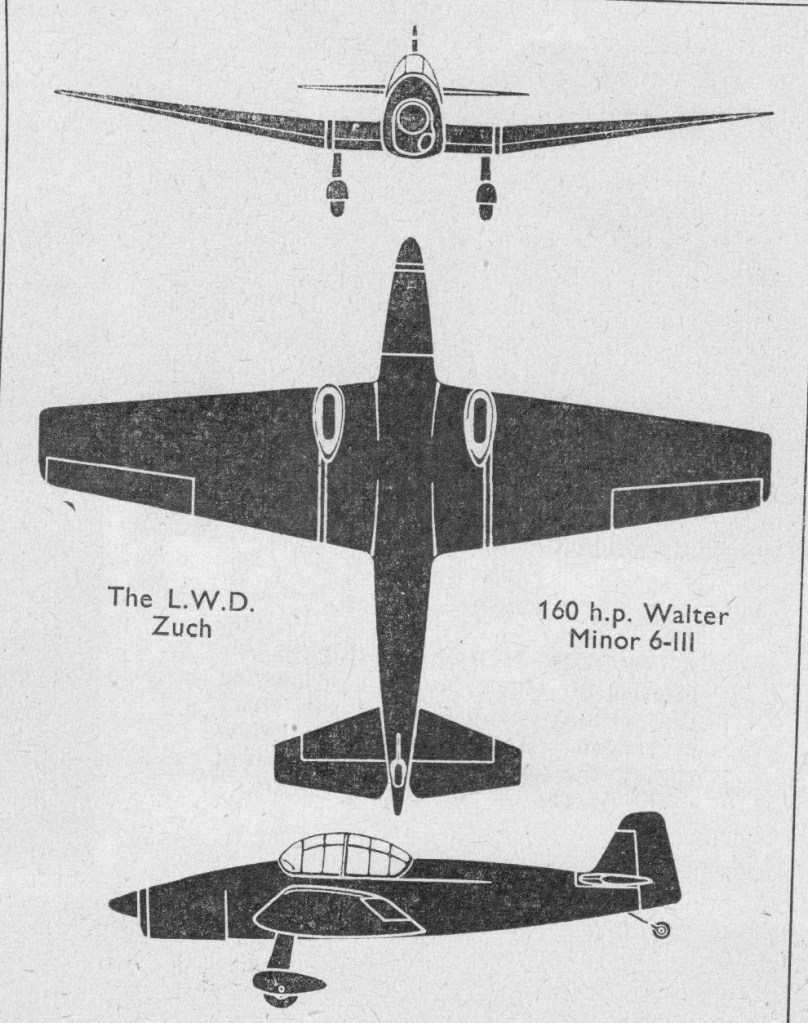
The Zuch-1 (Dare-Devil) was produced in 1948 by LWD / Lotnicze Warsztaty Doswiadczaine as a development of the Junak. Employing the same basic wing and fuselage, the Zuch-1 was powered by a 180 hp Walter Minor 6-III engine.
Designed as a two-seat primay training monoplane, the Zuch-1 has a welded steel-tube fuselage and centre wing section, and wooded outer wing panels, the whole covered by plywood and fabric.
Engine: 180 hp Walter Minor 6-III Max speed: 155 mph Cruise: 130 mph Range: 930 mi Empty weight: 1250 lb Loaded weight: 2200 lb Wingspan: 32 ft 9.5 lb Length: 29 ft 6 in Height: 6 ft 9.5 in Wing area: 188.4 sq.ft
After World War II flying clubs rebirth lacked of easy-to-use training aircraft. This problem was recognized by the Department of Civil Aviation. The director, Eng. Konrad Jagoszewski, head of the technical department of the Civil Aviation Department, Eng. Richard Bartel and Eng. Mieczyslaw Pęczalski (former deputy director of the PZL) developed a preliminary WTT for such aircraft.
It was agreed that the plane has to be a two-seater with side by side. The project was to be powered by a Czech Walter Mikron III 65 hp.
ZAK-1 prototype
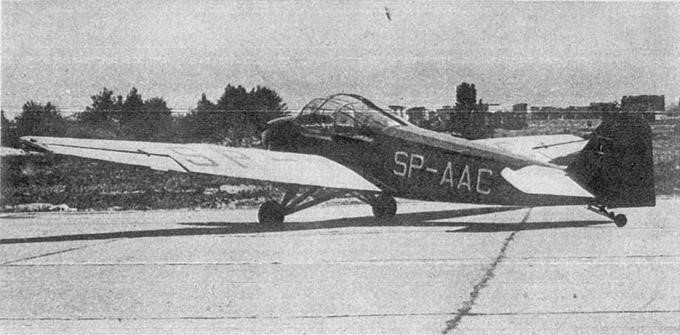
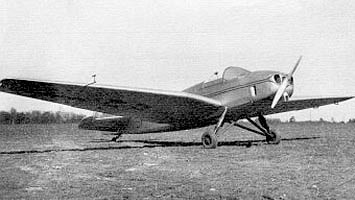
In 1946 the order went to the Experimental Aviation Workshops (LWD) in Lodz, where a group of designers headed Eng. Tadeusz Sołtyk could immediately proceed with the task. It was a light low-wing cantilever monoplane of a mixed construction, with a crew of two, sitting side by side, and fixed conventional landing gear. The plane was named Zak (old-fashioned “student”), and later added digital designation Zak-1. The prototype first flight performed on 23.03.1947 and received the registration SP-AAC, becoming the fourth post-war Polish plane (Starling-2, PZL S-1, Starling-3).
Zak-1 had a few glitches, among other things, they were improperly routed links the elevator, causing the looping out. They also changed the balance of the aircraft. Also, the engine had a tendency to overheat. The oil tank was changed to one that had a greater surface area, which solved the problem partially. Also, there were problems with feeding fuel to the engine. At certain points the motor is not getting fuel and choking. The problem was caused by the collection box intermediate (outgoing). They reported comments to the windshield and canopy.
The Zak-1 was good in flight. In flight at low speed there was warning vibration in the control stick. It was difficult to enter a spin, and recovery was easy. During 1947-1948. plane made dozens of propaganda flights.
Approval for the Zak-1 was received in February 1949. The aircraft rated positively, but acrobatics wer not allowed. The reason was the weak power unit. During the performance figures pilot pilot lost directional steering. The result was that at the exit of the loop faced sideways with loss of height. They tried to remedy this by increasing the height of the vertical tail.
Even before the first flight the Walter Mikron III was tested on a dynamometer. Instead of 65 hp, it only had 56 hp, forcing manufacturers to seek alternative propulsion.
With testing of the Zak-1 not yet completed, the Zak-2 construction was started. It was designed for installation of the Polish WN-1 motor (named constructor W. Narkiewicz), sometimes labeled PZL A-65. Since the WN-1 was in a trial phase, a Continental A-65 was used. The engine was removed from a Piper L-4. The Zak-2 plane did not differ much from the first prototype. Initially, it had mechanical brakes, which were later replaced by more effective hydraulic. It also had an oen cabin, equipped only with a windshield. Zak-2 was flown on November 27, 1947 and received registration SP-AAE. The aircraft underwent a trial approval in the autumn of 1951.
Positive Rating for the Zak-1 prompted the ministry to purchase 10 machines for flying clubs. The design appeared successful and the Ministry of Communication ordered a series of 10 aircraft. They were to be powered by licence-built A-65 engines, but since plans of engine production were abandoned, it was decided to fit them with Walter Mikron engines. They were also fitted with a closed canopy, sliding rearwards, and named Żak-3.
The design of the airplane Zak was threatened after work was suspended on the Polish WN-1 motor. Walter has not signed a contract for the production of the Walter Mikron III engines in Poland and it was decided to purchase a number of engines directly from Czechoslovakia.
The construction of the aircraft was carried out in the hall on the first floor of the main production building in Lodz. Completed aircraft, engines and painted, were drawn through a window on a makeshift wooden ramp (ramp) and slides to the ground. Wings also followed this path. The company which supplied the engines to Lodz, allegedly had the wrong address. In fact, they could not find the the street, because at that time the Communists gave many streets new names.
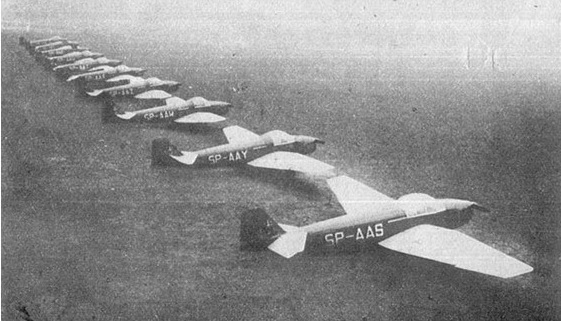
Ten planes were built by the LWD in the end of 1948, the first of them, SP-AAS, was flown on November 8, 1948. They had markings: SP-AAS to SP-AAZ, and SP-BAA to SP-BAC. At least one (SP-AAX) had engine replaced later with 85 hp (63 kW) Cirrus F.III.
The 10 aircraft machines were built two weeks before the deadline, although in fact only three of them had their first flight. In addition, the team realized that the machines may have shortcomings resulting from the rush and very nervous atmosphere. Fortunately, these defects have been timely detected and removed, even before the first flights, after the unification congress of communists.
Eng. Tadeusz Soltyka realized that the engines were weak and had a tendency to overheat. The Zak-3 SP-AAX underwent an examination at the Central Institute of Aviation in Warsaw and received the same assessment as Zak-1. The designers are still working to eliminate engine overheating. The focus is on different types of bottom oil tank; Additional ribs, ribs pressed, an additional barrier inhibiting mixing of oil was most effective.
Zak-3 SP-AAS, SP-AAT, SP-BAB, for a time were used in LWD to the various tests. For example, you try to use different profiles of wings, but without great effect. They also tested new hydraulic brakes.
ZAK 3
Zak-3 SP-AAX on air exhibition in Wroclaw was equipped with a Cirrus III RWD-21 engine. However, in this arrangement, the plane never flown. The aircraft was painted the color of the sea (top) and blue-silver (bottom).
10 LWD Zak-3 during the celebration of their transfer on 1.12.1948. These aircraft are painted in red (hulls and vertical tail) and silver (wings). Registration marks on the hull of silver, and red on the wings.
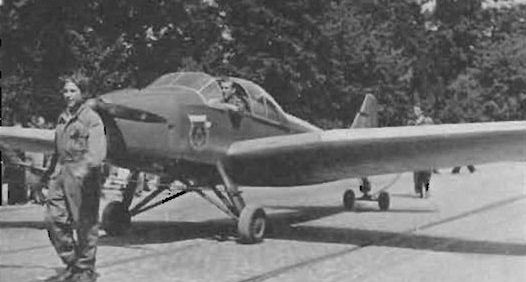
They were operated in aero clubs Kujawski, Poznan, Krakow, Gdansk, Bielsko-Biała and Warsaw. They were used in the Polish regional aero clubs until 1955.
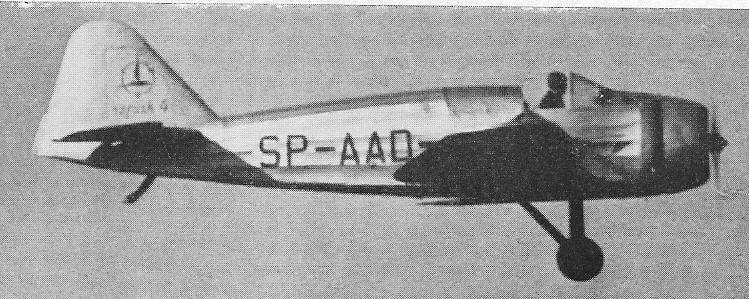
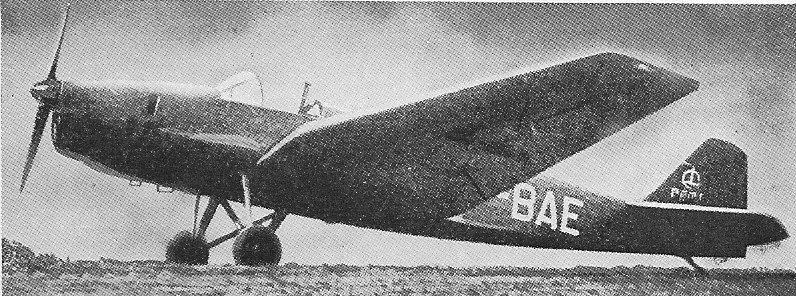
On October 20, 1948 there was flown a prototype of the last variant, Żak-4, meant for a glider towing. It had a 105 hp Walter engine and an open canopy. Once the plane had to make an emergency landing. Attempts were made towing gliders; Zak-4 with a glider Hedgehog need 215-340 m run. Zak-4 with a glider Vulture need to 400-500 m, while Po-2 glider Vulture need 250 m. Since it showed unsuitable for glider towing, the Żak-4 was not built in series, and the prototype was re-fitted with a closed canopy and used as a touring plane in aero club (markings SP-BAE). Due to the much more powerful engine, it towered over the Zak-3 machines.
LWD Zak-4
In December 1963 Żak-3 SP-AAX was transferred to the Air and Space Museum in Krakow. It is preserved in the Polish Aviation Museum in Kraków (disassembled as for 2007)
Variants: Żak-1 (SP-AAC) The first prototype powered by CSS-built Walter Mikron 4-III engine.
Żak-2 (SP-AAE) The second prototype without canopy and powered by Continental A-65 engine.
Żak-3 Main production version with closed canopy and powered by Walter Mikron III engine, 10 built.
Żak-4 (SP-BAE) Prototype of the glider towing version with open canopy (later refitted with a closed one) and powered by Walter engine.
Specifications:
Zak-1 Engine: 65 hp Walter Mikron III Wingspan: 11.75 m / 38 ft 8.5 in Length: 7.5 m / 24 ft 7.25 in Wing area: 15 sq.m / 161 sq.ft Empty weight: 400 kg / 880 lb Gross weight: 620 kg / 1365 lb Cruise: 140 kph / 87 mph Range: 500 km / 310 mi Service ceiling: 5000 m / 16,400 ft
Żak-3 Engine: 1 × Walter Mikron 4-III, 105 hp Length: 7.6 m (23 ft 11 in) Wingspan: 11.8 m (38 ft 8½ in) Height: 1.95 m (6 ft 5 in) Wing area: 17 m² (183 sq ft) Empty weight: 400 kg (880 lb) Loaded weight: 620 kg (1,365 lb) Maximum speed: 160 km/h (86 knots, 99 mph) Range: 400 km (216 nmi, 248 mi) Service ceiling: 3,500 m (11,500 ft) Rate of climb: 2.7 m/s (520 ft/min) Crew: two Capacity: one
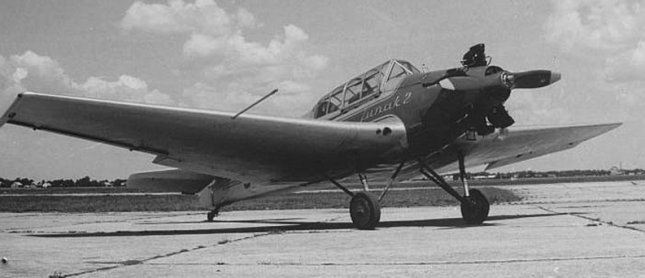
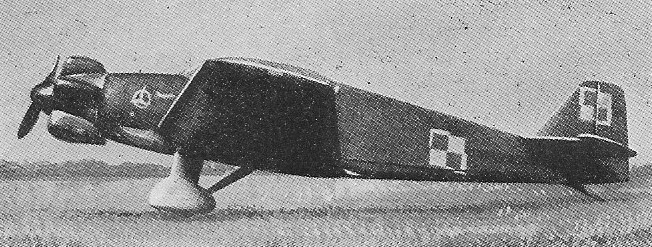
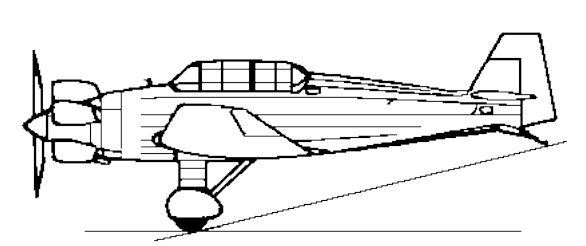
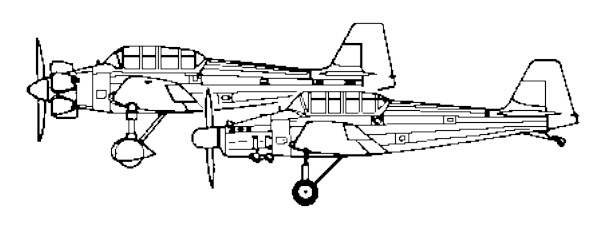
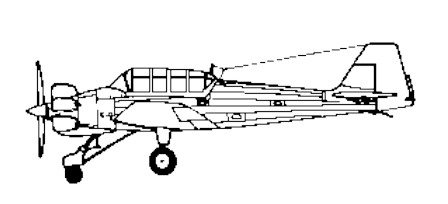
The Junak (Cadet) was developed as a primary trainer to replace the Polikarpov Po-2 in service with the Polish Air Force. A tandem two-seater, the fuselage was a fabric covered welded steel tube fuselage and wing centre section, and wooden outer wing sections.
The prototype Junak first flew on 22 February 1948.
Junak 1, Trainer, Poland, 1949
Junak 2, Training aircraft, Poland, 1948
Junak 3 Training aircraft, Poland, 1952
Junak Engine: M-11G, 125 hp Wingspan: 32 ft 9.5 in / 10 m Wing area: 188.4 sq.ft / 17.55 sq.m Length: 24 ft 7.5 in / 7.5 m Height: 6 ft 8.5 in / 2.09 m Empty weight: 1315 lb / 605 kg Loaded weight: 2030 lb / 920 kg Max speed: 143 mph / 230 kph Cruise: 118 mph Landing speed: 50 mph / 80 kph ROC: 690 fpm / 3.5 m/sec Service ceiling: 13,780 ft / 4200 m Seats: 2
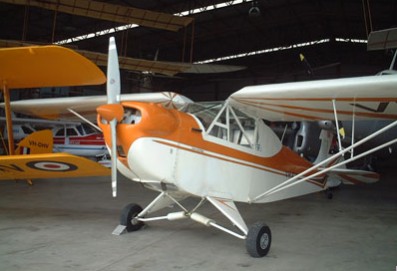
Following the pre-war success of the Luton Minor, Mr. Latimer-Needham designed the two seater Major which first flew on 4 March 1939.
Accommodation is for two per¬sons seated in tandem in an enclosed cabin with a door in the starboard side. Dual controls are fitted. An 11 Imp. gallon fuel tank is fitted behind the firewall. Alternative engines include 62 h.p. Walter Mikron 11, 83 h.p. Agusta GA-70, 55 h.p. Lycoming and 85 h.p. Continental.
A hangar fire at the Phoenix Works in 1943 destroyed the single example of the LA5 Major, a two-seat cabin type, and also spelt the end for the company. C. H. Latimer-Needham founded a new company at Cranleigh, Surrey, in March 1958, appropriately named Phoenix Aircraft Ltd, which acquired the rights for the Minor and Major. Both designs were improved, the first as the LA4A Minor, and built in the UK and in several countries across the world.
The Luton Major was the only British designed two seater aircraft available to amateurs for home building.
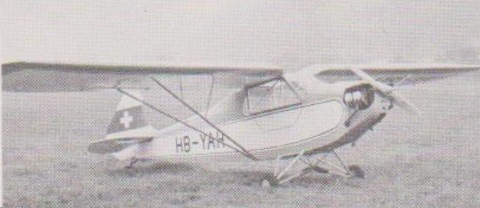
LA.5 Major HB-YAH. Built in Italy, registered and flown in Switzerland
Phoenix Aircraft Ltd. undertook the revision of the Major drawings for amateur construction and the aircraft has since been re-stressed to to permit engine power to 85 hp and gross weight to 1400 lbs and it has been restressed to British Airworthiness Require¬ments. The wing chord is the same as the Luton Minor and the wings fold back for ease of storage and transport.
 All Aero