This single-seater sailplane is an experimental variable-geometry version of the Swiss Neukom S-4A Elfe 15, and was first flown by Herr Fritz Mahrer on 6 May 1977.
It is basically a modified Neukom S-4A with new 15m span wings; these have Eppler wing sections similar to those on the Neukom AN-66C Super-EIfe, and are fitted with area-increasing Fowler-type flaps actuated electrically. When extended these flaps increase the wing area from 107.6sq ft to 121.6sq ft, and the aspect ratio of 22.5 with flaps in becomes 19.9 when they are extended.
The Delphin also has a T-tail unit similar to that of the Schempp-Hirth Cirrus replacing the Neukom S-4A’s low-set tailplane, thus avoiding tailplane buffeting when the flaps are extended. Construction of the Delphin is mainly of plastics materials.
Span: 49 ft 2.5 in Wing area: 107.6 sq.ft (flaps in) / 121.6sq ft (flaps out) Aspect ratio: 22.5 (flaps in) / 19.9 (flaps out) Empty weight: 617 lb
Founded as VPM in 1976 by Vittorio Magni, this company developed the single-seat MT5 and two-seat MT7 gyrocopters. It was renamed Magni Gyro in 1996 and produces a range of ultralight autogyros,
1998: Via della Tecnica 4/N I-21044 Cavaria (VA) Italy
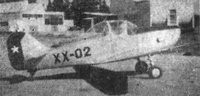
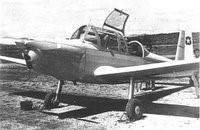
Designed by Hugo Fuentes (hence the HF in the designation), the HF XX-02 trainer was a conventional, low-wing cantilever monoplane of mixed construction with fixed tailwheel undercarriage. The pilot and instructor sat side by side.
Two prototypes were constructed at El Bosque Air Base, designated XX-02 and XX-02B, and the first flew in 1954. Development was abandoned due to difficulties maneuvering at lower altitudes, which in one case, led to a crash in which the instructor was killed while attempting to land after a tight turn at low altitude.
The design was subsequently refined by Francisco Bravo and an improved version, the HFB XX-02 flew in 1958 powered by a Continental O-470 engine in place of the Ranger L-440 that powered the original. Only the two were ever built.
HFB XX-02 Engine: 1 × Continental O-470-B, 168 kW (225 hp) Wingspan: 10.10 m (33 ft 2 in) Length: 6.60 m (21 ft 8 in) Height: 2.15 m (7 ft 1 in) Wing area: 16.0 m2 (172 ft2) Empty weight: 760 kg (1,675 lb) Gross weight: 1,060 kg (2,337 lb) Maximum speed: 195 km/h (121 mph) Range: 800 km (500 miles) Service ceiling: 4,570 m (15,000 ft) Crew: Two, pilot and instructor
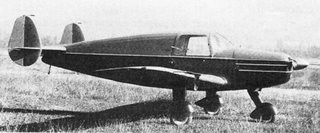
In 1947, the Maestranza Central de Aviación, the Central Workshops of the Chilean Air Force designed and built the first Chilean-designed aircraft, the Triciclo-Experimental (also designated XX-01), unveiled in May 1947. The Triciclo, designed by Alfredo D. Ferrer, was a low-winged monoplane of wooden construction with a fixed tricycle landing gear and a twin tail. The crew of two sat side-by-side in an enclosed cockpit, and were provided with dual flight controls.
Built with indigenous materials, Ferrer received tuition in the XX-01.
Only one was built.
Engine: 1 × Franklin, 75 kW (100 hp) Propeller: two-blade Length: 6.50 m (21 ft 4 in) Wingspan: 11.0 m (36 ft 1 in) Height: 1.80 m (5 ft 11 in) Wing area: 13 m2 (140 sq ft) Empty weight: 355 kg (783 lb) Gross weight: 600 kg (1,323 lb) Maximum speed: 180 km/h (112 mph; 97 kn) Cruising speed: 160 km/h (99 mph; 86 kn) Range: 1,000 km (621 mi; 540 nmi) Service ceiling: 5,500 m (18,045 ft) Crew: 2
Chilean Air Force Central Workshops, in 1947 built Tricolo. An experimental two-seat cabin monoplane designed by Alfredo Ferrer; first indigenous Chilean aircraft. In early 1950s Captain H. Fuentes designed H.F.XX-02 trainer, built at El Bosque Air Base.
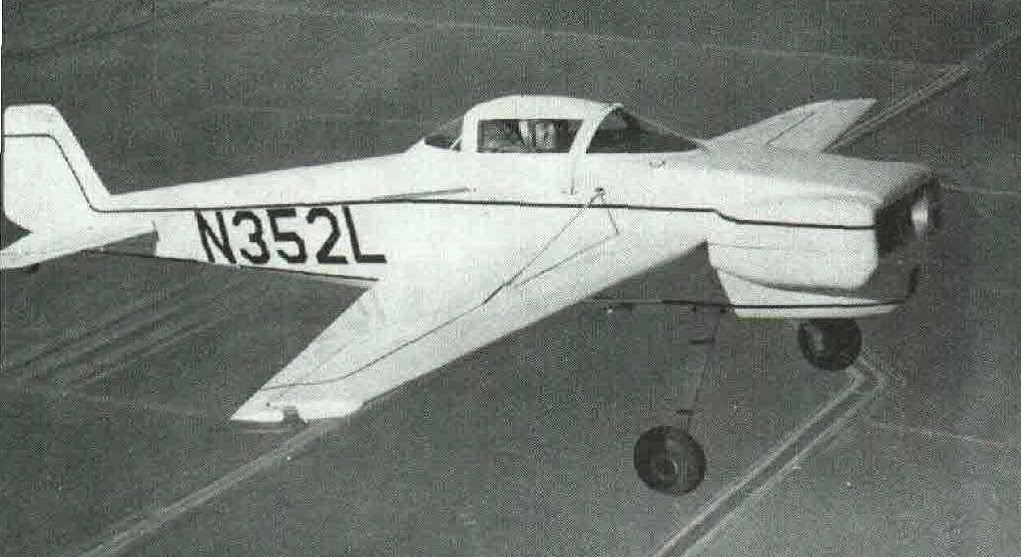
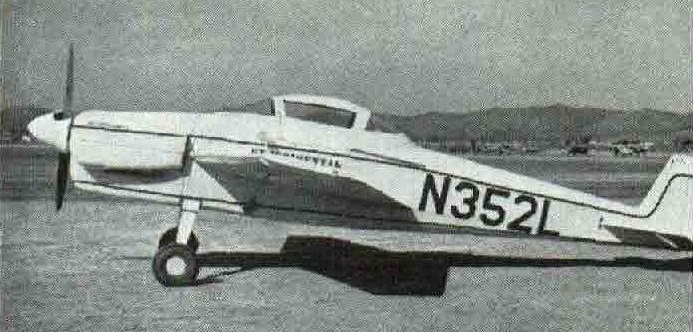
The 1959 M-101 Macerschmitt aka Could-Bee, designed by Harvey Mace, was a single place cabin, low wing monoplane.
From the outset, Mace was determined to design and build it completely on his own. This was done, with the sole exception of the paint job — George Pereira helped with that. Final assembly and weight and balance were completed on July 14, 1959.
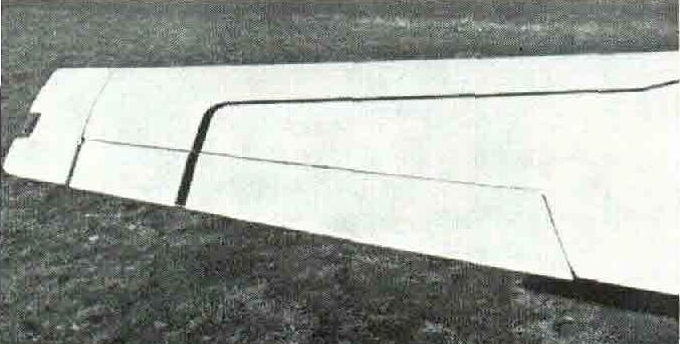
M-101 with tip ailerons
The first flight was to leave Sacramento Municipal Airport to proceed to an abandoned auxiliary field the following morning. Registered N352L, the M-101 first flew on 15 July 1959. The scrap pile tail wheel tire decided it had had enough. It didn’t have adequate aileron control. The tip ailerons could have been made to work with a little more area, as they worked at higher speeds Mace had plans all laid out for conventionals, but all this took another two months.
M-101 with conventional ailerons
After more flights, Macess wife flew it and dropped a wing in with superficial damage. The dinged prop was shortened and repitched to 65 pitch, 65 in. diameter, which was a fair compromise prop, and in actual practice, by stop watch, the “Macerschmitt” does 139 mph at 2350 rpm.
It still climbs at 1000 ft/min. at 6000 ft. at normal climb power, and 650+/min. at 11,000 ft.
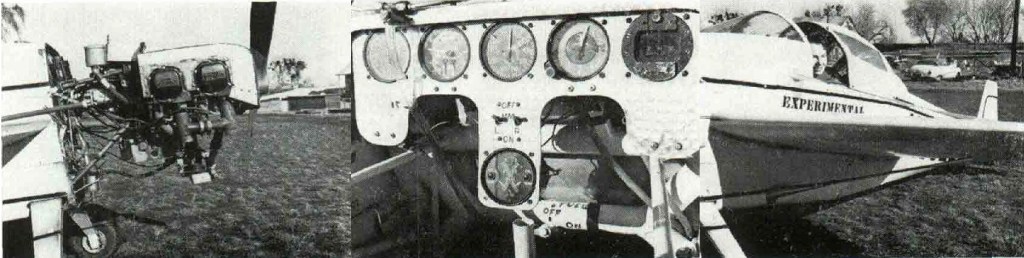
The adjustable seat was excellent, as well as the sliding canopy. The variable incidence adjustment proved unnecessary. The adjustable stabilizer is needed in this airplane to compensate for weight differences. The 3.5 degree incidence was helping the landing and takeoff speed.
Only the one was built.
Engine: Lycoming O-290, 125hp / 93 kW Propeller: 65 in. dia/65 in. pitch, 2 blade Wingspan: 16 ft 6 in / 5.03 m Wing area: 65.5 sq. ft / 6.09 sq.m Airfoil: NACA 0009 Length: 17 ft 9 in / 5.41 m Gross weight: 1000 lb Empty weight: 685 lb / 311 kg Max speed: 170 mph Cruise speed: 150 mph Stall: 80 mph ROC SL: 2000 fpm / 10 m/s ROC 12,000 ft: 650+ fpm Seats: 1

 All Aero