Franklin Manufacturing Corporation Maxair Sports Inc
Maxair Sports was founded in 1973 under the name of Franklin Manufacturing Corporation to make metal components for the hang gliding industry. By 1982 the name had changed to Maxair Sports Inc. 1982-4: Maxair Sports Inc, PO Box 95, 32 Water Street, Glen Rock, Pennsylvania 17327, USA. Maxair declared bankruptcy in 1991, and the Drifter project was picked up by Phil Lockwood, who had worked for Maxair.
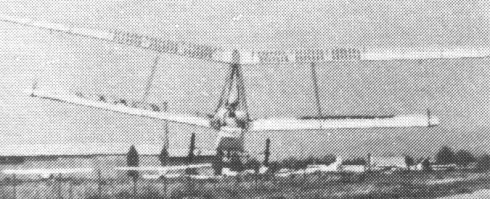
First flown in April 1979 the converted Easy Riser hang-glider is powered by 500 solar cells mounted on the top wing. The 40V, 10A output powers a 3 hp electric motor driving a 41 inch propeller. 1½ hrs of sunshine accumulated in the battery provides around 5 minutes of still air flight. The biplane was mylar covered.
Engine: Electric, 3 hp Wing span: 30 ft Empty wt: 125 lb
In 1981, Maule installed an IO-540-W1A5D out front of the M-5 and began delivering the M-6, also available with EDO floats. Two years later the model would morph into the M-7
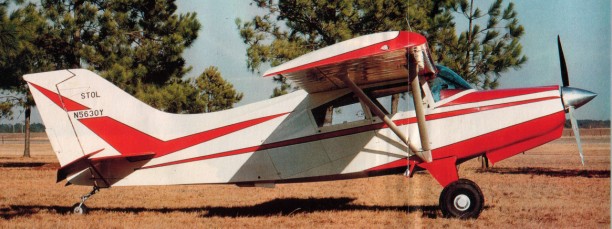
Of tube and fabric construction in the fuselage with metal wings. In essence, the Maule M5 is similar to the M4 but with larger vertical and horizontal tail surfaces and more effective flaps. Apart from the improved STOL capability of the M5, it also possesses a significantly more flexible C of G range.
Belford decided to put the six cylinder, 235 hp Lycoming into his M 5 because of the engine’s reliability. The M 5 is available with a 210 hp engine, but customers have opted for the 235 hp version. The O 540 has a 2,000 hour TBO and has proved remarkably trouble free over the years. The only airworthiness directive that has affected the engine was related to its Bendix magnetos.
The M 5’s skeleton is a steel tube structure, heavily primed against corrosion, since so many Maules end up on floats. With the exception of the aluminium that encases the cockpit and the fiberglass engine cowling, the fuselage is covered with a glass fiber fabric that constitutes a permanent skin, never requiring testing for strength. The special high lift wings are metal covered, and the wingtips, heavily drooped, are of fiberglass. The rugged main landing gear is mounted on pneumatic shock absorbers; the beefed up tailwheel is designed to withstand the shock of chuckholes. There are four doors, one on the left for the pilot and three on the right; the center passenger door and the aft luggage door have no separating post, so that when opened together, they provide a four foot gap for the loading of bulky cargo. As an option, there is a lightweight rear folding benchseat. A pilot could fold the seat flat, carry a full load of cargo to a remote village and unfold it on the return flight to carry a full load of passengers.
The interior of the M 5 is well designed, if a bit narrow, and the work is of a high quality, thanks to an elderly lady at the Maule factory who is “a genius in upholstery.” Overhead, the ceiling is covered with a thick, heavy weave fabric, a welcome change from the plastic of most airplanes. The instrument panel is dark, functional metal, and the switches and gauges are grouped intelligently. Overall, the Maule’s interior, like its exterior, seems tough, built to withstand the rigors of bush flying.
A total of 63 gallons of usable fuel is carried in four wing tanks; the engine feeds directly from two 20 gallon inboard tanks, which can be refilled in flight, with the additional gas pumped electrically from two 11.5 gallon outboard tanks. So, while a full fuel payload is about 462 pounds, the pilot can fill only the mains and load 600 pounds of people and cargo into the cabin. The seaplane version has a gross weight 50 pounds higher, which is more than offset by the weight of the floats. Maule in 1979 was in the process of raising the airplane’s gross weight by 200 pounds to 2,500 pounds a change that would apply retroactively to all M 5s.
The Maule is a workable IFR airplane, and 95 percent of the M 5s go out with full IFR avionics. It cruises well, burning roughly 12 gallons an hour at 65 percent power, which at 8,000 feet gives it a true airspeed of about 134 knots. But other airplanes fly faster on less gas. The Maule’s real strength is its short field ability.
The M 5 was intro¬duced in 1974 and the first M-5 Lunar-Rockets were delivered in 1974 as M-5-21OCs with 210-hp Continental engines. The M-5-220C houses a 220-hp Franklin. These models differ from the earlier M-4s by having four cabin doors for hauling cargo as the “C” in the model number implies; otherwise, the M-5 has a 30% increase in flap area and enlarged tail surfaces to enhance its short-field performance. The 220-hp version was discontinued when the Franklin engine was no longer available, and the M-5-235C was added to the line in 1976 employing a 235-hp Lycoming.
M-5-220C Lunar Rocket
Factory base price was $20,565 in 1975. The 1975 used price range: $13,000 to $16,000 for ’70 through ’72 models, and $17,000 to $19,500 for’73 through ’75 models.
The 1977 M-5 model was fitted with either the 210-hp Continental 10-360-D33A or a 235-hp Lycoming.
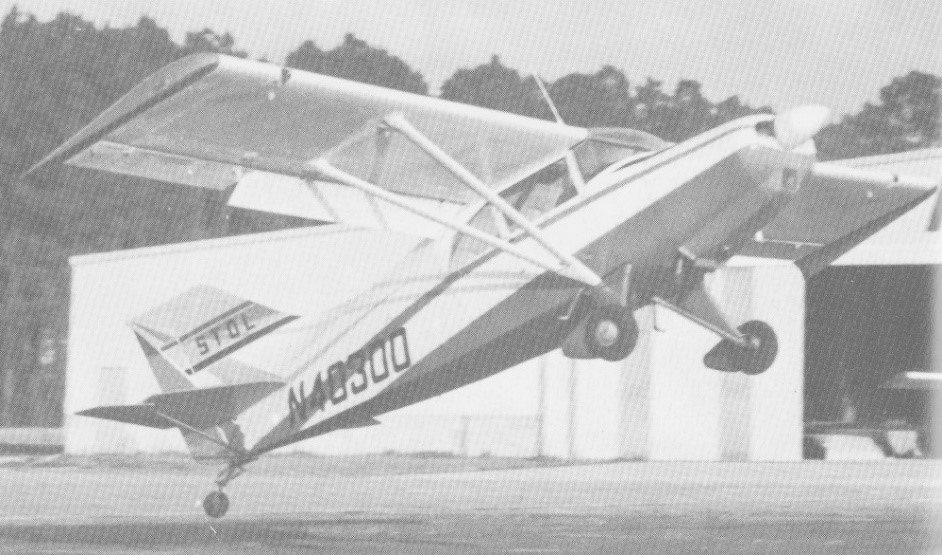
The Maule M-5 Rocket, which has been manufactured steadily, if in relatively small numbers, in Moultrie, Ga. since the early sixties, is a STOL airplane designed to fly from short, rough fields. With a stalling speed of only 38 mph, and the ability to takeoff over a 50-ft. obstacle in 550 feet, the Maule is seldom seen on paved runways. Most are at work in Alaska, the American West, and in Latin America. Cruise of the later models is in the 160 + mph class.
M-5-220C Undercarriage: conv. oleo Produced: 1974-75 Engine: Franklin O-350, 220 hp TBO: 1500 hr Prop: C/S Wingspan: 30’10” Wingtip: Droop
M5-235 Engine: Lycoming O 540 J1A5D, 235 hp TBO: 2,000 hrs Prop: two blade, constant speed, 84 inch diameter Length: 27 ft. 7 in Height: 6 ft. 4 in Wingspan: 30 ft. 10 in Wing area: 157 sq. ft Max ramp weight: 2,300 lb Max takeoff weight: 2,300 lb Standard empty weight: 1,400 lb Max useful load: 900 lb Max landing weight: 2,300 lb Wing loading: 14.6 lb/sq.ft Power loading: 9.8 lb/hp Max usable fuel: 63 USG/378 lb Max rate of climb, sea level: 1,300 fpm Max rate of climb 8,000ft: 800fpm Max operating altitude: 20,000 ft Max speed (8,500 ft): 148 kt Cruise, 65% power at 8,000 ft: 134 kt Fuel flow at 65% power: 12 USG/hr Endurance at 65% power, no res: 5 hr Stalling speed, clean: 54 kt Stalling speed, flaps down: 49 kt Turbulent air penetration speed: 109 kt Seats: 4
M-5-235C Lunar Rocket Engine: 1 x Lycoming O-540-J1A5D, 235 hp TBO: 2000 hr Prop: McCauley 3 blade, CSU Wingspan: 30’10” Wingtip: Droop Seats: 4 Wing loading: 14.57 lb/sq.ft Pwr loading: 9.79 lb/hp Gross wt: 2300 lb Empty wt: 1400 lb Equipped useful load: 837 lb Payload max fuel: 459 lb Range max fuel/75% pwr: 641 nm/4.3 hr Range max fuel / 55% pwr: 688 nm/ 5 hr Service ceiling: 20,000 ft 75% cruise: 149 kt 55% cruise: 139 kt Stall: 49-54 kt 1.3 Vso: 64 kt ROC: 1350 fpm Min field length: 600 ft Fuel cap: 240/378 lb Undercarriage: Fixed tail / oleo Produced: 1976-88
M-5-250C Undercarriage: conv. oleo Produced: 1975 Engine: Franklin TO-350, 235 hp TBO: 1500 hr Prop: C/S Wingspan: 30’10” Wingtip: Droop
The first Maule production model, known as the Jetasen M-4 was delivered in April 1962, constructed in Moutrie, Georgia. Originally designed as a homebuilt in the USA in the late 1950’s, it was developed until it has become a commercially-built aeroplane.
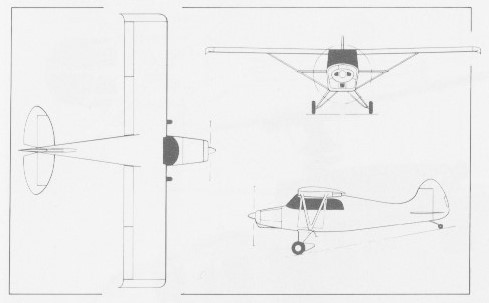
The Maule is a four seat, high wing, tail wheel monoplane, designed to operate in and out of confined airstrips. The excellent short field performance is obtained by the unusually high-lift capability flaps and the thick high-lift aerofoil of the wing. The welded steel-tube fuselage is covered with fiberglass, and the shortspan wing is all-metal with a thick, high-lift airfoil. The airplane accomplishes its short-field performance with two-position flaps of an unusually high-lift capability and without the elaborate spoilers, slots, and other items normally associated with STOL design.
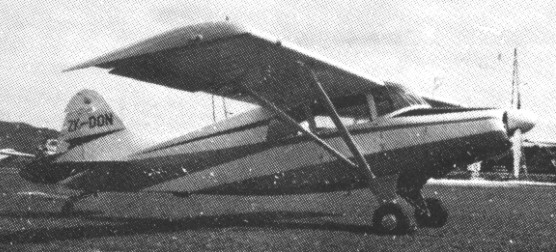
The fuselage is fairly wide giving a cabin dimension of 3 ft 6 ins which comfortably accommodates two adults in side-by-side seating. There is a door either side for the two front seats, as well as one on the starboard side for the rear seats. The baggage locker has its own door but this cannot be opened without the rear door being opened as well. The all-metal wings have down swept tips, strengthened centre-section so that floats can be fitted; other optional extras also fitted in¬clude a top and bottom strobe light and a glider tow hook. The tailplane is covered in a form of fibre-glassed linen that is virtually rot-proof. The fuel is contained in two, 18 Imp.G tanks in the inboard section of each wing.
First flying in 1960, the original M-4 was powered by a 145-hp O-300 Continental engine, and in 1965, the Rocket entered production with a 210-hp Continental powerplant and a constant-speed propeller. The Astro-Rocket was a deluxe version of the Jetasen, housing a 180-hp Franklin. In 1967, the Strata-Rocket was introduced into the line. Basically similar to the Rocket, it was powered by a 220-hp Franklin. All aircraft mentioned shared the same M-4 designation.
In the 1960s Servicios Aereas De America Sa serviced and repaired aircraft and engines, but undertook license-manufacture of a higher-powered Maule M-4, developed specially for Mexican conditions and called Cuauhtemoc M-1. In 1964 Servicios de America began production in Mexico City as the Cuauhtemoc M-1. Mexican materials were used and a 180 hp Lycoming engine. Delivery was taking 30 days and priced at US$12,600.
M-4 Jetasen Engine 145-hp O-300 Continental Gross wt. 2,100 lb Empty wt. 1,100 lb Fuel capacity 42 USG Top speed 157 mph Stall 40 mph Initial climb rate 700 fpm Ceiling 12,000 ft Range 750 miles Takeoff distance (50′) 585 ft Landing distance (50′) 600 ft Seats 4
M-4 Rocket Engine 210-hp IO-360 Continental Gross wt. 2,100 lb Empty wt. 1,190 lb Fuel capacity 42 USG Top speed 170 mph Cruise mph 165 Stall 40 mph Initial climb rate 1,250 fpm Range 680 miles Ceiling 18,000 ft Takeoff distance (50′) 585 ft Landing distance (50′) 600 ft Seats 4
M-4 Astro-Rocket Engine: Franklin 6A-335-B1A, 180 hp Double cargo door
M-4 Strata-Rocket Engine: Franklin 6A-350-C1, 220 hp
M-4-180C Gear: conv. oleo Produced: 1970-71 Engine: Franklin O-335, 180 hp TBO: 2000 hr Prop: C/S Wingspan: 30’10” Wingtip: Droop
M-4-210 Rocket Engine: Cont IO-360-A, 210 hp TBO: 1500 hr Prop: C/S Wingspan: 30’10” / 9.40 m Length: 22 ft 0 in / 6.71 m Empty weight: 1220 lb / 553 kg MTOW: 2300 lb / 1043 kg Max cruise 75%: 143 kt / 165 mph / 265 kph ROC SL: 250 fpm / 380 m/min Service ceiling: 18,000 ft / 5500 m Range std fuel: 590 nm / 680 mi / 1090 km Seats: 4 Bagage capacity: 100 lb / 45 kg Cabin length: 8 ft 4 in / 2.54 m Cabin width: 3 ft 6.5 in / 1.08 m Cabin height: 3 ft 10.5 in / 1.18 m Gear: conv. oleo Wingtip: Droop Produced: 1965
M4-210C Engine: Continental IO-360, 210 hp TBO: 1500 hr Prop: CS Wing span: 30 ft 10 in Length: 22 ft 9 in Empty wt: 1300 lb Max wt: 2300 lb Prop: McCauley CS Fuel cap: 36 Imp.G Cruise 75% pwr: 125 kt Undercarriage: Oleo / tail wheel Wingtips: Drooped Produced: 1965-73
M-4-220C Gear: conv. oleo Produced: 1967-73 Engine: Franklin O-350, 220 hp TBO: 1500 hr Prop: C/S Wingspan: 30’10” Wingtip: Droop
SADASA Cauchtemoc M-1 Engine: Lycoming O-360-A, 180 hp
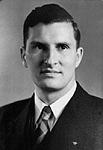
Belford D. Maule, or “B.D.”, as everyone knew him, was born November 4, 1911 in Old Fort, Ohio to farming parents. Not caring much for farm life, he left at the age of 15 to live in Salladasburg, PA. with an uncle and aunt who owned a garage and tea room. There he demonstrated his mechanical ability by building a tractor, and by motorizing an ice cream freezer and an ice saw, among other things.
B.D. joined the Army when he was 18 and was assigned to the 19th Airship Company at Langley Field, Virginia. While working on dirigibles, he found time to design and build his first airplane, a single seat midwing monoplane powered by a Henderson 27 HP motorcycle engine, known as the M-1. Starting with the airplane on floats, and later on wheels at the Salladasburg farm, B.D. taught himself to fly. (Regulations weren’t as strict in those days.)
Following his stint in the Army, B.D. moved back to Pennsylvania and became a family man, marrying June Aderhold in 1934. June and B.D. located in Jersey Shore, Pennsylvania and built their own home there in 1936. Note that Jersey Shore is not only June’s birthplace but is also midway between Lock Haven (Piper Aircraft) and Williamsport (Lycoming Aircraft Engines). This was an area in keeping with B.D.’s interest in aviation. B.D. went to work for Lycoming, and in 1939 designed and built “the Hummer”, a low cost mechanical starter for light aircraft. (Many airplanes did not have electrical systems back then.) In 1940, the Maule family moved to Jackson, Michigan. Mechanical Products Company was formed to manufacture the Hummer starter (Piper and the Continental Engine Company had shown an interest). In 1941 the B.D. Maule Company was formed in Napoleon, Michigan to build a light aircraft tailwheel which B.D. had designed. The steerable, full-swiveling tailwheel, is still being manufactured by Maule, in an improved form. With the advent of World War II, the starter business waned, and tailwheels were in demand as well as subcontract work to support the war effort.
As a diversion during the latter part of the war, B.D. designed a man-powered glider with flapping wings, known as an ornithopter. He claims to be the first (and is probably the last) person to have successfully flown such a device.
In 1946, B.D. and June purchased a farm near Napoleon, Michigan. With the help of their two oldest children, they converted it to an airport. In the process, they had the dubious honor of leveling a dog race track which had been operated by Al Capone. The airport flourished, being used for flight training during the initial post-war aviation boom.
Maule Aircraft Corporation formed by B. D. Maule at Jackson, Michigan, to manufacture M-4 four-seat light aircraft; production transferred to Moultrie, Georgia, September 1968. The airplane manufacturing business that received its first FAA type certificate in 1961. Prototype flown September 8, 1961, produced as M-4 with 145 hp Continental engine, as M-4 Rocket with 210 hp Continental. M-4 Strata-Rocket with Franklin engine led to M-5-220C Lunar Rocket, flown 1 November 1971, while M-4 Rocket became M-5-210C; M-5- 235 with 235 hp Lycoming 0-540 engine also built. Current name Maule Air Inc., offering large range of four- and five-seat lightplanes for recreational and business uses in the M-7, MT-7 and MXT-7 series. Over 2,000 Maule aircraft built since 1961.
The Maules are built on the Air Force’s abandoned Spence Air Base, just east of Moultrie, Georgia. They had been building airplanes for years in Jackson, Michigan, when in 1972, a particularly severe winter convinced them to seek a warmer haven. Moultrie was looking for industry. The first production model, known as the Jetasen M-4 was delivered in April 1962. Then, as now, all Maules are constructed in Moutrie, Georgia.
After his separation from Peyret, Mauboussin redesignated his designs in a sequence that derives the Peyret-Mauboussin designations. The PM XI and PM XII were redesignated as M.111 and M.112 (although still reported as ‘M.11’ and ‘M.12’ in the early 1930s).
Pierre Mauboussin established design office and factory at Puteaux, Seine, France, developing Corsair light aircraft which was built as Corsair 120 and Corsair Minor.
Production aircraft designations were in a more typically French pattern. The production PM XII/M.12 became the M.120 with major developments following as M.121-M.129. Inititially, M.120 developments received suffix numbers based on their year of original (eg: the M.120/37 project of 1937 which led to the production M.123 Corsaire).
Production license for all Mauboussin aircraft acquired by Societe des Etablissements Fouga in 1936. Mauboussin 123, development of Corsair, built 1937-1938, and as M.129 1947-1948.
According to Flight (30 Sept 1943), after the Armistice the Mauboussin plant was engaged in glider production.
Following the collapse of Aerotecnica, Jean Cantinieau returned to France where he joined Matra. There, he designed and completed a single example of the “Bamby”. This single-seat machine closely resembled the Aerotecnica machines but embodied a triangular end to the tailboom which provided a better direction and control of exhaust gas. After brief testing in 1963 the “Bamby” suffered a power train failure and was abandoned.
Following the collapse of Aerotecnica, Jean Cantinieau returned to France where he joined Matra. There, he designed and completed a single example of the “Bamby”.
 All Aero