Turbomeca was founded August 29, 1938 by Joseph Szydlowski and André Planiol following their patent of a supercharger in 1937. Hispano-Suiza ordered a demonstrator to equip its 12 Y engine, used among others on the MS 405 C1.
Turbomeca changed rapidly from an artisanal production to an industrial one benefiting from the politics of re-armament. This is shown by the production figures of the following three years: 18 compressor in 1938, 300 in 1939 and 1200 in 1940. Although the factory at Mézières-sur-Seine was only really operational in June 1940, the government advised the move to the south of France due to the German advance. During the same month, Turbomeca had relocated in newly requisitioned workshop in Saint-Pé-de-Bigorre near the Hispano-Suiza engine factory in Tarbes. The buildings were found to be too small and in 1941 a place is bought in Bordes near Pau. Between the autumn of 1941 and June 1942 Turbomeca moved. In November 1942, Szydlowski fled to Switzerland. Between October 1942 and 1944, the production stale and the workforce went from about 300 to about 50.
From 1950, Turbomeca produced the tiny centrifugal flow Palas turbojet, producing 1.6 kN (353 lbf). The Palas was also produced by Blackburn and General Aircraft in the UK and Continental in the USA. From 1957, it manufactured the Bastan turboprop for the Aérospatiale N 262 airliner. Blackburn had a licence for producing other Turbomeca designs.
Rolls-Royce Turbomeca Limited was established in 1968 to develop the Adour jet engine for the Anglo-French SEPECAT Jaguar. The company went on to develop the RTM322 turboshaft, which powers Westland WAH-64, and some models of the AgustaWestland EH101 and NHI NH90.
In 2001 Turbomeca and Rolls-Royce won a $1 billion USD contract to equip 399 German, French and Dutch NH90 helicopters with their RTM322 engines.
SNECMA Group acquired the company in September 2001.
Headquarters: Bordes, France Revenue (2006): € 870 million Employees (2006): 5,178
As of 2012, Turbomeca turbines power civil, parapublic and defence helicopters for all the leading helicopter manufacturers (mainly Eurocopter, but also AgustaWestland, Sikorsky, NHI, Kamov, HAL).
Engines of Microturbo:
Palas SG 18 TRS 18 TRS 25 TRI 40 TRI 60 TRI 80 J403 Cougar Eclair Eclair II Lynx
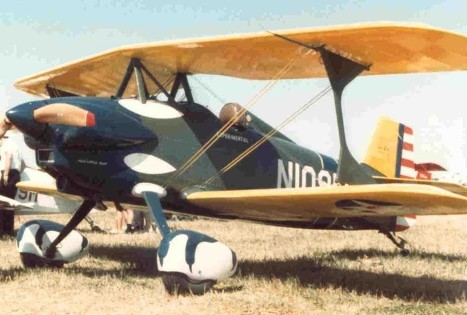
George W. Meyer was already a well known craftsman and model airplane builder prior to his full size project. He started the Little Toot by drawing it in ½ inch to the foot scaled drawings and proceeded to build a metal, 1/24 scale model of his dreams. The model duplicated what he wanted in the full size airplane including a scale metal engine. Many of the building processes were refined in the small model, prior to starting the full size project in 1952.
The full size airplane performed perfectly on the first flight with only a slight adjustment to the rudder trim tab. The first flight was flown on February 2, 1957 in Corpus Christi, Texas. The pilot for the test flight was a great lady pilot by the name of Pauline Glasson.
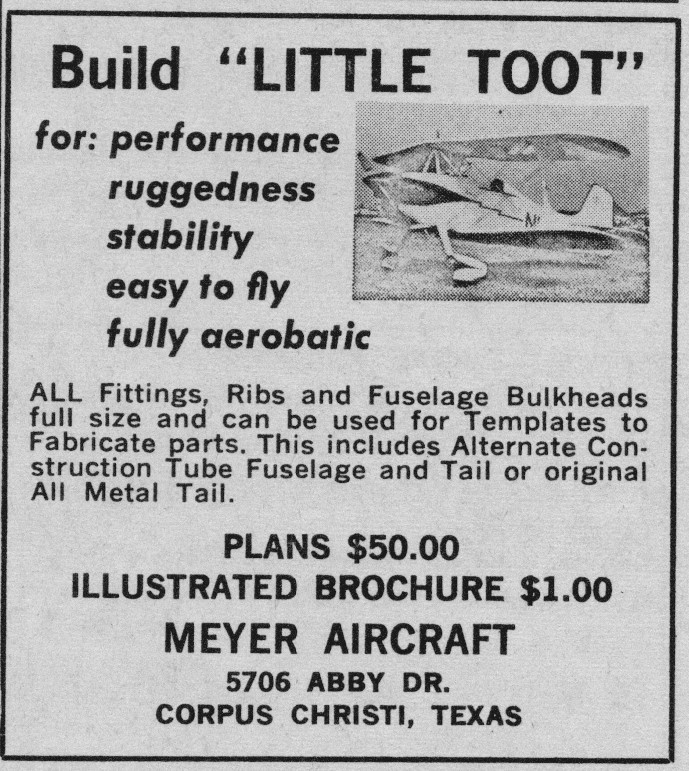
All the test hours were flown off and the plane came through with flying colours. The plane was fully aerobatic, and had no bad habits in stall or spin type maneuvers. George originally intended for the Toot to be a one of a kind airplane, but the requests for plans soon overwhelmed that decision so he began to produce plans with all of the modifications incorporated into them that he had made during the project.
The Little Toot took the top award from Mechanic Illustrated for “Outstanding Achievement in a Homebuilt Aircraft” at the 1957 EAA convention in Milwaukee. “Little Toot” also won the Paul H. Poberezny Award two years in a row. Year 1999 and 2000.
The single seat fuselage is an all-metal structure with metal-covered steel tube construction from rear of cockpit forward, and metal monocoque rear of tubular fuselage cockpit forward section. Plans also provide you with an alternate full Tube and Fabric fuselage construction.
It features all wood wings, two 1″ thick spar structure with fabric covering, and NACA 2212 wing section, 8 degrees sweepback on the top wing, and 2.5 degrees of dihedral on lower wing. There is 2 degrees incidence on both upper and lower wings. Braced biplane type with Cabane and I-struts. Fabric covered all metal full-length ailerons on lower wings only. No Flaps. Little Toot has a structure stressed to 10- and 10+ G’s
The original was fitted with a Continental 90-hp engine, but power plant options include 4-cylinder engines of up to 200 hp, or six cylinders up to 250 hp. The Little Toot has an eight-degree sweepback on the upper wing. The straight lower wing carries fabric covered, metal, almost full-span ailerons that give the ship an unusually high roll rate. Fiberglass engine cowlings are now available. A baggage compartment is located behind the pilot seat.
There are two tail type options. A cantilever all aluminum structure, or a tubular 4130 chrome-moly steel, fabric covered. Both have a trim tab in the port elevator. The main gear is fixed cantilever spring steel from Cessna 140/120, or new aluminum gear with integrated brake line, and a steerable tailwheel.
Jan 65
Wing span (both): 19 ft in Fuselage length: 16 ft 6 in Total height: 7 ft Weight empty: 914 lb Gross weight: 1320 lb Max wing loading: 10 lb/sq foot Max power loading: 13.7 lb/sq foot Fuselage fuel tank: 19 USG Opt. wing fuel tanks: 18 USG Total fuel capacity: 37 USG Roll rate: 120 deg/sec Vne: 200 Mph V2min (min takeoff speed): 65 mph VFTO (Final takeoff speed): 70 mph VC (most efficient cruising speed): 125 mph VD (design diving speed): 200 mph VDF (demonstrated flight diving speed): 160 to 180 mph in aerobatic configuration VFC (Max speed for stability characteristics): 90 mph VH (Max speed in level flight at max power): 138 mph VLOF (Lift-off speed): 55-60 mph VMC (Minimum control speed in flight): 48 mph Vmcg (Minimum control speed on the ground): 40 mph VMO (Maximum operating limit speed): 180 mph VNO (Maximum structural cruising speed): 138 mph VR (Rotation speed): 60 mph VRef (Landing reference speed): 70 mph VSO (Power off stall speed): 48 mph VY (Best rate of climb): 100 mph Max speed at sea level 125 hp: 135 mph Max speed at sea level 150 hp: 150 mph Max speed at sea level 180 hp: 165 mph Normal cruising speed 125 hp: 125 mph Normal cruising speed 150 hp: 135 mph Normal cruising speed 180 hp: 145 mph Max rate of climb 125 hp: 1600 fpm Max rate of climb 150 hp: 2000 fpm Max rate of climb 180 hp: 2150 fpm Range (Standard with wing tanks)125 hp: 260 sm Range (Standard with wing tanks)150 hp: 240 sm Range (Standard with wing tanks)180 hp: 220 sm
George W. Meyer was already a well known craftsman and model airplane builder prior to his full size project. He started the Little Toot by drawing it in ½ inch to the foot scaled drawings and proceeded to build a metal, 1/24 scale model of his dreams. The model duplicated what he wanted in the full size airplane including a scale metal engine. Many of the building processes were refined in the small model, prior to starting the full size project in 1952.
The full size airplane performed perfectly on the first flight with only a slight adjustment to the rudder trim tab. The first flight was flown on February 2, 1957 in Corpus Christi, Texas. The pilot for the test flight was a great lady pilot by the name of Pauline Glasson, who is now in her 90’s and still a flight instructor in Corpus Christi. All the test hours were flown off and the plane came through with flying colors. The plane was fully aerobatic, and had no bad habits in stall or spin type maneuvers. George originally intended for the Toot to be a one of a kind airplane, but the requests for plans soon overwhelmed that decision so he began to produce plans with all of the modifications incorporated into them that he had made during the project.
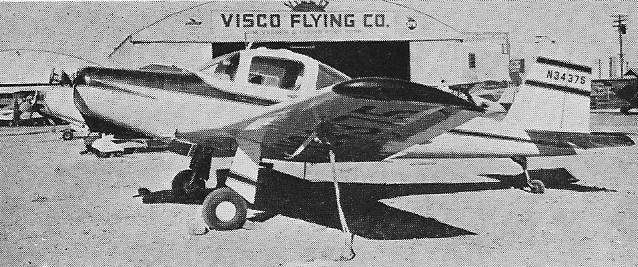
Postwar production included MAC 125 and MAC 145 two-seat cabin monoplanes with Continental engines.
The MAC 145, introduced in 1948, is a higher-powered development of the MAC 125-C, the first post-war design of Meyers Aircraft Company. The MAC 145 differs in having a 145 hp Continental C145-2H engine.
Both were side-by-side two-seat cabin monoplane of all metal construction. A small series of MAC 145 were built.
The MAC 125 and MAC 145 developed into the Micco SP 20 and SP 26.
MAX 125 Engine: 125 hp Continental C125 Seats: 2
MAC 145 Engine: 145 hp Continental C145-2H Wingspan: 30 ft Wing area: 149 sq.ft Length: 21 ft 4 in Height: 8 ft 6 in Empty weight: 1135 lb Loaded weight: 1735 lb Max speed: 166 mph Cruise: 145 mph ROC: 950 fpm Service ceiling: 18,000 ft Range: 600 mi Seats: 2
Formed 1936 at Tecumseh, Michigan. Developed OTW- 160 biplane trainer and MEW-165W monoplane trainer for U.S. schools within CAA War Training scheme. Postwar production included MAC 125 and MAC 145 two-seat cabin monoplanes with Continental engines. Meyers 200 four-seat cabin monoplane flown 8 September 1953, deliveries began 1959. Acquired by Rockwell-Standard Corporation 12 July 1965, and marketed Model 200 as Aero Commander 200. Manufacturing rights in this model were acquired in 1977 by Meyers Aircraft Manufacturing Company of Broomfield, Colorado, to build the Meyers 200D. 1980: Meyer Aircraft, 576 Abby Dr, Corpus Christi, TX 78413, USA.
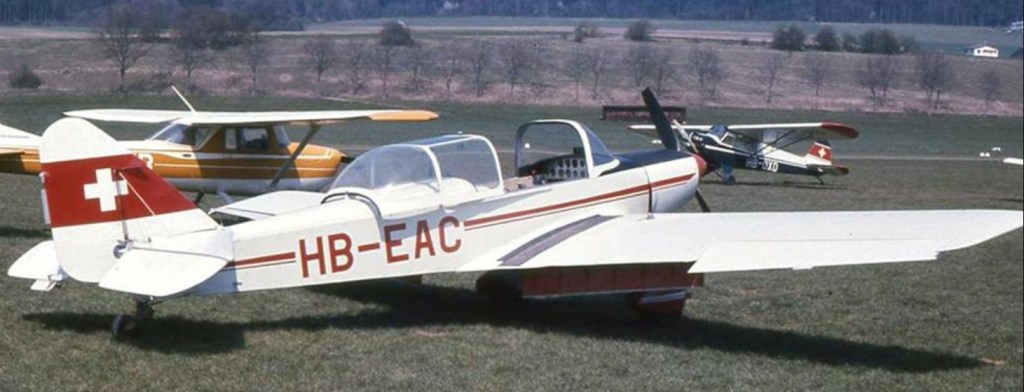
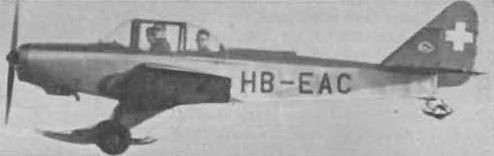
In 1953 Meteor took over the aeronautical designs and equipment of Francis Lombardi & Co. (formerly Azionari Vercellese Industrie Aeronautiche-AVIA) of Vercelli, whose products included the FL.3 of which 566 were built between 1939 and 1948. Meteor redesigned the FL.3 with tubular steel construction, a cut-down rear fuselage and bubble canopy. A total of 37 Meteors of various kinds was built during the period up to 1959 and several of these aircraft were sold as crop sprayers and with ski or float landing gears. The different Meteor models were:
FL.53, two-seat trainer and tourer, powered by a 65 hp Continental A65 engine (8 built). FL.53BM, basic FL.53 fitted with 90 hp Continental C90-12F engine (4 built). FL.54, three-seat FL.53 with 85 hp or 90 hp Continental (10 built). FL.55, four-seat FL.54 with strengthened airframe and 135 hp Lycoming O-290-3 engine (4 built). FL.55BM, basic FL.55 with modified fin and rudder and 150 hp Lycoming O-320-A1A engine (10 built).
MOUNTAIN RESCUE METEOR 55B version of the Italian Meteor (Lombardi) FL5 series. Four supplied to Switzerland.
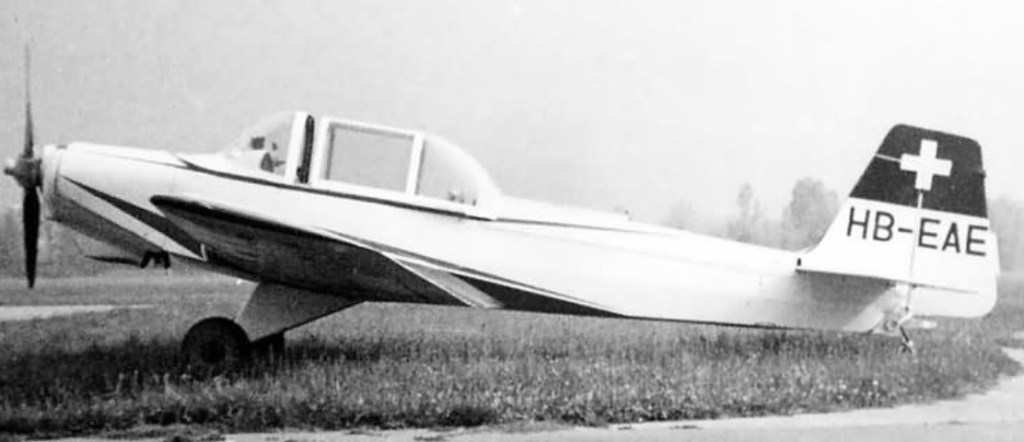
FL.55CM, basic FL.55 with 180 hp Lycoming O-360-A1A engine (1 built).
Meteor FL.55CM (HB-EAE c/n 1134)
Super, basic FL.55 with enlarged vertical tail and 220 hp Meteor Alpha engine (1 built).
Meteor Super (220 hp Meteor Alfa 4 engine)
Bis, two-seat Super with 110 hp Meteor Alpha 2 engine (number built unknown).
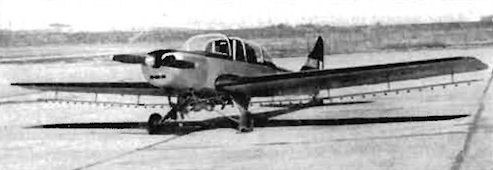
This Meteor FL-55 has been modified in Italy for crop-spraying. Part of the insecticide tank can be seen in the cockpit behind the pilot’s seat.
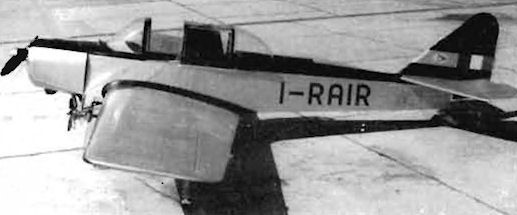
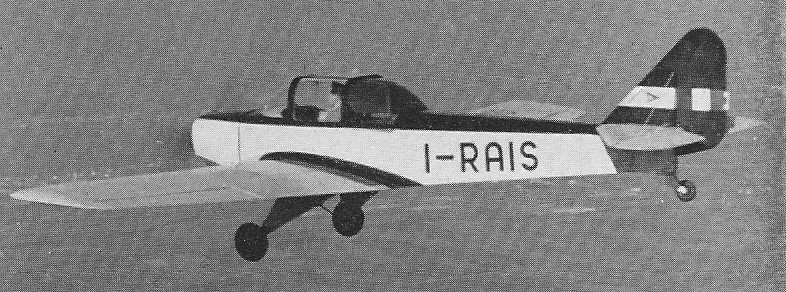
From Italy comes another form of crop spraying using a wind generator forward of the undercarriage. The aircraft is the Meteor FL55 “Agricolo” I-FULU (150 hp Lycoming).
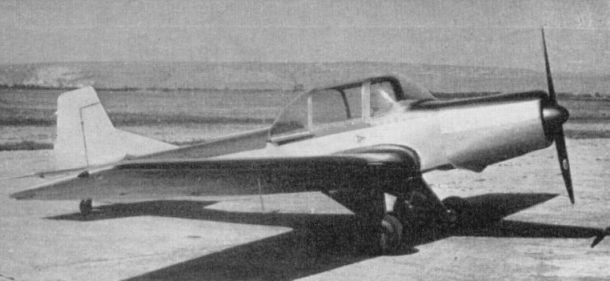
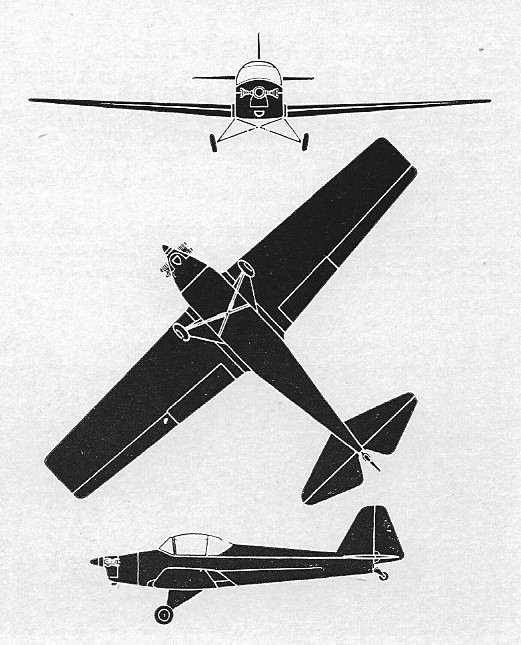
The Meteor F.L.53 is an improved version of the Lombardi F.L.3 built by Meteor S.p.A. of Trieste under licence. The F.L.53 differs by having an all-round vision cockpit canopy and a cut-down rear fuselage.
Engines can include the 75 hp Praga D, the 65 hp Continental A-65, or the 60 hp CAN D-4. The F.L.53 is of mixed construction and the undercarriage is identical to that of the standard Piper Cub.
The F.L.54 is a three-seat model which can be powered by an 85 hp Continental C-85 or 90 hp Continental C-90.
F.L.53 Engine: 65 hp Continental A-65 Wingspan: 33 ft 9 in Wing area: 152.85 sq.ft Length: 21 ft 7.75 in Empty weight: 772 lb Normal loaded: 1157 lb MTOW: 1378 lb Max speed: 112 mph Cruise: 97 mph Cruise altitude: 13,120 – 18,700 ft Seats: 2
Established in 1947 in Trieste, initially manufactured series of gliders and sailplanes of various types under licence, turning to powered aircraft in 1953 when company acquired the assets of Francis Lombardi & Cie of Vercelli, further developing FL.3 light aircraft, FL.53 two-seater, three-seat FL.54, and FL.55 four-seater. Own 110 hp Alfa 2 and 220 hp Alfa 4 engines powered two-seat Meteor Bis and four-seat Meteor Super. In 1960 Meteor diversified into unmanned drones. These serving as the basis of the Sky Arrow. In 1985 Meteor changed its name to Iniziative Industriali Italiane.
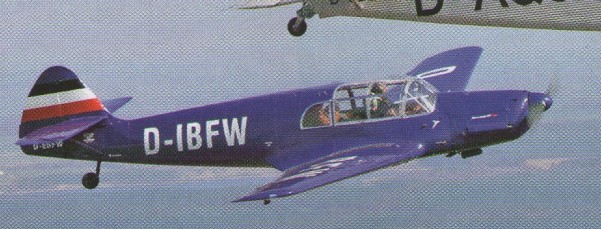
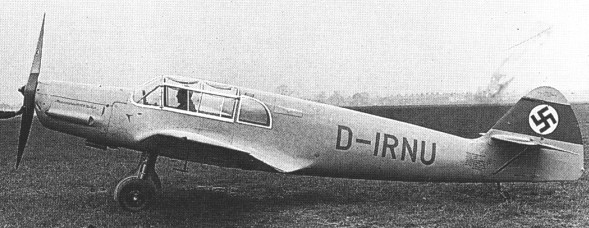
In 1934 Messerschmitt designed the M37, later to become the Bf 108 Taifun, for the German team taking part in the 1934 Challenge de Tourisme International. The original design was for a light tourist two-seater, and even though the Challenge was not a great success for the Bf 108, as the best German pilot Theo Osterkamp only came in fifth, the RLM still ordered thirty-two Bf 108s.
The M 37 prototype flew first in spring 1934 powered by a 250 PS (247 hp, 184 kW) Hirth HM 8U inverted-V engine, which drove a three-blade propeller. It could cruise at 145 knots and was orig¬inally equipped with full span flaps and spoilers for lateral control. It featured automatic Handley Page leading edge slats, a retractable undercarriage, fully stressed skin fuselage construction and flush rivets.
Although it was outperformed by several other aircraft in the competition, the M 37’s overall performance marked it as a popular choice for record flights. Particular among these traits was its extremely low fuel consumption rate, good handling, and superb takeoff and landing characteristics. One of the first major changes made to the production variants was to adapt the fuselage for a four-seat configuration.
Production as the Bf 108 Taifun began in 1934 and the first foreign pilot who tested the Bf 108 was Charles Lindbergh.
The Bf 108A first flew in 1934, followed by the Bf 108B in 1935. The production of the improved version, the Bf 108B, was set-up in November 1935. The B version was redesigned to be a four-seater with a new 179kW Argus As 10C engine. The Bf 108B was a very modern light aircraft with an all-metal airframe, retractable undercarriage, adjustable propeller, and with excellent flight characteristics.
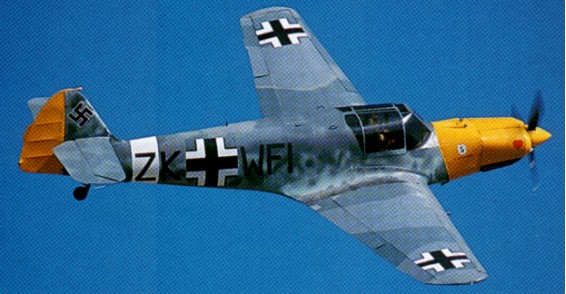
The military version of the Taifun was the Bf 108B-2 and was acquired by the Luftwaffe in 1939. It was widely employed during the war years by all operational Luftwaffe units as a light liaison aircraft. The nickname Taifun (German for “typhoon”) was given to her own aircraft by Elly Beinhorn, a well known German pilot, and was generally adopted.
In 1941 the Bf 108D replaced the B on the production line. An Argus As 10R engine powered the D version and included the new Argus automatically adjustable propeller and improved fuel assembly.
Production was transferred to the S.N.C.A. du Nord factory at Les Mureaux in France in 1942, where 170 Bf 108D were completed before the liberation of France in 1944. In total 626 military Taifuns, versions B-2 and D-1, were produced. At least 180 civilian or export versions, Bf 108B-0 and B- 1, were produced.
French production continued after the war where another 115 aircraft as the Nord 1000 and Nord 1002 Pengouin were manufactured. 285 were built post-war.
Nord 1002
Production of the Bf 108 amounted to 885 aircraft in total.
The Hungarian Air Force had eight Taifuns, both the Italians and Rumanians had three, the USSR bought two and Switzerland and Yugoslavia had twelve each. One aircraft was used in Chile, one or two in Japan and one was in Australia. The Bulgarian Air Force had six and at least one was in Spain. One Bf 108B-1, coded XC44, was operated by the US Embassy in Berlin. Two Bf 108B-1s were flown by the German Embassy in London but the RAF confiscated these two aircraft in 1939. After the war, one Bf 108B-2 was flown in Czechoslovakia, two in Poland, one in Denmark and one in Sweden. Some 115 Bf 108Ds (Nord 1000) were used by the French Air Force and Navy until the late 1950’s.
The Ilmavoimat / Maavoimat evaluated both the Bf108 but considered the design unsuitable for their overall requirement, correctly assessing the aircraft as a light passenger aircraft unsuitable for combat reconnaisance and without any real STOL capability.
Bf 108B Taifun 1 x Argus As 10C, 179kW / 237 hp Max take-off weight: 1385 kg / 3053 lb Empty weight: 880 kg / 1940 lb Wingspan: 10.50 m / 34 ft 5 in Length: 8.30 m / 27 ft 3 in Height: 2.30 m / 7 ft 7 in Wing area: 16.40 sq.m / 176.53 sq ft Max. speed: 300 km/h / 164 kts / 186 mph Service ceiling: 5000 m / 16400 ft Range: 1000 km / 540 nm / 621 miles Endurance: 4 hr Initial climb rate: 787.4 ft/min / 4.00 m/s Seats: 4
Nord 1001 Engine: 240hp Renault 6Q-10, 240 hp Span: 34ft 6in (10.51m) Width wings folded: 10 ft 7 in Length: 27ft 3in (8.3m) Height: 7 ft 7 in Max wt: 2990 lbs (1355kg) Max speed: 186 mph (299 kmh) at 5000 ft Cruise: 160 mph at 6000 ft TO speed: 70 mph Ldg speed: 65 mph Stall: 53 mph TO roll at 3000 lb: 950 ft TO to 50ft: 1120 ft Ldg rol: 750 ft Ldg from 50 ft: 1100 ft ROC: 1200 fpm Ceiling: 23,500 ft Range: 620sm (997 km)
Nord 1002 Engine: 240hp Renault 6Q-11, 240 hp
Nord 1002 Engine: 240hp Argus As 10c V8 Span: 34ft 6in (10.51m Length: 27ft 3in (8.3m) Max wt: 2990 lbs (1355kg) Speed: 186mph (299 kmh) Range: 620sm (997 km)


 All Aero