Mikoyan-Gurevich

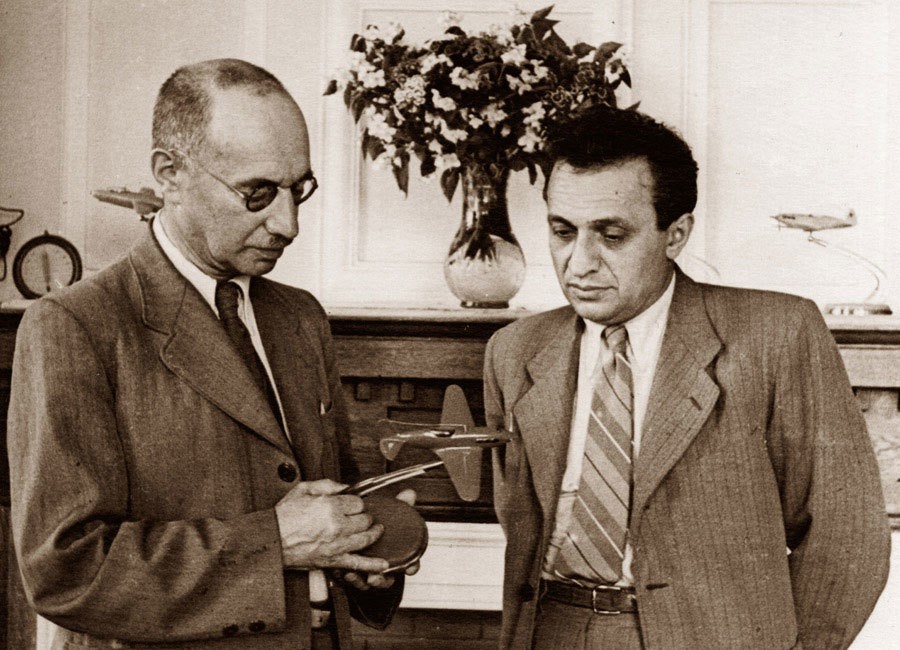
Mikhail Iosifovich Gurevich and Artem Ivanovich Mikoyan with a model of the MiG-3 fighter

A. Mikoyan and G. Gurevich design bureau established December 1939; still operating in 1990 as MAPO “MiG” as part of MIG “MAPO-M” organization, although Gurevich retired in early 1960s and Mikoyan died December 9,1970.

MiG-1 fighters with AM-35 engine produced 1940-1941; developed MiG-3 produced until 1942. First jet aircraft built in quantity was MiG-9 with twin RD-20 (BMW 003A) engines, flown 24 April 1946. Swept-wing MiG-15 with Russian copy of Rolls-Royce Nene introduced 1947, built under license in Czechoslovakia and Poland. Followed by approximately 9,000 of derived MiG-17, with redesigned wing, manufactured 1950-1957. Twin Mikulin AM-5-powered MiG-19 flown September 1953, built under license in Czechoslovakia, Poland, and China. Superseded by delta-winged MiG-21, in service in the USSR from 1959 and, when built in India, was first Russian aircraft manufactured in non-communist country.

Col-Gen Mikoyan died in 1970.

As ANPK “MiG” named after A.I. Mikoyan Aviation Scientific- Production Complex, produced MiG-23 (4,278 constructed 1969-1985; also built in India) and MiG-27 (over 900 between 1973 and 1983) related variable-geometry fighter and ground-attack aircraft, MiG-25 Mach 2.8+ reconnaissance aircraft and interceptor (some 1,200 built up to 1985), and MiG-31 long-range interceptor (about 400, operational from 1983).

MAPO ‘MiG’ produced MiG-21 upgrade as MiG-21 -93, MiG-29 Fulcrum lightweight close-air-combat fighter (first flown October 1977 and over 1,500 built, serving since 1983), improved MiG-29M (first flown April 1986) and MiG-33 export version, MiG-29K shipborne fighter prototype (first flown July 1988, first landing on aircraft carrier Admiral KuznetsovNovember 1989, and development restarted in 1996 after earlier program halt), MiG-35 multirole fighter (first flight 1999?), MiG 1-44 uniquely configured newgeneration combat aircraft (first seen February 1999), and MiG-AT/UTS/AC series of advanced and combat trainers. MiG-301/321 are reported hypersonic reconnaissance aircraft, thought to be under development. Also developing MiG-110 light multipurpose transport and MiG-115 and MiG-125 transports.

Migavia – the first national aircraft manufacturer in Russia aircraft corporations. RAC “MiG” is integrated company in which all technologies of design, production and improvement of aircraft are collected together in one legal frame. Corporation Migavia holds the shares of other corporations which are included into the complex of firms developing and producing the aircraft engines.
Mike Adams Balloon Loft A55

Persons: 4
Diameter: 55 ft
Height: 67 ft
Volume: 75,000 cu.ft
Weight: 629 lb
Payload: 1500 lb
Burner: 8.8 Million BTU/hr
Fuel capacity: 10-40 USG
Cost: (1972): US$ 6920
FAI AX-7

A55-S
Persons: 4
Diameter: 55 ft
Height: 70 ft
Volume: 83,000 cu.ft
Weight: 639 lb
Payload: 1500 lb
Burner: 8.8 Million BTU/hr
Fuel capacity: 10-440 USG
Cost: (1972): US$ 7560
FAI AX-8

Mike Adams Balloon Loft A50

Persons: 3
Diameter: 50 ft
Height: 61 ft
Volume: 55,000 cu.ft
Weight: 604 lb
Payload: 1050 lb
Burner: 8.8 Million BTU/hr
Fuel capacity: 10-40 USG
Cost: (1972): US$ 5760
FAI AX-6

A50 – S
Persons: 3
Diameter: 50 ft
Height: 64 ft
Volume: 62,000 cu.ft
Weight: 614 lb
Payload: 1250 lb
Burner: 8.8 Million BTU/hr
Fuel capacity: 10-40 USG
Cost: (1972): US$ 6240
FAI AX-7

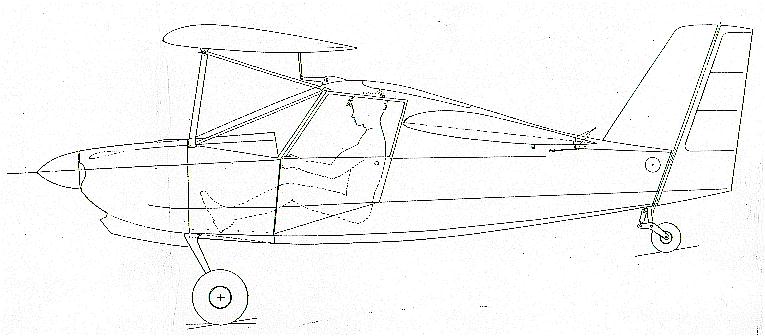
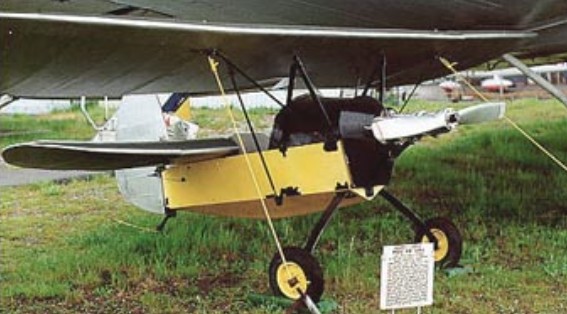
Mignet HM 300 Flying Flea / HM 310 / HM 360 / HM 380

HM380

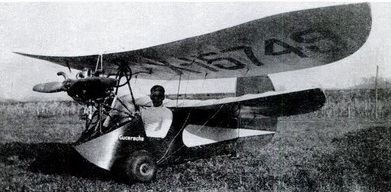
Mignet Do Brasil was formed early 1950s to build Mignet H.M.310 Estafette two-seat modernised version of the designer’s earlier Pou-du- Ciel light aircraft. A new development flown 1951 with Continental A90 engine.

The HM 360 is a single seater with very detailed plans in French, and English translation manuals supplied.
The HM 380 is a two seater side-by-side, with a wood fuselage. It is supplemental to the HM 360 set, redrawn in English, with added detail.

Options include Cosandey flap, ailerons, swept fin & rudder, tricycle gear and HIPEC® covering.

The HM380L is a set of plans in English for a steel tube fuselage version of the 380. Instructions are on plans. Flap plans included (Cosandey flap not required). Set is very complete showing engine installation, fuel system, wiring diagram, exhausts, engine mount, full size wing ribs, tailwheel, main undercarriage (Wittman type), etc. Hardware is AN standard. Materials are SAE and US standard. The Ladybug 380L ia a 2 seat side by side tandem wing aircraft that is great for training and familiarization for these type of aircraft.

The two seaters are flown from the front.

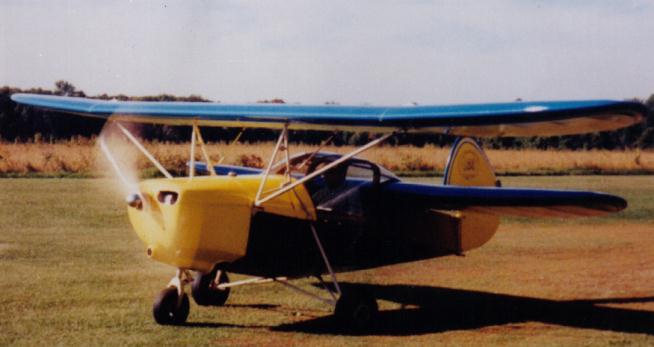
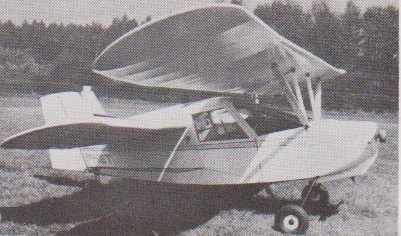
A considerably modified version of the two-seat HM.380 was developed by Mr Lederlin in France as the Lederlin HM.380L Ladybug. The prototype of this version on 14 September 1965, powered by a Continental C90.

Prototype Lederlin HM.380L Ladybug, Old Warden 1973.

Falconar Mignet HM 360 plans cost US$150 in 2010, with the 380 supplemental plans and additional US$50. Falconar 380L Ladybug plans sold for US$175 in 2010.

On June 30, 2019, Falconar Avia Inc closed for business and assets dissolved. The Master Sets (Original Drawings, Plans, Info Kits, Documentation) were available for sale and full transfer of rights included the MIGNET HM 360, HM 380, and 380 L for $2500 USD.

Mignet HM 360
Engine: 60 hp Continental or similar
Cruise speed: 80mph
Empty weight: 390 lbs
Wing Span: 21 feet
Gross weight: 700 lbs
Wing span folded: 8 feet

HM 360
Engine: Continental, 65 hp.
HP range: 65-100.
Length: 13 ft.
Wing span: 21 ft.
Wing area: 138 sq.ft.
Weight empty: 390 lbs.
Gross: 700 lbs.
Fuel cap: 14 USG.
Cruise: 95 mph.
Range: 330 sm.
Stall: 28 mph.
ROC: 1500 fpm.
Take-off dist: 130 ft.
Landing dist: 130 ft.
Seats: 1.
Landing gear: nose or tail wheel.

HM360
Engine: Continental C-65, 65 hp
HP range: 65-100
Height: 6 ft
Length: 13 ft
Wing span: 21 ft
Wing area: 138 sq.ft
Empty weight: 390 lb
Gross weight: 700 lb
Fuel capacity: 14 USG
Top speed: 124 mph
Cruise: 95 mph
Stall: 28 mph
Range: 330 sm
Rate of climb: 1000 fpm
Takeoff dist: 130 ft
Landing dist: 130 ft
Seats: 1-2
Landing gear: nose or tail

Mignet HM 360
Engine: 100 hp Continental or similar
Cruise speed: 100 mph
Empty weight: 390 lbs
Wing Span: 21 feet
Gross weight: 700 lbs
Wing span folded: 8 feet

Mignet HM 380
Engine: 60 hp Continental or similar
Cruise speed: 80mph
Empty weight: 580 lbs
Wing Span: 27 feet
Gross weight: 1100 lbs
Wing span folded: 10 feet

HM380
Engine: Continental C-65, 65 hp
HP range: 65-100
Height: 6 ft
Length: 13 ft
Wing span: 21 ft
Wing area: 138 sq.ft
Empty weight: 390 lb
Gross weight: 700 lb
Fuel capacity: 14 USG
Top speed: 124 mph
Cruise: 95 mph
Stall: 28 mph
Range: 330 sm
Rate of climb: 1000 fpm
Takeoff dist: 130 ft
Landing dist: 130 ft
Seats: 1-2
Landing gear: nose or tail

HM 380
Engine: Continental C-90, 90hp.

Mignet HM 380
Engine: 100 hp Continental or similar
Cruise speed: 100 mph
Empty weight: 580 lbs
Wing Span: 27 feet
Gross weight: 1100 lbs
Wing span folded: 10 feet

380L Ladybug
Engine: Continental C90
Wing span front: 26 feet
Wing span rear: 19.08 feet
Wing area: 180 sq. feet
Length: 15.07 ft
Empty weight: 795 lbs
Gross weight: 1330 lbs
Vne (never exceed speed): 124 mph
Cruise speed: 113 mph
Range: 130 miles
Stall: 28 mph
Takeoff distance: 500 feet
Landing distance: 500 feet

Mignet HM 290 Flying Flea / HM 293 / HM 295 / Falconar Avia 290E/293E / Rodolphe Grunberg HM 293

HM290

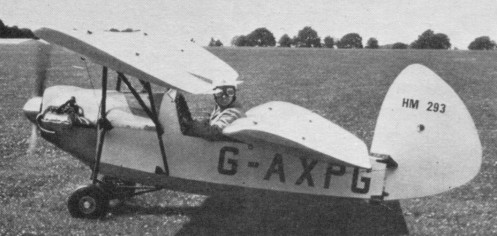
Development has continued since World War 2, the basic post war single seat version being the HM-290 with a 25 hp Poinsard engine.

The HM 290 Series included:
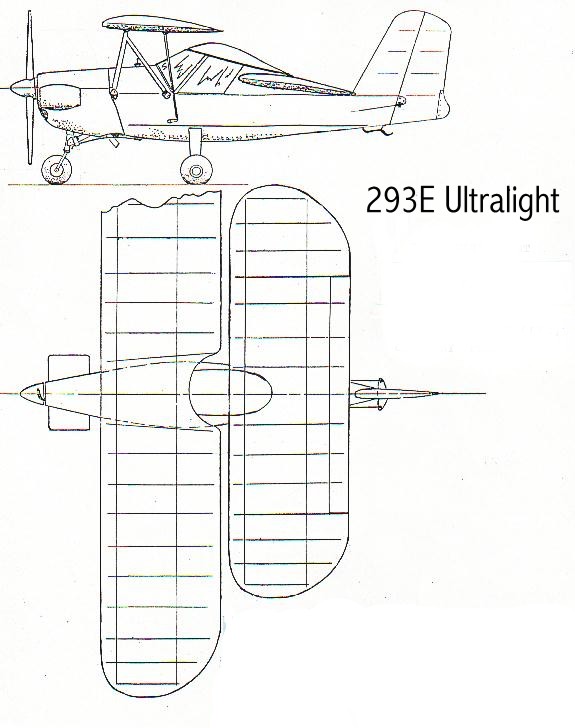
F293E ultralight model- for medium size pilot
F295E ultralight model- for medium size pilot (with simplifications)
HM290 amateur built model – for small pilot
HM293 amateur built model – for medium size pilot

HM293

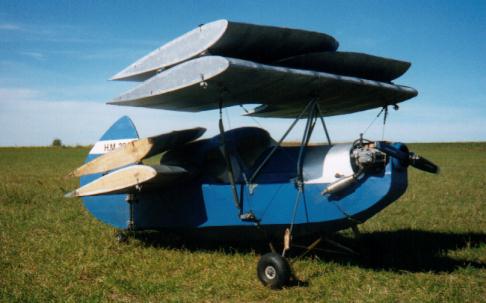
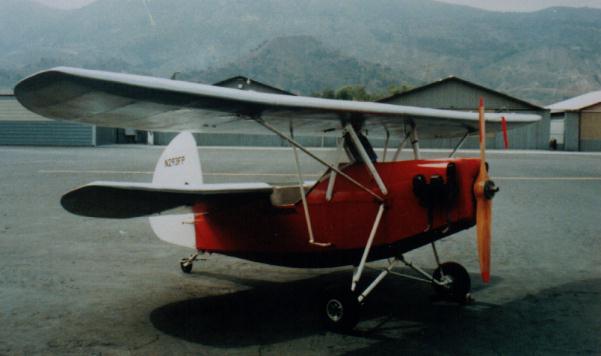
These tandem wing aircraft feature a large speed range, stall resistant, and spin proof. Both wings lift and being small size, minimal space is needed to build. Landing gear arrangement: tail dragger or tri-gear.
Options include swept fin and rudder.

Falconar devised design changes for easier construction, modern materials, Delrin bearings, tri-gear and HIPEC® covering.

Rodolphe Grunberg has redrawn the 1940s HM.293 plans, updated them for 1990s materials, and fitted new light weight engines. Over 40 Grunberg HM.293s were reported either flying or close to completition in France in 1998.

Rodolphe Grunberg HM 293

In 2010 Falconar MIGNET “Flying Flea” plans cost: HM290E, HM293E, HM290, HM293 cost US$65. Falconar Avia produced kits as an LSA.

HM 293

On June 30, 2019, Falconar Avia Inc closed for business and assets dissolved. The Master Sets (Original Drawings, Plans, Info Kits, Documentation) were available for sale and full transfer of rights included the MIGNET “Flying Flea” HM 290/293, 290/293 E, F295 E, and 295 F for $4500 USD.

Gallery

“Flying Flea”
HM 290E/293E ULTRA LIGHT
Engine: 25/30 hp Hirth or Rotax
Cruise speed: 60 mph
Length: 13 ft
Empty weight: 246 lb
Gross weight: 476 lb
Wing span: 20 ft

HM290/HM293 amateur built
Engine: 50/60 hp Little Demon (VW) or similar
Cruise speed: 90 mph
Length: 12-13 ft
Empty weight: 360 lb
Gross weight: 580 lb
Wing span: 18-20 ft

HM290/293
Engine: VW, 60 hp
HP range: 50-60
Height: 5.5 ft
Length: 13 ft
Wing span: 20 ft
Wing area: 113 sq.ft
Cruise: 90 mph
Stall: 28 mph
Range: 300 sm
Rate of climb: 800 fpm
Takeoff dist: 150 ft
Landing dist: 150 ft
Fuel capacity: 10 USG
Empty weight: 350 lb
Gross weight: 600 lb
Seats: 1
Landing gear: nose or tail

HM 293
Engine: VW, 60 hp
Speed max: 110 mph
Cruise: 90 mph
Range: 300 sm
Stall: 28 mph
ROC: 1400 fpm
Take-off dist: 150 ft
Landing dist: 150 ft
Fuel cap: 10 USG
Weight empty: 350 lbs
Gross: 600 lbs
Height: 5.5 ft
Length: 13 ft
Wing span: 20 ft
Wing area: 113 sq.ft
Seats: 1
Landing gear: nose or tail wheel.

Falconar Avia 290E/293E
Engine: Kawasaki, 30 hp
HP range: 25-35
Length: 13 ft
Wing span: 20 ft
Wing area: 117 sq.ft
Empty weight: 246 lb
Gross weight: 476 lb
Fuel capacity: 5 USG
Cruise: 55 mph
Stall: 28 mph
Range: 290 sm
Rate of climb: 500 fpm
Takeoff dist: 180 ft
Landing dist: 150 ft
Cockpit width: 23 in
Landing gear: nose or tail

Rodolphe Grunberg HM 293
Engine: 30-40 hp
Wing span: 6.10 m
Wing area: 12 sq.m
MAUW: 250 kg
Empty weight: 117 kg
Fuel capacity: 30 lt
Max speed: 130 kph
Cruise speed: 90 kph
Minimum speed: 30 kph
Seats: 1
Plan price (1998): 295 Fnc

HM293E

Mignet HM 14 Flying Flea

The first Flying Flea took to the air back in 1933 and quickly earned a reputation for being temperamental. Mignet was a furniture manufacturer, and named his creation “Le Pou de del,” or Louse of the Sky. It started out to be Everyman’s Airplane, something you could build for $500, complete, in the Depression years. Mignet’s Flea carried a 17-hp engine and had a speed range from 25 to 62 mph.

Mignet HM 14 Flying Flea Article

The Pou de Ciel (Flying Flea) was introduced to the public during the Paris Aero Salon in 1935.

For simplicity the top wing pivoted about the front spar and was tilted up and down for longitudinal control. There were no ailerons, turns being made by the rudder alone. Mignet’s Pou and his book Le Sport de l’Air started a craze for do it yourself aircraft in the 1930s. Translated to English by the British Air League which did not include a true and correct C of G situation. This resulted in numerous crashes. Flea fever swept France, Britain and America. In 1935 some 600 Flying Fleas were under construction in the British Isles alone. Most stayed firmly on the ground. Ignorant of the ways of aircraft, they built their Fleas too heavy, or used unsuitable engines, so that the machines would do little more than tear around re¬fusing even to hop like their namesakes. Most were fitted with the 25 hp Scott or Douglas engine. It was a blessing in disguise, for the Pou du Ciel had an inherent design fault. The trouble lay in Mignet’s tan-dem wing configuration: the rear wing was fixed while the incidence of front surface could be varied to give control in pitch. If the front wing was allowed to stall, the nose would drop and because of an obscure inter¬ference effect between the two wings the aircraft would dive ever steeper until it either became stabilized in an inverted posi¬tion from which recovery was impossible, or struck the ground. Accidents showed that the aircraft became uncontrollable if the wing incidence exceeded 15 degrees, and British Fleas were promptly grounded. It became illegal to fly unmodified Flying Fleas after June 1937.

Mignet fixed the problem and continued to build and develop Poux until his death in 1965.

Douglas developed an engine model specifically for aircraft, with longitudinal finning; the Scott company brought out their 750cc inline model A.25; and Sir John Carden set up in production with a modified version of the reliable Ford 10 engine.

E.D.Abbott Ltd coachbuilders of Wrecclesham, Farnham, Surrey, UK, set up production of kits (at £90) and complete aircraft (at £198). Flight test took place at Heston.

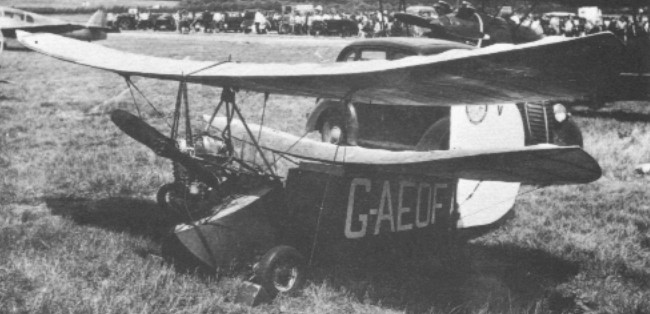
G-AEGD cn CP.1 was modified to ‘Cantilever Pou’ design of L.E.Baynes with strut-braced wings and fitted with an enclosed Carden-Ford engine. It was registered on 15 April 1936, sold in January 1936, and cancelled in February 1943. Following G-AEGD were G-AEJC cn CP.3 and G-AEJD cn CP.4. G-AEJC was registered on 27 July 1936 and cancelled in December 1937. G-AEJD was used for stall investigation.

Gallery

Mignet HM 14 Pou de Ciel / Flying Flea
Engine : Bristol, 35 hp
Length : 11.483 ft / 3.5 m
Height : 6.562 ft / 2.0 m
Wingspan : 16.732 ft / 5.1 m
Max take off weight : 441.0 lb / 200.0 kg
Weight empty : 242.6 lb / 110.0 kg
Max. speed : 65 kt / 120 km/h
Crew : 1

Mignet Pou-du-Ciel (Flying Flea)
Engine: 75 hp McCulloch horizontally opposed
Maximum speed: 91 mph (146 km/h)
Empty weight: 421 lb (191 kg)
Maximum weight: 643 lb (292 kg)
Span: 18 ft 2 in (5.5 m)
Length: 12 ft 6 in (3.8 m)
Height: 5 ft 8 in (1.7 m)
Wing area: 108 sq ft (10 sq m)

Engine 22-38 hp.
Gross Wt. 700 lb
Weight empty 350 lb (160 kg.)
Fuel capacity 12 USG
Top speed 56 mph
Stall 35 mph
Climb rate 500-600 fpm
Ceiling 16,400 ft
Seats: 1
Length 13 ft. (3.96 m)
Wing span 22 ft. (6.7 m)
Max cruise 60 mph (96 kph)
Range 200 miles (320 km)

Engine: ABC Scorpion, 35 hp
Top speed: 80+ mph
Cruise speed: 70 mph
Landing /TO speed: 30 mph
Landing dist: 150 ft
TO dist: 200 ft
Fuel capacity: 7 USG
Range: 280 mi
Empty wt: 316 lb

Mignet

Avions Henry Mignet
Societe D’exploitation Des Aeronefs Henri Mignet
Mignet do Brasil

Early aircraft from Henri Mignet was HM.14, popularly known as the Flying Flea (first flown 1933). Founded Mignet do Brasil postwar, but later returned to native France to produce series of new aircraft. or kit form is HM.1000 Balerit microlight, a tandem-wing two-seat Pou-du-Ciel type; customers include the French Armee de I’Air, for surveillance.

1998: Aviona Henri Mignet, 17600 St.Romain de Benet, France.

Available in assembled or kit form is HM.1000 Balerit microlight, a tandem-wing two-seat Pou-du-Ciel type; customers include the French Armee de I’Air, for surveillance.

1998: Aviona Henri Mignet, 17600 St.Romain de Benet, France.

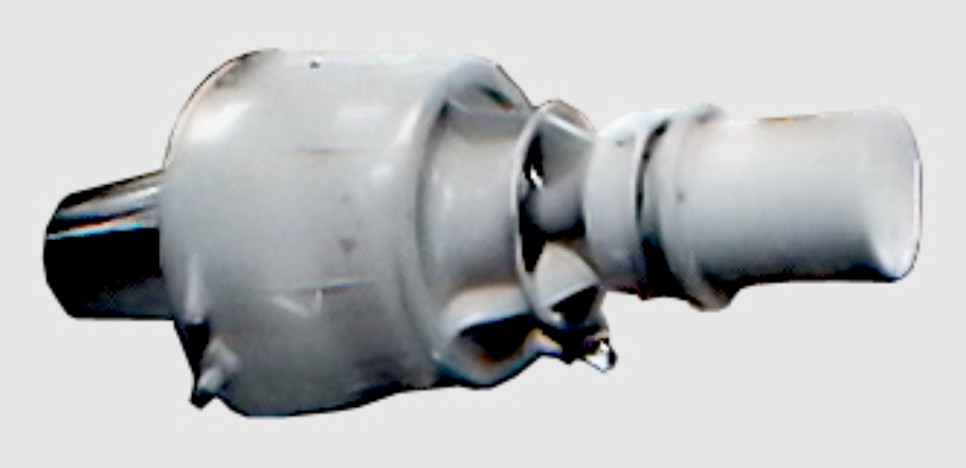
Turbomeca Éclair

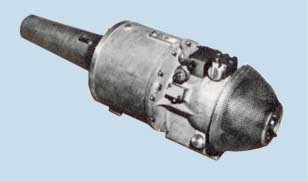
The initial Microturbo product offering was the “Noelle” starter turbine, which led to a number of starter / APUs such as the “Emeraude”, “Espandon”, and “Saphir”. The Emeraude led to the company’s first turbojet, the small and simple Eclair, intended for self-launching sailplanes.

Based on the gas generator section of the Microturbo Emeraude starter and APU for Concorde prototypes, the Eclair is an ultra-small single-shaft turbojet designed to power pilot-less drones and for use in sailplanes.

The engine is also capable of in-flight starting to provide powered flight in an emergency. Initial installation was in the Fauvel Aile Volante AV 45-01R single-seat tailless self-launching sailplane which first flew with the Eclair 012-01 in late 1967.

Height: 12.7 in / 312 mm
Width, including accessories: 19.9 in / 501 mm
Length overall: 23.9 in / 607 mm
Weight: 77 lb / 35 kg
TO pwr 47 000 rpm: 176 lb / 80 kg
Fuel at TO pwr: 198 lb/hr / 90 kg/hr

Turbomeca TRS-18 Turbojet

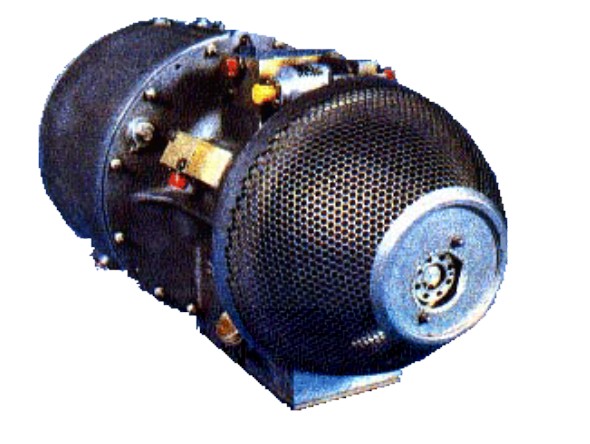
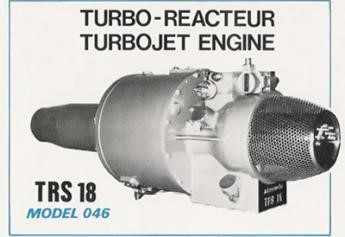
The Microturbo TRS 18 is a small, low thrust turbojet designed and built in France in the 1970s. It was installed on both manned and unmanned aircraft.

The TRS 18 was originally designed for self-launching motor gliders but was adapted to power conventional ultralight aircraft and unmanned vehicles (RPV). It was originally designed and developed by Sermel, a competitor company to Microturbo which the latter took over in 1971. It is a simple, low thrust, reverse flow single shaft engine with a centrifugal compressor and axial turbine. It is built in three modules: an intake section containing starter and lubrication systems; a centre section with compressor and turbine on ball bearings; and an aft section with the folded combustion chambers and tail-pipe.

Early microjets developed 200 lbs thrust, while the newer TRS 18-1 engine develops 325 lbs thrust with nearly identical in dimension & weight.

It gained its US Federal Aviation Administration type certificate E13CE on 25 May 1976.

TRS 18-046

Variants:

TRS 18-046
Production version, primarily intended for manned applications with full self start provision, oil lubrication and temperature and pressure transducers.

TRS 18-056
Cut down gas generator or core engine version, fuel lubricated and only 62% the weight of the 18-046 version but the same thrust; intended for RPVs.

TRS 18-075
Intended respectively for the Flight Refuelling ASAT target drone. Includes an engine driven alternator and fuel and oil lubrication pumps. Dry weight as 18-046. Take-off thrust increased to 1.15 kN (260 lb st) and maximum continuous thrust to 1.10 kN (247 lb st).

TRS 18-076
Intended for the Meteor-Mirach 100. Includes an engine driven alternator and fuel and oil lubrication pumps. Dry weight as 18-046. Take-off thrust increased to 1.15 kN (260 lb st) and maximum continuous thrust to 1.10 kN (247 lb st).

Applications:

Manned

Bede BD-5J
Caproni Vizzola A-21SJ
Chagnes Microstar (version of Rutan VariViggen)
EFF Prometheus 19
EFF Prometheus 12
Microjet 200
NASA AD-1 slew wing

Unmanned

Flight Refuelling ASAT
France-engins Mitsoubac
Meteor-Mirach 100

Specifications:

Microturbo TRS 18-1
Thrust: 325 lbs
Max Running Altitude: 30,000 ft.
Weight : 84.88 lbs.
Length : 27 in.
Diameter: 13 in.
Fuel Types: Jet A, JP4-JP5
Oil Types: MIL-L-23699
Fuel Consumption (Max Power): 283 lbs./hr.

TRS 18-046
Type: Single shaft centrifugal turbojet.
Length: 650 mm (25.59 in)
Diameter: 325 mm (12.80 in) wide × 350 mm (13.78 in) high.
Dry weight: 37 kg (81.6 lb) dry, basic, no jet pipe.
Compressor: Centifugal; one piece with diffuser and straightener vanes.
Combustors: Folded, with ten spill type burners.
Turbine: Axial.
Fuel type: Electric pump.
Oil system: Submerged pump in tank on front underside; filter and pressure transducer on upper side. Closed circuit with high pressure supply to rotor and gearbox bearings.
Maximum thrust: Take-off 1.10 kN (247 lb st). Maximum continuous 1.00 kN (225 lb st).
Specific fuel consumption: 35 mg/N/s (1.24 lb/h/lb st).
Maximum altitude: 9000 m