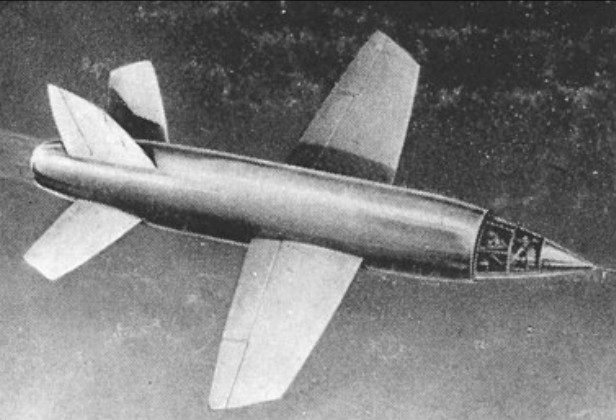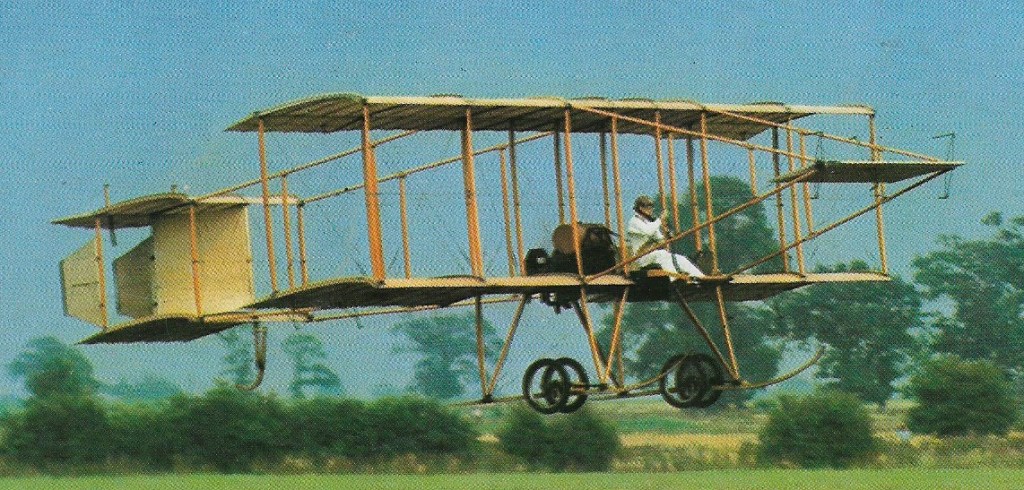
Miles Bristol Boxkite

No original Bristol Boxkites aeroplanes survive today, although three authentic flyable reproductions were built by the F.G. Miles group for the film Those Magnificent Men in Their Flying Machines. Of 20 types built in 1964 at £5,000 pounds each, six could fly, flown by six stunt pilots and maintained by 14 mechanics.

The Phoenix Flyer Bristol Boxkite built by F.G. Miles Engineering Co. at Ford, Sussex, representing Curtiss biplane of 1910. Annakin had apparently expressed a desire to have a Wright Flyer in the film. The Bristol (a British derivative of the French 1909 Farman biplane) was chosen instead because it shared a common general layout with a Wright or Curtiss pusher biplane of the era, and had an excellent reputation for tractability. For the impersonation, the replica had “The Phoenix Flyer” painted on its outer rudder surfaces and was also called a “Gruber-Newton Flyer” adding the name of its primary backer to the nomenclature; although the American pilot character, Orvil Newton inaccurately describes his aircraft to Patricia Rawnsley as a “Curtiss with an Anzani engine.”

These were initially powered by a 65 hp (48 kW) Rolls-Royce Continental A65 air-cooled flat four, but this produced insufficient power, due to the shorter-stroke, higher-RPM mid-20th century engine, driving a small-diameter modern propeller, being inefficient at the low airspeed achieved by the Boxkite, which originally used the slower-revving Gnome Omega 50 hp seven-cylinder rotary engine.
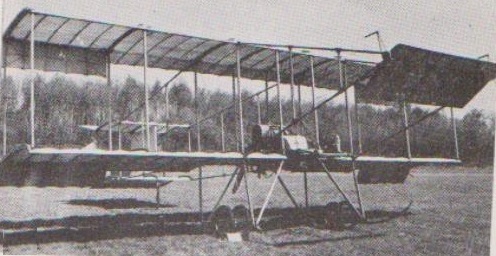
Miles-built Bristol Boxkite replica ‘The Phoenix Flyer’ BAPC.2

F G Miles, chiefly responsible for its design and manufacture, built the replica Bristol Boxkite with the original standard twin rudder installation and powered the replica with a 65 hp Rolls-Royce A65. In the course of testing, Air Commodore Wheeler had a third rudder inserted between the other two (as did some original Boxkites) to improve directional control, and replaced the first engine with a Rolls-Royce C90 that barely delivered the power of the original 50 hp Gnome rotary, and provided a 45 mph top speed. The Boxkite was tractable and the scene in the story when the aircraft loses a pair of main wheels just after takeoff but lands smoothly was repeated 20 times for the cameras. In the penultimate flying scene, a stuntman was carried in the Boxkite’s undercarriage and carried out a fall and roll (the stunt had to be repeated to match the principal actor’s roll and revival). Slapstick stunts on the ground and in the air were a major element and often the directors requested repeated stunts; the stuntmen were more than accommodating – it meant more pay.

This resulted in the replacement of the 65 hp flat-four by a 90 hp (67 kW) Continental O-200-B engine. These proved flyable enough to be used for cross-country flights between filming locations. Another tribute to the soundness of the design is that the calculations made for the purpose of granting the necessary Certificates of Airworthiness found that the stressing of the design was very close to modern requirements.

Box 1
c/n BM.7279 RR/Continental A65, first flown April 1964 at Ford Re-engined with a RR/Continental C90. Flew in the film ‘The Phoenix Flyer’. Refurbished and presented to the Shuttleworth Trust in Bedfordshire, where it is still flown during flying displays when the weather permits. Allocated BAPC.2.

Box 2
c/n BM.7280 A65 then C90. Donated to Museum of Australian Army Flying in Queensland after filming.

Box 3
c/n BM.7281 Retained A65 as it was only used for studio shots and crash scenes. Refurbished after the film and donated to Bristol City Museum and Art Gallery, allocated BAPC.40.
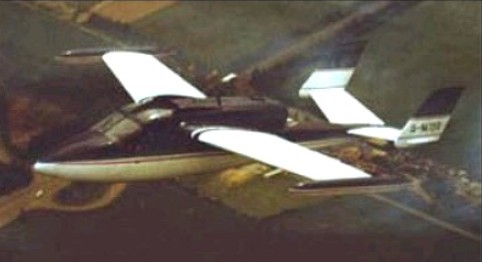
Miles M.100 Student        

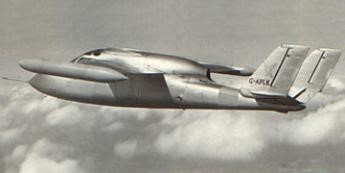
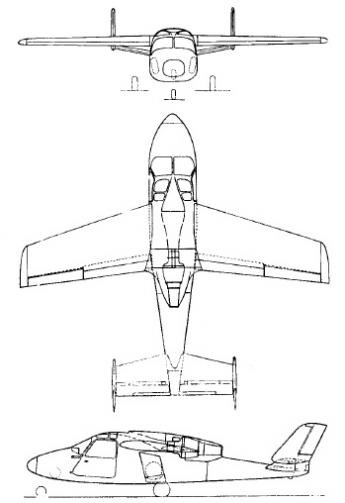
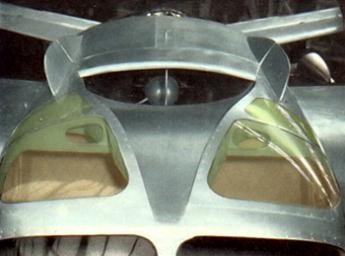
The Miles M.100 Student was built as a lightweight trainer as a private venture by F.G. and George Miles with development starting in 1953. In designing the M.100 the two brothers and their small team set out to produce an aircraft to do the same job as the Jet Provost for ab initio and flying instruction, but in a generally smaller design, to minimise acquisition and operatings costs.

With its accent on economy, the two-seat side-by-side all-metal M.100 was designed round a single Marboré IIA turbojet of only 880lb thrust for take-off, or little more than half the output of the initial Jet Provost’s 1640lb Viper ASV.5.

The Student flew on 15 May 1957, with the B Condition indentity G-35-4 on its fins, in hand of George Miles, its chief designer, at Shoreham. Maximum level speeds were just under 300 mph and 330 mph, respectively.

One of the main design features was the NACA-type flush intake above the wing centre-section for the Marboré centrifugal turbojet (for which Blackburn had a production licence). This intake’s location and shape minimised the possibilities of foreign object ingestion on the ground and in the air, at the expense of some loss in installed thrust.

To prevent overspill at high angles of attack, fences had been added each side after the first flight, to prevent overspill.

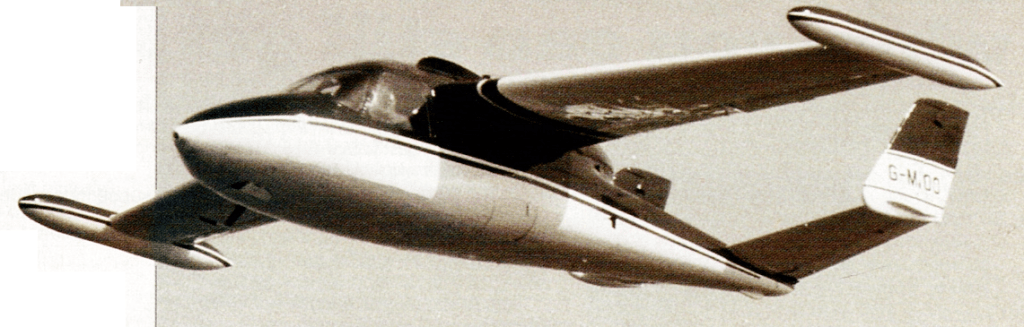
An uneventful flight development programme over the next few months, mostly by F.G. Miles Ltd test pilot ex-Sqn Ldr Duncan McIntosh, necessited non significant changes, and allowed the Student’s inclusion in the Farnborough programme in September 1957. At Farnborough 1957 the M.100 had the wing tips tanks removed. Miles had hoped to secure an RAF order, which in the event went to the Jet Provost, and the Student did not go into production. The Student was subsequently proposed for several training orders, but without success.

By 1958 the civil identity was G-APLK.

Early in 1964, the prototype Student was modified to the Mk. 2 version, incorporating a Marbore VI F turbojet giving 20 per cent greater thrust, interchangeable underwing pods for a variety of weapons, improved brakes and cockpit ventilation. In this guise, basic production price was £25,000. It was flight tested by George Miles on 22 April, 1964.

Student Mk.2

After taking off from Duxford in 1985 it suffered a catastrophic engine turbine failure and was seriously damaged in the forced landing.

In May 2000, after a long period of storage, members of the Museum of Berkshire Aviation at Woodley began rebuilding M.100 Student G-APLK/G-MIOO to static display.

Gallery

Miles Student
Engines: 1 x Blackburn Turbomeca Marbore 2 or 2 x Palas 600
Span: 29.2 ft (8.90 m)
Length: 30.9 ft (9.38 m)
Height: 6.3 ft (1.90 m)
Empty, equipped: 2300 lb (1043 kg)
Weight loaded: 3100 lb (1406 kg)
Max loaded: 3600 lb (1630 kg)
Max.wing loading: 26 lb/sq.ft (127 kg/m²)
Max speed at S/L at 3100 lb: 290 mph (467 km/h)
Max speed at 20000 ft at 3100 lb: 302 mph (486 km/h)
Cruising speed at S/L at 3100 lb: 254 mph (409 km/h)
Cruising speed at 20000 ft at 3100 lb: 268 mph (431 km/h)
Landing speed at 3100 lb: 69 mph (111 km/h)
Rate of climb at S/L at 3100 lb: 2050 ft./min (650 m/min)
Time to 10 000 ft at 3100 lb: 5.7 min
Time to 20 000 ft at 3100 lb: 14 min
Take-off distance (50 ft) at 3100 lb: 1740 ft (530 m)
Landing distance (50 ft) at 3100 lb: 1710 ft (520 m)
Range: 476 miles (767 km)

Miles M.77 Sparrowjet

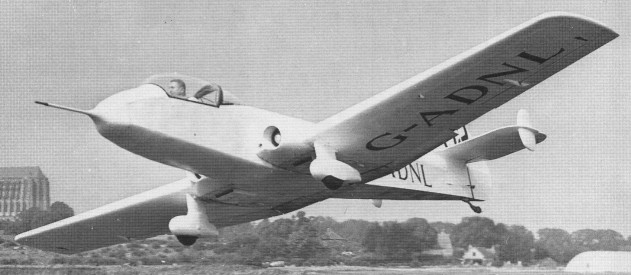
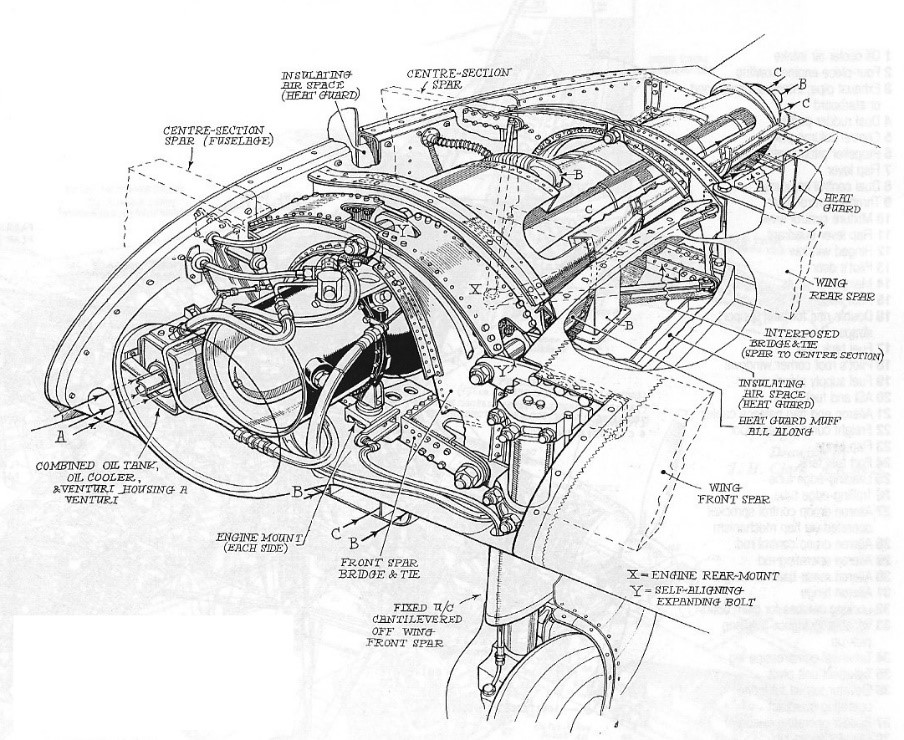
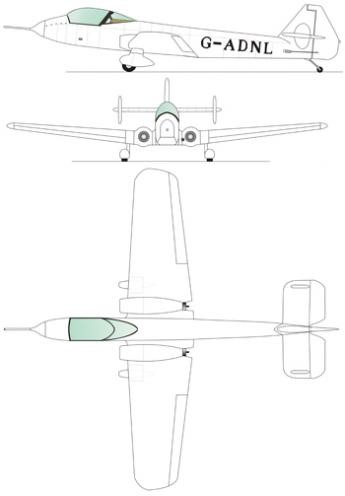
The M.5 Sparrowhawk prototype G-ADNL survived the war. Air racing enthusiast Fred Dunkerley acquired the Sparrowhawk and in 1950 he sent it to F.G.Miles at Redhill in Surrey, with instructions that it be rebuilt as a jet-powered racer. Fred Miles conceived the idea of replacing the M.5 140 hp high compression Gipsy Major with two Turbomeca Palas turbojets, each developing 330 lb maximum thrust (equivalent to about 550 hp in total).

With a length of 35in and a diameter of 16in, for an individual weight of 160 lb, the Palas units required new twin metal¬ sparred inner wing attachments to the fuselage centre section for their upper wing root housing. Designer, aerody¬namicist, stress engineer and flight test observer Grahame Gates, who was brought in to assist George Miles, recalls that the Sparrowjet centre section attachments and engine mountings required some complex engineering. This included curved compression mem¬bers with a pin joint above each engine centreline, and the rear spar straddling the hot tailpipe. Being completely buried within the wing chord, the little Palas engines also needed short stainless steel exhaust channels to protect the adjacent wing structure.

A completely new single seat cockpit and forward fuselage section was also required, resulting in an increase in length of nearly 7ft to 29ft 7in, includ¬ing a new and bigger tail assembly to balance the additional side area of the longer nose. Two small fins near the tailplane tips were also added solely as mass balance fairings.

While the original Hawk wooden wings with their ancient Clark YH aero¬foil sections were retained, extensive modifications were required to incorpo¬rate a 38gal fuel tank in each for the turbojets. The wings’ twin ¬sparred structure also had to be rein¬forced and re covered with thicker ply skins to cope with the increased air¬speeds, and their stiffness was further improved when 18in were clipped from each wingtip during initial flight development.

Squared off tips, with no decrease in aileron span, had been schemed as a means of achieving an increase in lateral control effec¬tiveness, and of reducing associated stick forces. Their planned removal, however, was delayed until after initial flight trials, to retain lighter wing load¬ing and docile handling in the early stages of development. Overall wingspan was still 7in more than the Sparrowhawk’s original 28ft, because of the additional wing root engine bays.

With no propeller clearance problems, shortened, spatted Magister type mainwheel undercar¬riage oleos with stub axles instead of alloy forks, and Goodyear tyres and brakes, could be used. Although these brought the Palas tailpipes close to the ground, no problems were reported from surface erosion. The two engines increased empty weight by more than 500 lb to 1,578 lb, although the maximum take off weight went up by only 200 lb, to 2,400 lb.

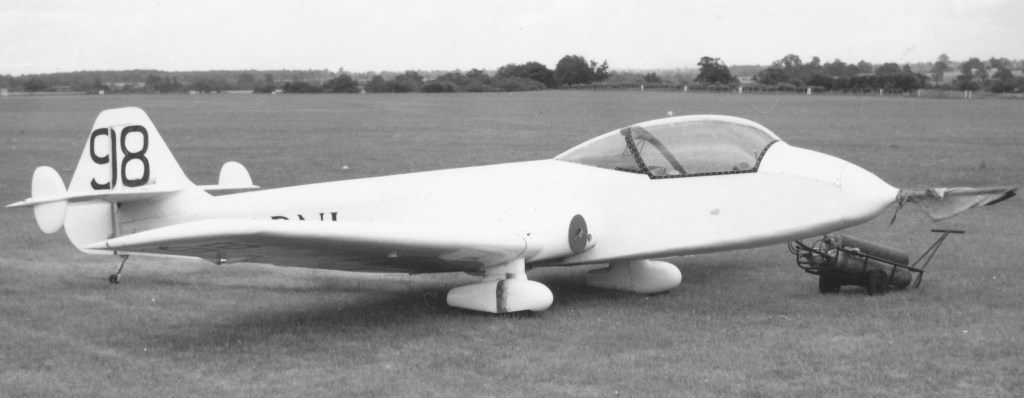
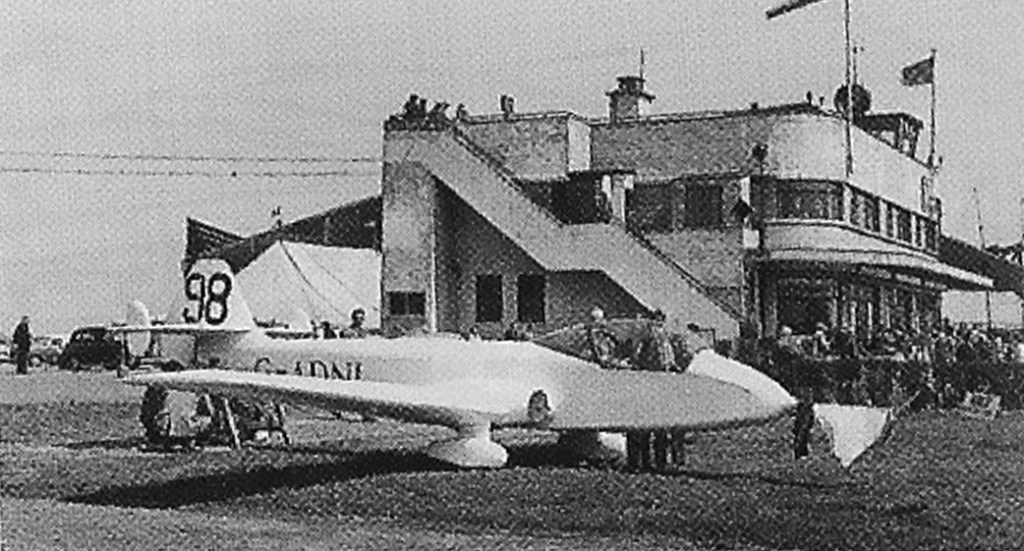
All of these changes took time, and were further complicated by accompa¬nying budget overruns, as well as the transfer of F.G. Miles’s activities from Redhill to Shoreham in 1952. It was not until December 14, 1953, after three year’s work, that G.H. Miles made the first flight of the redesignated M.77 Sparrowjet (c/n FGM 77/1006) at Shoreham. Originally flown under B conditions as G 35 2, it soon reverted to its original civil registration, G ADNL, plus racing number 99 on the new broad chord fin and rudder.

Sparrowjet G-ADNL 2 July 1957 Coventry

Few problems were encountered dur¬ing Sparrowjet flight development, which was shared by G.H. and Miles test/sales pilot Ian Forbes. The Sparrow¬jet’s inaugural flight also marked its initial pilot’s first jet experience, a distinction which Fred Dunkerley shared when he had his baptism on type on Whit Monday, 1954. It was evident that, while the cruis¬ing and maximum speeds of the Sparrowhawk had been increased by over 50 mph, its pleasant flying qualities and docile low speed handling had been retained.

In the C of A, the Ministry of Civil Aviation and the Air Regis¬tration Board (ARB) had imposed a restriction of 31,400 rpm maximum continuous power on the Palas tur¬bojets, instead of their rated 33,800 rpm, which was permitted only for take off or emergencies. This had the effect of reducing the Sparrowjet’s design maximum speed performance of 240 mph to a revised handicap estimate of 227 mph.

Engine start¬ing was normally via high pressure air from a large ground cylinder to spin the centrifugal compressor up to light up rpm. This system saved the weight and complication of integral electric starters, but effectively ruled out off base operation without the necessary ground equip¬ment.

At Yeadon 21 May 1956 when it won the SBAC Challenge Cup

G-ADNL usually operated from the airfield Barton, participating in many races, including:

SBAC Challenge Cup in 1956 at an average speed of 197 mph [316 km / h]
King’s Cup Race July 13, 1957, at an average speed of 228 mph [366 km / h]

1957 King’s Cup winner, flown by Fred Dunkerley immediately after landing

The M.77 SparrowJet was destroyed in a fire at a hangar at RAF Upavon in 1964.

Engines: two Turbomeca Palas turbojets, 330 lb max thrust each
Wingspan: 8.49 m
Total length: 9.40 m
Wing area: 14,50 m²
Empty weight: 717 Kg
Maximum weight: 1090 Kg
Max speed: 368 Km / h
Range: 432 Km
Climb rate: 640 m / min
Wing loading: 75 Kg / m²

Miles F.G. Ltd

UK
Miles F.G. Ltd was formed in 1951 at Redhill, Surrey, and transferred to Shoreham, Sussex, in 1952. Acquired by British Executive and General Aviation February 1961.
Developed M.75 derivative of Gemini with Cirrus Major engines; M.77 Sparrowjet conversion of M.5 Sparrowhawk prototype; M.100 Student jet trainer, first flown May 15,1957; H.D.M.105 aerodynamic test vehicle, which had Aerovan fuselage with Hurel-Dubois high-aspect ratio wing, flown March 31,1957.

Miles M.71 Merchantman

In August 1947 Miles flew the M.71 Merchantman with four 186kW de Havilland Gipsy Queen 30 engines and a modified Marathon wing. Configuration was similar to that of the Aerovan, but the aircraft was of metal construction. The Merchantman could carry 2268kg of freight or 20 passengers over 1367km.
The design was unable to proceed because of the firm’s collapse.

Miles M.68 Boxcar

The Miles M.68 Boxcar, flown on 22 August 1947, had four 75kW Blackburn Cirrus Minor II engines and was basically of Aerovan layout, except that the centre section of the fuselage was designed to mount a detachable container 1.37m square and 3.05m long, the idea being that freight containers could be pre-loaded and the aircraft could be flown with or without the container attached.

Miles M.65 Gemini / M.75 Aries

M.65 Gemini

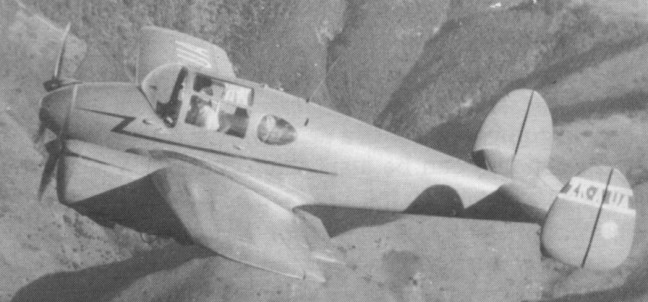
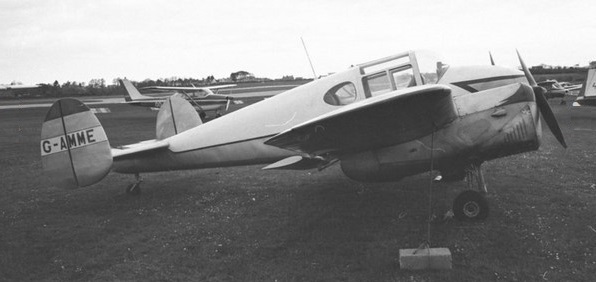
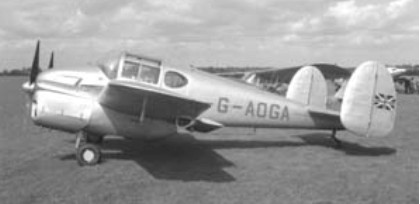
Conceived as a twin-engine retractable landing gear version of the Messenger, the Miles M.65 Gemini flew first on 26 October 1945 and was an immediate success. It was the last Miles aircraft to enter quantity production and in its Gemini Mk 1A initial form was powered by 75kW Blackburn Cirrus engines, and had non-retractable auxiliary trailing-edge flaps. About 150 were built in the first year of production.

One Gemini Mk 1B was built with retractable flaps.

The single Gemini Mk 2 was created by installing 93kW Continental engines, while production Gemini Mk 3A aircraft had 108kW de Havilland Gipsy Major 10s. There were several sub-variants with detail differences, but the most powerful version with two 116kW Blackburn Cirrus Major III engines, a strengthened structure and larger fins and rudders, was deemed sufficiently different to be designated M.75 Aries.

M.75 Aries

A total of 170 Geminis and two Aries were built, around two-thirds of them being exported, before the company collapsed in 1947.

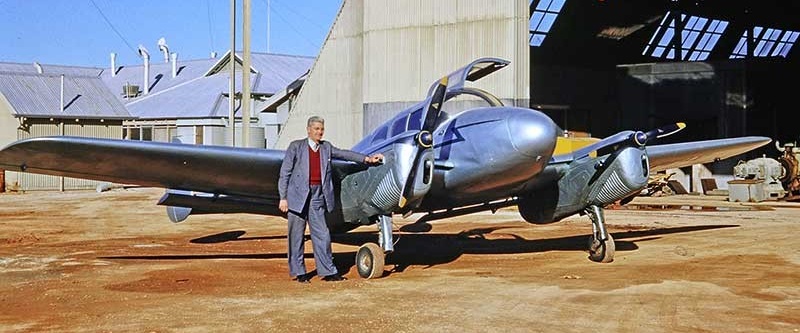
Miles Gemini VH-AKV flown by Perth businessman Mr.O. Odegaard during a stop at Forrest, Australia, in 1955

M.65 Gemini
Engines: 2 x 100 hp Blackburn Cirrus Minor
Wing span: 11.02 m / 36.1 ft
Length: 6.78 m / 22.25 ft
Weight empty 1,900 lb / 860 kg
Cruise speed: 125 mph / 200 kph
Ceiling: 13,500 ft / 4,100 m
Range: 820 miles / 1,320 km
Seats: 4

M.75 Aries
Engines: 2 x 116kW Blackburn Cirrus Major III

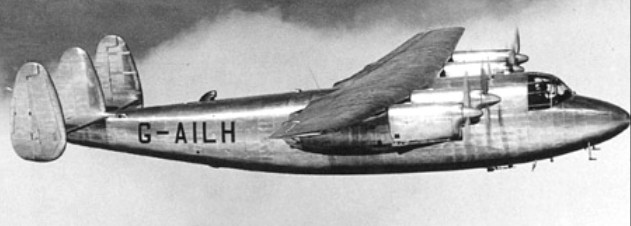
Miles M.60 Marathon / M.69 Marathon II / Handley Page H.P.R.1 Marathon I

The Miles M.60 Marathon was the company’s first all-metal aircraft and the first with four engines.

Miles Marathon Article

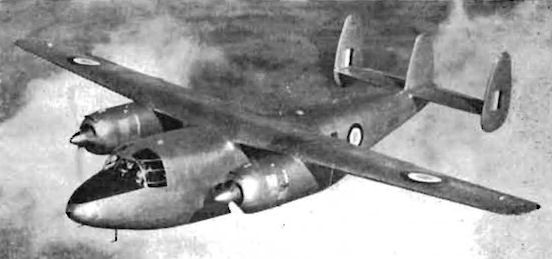
Flown in 1946 with Gipsy Queen 71 engines, the Marathon was the winner in a competitive bid to Air Ministry Specification 18/44, and the Ministry ordered three prototypes for BOAC.

The Ministry of Aircraft Production, gave orders and counter orders throughout the pre-production stages, but when the prototype flew test pilots soon found it was a very pleasant aircraft to handle. Loss of the prototype in a fatal crash during trials at Boscombe Down was attributed to pilot error. The second prototype flew in February 1947, but before a production contract could be signed the Miles company suffered financial collapse and its aircraft assets were eventually acquired by Handley Page. The company became Handley Page (Reading) Ltd. and the 18 passenger M.60 Marathon was redesignated Handley Page H.P.R.1 Marathon I.

A production order for 50 was placed, 30 for BEA and 20 for BOAC’s associated companies, but the BEA order was reduced to 25 and later seven, then cancelled completely, and 28 of the Marathons were modified for use by the RAF as navigation trainers as the Marathon T.Mk II, serving for six years before being replaced by Vickers Varsities.

Handley Page built only 40. The remaining aircraft operated in a number of overseas countries including West Germany, Jordan, Nigeria, Canada, Japan and Burma.

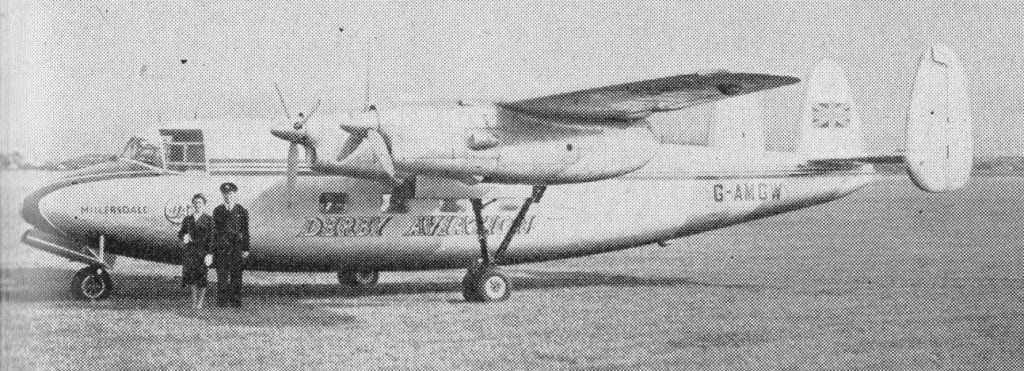
Derby Aviation Marathon circa 1958

Some were used experimentally, including use as engine test-beds, one equipped with a pair of Mamba turboprops, designated M.69 Marathon II. Flown by the Handley Page company, initially with two 753kW Armstrong Siddeley Mamba turboprop engines, it was later used to test two Alvis Leonides Major radial engines.

First flown on 15th March 1955, the Leonides Major-powered Marathon was at the Handley Page (Reading) works at Woodley. It was to act as a general flying test-bed for the Leonides Major, but in particular for the construction of the engine at Handley. The Marathon itself, serial VX231, was originally G-AHXU, with two Armstrong Siddeley Mambas in place of the four Gipsy Queen inlines.

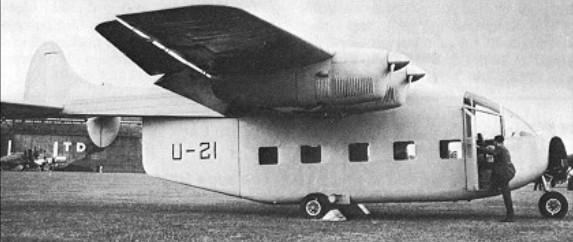
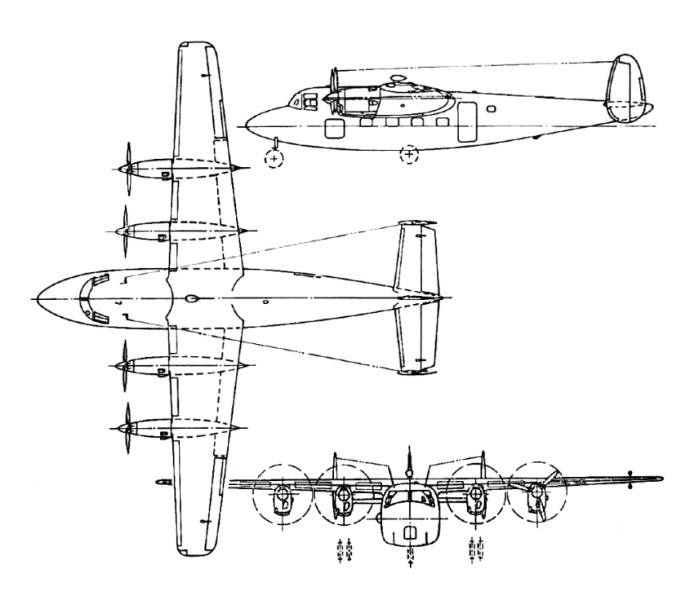
The fuselage is deep and flat-bottomed with a rounded nose, stepped cockpit, and square cabin windows. The underside of the fuselage has a marked upsweep. The wing is equi-tapered with square-cut tips and the engines are housed in a circular section of nacelles. There are prominent underwing bulges on the trailing edge outboard of the nacelles. The tail unit has triple oval fins. Main undercarriage legs retract forwards into the nacelles, and the nosewheel also folds forwards.

The last survivors were scrapped around the mid-1960s.

M.60 Marathon
Engines: 4 x de Havilland Gipsy Queen 71, 246kW
Wingspan: 19.81 m / 64 ft 12 in
Length: 15.93 m / 52 ft 3 in
Height: 4.27 m / 14 ft 0 in
Wing area: 46.45 sq.m / 499.98 sq ft
Max take-off weight: 7484 kg / 16499 lb
Empty weight: 5198 kg / 11460 lb
Max. speed: 322 km/h / 200 mph
Ceiling: 5030 m / 16500 ft
Range: 1368 km / 850 miles

HPR.5
Engines: two Leonides Major
Wingspan: 65 ft
Length: 52 ft 1 in
Height: 14 ft 1 in

Miles M.60 Marathon

Miles M.57 Aerovan

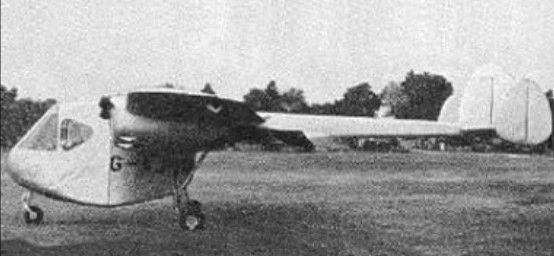
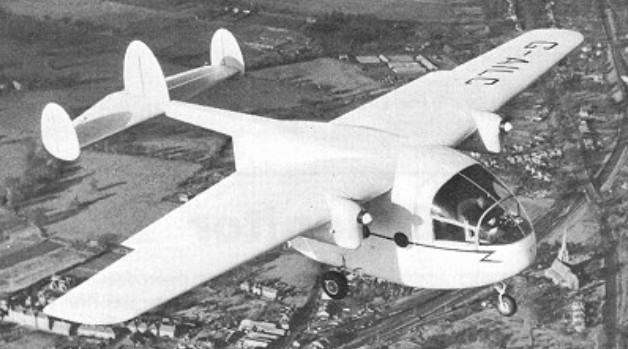
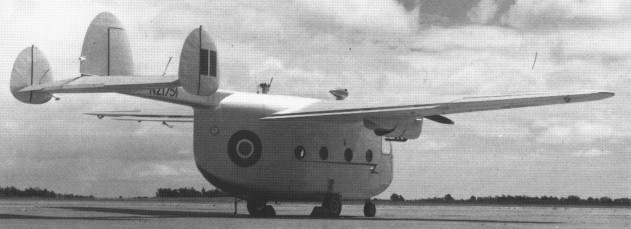
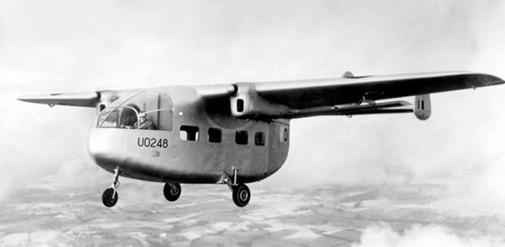
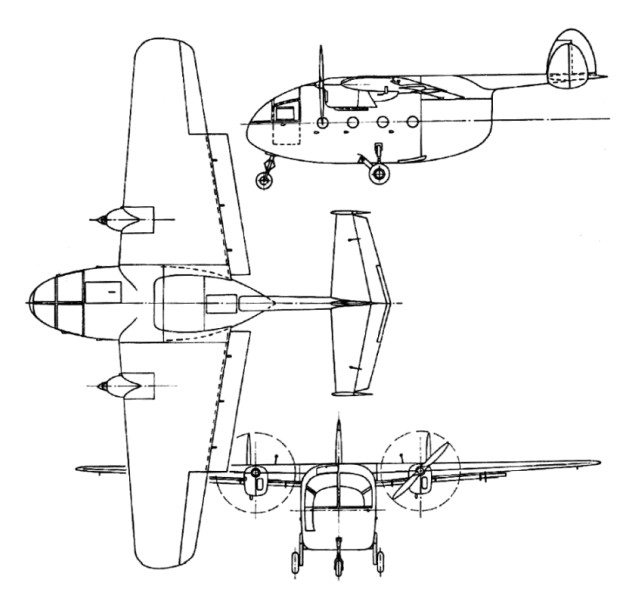
One unusual design was the Miles M.57 Aerovan, a twin-engine light freighter which flew first in January 1945. The wings and tail unit were similar to those of the Messenger, but larger, while the fuselage was of pod and boom layout.

A number of UK and overseas orders were placed and the Aerovan entered production with a longer pod than the prototype, which was designated Aerovan Mk I, and the second prototype the Aerovan Mk II.

The first Aerovan Mk III production model was similar to the Mk II, and seven were built with 112kW Blackburn Cirrus Major III engines, the standard Aerovan powerplant. The next version, the Aerovan Mk IV, differed in detail and 40 were built. One Aerovan Mk V with 108kW de Havilland Gipsy Major 10 engines and two Aerovan Mk VI aircraft with 145kW Avco Lycoming O-435-4A engines were built; one of the latter was fitted with an experimental Hurel-Dubois high aspect ratio wing in 1957 when it became known as the HDM.105. The last known surviving Aerovan was the first Mk VI, operating in Italy in 1968, although a pair of uncompleted airframes were around for some years.

The only military operators of the type were the Israeli Air Force and Royal New Zealand Air Force.

Variation: Hurel-Dubois HDM.105

Aerovan IV
Engines 2 x 155 h.p Blackburn Cirrus Major III 155hp
Length 36 ft 0 in / 10.97 m
Wing span 50 ft 0 in / 15.24 m
Height: 13 ft 6 in
Weight empty 3,410 lb / 1,546 kg
MAUW: 5800 lb
Max speed: 127 mph @ SL
Max cruise: 110 mph / 180 kph
Ceiling 13,000 ft / 4,000 km fully loaded
Range 450 miles / 720 km
Pax cap: 8 / or 2,000 lb / 900 kg freight
Crew: 2

Miles M.57 Aerovan

Miles M.52

Designed to meet Specification E.24/43, which called for an aeroplane capable of flying more than twice as fast as any that had previously flown in level flight.

The Miles company began work on the M.52 in 1943, at a time when knowledge of high-speed aerodynamics was strictly limited. As the project was masked in secrecy, Miles set up its own foundry for the production of the necessary metal components and also built a high-speed wind tunnel. The Miles M.52 used ultra thin, bi convex wings, flight tested on the Miles ‘Gillette Falcon’, and other advanced features such as an annular air intake, all moving tailplane. A full-scale wooden mock-up of this unique high-speed wing design was built and tested on a Miles Falcon light aircraft in 1944.

The design featured a bullet-like fuselage of circular section, 1.5m in diameter, constructed of high-tensile steel with an alloy covering. The powerplant, a Power Jets W.2/700, was centrally mounted and fed by an annular air intake, the cockpit forming a centre cone. The whole cockpit cone, in which the pilot sat semi-reclined, could be detached in an emergency by firing small cordite charges; the pilot would then bale out normally when the capsule reached a lower altitude. The M.52 was fitted with biconvex section wings, mounted at mid-point on the fuselage. As design work progressed, various refinements were incorporated. Split flaps were fitted, together with an all-moving tailplane. The addition of rudimentary afterburners in the form of combustion cans situated at the rear of the engine duct was calculated to produce much greater thrust at supersonic speed.

The very thin wing section meant that the undercarriage had to be positioned to retract into the fuselage.

Detailed design work on the M.52 was 90 per cent complete by the beginning of 1946, and the jigs were ready for the assembly of three planned prototypes. No snags were envisaged in construction, and it was expected that the first M.52 would fly within six to eight months. Then, in February 1946, quite without warning, F.G.Miles received word from the Director General of Scientific Research at the Ministry of Aircraft Production, Sir Ben Lockspeiser, that all work on the M.52 project was to cease at once.

Secrecy surrounded the cancellation of the M.52, just as it had surrounded its design, and it was not until September 1946 that the British public were made aware that their aircraft industry had been within sight of flying the world’s first supersonic aircraft. The stated reason behind the decision to cancel the M.52 was that it had already been decided, early in 1946, to carry out a supersonic research programme with the aid of unmanned models developed by Vickers Ltd, the department responsible was headed by Dr Barnes Wallis. Between May 1947 and October 1948 eight rocket-powered models were launched, only three of which were successful. In each failure (apart from the first attempted launch when the Mosquito launch aircraft got out of control in cloud and the model broke away) it was the rocket motor that failed, not the airframe.

Only a year after the M.52’s cancellation was made public, Major Charles Yeager, US Air Force, had made history’s first supersonic flight in the rocket-powered Bell X-1 research aircraft.

Engine: 1 x 2000 lb / 907kg Power Jets W.2/700 turbojet engine, with afterburning 4100 lb / 1860 kg st
Wingspan: 8.20 m / 26 ft 11 in
Length: 10.20 m / 33 ft 6 in
Design max take-off weight: 3715 kg / 8190 lb
Wing area: 143 sq.ft / 13.28 sq.m
Max design speed: 1,000 mph / 1,609 km/h) at 36,000 ft / 11,000 m
Ceiling: 15250 m / 50050 ft
Crew: 1