Miller Bamboo Butterfly Rogallo

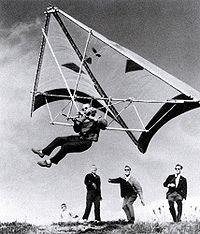
Richard Miller flying his new Bamboo Butterfly hang glider. Vista Del Mar California, 1966.

Barry Hill Palmer had a good paying aerospace job and was flying on a minimalist and inexpensive glider purely for curiosity and fun. He did not attempt to modernize or market the flexible wing hang glider; there was no attempt to publicize on the media, except for an ‘accidental’ report made by a small local newspaper. Palmer freely gave information about the wing to any person interested, including Francis Rogallo and Richard Miller, who develop the famous Bamboo Butterfly Rogallo wing hang glider, the plans of which circulated in some American magazines in the mid 1960s.

In 1964, after building some small Rogallo models, Miller used bamboo and polyethelene to construct the ‘Bamboo Butterfly’.

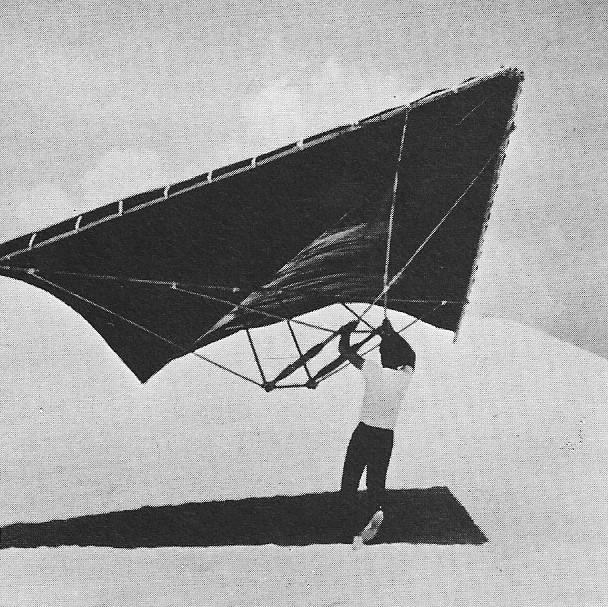
Over the next few years Miller and a growing number of friends slowly mastered the techniques of Rogallo flight.
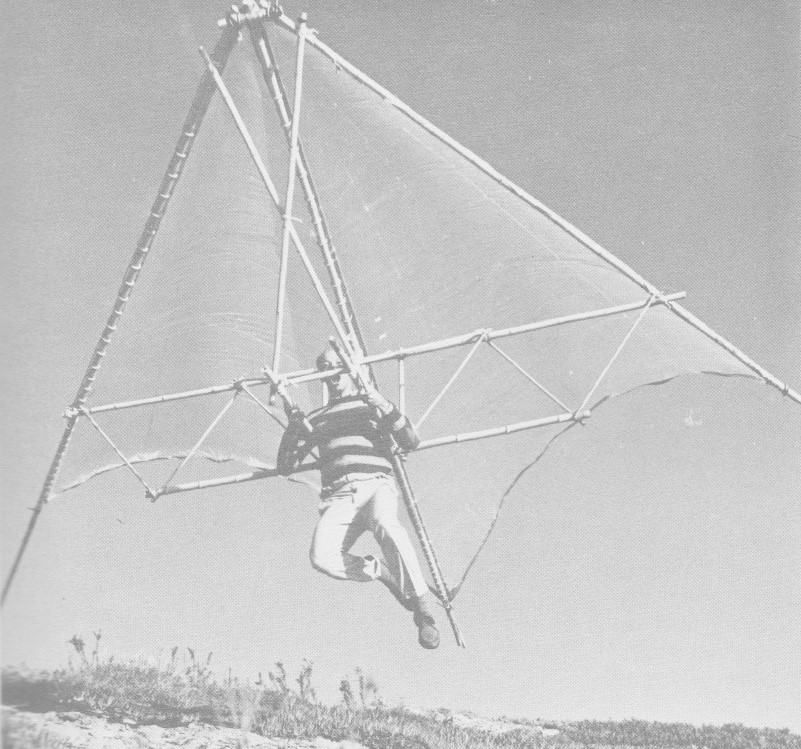
Before the Butterfly was retired they had launched more than a hundred successful flights over Los Angeles beaches.
Miller Lil’ Rascal

The “Lil’ Rascal” by Merle B. Miller began flight testing in early 1978. This biplane makes use of a steel-tube fuselage and tail section covered with Stits Poly-Fibre Dacron. The wings are constructed of spruce and plywood and are covered with same fabric. The landing gear is the nonretractable tailwheel type, and seating is for two persons in a side-by-side open cockpit. The standard 85-hp engine turns a fixed-pitch prop.

Gross Wt. 1100 lb
Empty Wt. 600 lb
Fuel capacity 12 USG
Wingspan 20 ft 8 in
Length 15 ft 3 in
Engine 85-hp Continental
Top speed est: 110 mph
Cruise est: 90 mph
Stall est: 58 mph

Militky Brditschka MB-E1

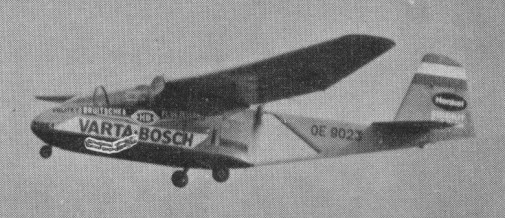
Heinz W. Brditschka also converted an HB-3 airframe in 1973 to have electric power, in which form it was known as the Militky MB-E1; Fred Militky, who designed the installation of the 13hp Bosch electric motor that replaced the piston engine, was an engineer with the Graupner model-building company, and used his experience with electrically powered radio-controlled models to produce this first electric motor glider. This made what is claimed to be the first ever manned electric-powered flight on 21 October 1973.

The silent Militky Brditschka MB El made its 9 minute maiden flight on October 21 1973. Power was provided by a standard Bosch 10kw electric motor and Varta batteries, giving 13 hp.

Militi M.B.2 Leonardo

The Militi M.B.2 Leonardo is an Italian single-seat powered flying-boat glider version of Militi’s M.B.1 flying-boat glider, designed and built by Bruno Militi.

The Leonardo is a parasol-wing monoplane with a two-step hull and a fuselage of aluminium alloy, wood and fibreglass. The mixed construction wing is supported by two N-struts in the centre and a vee-strut outboard on each side, it has plain ailerons but no flaps. The pilot has an open cockpit with a small windscreen. The 42 hp (31 kW) modified Panhard motor car engine is strut-mounted above the wing centre section and drives a two-bladed fixted-pitch laminated wood pusher propeller.

The aircraft was first flown on 21 June 1970 and was exhibited at the 1972 Turin Air Show.

Engine: 1 × Modified Panhard two-cylinder four-stroke air-cooled motor car engine, 31 kW (42 hp)
Wingspan: 8.14 m (26 ft 8½ in)
Length: 5.91 m (19 ft 4¾ in)
Width: 0.90 m (2 ft 11½½ in)
Height: 2.20 m (7 ft 2½ in)
Wing area: 11.40 m2 (122.7 ft2)
Aspect ratio: 5.7
Empty weight: 145 kg (319 lb)
Gross weight: 250 kg (551 lb)
Maximum speed: 116 km/h (73 mph)
Cruising speed: 80 km/h (50 mph)
Stall speed: 55 km/h (34.5 mph)
Range: 200 km (124 miles)
Endurance: 2 hours 30 min
Climb rate: 580 ft/min
Service ceiling: 4000 m (13125 ft)
Crew: 1

Militi M.B.1

The Militi M.B.1 is an Italian single-seat flying-boat glider designed and built by Bruno Militi.
Militi started to build his design for a flying-boat glider in October 1964 and it first flew on 13 August 1967. The M.B.1 is a parasol-wing monoplane with a two-step hull and a fuselage of aluminium alloy, wood and fibreglass. The mixed construction wing is supported by two N-struts in the centre and a vee-strut outboard on each side, it has plain ailerons but no flaps. The pilot has an open cockpit with a small windscreen. From 1969 Militi developed a powered version as the M.B.2 Leonardo which first flew in 1970.

Wingspan: 8.05 m (26 ft 5 in)
Length: 5.91 m (19 ft 4¾ in)
Width: 0.90 m (2 ft 11½ in)
Height: 1.95 m (6 ft 4¾ in)
Wing area: 11.40 m2 (122.7 ft2)
Aspect ratio: 5.7
Empty weight: 85 kg (187 lb)
Gross weight: 165 kg (363 lb) each each
Crew: 1

Miles Marine and Structural Plastics S.E.5a

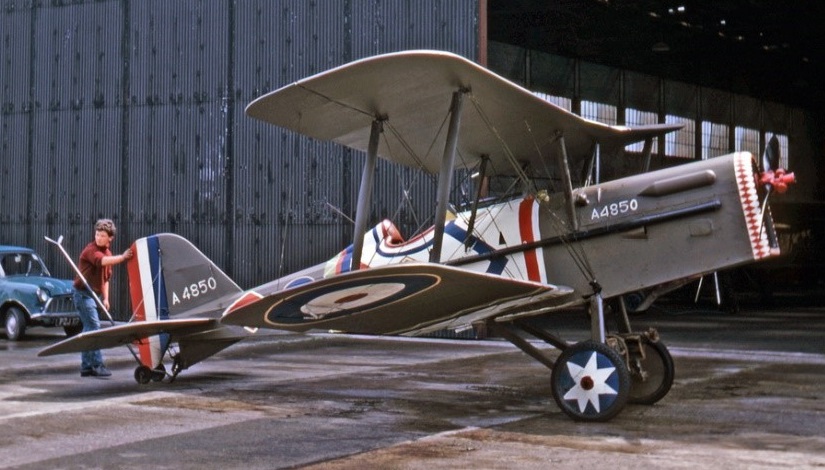
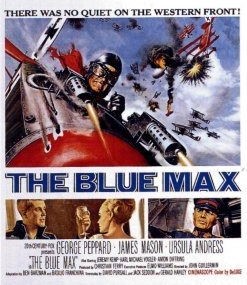
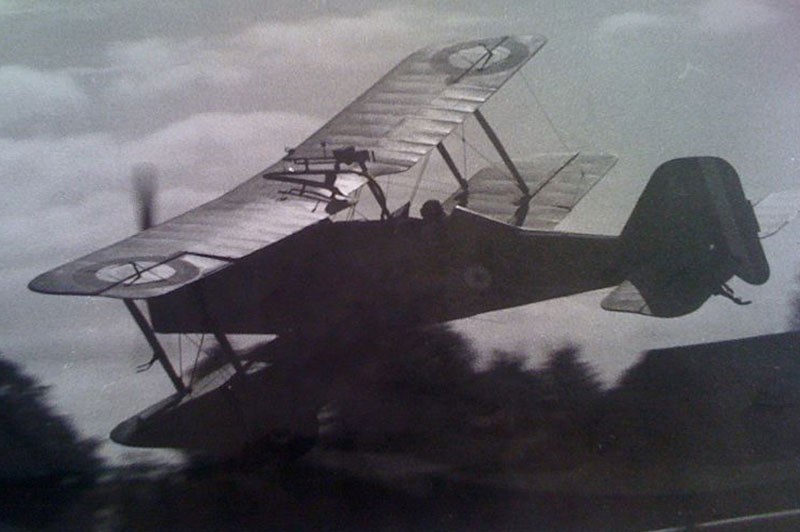
20th Century Fox purchased the film rights of Jack D Hunter’s “The Blue Max” and the film was to be a multi-million dollar production, and the stars were to be the full sized reproductions of World War I fighters constructed for the film- two Pfalz D.III biplanes, two Fokker Dr.I triplanes, two S.E.5a scouts and three Fokker D.VII biplanes.

The reproductions had to be built in a hurry to meet the time frame for shooting and were constructed in different locations. Miles Marine and Structural Plastics Ltd of Shorham, constructed the steel tube fuselage S.E.5a reproductions in 1965. With a 200 hp De Havilland Gypsy Queen 3 engine installed, they were very manoeuvrable and reportedly easy to fly.

The two full-scale replica S.E.5a aircraft were transferred to the Irish civil aircraft register in 1967 while the two were employed in flying scenes for the 1966 war movie The Blue Max.

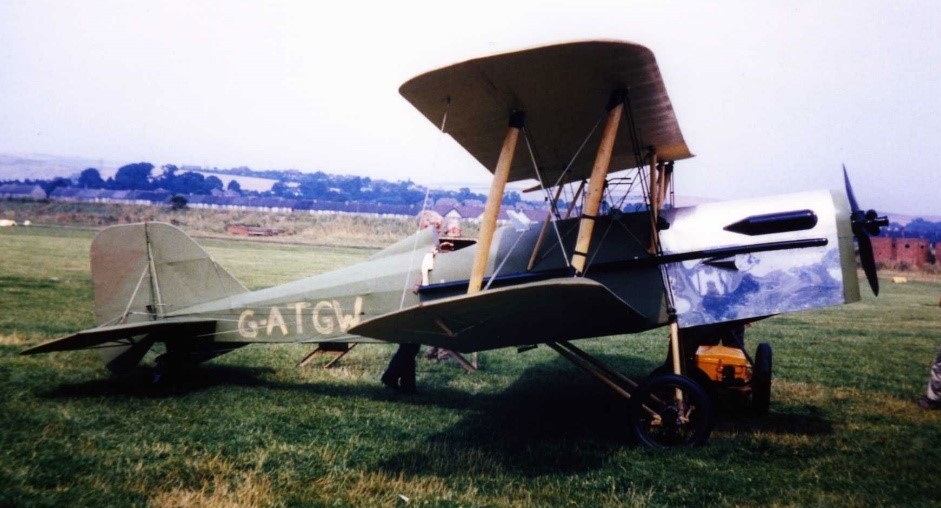
The SE.5 replicas built by Miles Marine and Structural Plastics Ltd, G-ATGV and G-ATGW, were both written off within a month of each other in 1970.

On August 18, 1970, while filming Zeppelin over the Irish Sea, SE.5 G-ATGW (shown here under construction at Shoreham) rammed the Aérospatiale Alouette II camera helicopter, the same one used to film The Blue Max. Both aircraft were destroyed and all crew members killed.

On September 15, 1970, while performing a low-level maneuver during the filming of von Richthofen and Brown at Weston, Charles Boddington struck the ground in SE.5 G-ATGV and was killed. Aircraft written off.

Gallery