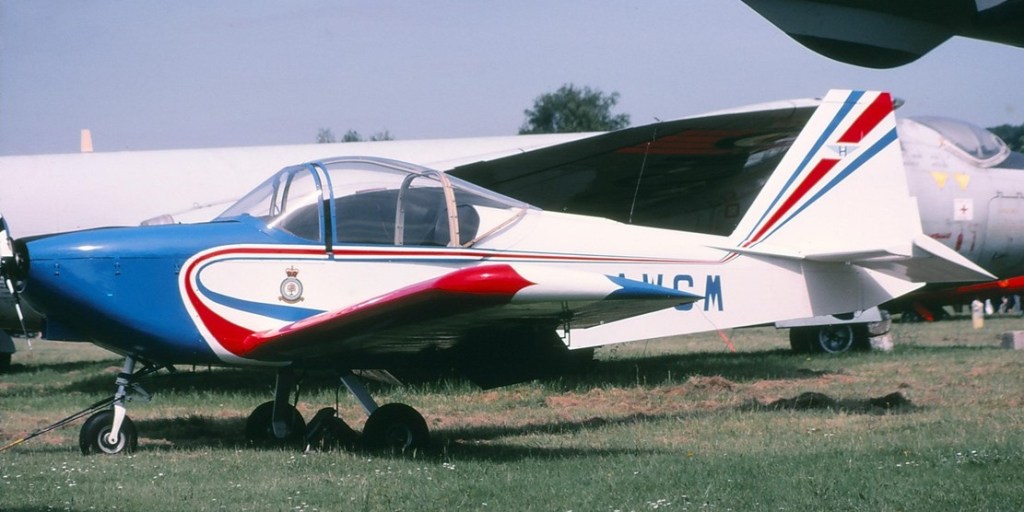
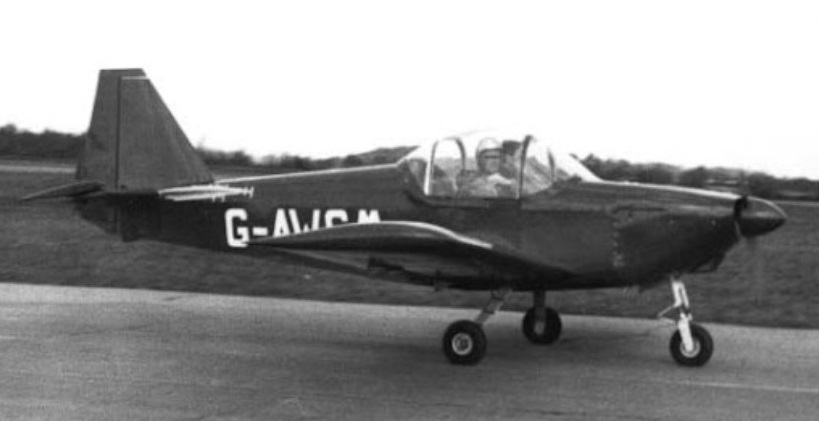
For the Maintenance Command Development Centre, Air- Vice Marshal Harjinder Singh of the Indian Air Force designed Kanpur I four-seat light aircraft, prototype built at MCDC in 132 days.
Kanpur II with 250 hp Lycoming engine, first flown October 1961.
For the Maintenance Command Development Centre, Air-Vice Marshal Harjinder Singh of the Indian Air Force designed Kanpur I four-seat light aircraft, prototype built at MCDC in 132 days. Kanpur II with 250 hp Lycoming engine, first flown October 1961.
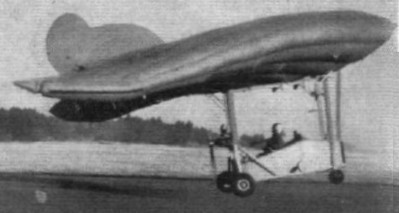
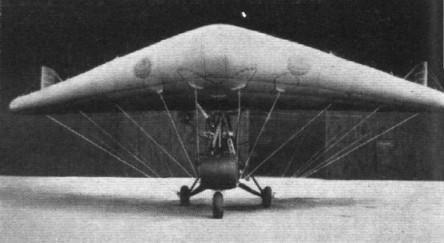
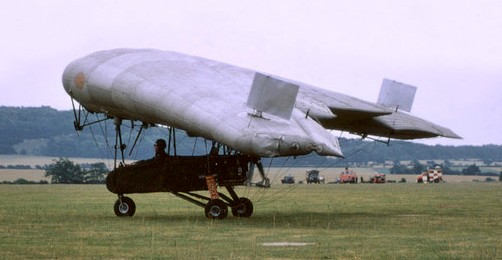
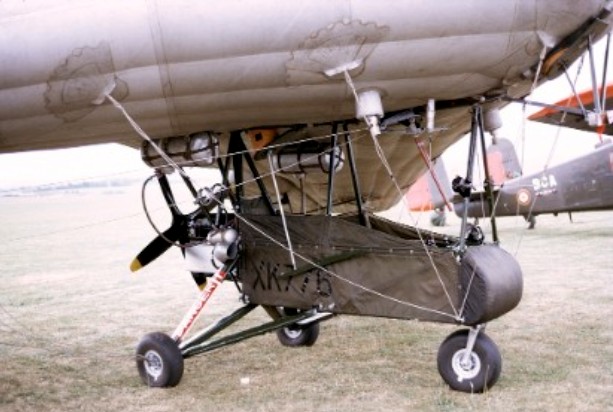
In 1955 ML Aviation at White Waltham designed and produced a portable flying machine called the ML Utility ML.1. Given the serial number XK776, the aircraft featured an inflatable rubberised fabric wing and quick release fittings enabling the aircraft to be rigged and de-rigged fairly quickly.
Over the period of a year, the prototype fuselage was redesigned from the box like structure, to a slimmer, longer structure with tandem seating fir a pilot in the front, and passenger. The tricycle undercarriage, with swivelling nosewheel, changed from wheels on a horizontal axle to rear wheels mounted on legs.
The 65 hp McCulloch pylon mounted pusher of the prototype was changed in the Mk.1 to a Walter Mikron in a cowling faired into the rear of the fuselage. Fuel was a mix of methanol, benzole, and petrol. Cruising speed increased from 45 mph to 58 mph.
The inflatable rubberised-fabric wing, of delta planform, was cleaned up. The basic structural method was retained with the upper and lower surfaces being connected by a number of porous fabric diaphtrams running spanwise and maintaining a symmetrical aerofoil profile developed from NACA 0024. After initial inflation on the ground, the wing is maintained at its correct internal pressure, under 1 lb/sq.in, by an electric pump and relief valve. The prototype had a windmill operated pump.
Control was by inflated elevons over almost the full span of the trailing edge, operated by cable from an inverted control column mounted on the fuselage superstructure. Vertical stabilising surfaces fitted near the wingtips replaced the central fin of the prototype.
The whole wing can be deflated and packed in a bag. The wing is attached to the superstructure by a series of toggles, and flying wires lead from patches on the wing undersurface to points on the fuselage and undercarriage members.
Despite evaluation by the British Army Air Corps at Middle Wallop further production was not taken up. The flight characteristics were unusually slow and the machine was then stored until saved by the Army Air Corps museum.
This was an experimental 2-seat observation aircraft built in 1957 for the Army. Fuselage consisted of a canvas bathtub type fuselage reminiscent of some later microlight aircraft. XK776 was the first of three inflatable wing aircraft flight tested between 1954 & 1960. It went to Cardington on 27/11/69, and is now preserved at the Museum of Army Flying at Middle Wallop.
Utility Mk.1 Engine: Walter Mikron III Span: 35 ft 0 in Overall length: 23 ft 3 in Overall height: 10 ft 6 in Wing area: 400 sq.ft Dry weight: 450 lb Fuel: 85 lb Pilot weight; 180 lb Passenger weight: 180 lb Baggage weight: 40 lb Total weight: 935 lb Max speed: 68 mph Cruise: 58 mph Stall: 30 mph Rate of climb: 740 fpm Takeoff distance: 210 ft Endurance: 2 hr 30 min Ceiling: 5000 ft Root chord: 17 ft 6 in Tip chord: 5 ft 9 in Wheelbase: 7 ft 1 in Track: 5 ft 4 in
The origins of M. L. Aviation began during the mid 1930s with two separate companies, mainely Wrightson Aircraft Sales (formed May 34). The name was changed to Malcolm and Farquharson (formed May 36) and again changed to R. Malcolm Company (founded in Dec 36). Malcolm & Farquharson became a holding company in December 1939 with aircraft product work carried out by R. Malcolm. About this time, Marcel Lobelle, who had been Chief Designer of Fairey Aviation joined the company. He had designed many Fairey aircraft including the Swordfish.
At the beginning of WW2, both Malcolm & Farquharson and R. Malcolm suffered financial problems and turned to the Mobbs family for assistance. During 1940, control of both companies was taken over by the Mobbs through United Motor Finance Corporation.
Under Marcel Lobelle, a drawing office was opened on the Slough Trading Estate (owned by the Mobbs family) with rapidly expanding work for the Ministry of Aircraft Production. To allow for expansion the drawing office and experimental work was moved to White Waltham, leaving production on the Slough Trading Estate and still under the name of R. Malcolm. An additional firing site was also established on the airfield perimeter for development work.
In 1943, Malcolm & Farquharson’s services were dispensed with and control was taken over by Eric Mobbs as Managing Director and Marcel Lobelle as Chief Designer. The company continued to trade under the name of R. Malcolm. Finally in October 1946 the name was changed to M. L. Aviation for the White Waltham site and M. L. Engineering at Slough, the initials presumably being taken from the leading figure heads.
Spurred on by the advent of the Cold War the company expanded rapidly from the 1950s with a considerable work force of Design Engineers designing and manufacturing a large range of aviation products.
Expansion required further finance and in 1958 M. L. went public through the creation on M. L. Holdings. Subsequently the Holding Company diversified with non-aerospace business introducing further finance and therefore gradually reducing the influence of the Mobbs family
The 1980s saw the reducing aerospace industry having considerable impact on MLA with an ever diminishing workforce until in 1990 the Holdings Board, having recently brought Wallop Industries based in Andover, deciding to merge and sell the White Waltham site. The move was completed by early 1991, leaving the Airfield test site still operating. The White Waltham site was eventually sold in 1996.
In mid 1996, the Holding Board acquired the remains of arch rivals Fraser Nash and merged it with MLA producing a formidable aircraft equipment company which should have augured well for the future.
M. L. (Engineering) in Slough finally moved to Andover in early 1997 enabling design and production to join under one roof, thereby almost severing links with Berkshire.
Finally Cobham plc acquired M. L. Aviation & Marine for £37 million.
In 1959, MHI started on a utility/ executive aircraft aimed at the emerging business aviation market. It was announced in April 1962 that Mitsubishi were to build one flying prototype and a structure test airframe of a shoulder-wing twin-turboprop utility aircraft under the XMU-2 designation. A mock-up had been built and the aircraft is described as being similar in appearance to the Aero Commander, but smaller, with a circular-section fuselage. The engines were to be French or Canadian turboprops of 500 hp each.
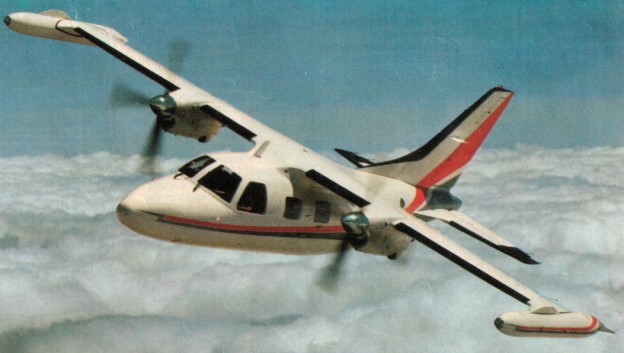
On 14 September 1963 the first of four prototypes was flown, a cantilever high-wing monoplane with a pressurised fuselage, retractable tricycle landing gear and two wing-mounted turboprop engines. The first MU 2 prototype flew pow¬ered by French Turbomeca Astazou en¬gines. The fourth airplane to be tested was fitted with an early version of the Garrett AiResearch TPE 331, and all subsequent MU 2s have been powered by TPE 331 turboprops. By 1965, the short body MU 2B was certified by the FAA for use in the U.S. and sales to American firms began. To achieve roll control when the wing required full span flaps, Mitsubishi developed a small spoiler that resides at about the two thirds chord position and extends along most of the wing’s span.
Since 1965, MHI has improved the MU 2 as the technology of general avia¬tion aircraft advanced, but with the ex¬ception of powerplants and systems, very few changes in the airframe were neces¬sary. As more power was added, a speed increase of 15 percent and a gross weight increase of 30 percent was achieved. The first significant changes to the MU 2 ap¬peared in 1968 when the aircraft was fitted with larger tip tanks and powered by 705 eshp TPE 331s.
Initial production versions were the MU-2A with Turbomeca Astazou turboprops, MU-2B with Garrett TPE331 turboprops and a similar MU-2D, an unpressurised multi-role MU-2C for the Japanese Ground Self-Defence Force, a search-and-rescue MU-2E, and the MU-2F with uprated TPE331 engines.
Models B and D were powered by 605 shp and seated 7-9 passengers. The Model F represented a boost in power to 705 shp.
Certification of the MU-2B-26A is FAA A10SW, and the MU-2B-30 JCAB 25.
The first stretched (by 1.88 m) MU 2 was the G model, which was based on the MU 2F and introduced in 1969. The Model G featured increased seating capacity for up to 11 people, and the powerplant of the MU-2F.
In 1971, the eshp of the AiResearch turbines was increased to 724 for use on the long bodied MU 2J and the short bodied MU 2K, which were introduced in mid 1972. Both utilizing 724-shp turboprops and offering seating arrangements that corresponded to Models F and G, respectively.
Subsequent versions have included the MU-2J with more powerful engines, and MU-2K combining MU-2F fuselage and MU-2J powerplant.
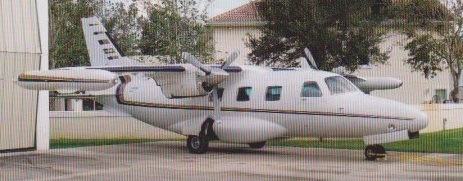
Mitsubishi MU-2J N113SD
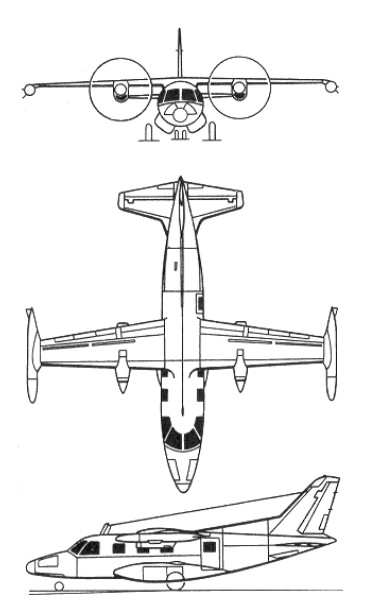
The MU 2L and M models (variants of the MU-2J and MU-2K respectively), with their increased gross weights and added soundproofing, were an¬nounced at NBAA in September, 1974. Fitted with full span, high lift flaps and two Garrett AiRe¬search TPE 331 6 251M engines, rated at 776 equivalent shaft horsepower on the L model and at 724 eshp on the M model. Thus, both Mitsubishis have power loadings of 8.1 pounds of aircraft per horsepower for the MU 2L ¬and 7.9 lbs/hp for the MU 2M. The L and M model use AiResearch cabin pressurization systems with Hamil¬ton Standard air conditioning utilizing bleed air from the engines. The MU 2L, nine feet longer inside than the MU-2M, providing ac-commodations for a pilot and from seven to ten passengers. The MU 2L uses 178 square feet of wing area and a NACA 64A415 airfoil to produce a high speed wing that carries a load of 65 pounds per square foot.
The MU-2L and MU-2M were discontinued in 1976 and replaced by the MU-2N and MU-2P with Garrett TPE331-5-252M engines. The 90 inch, three blade propellers that were standard on MU 2Ls and Ms are replaced on the latest models by 98 inch, four¬blade props that turn at 1,591 rpm on take off, only 80 percent of the revolu¬tions previously used. Because of the slower turning propellers, the propeller tip speeds are reduced about 100 feet per second in spite of the increased prop diameter needed to produce the same thrust horsepower available on older MU 2s. The result is a dramatic 25 per¬cent reduction in perceived noise levels within the cabin and no loss in per¬formance.
The new aircraft are designated the MU 2N and the MU 2P (the latter model has the shorter fuselage). In addition to larger, slower turning propellers, both models are equipped with the Woodward fuel control units; a move which will mark a return to the fuel con¬trol units utilized by Mitsubishi in their early MU 2 models. Purchasers of L or M model Mitsubishis have the option to upgrade their new aircraft to the stan-dards of the MU 2N or MU 2P, respective¬ly, should they wish to have the slow turning engines with the Woodward fuel controllers.
The MU 21P 98 inch four blade propellers have been slowed 20 percent, to 1,591 rpm for takeoff and 1,561 during cruise. According to the factory, that reduces the interior noise level by 25 percent. A vertical fin now sprouts from the top of each tip tank, to help improve low-¬speed roll stability, and there’s a new taxi light in the nose of each tank. A new windshield can be seen in the cockpit; the new glass creates less distortion. Spoilers replace the ailerons to good advantage; they remain equally effective at all airspeeds, eliminate adverse aileron yaw and, most significantly, permit space for almost full span double slotted Fowler flaps. When fully ex¬tended, the flaps increase wing area by 24 percent and reduce stalling speed by 24 knots. Taking off at Vmc (93 knots) allows the airplane to clear a 50 foot obstacle in 1,800 feet at gross on a standard day. In fact, the airplane’s single engine rate of climb is 760¬ fpm, at a typical weight of 9,250 pounds. The MU 2P is a short coupled machine, and this shows up during takeoff and landing. Bluntly stated, the MU 2P is lacking in pitch¬ control power, and some piloting effort is re¬quired to compensate for that shortcoming. The problem is apparently limited to the short fuselage version; the longer body MU¬2s, including the new four blade MU 2N, do not display any pitch difficulties. When leav¬ing or entering ground effect during takeoff or landing, the low mounted tailplane is af¬fected more than the high wings because of the particular relationship between them, and this produces a forward pitching force. The MU 2P, with its short fuselage and narrow center of gravity, demonstrates the effects of this nose down load more vividly than do most airplanes.
An ar¬rangement was struck with Mooney Aircraft for assembly and marketing of the MU 2, and that lasted until it was dissolved in 1970 after Mooney had been purchased by Butler Aviation. But as early as 1967, Mitsubishi Aircraft International, Inc. had been formed, and by 1970, MAI was in a position to take over both the assembly of MU 2s in San Angelo and marketing of the product. Mitsubishi Aircraft Interna-tional, Inc., a U.S. corporation based in San Angelo, Texas was responsible for assembling MU 2s and marketing them in the US and throughout the world.
The MU-2S is the Japan Air Self-Defence Force patrol aircraft, which resembles the civilian aircraft but has a shorter fuselage and bulbous radar nose.
The MU-2N and MU-2P evolved into the Solitaire (standard fuselage) and Marquise (stretched fuselage), respectively. Both airplanes have 1,000 ¬horsepower engines, wet wing fuel tanks that hold an additional 40 gallons and are certificated to 31,000 feet. The MU 2 designation will be dropped. The Solitaire succeeded the MU 2P, and the Marquise the larger, slower MU 2N.
The Solitaire is powered by two Garrett TPE331-10-501M turboprops producing 727 shp at maximum continuous power or 689 shp at recommended cruise power of 96% RPM. Each engine turns a Hartzell 98-inch four-blade prop and provides a 475-fpm single-engine rate of climb when loaded to full gross. With a cabin pressurization differential of 6.0 psi, a sea-level cabin can be maintained up to 14,000. The Marquise, which is 6 feet 2 inches longer, is powered by two turboprops, each producing 778- shp for takeoff or maximum continuous operation and 738 shp at recommended cruise power. Single-engine rate-of-climb is 410 fpm at full gross, and cabin pressurization differential is the same as the Solitaire. The long-fuselage Marquise accommodates a crew of two plus seven to nine passengers; and the Solitaire, seating a crew of two plus six or seven passengers.
Sales of the Mitsubishi MU 2 passed the 700 mark in July 1981 when the total reached 702. Since the twin turboprop business transport was introduced in 1966, 518 were sold in the USA, 20 in Canada, 58 in Latin America, 36 in Europe, nine in Africa, eight in Australia, one each in the Middle East and Asia and 51 in Japan. The last 100 aircraft were sold since September 1979.
Napier NZ Jan 84
When production ended at the end of 1983, 831 MU-2s of all versions had been built, including 73 military versions.
MU 2 prototype Engines: 2 x Astazou II turbo-prop, 415kW Wingspan: 10.3 m / 33 ft 10 in Length: 10.1 m / 33 ft 2 in Height: 4.0 m / 13 ft 1 in Wing area: 16.6 sq.m / 178.68 sq ft Max take-off weight: 3600 kg / 7937 lb Empty weight: 2072 kg / 4568 lb Max. speed: 525 km/h / 326 mph Cruise speed: 523 km/h / 325 mph Ceiling: 11000 m / 36100 ft Range w/max.fuel: 2830 km / 1759 miles Crew: 1-2 Passengers: 5-13
MU-2B-26A Engines: 2 x Garrett TPE-331-252M, 605 shp. Seats: 7/9.
MU-2B-60 Marquise Engines: 2 x Garrett TPE-331-10-501M, 715 shp. Props: Hartzell 4-blade, 98-in. Seats: 9/11. Length: 39.4 ft. Height: 13.7 ft. Wingspan: 39.2 ft. Wing area: 178 sq.ft. Wing aspect ratio: 7.7. Maximum ramp weight: 11,625 lbs. Maximum takeoff weight: 11,575 lbs. Standard empty weight: 7650 lbs. Maximum useful load: 3975 lbs. Zero-fuel weight: 9950 lbs. Maximum landing weight: 11,025 lbs. Wing loading: 65 lbs/sq.ft. Power loading: 8.1 lbs/hp. Maximum usable fuel: 2700 lbs. Best rate of climb: 2100 fpm Service ceiling: 29,400 ft. Max pressurisation differential: 6 psi. 8000 ft cabin alt @: 27,300 ft. Maximum single-engine rate of climb: 410 fpm @ 152 kts. Single-engine climb gradient: 158 ft/nm. Single-engine ceiling: 14,800 ft. Maximum speed: 309 kts. Normal cruise @ 20,000ft: 295 kts. Fuel flow @ normal cruise: 592 pph. Endurance at normal cruise: 4.1 hrs: Stalling speed clean: 100 kts. Stalling speed gear/flaps down: 81 kts. Turbulent-air penetration speed: 191 kts. Takeoff distance (50′) 2,170 ft Landing distance (50′) 2,200 ft
MU-2B-400 Solitaire Engines: 2 x Garrett TPE-331-10-501M, 665 shp Props: Hartzell 4-blade, 98-in Seats: 7/9 Length: 33.3 ft Height: 12.9 ft Wingspan: 39.2 ft Wing area: 178 sq.ft Wing aspect ratio: 7.7 Maximum ramp weight: 10,520 lbs Maximum takeoff weight: 10,470 lbs Standard empty weight: 7010 lbs Maximum useful load: 3510 lbs Zero-fuel weight: 9700 lbs Maximum landing weight: 9950 lbs Wing loading: 59 lbs/sq.ft Power loading: 7.8 lbs/hp Maximum usable fuel: 2700 lbs Best rate of climb: 2250 fpm Service ceiling: 31,000 ft Max pressurisation differential: 6 psi. 8000 ft cabin alt @: 27,300 ft Maximum single-engine rate of climb: 475 fpm @ 150 kts Single-engine climb gradient: 190 ft/nm Single-engine ceiling: 16,900 ft Maximum speed: 321 kts Normal cruise @ 25,000ft: 309 kts Fuel flow @ normal cruise: 526 pph Endurance at normal cruise: 4.6 hrs Stalling speed clean: 104 kts Stalling speed gear/flaps down: 78 kts Turbulent-air penetration speed: 182 kts
MU-2J
MU 2L Engines: 2 x AiResearch TPE 331¬6 251M, 776 eshp Max cruise pwr: 767 eshp Prop: Hartzell 90in Constant speed, full feather with reverse pitch Span: 39 ft. 2 in Overall length: 39 ft. 5 in Overall height: 13 ft. 8 in Wing area: 178 sq. ft Cabin length: 19 ft. 8 in Cabin width: 4 ft. 11 in Cabin height: 4 ft. 3.2 in Baggage compartment: 44 cu. Ft Seats: 8 11 Empty weight: 6,380 lbs Standard equipped weight: 7,570 lbs Max takeoff weight: 11,575 lbs Max ramp weight: 11,625 lbs Useful load (with std equip): 4,055 lbs Payload with full fuel: 1,603 lbs Usable fuel capacity: 366 US gal Max cruise: 340 mph Rate of climb at sea (10,350 lbs): 2,630 fpm ROC SE: 675 fpm Service ceiling (10,350 lbs): 29,600 ft Service ceiling (10,350 lbs) SE: 15,450 ft Stall speed: 88-115 mph Max range 30 min res: 1450 miles Takeoff distance over 50 ft. at 11,575 lbs: 2170 ft Ldg dist from 50 ft. at 9,473 lbs: 1880 ft Pressurization: 6.0 psi Cabin alt @ 24,000 ft: 6200 ft
MU 2M Engines: 2 x AiResearch TPE 331¬6 251M, 724 eshp Max cruise pwr: 715 eshp Prop: Hartzell 90in Constant speed, full feather with reverse pitch Span: 39 ft. 2 in Overall length: 33 ft. 3 in Overall height: 12 ft. 11 in Wing area: 178 sq. ft Cabin length: 11 ft Cabin width: 4 ft. 11 in Cabin height: 4 ft. 3.2 in Baggage compartment: 43 cu. Ft Seats: 7 9 Empty weight: 5,920 lbs Standard equipped weight: 6,864 lbs Max takeoff weight: 10,470 lbs Max ramp weight: 10,520 lbs Useful load (with std equip): 3,656 lbs Payload with full fuel: 1,204 lbs Usable fuel capacity: 366 US gal Max cruise: 365 mph Rate of climb at sea (9,250 lbs): 2,840 fpm ROC SE: 760 fpm Service ceiling (9,250 lbs): 32,200 ft Service ceiling (9,250 lbs) SE: 18,000 ft Stall speed: 84-112 mph Max range 30 min res: 1680 miles Takeoff distance over 50 ft. at 10,470 lbs: 1800 ft Ldg dist from 50 ft. at 8338 lbs: 1600 ft Pressurization: 6.0 psi. Cabin alt @ 24,000 ft: 6200 ft Wing loading: 58.8 lb/sq.ft
MU-2N Engines: 2 x Garrett TPE 331-6-251M, 715 hp Seats: 11 Wing loading: 65 lb/sq.ft Pwr loading: 8.1 lb/hp Gross wt: 11,625 lb Empty wt: 7570 lb Equipped useful load: 4040 lb Payload max fuel: 1601 lb Range max fuel/cruise: 772 nm/2.6 hr Range max fuel / range: 1112 nm/ 4.5 hr Service ceiling: 25,000 ft Max cruise: 291 kt Max range cruise: 250 kt Vmc: 99 kt Stall: 79-105 kt 1.3 Vso: 103 kt ROC: 2200 fpm SE ROC: 420 fpm @ 152 kt SE Service ceiling: 12,000 ft Min field length: 2200 ft Cabin press: 6 psi. Fuel cap: 2439 lb
MU 2P Engines: 2 x AiResearch TPE 331 5 252M, 665 shp Props: Hartzell four blade, full feathering, reversible Length: 33 ft 3 in Height: 12 ft 11 in Wingspan: 39 ft. 2 in Wing area: 178 sq. ft Wing loading: 58.8 lb/sq.ft Power loading: 7.9 lb/hp Seats: 7 Empty wt: 7,050 lbs Useful load: 3,420 lb Payload with full fuel: 1,236 lbs MTOW: 10,470 lb Usable fuel cap: 364 USG/2,184 lbs Max landing wt: 9,955 lb Max ROC: 2,450 fpm SE ROC: 475 fpm SE climb gradient (150 kt Vyse): 190 ft/nm Service ceiling: 32,200 ft Certificated ceiling: 28,000 ft SE service ceiling: 16,800 ft Max cruise at 16,000 ft: 306 kts Econ cruise at 24,000 ft: 272 kt Duration at max cruise: 3.9 hrs Duration at econ cruise: 5.9 hrs Stalling speed, clean: 103 kts Stalling speed, full flaps: 78 kts Pressurization differential: 6 psi 10.000 ft. cabin at: 31,200 ft.
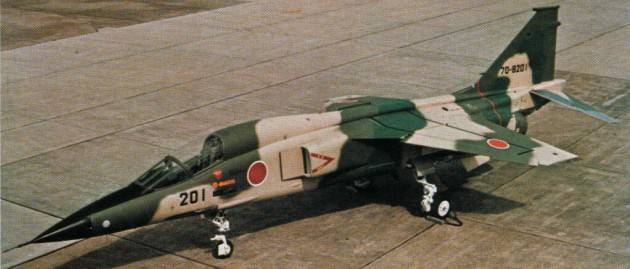
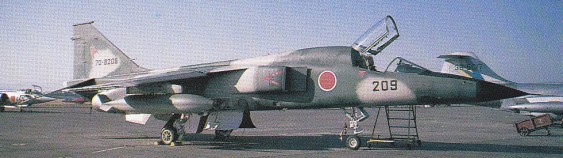
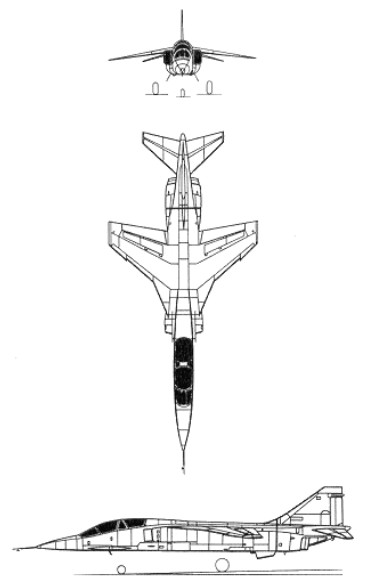
Japan’s first indigenous combat aircraft produced since the end of World War II, the F-1 originated from a 1972 decision to develop a single-seat close air support fighter from the Mitsubishi T-2 supersonic trainer. The overall performance of the latter was such that virtually no aerodynamic modifica¬tions had to be made, the principal change from the T-2 to the F-1 being the fairing over the rear cockpit for a bombing computer, inertial navigation and radar warning systems, without changing the contours. Two T-2s were converted to a single-seat fighter variant and redesignated FST-2 Kai. The first flight of this prototype (59 5107) took place on 3 June 1975, a conversion of the third production T 2 trainer.
The two prototypes were modified T-2s with weapons systems equipment and test instrumentation in the rear cockpits. Powered by two 7,070 lb st / 3207kg with afterburning Ishikawajima-Harima TF40-IHI-801A (licence-built Rolls-Royce/Turbomeca Adour) turbofans, the F-1 was armed with a single 20mm JM61 multi-barrel cannon in the lower front fuselage and had provision for up to 2721kg of bombs or rockets on the fuselage centreline and four wing hardpoints. Normal armament comprised two ASM-1 air-to-surface missiles and two or four AIM-9 Sidewinder AAMs.
Its primary task in the Japanese Self Defense Force was anti-shipping with the 50km range ASM-1 anti-ship missile as its primary weapon. It is equipped with the J/AWG-12 radar which has two operating modes, air-to-air and air-to-surface, and is compatible with the ASM-1 missile. It has an air-to-air capability using the AIM-9 IR seeking missile, but because of its short range this capability is only limited.
The Air Self-Defence Force purchased 77 F-1s, and the first production example (70¬8201) of the Mitsubishi F 1 was flown on 16 June 1977. First deliveries of the initial 59 aircraft ordered began in 1977 to the 3rd Squadron of the JASDF’s 81st Air Wing were made on 26 September 1977, and in April 1978 the first F-1 entered JASDF (Japanese Self Defense Force) service. All were delivered by 1987.
70 were retrofitted during 1991-93 to enable them to remain in Air Self-Defence Force service until 1999-2000. The retrofit included installation of an advanced fire control system, provision of a stronger cockpit canopy and compatibility with the ASM-2 anti-shipping missile and XGCS homing bomb.
The F-1 was scheduled to be replaced by the F-2.
Mitsubishi F-1 Engines: two 32.49 kN (7,305 lb st) Ishikawajima-Harisma TF40-IHI-801 (license built Rolls-Royce/Turbomeca Adour Mk 801A) afterburning turbofans Wing span 7.88m (25 ft 10¼ in) Length 17.86m (58 ft 7 in) Height 4.39m (14 ft 5 in) Wing area, 228 sq ft (21,18 sq.m) Empty weight, 14,017 lb (6 358 kg) Max loaded weight, 30,146 lb (13 674 kg) Max speed, 1,056mph (Mach 1.6 / 1700 km/h) at 40,000 ft (12 190 m) Service ceiling 15240m (50,000 ft) Initial climb, 35,000 ft/ min (177,8 m/sec) Combat radius, 346 mls (556 km) Max range: 1100 km / 684 miles Armament: one JM61 Vulcan 20mm multi-barrel cannon with 750 rounds Hardpoints: 5 Bombload: 2721 kg (6,000 lb)
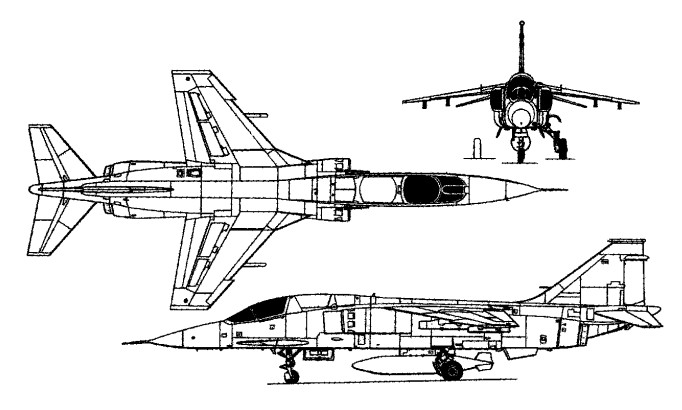
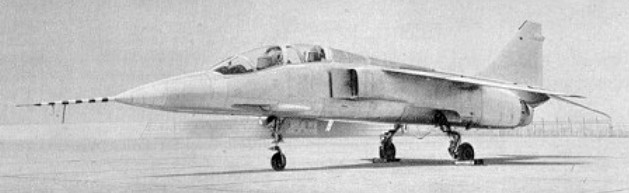
The T-2 was the first supersonic aircraft developed by the Japanese aircraft industry. It is a twin-engined two-seat jet trainer designed to meet the requirements of the JASDF. The first XT-2 prototype took to the air on 20 July 1971 and flew supersonically for the first time in level flight (Mach 1.03) during its 30th flight on 19 November 1971.
Armed with the 20mm Vulcan rotary cannon, production orders were placed for 92 T-2s: 28 T-2 advanced trainers, 62 T-2A combat trainers, and two as prototypes for the F-1 close-support fighter version. All of them retired from service by 1988.
Two T-2s were converted to a single-seat fighter variant and redesignated FS-T-2 Kai. The Mitsubishi FS-T2 Kai single seat close support fighter prototype (59 5107) was the first to fly on 3 June 1975, a conversion of the third production T 2 trainer. Designated F 1 in production form.
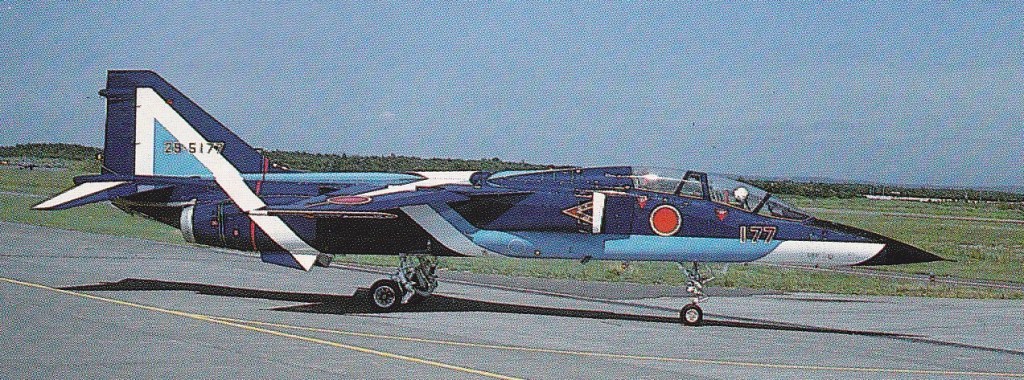
Mitsubishi T-2 29-5177 of JASDF ‘Blue Impulse’ team, Chitose, August 1982
A T-2 supersonic twin-turbofan advanced trainer modified to serve as a Control Configured Vehicle (CCV) testbed and distinguished by new horizontal canard and vertical control surfaces flew in August 1983. An extensive test programme undertaken by the JASDF/TRDI had achieved a total of 138 flights by March 1986, exploring all flight regimes including relaxed-stability and direct side force control.
Engines: 2 x Rolls Royce Turbomecca Adour turbofan, 22.8kN / 70 lb Wingspan: 7.9 m / 25 ft 11 in Length: 17.9 m / 58 ft 9 in Height: 4.5 m / 14 ft 9 in Wing area: 21.2 sq.m / 228.19 sq ft Max take-off weight: 9650 kg / 21275 lb Empty weight: 6200 kg / 13669 lb Max. speed: M1.6 Ceiling: 15250 m / 50050 ft Range w/max.fuel: 2870 km / 1783 miles Armament: 1 x 20mm cannon, 8-12 bombs, 2-4 missiles Crew: 2
Mitsubishi Jukogyo Kabushiki Kaisha Mitsubishi Heavy Industries Ltd
After World War 1 several members of the former Sopwith Aviation Company’s technical staff had joined Mitsubishi and produced designs to meet the specifications of the Air Supply Section of the I.J.N. In this way, Herbert Smith became chief designer for Mitsubishi. W. L. Jordan, D.S.C., D.F.C., an ex RNAS and RAF fighter pilot, was appointed their chief test pilot.
Mitsubishi Heavy Industries Ltd. formed April 11,1934, through the merger of Mitsubishi Shipbuilding and Engineering Co Ltd. and Mitsubishi Aircraft Co Ltd. Long association with Japanese Navy, commencing with Type 10, operational 1922. Most notable aircraft were 1937 A5M4 “Claude”; 1942 J2M3 ‘Jack’; 1939 A6M3 ‘Zeke’ (Zero), which were all fighters; 1941 Ki-46 ‘Dinah’ reconnaissance aircraft; 1940 G3M1 “Nell” and 1941 G4M1 “Betty” medium bombers; 1940 Ki-21 “Sally” heavy bomber; and its replacement, 1944 Ki-67″Peggy.”
Mitsubishi built 80,000 aircraft between 1920 and 1945. After the pre¬dominant role Mitsubishi played in Japa¬nese aviation during the 25 years that preceded the termination of World War II, MHI was prohibited from engaging in aircraft manufacture until 1955.
Post-war built North American F-86F Sabres, Sikorsky S-55s, S-62As, and S-61s, and 177 Lockheed F-104J and 19 two-seat F-104D-Js Starfighters with Kawasaki, with which company it also manufactured McDonnell Douglas F-4EJ Phantoms. They will be fitted with arrester gear
Mitsubishi completed the assembly of 300 F-86F Sabres for the JASDF, but modifed 18 of these aircraft into RF-86F reconnaissance-fighters, each carrying two K-22 cameras in the forward fuselage and one K-17 camera under the centre fuselage.
Licence production of Sikorsky S-55 helicopters began in 1958, and was to be followed by manufacture of the HSS-2 Seadragon anti-submarine helicopter, of which Mitsubishi were to build 10 for the JMSDF by November 1966.
Shin Mitsubishi Jukogyo Kabushiki Kaisha 1962: Shin Mitsubishi Building, No 10, 2-Chome, Marunouchi, Chiyoda-ku, Tokyo
Produced 90 T-2 supersonic jet trainers, the first Japanesedeveloped supersonic aircraft (first flown 1971 and all delivered by 1988) and 77 F-1 single-seat close-air-support derivatives (all delivered by 1987). Developed MU-2 turboprop executive aircraft (first flown 1963), built in Japan and assembled and marketed in U.S.A. by subsidiary Mitsubishi Aircraft International, followed by the MU-300 Diamond (first flown 1978), which later became the Beech Model 400 Beechjet.
Produced 213 McDonnell Douglas F- 15J/DJ fighters for JASDF by 1998, and in October 1995 first flew new Japanese-developed F-2 fighter support aircraft, intended to replace F-1 and based on F-16 but incorporating new technologies. Currently modernizing F-4EJ fleet, is a partner in the Bombardier Global Express program, has a 20% share in the Kawasaki OH-1 helicopter program, constructs Sikorsky S-70B-3 helicopters for the JMSDF as SH-60JS (the first flew 1991) plus UH-60Js for SAR with JMSDF and JASDF and UH-60JAS for JGSDF, has developed the new MH2000 twin-turbine multipurpose helicopter (first flown July 1996), and constructs components forthe Dash 8, various Boeing airliners and Sikorsky S-92. Also has engine and space activities.
Its overhaul and repair organization handles all types of aircraft and aero-engines. In particular, it is responsible for component manufacture and repair of Pratt & Whitney engines in Japan.
Mitchell concentrated on the design of a two-seat development of the Proctor Kittiwake I, the Mitchell Kittiwake II.
The Kittiwake II differs chiefly in having two side-by-side seating and a more powerful 130 hp (97 kW) Continental O-240. It is longer, heavier and has an increased span which increases the wing area by about 8%. The fuselage is wider and the small dorsal fillet of the Kittiwake I gone; the rudder gained a trim tab and the elevators full width tabs.
Robinson Aircraft built the prototype at Blackbushe, which first flew on 19 March 1972, powered by a Rolls-Royce/Continental O-240-A.
Arkle (R&D) Ltd was formed by A. Ronald Kellett to undertake the development of the improved Mitchell-Procter Kittiwake II, Known as the Arkle Kittiwake II, it was first flown in this form on 29 April 1975.
A second Procter Kittiwake II was started in 1974 at Barrow-in-Furness, by R.Bull. It was registered G-BBUL c/n RB-1.
In 1977 a Mitchell-Procter Kittiwake II was registered as belonging to Arkle Research & Development.
I seem to remember Wing Commander Ronald Kellett was funding work on a Mitchell Proctor Kittiwake. The CFI was doing some of the test flying out of Lydd. I worked at Benenden for Arkle Reserch and Development during 75/76 maintaining the Beagle Pup 150’s and assisting on modifications with Kittywake 2. We actually installed a Pup 100 control column and linkages in Kittywake 2 which was a vast improvement on the original unit. I accompanied Julian Soddy who was CFI at Lydd on the test flights as flight observer. Julian was an ex RAF Black Arrows pilot hence his aerobatics were somewhat interesting. Mike Buck


 All Aero