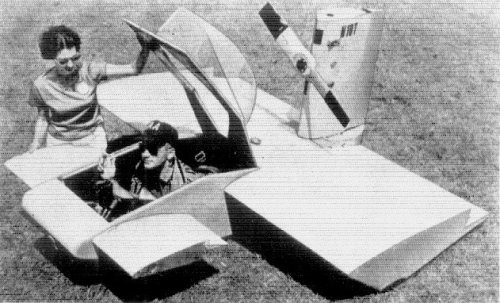
Terence O’Neill’s Pea Pod N10T of 1963 was a diminutive machine in which the pilot lay in a prone position, with most of his body inside the wing. It was powered by a 35 hp Kiekhaefer O-4-35 boat engine mounted inside the vertical fin, and could be carried atop the family car. Taxi tests were performed, but it could not meet FAR 103 requirements and reportedly never flew.
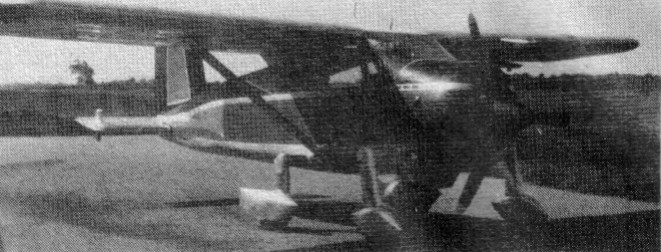
O’Neill Airplane designed the eight-seat Model J Magnum with unusual four-wheel undercarriage in 1980s. Further developed Magnum V8 six-seater, featuring swing tail for loading cargo, which can be built from plans and some available components.
The Magnum is a bush-type, designed around radial engines like prototype’s 350 HP turbocharged Jacobs R755S, a manufacturer’s modification of the L4M 245HP Jacobs. It features an extra-large cabin 49 inches wide by 102 inches long, plus an additional 68 inches cargo camping gear area. Special features are: stall/spin safety system with wind-wing angle indicator, vertical stabilator with forward-canted axis, and slotted stabilator; instant-droppable fuel tank to avoid post-crash fire hazard; and full-span dive flaps intended to limit airspeed to 185 mph at 3800 pounds gross, combined with structural design strength of 7 G’s yield, the maximum available from full-flapped wing at 185. Super rough-ground stability achieved by dual nosewheels.
Power (optional 245 hp) 350 hp Gross Wt. 2900-3500 lb Empty Wt. 1750-2000 lb Wingspan 30 ft 3 in Length 23 ft l1 in Top alt, cruise 200+ mph SL cruise 140 mph Stall 60 mph Climb rate 1000 fpm Takeoff run 1000 ft Landing roll 1000 ft Range 400 mi. plus 45 min. reserve
Magnum V8 Pickup Engine: Ford 351ci V8, 380 hp Speed max: 185 mph Cruise: 140 mph Range: 800 sm Stall: 61 mph ROC: 1200 fpm Take-off dist: 1000 ft Landing dist: 1000 ft Service ceiling: 20,000 ft HP range: 350-450 Fuel cap: 110 USG Weight empty: 1900 lbs Gross: 3800 lbs Height: 9 ft Length: 25.8 ft Wing span: 36 ft Wing area: 189 sq.ft Seats: 2+ Landing gear: dual nose wheel
After the war, Waco developed a new monoplane, the Aristocraft, but abandoned it in 1947, and the company went out of business. O’Neill Airplane Co. formed 1962 to develop Waco’s last design, the Waco Model W Aristocrat, for which all rights were acquired. Terry O’Neill flew the aircraft for a brief period after he had completed the restoration.
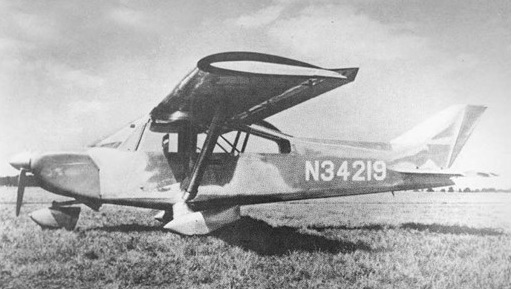
The Waco W was flown for only a brief period as it was converted into the tail dragger Aristocraft II, with the engine mounted in the nose, in this configuration it was flown in October 1963 and retained most of the original fuselage, the wings and horizontal tail of NX34219.
O’Neill Aristocraft II
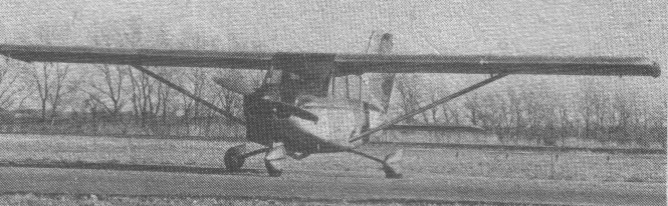
The Artstocraft uses the Waco wing design, simplified for amateur builders. The II design was awarded a Provisional Type Certificate (Al 9CE) by the FAA in 1969. It is one of the largest homebuilts, seating up to six persons. Originally powered by a 200-hp Lycoming IO-360, one amateur builder was adapting the Blanton 220-hp Ford 23 turbo and is using conventional landing gear for more speed and lower cost for cross country use.
In 1968 O’Neill refitted it with six seats, a tricycle landing gear and a single swept fin tail, in this configuration it was flown in October 1968, still registered N34219, but re-designated Model W Winner.
The O’Neill Pea Pod canard design was proposed also, but all activity on the Aristocraft terminated in 1974.
Wingspan 36 ft l0 in Length 25 ft l0 in Gross Wt. 2650-3300 lb Empty Wt. 1600-1800 lb Top speed 135 mph Cruise 120 mph Stall 55 mph Climb rate 500 fpm Takeoff run 1000 ft Landing roll 1000 ft Range 600 miles
Model W Wingspan: 37ft 6in Length: 26.7ft Height: 8ft 4in trigear
O’Neill Airplane Co. formed 1962 to develop the Waco Model W Aristocrat design, for which all rights were acquired. Two versions were evolved, the Model W Winner, which was to have been a serious production machine, and the Aristocrat II for amateur construction. The O’Neill Pea Pod canard design was proposed also, but all activity on the Aristocraft terminated in 1974. Designed eight-seat Model J Magnum with unusual four-wheel undercarriage in 1980s. Further developed Magnum V8 six-seater, featuring swing tail for loading cargo, which can be built from plans and some available components.
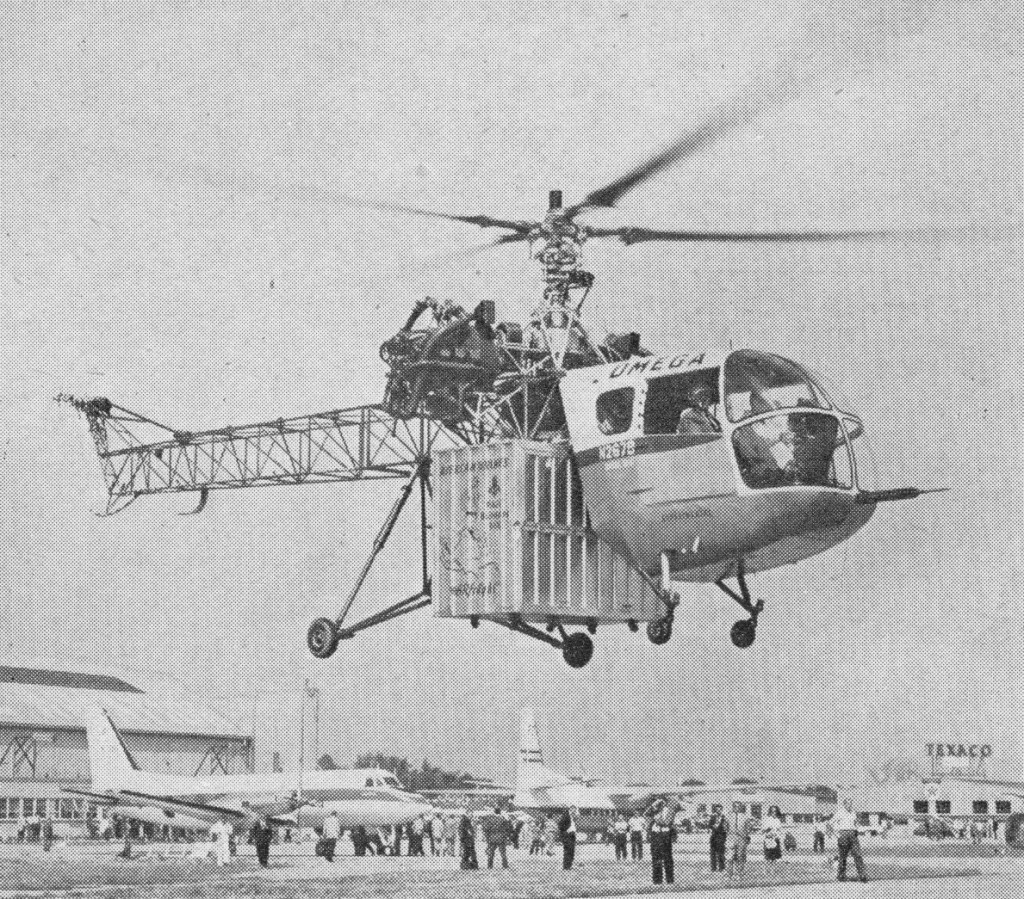
The Omega BS-12 four-seat, twin-engined helicopter flew in 1956, and was succeeded by the BS-12D with more powerful engines and the 1963 BS-12D3S supercharged version.
Developed from an original Canadian design with two Franklin engines, the BS-12 could carry a 1500 lb load.
Production was to have started in 1964, when all development was suspended after completion of four prototypes.
USA Omega Aircraft Corp was founded 1953 as a subsidiary of Allied Aero Industries for further development of the Sznycer-Gottlieb SG VI helicopter. The Omega BS-12 four-seat, twin-engined helicopter flew in 1956, and was succeeded by the BS-12D with more powerful engines and the 1963 BS-12D3S supercharged version. Production was to have started in 1964, when all development was suspended after completion of four prototypes.
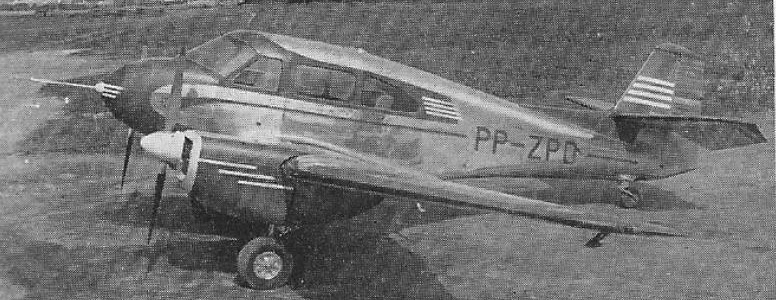
Designed to operate from small airfields, the Casmuniz 52 sive-seat cabin monoplane is the first all-metal twin designed in Brazil.
The prototype was designed and completed in 1952 by Cassio Minuz S.A. of Sao Paulo, and eighty per cent of the skin is made of uniformed or single-curvature aluminium sheet panels to facilitate replacement in any locality of limited resources. It was first flown in April 1952.
Oficina de Manutenco e Recuperaceo de Avioes Ltda, the Brazilian maintenance and overhaul facility based at Sao Paulo, acquired manufacturing rights to the Casmuniz 52 and sole prototype in 1955. OMAREAL took over the flight testing of the sole prototype, but no production ensued.
Engine: 2 x Continental E185, 185 hp Max speed: 200 mph Cruise: 165 mph Range: 700 mi Seats: 4-5
Brasil Oficina de Manutenco e Recuperaceo de Avioes Ltda, the Brazilian maintenance and overhaul facility based at Sao Paulo, acquired manufacturing rights to the Casmuniz 52 twin-engined five-seat lightplane in 1955. Designed and built by Cassio Muniz SA, the Casmuniz 52 was intended for easy construction from single-curvature metal to facilitate field repair in bush operations. OMAREAL took over the flight testing of the sole prototype, but no production ensued.
USA Established at Reno in 1977 to produce OMAC 1 business aircraft with pusher turboprop engine (first flown 1981). Second prototype served as testbed for improved Laser 300 version; production prototype flew July 1988, but further development halted soon after owing to funding difficulties.
The Old Rhinebeck Aerodrome has a reproduction 1910 Hanriot constructed by Cole Palen, Mike Lockhart, and Andy Keefe with the aid of drawings published in Flight during the winter of 1974 in Florida. It had originally been powered by a 1910, two-cycle, water-cooled Elbridge Featherweight engine, but it had later been retrofitted with a more capable, water-cooled, 50-hp Franklin after it had sustained connecting rod damage. Because of its lower weight, it often resulted in a nose-high pitch which had to be elevator-counteracted during flight, although its increased horsepower produced more sprightly performance than the original engined-version had offered.
The aircraft, initially demonstrating stability problems, was subsequently modified and first performed in the 1976 Hammondsport Air Show. Demonstrating its handling characteristics much further afield, it partook, along with the Curtiss Model D and the Sopwith Camel, of the 2003 Australian International Air Show in Geelong, flying circuits round Avalon Airport 11,000-foot runway.