Born August 1, 1920, Eastern Band of Cherokee Indians Reservation in North Carolina.
BS Aeronautical Engineering, Parks Air College, East St. Louis, 1940.
Engineer at Curtiss Wright, Aeronca, McDonnell Aircraft, North American Aviation, California. Projects included X-15, B-70, B-1, F108, F-14, F-15, Space Shuttle.
Poland Formed 1957 by the Polish Minister of Heavy Industry, to take over all design activities formerly conducted by the Polish Aviation Institute. First design was the MD-12 four-engined feederliner/photo-survey aircraft, which flew in 1962. A developed version of Russian Yak-12, known as the PZL-101 Gawron (Rook), has been produced in quantity for agricultural and air-ambulance duties. Now superseded by the PZL-104 Wilga (Thrush), which is offered for agricultural, air-ambulance, transport, glider-tug and parachute roles, and has been widely exported. License production is under way in Indonesia. Deliveries of the TS-11 Iskra (Spark) two-seat aerobatic jet trainer to the Polish Air Force began in 1963.
USA The original Osprey amphibian was designed by George Pereira. The Osprey 2 two-seat amphibian first flew 1973 and plans and kits are available to allow amateur construction. Osprey Aircraft also marketed as plans and kits is the Osprey GP-4, a two-seat monoplane first flown in 1984.
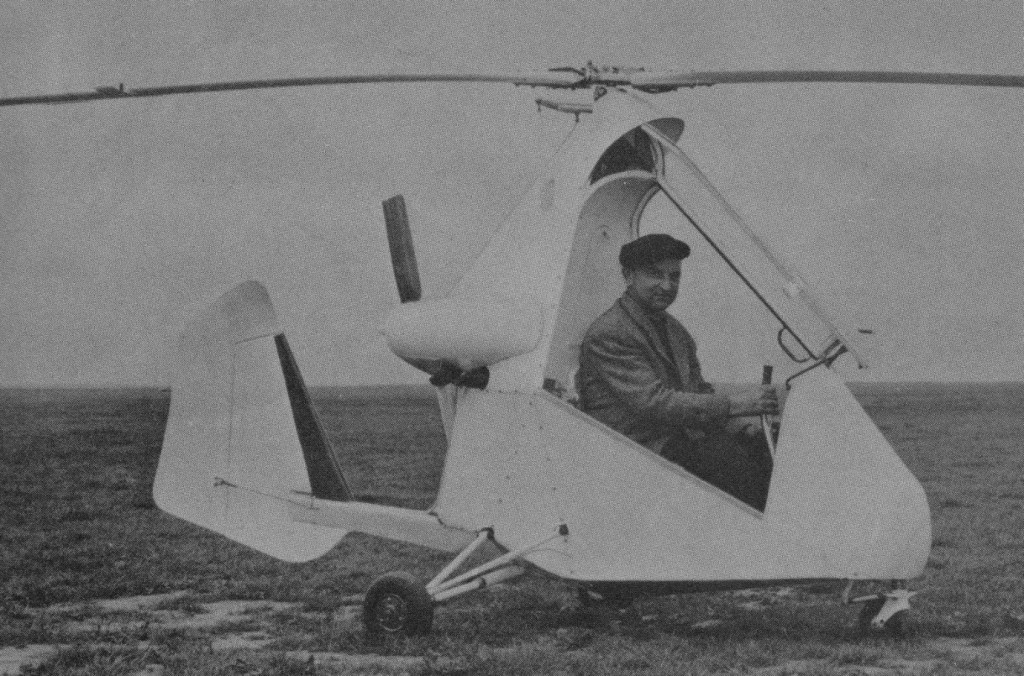
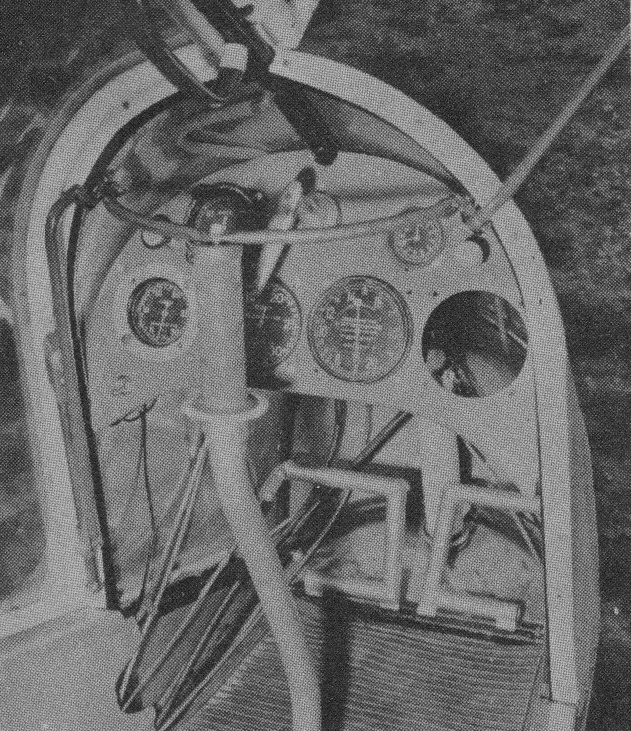
Francois Oslist designed and built a small autogiro, he called Microgiro, in 1964.
Rotor blades are formed from solid spruce, with an aluminium hub. The fuselage is steel tube with an aluminium skin. The tail is also tubular steel but with fabric cover.
Engine: McCulloch, 72 hp Rotor diameter: 20.6 ft Rotor chord: 7.8 in Fuselage length: 10.66 ft Hieght: 6.3 ft Landing gear tread: 54 in Landing gear track: 65 in Main wheel diameter: 9.5 in Nosewheel diameter: 6 in Empty weight: 330 lb MTOW: 550 lb
The BrO-21 Vyturys training glider prototype was built in Kuibyshev with the help of Aviation Factory engineers and Aviation Institute students.
The wing of the of the BRO-21 Vyturys glider consists of four balances and two ailerons. The wings were arranged one after the other with an overlap of 70 mm, forming a 40 mm slit forming an angle of 7 degrees.
The BrO-21 1980 At the beginning of 1980, the construction of the second example of BRO-21 was started in Palanga, the construction of which was completed in Kaunas in 1980. June 20 his trials began.
Polymers and glass cloth were used in the construction. The gap between the spar is filled with epoxy- impregnated foam, covered with glass cloth.
The fuselage consists of a front part (cockpit) and a tail beam. The cabin is made of fiberglass. All cabin sides are covered with microporous rubber edging.
At the bottom, the cabin has 5 rubber “legs” to which it can be attached: wide fiberglass ski (for winter), ski with wheel 200 × 80 or 255 × 115 (for summer), three-wheel chassis (training in landing) a float that turns the apparatus into a hydraulic dispenser.
The tail beam is made of fiberglass.
The BRO-21 variant of the glider built in Kuibyshev, was demonstrated in Moscow at a union competition of youth gliding schools. The glider, starting with the shock absorber, showed a great advantage over another classic-designed training glider “Trener” developed by Kuibyshev.
Wingspan: 5.2 m Length: 7 m Wing area: 10.5 m² Empty weight: 84 kg Take off weight: 160 kg Pilot weight: up to 76 kg Maximum speed: 100 km / h Minimum speed: 35 km / h Glide ratio: 12 Wing load: 15.2 kg / m² Seats: 1
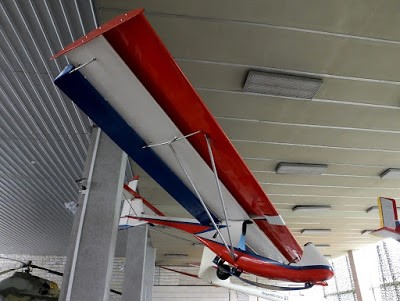
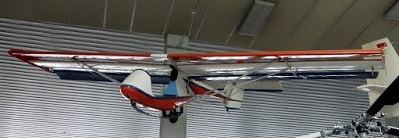
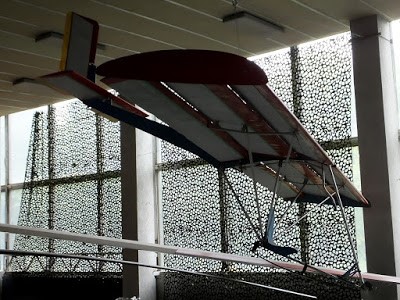
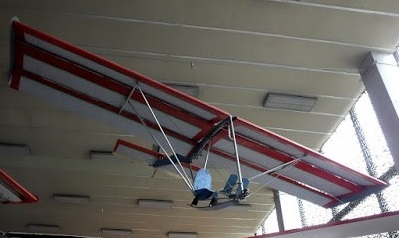
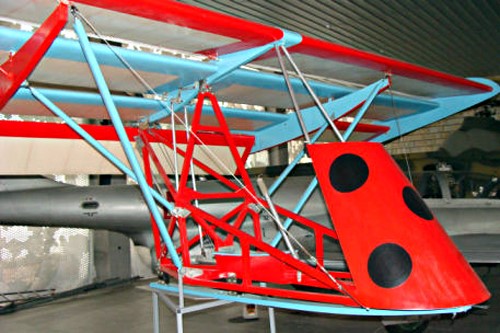
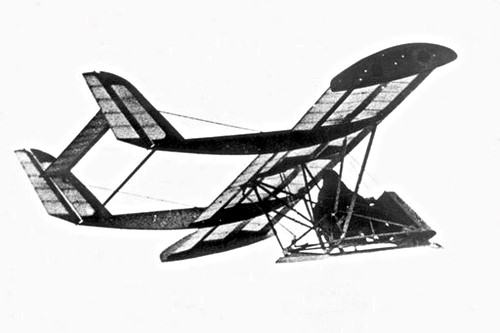
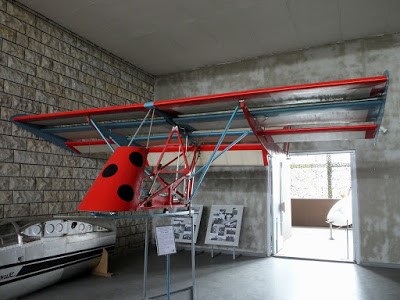
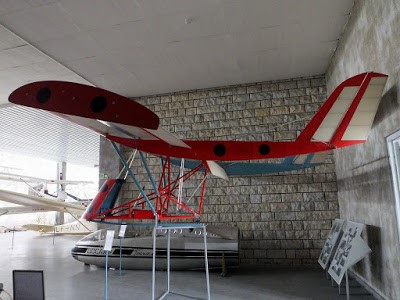
The Oškinis BrO-18 Boružė mini glider was easy to manufacture and easy to handle. With its short wings, Boružė cannot reach high speeds and heights, so it is perfect for training children from 12 years of age. The glider takes off at a speed of 35-40 km / h (3-4 people are enough to take off).
Boružė is an experimental device and probably the smallest glider in the world (wing span – 4.9 m).
According to Bronius Oškinis, this glider is designed to be launched with a puller and to be able to reach the thermal. The glider had to be inexpensive, suitable for mass production, so that every gliding club could buy it. Oškinis applied an unprecedented innovation to gliders – hanging flaps and ailerons, which greatly increase the lifting capacity of the wings.
At that time, the Soviet Union’s air construction bureaus focused on the construction of military aircraft, while Lithuanian designers designed gliders because they did not have the opportunity to construct aircraft during the Soviet occupation.
The wings were covered with 1.0-1.5 mm thick plywood, varnished and polished.
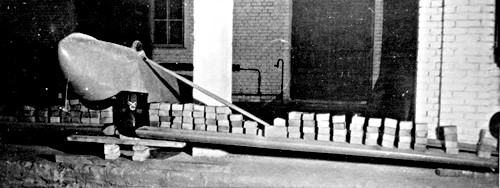
Static tests
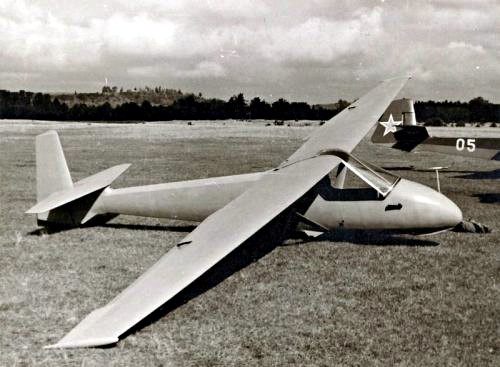
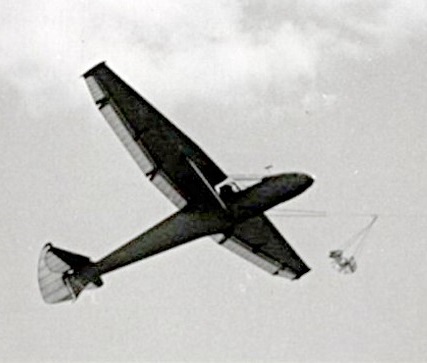
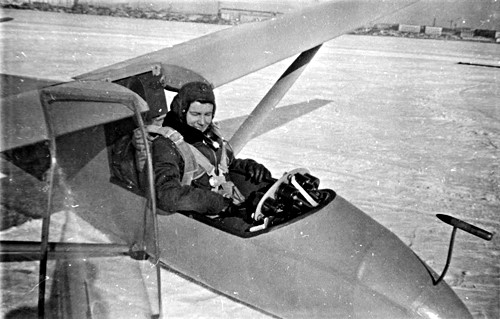
In order for novice pilots to clearly see the fluctuations in the direction of flight, the glass of the BrO-12 cockpit covered the glider only from the front – the deviation from the straight flight was immediately felt by the pilot blowing in the wind through the open sides. The seat is suitable for flying with a parachute ПНЛ-45.
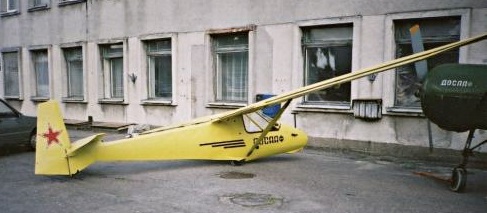
The BrO-12 prototype was built in 1957. In the workshops of Kaunas Gliding Station. Pulled by a winch, it rose to 400-500 m, and even higher in the event of stronger winds. No other glider was able to take off so much then. In Moscow it was decided to produce BrO-12 series.
The BrO-12 was produced at the Simferopol Aviation Workshop, where during 1959–1961 about 120 units were produced.
In 1959-61, a total of about 20 gliders of this type flew in Lithuania.
In 1959-61, a total of about 20 gliders of this type flew in Lithuania. After the Soviet Union decided to produce metal-gliders, the BrO-12 soon competed with the Czech two-seater Blanik.
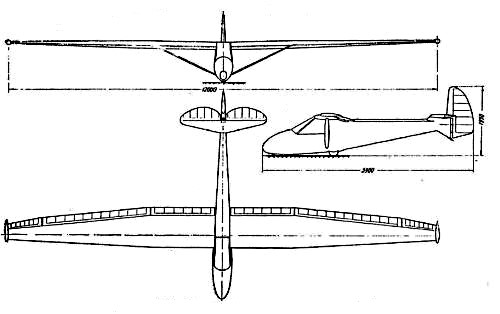
Wingspan: 12 m Wing area: 11.3 m² Length: 5.9 m Height: 1.50 m Empty weight: 160 kg Takeoff weight: 245 kg Wing loading: 21.7 kg / m² Landing speed: 45 km / h Cruising speed: 60 km / h Glide ratio: 20 Seats: 1
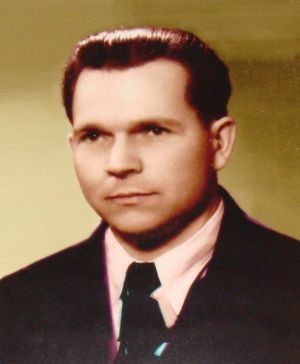
Bronis Oškinis was born April 15, 1913 in Barzdai, Šakiai county, Lithuania, in the family of Jonas and Agnieška Oškiniai.
In 1920 the family moved to Kaunas. 1928–1933 Bronis Oškinis studied at Kaunas Higher Technical School (ATM). Interested in aviation, he was one of the Kaunas ATM aviation group, founded on 13 December 1931.
After completing aviation courses, he led the construction of gliders in ATM workshops.
Reconstructed the German training glider RRG-23 “Zoegling” and in August 1932 developed the Lithuanian T-1 (“Technikas-1”) glider. In Pažaislis, this glider was tested by military pilot Gregorius Radvenis. The first flight was performed by B. Oškinis himself.
In 1933, with others, in Nida set up a gliding school. He later constructed the BRO-2 and BRO-3 gliders. He learned to fly not only gliders but also airplanes. In 1936 appointed Deputy Chief of the Zokniai Military Aviation Workshop. He later served as a military pilot in the 3rd Squadron.
Oškinis tested the BRO-4 “Rūta” glider for acrobatic flying in 1937. Jonas Pyragius and Bronius Oškinis participated in the 1937 world meeting in Elmyra (USA), where B. Oškinis flew the LAK glider “Biržietis”, and J. Pyragius – BRO-5 “Rūta”.
In 1938 he graduated from the Lithuanian Military Pilot School and 1938–1940 studied aeronautics at the Technical University of Berlin. He returned to Lithuania in 1940 and was assigned to the workshop of the National Aviation Squadron of the 29th Territorial Rifle Corps in Pivonia (near Ukmergė). 1941–1944 worked in Kaunas aviation workshop in Freda as a production controller, repaired German Junkers Ju-88 and during 1942–1944 studied at Kaunas Vytautas Magnus University.
1944–1945 was arrested and taken to the Podolsk camp, returning to Kaunas 1947, he gave lectures at the State University and continued to develop new gliders. During 1956–1962 was Head of Kaunas Gliding Station, later headed a gliding school in Palanga.
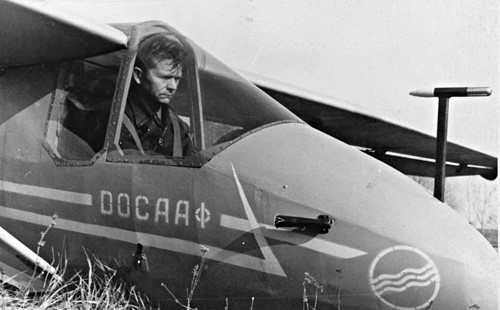
Bronius Oškinis in his design glider BrO-12
Serial production of Bronius Oškinis gliders BRO-9 “Grasshopper”, BRO-11 “Pioneer” and BRO-12 was started in Simferopol aviation workshop. They flew in all aviation sports clubs of the former USSR. 1962 An Experimental Sport Aviation Factory was established in Prienai, where B. Oškinis worked as a designer. Much attention was paid to the development of gliders for young people. They introduced many innovations, using slit wings, slit flaps and ailerons.
Bronius Oškinis developed 25 gliders of various modifications and died on April 7, 1985 in Palanga.
He was awarded by the Lithuanian government and FAI (International Aeronautics Association). The Lithuanian Children’s Aviation School and the street in Palanga are named after him.
Ošk gliders T-1 (BrO-1) (1932) T-2 (BrO-2) BrO-3 “Fluff” (1936) BrO-4 “Ruth” BrO-5 “Ruth II” (1938) BrO-6 “Fluff” BrO-9 Grasshopper BrO-10 “Fluff” BrO-11 Pioneer BrO-11 M Tit BrO-12 (1957) BrO-14 BrO-16 “Pempė” (1973) – water glider BrO-15 “Raguva” BrO-17S Bite (1974) BrO-17V “Antelė” – water glider BrO-18 Boružė (1975) the smallest glider in the world Br0-19 “Duck” BrO-20 “Fluff” BrO-21 “Vyturys” BrO-22 “Rūtelė” BrO-23 “Herons”