This company continued the work of PacAero. It also produced a conversion of the Beech 18 known as the Tradewind, with single fin and rudder, tricycle landing gear, and improved avionics. PAC also has considerable agency agreements and is heavily involved in modification, repair, and maintenance contracts, and in 1968 took over the R.J. Enstrom Corporation, manufacturer of light helicopters. Helicopter production was stopped in 1970 when the Purex Corporation, owner of Pacific Airmotive Corporation, began to reduce its aviation commitments.
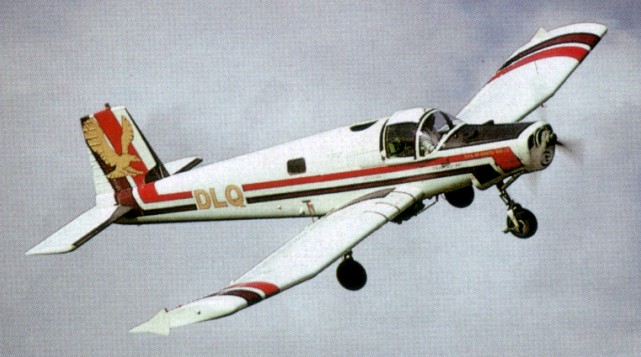
Design beginning in the mid 1970s to FAA FAR Part 23 the first Cresco, (Latin for “I grow”) flown, ZK-LTP, became airborne in February 1979. During development, feedback from operators of the Fletcher aircraft regarding areas in which the Fletcher was lacking was taken into account, however the strength of the original design was retained.
The new aircraft featured a longer fuselage, a massive hopper, enlarged fin and rudder, revised wing with integral fuel tanks (wet wing) and a 600 hp, Lycoming LTP 101 turbine. The Cresco retained all the good features of the Fletcher.
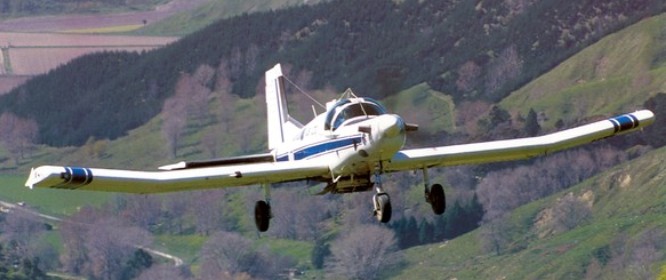
Although appearing very similar to the FU 24 Fletcher at first glance, the Cresco was actually a much bigger machine and improved in many ways. With its tricycle landing gear and rear mounted hopper the Cresco is unique in agricultural aircraft and, through this configuration, allows for safe operations off these sloping hill strips. The Cresco has the advantage of forward visibility and wind gust capabilities lacking in tail dragger aircraft with forward mounted hoppers.
All metal semi monocoque construction, comprising of frames and longerons covered by pre-formed aluminium alloy skins. Wing single spar cantilever construction with sheetmetal ribs covered by pre-formed aluminium alloy skins with the centre wing having no dihedral and outer with 8 degree dihedral. Dual side by side controls. Fixed tricycle landing gear with a wide track and long stroke oleos designed for rough fields and providing a soft ride. Rear mounted hopper independent of the fuselage. Three-blade Hartzell fully reversible prop. Superb visibility with the cockpit forward of the wing and hopper to the rear rather than in front. No handling vices. Cockpit environmental structure stressed to 25g.
After several years of design and construction ZK-LTP, the prototype 08-600 Cresco took to the air on the 28th February 1979 powered by a 600 shp Lycoming LTP101-600A-1A turbine engine. This was the first flight in the world of an aircraft designed from the outset as a turbine powered agricultural aircraft.
Configured as a dual control aircraft with a 62.5 cu. ft. hopper it differed from future examples by having a full flying tail-plane (much like the FU-24) and no dorsal fin.
After a bright start to the certification process trouble stuck on the 10th December 1979 when, after difficulties during a test flight, the pilot elected to parachute to safety and consequently ZK-LTP was completely destroyed as it impacted the ground.
It was June 1980 before the second prototype ZK-LTQ s/n 002 took to the air for the first time and the certification process continued. Significantly ZK-LTQ unlike s/n 001, sported a new fixed tail-plane and a dorsal fin.
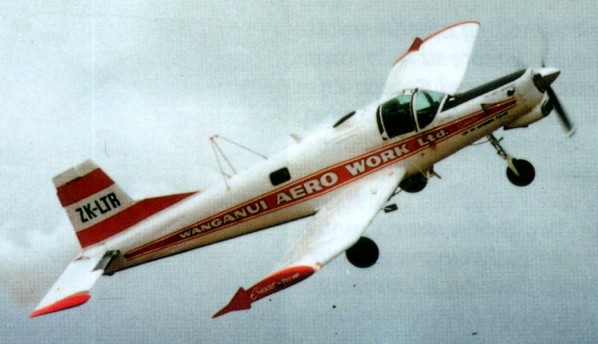
By January 1981 the certification process was complete, NZ Certificate of Type Approval NZ CTA A-11 was granted as the 08-600 Cresco, and production had commenced with s/n 003 ZK-LTR first flying on the 19th January 1981.
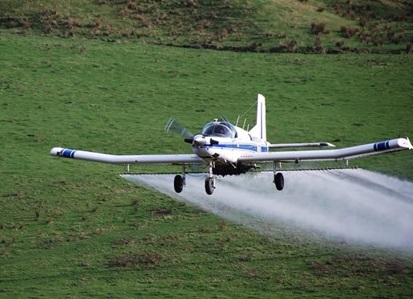
In the steep New Zealand hill country, “operating” means operating from an unimproved landing strip; often on the side of a hill with a flat spot at the top to load. With GPS to help make accurate dispersal runs, the aircraft will often be back for another load in less than 4 minutes. From brakes on to brakes off, the loading operation is completed in around 7 seconds and power is applied for the takeoff run. One unforeseen problem arose with the introduction of the Cresco: the aircraft was dispersing material faster than the trucks could deliver it to the aircraft.
Production had no sooner commenced when it was slowed considerably over the next decade due to a downturn in the farming sector. Only six further examples were produced between 1982 and 1992.
S/n 004 ZK- JAD the first 700 hp and single control variant was produced in January 1983 followed by s/n 005 ZK-LTS in September 1987. There was some relief in 1990 when three examples were produced for the Department of Plant Protection in Bangladesh. Next off the line was s/n 009 the last LTP101 powered variant (ironically like the prototype also ZK-LTP) which first flew in October 1992.
In 1992 the customer for s/n 010 requested replacement of the Lycoming LTP101 Engine with a Pratt & Whitney Canada PT6A-34AG engine of 750 shp. First flown in November 1992 the modification was an outstanding success and the PWC powered Cresco became the standard aircraft that PAC produced as the Cresco 750.
When PAL changed ownership in late 1995 the first continuous Cresco 750 production commenced with s/n 012 ZK-TMO first flying on the 15th February 1996, and by the time the year was out four aircraft had been completed. A further five examples were completed in 1997 including several milestone aircraft:
S/n 019 the first aircraft with the “big” hopper mouth and gatebox, s/n 020 the first aircraft with the new extruded spar caps and s/n 021 the first utility version produced.
The next significant milestone was the production of the first utility parachuting variant s/n 024 in September 1999, which contributed to the subsequent development of the new P-750 XSTOL.
It is able to take a pilot and twelve skydivers to 14,000 ft (4,267m) in 12 minutes.
Modifications for the skydiving role include factory installed special steps, external jump door, grab rails and a large air scoop cowling to allow the engine to obtain full power at altitude.
Production continued through the early 2000s and in 2002, the highest production year to-date, seven examples were produced cumulating in s/n 036 ZK-TTS.
Of the last 10 airframes produced five have been agricultural variants and five utility parachuting variants.
PAL has upgraded four of the early Lycoming LTP101 powered aircraft to PWC PT6A-34AG 750 shp status.
This unique and special aircraft is no longer in production.
The CT-4 Airtrainer was born out of two situations that occurred in the early 1970’s. Firstly the failure of the T6/24 Airtourer to meet the Royal Australian Air Force (RAAF) requirement for a basic trainer. Secondly the foresight of the AESL management of the time to exercise an already held option on the production rights to the Victa Aircruiser and adapt it into what we know as the CT-4 Airtrainer.
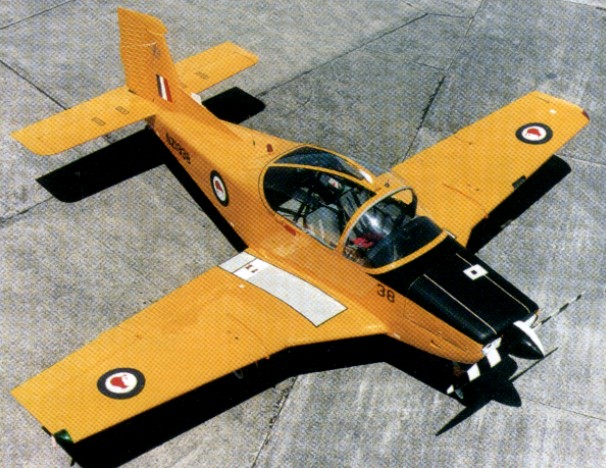
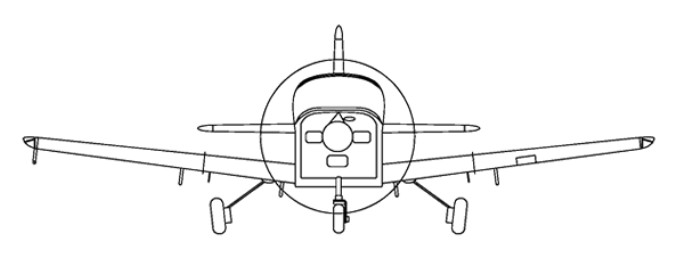
Development included a jettisonable clamshell canopy, revised seating and interior with side-by-side and optional third seat in the rear, and structural strengthening for aerobatic work. The wings are constructed separately, and during their installation to the fuselage are joined by splicing the two protruding main spars at 6 deg 4 min of dihedral on the top of the spar and 3 deg incidence at the root. Conventional control surfaces are utilised, with electrical spring bias trimming devices provided for the rudder and elevator and fixed tabs for the ailerons. Flaps are electrically operated and can be set at any position, while the fixed under¬carriage has a steerable nosewheel and the wheel brakes are toe operated.
Powered by a 210 hp Continental IO-360-H and the CT-4 was designed for aerobatics of +6 to -3g.
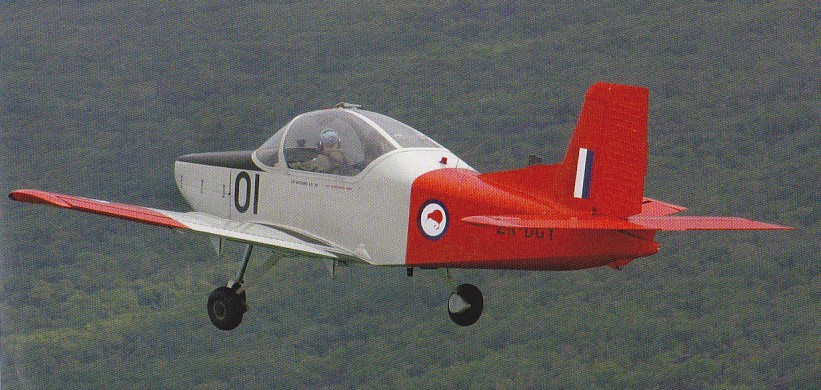
The first CT/4 Airtrainer s/n 001 first flew on 23 February 1972 (ZK-DGY).
ZK-DGY
The second prototype was built to refine the design. The second, c/n 002, was the only single-control model ever made. The two prototypes were the only Airtrainers made under the AESL banner.
AESL secured a RAAF contract to supply 37 aircraft. This order was followed by another from the Royal Thai Air Force for 24 aircraft.
These orders prompted the merger of AESL with Air Parts (NZ) Ltd and with the involvement of the New Zealand Government, New Zealand Aerospace Industries was formed.
The RAAF order followed the RTAF order down the production line also as CT-4As the first in December 1974 and continuing throughout 1975, ending with s/n 063.
CT-4A
A further order from a Swiss company named Breco had been secured for 14 aircraft (c/n 064 to c/n 077) and these immediately followed the last RAAF Aircraft down the line. These aircraft were designated CT-4B but were not the same as the civil CT-4Bs that were produced at a later date. They were in fact destined for Rhodesia (Zimbabwe) which was UN sanctioned at the time and the NZ Government prevented their export and consequently they were never delivered (although paid for).
The Royal New Zealand Air Force was next to sign up for CT-4s with an order for 13 aircraft. These were produced in 1976 ending with s/n 090. Although initially they were to be CT-4D models the aircraft were data plated as CT-4B, however technically they were neither as they were not built to the Type Certificate but to a RNZAF specification. The CT/4B designation described a higher all up weight requirement by the RNZAF to accommodate additional avionics.
Then the orders had run out and continuous production ceased at s/n 090.
When NZASIL announced the termination of CT-4 production the RNZAF in 1978 ordered a further 6 aircraft as attrition airframes.
In 1981 the RAAF, looking to expand their fleet of CT-4A Airtrainers, opted to purchase the Breco CT-4B aircraft that had been in storage since manufacture. These aircraft went down the production line once again retaining their original serial numbers to be converted from the Breco CT-4B specification into the RAAF CT-4A specification. The last aircraft was completed in May 1982 and that seemed to be it for CT-4 production.
With the purchase of NZAI by the Pacific Aerospace Corporation in 1982, the turbine project was taken out of the filing cabinet and re examined. Initially mooted was the CT4/CR featuring the Allison 250 B17 turboprop engine and a redesigned wing to accommodate a retractable undercarriage. Subsequently it was decided to build an intermediate stage, the fixed gear CT/4C.
With no airframes on hand to modify for the project, PAC approached the RNZAF and NZ1940 c/n 066, written off and reduced to spares was obtained. A 250 hp Allison turboprop, fitted with a PAC designed and built oil and fuel system to enable up to 30 seconds of inverted flight, was installed on 21 December 1990. Up front was a three bladed variable pitch Hartzell propeller.
On 21 January 1991 the CT/4C was test flown for the first time, by chief test pilot John Muir accompanied by Murray McGregor. Downrated to match the 210 hp of the CT/4B, the Allison was able to maintain its horse power through to 5000 feet. The CT/4C rotated at 60 knots and climbed away at 90 kts. The engine horsepower was increased to 300. At 300 hp John Muir described the aircraft as very quiet with more noise coming from the slipstream than the engine. Cruise on 300hp proves out at 165 knots (25 knots above the CT/4B on 75 percent power) and has a 2000 foot per minute climb rate at 105 knots. The stall is clean 58 knots, full flaps 48 knots. The engine uses about 80 litres/hour.
Production resurfaced under the PAC banner in 1990 when the RAAF decided to civilianise it’s basic training and sell off the majority of CT-4A Airtrainers.
In 1990, PAC proposed one major change to the new batch of Airtrainers; introducing an inverted oil system to permit extended inverted flight, a modification developed from the Christen system implemented by the RNZAF. The change is to be incorporated by Teledyne Continental at the factory level as the IO 360-HB9.
The contract to provide this training was awarded to BAe/Ansett in NSW (later BAe Systems Australia) who in 1990 ordered 12 CT-4 Airtrainers to undertake the task. These were produced from ex-RNZAF aircraft as civil CT-4B models during 1991 and 1992. The RTAF, aware that the CT-4 was back in production, placed an order for 6 CT-4B models and these were produced after the BAe/Ansett airframes taking total production to-date to 114.
During this same period the development of the CT-4E was undertaken in the hope of securing an USAF contract. Using ex Breco and ex RAAF airframe s/n 065 the development was successful, but the contract hopes not.
The CT/4E incorporates a larger engine and three-blade Hartzell prop. To compensate for the heavier 300 hp Textron Lycoming AEIO-540-L1B5 engine and Hartzell 3-blade variable pitch prop, the wings were located further forward. The first CT/4E flew on 16 November 1991 and entered production in 1998.
Nothing further happened until 1996 when under the new Aeromotive ownership of PAC the Aeromotive Group was successful in securing a contract to lease of 13 CT-4E Airtrainers to the RNZAF as NZ1985 to NZ1997.
Production recommenced with a new serial number sequence for the CT-4E starting at s/n 200. The first CT/4E delivery to the RNZAF on 28 August 1998 and the last delivered in June 1999.
The RTAF placed an order for 12 CT-4E aircraft and these were produced during 1999 and 2000. In the middle of the RTAF order s/n 216 was reconfigured from RTAF specifications and is operated by Aerotec Flight Training in Queensland, Australia.
The RTAF ordered a further 4 CT-4Es and these were produced in 2001 followed in 2002 by 2 Aircraft for DSTA in Singapore.
All models were certified under NZ CTA A-10.
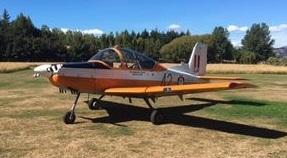
CT/4B
As of 2004 total production of the CT-4E had reached 32 (c/n 200 to c/n 231). In addition to 13 RNZAF and 16 Thai examples, one went to a private buyer in Israel and two to the Defence Science and Technology Agency Singapore.
Production Data CT-4 qty 2 s/n 001 – 002 S/n 001 was retained as a demonstrator and then eventually sold to a NZ syndicate. S/n 002 was the only single control CT-4 ever built. It was gifted to the King of Siam (Thailand). CT-4A qty 61 s/n 003 – 063 S/n 003 – 026 sold to RTAF S/n 027 – 063 sold to RAAF (most on Australian civil register today. 3 in USA) CT-4B qty 14 s/n 064 – 077 Not the same as a civil CT-4B model. S/n 064 – 077 sold to Breco and never delivered. Converted to CT-4A model and sold to RAAF. S/n 065 owned by PAC as ZK-PAC (prototype CT-4E). CT-4B qty 19 s/n 078 – 096 Not technically CT-4B although data plated as such. S/n 078 -096 sold to RNZAF. Traded in on CT-4E models in mid 1990s. Converted by Aeromotive to civil CT-4B and most operated by BAe Systems Australia. CT-4B qty 18 s/n 097 – 114 The only civil CT-4Bs ever produced. S/n 097 – 108 sold to BAe/Ansett. S/n 109- 114 sold to RTAF. CT-4E qty 40 s/n 200 – 240 S/n 200 – 212 sold to Aeromotive (leased to RNZAF) S/n 213 – not produced. S/n 214 -215 sold to RTAF. S/n 216 – sold privately in Israel. S/n 217 – 230 sold to RTAF. S/n 231 – 232 sold to DSTA Singapore. S/n 233 – 240 sold to RTAF S/n 241 – Company Demonstrator
CT-4 Model Development CT-4C – Allison 250 powered Turbine variant developed but not certified on loan RNZAF s/n 088, returned to RNZAF as CT-4B. CT-4CR – Allison 250 powered turbine variant with retractable undercarriage. CT-4D – Original RNZAF model designation. Later revived as a Textron Lycoming TIO-360 powered variant.
Specifications: CT-4
CT-4A Engine: Teledyne Continental IO 360 H, 210 hp / 156.6 kW Wingspan: 26 ft / 7.92 m Length: 23 ft 2 in / 7.05 m Height: 8 ft 5 in / 2.59 m Empty weight: 1520 lb / 690 kg Loaded weight: 2350 lb / 1070 kg Max speed: 180 mph / 290 kph Max range: 808 mi / 1300 km Service ceiling: 17,900 ft / 5456 m
CT-4B Engine: Teledyne Continental IO-360-H, 210 hp Wing span: 26 ft (7.92m) Length: 23.16 ft (2.59m) Wing area: 129 sq.ft Fuel cap: 320 lbs useable Empty wt: 1699 lbs MTOW: 2650 lbs Max aerobatic wt: 2500 lbs Vne: 207 kts Maximum speed: 180 mph (290 kph) VA: 141.5 kts Stall: 58 kts Cruise 65%: 150 mph Endurance 65%: 4.86 hr Maximum range: 808 miles (1300 km) Useful load: 742 lb (337 kg) ROC: 1350 fpm Service Ceiling: 17,900 ft (5456 m)
CT-4C Engine: Allison 250B17D turboprop
CT-4E Engine: Lycoming AEIO-540L1-B5, 300 hp Wing Span: 26.0 ft / 7.92 m Area – Wing Gross: 129.0 sq.ft / 39.32 sq.m Length Overall 23.48 ft / 7.16 m Height (ground to top of fin): 8.50 ft / 2.59 m Basic Empty Weight: 1780 lb / 807 kg Max. Landing Weight: 2600 lb / 1180 kg Stowage Capacity (Utility Category): 160 lb / 73 kg Stowage Capacity (Aerobatic): 100 lb / 45 kg Maximum Fuel: 322 lb / 150 kg Fuel Capacity: 44 Imp Gal / 199 lt Useable fuel: 198 lt Fuel Consumption: 14 Imp Gal/hr / 65 lt/hr Va Manoeuvring Speed: 144 kt Vc Design Cruising Speed: 150 kt Vd Design Diving Speed: 209 kt Vs Stalling Speed – No Flap: 60 kt Vsf Stalling Speed – With Full Flap: 45 kt ROC 100 kt: 1500 fpm Range: 520 nm / 836 km Take off Ground Roll: 600 ft / 183 m Landing Run: 553 ft / 168 m Rate of Climb: 1830 fpm Aerobatic Flight (Flaps Up): +6.0g / -3.0g Wing Loading: 20.2 lb/sq.ft Power Loading (at MAUW): 8.7 lb/hp Area – Flap: 22.60 sq.ft / 6.89 sq.m Area – Aileron: 11.56 sq.ft / 3.52 sq.m Area – Elevator: 16.7 sq.ft / 5.09 sq.m Area – Fin & Rudder: 12.69 sq.ft / 3.87 sq.m Cabin, Inside Width: 3.64 ft / 1.10 m Cabin, Inside Length: 8.93 ft / 2.72 m Cabin, Inside Height: 3.83 ft / 1.17 m Wheel Base: 5.45 ft / 1.66 m Wheel Track: 9.75 ft / 2.97 m
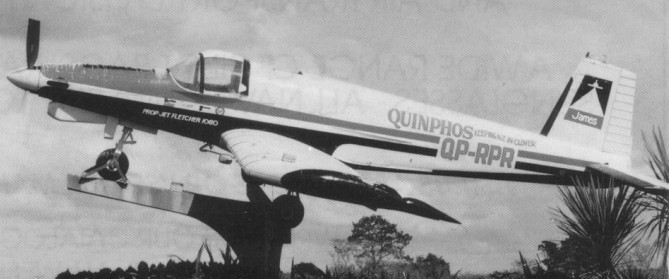
The conversion of a standard Fletch¬er to take a PT-6A-20 turbine of 500 shp was designed by Dennis Kemp of Air New Zealand for a James Aviation/Thames Aerial Topdressing/Robertson Air Service consortium. Development work began at Air NZ’s jet base at Mangere in 1966 and entailed considerable structural rede¬sign of the Fletcher’s nose section, a 12-inch fuselage stretch, two feet increase in wingspan, strengthened wing and rear fuselage, including vertical fin, a redesigned hop¬per – enabling it to take 24 cwt of super – and a dual main undercarriage. Technical substantiation was carried out by Air New Zealand and the model was type certificated by the CAA.
The 1060 was first flown in July 1967 and after 50 hours’ evaluation flying was put into operational service by James in the Gisborne area at the hands of Dennis Clarke.
The aircraft proved more than able to compete with Beavers in the steep east coast hill country once initial pro¬blems of ingestion of dirt, dust and grass were overcome by redesigning the cowling. The PT-6engine has provided only minor problems in operational flying, but the real problem involves spares backup. As the 1060 is a one-off type, maintaining it with an extensive spares inventory at Hamilton was too expensive, and all parts must come from the US, which lengthened overhauls considerably.
FU1060 ZK-CTZ s/n 1001 was first registered in July 1967, and was withdrawn from service and de-registered in December 1980. (Lou Forhecz in his book on the history of the FU24 states the aircraft had flown 5325 hours.)
The Fletcher FU24 has a unique type of vertical fin construction. It is made up of strips of vertical sections with integral edge-stiffeners. There is a substantial rear spar, which the whole fin structure effectively cantilevers off. The front fin attachment is a single pin-joint.
In the original FU24 fin design there was one internal rib. When the aircraft was first converted to turbine power as the FU1060, with increased speeds and operating weights (and hence design loads), the vertical fin had to be strengthened. This was done by fitting additional internal ribs and associated external straps. This fin design was carried over to the FU24-950, with some minor detail changes. (The top rib was deleted.) When the design was upgraded to the Cresco the same basic vertical fin was used. The fin was strengthened with the addition of a metal closing strip to the front vertical strip. In addition after static tests of the forward-biased case some doublers were added to the bottom rib.
A second version, the FU1160, was essentially the same as the FU1060 except a 530 shp Garrett TPE331 engine was fitted. FU1160 ZK-BHQ s/n 2001 (previously FU24 s/n 19) was converted to turbine power in May 1967. The aircraft crashed fatally on 13 August 1968 after 376 hours in service, possibly from a partial power loss due to fuel starvation. (See NZCAA Aircraft Accident Report No.1837)
The third was the FU1284, which installed a 665 shp Garrett TPE331 turbine engine. This aircraft had major changes from the standard FU24 airframe. However, the vertical fin was the same part number. (It is reported that after a failure during testing, some doublers were added to the fin front attachment bulkhead. This change was subsequently retrofitted to all FU24 aircraft.)
FU1284 ZK-CYY s/n 2002 with a TPE331-l0l was first registered in November 1969, flew at Auckland on April 16 1970, and was de-registered in March 1977.
No further examples were produced, because the Type Certificate holder at the time, Airparts (NZ) Ltd, decided to proceed with a new turbine aircraft development which eventually became the 08-600 Cresco.
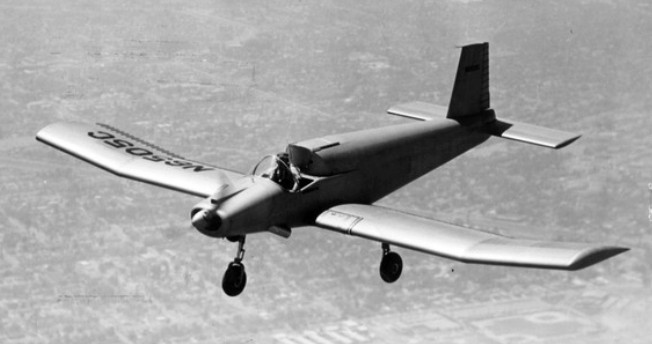
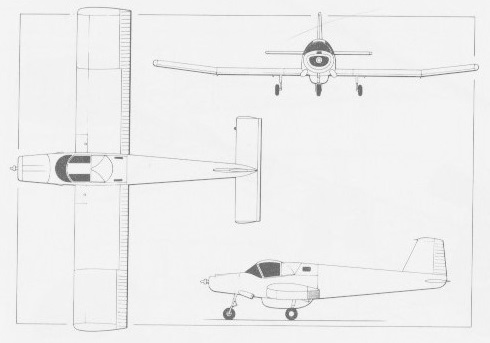
The Fletcher FU-24 was designed as a utility aircraft by John Thorp (as the Thorn T15) for the Fletcher Aircraft Corporation of El Monte, California, and N6505C (s/n 1) was built and first flown on 14 June 1954. As designed and produced by the Fletcher Aircraft Corporation, the first Fletcher FU-24 was of open cockpit design and access to the cargo section was achieved by lifting a large drop hatch on the right-hand side of the fuselage. Once the 30” x 45” hatch was opened, the cabin or cargo bay in this case, could hold a long item by sliding it into the rear fuselage or a half-tonne item placed and tied down directly behind the wing spar. The first FU24 aircraft had a 3500 lb maximum takeoff weight.
Prototype FU-24 s/n 001 (225-hp) flying in USA 1954.
The aircraft was sent to New Zealand and made its first flight as ZK-BDS on 24 September 1954. Further testing was carried out before it was placed in use with Robertson Air Service Ltd of Hamilton. The aircraft was powered by a 225 hp Continental O-470-E. The aircraft was an immediate success and, through the New Zealand Meat Board, an order was placed for 100 aircraft to be supplied in knock-down form and kitsets. The New Zealand agents, Cable-Price Corp of Wellington, contracted James Aviation Ltd of Hamilton to assemble the aircraft in the large wooden hangar now occupied by Pacific Aerospace Corporation.
Fletcher Aircraft Corporation actually only ever assembled 4 complete Aircraft: the prototype s/n 001, s/n 007, s/n 089 and the first FU-24A dual s/n 102 (although this was first built as a FU-24 single control). Of these four, three eventually came to New Zealand. S/n 089 went directly to Uruguay in 1963 and is the only Fletcher FU-24 ever built that has never been to New Zealand.
The first group of aircraft (s/n 2-52) were allocated the aircraft registrations ZK-BHA through ZK-BIZ in 1954. The first aircraft to he completed was ZK-BHE (#6), flown on 16 February 1955 and delivered to Wanganui Aero Work Ltd, which had placed an order for six aircraft. The second aircraft was ZK-BHA (#2), delivered to Aerial Agriculture of Hastings. The first thirteen aircraft were delivered partially completed and were basically the same as the New Zealand aircraft, except semi-flush rivets were used giving all metal-surfaces a near smooth appearance. The forward fuselage incorporated the engine exhausts within an augmentor tube on both sides of the cowling (similar to those fitted to the Auster Agricola). The ailerons were a similar pattern to the flaps. The bulged ailerons came in the late 1950s and the horn balanced conversions in the late 1960s. The last of the part-assembled aircraft was ZK-BHK, flown on 26 June 1955 and delivered to Southland and Otago Aerial Topdressing Co Ltd of Dunedin, while the first completely assembled aircraft was ZK-BHL (*44), which was flown on 10 August 955 and subsequently delivered to Aircraft Service (NZ) Ltd of Auckland. Of the original batch of aircraft, number 7 was retained by Fletcher Aircraft and this became N6506C first flown on 8 February 1955. Built as an agricultural aircraft, it was used as a test bed for engine and airframe upgrades until sold to James Aviation, fitted with a geared Continental GIO-470A developing 310 hp, becoming ZK-CQB in May 1966.
Production continued through 1956 and a further batch of registrations were allocated, ZK-BOA through ZK-BPZ. However, production slowed at the end of 1957 with the last aircraft, ZK-BOL (s/n 64), completed and flown on 26 November 1957.
As Fletcher had allocated 100 serial numbers to New Zealand assembly, number 102 was completed and flown in June 1955 as N6507C. In 1962 it was converted to a Utility version and fitted with dual controls. Two months later it was sold to New Zealand and became ZK-CCT.
Air Parts (NZ) Ltd was formed in 1957 by local operators and they took over the agency of the Fletcher FU-24 aircraft. The first aircraft registered was ZK-BVA (s/n 66) and was assembled at Mechanics Bay by TEAL, barged to the upper harbour and flown at Whenuapai on 1 December 1957.
The original design of the cowling was a round open design, but from ZK-BIJ onwards the front had been replaced by a simple flat panel manufactured in Hamilton with air intake holes on either side of the propeller. A larger air scoop on the top of the cowling had replaced the intake on earlier aircraft. At the end of 1956, Continental had introduced the 240 hp O-470N and this was fitted to the American registered aircraft in November 1950. The first aircraft in New Zealand fitted with this engine off the production line, ZK-BIX, was flown on 13 April 1957.
The 240 hp aircraft later became known as “Mark Ones” and some of the later TEAL aircraft (ZK-BPY, -BPZ, -BWD and -BWV) had been registered as FU-24Ns, meaning an O-470N was fitted. All earlier aircraft were progressively re-engined and modified to Mk I status at major inspections or overhauls. The 225 hp motors continued to be used as short-term spares.
James Aviation assembled the last Mk I, ZK-BYC (s/n 78), with an O-470E motor but soon changed to an O-470N. ZK-BYC first flew on 19 July 1961. The last aircraft known to have the O-470E was ZK-BIP and made its last flight, so powered, on 25 October 1963 before being converted to Mark II status (260 hp). The last flight of a Mk 1, 240 hp Fletcher was made by ZK-BHC on 12 January 1970 after being sold to Wanganui Aero Work.
When the first aircraft arrived in New Zea¬land in 1954 the Fletcher still had an open cockpit. The large hatchway was replaced with a smaller door located on the right-hand side, immediately behind the hopper, giving access to a bench seat for two passengers, or access for the engineers during maintenance. The small door was hinged at the top but aircraft assembled from kits brought in by Air Parts NZ Ltd (Cable-Price Corp) were fitted with a door hinged at the side and were only fitted to aircraft with the original 27-ft3 hopper. The aircraft kits were assembled by James Aviation at Hamilton, starting in 1955, and all were completed as topdressers, first flown on 24 September 1954.
Once orders for hopper-fitted topdressing aircraft were fulfilled, the agents turned to thoughts of selling the aircraft as a utility version. The aircraft chosen was ZK-BIL (serial #39). Completed as a topdresser, it had the hopper removed at Hastings and modifications done by Temple Martin, modifications that included fitting a hatch with square windows in late 1956. As a passenger version, ZK-BIL was on display at Palmerston North in November 1956 during the Agricultural Aviation Airshow.
The next change in the development of the Fletcher FU-24 occurred in 1961 with the introduction of the Mark II model. The front of the cowling, which could he easily removed during checks, was redesigned to incorporate the new 260-hp Continental IO-470-D. The first Mark II FU-24 was ZK-CAY (#79), which first flew on 18 January 1962. Like ZK-CAZ, it was fitted with a 240 hp Continental and short airscoop on the top of the cowl.
ZK-CBA, fitted with the new 260-hp motor and, for the first time, without the airscoop (as were ZK-CBB, -CBC and -CBJ), first flew on 1 June 1962. The James Aviation aircraft that followed, ZK-CBD, -CBE, etc, with short scoops had 240 hp motors installed. The next new aircraft built, ZK-CDZ, was fitted with the 260-hp motor had a long airscoop on the top of the cowl which became the standard for this version. Within three years, other than ZK-BHC which was in storage, all remaining Mark I aircraft had the Mark II cowl¬ing fitted; primarily for ease of maintenance. The shortage of 260-hp motors saw some new aircraft fitted with 240-hp motors, or the O-470-M, an upgraded O-470-G, which delivered 250-hp. Around 1964 ZK-BXZ was fitted with a 310-hp geared Continental GIO-470A. ZK-COB (#7) arrived from the United States in 1966 with a 310 hp engine but this was removed in July 1967. In 1963 another batch of components was produced in California and one aircraft was retained, #89. This was completed as N9636Z and flown to Uruguay in April 1963.
By 1964 kitsets were in short supply, and James Aviation set about building “bitsers.” The first of these aircraft, ZK-CLA (#JAL/FU-1) first flew on 4 December 1964. Five more aircraft followed with the last being ZK-CPY, flown on 31 August 1960. ZK-CMG (#111) was the last to fly at Whenuapai as no. 112, ZK-CMH, first flown on 2 August 1965, was finished at the new Air New Zealand workshops in Auckland. The last aircraft to be assembled by Air New Zealand was ZK-CMO (#119), finished on 23 February 1966 and delivered to James Aviation Ltd. Among this batch of aircraft were two dual control FU-24As, ZK-CMI (#113) and ZK-CMK (#115), which were both completed in 1965.
A new Continental motor, the 285-hp IO-520-A, became available in 1965 and the first new aircraft such fitted was ZK-CML, flown on 16 December 1965. ZK-CMM was assembled by James Aviation Ltd for Air Parts (NZ) Ltd and it was delivered to Central Aviation Ltd. The James Aviation conversions with this motor had the aircraft fitted with three-blade propellers and James Aviation had also fitted three-blade propellers to some 260-hp Fletchers (identified by their long airscoop).
The first completely New Zealand built example built by Airparts (NZ) Ltd in 1966 was a 300-hp variant delivered to Wanganui Aerowork. Prior to that Aircraft were assembled from detail parts produced by Fletcher Aircraft Corporation in the USA.
In 1966, Air Parts began producing the Fletcher FU-24 with ZK-CRF (#121) being the first, flown on 24 June. This aircraft was fitted with a 285-hp Continental IO-520A and later, the 300-hp IO-520-F became available. These engines were also fit¬ted to older aircraft and could be identified by the short airscoop, the same fitted to the 240-hp air¬craft. The 300-hp version also had a pressing on the front of the cowl giving clearance to external parts at the front of the Continental IO-570-F.
The all-up weight (AUW) for the 225-hp Fletcher started out at 3,200 lbs and had increased to 3,500 lbs for the 240-hp conversions and then up to 3,910 lbs for the new 240-hp models. With introduction of the 285- and 300-hp aircraft the AUW had reached 4,470 lbs.
300 hp aircraft had a loader driver’s seat in the rear fuselage behind the hopper, facing rearwards. The was no second seat in the cockpit.
The last new 300-hp Fletcher FU-24, ZK-DAJ (#154), was test flown on 23 December 1969 and delivered to Australia becoming VH-SFL. One final change for 300-hp aircraft appeared in late 1970 when the oil cooler was removed from the front of the engine and mounted on the airframe below the engine cowling.
The conversion to 400 hp usually involved the pilot seat changed to a bench seat across the full width of the cockpit, with the pilot’s position moved to the left, allowing the passenger to sit along side. A passenger harness was fitted.
In August 1962, N6507C, in the United States, had the hopper removed and was fitted with dual controls, and also with four passenger seats and windows. When offered for sale it was bought by James Aviation Ltd and in February 1963 was in service as ZK-CCT, the first dual-controlled training Fletcher topdresser. All dual control models being designated FU-24A.
Air Parts (NZ) Ltd obtained the world manufacturing rights in 1965 and took over production in 1966 and was well under way at Hamilton when a Queensland rancher, Ewan MacKay, ordered a 300-hp Fletcher which was flown to Australia in September 1967. A talented Sydney engineer by the name of Bill Smith designed and converted the Fletcher into a real utility aircraft by fitting a three-foot by three-foot door on the left-hand side of the fuselage. The AeroSmith doors are recognised by being hinged at the top. To compensate for the removal of fuselage formers, an extra skin was added around the door and an angle section was riveted along the fuselage and under the door sill. As ZK-DCM, it was first flown in December 1967.
Several other door conversions were done in Australia and these were designated FU24A/ls by the Australian Department of Civil Aviation. In New Zealand, James Aviation also converted five surplus topdressing Fletchers in 1968 using the AeroSmith door.
Air Parts (NZ) Ltd completed a brand new Fletcher FU-24, ZK-CVW (serial #139) as a utility version and was first flown on 12 July 1968. This aircraft was fitted with a door hinged on the left-hand side. In November 1968, ZK-CXZ (serial #143), another Fletcher, flew designated an FU-24-872. This was a utility with a hopper. This aircraft was flown to Australia and was eventually sold as a topdresser.
The first number of the code was to indicate the engine fitted: 1XX for the O-470E, 2XX for the O-470M or O-470N, 3XX for the O-470G, etc. The second number, XOX indicated the basic production, X1X was referred to the 240-hp Mk.I, X2X the Mk.II, X3X indicated an AUW of 4,470 lbs, X4X and X5X were projected versions and X6X was allocated to the turbines of 6,000 lbs AUW (but which, in fact, reached 5,450 lbs). The third set of numbers was to represent versions of each model, XX 1: NZ agricultural, XX2: NZ utility, XX3: Australian agricultural and XX4: Australian utility.
The next major development in the early 1970s was the introduction of the FU24-950 Series, using the 400 hp Lycoming IO-720 engine. (This engine change was first carried out and approved in Australia by Pays Air Service, using Space Development drawing number 5090.) The MAUW was also increased for the FU24-950 variant to 4860 lbs in accordance with Air Parts Service Bulletin AP55 (Parts A, B and C).
The 400-hp FU-24 known as the “950” was actually first developed in Australia by Airparts (NZ) Ltd’s Sydney branch. This prototype was then abandoned in favour of another being developed by Pay’s Air Service in Scone NSW. The PAS 400 was converted from 300-hp variant s/n 136 and first flew as a 400-hp in February 1970.
400-hp FU-24s were operating in Australia, all modified from 300 hp variants when the first factory example s/n 155 named FU-24-950 was produced in 1970.
This variant was very successful and became the standard production aircraft. In addition most existing FU24 aircraft were upgraded to this configuration under Supplemental Certificate of Type Approval Number SA-3 and re-designated FU24-950M.
In April 1970, Air Parts (NZ) Ltd produced the first 400-hp Fletcher, ZK-DBF. By using the unused number 9XX for the Lycoming IO-720A, and the unused X4X for an AUW of 5,430 lbs.
Air Parts (NZ) Ltd continued building the 400-hp Fletcher FU-24-950s fitted with the 37-ft3 fibreglass hopper. Ten aircraft were built with no access door except a removable panel under the fuselage.
In November 1971 ZK-DGE was registered as an FU-24-954, an agricultural model with an Air Parts door. This fuselage was set aside and another assembled along with three other kits. ZK-DHD (serial #169) was the first to be completed and it was fitted with a “half-size” door at 30” x 17.5” hinged at the top. This aircraft first flew on 17 February 1972. ZK-DGE was completed as a normal FU-24-950 and flew in June 1972.
The airframe with the large door became ZK-DHO (serial #171) flew on 26 September 1972 and was registered as a FU-24-950. In August the following year, the aircraft was damaged beyond repair near Stoke. The title FU-24-954 would have required another type certification process, so any aircraft produced, with small or large doors, were FU-24-950s but in-house the large door variety were known as -954s.
The model name 954 has two variations: firstly, an in-house type upgrade by NZ Aerospace Industries of all additions and modifications to the airframe and wing to include the door modification within the type certificate and, secondly, the post-954, the customer production model “954” with major additions to the airframe and wing. The FU-24-954 (post-954) production model first appeared in 1978, featuring a number of new additions. Externally, a new more streamlined cowling, a cargo door built into the airframe, thus reducing the empty weight, and the wing had modified aileron tips and vortex generators on the outer wing panels. The first Cresco was nearing completion at the same time and both aircraft shared the outer wing panel and cargo door modifications. The major change in the cockpit was the rudder pedals and these are only fitted to “production -954s.” The -954 was also fitted with a 43-cu.ft fibreglass hopper.
In 1973 Air Parts (NZ) Ltd and Aero Engines Services Ltd merged and a new factory was built at Hamilton airport. The new company became NZ Aerospace Industries Ltd. Production of the Fletcher FU-24-950 continued with the original factory being used for component manufacture. When Aerospace Industries completed the upgrade of the Fletcher modifications both factories had completed a total of 89 400-hp FU-24-950 topdressers including 14 aircraft fitted with the large cargo door. In 1977 the Fletcher FU-24-950 ZK-USA (serial #240) was flown to the United States. A company called Frontier Aerospace at Long Beach, California, was set up to assemble aircraft, while at home NZ Aerospace Industries set about upgrading all modifications into one certificate, and this became the FU-24-954, although the aircraft being built were still physically FU-24-950s. ZK-EGY (serial #247) was the first to be registered as a basic FU-24A-954, a dual control aircraft with a large cargo door. The aircraft was assembled to knock-down standard and was sent to the United States. Several aircraft followed, both as kits and knocked down aircraft. A new series of kitsets were allocated #3001 onwards and four were completed and sent to the USA. These were basic FU-24-954s with large cargo doors. They all returned to New Zealand and two were assembled by Aerospace, ZK-EUB (#3002) and ZK-EUE (#3003) and were fitted with post-954 engine cowlings and outer wing panels. ZK-EUB went to Australia and became VH-EUO.
Production of the FU-24-950 continued until s/n 248 in 1978 when it was replaced by the FU-24-954. The prototype FU-24-954 was actually s/n 247 and it was exported to the USA where it languished unassembled for some years until it was returned to New Zealand and flew for the first time in 1988 at Wanganui Aerowork. The first FU-24-954 to be completed and fly in New Zealand was s/n 250, which first flew in May 1978. Aircraft were being built out of s/n sequence at this time, as s/n 249 did not fly until May 1979.
The last FU-24-954 was s/n 257 so numerically it was the smallest variant built with the exception of the sole FU-24-872, and the three turbine variants built in the late 1960s.
Next came the final factory variant named FU-24 post 954 with s/n 258. Production of the post 954 continued, albeit sporadically, until s/n 297, which flew in May 1992 when production was halted in favour of the 08-600 Cresco, (which itself had been in sporadic production for some 10 years). Of the final 10 FU-24 post 954s built the first five went to Thailand and the final five to Syria.
There is confusion as to what is an FU-24-954 and what is a FU-24 post 954. The FU-24-954 is identical to an FU-24-950 but with a large Cargo Door. An FU-24 post 954 had a revised appearance including new Cowlings, Aileron fences, changed Rudder Pedals and many other refinements over an FU-24-954. What is generally accepted as an FU-24-954 is actually an FU-24 post 954.
To save weigh the oleo suspension ram didn’t have a heavy metal stop to prevent the ram falling out when airborne. The designers relied on a lighter scissor bracket. It wasn’t unheard of for the bolt to break in these, resulting in the wheel assembly falling right out. If it was a side wheel, this required the pilot to land on one wheel. Sometimes the wheel strut handled the force of the wheel-less landing, and once the wheel was found, a new bolt fitted, the plane was back in business. Later, safety wires were added to retain the wheel should the scissor bracket fail.
The cabin heat system for the Fletcher 400 was taken from a small oil cooler about 4 inches square. Less chance of carbon monoxide fumes in the cockpit but it took about five minutes of flying to work effectively.
In February 1996 VR-EUO flew as the first Garrett-powered Stallion, or FU-24A/6, which was approved in New Zealand under CAA STC 98/21E/13. At Scone, New South Wales, AirPasture flew the Stallion – the turbine Fletcher FU-24A16 VH-EUO. This aircraft was fitted with the Garrett TPE331-6 and first flew on 21 February 1996. The addition of two extra fuel tanks located in the leading-edge of both wings now gives a total Jet A-1 fuel capacity of 500 litres (123 usable litres per tank), which compliments a safe operational en¬durance of the standard two hours, thus the turbine burns about 200 litres per hour. Fuel distribution is from the four wing tanks into a header tank positioned between the main tanks, just forward of the hopper box, and then to the power plant via an emergency cut-off valve. The cutoff valve is operated by the pilot and instantly deprives the engine of fuel and feathers the propeller. This conversion used the standard FU24-950 vertical fin but with the addition of a dorsal fin. As part of the CAA approval the design substantiation was reviewed. The designer of the Stallion, Auto Avia Design, stated that “The dorsal fin was solely to improve directional stability – with the longer nose for the turbine engine, the weathercock stability was lacking.”
The Fletcher FU24 has a unique type of vertical fin construction. It is made up of strips of vertical sections with integral edge-stiffeners. There is a substantial rear spar, which the whole fin structure effectively cantilevers off. The front fin attachment is a single pin-joint.
In the original FU24 fin design there was one internal rib. When the aircraft was first converted to turbine power as the FU1060, with increased speeds and operating weights (and hence design loads), the vertical fin had to be strengthened. This was done by fitting additional internal ribs and associated external straps. This fin design was carried over to the FU24-950, with some minor detail changes.
Serial #270 was a kit sold to Australia and was registered VH-UJP as an FU-24A/4. In 1994 the very last 300-hp Continental IO-520-F Fletcher FU-24 was converted to a 300-hp Lycoming IO-540S1A5. VH-SFL is designated an FU24A/5.
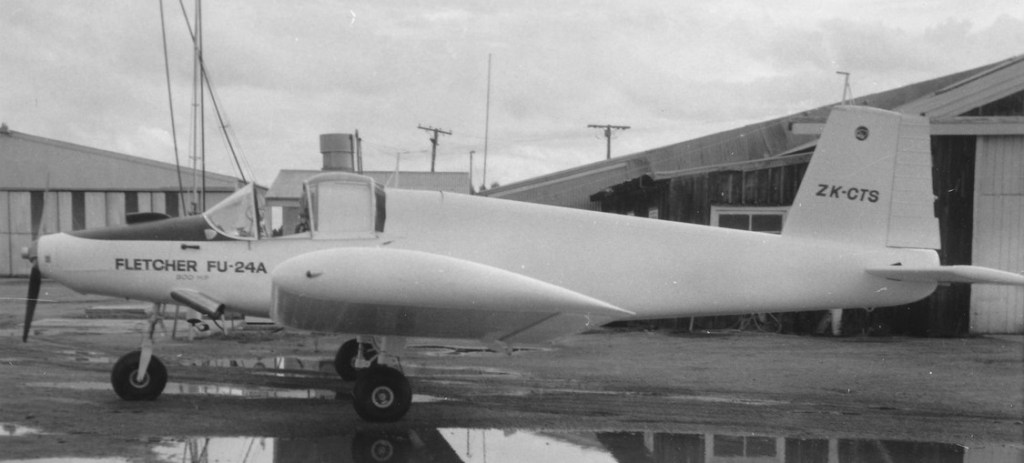
Fletcher FU24 A/4 ZK-CTS
Late in 1993 two North Island ag compa¬nies, Fieldair and SuperAir, took different paths with the installation of a V8 motorsport engine on an FU-24. Fieldair chose a small-block 402 Chev engine, with turbo-charging, to develop 550-hp. The engine was fitted to the FU-24A-954 ZK-EMO and ran in late 1994, designated an FFU-24. Two years later the project was abandoned. At Hamilton, Super Air embarked on the motorsport engine path with a 640-cubic-inch 500 hp V-8 Ford engine. Super Air Ltd was the first applicant and established the principle that the CAA would accept a significant increase in power (37%) for the take-off condition with a 5 minute limitation, with no changes required to the aircraft flight envelope. This was running in ZK-BHG in 1995. The project has been beset with a number of problems; nothing major and but the company has proceeded with development on a low-key basis. A locally manufactured gearbox allowing reverse pitch was installed and the aircraft first flew on 23 January 2000. Neither project was taken forward to the certification phase.
The first modern New Zealand turbine conversion was by Super Air Ltd as the Walter Fletcher, using the Czech Walter M601D-11NZ engine. This (ZK-EUF) first flew on 4 October 1998 and some 23 conversions have since been completed comprising FU-24-950, -950M and -954 airframes. The standard FU24-950 vertical fin is used.
Super Air then produced a Pratt and Whitney Canada PT6 powered version with a stretched fuselage, which resulted in a configuration externally very similar to the Cresco. Again there was no change to the vertical fin.
A very similar stretched PT6 turbine conversion was produced by Flightcare Limited in 2005, as the FU24-550 Crusader. This aircraft also used the standard FU24-950 vertical fin, but with the addition of a dorsal fin.
2000 saw Wanganui Aero Work modify an FU-24-950 with a Cresco centre wing section and added a Lycoming LTP-101-A1A 550 shp engine, with a Hartzell HCB3TN 8 ft 6 in prop out of a Cresco, with the “Fletcher Falcon,” ZK-LTF, first flying on 6 April.
Factory assembled examples were serial numbered 001 through to 297, 2001 and 3001 through 3003.
All re-powered conversions of the FU24-950 have continued to use the standard FU24-950 vertical fin Part Number 240340, with no changes other than in some cases the addition of a dorsal fin. This fin was originally approved for the FU1060, which had a similar engine power to the modern turbine conversions. Two of the three original turbine conversions using the Part Number 242341 vertical fin had successful service lives of up to thirteen years, with no reported structural problems.
Superair Turbine Fletcher FU 24-950 ZK-DZO (c/n 212) at their base at Hamilton airport in the current fleet colours. This aircraft was first registered in January 1976 and then went overseas to fly in Pakistan and Sudan before returning to New Zealand for Superair in July 1993. It was then rebuilt with the extended fuselage and large hopper and re-powered with a Pratt and Whitney PT6A-34AG turbine engine. It first flew in this configuration on 4-10-06 and was marked as a Fletcher 2000EX.
Piston engines have not been forgotten though. To get high altitude performance, Advanced Aero Engineering Ltd converted a dual FU-24A-954 with a 350-hp turbo-charged Lycoming TIO-540. Known as the “Magnum,” ZK-EMK first flew at Masterton on 19 June.
In 2001, Turbine Conversions approached Pacific Aerospace Corporation with the idea of using the “08” Cresco plug for an extended Fletcher (TOFURA). The Fletcher selected for the conversion was #277, a 1980-built FU24-954 registered ZK-EMW. The aircraft was completely stripped at the end of 2001, and overhaul and re-assembly began on 8 January 2002. The wing was overhauled and extra fuel tanks installed the same modification made to the Walter conversions. Once the forward and aft fuselage sections were overhauled, the 18-inch “08” Cresco panels were inserted. An all-new, one-piece 60 ft3 hopper manufactured by Profession Fibreglass arrived about the same time as the wing was mated with the new fuselage. The engine mount is the same as the Walter conversion except for a few modifications as the PT6A-11AG engine is positioned two inches further forward. The same air filtration and induction system are used and the cowling, also made by Professional Fibreglass comes from the same mould as the Walter but has minor modifications for exhaust outlets and air filtration scoop. Although the PT6A engine sits two inches further forward on longer engine mounts, the cowling is exactly the same length as the Walter configuration. The fuel system is also identical to the Walter version. The undercarriage remains unchanged with the exception of an extension block on the nose wheel piston and the fitting of heavy-wall Cresco cylinders to the main undercarriage. ZK-EMW was test flown by Kevin Young at Hamilton on Thursday, 23 January 2003.
FU24-820 Engine: Continental IO-520-F, 300 hp AUW 3,910 lbs or mods to 4,000 lbs Wing area: 294 sq.ft Wingspan: 42 ft 0 in (12.8 m) Length: 31 ft 10 in (9.7 m) Maximum speed: 230 mph (370 kph) Maximum range: 441 miles (710 km) Service Ceiling: 17,000 ft (5200 m) Type certificate: FAA 4A12 / NZCAA A-3 Certificate issued: 22 Jul 55 Vne: 143 kt Va: 116 kt
FU-24-950 Engine: Lycoming IO-720-A1A, 400 hp Wingspan: 42 ft 0 in / 12.81 m Length: 32 ft 9 in / 9.98 m Cabin length: 10 ft 5 in / 3.18 m Max cabin width: 4 ft 0 in / 1.22 m Empty weight equipped: 2616 lb / 1186 kg Max payload (ag): 2320 lb / 1052 kg Normal max TO weight: 4860 lb / 2204 kg Special TO weight: 5430 lb / 2463 kg Max cruise: 106 kt / 122 mph / 196 kph ROC SL: 630 fpm / 192 m/min Service ceiling: 16,000 ft / 4875 m Range max fuel: 382 nm / 440 mi / 708 km Accommodation norm: 1 pilot, 5 pax Accommodation norm: 1 pilot, 1 pax
FU24-950 Engine: Lycoming IO-720-A1B, 400 hp cruise 110 kts Max load 1.0t. Spray cap: 900 lt Empty wt: 2620 lb Equipped useful load: 2244 lb Payload max fuel: 1478 lb MTOW std: 4860 lb MTOW ag: 5430 lb Vne: 143 kts Wing area: 294 sq.ft Wing loading: 16.5 lb/sq.ft Pwr loading: 12.2 lb/hp Range max fuel/ 75% pwr: 683 nm/ 6.5 hr Service ceiling: 16,000 ft Hopper cap: 277 USG 75% cruise: 106 kt ROC: 630 fpm Min field length: 1610 ft Fuel cap: 405/766 lb Type certificate: NZCAA A-3 Pt 2 Certificate issued: 11 Dec 70 Va: 116 kt
In the late 1950s several FU-24 operators; James Aviation, Thames Aerial Topdressing and Robertson’s Air Services, formed Air Parts (NZ) Ltd at Hamilton Airport to provide aftermarket sales and service to FU-24 operators. Also in the mid 1950s Aero Engine Services Ltd (AESL) was formed to provide Engine and component overhaul facilities in support of the FU-24 program.
These businesses continued on until the 1960s when things began to change for the both of them. In 1965 Air Parts (NZ) Ltd secured the manufacturing rights to the Fletcher FU-24 and began producing detail parts and FU-24 aircraft locally. In 1967 AESL secured the manufacturing rights to the Victa Airtourer and also began detail and Aircraft production locally. Both companies then enjoyed some years of expansion and development.
AESL provided the catalyst for the next change. In the early 1970s it had developed the CT-4 Airtrainer out of the prototype Victa Aircruiser and successfully secured contracts to supply the Airtrainer to the RAAF and RTAF. As a result of this, there were moves to get the New Zealand Government involved and merge Air Parts (NZ) Ltd and AESL into a new strong entity.
New Zealand Aerospace Industries Ltd (NZASIL) was born in 1973 with a 50% Government shareholding, (25% Air New Zealand and 25% National Airways Corporation), with the other 50% shareholding remaining with the previous companies shareholders such as James Aviation.
NZASIL started off well and successfully marketed both lines of Aircraft all around the world. Peak production was reached in 1975 with the delivery of 36 CT-4 Airtrainers and 14 FU-24s a total of 50 aircraft for the year.
Things quietened down several years later when CT-4 production slowed and all that remained was short run FU-24 production.
NZ Aerospace Industries went into receivership early 1982. The company was half-owned by the government (through Air New Zealand), and was producing the Fletcher and Cresco at the time of collapse. Production of the CT-4 Airtrainer had already ended, although the design and jigs may be one of the assets. The fourth Cresco was nearing completion when receivership was announced.
In July 1982 Pacific Aerospace Corporation, (PAC), was formed to carry on the manufacturing activities of NZASIL. A couple of years later the maintenance side of James Aviation was absorbed into the PAC structure.
By the late 1980s PAC had been purchased by Aerospace Technologies of Australia (ASTA). ASTA’s main interest was for PAC to produce detail parts for its commercial Airliner contracts with Boeing and Airbus. Production of PAC aircraft was secondary. In 1995 ASTA sold PAC to the Hamilton based and owned Aeromotive Group.
Under Aeromotive ownership PAC began its renaissance producing aircraft on a regular basis again. In late 1995 Cresco topdressing aircraft started regularly moving down the production line again , in 1998 the CT-4E was put into production and in 2000 the development of a brand new aircraft, the P-750 XSTOL, commenced.
In November 2006, a New Zealand consortium of aviation related professionals saw great potential in the company, in particular its P-750 XSTOL aircraft, and purchased the assets of the company. Pacific Aerospace Corporation became Pacific Aerospace Limited.
In July 2007 Pacific Aerospace celebrated the production of its 600th aircraft, spanning back to the 1950’s when the first Fletchers were produced. Since January 2007 Pacific Aerospace has lifted production of the XSTOL by 42%. New markets include India, Nepal, Latin America, China and Russia.
New Zealand aircraft manufacturer Pacific Aerospace Limited (PAL) acquired the ownership and manufacturing rights of the E-350 Expedition from Found Aircraft after it went into receivership in 2013. PAL launched a joint venture company, Beijing Pan-Pacific Aerospace Technology (BPAT), in Changzhou, China, which was to manufacture the P-750 SETP and, in the future, the E-350.
Formed in 1957 at Santa Monica, California, as a subsidiary of Pacific Airmotive Corporation to continue manufacture of the Learstar Executive transport, with two Wright Cyclone engines. PacAero also carried out modifications to other types, including conversion of North American T-28 trainers to Nomad standard with a bigger engine. Dissolved and merged with Pacific Airmotive Corporation’s Aircraft Division in early 1960s.
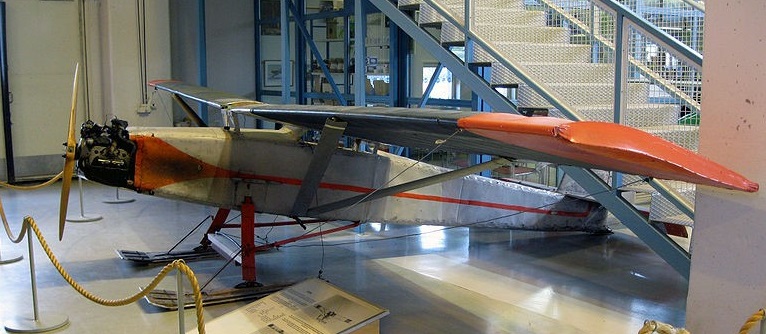
The single-seater Tiira aircraft was designed and built by Raimo Päätalo (b. 1947) from Sanginjoki. It was completed in 1973 and used until 1977, flying for about 70 hours. The aircraft was designed without any training other than that obtained from the construction of the aircraft. The raw materials were found in agricultural goods, for example, a furniture tube was used in the wing areas and a greenhouse plastic film was used to upholster the machine. The powertrain was Volkswagen’s 50-horsepower engine. The hobby of flying could have lasted longer, but in 1977 Tiira was spotted on the radar of Oulu air traffic control. Today, the plane is in the Aviation Museum of Central Finland.
A second Tiira 2 aircraft was built in 1983, and flying it resulted in a four-month suspended prison sentence.
Later, Päätalo has also built a third Tiira 3 aircraft.
In 2010, a “Oulu man” was sentenced to daily fines for an unauthorized flight in September 2009: “two aviation violations and the right to drive a vehicle.”
On August 30, 2014, air traffic control spotted a small self-propelled aircraft on the radar about 60 kilometers from Oulu Airport and reported the matter to the police. The pilot is suspected of an aviation violation and the right to drive the vehicle. Police have had information about the man’s previous similar activities.
Engine: Volkswagen 1,600 cm³, 50 hp Wingspan: 8.04 m Wing area: 9.6 m² Length: 5.4 m Height: 1.4 m Flight weight: 340 kg Top speed: 130 km / h Ceiling: 2,500 m
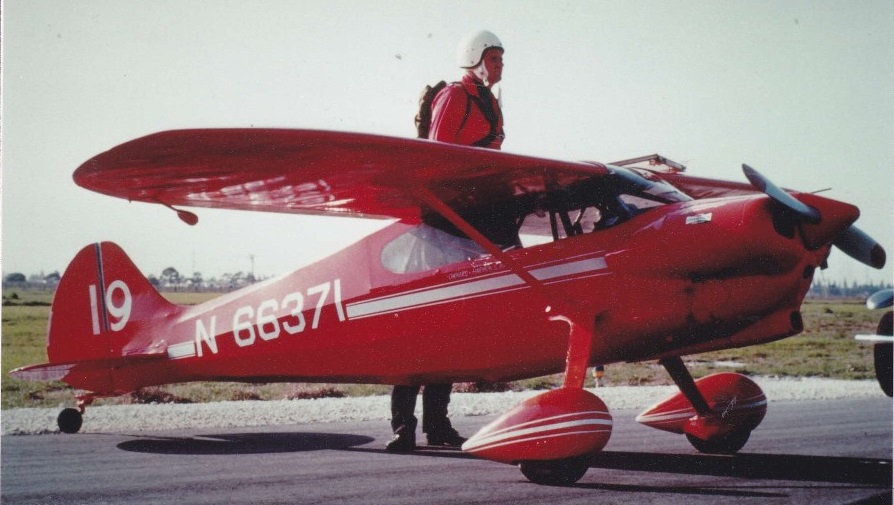
The Owl-Zeisloft Midget Monocoupe was designed and built by George Owl and Harry Zeisloft.
It disappeared shortly after its first flights but was resurrected and entered in the 1969 Ft. Lauderdale meet but was not permitted to race by the Technical Committee and again retired.
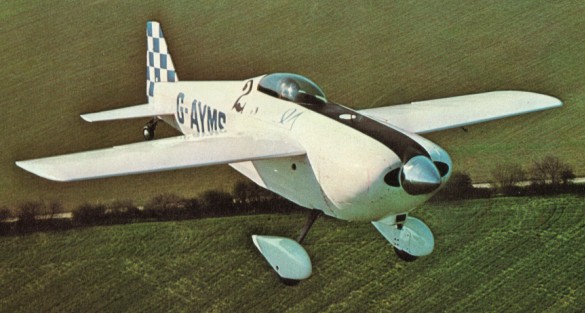
The OR65-2 is a single seat mid-wing aircraft with a bubble canopy and conventional landing gear. The tapered wing uses wood construction with plywood covering. The fuselage is constructed of steel tubing with fabric covering.
The prototype was built by John Alford. A second example, G-AYMS named Ricochet was built by Farm Aviation in the United Kingdom and was first flown at Panshanger Aerodrome Hertfordshire by Squadron Leader M.A.Kelly on 13 April 1971. The aircraft was raced at North Weald Airfield on 31 May 1971 but crashed in the River Thames at Greenwich later that day following propeller failure.
OR65-2 Powerplant: 1 × Continental O-200, 100 hp (75 kW) Wingspan: 16 ft (4.9 m) Wing area: 66 sq ft (6.1 m2) Length: 17 ft 5 in (5.31 m) Maximum speed: 190 kn (220 mph, 350 km/h) Crew: 1