Riley Turbostream / Super 310/320

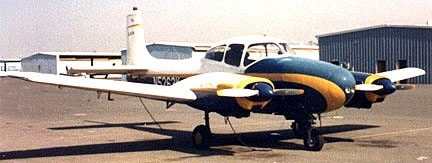
Jack Riley produced variants of the Cessna 310 to improve performance. The Riley Rocket 310 and the Riley Turbostream 310 replaced the standard Continental 310 hp (230 kW) engines with Lycoming TIO-540 350 hp (261 kW) engines. These turbocharged intercooled engines were installed with three-blade Hartzell propellers in a counter-rotating configuration to further increase performance and single-engine safety. At 5,400 lb (2,400 kg) gross weight the aircraft had a weight to power ratio of 7.71 lb (3.50 kg) per horsepower. This resulted in a cruising speed of 260 knots (480 km/h) at 18,000 feet (5,500 m) and a 3,000fpm rate of climb.

The Riley 65 and Riley Super 310 conversions used Continental engines.

Variants:

Riley 65
Cessna 310 to 310G by fitting two 240-260 hp (179–194 kW) Continental O-470D/-470M engines.

Riley Super 310
Conversion of Cessna 310/320 by fitting two 310 hp (231 kW) Continental TSIO-520-J/-N engines.

Riley Turbostream
Conversion of Cessna 310 by fitting two 350 hp Lycoming engines.

Riley Rocket
Conversion of Cessna 310 by fitting two 290 hp (216 kW) Lycoming IO-540-A1A5 engines and more fuel.

Specifications:

Riley Super Turbostream / Cessna 310/320
Engines: 2 x Continental TSIO-520-J2BD, 350 hp
Seats: 4/6
Wing loading: 30.73 lb/sq.ft
Pwr loading: 7.9 lb/hp
Max TO wt: 5500 lb
Empty wt: 3600 lb
Equipped useful load: 1601 lb
Payload max fuel: 185 lb
Range max fuel/ 75% cruise: 1235 nm/4.7 hr
Range max fuel / 55% cruise: 1721 nm/ 7.7 hr
Service ceiling: 36,000 ft
75% cruise: 260 kt
55% cruise: 225 kt
Vmc: 82 kt
Stall: 73-82 kt
1.3 Vso: 95 kt
ROC: 3200 fpm
SE ROC: 600 fpm @ 106 kt
SE ceiling: 25,000 ft
Min field length: 1400 ft
Fuel cap: 1218/1416 lb

Riley Super 310, 320 / Cessna 310/320
Engines: 2 x Continental TSIO-520-J, 310 hp
Seats: 4/6
Wing loading: 30.73 lb/sq.ft
Pwr loading: 8.25 lb/hp
Max TO wt: 5500 lb
Empty wt: 3400 lb
Equipped useful load: 1818 lb
Payload max fuel: 600 lb
Range max fuel/ 75% cruise: 1306 nm/5.1 hr
Range max fuel / 55% cruise: 1644 nm/ 7.2 hr
Service ceiling: 36,000 ft
75% cruise: 255 kt
55% cruise: 230 kt
Vmc: 83 kt
Stall: 67-76 kt
1.3 Vso: 87 kt
ROC: 2200 fpm
SE ROC: 500 fpm @ 106 kt
SE ceiling: 24,000 ft
Min field length: 1550 ft
Fuel cap: 960/1218 lb
Riley Jetstream / HP Jetstream Mk.1

Engines: 2 x Turbomeca Astazou XVI, 940 shp
Seats: 16/20
Wing loading: 47 lb/sq.ft
Pwr loading: 6.7 lb/hp
Max TO wt: 12,500 lb
Empty wt: 8450 lb
Equipped useful load: 3750 lb
Payload max fuel: 678 lb
Range max fuel/ 75% cruise: 1067 nm/4.3 hr
Range max fuel / 55% cruise: 1459 nm/ 7 hr
Service ceiling: 25,000 ft
75% cruise: 245 kt
55% cruise: 210 kt
Vmc: 90 kt
Stall: 77-91 kt
1.3 Vso: 100 kt
ROC: 2600 fpm
SE ROC: 700 fpm @ 99 kt
SE ceiling: 16,000 ft
Cabin press: 6.5 psi
Fuel cap: 3072 lb

Riley Rocket

Jack Riley kept semi retiring between his aviation ventures, wanting to have only a small business, but was soon back in full force with the Riley Rocket. The Cessna 310 was fitted with under wing exhaust along with airfoil nacelles to house the 290¬hp Lycoming engines. Three blade props (among the first on light twins) were used, and extra fuel tanks extended the range. A one piece windshield and extended cabin area were also part of the conversion.

Riley Twin Navion

Temco Riley Twin Navion N5263K

A 1953 Riley project was to convert the Navion to a twin. The Twin Navions started with two 140 hp engines and graduated to 150s and finally to 170s. He built 15 of the airplanes at his Fort Lauderdale, Florida facility, and 85 others for a total of 100 were built in Greenville, Texas, by Temco (later the “T” in LTV). Temco production of Riley Twin Navions was under a contract with Jack Riley, who handled sales, engineering, and tooling.

Planes were produced by both Riley and Temco on a production line basis in 1953-54, where the first 20 had 140hp Lycoming O-290-D2As, later 150hp 0-320s in larger cowlings as standard for all Twin Navions up to the introduction of the D-16A (or Riley 55).

In December 1953, Temco acquired the Riley Twin Navion program

Riley / Advanced Aircraft Corp

Based at Fort Lauderdale, Texas, company specialized in conversions of existing types to improve performance. In 1953 converted Ryan Navion to twin-engine configuration as the Twin Navion with Lycoming engines, and by 1961 was producing a conversion of the Cessna 310 known as the Riley 65 Rocket. Later aircraft which received Riley conversions included the D.H. Dove and Heron, the Cessna 340 and 414, and, in 1975, the Handley Page-built Jetstream. Became Riley Turbo Sales Corporation, and Riley Turbostream Corporation in 1970 and Riley Aircraft Corporation 1979. Purchase by Advanced Aircraft Corporation in 1983. Advanced Aircraft Corp in Orlando, Florida, was formed in July 1983 and took over the facilities of Riley. Subsequently, Riley International Corporation formed to continue Riley conversions.

Riddle Airlines Inc

USA
Operator of a large fleet of Curtiss C-46 twin-engine transports, Riddle produced a modification kit in the mid-1950s which added 40mph (64kmh) to cruising speed and 2,204 lb (1,000 kg) to the payload. The improved model was designated C-46R, and Riddle subsequently converted its own fleet of 32 to have 2,100 hp Pratt & Whitney engines.

Rhein-West RW-3 Multoplane / Fischer RW-3

Fischer RW-3

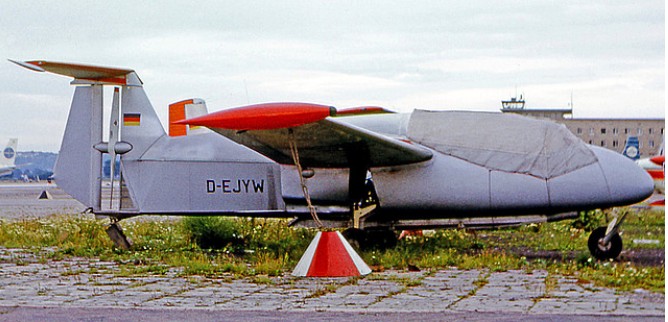
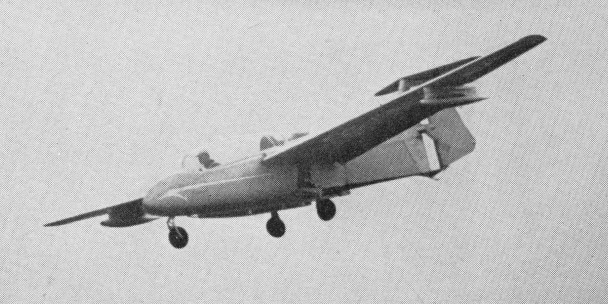
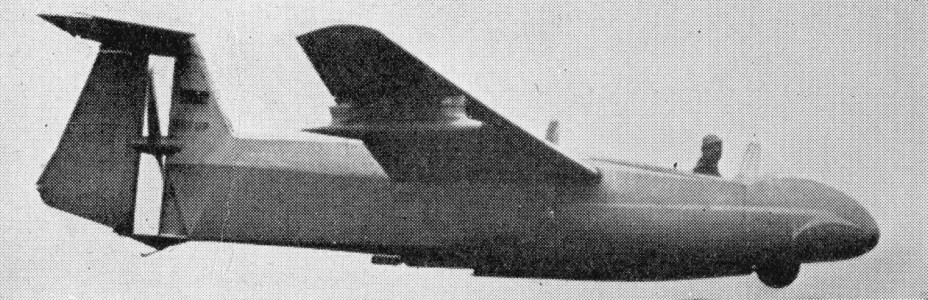
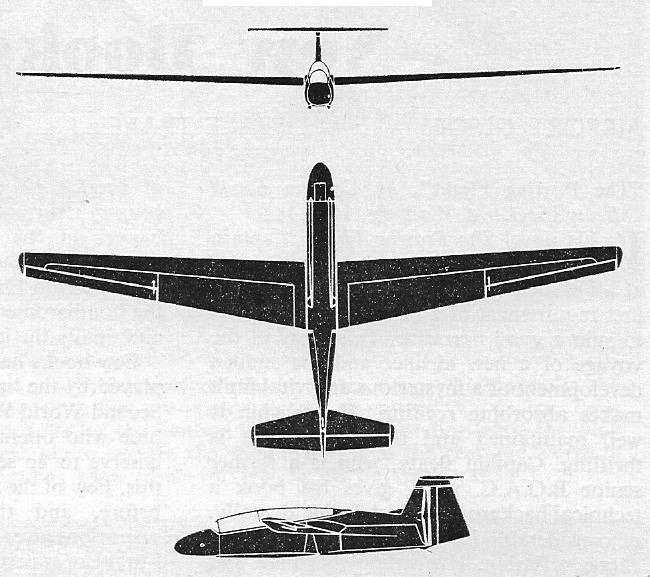
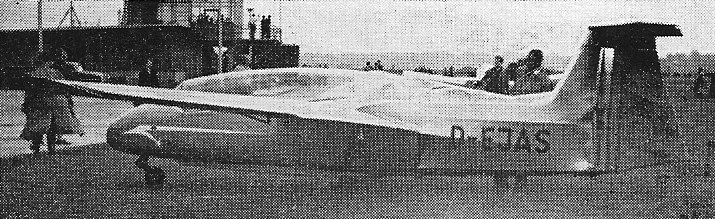
The Fischer RW-3 was essentially a powered glider of mixed wood and metal construction, with fabric covering. The cantilever mid-wing is swept forward while the T-tail assembly acts as a mount for the propeller. The main wheels are retractable manually as is the semi-retractable nose wheel.

The first prototype RW-3 A-1, D-EJAS, was wrecked in June 1956 and a second was built.

RFB RW3-P75 Multoplan

RWF formed at Porz-Westhoven, near Cologne, in early 1950s to develop a new light aircraft, the RW-3 Multoplane, basically a powered sailplane with Porsche engine driving a propeller mounted between the fin and rudder, and under the tailplane. The production license was subsequently transferred to Rhein-Flugzeugbau GmbH.
It is powered with a Porsche 678/4 aircraft powerplant, a flat-four opposed piston engine with a reduction gearing of 1.981, a takeoff-power rating of 75 hp at 4600 rpm (propeller 2320 rpm), and max continuous power rating of 65 hp at 4500 rpm (propeller 2070 rpm). Leaned out, it delivers 55 hp at 4100 rpm (propeller 2070 rpm), with fuel consumption in economy flight mode 3.7 US gph.

This RW-3 Multoplane was demonstrated in England during August 1958.

Gallery

RW-3 A-1
Engine: Porche 55 hp
Wingspan: 48 ft 6.5 in
Length: 23 ft 11.5 in
Wing area: 188.4 sq.ft
Aspect ratio: 15.4
Empty weight: 795 lb
Loaded weight: 1235 lb
Max speed: 103 mph
Cruise: 90 mph
Best glide: 22
Min sink: 2.95 ft/sec

Fischer RW-3

Rhein-West Flug

Germany
RWF was formed at Porz-Westhoven, near Cologne, in early 1950s to develop a new light aircraft, the RW-3 Multoplane, basically a powered sailplane with Porsche engine driving a propeller mounted between the fin and rudder, and under the tailplane. The production license was subsequently transferred to Rhein-Flugzeugbau GmbH.

RFB / Rhein-Flugzeugbau Sirius

Sirius 2

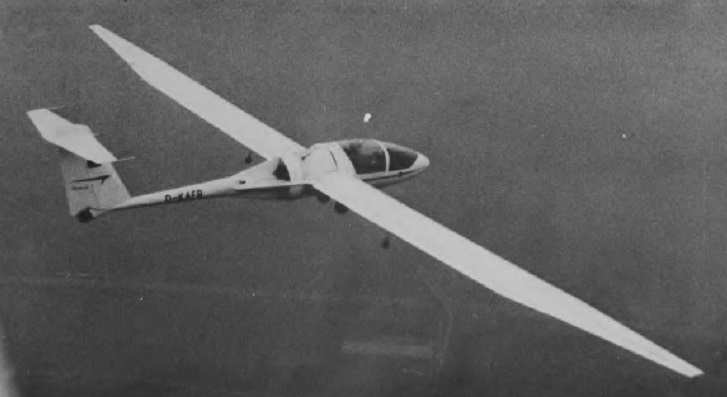
The Sirius 1 was developed to investigate the efficiency of the ducted fan as a means of propulsion for motor gliders. It was developed from the VFW FK-3 all-metal sailplane and was first powered by a Nelson 48 hp two-stroke engine, then by two Yamaha motor cycle engines and finally two 20 hp Fichtel & Sachs Wankel engines were chosen.

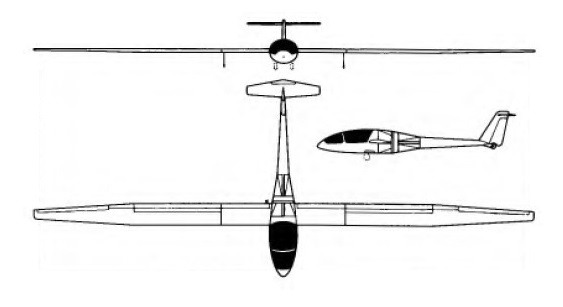
First flown in January 1972, the Sirius 2 is the two-seat companion to the Sirius 1, but Rhein-Flugzeugbau, the manufacturers, in this case have arranged with Caproni of Italy to use the wings, tail unit and landing gear of the A-21 Calif. This side-by-side two-seat ducted fan motor glider is powered by two 30 hp Wankel rotary engines which drive a ducted fan embedded in the fuselage just aft of the wing trailing edge. One engine is mounted in front of the fan and the other behind it. The fan shroud utilises an annular slat intake round the wing leading edge to keep the airflow attached to the duct, and suck-in doors fair off this intake when the power plant is not operating to maintain gliding performance.

Sirius 2
Engines: 2 x Wankel driving ducted fan
Wing span: 20.38 m / 66 ft 10 in
Length: 8.04 m / 26 ft 4.5 in
Height: 1.8m / 5ft 11 in
Wing area: 16.1 sq.m / 173 sq ft
Wing section: Wortmann FX-67-K-170/60-126
Aspect ratio: 25.8
Empty weight: 510 kg / 1,124 lb
Max weight: 690 kg / 1,521 lb
Water ballast: None
Max wing loading: 43.4 kg/sq.m / 8.88 lb/sq ft
Max speed (powered): 146 kt / 270 km/h
Stalling speed: 39 kt / 72 km/h
Min sinking speed: 0.6 m/sec / 2 ft/sec
Best glide ratio: 38
T-O run: 200 m / 656 ft
Rate of climb: 120 m/min / 394 ft/min
Range: 270km / 147nm

Sirius 2

RFB / Rhein-Flugzeugbau X-114

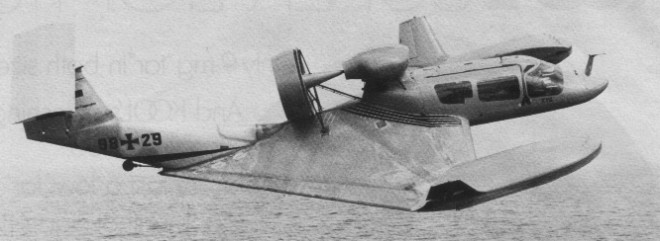
One of the first aircraft designed specifically for Wing In Surface Effect flight, designed by Dr Lippisch, the X-114 could operate in surface effect over waves of 1.5m and was able to escape into unrestricted free-flight. The ground effect craft flys on a bubble of air built up under its reverted negative V delta wing.

VFW Fokker completed preliminary flight testing of its radical RFB X-114 in 1975. It can fly free but is designed to travel over water or flat terrain in ground effect, which gives it a range of almost 1,100 nautical, a duration of 20 hours and a cruise of about 80 knots.

Engine: 1 x Lycoming, 200 hp
Cruise: 100+ kt
Range: 1000 km
Seats: 6
Fuel consump: 1 kg / 10 km