In the late 1950s Jim Robertson designed the Skyshark featuring many STOL features. The best of these features was then applied to the Cessna 182 airframe to produce the Wren 460.
Post WW2
Roberts Zero
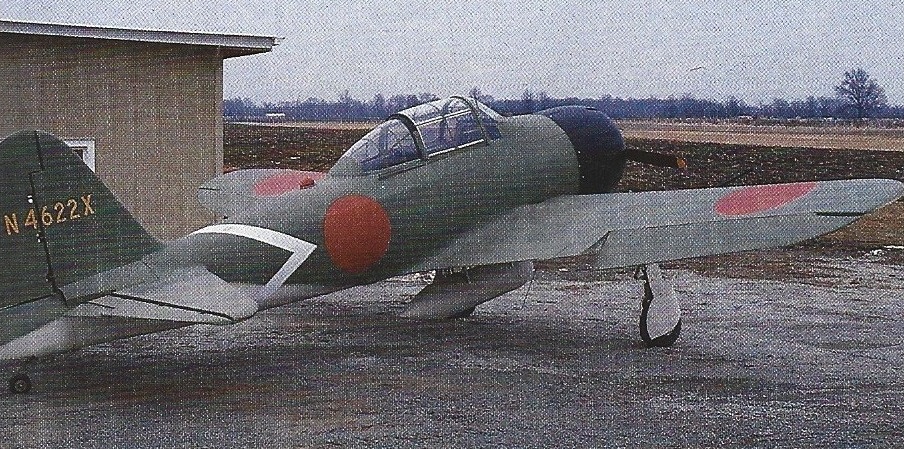
A May 1987 article “Tora, Tora, Tora over Indiana” describes another one of Mr. Don Roberts’ class projects, a 5/8 scale Zero. It was mostly of wood construction, using the wing from the Cavalier and a fuselage made from a wood box covered with foam and fiberglass, similar to the WAR replicas. It was powered by an O-290-D2 from a Tri-Pacer. (Overhauled to “zero time,” it says.)
Roberts Douglas Dauntless

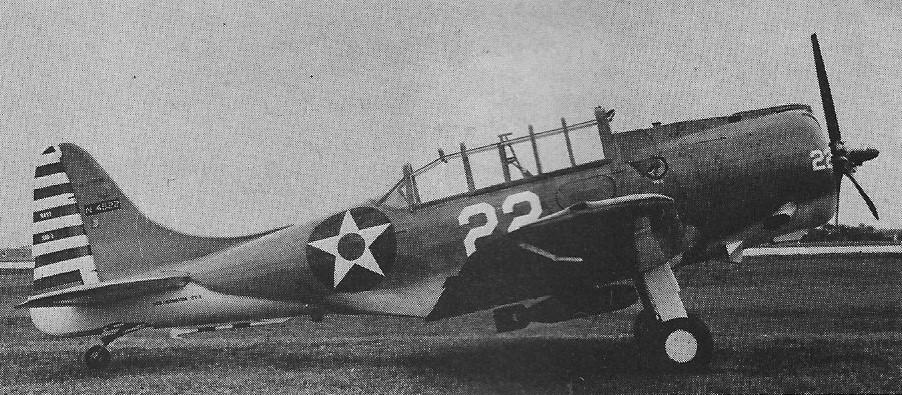
A 2/3 scale Douglas Dauntless dive bomber was built by a group of high school students in Project Schoolflight.
The project was lead by a Mr. Don Roberts of Noblesville High School, Noblesville, Indiana. Construction began in the fall of 1972 and was completed in May of 1977 at a cost of $15,000.
They supposedly used the plans from a Guillow’s Balsa Wood kit and scaled. The aircraft was powered by a Lycoming O-435. The wing was aluminum; the fuselage was steel tube with aluminum formers and skins.
It first flew on 25 May 1977.
The aircraft was supposedly sold after it was completed.
The Dauntless went to the San Diego Air Museum.
Jan 19, 2021
I was a student of Don Roberts 76-79 and remember this aircraft well! I remember the smell of the polyester resin through half of the school building from the cowl construction. Mains were from a Ryan Navion if I remember correctly. The “bomb” was donated by the Navy recruiter and we all got copies of Naval Aviation News which had an article of the plane.
Roberts, Don
Don Roberts of Noblesville High School, Noblesville, Indiana.
Mr. Roberts built or rebuilt 10+ aircraft in the high school program he led, involving hundreds of boys in the process.
Mr. Don Roberts was a Navy man, serving on the aircraft carrier USS Essex as an aircraft maintenance technician.
He describes his ring-side seat at the Bay of Pigs invasion.
I was at Noblesville High School from 1972 to 1976 and worked on this plane. Mr. Roberts approached the school board several years before I became a high school student and convinced the board to allow him to put together an aviation program. The Dauntlas was the third plane the school built. Don was able to scratch together funds to allow us to build this plane and it was one of the greatest experiences I had. The program he put together was three years, the first was a ground school, the second you learned how to work on airplanes, (welding, riveting and general maintenance), and in the third year two students were selected to supervise the rest that worked on this plane. He took a group of us to Oshkosh two years in a row.
RMI / Repülo Muszaki Intézet / Aviation Technical Institute
RMI stood for Repülo Muszaki Intézet or Aviation Technical Institute. Aircraft were primarily (but not exclusively) designed for RMI by László Varga. As a result, RMI designs are often given the Varga name (in some cases, even when he was not a major designer).
Rithner Hirondelle / Hirondelle Electra
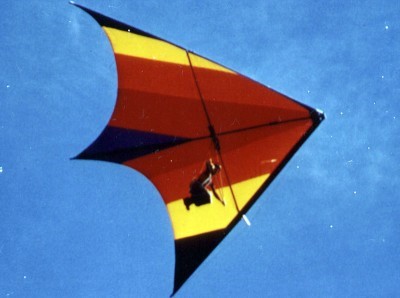
In the early 1970s, E. Rithner distributed the Bernard Danis (wing = Manta) and Electra Flyers (wing = Hirondelle) brands in Switzerland before being “inspired” to make them on his own account. Very quickly the Hirondelle Electra took over by proving to be more powerful and safer than the Manta which had the unfortunate propensity to put itself in the flag, often irreversible because the dive was stable (several accidents). Electra, which already had the “S” shaped keel (the front part was curved downwards by a cable between the upper anchorage of the trapezium and the nose, the rear part being curved upwards by the longitudinal upper cable Back), was fairly stable (slight neutral) and did not suffer from the (often fatal) phenomenon of feathering. Its fineness was of approx. 5.5, its drop rate of 2.5 – 3.0. For a weight of 18 kg.
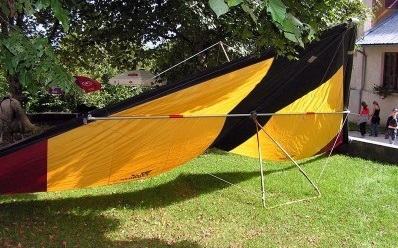
The Electra of the 1st generation had the corners of the trapezium always bent, American fashion. Undoubtedly, at this time, E. Rithner still imported a few pieces of hardware (stiffeners, screws, etc.) and US structural trapezium.
Rithner
In the early 1970s, E. Rithner distributed the Bernard Danis (wing = Manta) and Electra Flyers (wing = Hirondelle) brands in Switzerland before being “inspired” to make them on his own account. Very quickly the Hirondelle Electra took over by proving to be more powerful and safer than the Manta
Hang glider builder
Riter Special
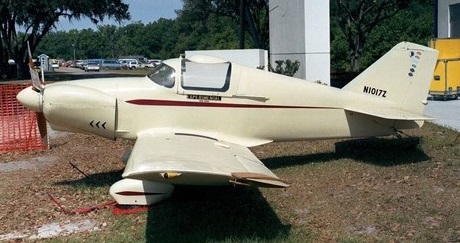
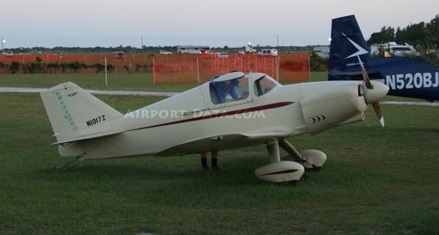
The Riter special is a single engine, low wing, single seat, retractable conventional landing gear aircraft. The wings fold upward for ground transport on a trailer. The landing gear is retracted by hand with a worm-gear mechanism.
First flown in 1961, the two seat aircraft was registered N1017Z Riter Special R.E.C. C/N 101.
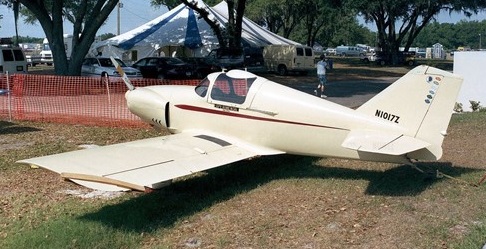
Engine: Lycoming O-290 GPU
Maximum speed: 174 kn; 322 km/h (200 mph)
Cruise speed: 148 kn; 274 km/h (170 mph)
Crew: one
Riley Super 414
Riley Super 414-8 / Cessna 414
Engines: 2 x Lycoming IO-720-B1B, 400 hp
Seats: 7
Wing loading: 32.4 lb/sq.ft
Pwr loading: 8.53 lb/hp
Max TO wt: 6825 lb
Empty wt: 4750 lb
Equipped useful load: 1976 lb
Payload max fuel: 560 lb
Range max fuel/ 75% cruise: 1161 nm/4.4 hr
Range max fuel / 55% cruise: 1573 nm/ 7.2 hr
Service ceiling: 35,000 ft
75% cruise: 260 kt
55% cruise: 220 kt
ROC: 2400 fpm
SE ROC: 500 fpm
SE ceiling: 25,000 ft
Min field length: 2400 ft
Cabin press: 4.2 psi
Fuel cap: 840/1416 lb
Riley Super 340
The Riley Super 340 is a conversion from a stan¬dard Cessna 340. The 285 hp engines in a standard Cessna 340 and the 310 hp en¬gines in the Cessna 414 are basically the same. Some additions and changes in the area of the induction air intercooler, oil cooler and intake manifold elbows make it possible to extract more power from the 414 engine, through the use of three inches more manifold pressure. Fuel injection, cyl¬inder baffles and other modifications are also necessary. Riley does all this to the en¬gines in a 340 to convert it to a “Super.” When Riley finishes, the engine is just like the 310 hp engines built by Continental and installed in the 414 by Cessna. Even the data plate on the engine is changed to reflect the change. The airplane then be¬comes a 340 with the 414 powerplants. Weight increase is minimum, at 22 pounds.
Additional horsepower helps rate of climb more than anything else, and in the Super 340 conversion, there’s a bonus over and above the apparent simple increase in horsepower. The 285 engines have a mani-fold pressure restriction starting at 16,000 feet; the 310 hp engines are unrestricted to 20,000 feet and can pull 285 hp to 22,000 feet, for a 6,000 foot advantage over the straight 285 engine.
There is one qualification to the Riley Super 340 package. Even after conversion, the engines are “flat rated” at 285 hp, meaning that you aren’t supposed to use the full 310, even though it is there and the engine is built for it. This is because Riley would have to do time consuming certifica¬tion work, such as developing figures for a higher engine out minimum control speed to reflect the higher horsepower. It will come in time; in the interim, Super 340 pi¬lots are told to mind the 33 inch (which means 285 hp) redline on the manifold pressure on takeoff. That’s no problem, but I’d imagine that in an engine out situation, it would be tempting to go for the extra three inches for extra single engine rate of climb, even acknowledging that Vmc would be a little higher. When climbing and cruising, you can get full benefit from the conversion by using 75 percent of the 310 hp for cruise climb. Again, the benefit is most no-ticeable at altitude: The 285 engine is good for 75 percent climb or cruise power to 20,000 feet; converted, it will deliver 75 percent of 310 hp to about 25,000 feet and 75 percent of 285 to about 27,000 feet. So you can see that the Super 340 really pays powerful dividends up high.
Riley Super 340 / Cessna 340
Engines: 2 x Continental TSIO-520-J, 310 hp
Seats: 6
Wing loading: 32.47 lb/sq.ft
Pwr loading: 9.63 lb/hp
Max TO wt: 5975 lb
Empty wt: 3745 lb
Equipped useful load: 2131 lb
Payload max fuel: 715 lb
Range max fuel/ 75% cruise: 1420 nm/6 hr
Range max fuel / 55% cruise: 1732 nm/ 8.5 hr
Service ceiling: 32,000 ft
75% cruise: 235 kt
55% cruise: 205 kt
Vmc: 86 kt
Stall: 71-79 kt
1.3 Vso: 92 kt
ROC: 1800 fpm
SE ROC: 350 fpm @ 100 kt
SE ceiling: 16,000 ft
Min field length: 2130 ft
Cabin press: 4.2 psi
Fuel cap: 840/1416 lb
Riley Super 340-8 / Cessna 340
Engines: 2 x Lycoming IO-720-B1B, 400 hp
Seats: 6
Wing loading: 32.47 lb/sq.ft
Pwr loading: 9.63 lb/hp
Max TO wt: 6600 lb
Empty wt: 4525 lb
Equipped useful load: 1976 lb
Payload max fuel: 560 lb
Range max fuel/ 75% cruise: 1238 nm/4.4 hr
Range max fuel / 55% cruise: 1716 nm/ 7.2 hr
Service ceiling: 45,000 ft
75% cruise: 276 kt
55% cruise: 240 kt
ROC: 2500 fpm
SE ROC: 600 fpm
SE ceiling: 30,000 ft
Min field length: 1600 ft
Cabin press: 4.2 psi
Fuel cap: 840/1416 lb

