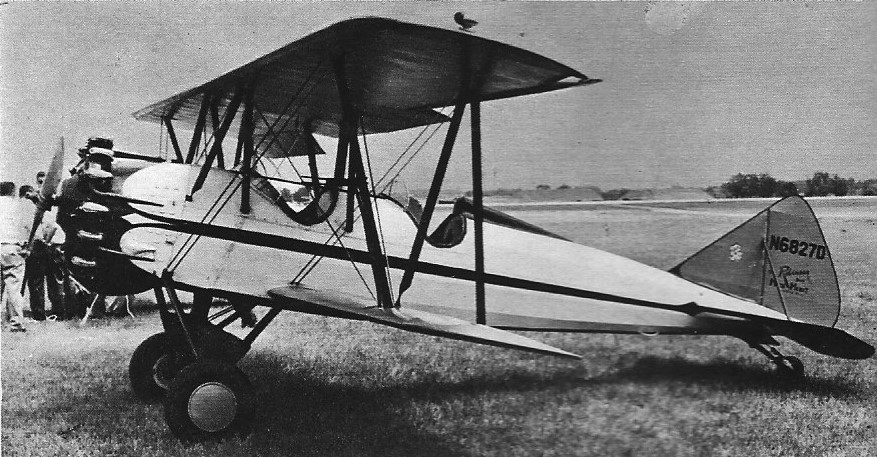
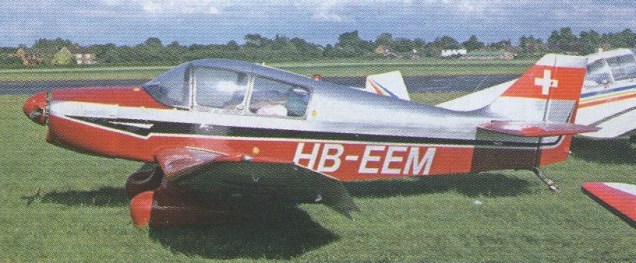
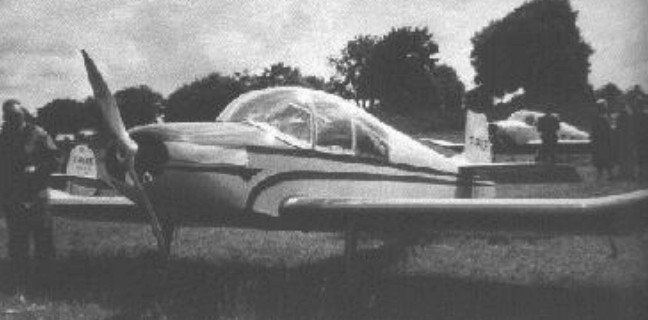
The tandem two-seat Robinson Mere Merit N6827D is actually a 2/3 scale of a 1929 Ken Royce-Rearwin and was built by father and son Cleo and Howard Robinson of Phillipsburg, Kan., SA. Construction took 21 months and $1700, including an antique-like paint job. First flying in late 1964, the wings are wood, fuselage and tail steel tube, all fabric covered.
Engine: Warner, 145 hp Wingspan: 28 ft / 8.54 m Length: 20 ft / 6.10 m Empty weight: 900 lb / 408 kg MAUW: 1400 lb / 635 kg Cruise: 120 mph / 193 kph Landing speed: 43 mph / 69 kph ROC: 1000 fpm / 5.08 m/sec Range: 400 mi / 644 km
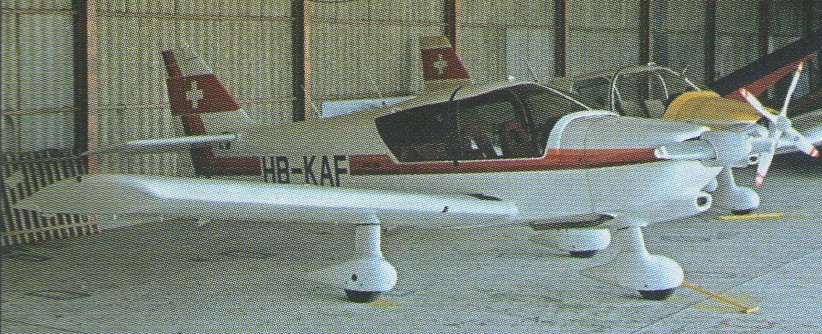
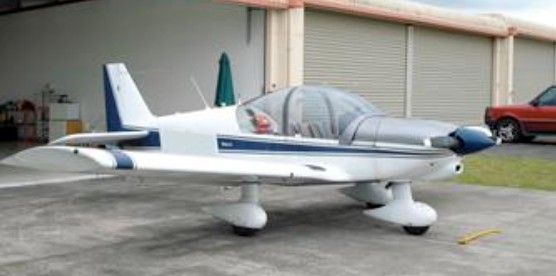
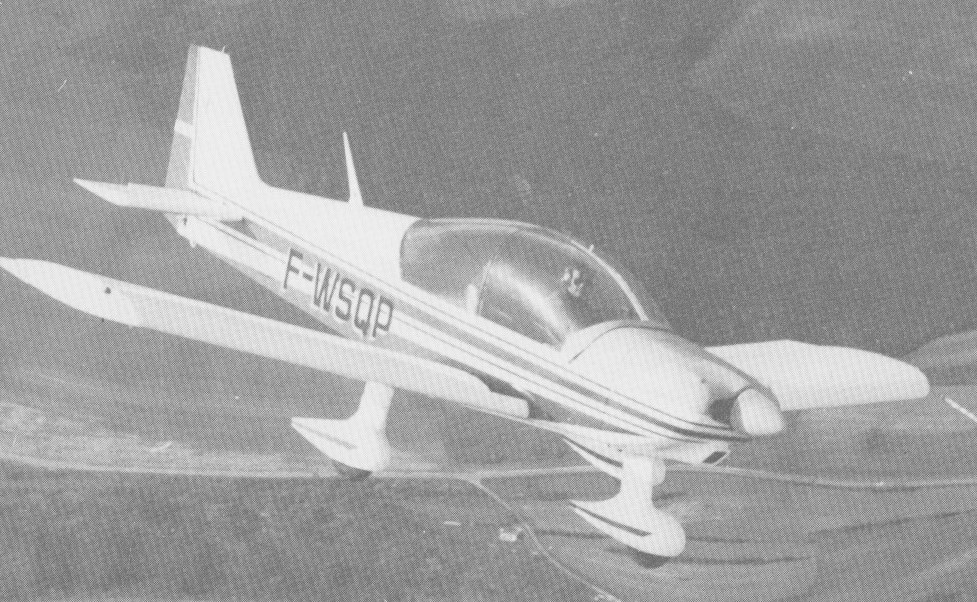
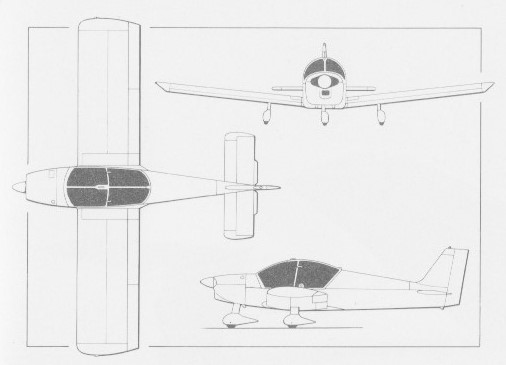
The HR 200, an original design of Christophe Heintz (hence the “H” in the designation, with “R” for Robin) when he was working with Pierre Robin, proved less successful than the company had hoped, and the R 2000 was evolved to replace it. The HR.200 was produced in response to a French flying school and club requirement for a two-seat trainer with modest touring capability, and first flew in prototype form during July 1971 as a low-wing monoplane of all-metal construction with fixed but spatted tricycle ending gear and a large clear-view canopy with a forward-sliding front section.
HR200 Club
The HR.200 was produced in variants with Avco Lycoming engines of different ratings. The basic models were the HR.200/100 Club with the 81 kW (108hp) O-235-H2C, the HR.200/120 with the 93-kW (125-hp) O-235-J2A, the HR 200/140 with the 0-320-E and the HR.200/160 with the IO-320-D. Later two low-cost versions were produced as the HR.200/100S based on the HR.200/100 but with simpler equipment and no wheel spats, and the HR.200/120B with the 88-kW (118-hp) O-235-L2A.
HR.200/100 Club Engine: Lycoming O-235-H2C, 81 kW (108hp)
HR.200/100 Club Engine: Lycoming O-235-C1C, 100hp Wingspan: 27 ft 4 in / 8.33 m Length: 21 ft 9.5 in / 6.64 m Cabin max width: 3 ft 6 in / 1.06 m Empty weight: 1113 lb / 500 kg MTOW: 1675 lb / 760 kg Cruise 75%: 116 kt / 133 mph / 215 kph Service ceiling: 12,950 ft / 3950 m Max range: 582 nm / 671 mi / 1080 km Seats: 4 Baggage: 55 lb / 25 kg
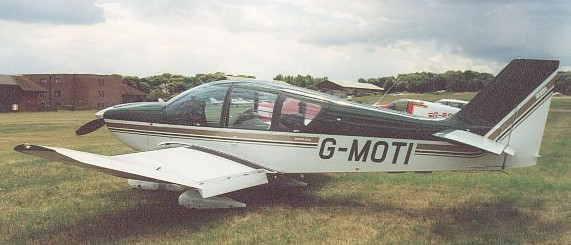
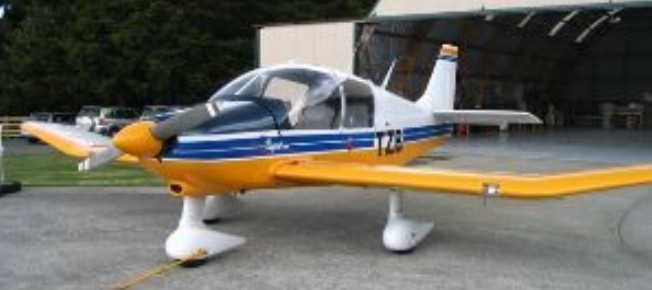
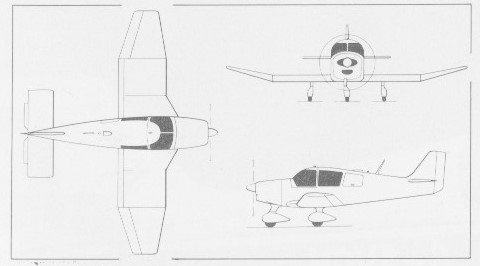
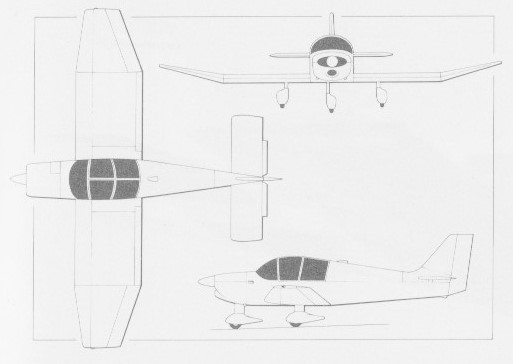
From the fabric-covered wooden DR.300 series with fixed tricycle landing gear the company evolved the DR.400, introduced in May 1972 with features such as a forward-sliding canopy and lower cabin sides for improved fields of vision. They still feature the wood structure and the cranked wings. The wings are built around a large, single piece, box spar. Steering is still by means of a stick.
The series has generally featured Avco Lycoming engines of a horsepower indicated by the designation suffix, and the original 1972 types include:
DR.400/2+2 – two adults and two children
DR.400/125 Petit Prince – three/four-seat
DR.400/140 Major – four-seat
DR.400/160 Chevalier – 160 hp lycoming O-320-D2A
DR 400/160 Major – 160 hp four-seat, extra fuel capacity, increased wing area
DR.400/180 Regent – 180 hp O-360, four-seat, forward sliding canopy and additional windows
DR.400/180R Remorquer – glider tug
DR.400/100 Cadet – Two seater trainer, 100 hp Continental O-200A
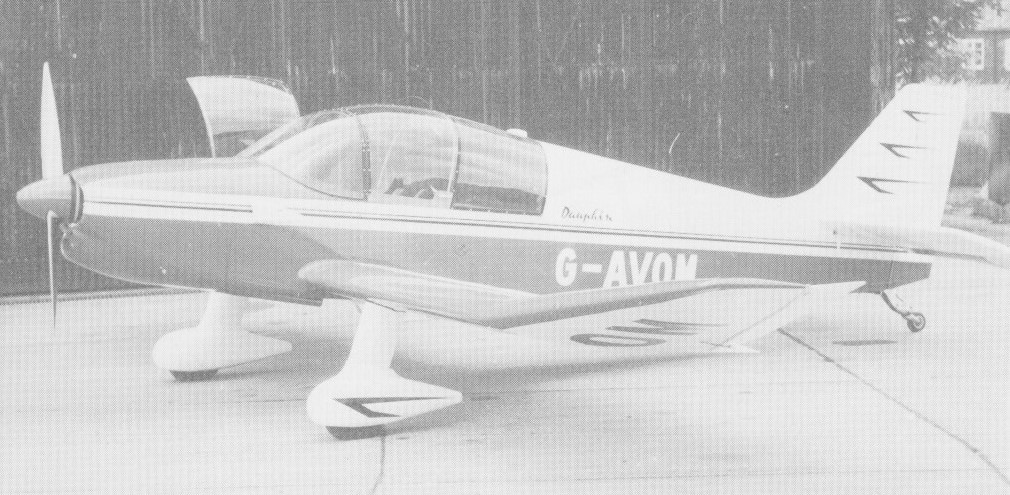
DR 400-108 Dauphin – 2+2 seater trainer, 108 hp Continental O-235 engine
DR 400-120 Dauphin 2+2 – Like DR 400-108, but with 120 hp engine and additional side windows
DR 400-140 Earl – DR 120 with larger engine and forward sliding canopy
DR 400/140 B Dauphin – 4 four-seat 160 hp
DR 400-180R Remorqueur – Specifically designed as a glider tug with reduced fuel.
DR 400/200 R Remo 200 – 200 hp four seat, for glider towing
DR 400/200i President – 200 hp four/five-seat, larger fuselage, increased cabin space
The later variants of DR400 are real four seaters, capable of carrying both full fuel and four passengers. They are powered by an engine up to 180 hp, which consumes around 35 liters (9 US gallons) of fuel per hour and give the plane a speed of 267 km/h (166 mph). Since its first flight in march 1972, over 1300 DR 400s have been built.
Robin Regent DR400-180
Certification of the DR400-180 and DR400-500 is under Direction Generale L’Aviation Civile France DGAC 45.
DR 400-108 Dauphin Engine: 108 hp Continental O-235 Seats: 2+2
DR 400-120 Dauphin 2+2 Engine: 120 hp Seats: 2+2
DR 400-140 Earl
DR 400/140 B Dauphin Engine: 160 hp Seats: 4
DR.400/180 Regent Engine: Lycoming O-360-A, 180 hp Wingspan: 28 ft 7.25 in / 8.72 m Length: 23 ft 6.25 in / 7.18 m Empty weight: 1301 lb / 590 kg MTOW: 2425 lb / 1100 kg Max cruise 8000ft/2440m: 143 kt / 163 mph / 264 kph Max ROC: 825 fpm / 252 m/min Service ceiling: 20,000 ft / 6100 m Range max fuel: 793 nm / 913 mi / 1470 km Seats: 4-5 Baggage capacity: 88 lb / 40 kg / 13.75 cu.ft / 0.39 cu.m Cabin length: 5 ft 3.25 in / 1,62 m Cabin height: 4 ft 0.25 in / 1.23 m
The HR.100 first flew in April 1969, and is in essence a development of the DR.253 Regent with metal construction. The first production variant was the HR.100/180 with the 134-kW (180-hp) Avco Lycoming O-360, but this was soon replaced by the HR.100/200. In 1971 Avions Pierre Robin placed in production its first all metal aircraft, the HR 100/200, designed by M Christophe Heintz. The HR.100/320/4+2 up-engined variant for two children as well as four adults failed to progress past the prototype stage, so the next model was the HR.100/ 210 with a 157-kW (210-hp) engine.
At this stage retractable landing gear and Continental engines entered the picture to produce the HR.100/285 with the 239-kW (285-hp) Tiara: this model entered production with the Tiara 6-285B version of the engine. The HT 100/Tiara, first flown in 1972, featured redesigned wings and vertical tail. This basic model was also produced in the HR.100/250TR version with the 186-kW (250-hp) Avco Lycoming IO-540 engine.
HR 100/Tiara
HR 100/200 Engine: Lycoming IO 360 A1D6, 200 hp Prop: 6 ft 11 in (1.87 m) dia 2 blade metal Wing span: 29 ft 6.25in (9.00 m) Length: 24 ft 1 in (7.34 m) Wing area: 155.0 sq ft (14.40 sq.m) Gross weight: 2.645 lb (1,200 kg) Max cruising speed: 155 mph (250 kph) at SL Max range: 750 miles (1,210 km) std fuel Seats: 4 Undercarriage: fixed No built: approx. 30
HR.100 Royal 210F Engine: Continental IO-360-D, 210 hp Wingspan: 29 ft 9.5 in / 9.08 m Length: 24 ft 3 in / 7.39 m Empty weight: 1565 lb / 710 kg MTOW: 2755 lb / 1250 kg 75% cruise 8000ft/1440m: 146 kt / 168 mph / 270 kph ROC: 1000 fpm / 305 m Service ceiling: 16,400 ft / 5000 m Range 75% pwr 8000ft/1440m std fuel: 739 nm / 850 mi / 1370 km Range 75% pwr 8000ft/1440m aux fuel: 1457 nm / 1675 mi / 2700 km Seats: 4 Undercarriage: fixed
HR.100 Royal 210R Undercarriage: retractable
HR.100/285 four-seat sport and touring lightplane Powerplant: 1 x Teledyne Continental Tiara 6-285B, 239kW (285 hp) Span: 9.08m (29ft 9.5 in) Length: 7.59m (24ft 10.75 in) Max TO weight: 1400 kg (3,086 lb) Max speed: 202 mph at sea level Operational range: 1,323 miles
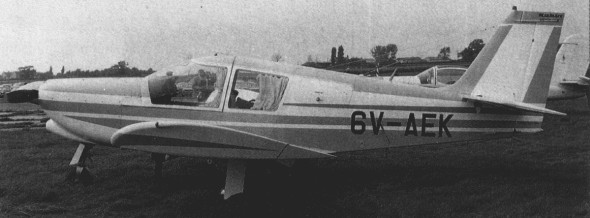
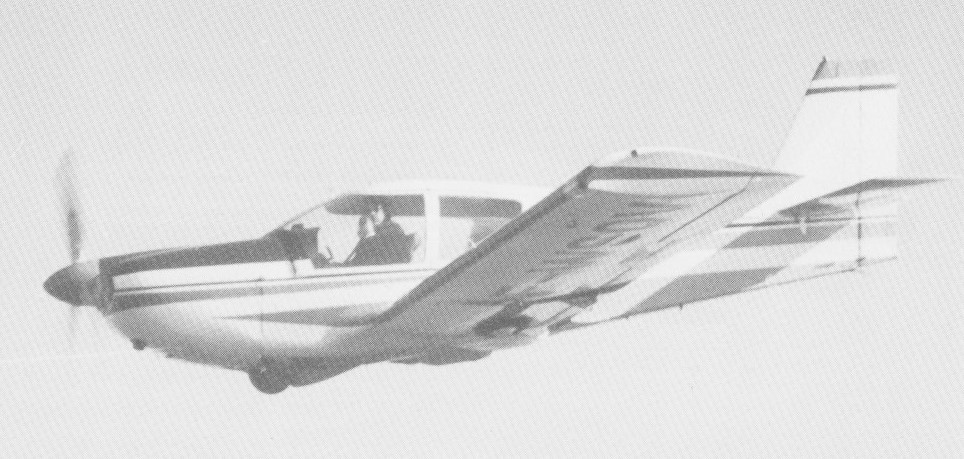
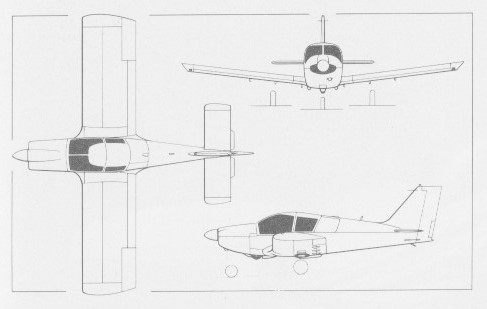
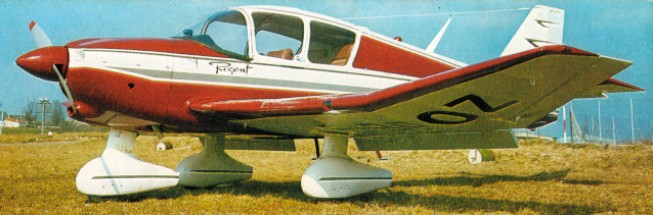
By 1965, it was time to replace the DR 1050 and the DR 100 series was succeeded by the Robin DR 200 range of aircraft, being very similar to the DR 100’s. The DR 200 series started with the DR 220 2+2 (first flying in 1966), of which 83 were built in 1967.
The DR.220A was an improved DR.220m strengthened airframe, and DR.250 type landing gear.
The 220 was eventually given a 108 hp Continental O-235 engine as the DR.220/108, instead of the original O-200A, and was then called the DR 221 Dauphine (first flying in 1967).
DR.221 Dauphin
The Dauphine was later given a 160 hp Lycoming O-320-D2A engine, making it the DR 250 Capitaine.
After winning the Sicile races with the DR1051, Robin wanted something even faster. In an era where improvements in General Aviation were following up very quickly, the 6 year old design of the DR1050M was becoming obsolete. Robin fitted a larger engine to the DR1050, made it more roomy, streamlined it even more and thus created the DR250 Capitaine.
As a modified and improved DR 1050, the major changes were: Larger engine Wider track for main landing gear Flaps Floating tailplanes (again like 1050 M) More streamlines around the nose Slightly more tilted, larger windscreen More shoulder room due to more arched side screens Bigger, more comfortable seats More comfortable as a whole More sophisticated instrument panel that was taller and farther away from the pilot No front/rear tank configuration, just a single, large tank under the rear seat, containing 70 liters and two 40 liter tanks in the wing roots Smaller, wheels (5 inch rather than 6 inch items) and wheel pants, which are unfortunately a bit less well suited for grass runways.
The 250 proved very competative in the Sicile racings, securing the first seven positions in the rankings, Robin as always firmly on the number one spot. Robin experimented with a 180 hp engine in his personal DR250, with which he obtained an avarage speed of 317 kph during one of the Sicile air races. Such was his lead, that the race organizers asked Robin not to enter the next race, since this would render the rest of the field without chances of winning. After some 100 DR 250 were produced, the DR 250 was later given a larger fuselage, trigear undercarriage and a 180 hp Lycoming O-360-D2A, making it the four/five seat DR 253 Regent, appearing in 1967. The first Robin with a nose wheel.
DR220 Number produced: 84 Production years: 1966-1970 Engine: Continental O-200, 100 hp Fuel: 80/87 Length: 6.90 m Wing span: 8.72 m Wing area: 13.6 sq.m Empty weight: 440 kg Max Take off weight: 780 kg Useful load: 340 kg Fuel capacity (wings): none Fuel capacity (rear): 110 l Gear: Tailwheel Seats: 2+2 Controls: Stick and rudder Material: Wood and fabric Fuel burn: 20 l/hr Max speed, sea level: 230 km/h Cruise speed, 75% SL: 205 km/h Cruise speed, 75% 3000 m: 215 km/h Service ceiling: 4600 m Range, no reserves: 1050 km
DR221 DAUPHIN Number produced: 62 Production years: 1967-1970 Engine: Lycoming O-235-C2A, 108/115 hp Fuel: 80/87 or 100/130 Wing span: 8.72 m / 28 FT 7.25 IN Wing area: 14.15 sq.m Length: 6.90 m / 22 FT 11.5 IN Empty weight: 475 kg / 1047 lb Max Take off weight normal: 840 kg / 1852 lb Max Take off weight utility: 780 kg / 1720 lb Useful load: 350 kg Fuel capacity (wings): 2 x 40 l Fuel capacity (rear): 110 l Gear: Tailwheel Seats: 4 Controls: Stick and rudder Material: Wood and fabric Fuel burn: 22 l/hr Max speed, sea level: 245 km/h Cruise speed, 75% SL: 205 km/h / 110 kt / 127 mph Cruise speed, 75% 3000 m: 230 km/h Range, no reserves: 910 km / 490 nm / 565 mi ROC: 650 fpm / 198 m/min Service ceiling: 12800 ft / 3900 m
DR250 Number produced: 101 Production years: 1965-1969 Length: 6.90 m Wing span: 8.72 m Wing area: 14.15 sq.m Empty weight: 500 kg Max Take off weight: 960 kg Useful load: 460 kg Fuel capacity (wings): 2 x 40 l Fuel capacity (rear): 110 l Gear: Tailwheel Seats: 4 Controls: Stick and rudder Material: Wood and fabric Engine: Lycoming O-320, 150/160 hp Fuel: 100/130 Fuel burn: 32 l/hr Max speed, sea level: 282 km/h Cruise speed, 75% sea: 250 km/h Cruise speed, 75% 3000 m: 265 km/h Service ceiling: 5200 m Range, no reserves: 1150 km
DR253 Regent Engine: Lycoming, 180 hp Seats: 4/5 Prop: fixed pitch Undercarriage: fixed-nose Max TO wt: 2425 lb (1100 kg) Max level speed: 171 mph (275 kph) Useful load: 1130 lbs ROC: 1,300fpm Cruise 75%: 144 kts Max range: 900 miles TO dist 50ft: 2,000 ft Wing span: 28 ft 7.5 in (8.72 m) Length: 23 ft 6.75 in (7.18 m) Height: 7 ft 9.5 in (2.38 m)
With the DR.10 finished and flown by Robin, Robin and Delemontez decided to join forces to see if they could create a marketable version of the Jodel-Robin. For several reasons, the Jodel-Robin could not be certified, so Delemontez ended up designing a completely new aircraft. This aircraft was to be produced by Robin, who had decided to found a company for this purpose, called Centre Est Aeronautique (CEA).
In 1958/59 the prototype of the new aircraft was finished and called the DR100 Ambassadeur. DR for Delemontez-Robin and 100 from the original D10 numbering. Immediately after the first flights of the prototype, Robin started producing the DR100’s.
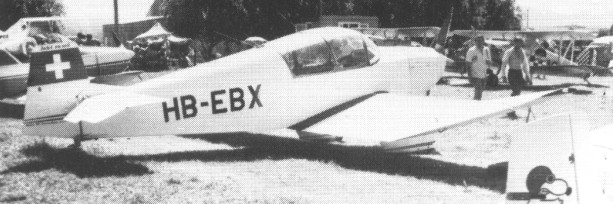
Earlier examples had a 90 hp Continental C90 engine, later ones were fitted with 100 hp O-200’s and 105 hp Potez 4E20 engines. The DR100 series features the typical cranked wing, a spatted (taildragger) undercarriage, four seats and is of wood and fabric construction.
The DR series progressed through a number of changes, giving it the following names:
DR100A First produced version with 90 hp Continental C90 3 seats No built: 10 – CEA, 59 – SAN
DR105A Ambassadeur As for the DR 100, but with hydraulic brakes Continental O-200A, 100 hp No built: 21 – SAN
DR1050 Ambassadeur As for the DR 105, but with 100 hp Rolls Royce or Continental O-200 engine.
DR1051 Ambassadeur As for the DR 1050, but with 105 hp Potez 4E20 engine.
DR1050 Sicile Continental O-200 engine
DR1051 Sicile 105 hp Potez 4E20 engine
DR1050M Excellence Sweptback fin and rudder, one piece elevator 38 built (by SAN)
After many refine¬ments, the final production version of the DR 10, powered by a Continental C-90 and able to carry three people rolled out as the DR100, as a high-performance three-seater with the 71-kW (95-hp) Continental C90 engine. The aeroplane entered production in 1958, and after 10 had been built the type was altered and redesignated DR.1050 Ambassadeur during 1961. Production of the DR.1050 Ambassadeur and its improved DR.1051 Ambassadeur variant totalled 252 by SAN and 148 by CEA. Production of the DR1050 and DR1051 Sicile totalled 114 (by CEA).
Subsequent versions were the DR.1050/M Sicile and DR.1050 Sicile Record each with the 70-kW (100-hp) Rolls-Royce Continental 0-200-A, of which 114 and 58 were built respectively.
Pierre Robin and his wife took their factory tuned and streamlined DR1051 to a number of air races, winning every race they entered. The race around Sicile being the most notable race of them all. The streamlining went as far as removing the air brakes, removing the door handles and taping up the doors after the Robin’s had entered the plane. The tailwheel received its own wheel pant as well. Furthermore the Robin engineers managed to squeeze every last horsepower from the Potez engine. The result of these efforts were an average speed of 270 kph during the race, which is the Vne of the stock model.
DR.1051 Sicile
The races did very well for Jodel sales, and large numbers of orders were placed.
After the results of the races, Robin decided to incorporate a number of the things that they had learnt from the races in the design of the DR1050 “Ambassadeur”. This lead to the “Sicile” model. The most notable changes were: More streamlined wheel pants A streamlined air intake for the carburator, situated underneath the propellor.
It was in 1963 that Robin and Delemontez started thinking of changing the tail section of their plane, to give it more directional stability and a more powerful elevator. Robin took to work to design the DR1050 MM1 model. It was at this time where SAN, a company that was building DR1050’s under a license agreement, introduced the DR1050 M model. This plane was a DR1050 with the tail section of the recently introduced D150 Mascaret. Thus far, SAN had given their DR1050’s the name “Excellence”, and the new model was called “Excellence Record”.
DR.1050M
Soon after SAN introduced the Excellence Record, CEA entered their DR1050 MM1 Sicile Record. The difference between the two is very notable. The SAN model has a more angular transition between the turtledeck and the vertical tail, just like the D150, whereas the CEA version has a fluent rounded profile.
The Dr1051 3 seat development is powered by a 105hp Potez 4E-20 flat-four engine, built in the early 1960s by Societe Aeronautique Normande (S.A.N.)
The final type was the DR.1052 Excellence, a 1963 development of the DR.1050 with either the 0-200-A or the 78-kW (105-hp) Potez 4 E-20 engine. These types were produced in similar forms by Avions Pierre Robin and also by the Société Aéronautique Normande.
Mainly due to hp restrictions, the loading capacity is not quite up to having all four seats occupied. The back seats are not all that roomy either. Finally, loading up the back seats quickly pushes the Center of Gravity too far aft (partially solved in the later M models with revised tailplanes). The DR 100 series should be looked at as a large two seater, or a 2+2 at best.
Another problem for taller people is that depending on the factory and the model year, sometimes the panel extends rather far downward. When you are over 1.85 meters (6′), then your shins will probably hit the panel when you try to work the pedals. Numerous people have solved this problem by simply removing some panel. The seats are adjustable, but not over a wide range and the seatbacks are rather low. Jodels are built for shorties.
Many homebuilders have fitted or retrofitted flaps to their DR1050’s. These are copies of the flaps that can be found on the DR200 and onward models. The air brakes are omitted and a rod running aft from the original airbrake torque tube mechanically operates the flaps, just like it is done on later factory models. No flaps were ever fitted to the DR100 by the factory.
Due to an automotive background of Joly (he had a Citroën garage), automotive details can be found on their aircraft. Most notable are the door handles, which are 1950’s Citroën 2CV items. And since the 2CV featured “suicide” type doors (hinged at the back), the door locks in the car are facing forward. In the Jodel they face backward, so the left and right handle needed to be switched in the transition. This explains why the DR 100 (and other Jodel/Robin models as well) have the door lock on the righthand side of the plane!
Parts of the DR100 series were still produced and plans were still being sold by SAB.
DR100 Engine: Continental C90, 95 hp Fuel: 80/87 octane, Mogas
DR105 Engine: Continental C90, 95 hp Fuel: 80/87 octane, Mogas
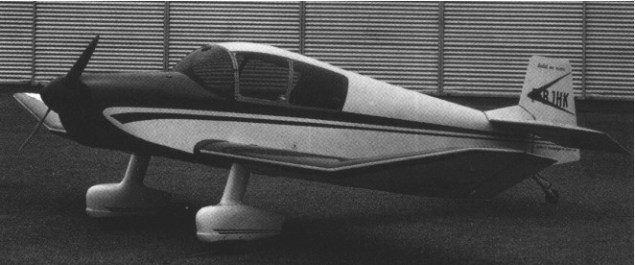
DR1050 Engine: Continental/Rolls Royce O-200, 100 hp Fuel: 80/87 octane, Mogas Length: 21.4 ft / 6.5 m Height: 5.8 ft / 1.8 m Wing span: 28.8 ft / 8.72 m Empty weight: 913 lbs / 415 kg Max Take off weight: 1650 lbs / 750 kg Max Landing weight: 1630 lbs / 740 kg Usefull load: 737 lbs / 335 kg Power loading: 16.5 lbs/hp / 7.5 kg/hp Fuel capacity (front): 12 gal / 55 l Fuel capacity (rear): 12 gal / 55 l Unusable fuel in aft tank: 1.5 gal / 6 l Max load factors: +3.8 G, -1.5 G Undercarriage: Tailwheel Seats: 2+2 Controls: Stick and rudder Material: Wood and fabric Fuel burn 75% pwr: 5.5 gph / 21 liter/hour Fuel burn 55% pwr: 4 gph / 15 liter/hour Max speed, sea level: 130 mph / 210 km/h Cruise speed: 115 mph / 185 km/h Vne: 169 mph / 270 km/h Stall speed (indicated): 55 mph / 88 km/h Climb rate: 600 fpm / 3 m/s Take-off roll: 980 ft / 300 m Landing roll: 800 ft / 250 m Range 75% power, no reserves: 575 nm / 1035 km (5.2 hours) Range 55% power, no reserves: 650 nm / 1170 km (6.9 hours)
DR.1050 Engine: Continental O-200, 100 hp Wing span: 8.72 m Wing area: 13.6 sq.m MAUW: 780 kg Empty weight: 400 kg Fuel capacity: 110 lt Max speed: 270 kph Cruise speed: 220 kph Climb rate: 2.8 m/s Seats: 3 Fuel consumption: 20 lt/hr Plan price (1998): 1200 Fttc Kit price (1998): 151 000 Fttc
DR1050M Engine: Continental/Rolls Royce O-200, 100 hp Fuel: 80/87 octane, Mogas Length: 21.4 ft / 6.5 m Height: 5.8 ft / 1.8 m Wing span: 28.8 ft / 8.72 m Empty weight: 913 lbs / 415 kg Max Take off weight: 780 kg Max Landing weight: 780 kg Usefull load: 737 lbs / 335 kg Power loading: 16.5 lbs/hp / 7.5 kg/hp Fuel capacity (front): 12 gal / 55 l Fuel capacity (rear): 12 gal / 55 l Unusable fuel in aft tank: 1.5 gal / 6 l Max load factors: +3.8 G, -1.5 G Undercarriage: Tailwheel Seats: 2+2 Controls: Stick and rudder Material: Wood and fabric Fuel burn 75% pwr: 5.5 gph / 21 liter/hour Fuel burn 55% pwr: 4 gph / 15 liter/hour Max speed, sea level: 130 mph / 210 km/h Cruise speed: 115 mph / 185 km/h Vne: 169 mph / 270 km/h Stall speed (indicated): 55 mph / 88 km/h Climb rate: 600 fpm / 3 m/s Take-off roll: 980 ft / 300 m Landing roll: 800 ft / 250 m Range 75% power, no reserves: 575 nm / 1035 km (5.2 hours) Range 55% power, no reserves: 650 nm / 1170 km (6.9 hours)
DR.1050 Sicile Record two/three-seat sport and touring lightplane Span: 8.71 m (28ft 7.25 in) Length: 6.35m (20 ft l0in) Powerplant: l x Rolls-Royce Continental 0-200-A, 75kW (100 hp) Max T/O weight: 780kg (1,720lb) Max speed: 133 mph at sea level Operational range: 775 miles
CEA DR.1050MM1 Sicile Record Engine: Continental O-200-A, 100 hp Wingspan: 28 ft 7.5 in / 8.72 m Length: 20 ft 10 in / 6.35 m Empty weight: 883-970 lb / 400-440 kg MTOW: 1720 lb / 780 kg Max cruise 75%, 6560ft / 2000m: 118 kt / 133 mph / 215 km ROC SL: 590 fpm /180 m/min Seats: 3 (max 308 lb / 140 kg)
DR1051 Engine: Potez 4E20, 105 hp Fuel: 100/130 octane, no Mogas
Pierre Robin, then a young flying instructor, wanted to build a 3 seater version of the D11 capable of carrying his wife and son. He found an unused Jodel D.10 glider wing lying in a hangar at a nearby airfield, bought the D10 wing from Delemontez for the price of the wood alone, and started building what became known as the Jodel-Robin. He built a fuselage, based on a scale-up version of the Jodel D.11, around this wing, resulting in the DR 10. After many refinements, the final production version an aircraft powered by a Continental C-90 and able to carry three people rolled out as the DR100.
The history of the Robin aircraft can be traced to the 1950s when Pierre Robin, then a young flying instructor, wanted to build an aircraft capable of carrying his wife and son. He found an unused Jodel D.10 glider wing lying in a hangar at a nearby airfield and built a fuselage, based on a scale-up version of the Jodel D.11, around this wing; resulting in the DR 10. After many refine¬ments, the final production version an aircraft powered by a Continental C-90 and able to carry three people rolled out as the DR100. This was the beginning of a successful aircraft business. Centre Est Aeronautique formed at Dijon October 1957 by Pierre Robin and Jean Delemontez (ex-Jodel) , at Darois Vil¬lage, near Dijon, Burgundy, as a privately owned company, and began production with the DR 100 Ambassadeur, a three-seat version of the Jodel D.11, designed by Robin and first flown July 1958; built also by Societe Aeronautique Normande. The basic design was constantly refined through a number of variants. Delivered 500th aircraft in June 1967.
Subsequent products also mainly two- to four-seat private-owner models. Name of company subsequently altered to Avions Pierre Robin (Centre Est Aeronautique); the latter part later dropped from marketing name.
Aircraft from Avions Robin include the Robin 200 two-seat lightplane and trainer (first flown 1971); DR 400 (first flown May 1972) that was offered in two-seat and 112 hp DR 400/100 Cadet form during 1980s later in 118 hp DR 400/120 Dauphin 2+2 two-plus-two seating form, 160 hp DR 400/140 B Dauphin 4 four-seat form, 160 hp DR 400/160 Major four-seat form with extra fuel capacity and increased wing area, 180 hp DR 400/180 Regent four-seat form, 180 hp 400/180 R Remo 180 four-seat form for glider towing and with reduced fuel, 200 hp DR 400/200 R Remo 200 four seat form for glider towing, and latest 200 hp DR 400/200i President four/five-seat form with larger fuselage to offer increased cabin space; Robin 2160 two-seat aerobatic lightplane (certificated 1978).
1983: Avions Pierre Robin SA, aerodrome de Dijon¬Val Suzon, 21121 Fontaine les Dijon, France.
Robin 3000 four-seat lightplane with T-tail (first flown 1988 in 3000/160 form). Robin 1180 Aiglon had first flown in 1976 as metal four-seater.
By 1998, Mudry had been bought out by the group which owns Robin Aircraft and as a result the Barouder became available through Bul Aéro.
Since its foundation it has continuously created light aircraft, producing over 3,500 in ten different aircraft ranges, and in 2001 the company was building about 60 aircraft a year, a third of which are for export.
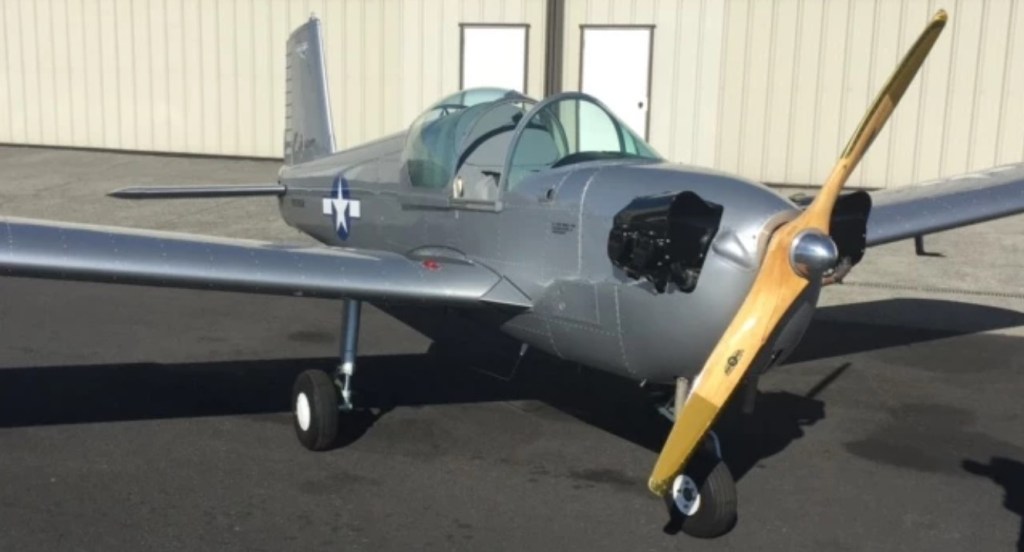
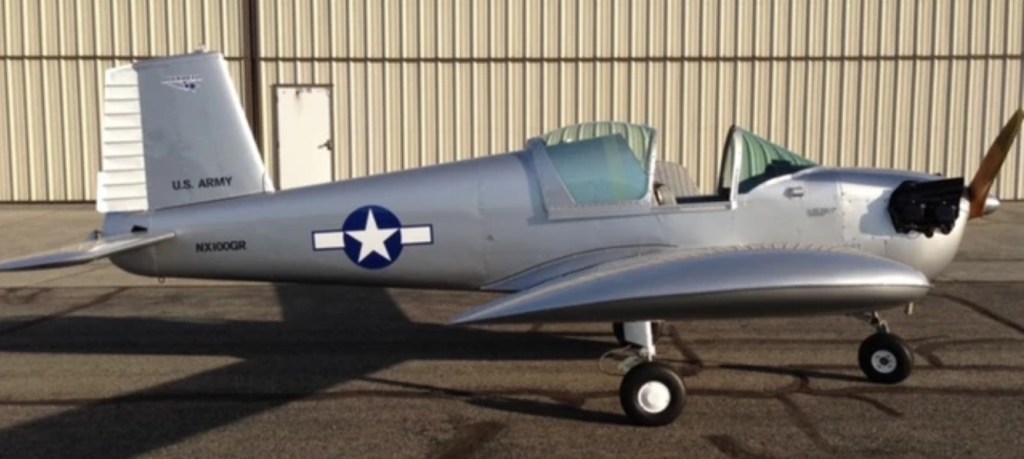
After WWII, George Robertson, worked for aircraft designer/builder John Thorp. Thorp had designed the Lockheed Model 33 Little Dipper also known as the Air Trooper in 1944. Only one example was built and flown before the program was cancelled.
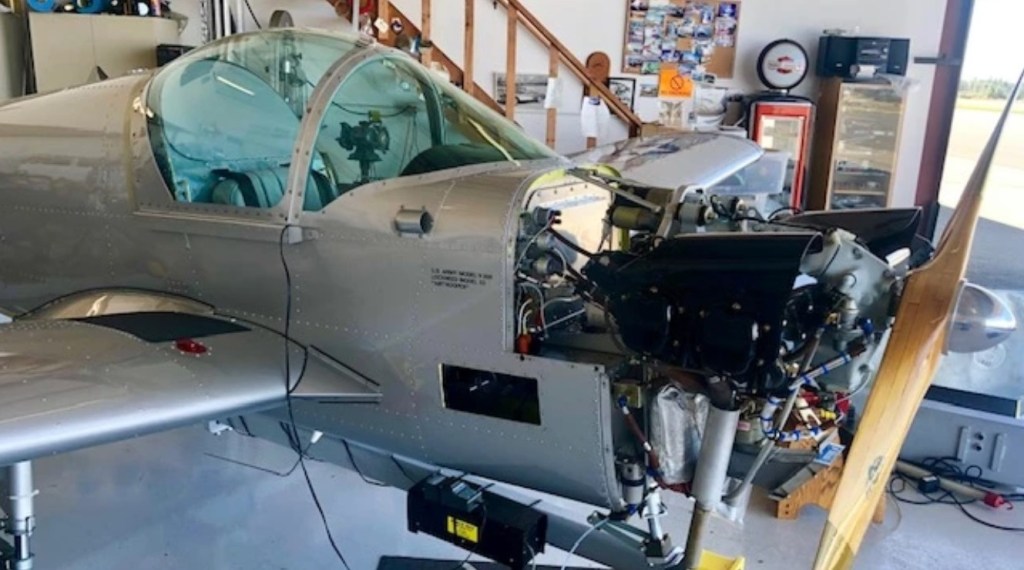
After WWII, Thorp designed the Thorp T-211 Sky Skooter and allowed his employee George Robertson to manufacture extra parts and convert a T-211 back into a single seat aircraft to replicate the original Lockheed Air Trooper. This aircraft is actually a Robertson Sky Skeeter.
Original powered by a Lycoming 0-145 engine, the aircraft was restoration by Sorrell Brothers in 2005 and the engine replaced with a TMX-O-200 Continental. A sliding canopy was installed at restoration.
The airframe had reached 129.5 hrs TTSN, 45 hrs since restoration.