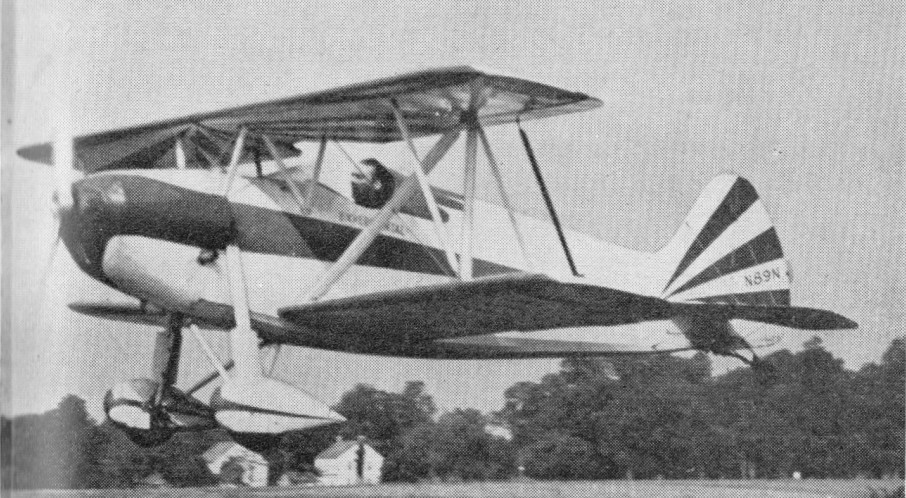
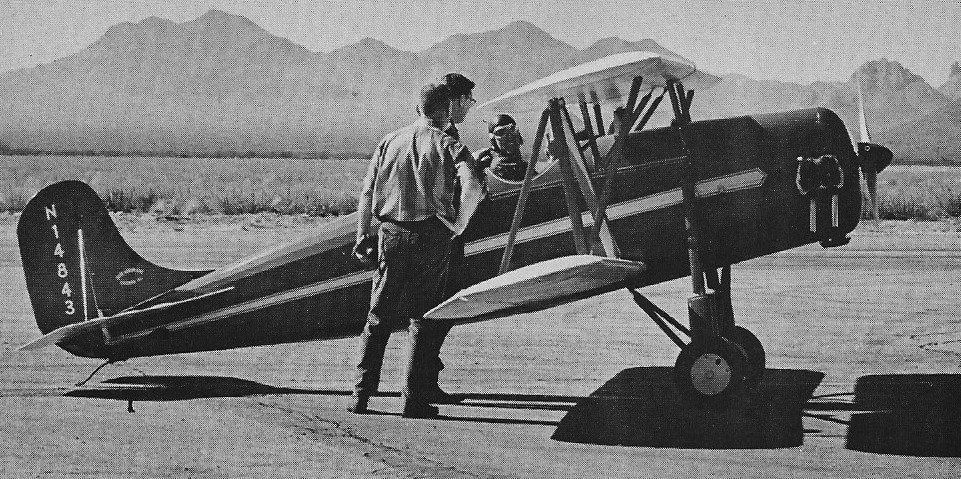
As flying began to recover from the depression, the little Rose Parakeet appeared in 1934. This was built by the Rose Aeroplane & Motor Co. of Chicago, Illinois. Powered with the new (and relatively expensive) 37-hp Continenal A.40 flat-four engine, it drew heavily on the layout of the old Lincoln Sport but incorporated welded steel-tube fuselage and tail construction and greatly modified wing rigging. The airfoil was a Rose design, nearly symmetrical. In spite of winning an ATC, only eight were built before the venture folded.
After acquiring in 1948 the manufacturing and marketing rights to the prewar Rose Parakeet single-seat sports biplane from Rose Aeroplane & Motor Company, Hannaford Aircraft Co offered production versions of the airplane with 40- 85hp engines. The design reappeared in the post-World War II homebuilt boom as the “Hannaford Bee,” the plans for which were available to the homebuilders. With 65-to 90-hp engines, the Bees, and some refurbished Parakeets became very suitable sport planes.
The design was revived in 1969 by Doug Rinehart, who used a 100-hp Continental 0-200 engine and intended to make the new Parakeet an ATC’d model for the general aviation market. The market did not accept it.
Argentina Builder of J-1 Martin Fierro single-seat agricultural monoplane with 300 hp Lycoming engine. Prototype first flew in 1975 and a small batch produced.
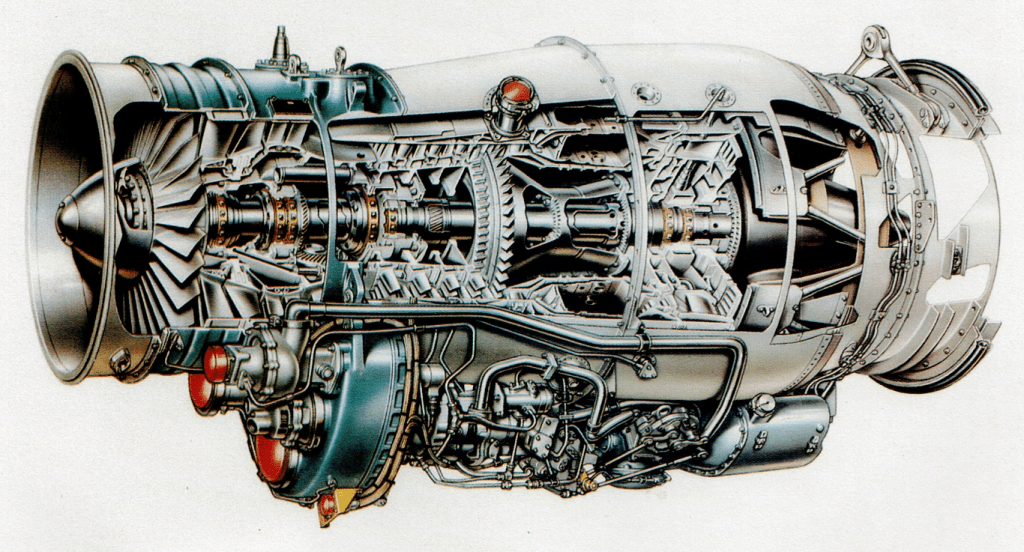
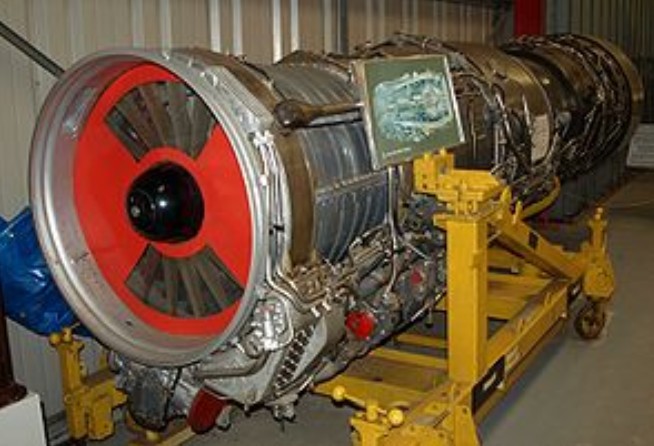
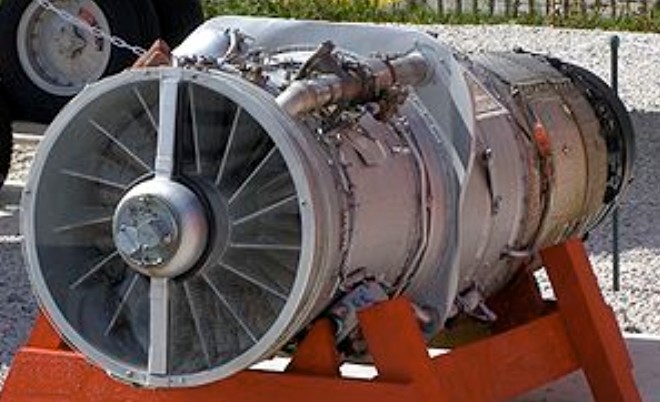
The Rolls-Royce Turbomeca Adour is a two-shaft turbofan aircraft engine developed by Rolls-Royce Turbomeca Limited, a joint subsidiary of Rolls-Royce (UK) and Turbomeca (France). The Adour is a turbofan engine developed primarily to power the Anglo-French SEPECAT Jaguar fighter-bomber, achieving its first successful test run in 1968.
Ten prototype engines were built for testing by both Rolls-Royce and Turbomeca, and 25 were built as development engines for the Jaguar prototypes,
Named after the Adour, a river in south western France, it was produced in versions with or without reheat.
Turbomecca/Rolls-Royce Adour – Finish Air Force Hawk
As of July 2009 more than 2,800 Adours have been produced, for over 20 different armed forces with total flying hours reaching 8 million in December 2009. The U.S. military designation for this engine is the F405-RR-401 (a derivative of the Adour Mk 871), which is used to power the fleet of Boeing / BAE Systems T-45 Goshawk trainer jets of the US Navy.
Variants: Reheated (Afterburning) Adour Mk 101 – First production variant for the Jaguar, 40 built.
Adour Mk 102 – Second production variant with the addition of part-throttle reheat.
Adour Mk 104
Adour Mk 106 – Replacement for the Jaguar’s Mk104 engine (developed from the Adour 871) with a reheat section. The RAF refitted its fleet with this engine as part of the GR3 upgrade. In May 2007, following the retirement of the last 16 Jaguars from No. 6 Squadron RAF, based at RAF Coningsby, the Adour 106 has been phased out of RAF service.
Adour Mk 801 – For Mitsubishi F-1 & T-2 (JASDF)
TF40-IHI-801A – Licence-built version of Mk 801 by Ishikawajima-Harima for Mitsubishi F-1 & T-2 (JASDF)
Adour Mk 804 – Licence-built by HAL for Indian Air Force phase 2 Jaguars
Adour Mk 811 – Licence-built by HAL for Indian Air Force phase 3 to 6 Jaguars
Adour Mk 821 – Engine upgrade of Mk804 and Mk811 engines, under development, for Indian Air Force Jaguar aircraft.
Dry (Non-afterburning) Adour Mk 151
Adour Mk 151A – Used by the Red Arrows,
Adour Mk 851
Adour Mk 861
Adour Mk 871
F405-RR-401 – Similar configuration to Mk 871, for US Navy T-45 Goshawk.
Adour Mk 951 – Designed for the latest versions of the BAE Hawk and powering the BAE Taranis and Dassault nEUROn UCAV technology demonstrators. The Adour Mk 951 is a more fundamental redesign than the Adour Mk 106, with improved performance (rated at 6,500 lbf (29,000 N) thrust) and up to twice the service life of the 871. It features an all-new fan and combustor, revised HP and LP turbines, and introduces Full Authority Digital Engine Control (FADEC). The Mk 951 was certified in 2005.
F405-RR-402 – Upgrade of F405-RR-401, incorporating Mk 951 technology, certified 2008. Expected entry into service 2012.
Applications: BAE Hawk McDonnell Douglas T-45 Goshawk SEPECAT Jaguar
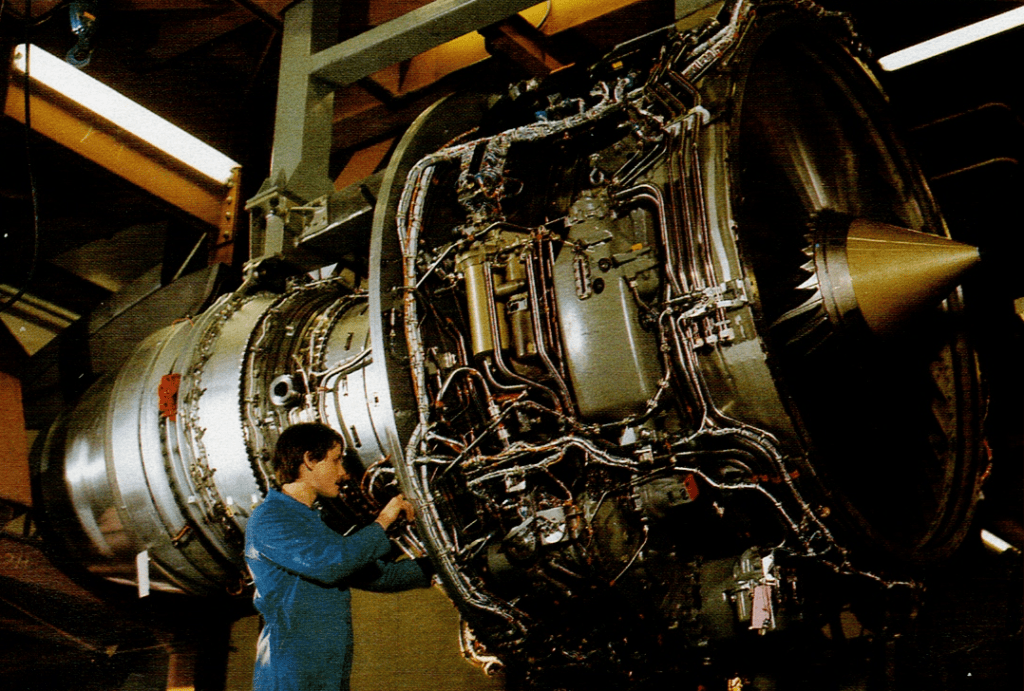
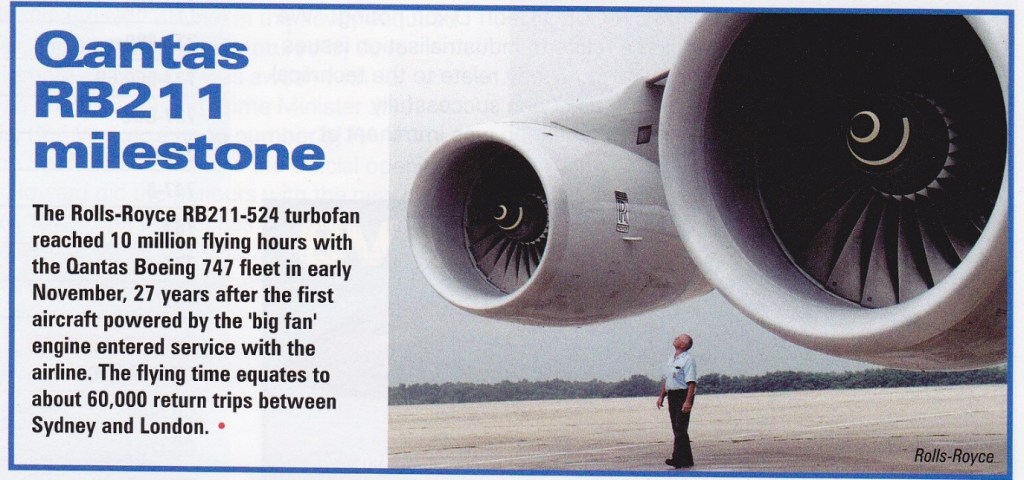
First run in 1969, the Rolls-Royce RB211 is a family of high-bypass turbofan engines made by Rolls-Royce plc and capable of generating 37,400 to 60,600 pounds-force (166 to 270 kilonewtons) thrust. Originally developed for the Lockheed L-1011 TriStar, it entered service in 1972 and was the only engine to power this type of aircraft. It was not, as often believed, the costs of development which forced Rolls-Royce Limited into bankruptcy, but a financial management error which saw revenue from the RB211 sales to Lockheed retained in the US in US$ bank accounts, whereas all the company’s costs were incurred in pounds sterling. An adverse shift in exchange rates then triggered the bankruptcy. British Prime Minister Edward Heath considered the company so important to UK interests he opted for nationalisation and it became Rolls-Royce (1971) Limited. Its RB211 engine was the first three-spool engine, and it was to turn Rolls-Royce from a significant player in the aero-engine industry into a global leader. Already in the early 1970s the engine was reckoned by the company to be capable of at least 50 years of continuous development.
In 1966 American Airlines announced a requirement for a new short-medium range airliner with a focus on low-cost per-seat operations. While they were looking for a twin-engined plane, the aircraft manufacturers needed more than one customer to justify developing a new airliner. Eastern Airlines were also interested, but needed greater range and needed to operate long routes over water; at the time this demanded three engines in order to provide redundancy. Other airlines were also in favour of three engines. Lockheed and Douglas responded with designs, the L-1011 TriStar and DC-10 respectively. Both had three engines, transcontinental range and seated around 300 passengers in a widebody layout with two aisles.
Both planes also required new engines. Engines were undergoing a period of rapid advance due to the introduction of the high bypass concept, which provided for greater thrust, improved fuel economy and less noise than the earlier low-bypass designs. Rolls-Royce had been working on an engine of the required 45,000 lbf (200 kN) thrust class for an abortive attempt to introduce an updated Hawker Siddeley Trident as the RB178. This work was later developed for the 47,500 lbf (211 kN) thrust RB207 to be used on the Airbus A300, before it was cancelled in favour of the RB211 programme. Meanwhile Rolls-Royce was also working on a series of triple-spool[3] designs as replacements for the Conway, which promised to deliver higher efficiencies. In this configuration, three groups of turbines spin three separate concentric shafts to power three sections of the compressor area running at different speeds. In addition to allowing each stage of the compressor to run at its optimal speed, the triple-spool design is also more compact and rigid, although more complex to build and maintain. Several designs were being worked on at the time, including a 10,000 lbf (44 kN) thrust design known as the RB203 intended to replace the Rolls-Royce Spey. Work started on the Conway replacement engine in July 1961 and a twin-spool demonstrator engine to prove the HP compressor, combustor, and turbine system designs, had been run by 1966. Rolls-Royce chose the triple-spool system in 1965 as the simplest, lowest cost solution to the problem of obtaining lower fuel consumption and reduced noise levels at a constant power setting. Work on the RB211 as essentially a scaled-down RB207 began in 1966-7 with the first certificated engines being scheduled to be available by December 1970 at 33,260lb take-off thrust and at a price of $511,000 each.
RB211-535C
On 23 June 1967, Rolls-Royce offered Lockheed the RB211-06 for the L-1011. The new engine was to be rated at 33,260 lbf (147,900 N) thrust and combined features of several engines then under development: the large high-power, high-bypass design from the RB207 and the triple-spool design of the RB203. To this they added one totally new piece of technology, a fan stage built of a new carbon fibre material called Hyfil developed at RAE Farnborough. The weight savings were considerable over a similar fan made of steel, and would have given the RB211 an advantage over its competitors in terms of power-to-weight ratio. Despite knowing that the timescale would be challenging for an engine incorporating these new features, Rolls-Royce committed to putting the RB211 into service in 1971. Lockheed felt the new engine would offer a distinct advantage over the otherwise similar DC-10 product. However, Douglas had also requested proposals from Rolls for an engine to power its DC-10, and in October 1967 Rolls responded with a 35,400 lbf (157,000 N) thrust version of the RB211 designated the RB211-10. There followed a period of intense negotiations between airframe manufacturers Lockheed and Douglas, potential engine suppliers Rolls-Royce and General Electric and Pratt & Whitney, as well as the major U.S. airlines. During this time prices were negotiated downwards, while the required thrust ratings were raised ever higher. By early 1968, Rolls was offering a 40,600 lbf (181,000 N) thrust engine designated RB211-18. Finally, on 29 March 1968 Lockheed announced that it had received orders for 94 TriStars, and placed an order with Rolls-Royce for 150 sets of engines designated RB211-22.
The RB211’s complexity required a lengthy development and testing period. By Autumn 1969 Rolls-Royce was struggling to meet the performance guarantees to which it had committed: the engine had insufficient thrust, was over-weight and its fuel consumption was too high. The situation deteriorated further when in May 1970 the new Hyfil (a Carbon (fiber) composite) fan stage, after passing every other test, shattered into pieces when a chicken was fired into it at high speed. Rolls had been developing a titanium blade as an insurance against difficulties with Hyfil, but this meant extra cost and more weight. It also brought its own technical problems when it was discovered that only one side of the titanium billet was of the right metallurgical quality for blade fabrication.
In September 1970, Rolls-Royce reported to the government that development costs for the RB211 had risen to £170.3 million – nearly double the original estimate; furthermore the estimated production costs now exceeded the £230,375 selling price of each engine. The project was in crisis.
By January 1971 Rolls-Royce had become insolvent, and on 4 February 1971 was placed into receivership,[note 1] seriously jeopardising the L-1011 TriStar programme. Because of its strategic importance, the company was nationalised by the then-Conservative government of Edward Heath, allowing development of the RB211 to be completed.
As Lockheed was itself in a vulnerable position, the government required that the US government guarantee the bank loans that Lockheed needed to complete the L-1011 project. If Lockheed (which was itself weakened by the difficulties) had failed, the market for the RB211 would have evaporated. Despite some opposition, the US government provided these guarantees. In May 1971, a new company called “Rolls-Royce (1971) Ltd.” acquired the assets of Rolls-Royce from the Receiver, and shortly afterwards signed a new contract with Lockheed. This revised agreement cancelled penalties for late delivery, and increased the price of each engine by £110,000.
Kenneth Keith, the new chairman who had been appointed to rescue the company, persuaded Stanley Hooker to come out of retirement and return to Rolls. As technical director he led a team of other retirees to fix the remaining problems on the RB211-22. The engine was finally certified on 14 April 1972, about a year later than originally planned, and the first TriStar entered service with Eastern Air Lines on 26 April 1972. Hooker was knighted for his role in 1974.
The RB211’s initial reliability in service was not as good as had been expected because of the focus of the development programme on meeting the engine’s performance guarantees. Early deliveries were of the RB211-22C model, derated slightly from the later -22B. However, a programme of modifications during the first few years in service improved matters considerably, and the series has since matured into a highly reliable engine.
Although originally designed for the L-1011-1, Rolls-Royce knew that the RB211 could be developed to provide greater thrust. By redesigning the fan and the IP compressor, Hooker’s team managed to increase the engine’s thrust to 50,000 lbf (220 kN). The new version was designated RB211-524, and would be able to power new variants of the L-1011, as well as the Boeing 747.
Rolls-Royce had tried without success to sell the RB211 to Boeing in the 1960s, but the new -524 offered significant performance and efficiency improvements over the Pratt & Whitney JT9D which Boeing had originally selected to power the 747. In October 1973 Boeing agreed to offer the RB211-524 on the 747-200, and British Airways became the first airline to order this combination which entered service in 1977. Rolls continued to develop the -524, increasing its thrust through 51,500 lbf (229 kN) with the -524C, then 53,000 lbf (240 kN) in the -524D which was certificated in 1981.
Notable airline customers included Qantas, Cathay Pacific, Cargolux and South African Airways. When Boeing launched the larger 747-400 still more thrust was required, and Rolls responded with the -524G rated at 58,000 lbf (260 kN) thrust and then the -524H with 60,600; these were the first versions to feature FADEC. The -524H was also offered as a third engine choice on the Boeing 767, and the first of these entered service with British Airways in February 1990.
These would have been the final developments of the -524, but when Rolls developed the successor Trent engine, it found it could fit the Trent 700’s improved HP system to the -524G and -524H. These variants were lighter and offered improved fuel efficiency and reduced emissions; they were designated -524G-T and -524H-T respectively. It was also possible to upgrade existing -524G/H engines to the improved -T configuration, and a number of airlines did this.
The -524 became increasingly reliable as it was developed, and the -524H achieved 180-minute ETOPS approval on the 767 in 1993.
In the mid 1970s, Boeing was considering designs for a new twin-engined aircraft to replace its highly successful 727. As the size of the proposed plane grew from 150 passengers towards 200, Rolls-Royce realised that the RB211 could be adapted by reducing the diameter of the fan and removing the first IP compressor stage to produce an engine with the necessary 37,400 lbf (166,000 N) thrust. The new version was designated RB211-535. On 31 August 1978 Eastern Airlines and British Airways announced orders for the new 757, powered by the -535. Designated RB211-535C, the engine entered service in January 1983; this was the first time that Rolls-Royce had provided a launch engine on a Boeing aircraft.
However, in 1979 Pratt & Whitney launched its PW2000 engine, claiming 8% better fuel efficiency than the -535C for the PW2037 version. Boeing put Rolls-Royce under pressure to supply a more competitive engine for the 757, and using the more advanced -524 core as a basis, the company produced the 40,100 lbf (178,000 N) thrust RB211-535E4 which entered service in October 1984. While still not quite as efficient as the PW2037, it was more reliable and quieter. It was also the first to use the wide chord fan which increases efficiency, reduces noise and gives added protection against foreign object damage. As a result, a relatively small number of -535C’s were installed on production aircraft, the majority using the -535E.
As well as a featuring a destaged IP compressor, the -535E4 was the first engine to incorporate a hollow wide chord, unsnubbered fan to improve efficiency. It also featured the use of more advanced materials, including titanium in the HP compressor and carbon composites in the nacelle. Later engines incorporate some features (e.g. FADEC) from improved models of the -524.
Probably the most important single -535E order came in May 1988 when American Airlines ordered 50 757s powered by the -535E4 citing the engine’s low noise as an important factor: this was the first time since the TriStar that Rolls-Royce had received a significant order from a US airline, and it led to the -535E4’s subsequent market domination on the 757. Humorously (as reported in Air International) at the time of the announcement made by American, selection of the -535E4 was made public prior to the selection of the 757, though this was welcome news to both Rolls-Royce and Boeing.
After being certified for the 757, the E4 was offered on the Russian Tupolev Tu-204-120 airliner, entering service in 1992. This was the first time a Russian airliner had been supplied with western engines. The -535E4 was also proposed by Boeing for re-engining the B-52H Stratofortress, replacing the aircraft’s eight TF33s with four of the turbofans. Further upgrading of the -535E4 took place in the late 1990s to improve the engine’s emissions performance, borrowing technology developed for the Trent 700.
The -535E4 achieved 180-minute ETOPS approval on the 757 in 1990.
The RB211 was officially superseded in the 1990s by the Rolls-Royce Trent family of engines, the conceptual offspring of the RB211.
2007
The family is divided into three distinct series: RB211-22 series Triple-spool high-bypass-ratio 5.0 Single-stage wide-chord fan Seven-stage IP compressor Six-stage HP compressor Single annular combustor with 18 fuel burners Single-stage HP turbine Single-stage IP turbine Three-stage LP turbine
RB211-524 series Triple-spool high-bypass-ratio 4.3 – 4.1 Single-stage wide-chord fan Seven-stage IP compressor Six-stage HP compressor Single annular combustor with 18 fuel burners (24 on the G/H-T) Single-stage HP turbine Single-stage IP turbine Three-stage LP turbine
RB211-535 series Triple-spool high-bypass-ratio 4.3 – 4.4 Single-stage wide-chord fan Six-stage IP compressor Six-stage HP compressor Single annular combustor with 18 fuel burners (24 on later versions of E4) Single-stage HP turbine Single-stage IP turbine Three-stage LP turbine
Specifications: RB211-22B Static thrust: 42,000 lbf (190 kN) Basic engine weight: 9,195 lb (4,171 kg) Length: 119.4 in Fan diameter: 84.8 in (2.15 m) Entry into service: 1972 Applications: Lockheed L-1011-1, Lockheed L-1011-100
RB211-524B2 Static thrust: 50,000 lbf (220 kN) Basic engine weight: 9,814 lb (4,452 kg) Length: 119.4 in Fan diameter: 84.8 in (2.15 m) Entry into service: 1977 Applications: Boeing 747-100, Boeing 747-200, Boeing 747SP
RB211-524B4 Static thrust: 53,000 lbf (240 kN) Basic engine weight: 9,814 lb (4,452 kg) Length: 122.3 in Fan diameter: 85.8 in (2.18 m) Entry into service: 1981 Applications: Lockheed L-1011-250, Lockheed L-1011-500
RB211-524C2 Static thrust: 51,500 lbf (229 kN) Basic engine weight: 9,859 lb (4,472 kg) Length: 119.4 in Fan diameter: 84.8 in (2.15 m) Entry into service: 1980 Applications: Boeing 747-200, Boeing 747SP
RB211-524D4 Static thrust: 53,000 lbf (240 kN) Basic engine weight: 9,874 lb (4,479 kg) Length: 122.3 in Fan diameter: 85.8 in (2.18 m) Entry into service: 1981 Applications: Boeing 747-200, Boeing 747-300, Boeing 747SP
RB211-524D4-B Static thrust: 53,000 lbf (240 kN) Basic engine weight: 9,874 lb (4,479 kg) Length: 122.3 in Fan diameter: 85.8 in (2.18 m) Entry into service: 1981 Applications: Boeing 747-200, Boeing 747-300
RB211-524G Static thrust: 58,000 lbf (260 kN) Basic engine weight: 9,670 lb (4,390 kg) Length: 125 in Fan diameter: 86.3 in (2.19 m) Entry into service: 1989 Applications: Boeing 747-400
RB211-524H Static thrust: 60,600 lbf (270 kN) Basic engine weight: 9,670 lb (4,390 kg) Length: 125 in Fan diameter: 86.3 in (2.19 m) Entry into service: 1990 Applications: Boeing 747-400, Boeing 767-300
RB211-524G-T Static thrust: 58,000 lbf (260 kN) Basic engine weight: 9,470 lb (4,300 kg) Length: 125 in Fan diameter: 86.3 in (2.19 m) Entry into service: 1998 Applications: Boeing 747-400, Boeing 747-400F
RB211-524H-T Static thrust: 60,600 lbf (270 kN) Basic engine weight: 9,470 lb (4,300 kg) Length: 125 in Fan diameter: 86.3 in (2.19 m) Entry into service: 1998 Applications: Boeing 747-400, Boeing 747-400F, Boeing 767-300
RB211-535C Static thrust: 37,400 lbf (166 kN) Basic engine weight: 7,294 lb (3,309 kg) Length: 118.5 in Fan diameter: 73.2 in (1.86 m) Entry into service: 1983 Applications: Boeing 757-200
RB211-535E4 Static thrust: 40,100 lbf (178 kN) Basic engine weight: 7,264 lb (3,295 kg) Length: 117.9 in Fan diameter: 74.1 in (1.88 m) Entry into service: 1984 Applications: Boeing 757-200, Boeing 757-300, Tupolev Tu-204
RB211-535E4B Static thrust: 43,100 lbf (192 kN) Basic engine weight: 7,264 lb (3,295 kg) Length: 117.9 in Fan diameter: 74.1 in (1.88 m) Entry into service: 1989 Applications: Boeing 757-200, Boeing 757-300, Tupolev Tu-204
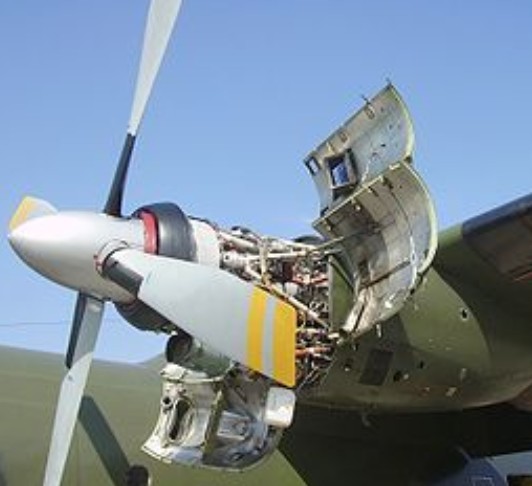
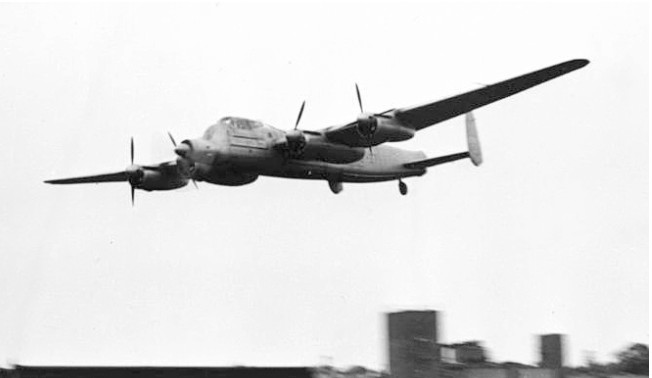
The Rolls-Royce RB.109 Tyne is a twin-shaft turboprop engine first run in April 1955. It was first test flown during 1956 in the nose of a modified Avro Lincoln. Following company naming convention for gas turbine engines this turboprop design was named after the River Tyne.
The Tyne was developed primarily for the four-engined Vickers Vanguard airliner, the prototype first flying on 20 January 1959 equipped with four Tyne Mk.506 of 4,985 e.s.h.p. Production deliveries of the engine were made from mid-1959 onwards to power the 43 Vanguards delivered to British European Airways and Trans-Canada Airlines.
The engine was further developed with greater power and used in the later twin-engined Dassault-Breguet Atlantique long-range reconnaissance aircraft; also in the Canadair CL-44 and Transport Allianz Transall transport aircraft.
A single stage HP turbine drives the 9-stage HP compressor. A 3 stage LP turbine drives the 6-stage LP compressor and, through a reduction gearbox, the propeller. The combustor is cannular.
The Mark 515 Tyne had a nominal takeoff power output of 5,730 hp (4,273 kW) equivalent power, flat rated to ISA+16.8C.
Rolls-Royce Tyne testbed Avro Lincoln demonstrating at Farnborough 1956 on just the nose Tyne, the 4 Merlins being shut down
Variants: RTy.1 4,370 hp (3,259 kW) fitted to Vickers Type 951 Vanguard and Vickers Merchantman. RTy.11 5,064 hp (3,776 kW) for Vickers Type 952 Vanguard RTy.12 4,616 hp (3,442 kW) for Canadair CL-44 RTy.12 5,399 hp (4,026 kW) for Short Belfast. RTy.20 Mk 21 5,667 hp (4,226 kW) for Breguet 1150 Atlantic and Breguet ATL2 Atlantique RTy.20 Mk 22 5,670 hp (4,228 kW) for Transall C-160 RTy.20 4,860 hp (3,624 kW) for Aeritalia G.222T RTy.20 6,035 hp (4,500 kW) for Transall C-160 and Breguet ATL2 Atlantique RTy.22 projected military use engine rated at 7,075 hp (5,276 kW) equivalent RTy.32 projected military use engine rated at 8,400 hp (6,264 kW) equivalent Mk.101 (RTy.12) Mk.506 Mk.512 Mk.515 Mk.515-101W Mk 801 Mk 45 RM1A Marinised ship powerplant RM1C Essentially similar to the RM1A RM3C Essentially similar to the RM1A
Applications Aeritalia G.222 Avro Lincoln Breguet Atlantic Canadair CL-44 Conroy Skymonster Short Belfast Transall C-160 Vickers Vanguard
The marine version, the Rolls-Royce Tyne RM1A, RM1C and RM3C remained in service as the cruise gas turbines in Royal Navy Type 42 destroyers and Type 22 frigates until the retirement of the 4 Batch 3 Type 22 frigates (2011) and the last remaining Type 42 Destroyer (2013).
Specifications: Tyne RTy.20 Mk 21 Type: Twin-spool turboprop Length: 108.724 in (2,762 mm) Diameter: 55.12 in (1,400 mm) Dry weight: 2,391 lb (1,085 kg) Compressor: Axial, 6-stage LP, 9-stage HP Combustors: 10 cannular flame tubes Turbine: 3-stage LP, single-stage HP Fuel type: Avtur Oil system: pressure spray/splash with dry sump using DERD 2487 spec. oil Maximum power output: 6,100 hp (4,549 kW) equivalent power Overall pressure ratio: 13.5:1 Turbine inlet temperature: 800 °C (1,470 °F) Specific fuel consumption: 0.485 lb/hp/hr (0.298 kg/kW/hr) for take-off Power-to-weight ratio: 2.55 hp/lb (4.194 kW/kg)
In 1954 Rolls-Royce introduced the first commercial bypass engine, the Rolls-Royce Conway, with a 21,000 lbf (94 kN) thrust aimed at what was then the “large end” of the market. This was far too large for smaller aircraft such as the Sud Caravelle, BAC One-Eleven or Hawker Siddeley Trident which were then under design. Rolls then started work on a smaller engine otherwise identical in design, the RB.163, using the same two-spool turbine system and a fairly small fan delivering bypass ratios of about 0.64:1. In keeping with Rolls-Royce naming practices, the engine is named after the River Spey.
The first versions entered service in 1964, powering both the 1-11 and Trident. Several versions with higher power ratings were delivered through the 1960s, but development was ended nearing the 1970s due to the introduction of engines with much higher bypass ratios, and thus better fuel economy. Spey-powered airliners continued in widespread service until the 1980s, when noise limitations in European airports forced them from service.
In the late 1950s the Soviet Union started the development of a new series of large cruisers that would put the Royal Navy at serious risk. After studying the problem, the RN decided to respond in a “non-linear” fashion, and instead of producing a series of new cruisers themselves, they would introduce a new strike aircraft with the performance needed to guarantee successful attacks on the Soviet fleet. The winning design was the Blackburn Buccaneer, which had an emphasis on low altitude performance (i.e. to evade enemy radar) as opposed to outright speed.
Flying at low altitude, in denser air, requires much more fuel; the air-fuel mixture in a jet engine needs to be kept very close to a constant value to burn properly, and more air requires proportionally more fuel. This presented a serious problem for aircraft such as the Buccaneer, which would have had very short range unless the engines were optimised for low-level flight. The early pre-production versions, powered by the de Havilland Gyron Junior, also proved to be dangerously underpowered.
Rolls-Royce attacked this problem by offering a militarized version of the Spey, which emerged as the RB.168. The resulting Spey-powered Buccaneer S.2 served into the 1990s. The Spey proved so successful in this role that it was produced under license, and developed, in the United States as the TF41 and F113, and was used in a number of British and US designs.
The British versions of the McDonnell Douglas F-4 Phantom II F-4K (designated Phantom FG.Mk.1) replaced the 16,000 lb thrust J79 turbojets with a pair of 12,250 lb thrust dry and 20,515 lb thrust with afterburning RB.168-15R Spey 201 turbofans. These provided extra thrust for operation from smaller British aircraft carriers, and provided additional bleed air for the boundary layer control system for slower landing speeds. The air intake area was increased by twenty percent, while the aft fuselage under the engines had to be redesigned. Compared to the original turbojets, the afterburning turbofans produced a ten and fifteen percent improvement in combat radius and ferry range, respectively, and improved take-off, initial climb, and acceleration, but a lower top speed.
Spey 25
A fully updated version of the military RB.168 was also built to power the AMX International AMX attack aircraft. A licensed version built by the XAEC is known as the WS-9 Qin Ling.
With the need for a 10,000 to 15,000 lbf (44 to 67 kN) thrust class engine starting up again with the removal of the Spey from service, Rolls then used the Spey turbomachinery with a much larger fan to produce the Rolls-Royce Tay.
A total of 2,768 were built.
Variants: RB.163-1 RB.163-2 RB.163-2W RB.163 Mk.505-5 RB.163 Mk.505-14 RB.163 Mk.506-5 RB.163 Mk.506-14 RB.163 Mk.511-8 Gulfstream II and Gulfstream III (USAF designation F113-RR-100 for the Gulfstream C-20) RB.163 Mk.512-14DW BAC One-Eleven AR 963 (RB.163) Boeing 727 (proposed); it was to have been built under licence by Allison F113-RR-100 US military designation for the Mk.511-8 engines fitted to the Gulfstream C-20. RB.168-62 RB.168 Mk.101 (Military Spey) Blackburn Buccaneer RB.168 Mk.202 (Military Spey) McDonnell Douglas F-4 Phantom II modified F4J for British service (“Phantom FG1”). (surplus engines were purchased and used by Richard Noble for the Thrust SSC land speed record car of 1997.) RB.168 Mk.250 (Military Spey) Hawker Siddeley Nimrod MR1/MR2 RB.168 Mk.251 (Military Spey) Hawker Siddeley Nimrod R1 and AEW RB.168 Mk.807 AMX International AMX, built under licence by FiatAvio WS-9 Qin Ling (Mk 202) powering the Xian JH-7 (Xian FBC-1 Flying Leopard) AR 168R Joint development with Allison Engine Company for the TFX competition (won by the Pratt & Whitney TF30 Allison TF41 (RB.168-62 and Model 912) LTV A-7 Corsair II (USAF -D and US Navy -E models), licence built by the Allison Engine Company RB.183 Mk 555-15 Spey Junior Fokker F28
First run in December 1967, the Rolls-Royce RB.203 Trent was a British medium-bypass turbofan engine of around 10,000lb thrust, bearing no relation to the earlier Rolls-Royce RB.50 Trent turboprop or the later high bypass Rolls-Royce Trent turbofan.
The RB.203 was a private venture engine based around the core of the Rolls-Royce Turbomeca Adour turbofan used in the SEPECAT Jaguar and the later Hawker Siddeley Hawk.
The RB.203, the first three-spool engine, was intended as a civilian replacement for the earlier Rolls-Royce Spey.
Type: Three-spool medium bypass turbofan Length: 82.2 in (208.8 cm) Diameter: 38.7 in (98.3 cm) Dry weight: 1,751 lb (794 kg) Compressor: Single-stage fan, four-stage intermediate pressure, five-stage high pressure Combustors: Annular chambers Turbine: Single-stage high pressure, single-stage intermediate, two-stage low pressure Maximum thrust: 16000 lb (71.4 kN) Overall pressure ratio: 16:1 Bypass ratio: 3:1 Thrust-to-weight ratio: 5.55:1
The Rolls-Royce RB.162 was a simply constructed and lightweight British turbojet engine produced by Rolls-Royce Limited. Developed in the early 1960s, the RB.162 was designed to meet an anticipated need for a lift engine to power VTOL aircraft with the emphasis on simplicity, durability and lightweight construction. Development costs were shared by Britain, France and Germany after signing a joint memorandum of agreement. The engine featured fibre glass compressor casings and plastic compressor blades to save weight which also had the effect of reducing production costs. The engine has no oil system, a metered dose of oil instead being injected into the two main bearings by the compressed air used to turn the compressor at startup. Although the RB.162 was a successful design the expected large VTOL aircraft market did not materialise and the engine was only produced in limited numbers.
In 1966 British European Airways (BEA) had a requirement for an extended range aircraft to serve Mediterranean destinations. After a plan to operate a mixed fleet of Boeing 727 and 737 aircraft was not approved by the British Government Hawker Siddeley offered BEA a stretched and improved performance version of the Trident that they were already operating. This variant, the Trident 3B, used, in addition to its three Rolls-Royce Spey turbofan engines, a centrally mounted RB.162-86 which was used for takeoff and climb in the hot prevailing conditions of the Mediterranean area. The ‘boost’ engine was shut down for cruising flight. Some conversion was needed for the change from vertical to horizontal installation. With the RB.162 fitted the Trident 3B had a 15% increase in thrust over the earlier variants for an engine weight penalty of only 5%.
First run in January 1962, only 86 were built.
A design study for a turbofan version of the RB.162 was designated RB.175. Another projected derivative, the RB.181 was to be a scaled down version of the RB.162 producing approximately 2,000 lbs of thrust. Seven of these lift engines were to power the unbuilt Lockheed/Short Brothers CL-704 VTOL variant of the F-104 Starfighter.
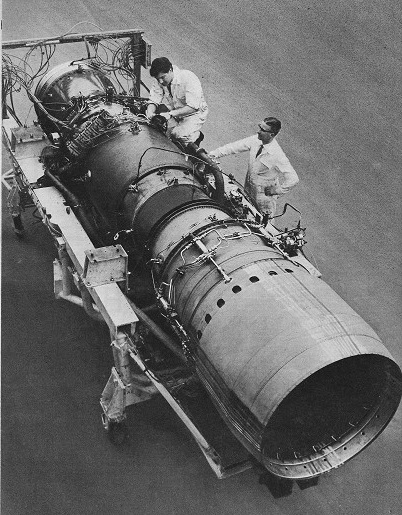
First run in 1953, the Rolls-Royce RB.106 was an advanced military turbojet engine by Rolls-Royce and was sponsored by the Ministry of Supply.
A two-shaft design with two axial flow compressors each driven by its own single stage turbine and reheat, it was of similar size to the Rolls-Royce Avon, allowing it to be used as a drop-in replacement, but it would have produced about twice the thrust at 21,750 lbf (96.7 kN). The two-shaft layout was relatively advanced for the era; the single-shaft de Havilland Gyron matched it in power terms, while the two-spool Bristol Olympus was much less powerful at the then-current state of development. Apart from being expected to power British aircraft such as those competing for Operational Requirement F.155 it was selected to be the powerplant for the Avro Canada CF-105 Arrow. However funding was cut with the 1957 Defence White Paper which terminated most aircraft development then under way. The Arrow moved to an indigenous two-spool design similar to the RB.106, the Orenda Iroquois.
A scaled-up version of the RB106 intended for F.155 was the Rolls-Royce RB122. The RB.106 project was cancelled in March 1957, at a reported total cost of £ 100,000.
RB.106 Type: Two-shaft turbojet Compressor: axial flow; LP followed by HP Turbine: axial flow; HP single stage; LP single-stage Maximum thrust: 21,750 lbf (96.7 kN)