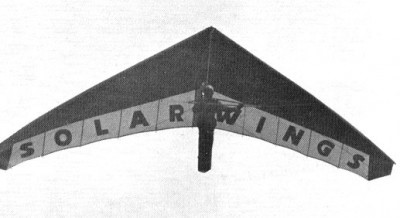
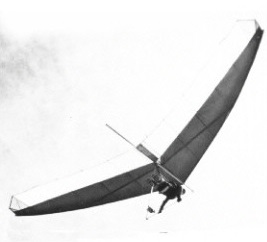
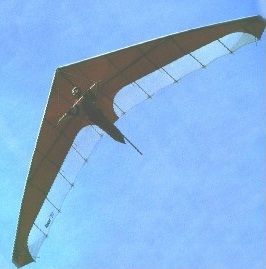
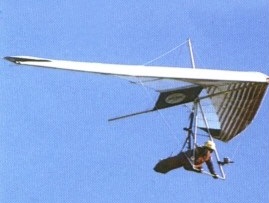
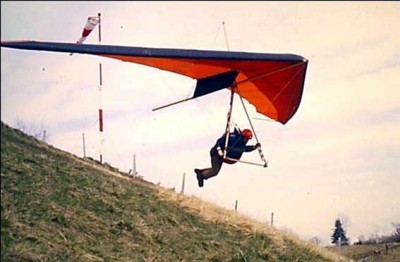
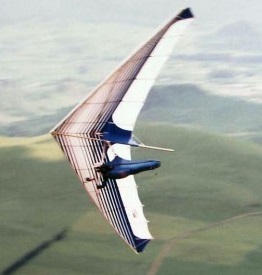
The 1980 Typhoon was the first double surface Comet clone produced by Solar Wings, in two sizes. The Typhoon followed the formula fairly closely with preformed battens and four undersuface battens. Reflex being retained by a harness of lines attached to the trailing edge from the kingpost.
Typhoon
Although the glider handled nicely it is rather heavy. Three hundred and thirty-four sold.
The 1982 Typhoon S was brought out by Solar Wings to counter improvements made to the Airwave Magic. In line with the policies of these two dominant companies no specification or details of changes made were publicised (184 sold). Priced from £943.00 plus VAT.
Typhoon S
The Typhoon SS has been introduced to give another increase in handling and performance, attributed in part to the lay of the cloth being bias-corrected to the trailing edge and in part to further modification of the tips. The trailing edge, previously taped, was folded over. (226 sold).
The Typhoon range resulted in the 1983 Typhoon S4 which is intended to be Solar’s answer to the successful Magic 3. The 1983 Typhoon S4 was priced from £865.00 plus VAT.
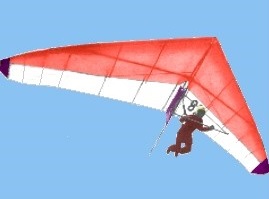
The 1984 S4 Racer was originally based on a standard S4 with a package of options added, these including the mylar leading edge, airfoil kingpost and control-frame sides and 8 undersurface battens. However a variable billow system has put the machine into a class of its own. Decreasing the nose angle increases the billow, improving the handling at the expense of speed, thus the low setting is selected for thermalling.
1984 S4 Racer
When leaving the thermal the pilot can select the maximum nose angle and by tightening the sailcloth decrease the drag coefficient substantially, making the S4 Racer one of the fastest hang gliders in the world, despite it’s friendly handling characteristics. The S4 Racer was priced at £1115.00 inc VAT.
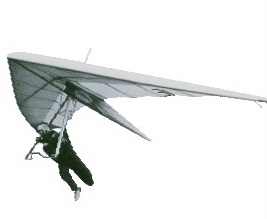
The 1985 S4 Racer GP was developed specifically for professional competition pilots, it’s tough mylar sandwich sail ensuring that it remained accurately tuned during the punishment of top competition.
S4 Racer GP
The S4 Racer GP has mylar sandwich sail, mylar leading edge, nose cone, keel and tip fairings, airfoil control frame sides, speed bar, 8 undersuface battens and Variable Billow.
Although the S4 performs well in international and national competitions it was just as suitable for the intermediate pilot. Decent take-off and landing speeds with smooth positive response make it a safe, enjoyable experience every time you take it into the air.
The 1985 S4 was very good in rough conditions, with great roll response without winding into turns too quickly. It was available in two sizes: 166 and 180.
Typhoon S medium Sail area: 166 sq ft Span: 32 ft 6 in Nose angle: 122 deg Aspect ratio: 6.4 Glider weight: 72 lb Min-sink: 180 ft min Double surface: 55 %
Typhoon S4 medium Sail area: 166 sq ft Span: 32 ft 6 in Nose angle: 122 deg Aspect ratio: 6.4 Glider weight: 72 lb Min-sink: 180 ft min Double surface: 55 %
The 1980 Storm was the first offering of Solar Wings, the new company, based at Marlborough, Wilts. The directors of the company are Mark Southall, Dave Raymond, Cliff Ingram, Roland Lewis-Evans.
1998: Elm Tree Park Manton, Marlbrough, SN8 1PS Wilts, United Kingdom
Since ceasing production of the Scandal (King post and XK) gliders, Solar has concentrated on manufacturing micro-lights.
The Solar One, made its public debut June 1979. 750 solar cells charge 24 accumulator cells to drive four electric motors linked together for a combined 4 hp. The aircraft, which looks like a conventional glider but with a pylon mounted power unit located on the nose immediately forward of the pilot, takes off at 20kts and has reached a maximum of 42kts.
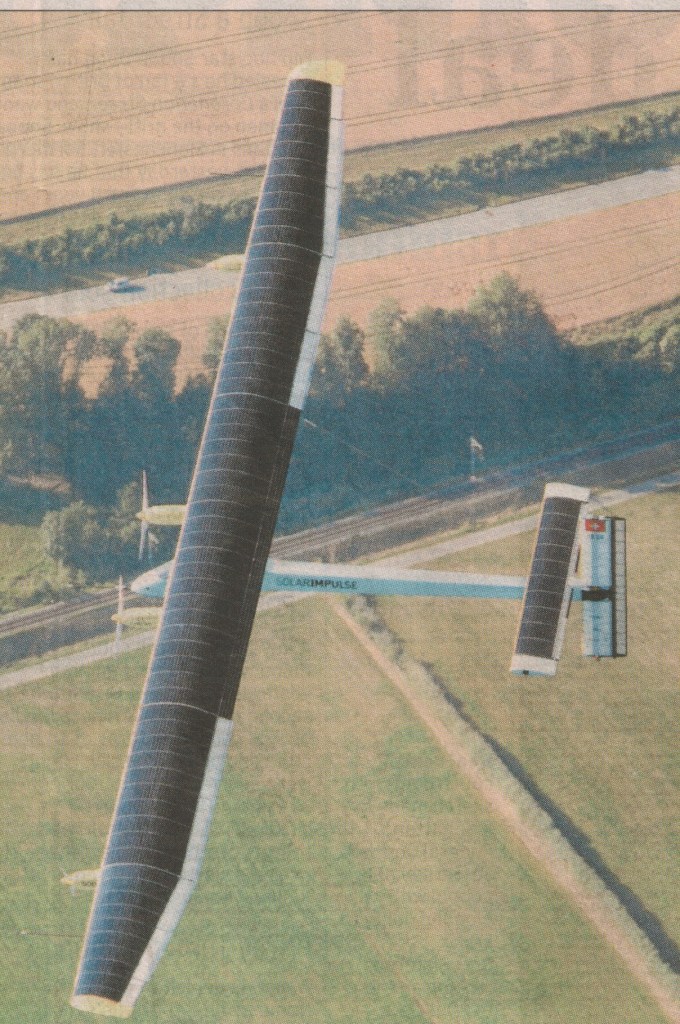
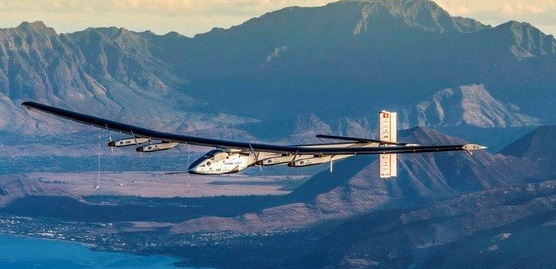
Solar Impulse is a Swiss long-range solar powered aircraft project developed at the École Polytechnique Fédérale de Lausanne. The project eventually hopes to achieve the first circumnavigation of the Earth by a piloted fixed-wing aircraft using only solar power. The project is led by Swiss psychiatrist and aeronaut Bertrand Piccard, who co-piloted the first balloon to circle the world non-stop, and Swiss businessman André Borschberg.
Piccard initiated the Solar Impulse project in 2003. By 2009, he had assembled a multi-disciplinary team of 50 specialists from six countries, assisted by about 100 outside advisers. The project is financed by a number of private companies. The four main partners are Deutsche Bank, Omega SA, Solvay, and Schindler. Other partners include Bayer MaterialScience, Altran, Swisscom and Swiss Re (Corporate Solutions). Other supporters include Clarins, Semper, Toyota, BKW and STG. The EPFL, the European Space Agency (ESA) and Dassault have provided additional technical expertise, while SunPower provided the aircraft’s photovoltaic cells.
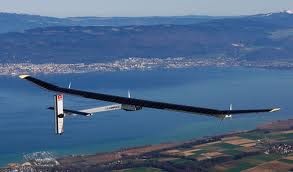
The first aircraft, bearing the Swiss aircraft registration code of HB-SIA, is a single-seater monoplane, capable of taking off under its own power, and intended to remain airborne up to 36 hours. This aircraft conducted its first test flight in December 2009, and first flew an entire diurnal solar cycle, including nearly nine hours of night flying, in a 26-hour flight on 7–8 July 2010. Piccard and Borschberg completed successful solar-powered flights from Switzerland to Spain and Morocco in 2012, and conducted a multi-stage flight across the USA in 2013.
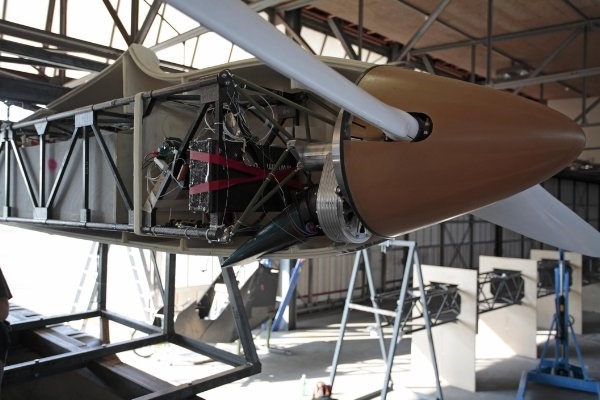
With a non-pressurized cockpit and a limited flight ceiling, the HB-SIA is primarily a demonstrator design. The plane has a similar wingspan to the Airbus A340 airliner. Under the wing are four nacelles, each with a set of lithium polymer batteries, a 10 hp (7.5 kW) motor and a twin-bladed propeller. To keep the wing as light as possible, a customised carbon fibre honeycomb sandwich structure is used.
Under the wing, 4 nacelles are fixed, each containing a 10-HP motor, a set of lithium polymer batteries and a management system that controls the maximum load and temperature limit. Thermal insulation is conceived to conserve the heat released by the batteries and thus allows them to function despite the -40 ° C encountered at 8500 meters. Each motor is provided with a reducer that limits the rotation of a propeller with two blades of 3.5 meters in diameter to 200-400 revolutions / minute.
11,628 photovoltaic cells on the upper wing surface and the horizontal stabilizer generate electricity during the day. 10,768 solar cells on the wing and 880 on the horizontal stabilizer. 200 cubic meters of photovoltaic cells and 12% of the total efficiency of the propulsion chain, the average power generated by the 4 engines of the plane, does not exceed 8 CV or 6 KW. These both propel the plane and charge its batteries to allow flight at night, theoretically enabling the single-seat plane to stay in the air indefinitely. The 11628 150 micron thick monocrystalline silicon cells have been selected for their quality of lightness, flexibility and efficiency. At 22%, its performance could have been even better, but its weight would then have been excessive, penalizing the aircraft during night flight. As this phase is the most critical, the main difficulty of the project is at the level of energy storage in polymer lithium batteries.
Reaching a 63.40 m wingspan for a fully equipped 1600 kg is a challenge never before experienced in aeronautics in terms of rigidity, lightness and flight control. Solar Impulse is built around a structure in composite materials made up of carbon fiber and honeycomb assembled in a sandwich. The upper surface of the wing is covered with a skin composed of encapsulated solar cells, and the underside of a high resistance flexible film. 120 carbon fiber ribs distributed all 50cm outline these two layers to give them their aerodynamic shape.
The aircraft’s major design constraint is the capacity of the lithium polymer batteries. Over an ideal 24-hour cycle, the motors will deliver a combined average of about 8 hp (6 kW), roughly the power used by the Wright brothers’ pioneering Flyer in 1903. As well as the charge stored in its batteries, the aircraft uses the potential energy of height gained during the day to power its night flights.
On 26 June 2009, the Solar Impulse was first presented to the public in Dübendorf, Switzerland. Following taxi testing, a short-hop test flight was made on 3 December 2009, piloted by Markus Scherdel. André Borschberg, co-leader of the project team, said of the flight:
"It was an unbelievable day. The airplane flew for about 350 metres (1,150 ft) and about 1 metre (3 ft 3 in) above the ground ... The aim was not to get high but to land on the same runway at a speed to test its controllability and get a first feeling of its flying characteristics ... the craft behaved just as the engineers had hoped. It is the end of the engineering phase and the start of the flight testing phase."
On 7 April 2010, the HB-SIA conducted an extended 87-minute test flight, piloted by Markus Scherdel. This flight reached an altitude of 1,200 m (3,937 ft). On 28 May 2010, the aircraft made its first flight powered entirely by solar energy, charging its batteries in flight.
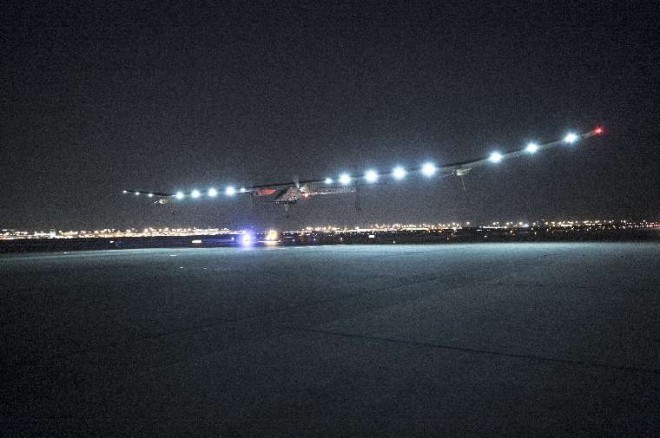
On 8 July 2010, the HB-SIA achieved the world’s first manned 26-hour solar-powered flight. The airplane was flown by André Borschberg, and took off at 6:51 a.m. Central European Summer Time (UTC+2) on 7 July from an airfield in Payerne, Switzerland. It returned for a landing the following morning at 9:00 a.m. local time. During the flight, the plane reached a maximum altitude of 8,700 m (28,500 ft). At the time, the flight was the longest and highest ever flown by a manned solar-powered aircraft; these records were officially recognized by the Fédération Aéronautique Internationale (FAI) in October 2010.
On 13 May 2011, at approximately 21:30 local time, HB-SIA landed at Brussels Airport, after completing a 13-hour flight from its home base in Switzerland. It was the first international flight by the Solar Impulse, which flew at an average altitude of 6,000 ft (1,829 m) for a distance of 630 km (391 mi), with an average speed of 50 km/h (31 mph). The aircraft’s slow cruising speed required operating at a mid-altitude, allowing much faster air traffic to be routed around it. The aircraft was piloted by Andre Borschberg. The project’s other co-founder, Bertrand Piccard, said in an interview after the landing: “Our goal is to create a revolution in the minds of people…to promote solar energies – not necessarily a revolution in aviation.”
A second international flight to the Paris Air Show was attempted on 12 June 2011, but the plane turned back half-way and landed back in Brussels, where it had taken off, due to adverse weather conditions. In a second attempt on 14 June, André Borschberg successfully landed the aircraft at Paris’ Le Bourget Airport at 9:15 pm after a 16-hour flight.
On 5 June 2012, the Solar Impulse successfully completed its first intercontinental flight, flying a 19-hour trip from Madrid, Spain, to Rabat, Morocco. During the first leg of the flight from Payerne, Switzerland, to Madrid, the aircraft broke several further records for solar flight, including the longest solar-powered flight between pre-declared waypoints (1,099.3 km (683 mi)) and along a course (1,116 km (693 mi)).
On 3 May 2013, the plane began its first cross-US flight with a journey from Moffett Field in Mountain View, California, to Phoenix Sky Harbor International Airport in Arizona. Successive legs of the flight took the Solar Impulse to Dallas-Fort Worth airport, Lambert–St. Louis International Airport and Washington Dulles International Airport; it finally concluded at New York’s John F. Kennedy International Airport on 6 July. Each flight leg took between 19 and 25 hours, with multi-day stops in each city between flights.
After the first leg to Phoenix, the aircraft completed the second leg of its trip on 23 May, landing at Dallas-Fort Worth International Airport. This flight, which covered 1,541 kilometres (958 mi), set several new world distance records in solar aviation. On 4 June, the plane landed in St. Louis, Missouri. It departed for Washington DC on 14 June, briefly stopping in Cincinnati, Ohio, to change pilots and avoid strong winds. On 16 June, the plane landed at Washington Dulles International Airport in Virginia. On 6 July 2013, following a lengthy layover in Washington, Solar Impulse completed its cross-country journey, landing successfully at New York City’s JFK International Airport at 11:09 p.m. EDT. The landing occurred three hours earlier than originally intended, because a planned flyby of the Statue of Liberty was cancelled due to severe damage to the aircraft’s left wing. The Solar Impulse was placed on public display at JFK after its landing.
Solar Impulse pilot André Borschberg completed the record-setting flight after flying more than 950 miles on solar power alone. Borschberg landed in Dallas with his batteries at about 60 percent, and used that juice to begin the third leg of his journey. As the headwind exceeded the speed of the airplane at times, Borschberg traveled backward relative to the ground. At one point, a little less than three hours before he actually landed, he was only 20 miles or so from Dallas/Fort Worth International Airport and found himself lined up with runway 13L, where he planned to touchdown. Landing on 13L required closing the runway, and there was simply too much commercial traffic. It was after midnight before air traffic control allowed him to land, so he spent the intervening hours in a holding pattern above the runway. As he descended, the windspeed increased and he encountered a 25- to 30-knot wind at 2,000 to 3,000 feet. This meant Borschberg had to be careful not to turn downwind, because he would be blown too far north and would have to make another approach to land, covering the ground at less than five miles per hour with the headwind. The sideways translation eventually brought him over the top of runway 13L, where he touched down 23 May 2013, at 1:08 a.m. local time, 18 hours and 21 minutes after departing Phoenix.
The flight to Dallas was fairly smooth, with just a few sections of turbulence. Flying 832 nautical miles (957 miles) broke the team’s own distance record for a solar powered airplane (and for any electric airplane). It also provided valuable experience and expand the Solar Impulse team’s flight techniques for future flights — including their planned circumnavigation of the world in a larger aircraft in 2015.
Construction of the second Solar Impulse aircraft, carrying the Swiss registration HB-SIB, started in 2011. The wingspan of HB-SIB will be 80.0 m (262.5 ft), slightly wider than an Airbus A380, the world’s largest passenger airliner, but unlike the 500-ton A380, the carbon-fibre Solar Impulse will weigh little more than an average automobile. It will feature a larger, pressurized cockpit and advanced avionics to allow for transcontinental and trans-oceanic flights. Supplemental oxygen and various other environmental support systems will allow the pilot to cruise at an altitude of 12,000 metres (39,000 ft).
Completion was initially planned for 2013, with a circumnavigation of the globe in 20–25 days in 2014. However, following a structural failure of the main spar during static tests in July 2012, a more likely date for the circumnavigation is 2015. The flight would circle the world in the northern hemisphere, near the equator. Five stops are planned to allow changes of pilots. Each leg of the flight will last three to four days, limited by the physiology of each pilot. Once improved battery efficiency makes it possible to reduce the aircraft’s weight, a two-seater is envisaged to make a non-stop circumnavigation.
Solar Impulse II
The Solar Impulse II landed in Hawaii on July 3, 2015, after breaking a five-day flight record and nights (117 hours and 52 minutes) in the air and about 8900 km from Japan. However, the long journey took its toll and the plane suffered damage to the battery due to overheating.
It remained grounded at the airport Kalaeloa during the northern hemisphere winter. Between February and mid-April, 13 test flights were conducted to ensure the proper functioning of the cooling system for the newly integrated battery.
Specifications – HB-SIA Powerplant: 4 × electric motors, powered by 4 x 21 kWh lithium-ion batteries (450 kg), 7.5 kW (10 HP) each Length: 21.85 m (71.7 ft) Wingspan: 63.4 m (208 ft) Height: 6.40 m (21.0 ft) Wing area: 200 sq.m (2,200 sq ft) Loaded weight: 1,600 kg (3,500 lb) Max. takeoff weight: 2,000 kg (4,400 lb) Take-off speed: 35 kilometres per hour (22 mph) Cruise speed: 70 kilometres per hour (43 mph) Stall: 35 km / h Endurance: 36 hours (projected) Service ceiling: 8,500 m (27,900 ft) Maximum altitude of 12,000 metres (39,000 ft) Crew: 1
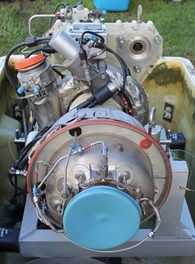
The Solar T62 is a family of compact auxiliary power units (APUs) installed in ground power units and aircraft. The T62T32 variant has also been successfully adapted as the power plant for small single seat and two seat home-build helicopters.
The T62T32 adopts a classic small gas turbine design featuring a centrifugal compressor and radial inflow turbine. The two are mounted back to back and supported on a common shaft with outboard bearings. The bearings hold the shaft in a cantilever fashion, this arrangement has a clear advantage – both bearings are outside the hot section of the engine and so run cooler in operation.
The combustion system fitted to the Solar T62 consists of an annular reverse-flow chamber with six vaporising burners. The operation of vaporising burners requires the presence of heat in the compositor in initiate the vaporisation process, this is provided a special small atomising burner and igniter plug.
The T62T32 version carries a heavy duty reduction gearbox that can carry a 60Kva 400Hz generator turning at 6,000 rpm. The usual accessories are also driven form the gearbox and also a heavy duty pre-engaged starter motor. Other versions of the T62 generally carry smaller lighter gearboxes and may make use of electrical starter generators or hydraulic starters.
The T62 is unusual in carrying a hybrid fuel control system. Fuel is supplied to the engine by a small gear pump, up to running speed the fuel flow is controlled by a mechanical pneumatically operated valve pressurised from the compressor delivery (P2). This arrangement ensures smooth surge free acceleration after starting. When full speed is reached an electronic governor takes over by means of a rotary solenoid actuator and fuel metering valve. The governor arrangement is not dissimilar to many diesel governors fitted to generator sets running at constant speed.
The USAF EMU30 transportable generator set was fitted with the T62T32 model, a number of these units can be found surplus from time to time in the USA. Demand for these units is likely to have been stimulated by the use of the engine as a powerplant in small kit built helicopters. Some modifications are carried out to reduce the weight of the substantial gearbox housing.
T62 Titan The direct drive main production version.
T62T-2 80 hp (60 kW) at 56,700 turbine rpm for Boeing-Vertol CH-47A Chinook helicopters.
T62T-2A 95 hp (71 kW) at 56,700 turbine rpm for Boeing-Vertol CH-47B / C Chinook helicopters.
T62T-11 80 hp (60 kW) at 56,700 turbine rpm for Boeing-Vertol CH-46A Sea Knight helicopters.
T62T-12 105 hp (78 kW) at 61,240 turbine rpm
T62T-16 / -16A1 95 hp (71 kW) for Sikorsky CH-3, Sikorsky SH-3 and Sikorsky CH-54A Skycrane helicopters at 56,700 turbine rpm, with 8,000 and 8,100 rpm outputs.
T62T-25 Turboshaft – 80 hp (60 kW) at 56,700 turbine rpm
T62T-27 Turboshaft – 150 hp (110 kW) at 61,250 turbine rpm, with 1x 8,000 and 1x 8,216 rpm outputs.
T62T-29 Turboshaft – 95 hp (71 kW) at 56,700 turbine rpm, for Lockheed Jetstar and Pan American Falcon business Jets at 56,700 turbine rpm, with 1x 8,000 and 1x 8,100 rpm outputs.
T62T-32 Power Output: 150HP @ 60,000rpm Compressor: single stage centrifugal Combustor: annular reverse flow with 6 vaporising burners Turbine: single stage radial inflow Layout: overhung rotor single shaft with reduction gearbox Fuel system: gear pump, part hydro mechanical/part electronic governor Ignition System: high energy plug torch igniter Starting System: electric starter Oil system: return system wet sump reservoir Accessories: Brush-less Alternator Application: 400Hz EMU30 Military Generator set
T62T-32A 150 hp (110 kW) at 61,250 rpm. Military Ground Power Unit (GPU) often used by US Navy and Air Force.
T62T-39
T66 A free power turbine version for the US military.
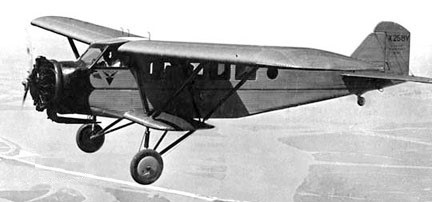
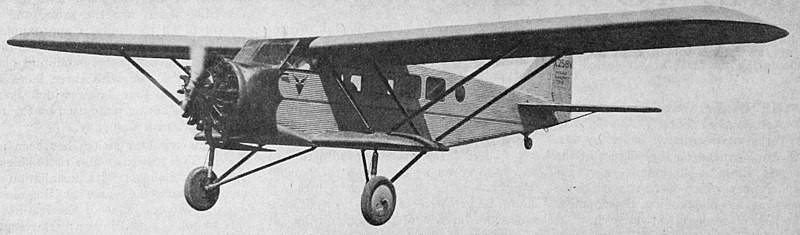
Designed by William L. Lewis, the 1930 Solar MS-1 (ATC 2-252) was a sesquiplane all-metal eight-passenger transport aircraft evolution of Prudden SE-1.
Its wings were braced to each other with warren truss-style struts. The lower stub wings carried the well separated legs of the fixed undercarriage. The fuselage was of rectangular cross-section and featured a fully enclosed flight deck and passenger cabin. The tail was of conventional design with strut-braced stabilizers and carrying a fixed tailwheel. Construction was of metal throughout with corrugated skins, and was powered by a single 420 hp (310 kW) Pratt & Whitney Wasp radial engine in the nose.
First flying on 21 January 1930, piloted by Doug Kelly, the one built was registered NX/NC258V. Kelly described it as “one of the finest closed planes I have ever flown”, and Charles Lindbergh also praised the MS-1 when he flew it a few days later. Despite this, the airlines did not order the type, although Northwest Airways and ten other airlines considered, and rejected buying examples due to the effect that the onset of the Great Depression was having on their traffic volumes.
A 6,000 mi (9,700 km) record flight from Los Angeles, California to Tokyo was planned, but never happened. The high point was a 7,000 mi (11,000 km) transcontinental flight over 25 states that the president of Solar took with his entire family, including his wife and three children, aged 9, 7 and 3, which attracted considerable interest from the media who dubbed it the “flying nursery”. A purchasing agent for a major airline then promised a substantial order, but dropped dead of a heart attack the day the order was to be signed, and his replacement called off the deal.
Solar made the prototype available for charter flights for a while, but in 1931 sold it to an operator in Mexico who used it to transport coffee beans. On the Mexican register as XB-AFK, the MS-1 was destroyed in a crash in 1936.
Solar would never build another aircraft after the MS-1, turning to saucepans to survive the depression, and later stainless-steel exhaust shrouds.
Solar MS-1 Powerplant: 1 × Pratt & Whitney R-1340 Wasp, 420 hp (310 kW) Propeller: 2-bladed fixed pitch metal Upper wingspan: 56 ft 6 in (17.22 m) Upper wing chord: 100 in (2.54 m) Upper wing dihedral: 2° Lower wingspan: 18 ft 0 in (5.49 m) Lower wing chord: 70 in (1.78 m) Lower wing dihedral: 0° Wing area: 496.5 sq ft (46.13 sq.m) Airfoil: Göttingen 398 Length: 35 ft 11 in (10.95 m) Height: 10 ft 2 in (3.10 m) Empty weight: 3,650 lb (1,656 kg) Gross weight: 7,000 lb (3,175 kg) Fuel capacity: 135 US gal (112 imp gal; 510 l) Oil Capacity: 8 US gal (30 l; 6.7 imp gal) Maximum speed: 130 mph (210 km/h, 110 kn) Cruise speed: 115 mph (185 km/h, 100 kn) Landing speed: 60 mph (52 kn; 97 km/h) Service ceiling: 15,000 ft (4,600 m) Absolute ceiling: 18,400 ft (5,600 m) Rate of climb: 750 ft/min (3.8 m/s) initial Wing loading: 14 lb/sq ft (68 kg/sq.m) Power/mass: 16.4 lb/hp (10.0 kg/kW) Crew: Two Capacity: Eight passengers Undercarriage track: 9 ft 6 in (2.90 m)
A dedicated glider for “Freestyle” and aerobatics, the Hoops is aimed at pilots experienced in maneuvers who will know how to use its agility. The aspect ratio is 5,81; with 54 cells and an area of only 18,55 square meters.
The sail is made of Gelvenor cloth (49 g/sq.m), with profiles of Porcher Marine 9092, and Cousin dyneema lines. Other construction features include diagonal V-tabs to reduce lines and weight, Mylar/Carbon reinforcement, and a clean layout.
The result is a glider with high inner pressure, showing strong reactions in extreme maneuvers and offering direct and sensitive piloting. It has a short and precise brake “which allows little use of the brake during the flight”, say at Sol. The Hoops is a fast machine that can reach a top speed of 68 k/h, and a minimum speed of 30 k/h, according to the manufacturer.
Like all Sol gliders, the Hoops is covered by a 3-years/300-hours warranty. It is available in one size to suit pilots of 70 to 100 kg. Hoops is a non certified glider.
The new Prymus 2 (DHV1) was one of the gliders tested during the 2005 Northeast Expedition in Brazil, to obtain a model not only to be used by schools and beginners, but a glider that would allow the pilot to feel “the magic of flying” and stay for hours in the air, achieve distance flights and start free style flights.
The Prymus 2 has an elliptical planform with a lightly positive arrow shape, and 39 cells for an “extra straight side, exactness in the airfoil and a consolidated stability” according to the manufacturer. The Prymus 2 also features a higher projected aspect ratio; a new profile chosen for maximum stability, and a more refined construction for this class. Other characteristics include easy inflation and takeoff; long and tolerant brake length; precise handling; high internal pressure; stability even in high speed; light reactions during extreme maneuvers; good passive safety; and “great behavior” in thermals. The Prymus 2 is made in Gelvenor cloth with Cousin lines, it has a 3-years/300 hours warranty, and it was available in 4 sizes.
The SOL Prymus 4 EN-A Size L is described as a beginner wing, and an anywhere all rounder wing – from coastal ridge soaring to inland thermals. Very stable in all conditions.
SOL Prymus 4
Prymus 4 S Zoom: 0.91 Cells: 39 Projected span: 8.65 m Real wingspan: 10.99 m Projected surface: 18.41 sq.m Real surface: 23.41 sq.m Projected AR: 4.06 Real AR: 5.16 Line diameter: 1, 1.5, 2.1 Height: 670 cm Takeoff weight: 70-90 kg Max Profil: 2.64 m Min Profil: 0.87 m Weight: 5 kg Places: 1 Certification EN/LTF: A
Prymus 4 M Zoom: 0.96 Cells: 39 Projected span: 9.12 m Real wingspan: 11.6 m Projected surface: 20.49 sq.m Real surface: 26.05 sq.m Projected AR: 4.06 Real AR: 5.16 Line diameter: 1, 1.5, 2.1 Height: 707 cm Takeoff weight: 80-100 kg Max Profil: 2.78 m Min Profil: 0.92 m Weight: 5.4 kg Places: 1 Certification EN/LTF: A
Prymus 4 L Zoom: 1 Cells: 39 Projected span: 9.5 m Real wingspan: 12.08 m Projected surface: 22.23 sq.m Real surface: 28.27 sq.m Projected AR: 4.06 Real AR: 5.16 Line diameter: 1, 1.5, 2.1 Height: 760 cm Takeoff weight: 85-110 kg Max Profil: 2.9 m Min Profil: 0.96 m Weight: 5.8 kg Places: 1 Certification EN/LTF: A
Prymus 4 XL Zoom: 1.04 Cells: 39 Projected span: 9.88 m Real wingspan: 12.56 m Projected surface: 24.05 sq.m Real surface: 30.58 sq.m Projected AR: 4.06 Real AR: 5.16 Line diameter: 1, 1.5, 2.1 Height: 790 cm Takeoff weight: 100-125kg Max Profil: 3.01 m Min Profil: 1 m Weight: 6.2 kg Places: 1 Certification EN/LTF: A