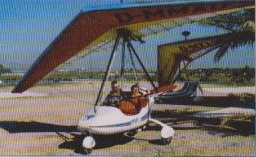
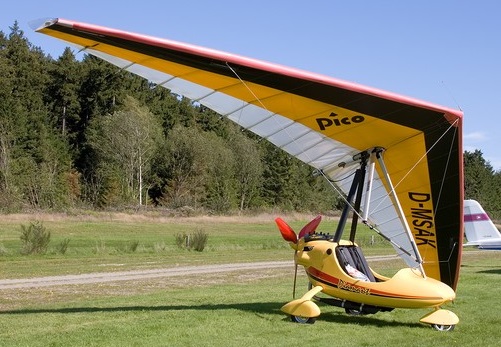
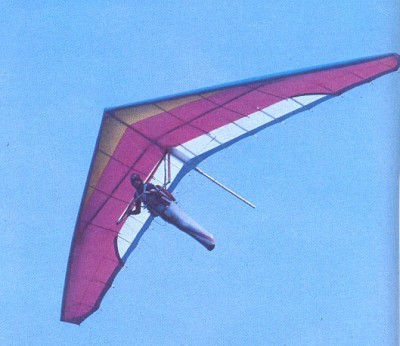
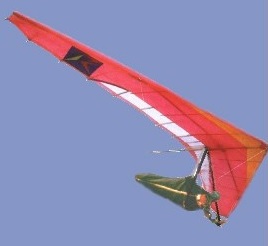
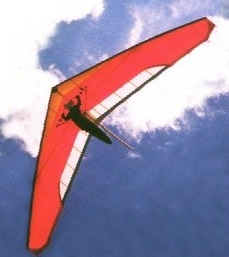
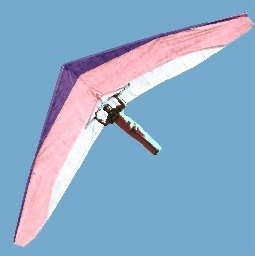
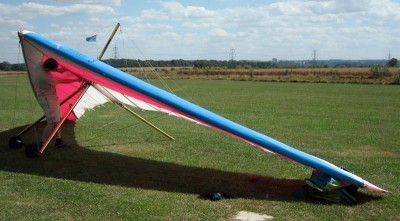
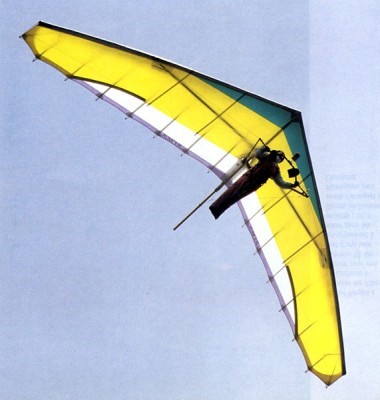
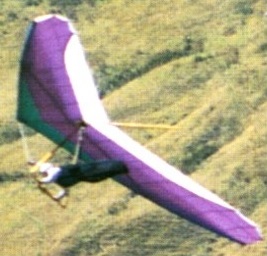
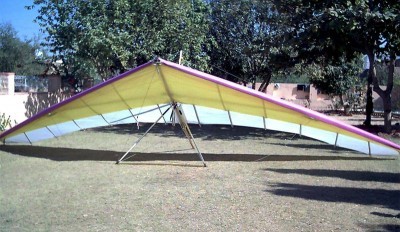
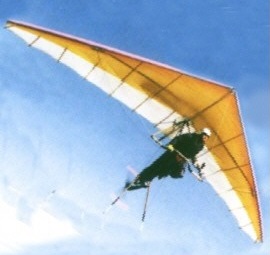
Also available as a single seater, the two seater seats side-by-side.
Diamant LP
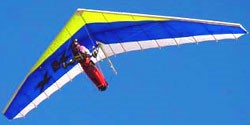
The Solid Air Diamant LP (English: Diamond, Light Performance) is a German ultralight trike, designed and produced by Solid Air UL-Bau Franz of Hundheim, Rheinland-Pfalz. The aircraft was supplied as a complete ready-to-fly-aircraft.
The Solid Air Diamant Twin (English: Diamond) ultralight trike was supplied as a complete ready-to-fly-aircraft.
Diamant Twin
Diamant Twin Hazard Empty weight: 170 kg Wing span: 10.50 m Wing area: 13 sq.m Fuel capacity: 40-60 lt Certification: Vz Engine: Hirth F 30, 60 hp MAUW: 383 kg Seats: 2 Max speed: 120 kph Cruise speed: 110 kph Minimum speed: 50 kph Climb rate: 3.5 m/s Fuel consumption: 8 lt/hr Price (1998): 41 000 DM
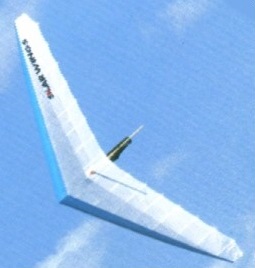
The 1982 Solar Blade was a new project for the Malborough company. Four prototypes were displayed at the Pennine league where it appears they had some teething troubles with the handling.
The 1993 Whisper was designed to blend good performance with ease of handling for intermediate pilots. It is distinguished from the Rumour by the lack of double surface at the tips.
The Whisper was priced at £1695 with round uprights, and £1825 with aerofoil uprights.
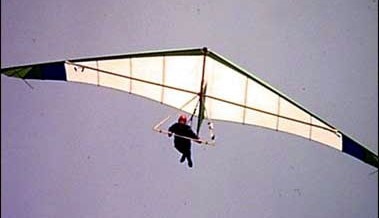
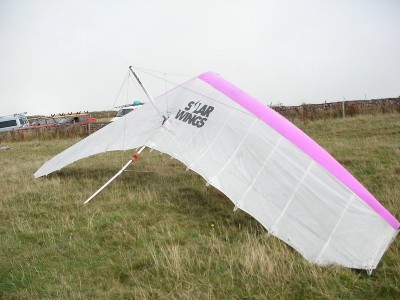
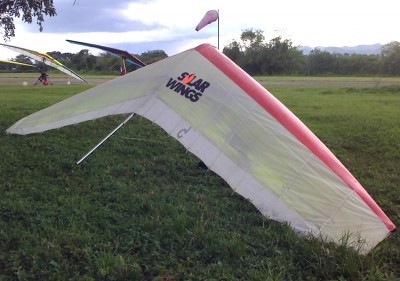
The 1980 Storm was the first offering of Solar Wings, the new company, based at Marlborough, Wilts. The Storm is similar to the Super Scorpion in that it has a deflexerless fully-battened and cambered sail, together with a simple but strong airframe. The set-up method uses plug-in type cross-booms with no loose attachment bolts, the bottom bar being secured by pip pins. Handling is pleasant, although the glider noticeably yaws prior to turning. Performance is on a par with other gliders of fourth generation machines, giving a good slow sink rate and a slightly faster top speed than the looser sailed Super Scorpion. The Storm came in three sizes to suit various pilot weights, although the large one is only recommended for the pilot of over 14 stones.
The 1980 Storm was Solar’s first glider. Simple and light with good handling. Did not have preformed airfoil battens and no moving crossbar. There were two massive poles had to be seperated from the glider when folding it.
A 1994 big version of the Rumour 3 hang glider. Not many made.
It has been described as heavyweight on the ground and in the air, and difficult to land. Yet near the top end of the weight range, very light in pitch/roll and to be very honest undemanding in any flight situation. Very docile and responsive, and good with power.
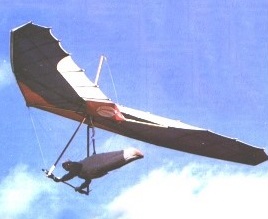
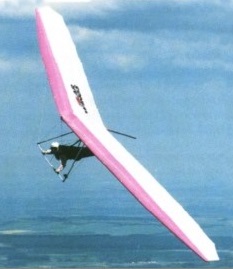
The 1986 Ace was a radically new sail design from Solar Wings, which incorporated an increased double surface towards the tips to improve performance and handling. The Ace were double surfaces to 70%.
The Ace featured mylar leading edge, nose cone, variable billow, aerofoil uprights, 4.2 ounce sailcloth, and was pricea at £1217.00 ex.VAT.
The Ace double surface tip was joined to the upper surface by a flexible membrane at the scallop ensuring that the tips remain totally clean even at very high airspeeds on the 1988 Ace Sport.
Ace Sport
The Ace Sport has a VB system, mylar trailing edge, camera zip on the cross boom, fluoro colours, a two tone undersurface, spare upright, and was priced at £1545.00 inc VAT.
Ace 150 Wing area: 13.9 m² Wing span: 9.6 m Aspect ratio: 6.6 Hang glider weight: 28 kg Minimum pilot weight: 51 kg Maximum pilot weight: 83 kg Packed length short: 4.2 m Number of battens: 25 Nose angle: 122°
Ace 160 (medium) Wing area: 14.8 m² / 160 sq ft Wing span: 9.9 m / 32.5 ft Aspect ratio: 6.6 Hang glider weight: 32 kg / 70 lb Minimum pilot weight: 70 kg Maximum pilot weight: 89 kg Packed length short: 4.2 m Number of battens: 25 Nose angle: 122° speed bar
Ace 170 Wing area: 15.8 m² Wing span: 10.3 m Aspect ratio: 6.8 Hang glider weight: 34 kg Minimum pilot weight: 83 kg Maximum pilot weight: 100 kg Packed length short: 4.2 m Number of battens: 27 Nose angle: 122°
Under power the large & small Scandal (kingposted) goes exceptionally well. The spiral stability is good and handling firm, but not stiff.
Scandal
The Solar range of gliders were unique in that they had 100% double surface at the tips. The key to this was a “rubber membrain” which allowed the upper and lower surface to move relative to each other. This was dropped on the Scandal range of gliders, when Solar introduced a presurised leading edge. This prevents the leading edge from colapsing when flying at high speed. It has a clever active pressure system – At low speed the holes in the leading edge are in the low pressure air, so it sucks air out of the double surface, giving concave lower surface at the wing tips, effectively adding camber to the wing. The Solar Gliders had a reputation for being more stable and less “twitchy” or sensitive. It was claimed that it gave a 13 % improvement in top speed and an 11 % reduction in stall speed to the 1995 Scandal.
1995 Scandal
The 1995 Scandal wing is ‘uniform’, easy to fly, to take-off, to land, and it accepts slow flight. Slow landings even with AUW over 100kg and sink rate with engine off 220 fpm. Neutral ground handling, not tail heavy. A much nicer glider than the Rumour. Handling better and more docile in pitch while thermaling. Lighter, stiffer leading edges & X tubes made big difference to the weight.
The Scandal 13.6 has a very nice glide, good penetration into wind and is a real confidence builder when you come to landing.
This is a very nice glider for a small light pilot. The glider is quite light. The A frame is small and “fits my shoulders”. Landing – no vices good large flare window. This glider has vents in the leading edge which stop it from collapsing at high speed. They seem to work, in that at high speed the Glide Angle does not deteriate as fast as other gliders.
Stright line at speed it is stable. Thermaling and scratching the ridge the glider is nice and responsive, and not too sensitive to turbulance. A very nice glider with great glide ratio but rather slow to initiate a turn. The wing has a tendency to drop the nose when held against the wind on take off. But as soon as you start running the wing behaves normal and the take off is just as easy as with any modern glider. Easy to land as well, light in construction and easy to set up.
The 1997 Scandal XK was Solarwing’s first kingpostless glider. The Scandal XK was claimed to be only 1.5 kgs heavier than the standard kingposted Scandal.
Scandal XK
The Scandal XK cross boom is of composite construction and was designed by Dr Bill Brooks. There are 23 battens (including 4 lower), the airframe material is 7075-T6 and HT30-TF, and it was priced at £3795.00.
Scandal XK
After the kingposted Scandal came the topless XK then the 2000 XK-R which had a roll-assist hang point arrangement. Said to be out-performed on glide by contemporary gliders such as the Laminar and rather variable in handling between different examples.
Scandal 12.4 Wing area: 12.4 sq.m Certification: BHPA Pilot weight: 48-68 kg Wing span: 9.4 m Nose Angle: 131 degs Aspect ratio: 7.1 Price (1998) £ 3350
Scandal 13.6 Wing area: 13.6 sq.m Certification: BHPA Pilot weight: 58-78 kg Wing span: 9.9 m Nose Angle: 131 degs Aspect ratio: 7.3 Price (1998) £ 3350
Scandal 14.4 Wing area: 14.4 sq.m Certification: BHPA Pilot weight: 72-92 kg Wing span: 10.35 m Nose Angle: 131 degs Aspect ratio: 7.44 Price (1998) £ 3350
Scandal XK 1997 Wing area: 13.2 m² Minimum pilot weight: 75 kg Maximum pilot weight: 95 kg Minimum speed: 28 km/h Maximum speed: 90 km/h Number of battens: 23
Scandal XK 13.6 Wing area: 13.6 sq.m Certification: BHPA Pilot weight: 58-78 kg Wing span: 9.9 m Nose Angle: 131 degs Aspect ratio: 7.3 Price (1998) £ 3795
Scandal XK 14.4 Wing area: 14.4 sq.m Certification: BHPA Pilot weight: 72-92 kg Wing span: 10.35 m Nose Angle: 131 degs Aspect ratio: 7.44 Flying weight: 32.5 kg Packed length: 5.8 m Double surface: 85% Price (1998) £ 3795
Scandal XK-R 13.6 Wing area: 13.6 m² Wing span: 9.9 m Aspect ratio: 7.3 Minimum pilot weight: 58 kg Maximum pilot weight: 78 kg Nose angle: 127°
Scandal XK-R 14.4 Wing area: 14.4 m² Wing span: 10.35 m Aspect ratio: 7.44 Minimum pilot weight: 72 kg Maximum pilot weight: 92 kg Nose angle: 127°
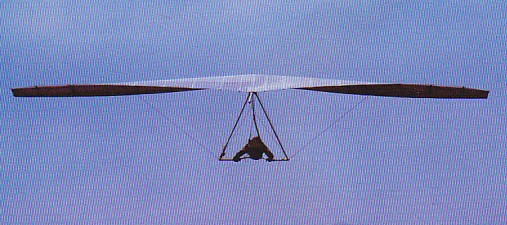
The 1989 Rumour was a fast, small, light, efficient and very clean glider which featured a new lightweight airframe, enclosed tip rods, enclosed keel, sealed kingpost hole and it was without a keel pocket.
Other features were 100 % double surface tips, VB, and rubber backed airfoil uprights.
The Rumor allowed Solar Wings to keep up with its UK competitor (i.e. Airwave) by winning the French and Italian championships in 89 and the UK ones in 89 and 90.
Very stable glider good in a straight line, but can be a little stiff in roll. Easy landings and rock solid in turbulance.
Plenty of examples around so not too expensive-good intermediate glider with reasonable performance, for 35hrs + pilot wanting to upgrade on a budget in May 2007 for £200.
The 1991 Rumour 2 had a new high-aspect ratio sail, a kingpost hang point, luff-line compensator and slightly reduced wing area in pursuit of improved handling and better glide at speed. The battens were of 7075.
Rumour 2
The Rumour 2 has very good min sink despite being near the top of its weight range. Compared to the Rumour 3, it is not so sensitive in roll but the K/P hang point makes it not too bad. Pitch sensitivity is high, but not unpleasantly so. Glide-on in ground effect is long, but landing without a drag chute is easily achievable.
There are 14 top battens (15 including static one), 2 tip battens and 6 undersurface battens – 23 in total.
From 40 kph the sink rate of the Rumour 2 14 increases considerably. It is a “hard” wing that it costs to leave its inertia, therefore stable. Especially at low speeds (where it has its best performance) requires a very physical piloting and the knowledge of some tricks like the “penduleo” to start the turns. Although it lands well in the final braking, this awkwardness and slowness of reaction is also a problem for approach, which requires some anticipation.
The 1992 Fever is a new light weight glider for the smaller pilot, priced at £2850.00 inc VAT. Later models were designated Rumour Fever MK2. They were later updated with mods to the sail and airframe with reduced anhedral to improve roll response. It was claimed to have better roll control, yaw stability and glide performance at speed.
Fever
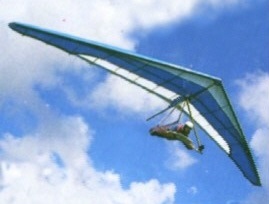
The 1993 Rumour 3 is one of the last Kingpost designs and has very high performance and light handling characteristics. It has excellent performance at low and high speed. Landing characteristics are docile, but float in ground effect if coming in fast is very long. Roll control is lighter than the 2. Oddly, it has no wingtip washout struts.
Rumour 3
The 1992 Fever 2 roll was much faster and easier pitch than the Rumour 1 (13m).
Rumour Fever 12
The 1992 Rumour 3 looks similar to its predecessor but the handling was been improved giving much lighter roll. The bar position was changed from the Rumour 2 so that it is 4 cm further forward. The advantages of this are that when flying in ‘budgie’ position more speed can be pulled on before the bottom bar reaches the pilot’s body, enabling pilots to take off and approach to land at higher speeds. Also a higher top speed can be flown. The Rumour 3 was produced in two sizes; 13 sq m and 14 sq m. The certification was BHPA C of A (No.9306090). The airframe material was 6082 TF T6 and battens 7075.
Rumour 3
The Rumour 3 Special Edition was only available between November 1 1993 and end of February 1994.Cost £3000.00. The glider featured blue leading edges, light grey top surface and Solar logo.
Rumour 13 1989 Wing area: 13 m² Wing span: 9.44 m Aspect ratio: 6.6 Hang glider weight: 34 kg Number of battens: 12 Nose angle: 128°
Rumour 14 1989 Wing area: 14.5 m² Wing span: 10.5 m Aspect ratio: 6.96 Hang glider weight: 34 kg Number of battens: 12 Nose angle: 128°
Rumour 2 13 1991 Wing area: 13 m² Wing span: 9.6 m Aspect ratio: 5.6 Minimum pilot weight: 58 kg Maximum pilot weight: 80 kg Nose angle: 127° Stall speed: 31 kph Maximum speed: 95 kph Glide ratio: 11
Rumour 2 14 1991 Wing area: 14 m² Wing span: 10.1 m Aspect ratio: 5.1 Minimum pilot weight: 65 kg Maximum pilot weight: 90 kg Nose angle: 127° Stall speed: 31 kph Maximum speed: 95 kph Glide ratio: 11 at 37 kph Min sink rate: 0.95 m/s
Rumour 3 13 Wing area: 13 sq.m Certification: DHV 3/BHPA Pilot weight: 60-75 kg Wing span: 9.6 m Nose Angle: 127 degs Aspect ratio: 7.1 Price (1998) £ 2850
Rumour 3 14 Wing area: 14 m² / 151 sq ft Wing span: 10.1 m / 33 ft 2 in Aspect ratio: 7.3 Weight: 31.7kg / 70 lbs Minimum pilot weight: 70 kg / 154 lb Maximum pilot weight: 85 kg / 187 lb Nose angle: 127° Packed length: 5.8 m / 19 ft Double surface: 85 % Battens: 25 (6 undersurface)
Rumour 3 15 Wing area: 14.8 m² Wing span: 10.4 m Aspect ratio: 7.4 Minimum pilot weight: 80 kg Maximum pilot weight: 95 kg Nose angle: 127°
Rumour Fever 12 1992 Wing area: 12.1 m² Wing span: 9.2 m Aspect ratio: 7 Minimum pilot weight: 45 kg Maximum pilot weight: 65 kg Nose angle: 127°
Fever Sail area: 12 sq m Weight: 27kg / 60lb
Fever Compet 1992 Wing area: 12.1 m² Wing span: 9.2 m Aspect ratio: 7 Minimum pilot weight: 45 kg Maximum pilot weight: 65 kg Nose angle: 127°
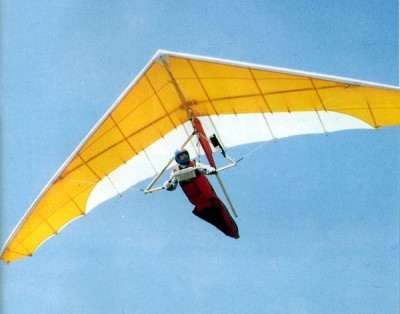
Made during 1996-8, the Breeze fits into the category of a sports glider as its performance is above that of a floater and exhibits some of the attributes of the higher performing hang gliders.hang glider. Price (1998) £ 1997.
The Breeze features 15 battens, round uprights, and speed bar.
Breeze Sail area: 15 sq m Span 9.4 m Nose angle: 125 degs Aspect ratio: 5.6:1 Weight: 28 kg Pilot weight: 60-80 kg Top speed: 50 mph Packed length: 5.5m Double surface: 61%
Breeze Wing area: 15 m² Wing span: 9.4 m Aspect ratio: 5.6 Hang glider weight: 27 kg Minimum pilot weight: 65 kg Maximum pilot weight: 80 kg Minimum speed: 25 km/h Maximum speed: 80 km/h Max glide ratio (L/H): 10 Max glide ratio speed: 50 km/h Minimum sink rate: 1 m/s Nose angle: 125° Certification: BHPA