1935 Bulgarian single seat training parasol sailplane.
Wingspan: 15.82m
3 assembled –
Albatross
Chuchuliga (Lark)
Rilski Orel (Rilski Eagle)
Rilski Orel gained 1936 Olmpic gold.
1935 Bulgarian single seat training parasol sailplane.
Wingspan: 15.82m
3 assembled –
Albatross
Chuchuliga (Lark)
Rilski Orel (Rilski Eagle)
Rilski Orel gained 1936 Olmpic gold.
1926 Bulgarian parasol sailplane
Hermann Winter, one assembled, named after Mjr Toprakchiev, a Bulgarian national hero.
1926 Bulgarian parasol single seat sailplane
Herman Vinter assembled one. Named after a Bulgarian national hero, Lt Vekilski.
State Aircraft Works, Bojouristhe, Sofia. Aero department of Ministry of Railways, Posts, and Telegraphs. Subject to Versailles limitations, but by 1932 had produced DAR-4, three engined transport for state airline. Of several subsequent designs, only the DAR-10F of 1941 reached production.
The D’Apuzzo D-295 of 1974 was an unequal-span variant of the PJ-260 built for E Mahler & L Webber.
Engine: 295hp Lycoming GO-480-G1D6
Wingspan: (upper) 27’0″ (lower) 23’9″
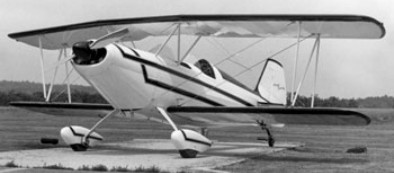
Designed by Nicholas D’Apuzzo, the aerobatic Senior Aero Sport was available as either a single or two-seater. One prototype, N40304, was designed and built at the request of Rodney Jocelyn as an exhibition aircraft for world champion aerobatic pilot Lindsey Parsons at competitions in Spain. It first flew on 28 July 1960.
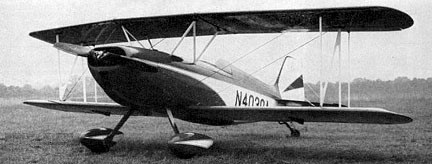
Rod Jocelyn completed a PJ-260 Joc-Par Special for entry in the 1964 World Aerobatic Championships in Spain. Powered by a 260 hp Lycoming VO-435-A1F, 27 ft span and 21 ft length, gross weight was 1600 lb. Scothply plastic was used instead of steel spring for landing gear, saving 40 lb.
This sport biplane has a wood-faired steel tube fuselage, wire-braced steel tube tail section, all fabric covered. The fuel supply and the front seat passenger are very close to the center of gravity, so trim is little affected by expending fuel or by the presence or absence of a passenger. A variety of engines can be used from 190 to 260 hp.
Reportedly 7 amateur-built planes up to February 1974. Also seen recorded as Joc-Par. One example is the grand champion homebuilt at the 1968 EM fly-in at Rockford, Illinois.
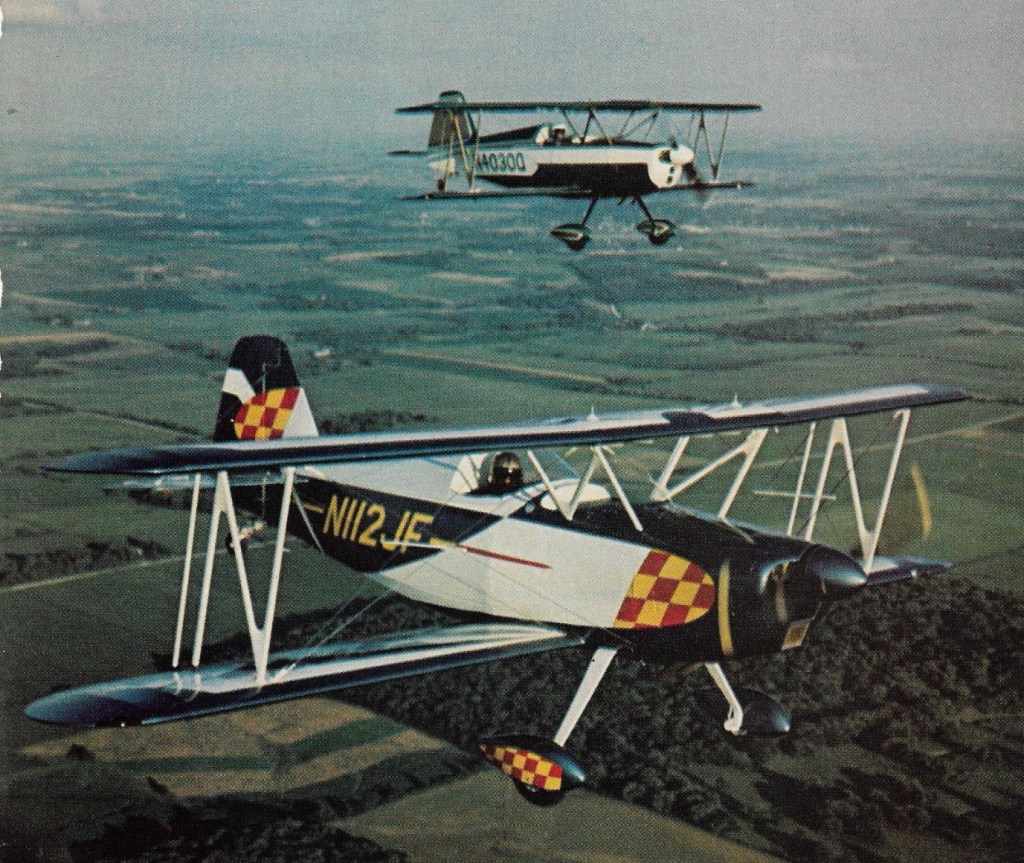
Engine: 260hp Lycoming GO-435-C2
Wingspan: 27’0″
Length: 21’0″
Useful load: 700 lb
Max speed: 170 mph
Cruise: 138 mph
Stall: 52 mph
Range: 500 mi
Ceiling: 24,000′
Seats: 1
Engine 280-hp Lycoming.
Wingspan 27 ft 0 in.
Length 21 ft 0 in.
Gross Weight. 2050 lb.
Empty Weight. 1450 lb.
Fuel capacity 36-42 USG.
Top speed 155 mph.
Cruise speed 140 mph.
Stall speed 52 mph.
Climb rate 2000 fpm.
Takeoff distance (50’) 700 ft.
Land¬ing distance (50’) 900 ft.
Range 400 miles.
Markets plans and components to construct D-201 Sportwing two-seat open-cockpit sporting biplane, developed from previous PJ-260 Senior Aero Sport.
1995-6: 1029 Blue Rock Ln., Blue Bell, PA 19422, USA.
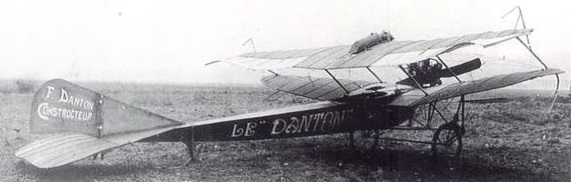
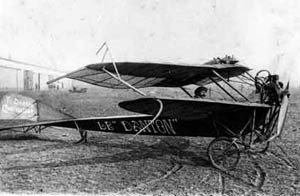
Denhaut designed it in 1910, Espinosa built it, Eugène Marie Pierre Frédéric Danton (1874-1929) paid for it, Victor Fumat bought it. Engine was a 6 cylinder 50 hp fan Lemasson.

A 1978 hang glider.
Wing area: 15.3 m²
Wing span: 11 m
Aspect ratio: 7.9
Hang glider weight: 25 kg
Minimum pilot weight: 60 kg
Maximum pilot weight: 100 kg
Packed length short: 5.58 m
Number of battens: 12
Nose angle: 127°


The SK 2 SS was a 1978 version.

SK 1
Wing area: 15 m²
Wing span: 9 m
Aspect ratio: 4.5
Hang glider weight: 19 kg
Packed length: 4.9 m
Number of battens: 10
Nose angle: 120°
SK 2
Wing area: 17 m²
Wing span: 9.1 m
Aspect ratio: 4.5
Hang glider weight: 22 kg
Minimum pilot weight: 60 kg
Maximum pilot weight: 85 kg
Packed length: 5.15 m
Number of battens: 10
Nose angle: 120°
SK 3
Wing area: 20.3 m²
Wing span: 10.5 m
Aspect ratio: 4.5
Hang glider weight: 25 kg
Packed length: 6.05 m
Number of battens: 10
Nose angle: 120°

