Hegetschweiler Moswey II

Hegetschweiler Moswey II

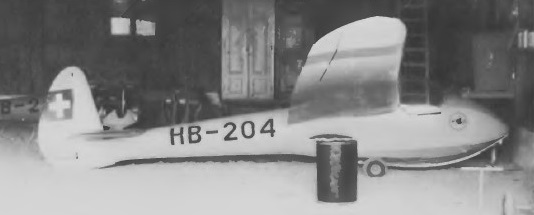
Before the war and during the 1940s the best-known sailplanes to emerge from Switzerland were the Moswey range of training and competition single seaters designed by Georg Muller and produced by the Hegetschweiler firm.

The Moswey 1 trainer of 1930 was followed in 1935 by the Moswey II, which had cantilever shoulder-mounted gull wings of 45 ft 3 in span. This was of conventional plywood and fabric construction, and in 1937 the Moswey II was among the types participating in the first International Competition to be held at the Wasserkuppe in Germany.

One Moswey II and three Mk IIAs were still on the Swiss register at the beginning of 1964.

Hegetschweiler Moswey I

Before the war and during the 1940s the best-known sailplanes to emerge from Switzerland were the Moswey range of training and competition single seaters designed by Georg Muller and produced by the Hegetschweiler firm.

The Moswey 1 trainer of 1930 was a braced high wing glider of 43 ft 6 in span, and this was followed in 1935 by the Moswey II.

Heeman WIGE

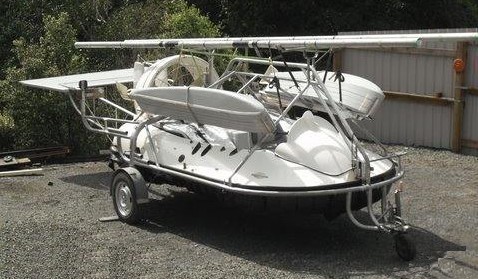
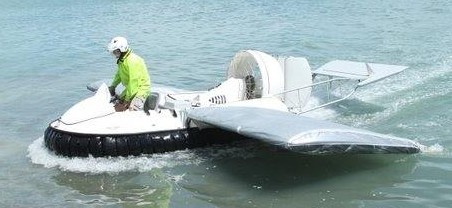
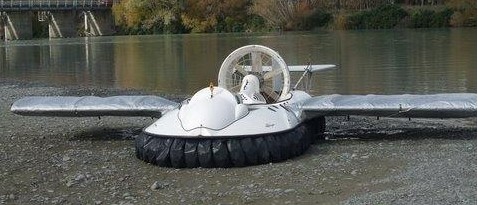
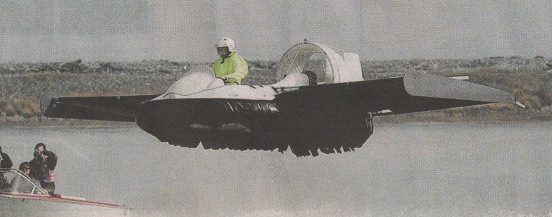
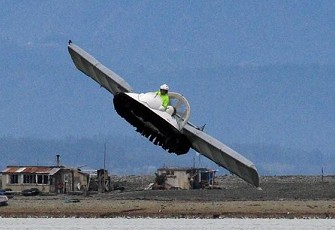
Rudy Heeman of Nelson, New Zealand, spent three years building and designing the hovercraft that can travel on water land and air.

The craft has alloy wing spars, with foam cored ribs and fabric skins. The tail unclips but stays on for trailer transport.

He wanted to develop the flying hovercraft design, but had to sell a prototype to raise enough cash to do so.
It was listed on a ‘Trademe’ website expiring on 13 March 2010 with a reserve of NZ$20,000.
Mr Heeman, a mechanic, has been making hovercraft in his spare time for more than 13 years but was his first attempt at a flying version. He had spent 75 hours flying his completed bovercraft.
With a modified 1.8 litre Subaru car engine and a range of more than 225 kilometres, the hovercraft cruises at 90 kph when flying, and has a smooth ride above the waves.

This machine is a W.I.G [wing in ground effect] in the form of a hovercraft. This machine, which is classed as a boat and comes under MSA rules, can operate as a hovercraft or, when the wings and tail put on, flying machine that can travel above the water or land. The engine is an EA81 subaru, modified with turbo, intercooler blow thru webber carb.

The construction of the hovercraft began in 2003 and conversion to WIGE began in 2007. The first flight was towards the end of 2007.
The wingtips have water skis on them so it doesn’t dig in.
The final wing shape was the third design. Skirt retraction is electric. The thrust diverter works electrically by pushing green or red buttons on the handlebars. The green button gives a 30% increase in thrust instantly by diverting lift sir to add to thrust once airborne.

Has alloy wing spars, foam cored ribs and fabric skins. The tail unclips if not required but stays on when transported. Has a retractable finger skirt, open cockpit, aerofoil wings, and thrust diverter.

The first test flight was 2007.

The WIGE was auctioned on the New Zealand Trademe website during 27 February – 13 March 2010. It was listed as designed and built by Rudy Heeman. Powered by a 100 hp inboard motor, it could operate as a hovercraft or, with the wings and tail put on, as a wing in ground effect flying machine. Built in 2003, the engine had run for 150 hours. With the 1.8 lt engine it could reach over115 kph, and a range of over 225 km cruising at 90 kph, using 30 lt of 96 octane fuel/hr.
The machine does not require any licence but must obey boat rules when on or above the water. The sale was for the machine only and did not include copyrights, intellectual properties, moulds etc.
In flying mode t could carry 160 kg (or three people as a hovercraft).
At that time it had flown over 75 hours with the Subaru EA81 engine, modified with turbo, and intercooler blowthru Webber carb.
Engine: 100 hp at 5000 rpm +7 lb boost, approx. 400 lb thrust.
The T/O distance is approximately 80m and, while it has flown in 25 kph winds, a max of 15 kph is recommended.

It was sold by Trademe auction for $27,500.

Engine: Subaru EA81, 100 hp 100HP at 5000rpm with 7 pounds boost
Wingspan: 7m
Length with tail: approx 6.3m
Length: 4 m (13 ft)
Approx weight: 320 kg + 50 kg wing and tail
Fuel capacity: 75 lt
TO speed: 70 kph
Heaton California Messenger

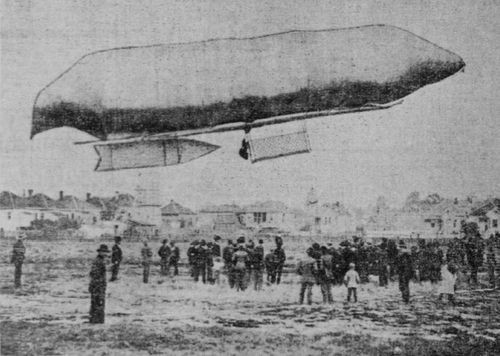
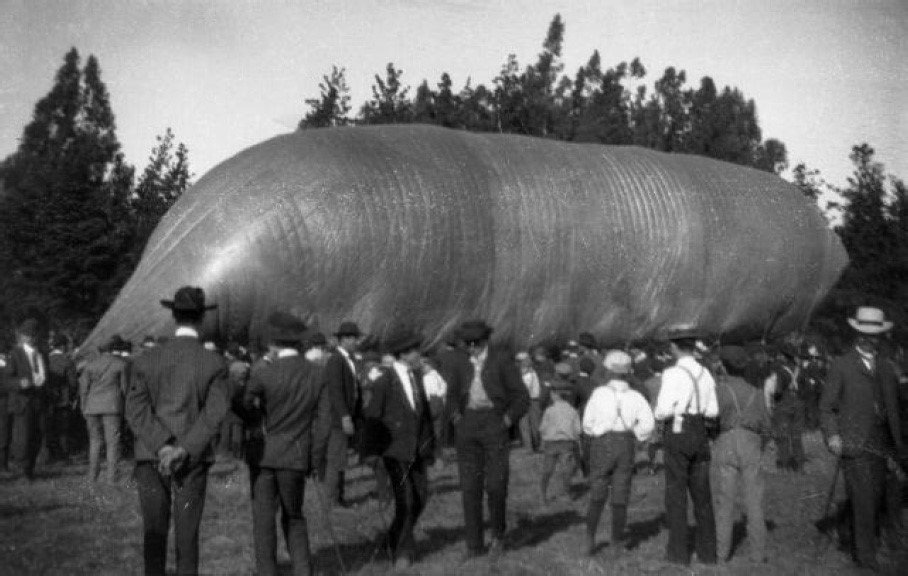
George E. Heaton’s 1904/05 Oakland/Bay-area airship, the California Messenger, making its first trial on December 2, 1904, at a field in East Oakland (north of the Tidal Canal, east of 23rd Ave.). At Idora Park during the following February it was on the California Messenger which world-renowned birdman Lincoln Beachey made his first powered-flight.

Heath Feather MA-2

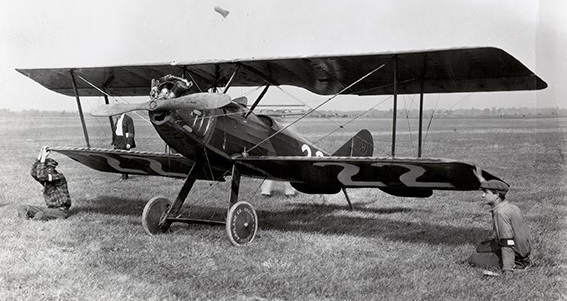
In 1919 Ed Heath designed and built his Feather biplane, designated the MA-2. It was his first ultralight airplane.

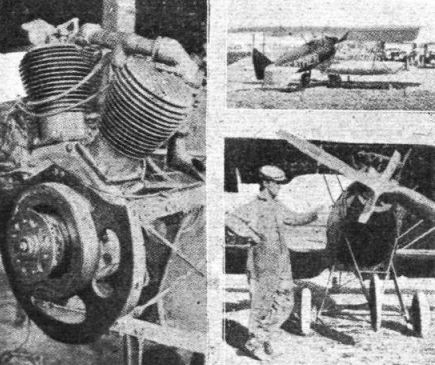
This was a single place plane with a two-cylinder Thor motorcycle engine modified by Heath’s company.

The propeller was fitted with two auxiliary blades, to act as a fan for engine cooling. The landing gear was equipped with a third wheel, extending out in front to prevent nose-overs.

Heath planned to sell these planes $1,200 ready to fly, $990 less engine and $250 for the kit of materials to build your own (less engine). The engine could be bought separately for $250.

Before Heath could get the Feather into production, the bottom dropped out of the airplane market with WW1 surplus aircraft available.

Engine: Thor 76 cu.in, 18 hp
Wingspan: 20 or 24 ft
Weight: 270 lb
Cruise: 45 mph
Seats: 1

Heath-Henderson B-4

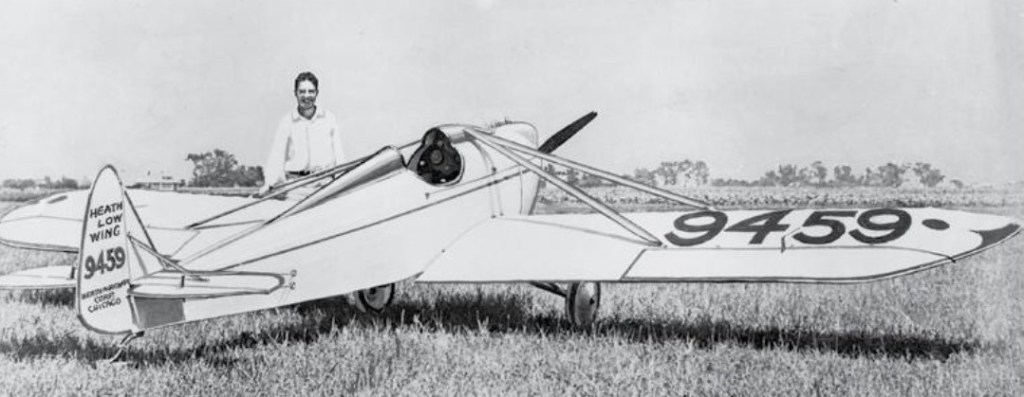
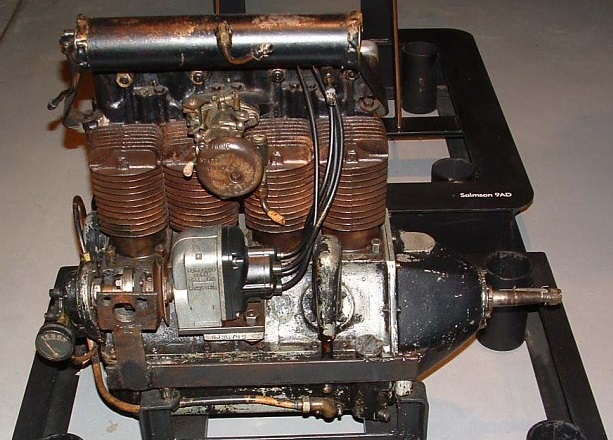
Henderson was a manufacturer of 4-cylinder motorcycles from 1912 until 1931. They were one of the largest and fastest motorcycles of their time. Many of the Henderson “DeLuxe” engines were converted by the Heath Airplane Company as Model B-4s which featured a modified lubrication system, different valves, and removal of the transmission. The B-4 mainly powered the small and economical Heath Parasol monoplane, which Heath sold in kit form for homebuilders in the 1920s and ‘30s.

The Heath Airplane Company’s Model B-4 was an in-line, four-cylinder, air-cooled Henderson motorcycle engine converted for use in aircraft by modifying the lubrication system and the valves. The B-4 mainly powered the small and economical Heath Parasol monoplane, which Heath sold in kit form for homebuilders in the 1920s and ’30s.

The low-cost, reliable Henderson motorcycle engine was well-suited for the Heath airplane design because it helped make sport flying affordable for many people. Service was simple and economical because parts were cheap and easy to obtain throughout the country.

Type: Reciprocating, In-line, 4 cylinders, air cooled
Power rating: 30 hp / 22.4 kW at 3,000 rpm
Displacement: 83 cu in / 1400 cc
Bore and Stroke: 70 mm (2.8 in.) x 89 mm (3.5 in.)
Weight: 119 lb / 54 kg
Length 64.1 cm (25.25 in.)
Width 36.8 cm (14.5 in.)
Height 61 cm (24.0 in.)