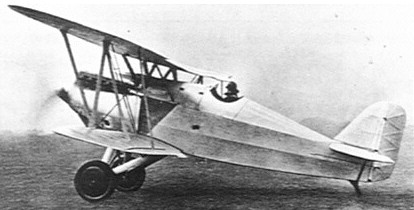
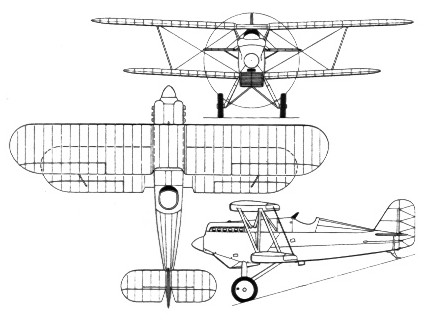
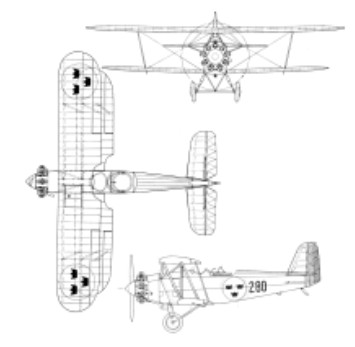
The first prototype HD-37a flew for the first time in April 1928. The HD-37 was rejected by the air force but as a transition before the availability of the Polikarpov I-5 the Soviet Union bought some HD-37c as sample and acquired the manufacturing license. The Soviet license version was called Polikarpov I-7. The I-7 was produced in Factory No.1 at Moscow.
Versions: HD-37a: first prototype HD-37c: Version for the Soviet Union with BMW a VIz engine with 537 kW (730 hp) and tail unit surfaces increased; Basis of the license version Polikarpow I-7 Polikarpov I-7 with a M-17F (license version BMW VI engine) with 526 kW (715 hp)
HD-37c Engine: a V-12-Reihenmotor BMW Viz, 537 kW (730 hp) Maximum speed 312 km/h Service ceiling 8,600 m Range 700 km Empty weight 1,267 kg Max. takeoff weight 1,685 kg Span 10.00 m Length 7.00 m Wing area 26.71 sq.m Armament: two machine guns
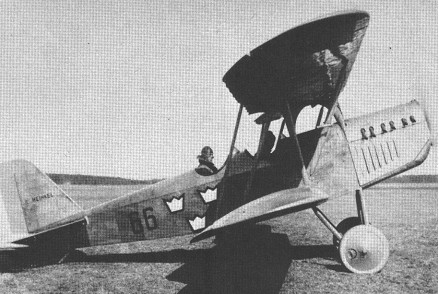
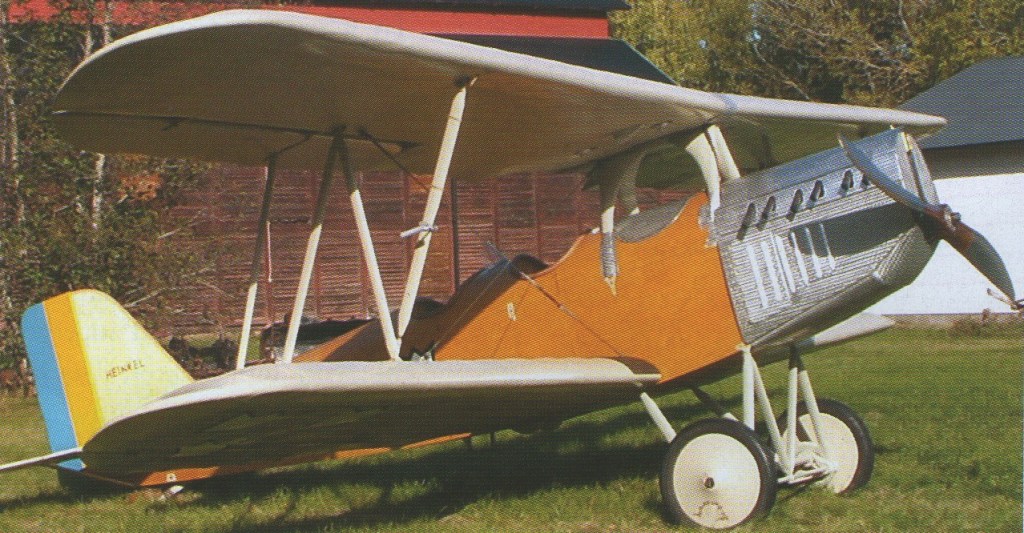
One HD.35 was delivered to ther Swedish Army Aviation Service in August 1929 for evaluation as a primary trainer, designated Sk.5. It did not satisfy the requirements and further purchases did not follow. The sole copy of the Sk.5 went in 1926 to the flying military school F5 in Lyungbikhede, where it became the personal aircraft of pilot Arvid Flory. In the summer of 1929, it was sold into private hands. It continued to fly until 1940 with the new registration code SE-SAM. Now this aircraft is located in a museum in Stockholm.
Engine 1 Mercedes D.II, 120 hp Wingspan 10.97 m Length, 7.40 m Height, 3.10 m Wing area, 32.40 sq.m Empty weight 760 kg Normal takeoff weight 1060 kg Maximum speed, 138 km/h Cruising speed, 120 km/h Service range, 250 km Climb rate, 108 m/min Service ceiling, 3300 m Passenger cap: 2 Crew: 1
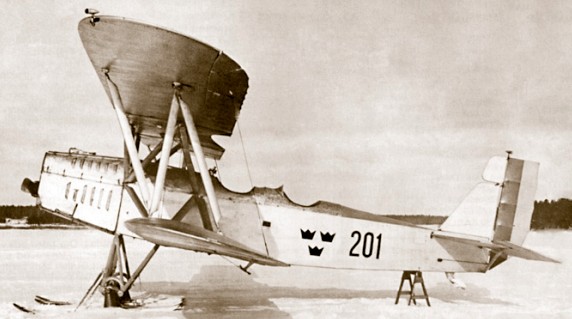
Heinkel had originally built two HD 24s for the competition ”Seeflugwettbewerb” in 1926. Further aircraft were built for the German Airline Pilot School (DVS). Eight Heinkel HD 24s (HD = Heinkel Doppeldecker), Sk 4 in the Air Force, was ordered in the first half of 1926 by the MFV (the Navy aviation), just before the forming of the Swedish Air Force. The Swedish Sk 4s were ordered from Heinkel’s Swedish subsidiary Svenska Aero AB. The aircraft was designed as a naval aviation trainer, but the floats could be replaced by wheel landing gear or skis. The eight Sk 4s were all based at the naval aviation Wing F 2 at Hägernäs.
The first two Sk 4s were manufactured at Heinkel’s Warnemünde works as pattern aircraft for the rest of the series. The two aircraft were approved by the Air Force in November 1926. Some months later, they were given the Air Force numbers 201 and 202. The six aircraft built in Sweden were approved in July 1927 – November 1928 (Air Force numbers 203-208).
The six first aircraft (201-206) were fitted with Mercedes engines of 180 hp. These engines were unfortunately not very reliable. Therefore, the 207 and 208 got Junkers Jumo L 25 engines. These engines delivered 280 hp (100 hp more than the Mercedes engines). The 207 and 208 got the subdesignation Sk 4A. After some time, also the 203, 204 and 206 got the L 25 engine and got their designation changed to Sk 4A. Aircraft 201, 202 and 205 also got their original Mercedes engines replaced, but this time to the Armstrong Siddeley Puma (240 hp). New designation Sk 4B.
Sk 4 Length: 9,69 m. Span: 14,20 Height: 4,15 m MTOW: 2.150 kg Max. speed: 168 km/h
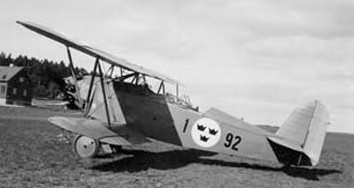
The HD-19 fighter was developed by Heinkel to an order from the Swedish VVS. The contract provided for the production of six fighters HD-19 (Heinkel Of doppeldecker 19). The first two had to be built at the plant of Heinkel, and remaining four – at Svenska Aero AB in Stockholm. Aircraft was equipped with a Bristol Jupiter VI engine, since this engine was standard for Swedish VVS. The first aircraft was tested at Warnemünde in July 1928, and after several months aircraft began to enter into F 2 squadron service, where obtained Swedish designation J 4. In 1934 three aircraft of those remaining in the operation were transferred into the F 1 squadron.
Engine: 1 x Bristol Jupiter VI, 420 hp Wingspan: 11.00 m Length: 9.26 m Height: 3.91 m Wing area: 31.60 sq.m Empty weight: 1175 kg Normal takeoff weight:1725 kg Maximum speed: 215 km/h Cruising speed: 182 km/h Range: 838 km Maximum rate of climb: 414 m/min Service ceiling: 6400 m Crew: 2 Armament: 3 x 8-mm machine gun
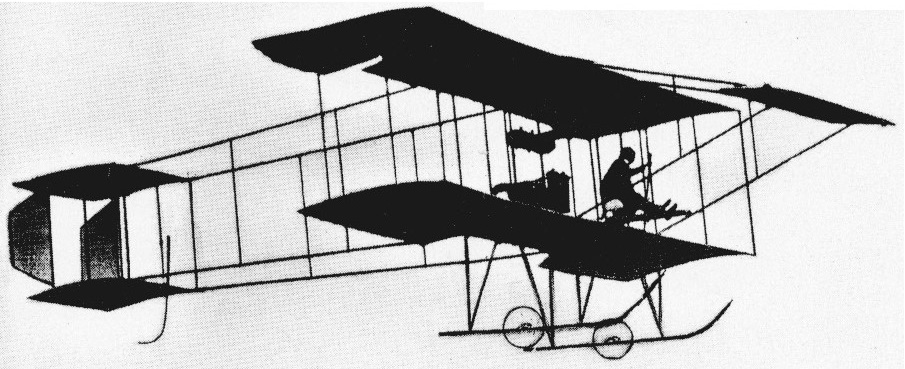
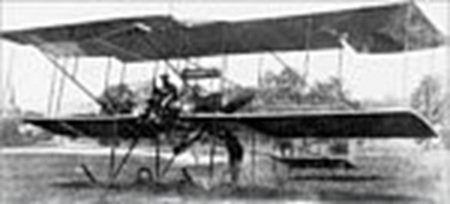
Ernst Heinkel flying his homemade biplane near Stuttgart in July 1911.
In 1909, after attended an international airshow in Frankfurt am Main, he determined flight was the future of transportation, and the following year, he built his first aircraft.
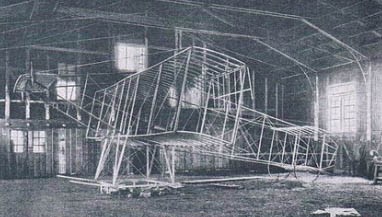
Working from a set of plans by Henri Farman, Heinkel’s aircraft was originally powered by a modified marine engine, but first flew his biplane at Cannstatter Wasen near Stuttgart in July, 1911, with a 50 hp engine on loan from DMG (Daimler). Heinkel crashed the plane and suffered severe injuries on 19 July, 1911.
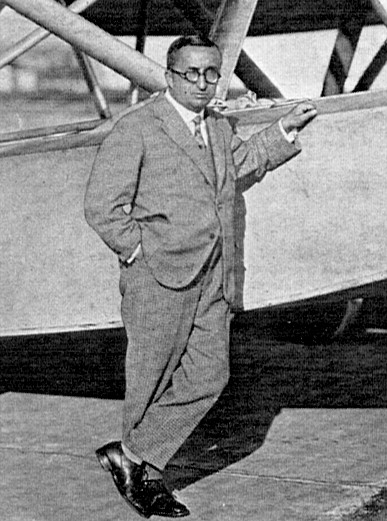
Ernst Heinkel was born in Grunbach, Germany, today a part of Remshalden. As a young man he became an apprentice machinist at a foundry. Heinkel studied at the Technical Academy of Stuttgart, where he initially became interested in aviation through a fascination with Zeppelins. In 1909, after he attended an international airshow in Frankfurt am Main, he determined flight was the future of transportation, and the following year, he built his first aircraft.
Ernst Heinkel established his own company shortly after the liquidation of Hansa Brandenburg, building a series of single-engined seaplanes (He 1 to He 8) in Sweden to circumvent the ban on the construction of military aircraft in Germany.
Heinkel, created in 1922, dealt with design, building of prototypes and small series. Large-scale production was not available, since all its production areas were limited to old aviation hangar in Varnemyunde. The general practice was using HD designations for Heinkel Doppeldeckers (biplanes) and HE designations for Heinkel Eindeckers (monoplanes) was dropped in favour of He designations. The He 51 biplane fighter went into production for the Luftwaffe in the 1930s and served with the Condor Legion in Spain. When the Heinkel He 70 passenger/mailplane appeared in 1932, ostensibly for Deutsche Lufthansa, it was the most advanced aerodynamic design then seen in Europe. A natural outgrowth of this design was the Heinkel He 111 twin-engined bomber which served with the Luftwaffe throughout the Second World War. A Rolls-Royce Merlin-engined version of the He 111 was built by CASA in Spain, and served with the Spanish Air Force until the late 1960s. Heinkel also produced late in the war the He 162 Volksjager (People’s Fighter), a lightweight turbojet fighter constructed almost entirely of wood. Heinkel had designed, built and flown the world’s first jet aircraft, the He 178, in 1939. Other significant Heinkel projects included the He 177 Greif heavy bomber and the He 219 Uhu nightfighter. Heinkel joined VFW in 1965.
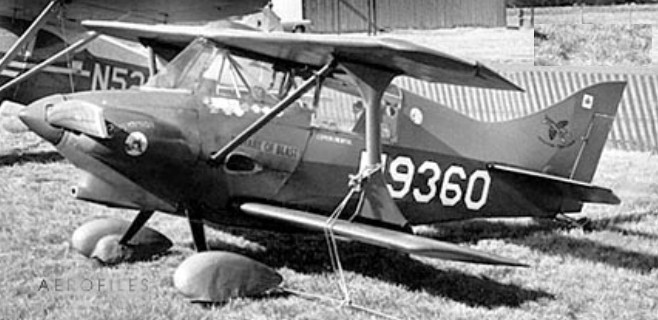
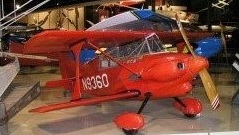
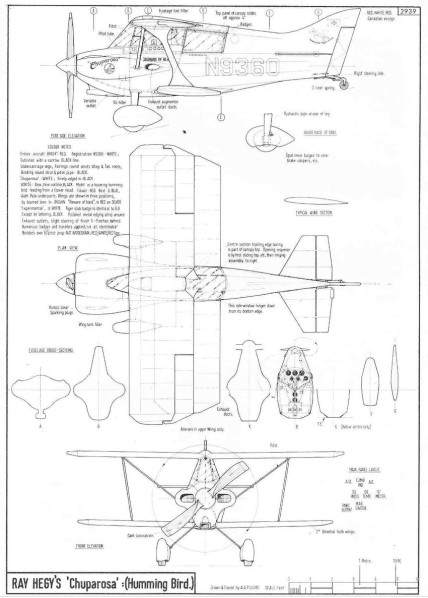
This was a single-seat enclosed cabin biplane designed and built by Mr. Ray Hegy, who was famous for his wooden propellers. Work on the aircraft started in 1950 and was it completed in 1959, making the first flight on 1 May of that year as N9360. The aircraft had a 65hp Continental A65 engine and a mixed steel tube/wood construction. The aircraft was donated to the EAA (AirVenture) Museum.
Before the war and during the 1940s the best-known sailplanes to emerge from Switzerland were the Moswey range of training and competition single seaters designed by Georg Muller and produced by the Hegetschweiler firm.
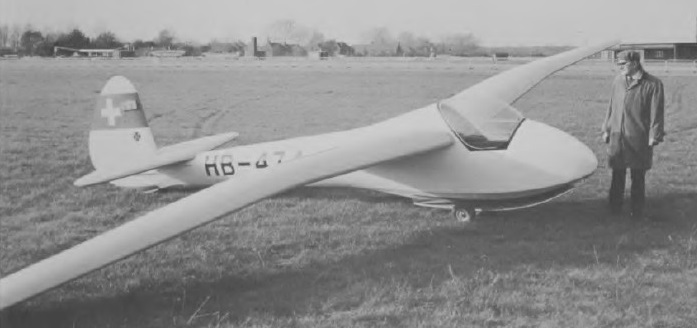
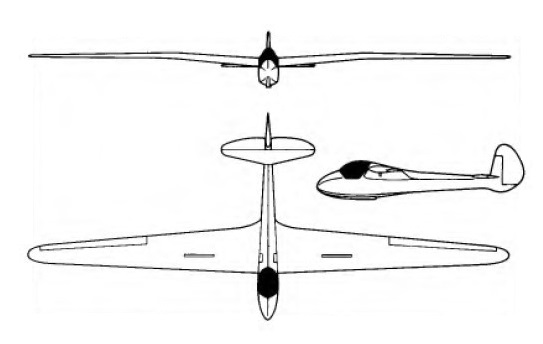
In 1950 the Mk III was succeeded by the Moswey IV, which had a span increased to 47 ft 3 in, a roomier cockpit and an enlarged one-piece Plexiglas canopy which gives excellent visibility. There are air brakes in the wing upper and lower surfaces, and landing gear consists of a nose skid and a monowheel plus a tail bumper fairing.
One Mk IVA was still on the Swiss register at the beginning of 1964.
Before the war and during the 1940s the best-known sailplanes to emerge from Switzerland were the Moswey range of training and competition single seaters designed by Georg Muller and produced by the Hegetschweiler firm.
Like the 2A, the Moswey 3 is made of traditional plywood and fabric, though the wing span is reduced to 14.0 m (45 ft 11 in) for aerobatic training.
The Moswey III first flew in October 1943. In 1948 a Mk.III piloted byAlwin Kuhn took third place in the World Championships at Samedan in Switzerland, and that same year one flown by Siegbert Maurer made the first sailplane crossing of the Alps from north to south. After the war a Moswey III set the first world record for speed over a 100km triangle, and this variant captured most of the Swiss national records of early postwar years.
In 1950 the Mk III was succeeded by the Moswey IV.
Ten of the 14 Moswey IIIs built were still on the Swiss register at the beginning of 1964.
Moswey III Span: 45ft 11 in / 14.0 m Length: 19 ft 8 in / 6.0 m Height: 4 ft 7 in / 1.4 m Wing area: 141 sq ft / 13.1 sq.m Wing section: Gottingen 535 Aspect ratio: 15.0 Empty weight: 353 lb / 160 kg Max weight: 250 kg / 551 lb Water ballast: None Max wing loading: 19.1 kg/sq.m / 3.9 lb/sq ft Max speed: 130 mph / 113 kt / 210 km/h Stalling speed: 27 kt / 50 km/h Max rough air speed: 67 kt / 125 km/h Min sinking speed: 2.1 ft/sec / 0.65 m/sec at 37.5 mph / 32 kt / 60 km/h Best glide ratio: 27.5:1 at 43.5 mph / 38 kt / 70 km/h