La Bottegga dell Aquilone TL 22 Prince

Totally faired in but tubular under the skin. The TL 22 is made in the Czech Republic and equipped with a Rotax 582, though it can be orderd with other power units.

Empty weight: 170 kg
Wing span: 10.38 m
Wing area: 10 sq.m
Fuel capacity: 30 lt
Engine: Rotax 582, 65 hp
MAUW: 400 kg
Seats: 2
Max speed: 120 kph
Cruise speed: 110 kph
Minimum speed: 55 kph
Climb rate: 7 m/s
Fuel consumption: 13 lt/hr
Price (1998): 28 000 000 L

Labahn Hitchiker

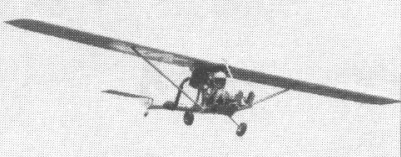
The Hitchiker is the third ultralight design from Robert Labahn and it is designed for cross-country and short field operations. With a rigid wooden wing sporting full span flaperons having both positive and negative selling, the light weight Hitchiker easily fits the bill. The pilot’s seating is reclining, glider like, to present the smallest possible frontal area. A streamlined pod will be fitted in the colder months for pilot protection.

Engine: Rotax 277 geared drive.
Prop: 127 cm x 96cm pitch.
Wing span: 8.05 m.
Weight: 100 kgs.
Fuel capacity: 27 ltr.
Econ cruise speed: 43 kts.
Stall: 23 kts.
Construction time: Ready to fly.

Kyushu Q3W1 Nankai

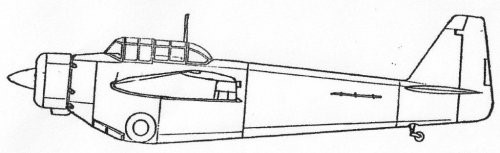
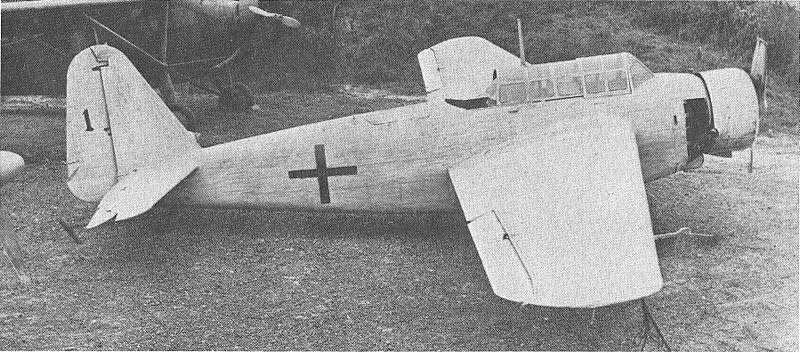
The K11W served as the basis for the Q3W1 Nankai (南海, “South Sea”) anti-submarine patrol aircraft.

The Q3W1 retained the basic layout of the K11W2, with a circular fuselage and large wing with a straight trailing edge and tapered leading edge. It carried a crew of two with the remaining space allocated for anti-submarine warfare equipment. A single prototype was produced, and made its maiden flight in January 1945. This first flight ended with a wheels-up landing, and after that work on the project was suspended and didn’t resume before the end of the war.

Kyushu K11W Shiragiku / White Crysanthemum

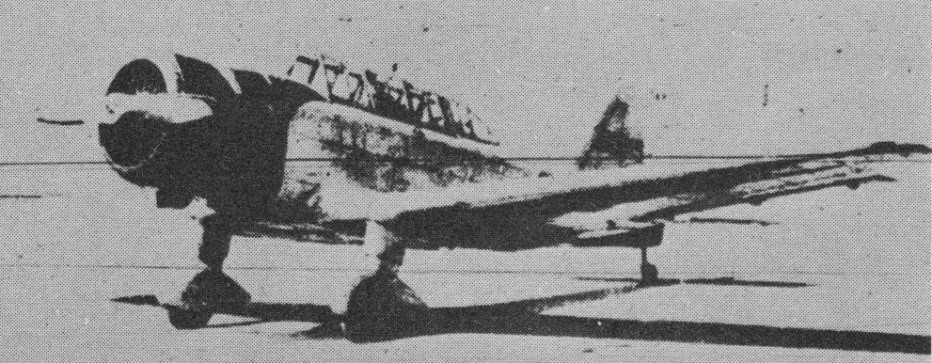
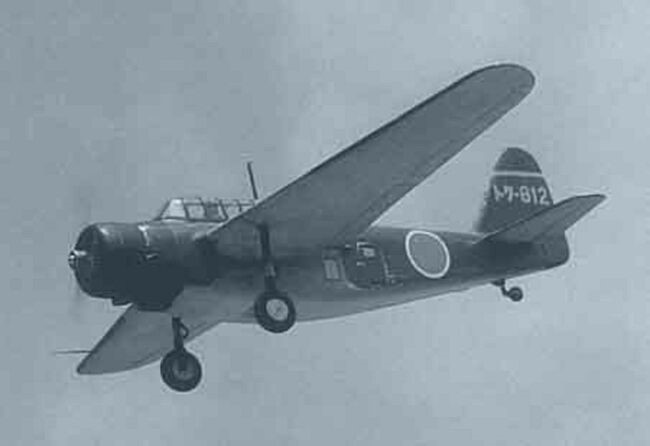
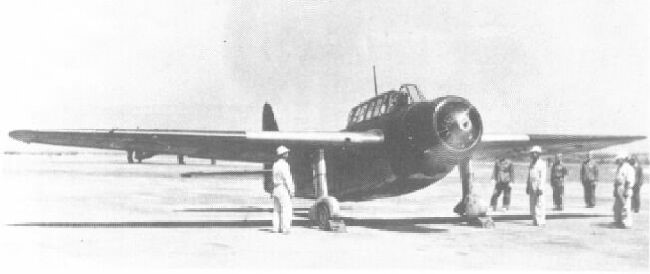
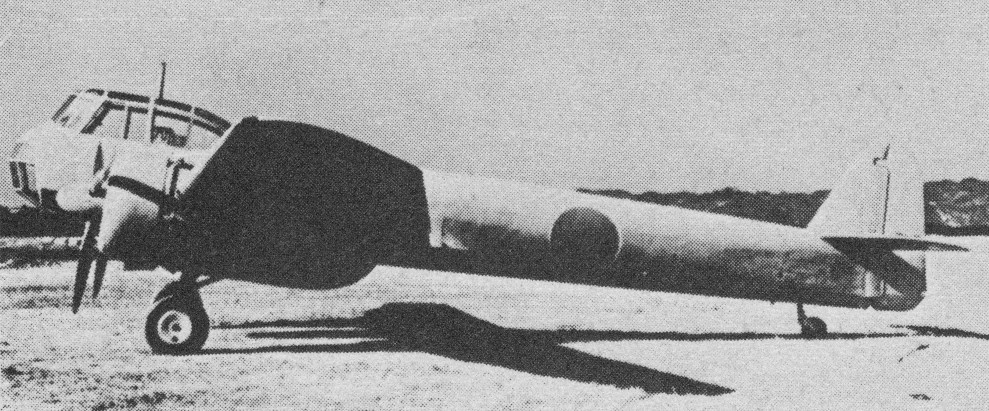
The Kyūshū K11W Shiragiku (白菊, “White Chrysanthemum”) made by the Kyūshū Aircraft Company, was a land-based bombing trainer aircraft which served in the Imperial Japanese Navy Air Service in the latter years of World War II. As indicated by its Japanese designation, “training aircraft for on-board work” (機上作業練習機, kijō sagyō renshū-ki), it was designed to train crews in operating equipment for bombing, navigation, and communication, as well as navigation techniques.

The Kyūshū K11W had a mid-wing layout, the crew consisting of a pilot and gunner/radio operator sitting in line under the canopy and the trainee bombardier, trainee navigator, and instructor in the lower fuselage beneath the wing.

The K11W1 was a basic bomber crew trainer, of all-metal construction with fabric-covered control surfaces.

The K11W2 was a anti-submarine warfare and transport version of all-wood construction.

A total of 798 K11Ws were manufactured, including a small number of K11W2 ASW and transport aircraft alongside the K11W1 trainer variant. These aircraft were also used in kamikaze mission during the last stages of the Pacific War.

The K11W served as the basis for the Q3W1 Nankai (南海, “South Sea”) anti-submarine patrol aircraft.

K11W1
Powerplant: 1 × Hitachi GK2B Amakaze 21, 384 kW (515 hp)
Wingspan: 14.98 m (49 ft 2 in)
Wing area: 30.5 sq m (328 sq ft)
Length: 10.24 m (33 ft 7 in)
Height: 3.93 m (12 ft 11 in)
Empty weight: 1,677 kg (3,697 lb)
Gross weight: 2,640 kg (5,820 lb)
Maximum speed: 230 km/h (140 mph, 120 kn) at 1,700 m (5,577 ft)
Cruise speed: 175 km/h (109 mph, 94 kn) at 1,000 m (3,281 ft)
Range: 1,760 km (1,090 mi, 950 nmi)
Service ceiling: 5,620 m (18,440 ft)
Time to altitude: 3,000 m (9,843 ft) in 19 min 35 sec
Crew: 5
Armament: 1 × 7.7 mm rear-firing machine gun
Bombload 2 × 30 kg (66 lb) bombs, or 1 × 250 kg (550 lb) bomb on kamikaze missions
Kyushu Q1W1 Tokai / Eastern Sea

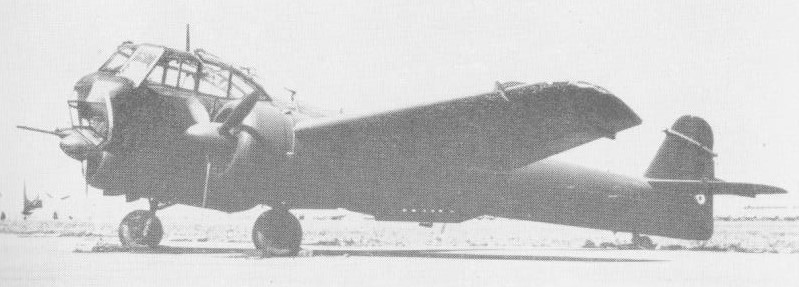
Built as an anti-submarine patrol aircraft for home defense, the Q1W1 was mentioned in a Japanese Navy delivery schedule directed to the manufacturer that was captured in 1944 and received the allied code name ‘Lorna’. It wasn’t spotted in action until 1945.

Kyushi built 153 of the Q1W1 Tokai during the war (allied codename Lorna).

Some Tokais were equipped with crude forms of radar and submarine detection gear.

Engines: 2 x Hitachi Tempu 31, 610 hp
Wingspan: 52 ft 6 in
AUW: 10,582 lb
Max speed: 200 mph at 4396 ft
Ceiling: 14,730 ft
Range: 914 miles
Armament: 1 x 20mm cannon, 1 x 7,7mm mg
Bombload: 1100 lb
Crew: 3

Kyushu J7W Shinden

J7W1

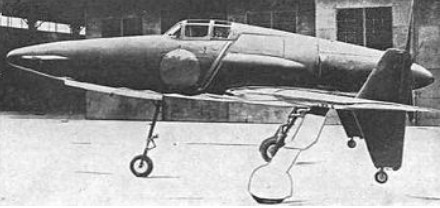
Towards the end of World War II the Japanese developed a canard fighter design which was the only such aircraft ever ordered into mass production. The machine was conceived in 1943 by Captain Masaoki Tsuruno, an Imperial Japanese Navy technical officer, who planned a jet powered high performance interceptor to counter the growing effectiveness of American air power in the Pacific. Three glider prototypes were built by the Dai lchi Kaigun Koku Gijitsusho (First Naval Air Technical Arsenal). They performed well, so in 1944 the Kyushu Hikoki company was commissioned to finalize the interceptor design. The Kyushu J7W Shinden (Magnificent Lightning) was powered by the 2130 hp Mitsubishi MK9D radial engine mounted amidships driving a six bladed pusher propeller through a long transmission shaft. It was armed with four 30 mm cannon and a projected maximum speed 0f 750 kph (466 mph) and a maximum operating altitude 0f 12,000 m (39,370 ft). The Japanese Navy ordered the Shinden into mass production long before the first prototype was ready. Nakajinia and Kyushu tooled up for but the first prototype did not fly until 3 August 1945, 12 days before the Japanese surrender.

Speed: 466 mph
Range: 528 miles
Crew: 1
Armament: 4 x 30mm cannon
Bombload: 4 x 66 lb or 132 lb bombs

Kysor 1950 monoplane

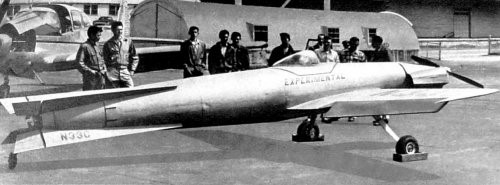
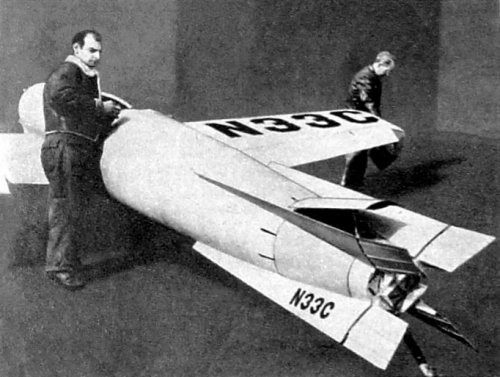
Cliff Kysor’s torpedo-shaped plane of 1950 had tail controls built flush with fuselage. The conventional elevators and rudder were eliminated to minimize air drag and permit greater speed. The four control surfaces at the top, bottom and sides of the tail section, were operated by a stick and by rudder pedals. Small tabs at the trailing edge of the fins were used only to trim the aircraft.