Aeromarine HS

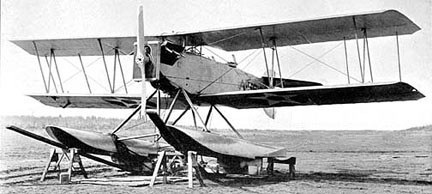
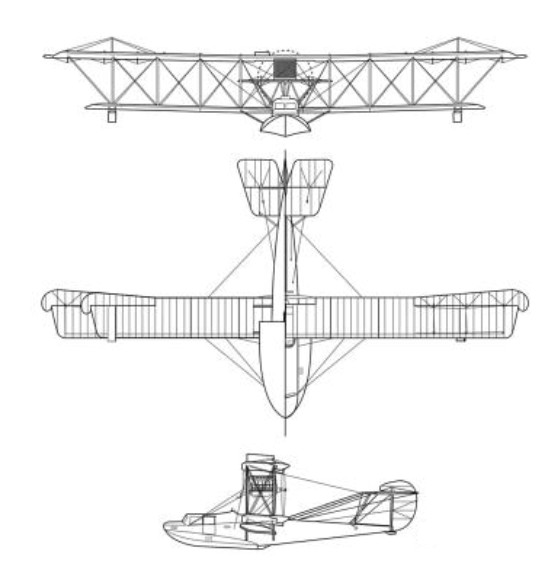
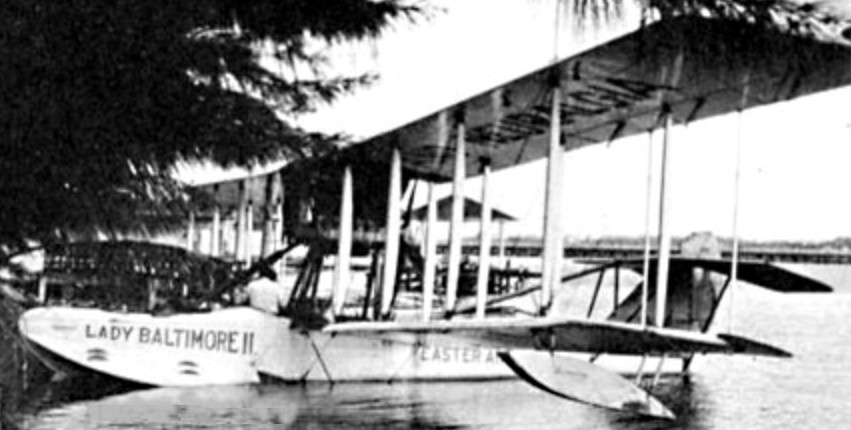
The Aeromarine HS of 1921 was an Aeromarine conversion of surplus Curtiss HS-2L open cockpit flying boat, using the wings and engine structure with an Aeromarine hull. Possibly only one was built.

Lady Baltimore II pictured here was the short-lived Easter Airways’ plane, displaying part of a commercial “FOR NEURALGIA” message on the underside of its top wing… an additional source of revenue.

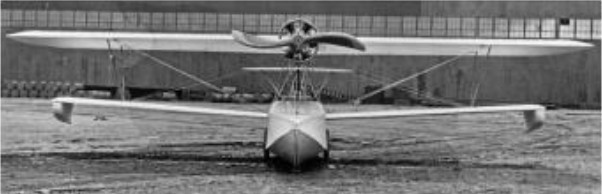
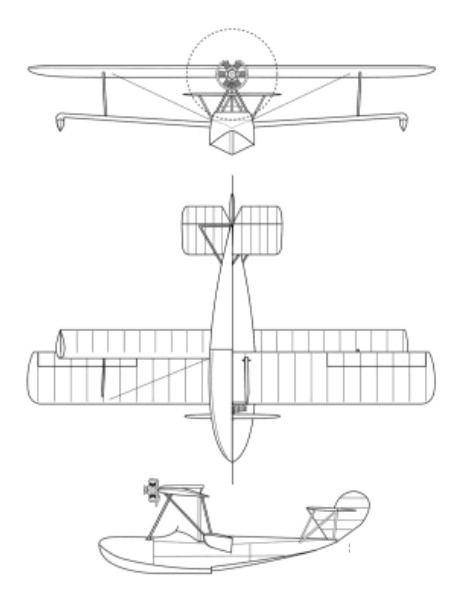
Aeromarine EO Turtle

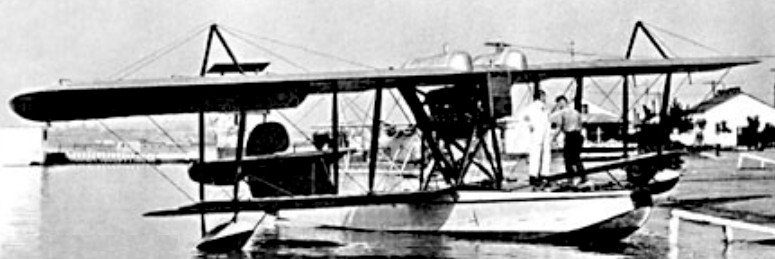
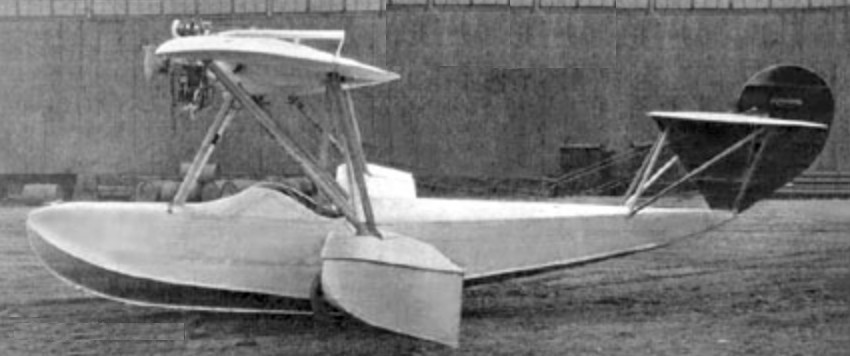
The Aeromarine aluminum hulled EO was built in 1924 and first flown in that June, with a shoulder mounted 80 hp Anzani radial engine. Developed from the Aeromarine AMC, the EO was a sesquiplane, the wings were braced by V-struts.

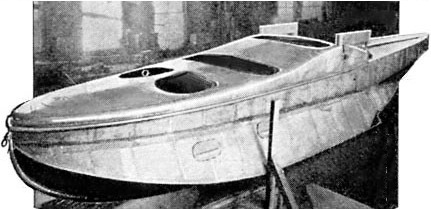
The EO is an open cockpit aluminum-hulled biplane seaplane with a single tractor engine center mounted in a nacelle on the top wing which also housed the fuel tank and oil tank. The upper wing is staggered well forward of the lower wing. The wings are constructed with spruce I-beam spars and ribs with aircraft fabric covering. The hull is built with four watertight compartments. The tip floats are all-aluminum. A cross-through tube accepted a wheel assembly for ground movement.

The Aeromarine EO was designed as an updated replacement to the Aeromarine Model 44 for the customer Earl Dodge Osborn. Osborn was a former accountant for Aeromarine, assistant editor of Aviation magazine and future founder of Edo Aircraft Corporation. The aluminum hull was scaled down from the Aeromarine AMC design, offering advantages in durability, weight and the inability to become waterlogged.

One EO is known to have been completed in 1924, re-engined with a 90 hp Kinner K-5 in 1929 and was destroyed in a crash at Cape May NJ on 12/15/31.

The first flight tests were performed by Osborn in June 1924. The EO was used for demonstration flights for the EDO company. It then transferred ownership several times with a planned flight to Peurto Rico. It was listed as “Washed Out” at Cape May, New Jersey and its registration was cancelled on 21 January 1932.

A reported second or modification to a larger fin, and increased dihedral may have become the Edo Model B.

1924
Aeromarine EO
Engine: 1 × Anzani 6.A.3 Double row radial, 80 hp (60 kW)
Length: 25 ft 2 in (7.67 m)
Upper wingspan: 38 ft (12 m)
Lower wingspan: 34 ft (10 m)
Height: 8 ft 7 in (2.62 m)
Wing area: 145 sq ft (13.5 sq.m)
Airfoil: Aeromarine Nbr. 2a upper, Aeromarine Nbr. 6 lower
Empty weight: 1,040 lb (472 kg)
Gross weight: 1,750 lb (794 kg)
Fuel capacity: 25 U.S. gallons (95 L; 21 imp gal)
Maximum speed: 65 kn; 121 km/h (75 mph)
Stall speed: 30 kn; 56 km/h (35 mph)
Endurance: 4 hours
Service ceiling: 16,500 ft (5,000 m)
Rate of climb: 280 ft/min (1.4 m/s)
Wing loading: 6.58 lb/sq ft (32.1 kg/m2)
Seats: 3
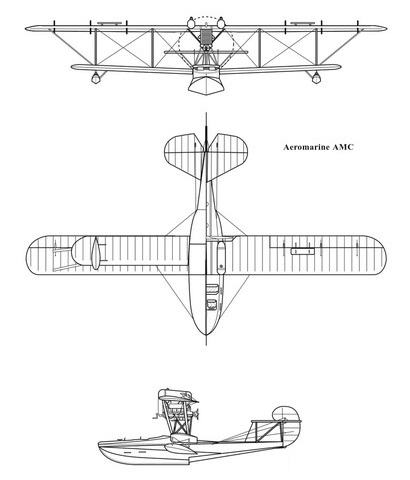
Aeromarine AMC / Aeromarine Metal Commercial

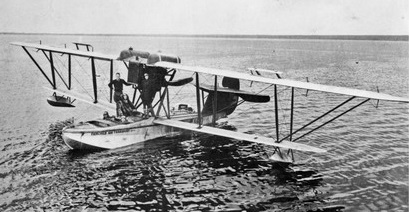
Similar in configuration to the Curtiss HS series, the AMC (Aeromarine Metal Commercial) was an effort to introduce a civil flying boat of conventional two-bay biplane design that possessed a more modern airframe, most notably an all-duraluminium hull and a dural-framed empennage.

The 1923 AMC was built with spruce I-beam spars and ribs, dural-framed empennage; fabric-covered wings and tail; all-duraluminum hull. The AMC was designed to replace the 75s of Aeromarine Airways and first flew on 1 June 1923.

The AMC flew for the first time in June 1923 and soon afterwards commenced a trial route between New York and San Juan, Puerto Rico, however, Aeromarine and its airline subsidary ceased operations in late 1923, and no more AMCs were completed.

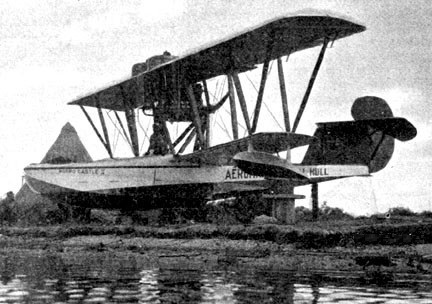
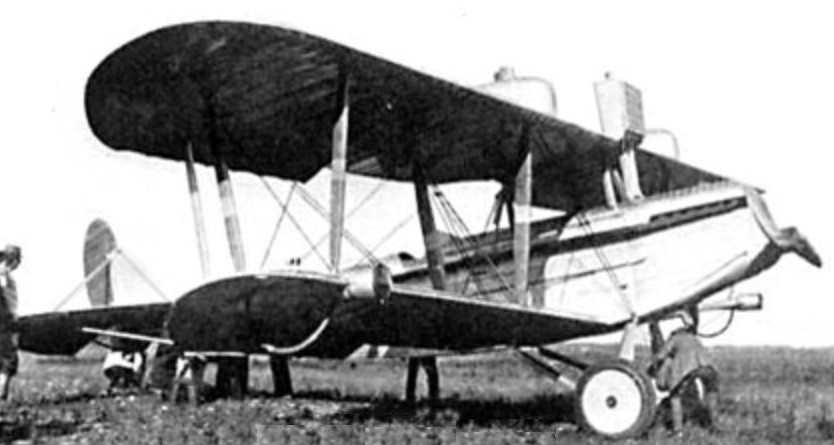
The Morro Castle II can be recognized by its shorter lower wings.

Aeromarine AMC in Canadian registration after being sold to Fairchild Air Transport

While not a commercial success, the AMC did establish a new standard for flying boats with more durable metal hulls.

Long before Photoshop, this bit of “creative enhancing” asks more than it tells. It could be a short-wing version of AMC, dubbed Morro Castle II, but its placement in an Egyptian setting is a mystery—perhaps for an ad with a relevant headline. The plane appears to be pasted on the background—a small seam below the rudder hinge is visible. If it is supposed to be landing, it is doomed. The prop is stopped and the pilot sits on the coaming away from the controls, which are set for a severe left hand dive into the Nile.

Engine: Liberty 12, 400 hp
Prop: 2 blade wooden fixed pitch
Wing span (upper): 65 ft 0 in
Wing span (lower): 48 ft 7 in
Length: 32 ft 10 in
Payload: 2440 lb
Max speed: 98 mph
Cruise speed: 80 mph
Stall speed: 50 mph
Ceiling: 14,000 ft
Seats: 7-9

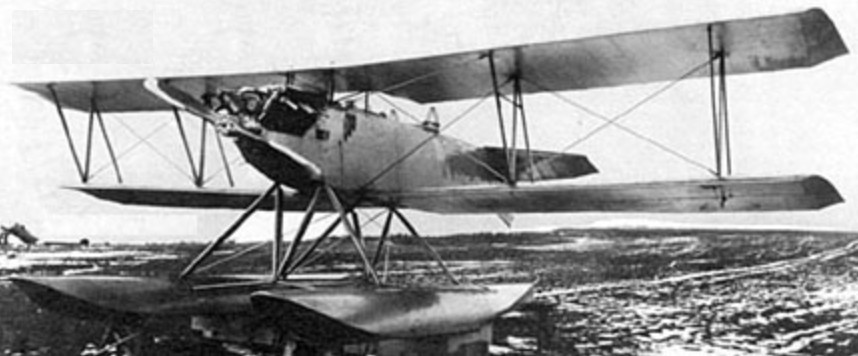
Aeromarine AM-1

The 1923 AM-1 was the first aircraft with an all-metal fuselage covered with sheet aluminium in the US. Designed by Paul Zimmerman to be a replacement for de Havilland DH-4 in mail and cargo duties, but test flights were disappointing, and stability problems brought an end to the project. Only one was built.

Engine: Liberty 12, 400 hp
Wing span: 50 ft 0 in
Length: 32 ft 11 in
Payload: 1575 lb
Speed: 116 mph
Stall: 44 mph
Seats: 1