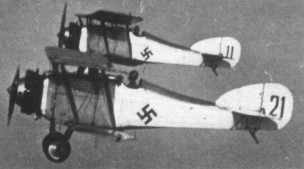
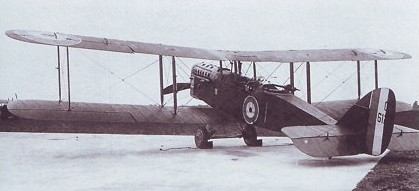
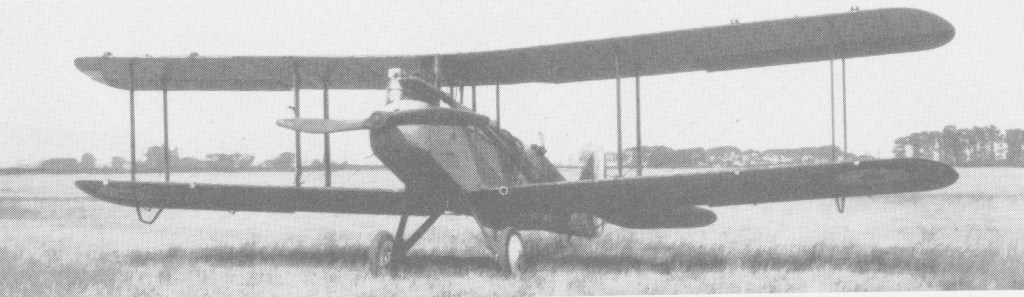
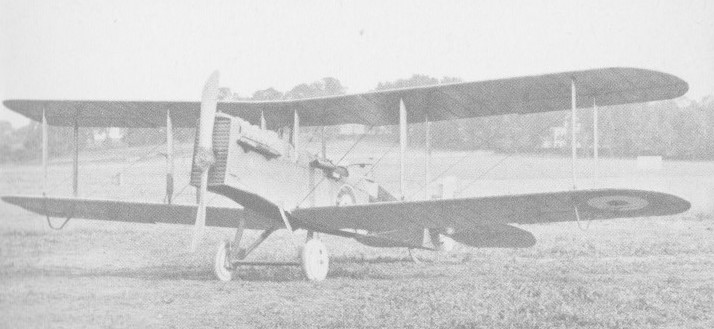
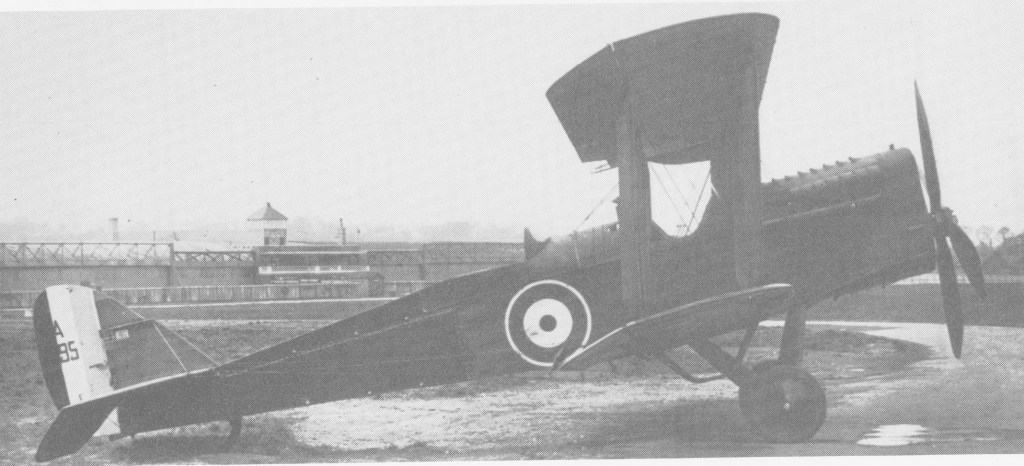
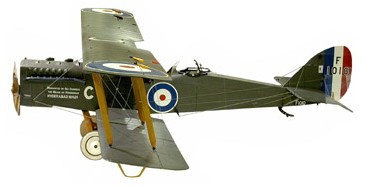
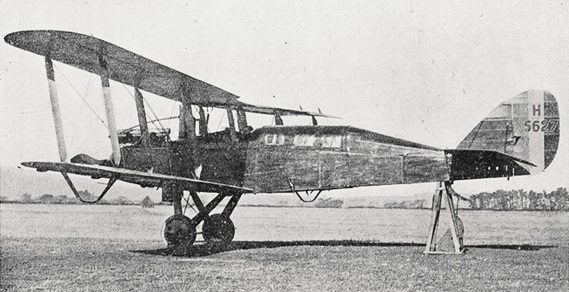
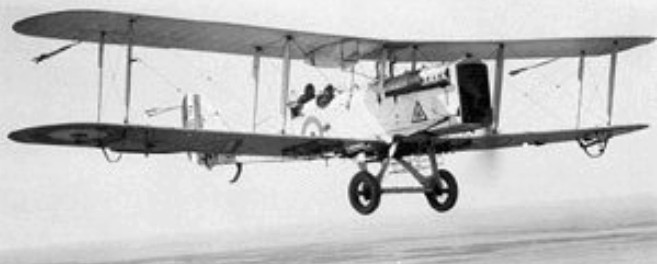
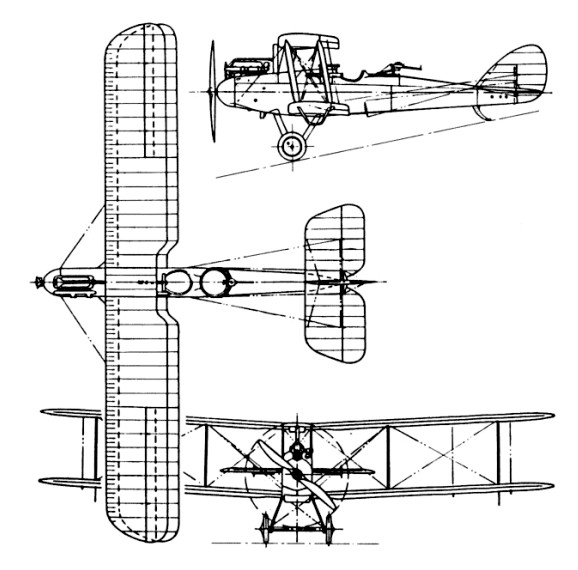
With the liquidation of the Martinsyde Company in February 1924, and the acquisition of its stores, stocks and goodwill by the Aircraft Disposal Company (A.D.C.), development of the Buzzard continued under the design leadership of John Kenworthy. This resulted in the A.D.C.1, which was fundamentally an F.4 Buzzard airframe with a 380 hp Armstrong Siddeley Jaguar radial engine. The prototype A.D.C.1 was first flown on 11 October 1924, subsequently participating in the 1925 and 1926 King’s Cup races, and considerable foreign interest was displayed in the type. In the event, only one order for the A.D.C.1 materialised, from Latvia and comprising eight aircraft which were delivered in 1926, at least two of these surviving until 1938.
Engine, Armstrong Siddeley Jaguar radial, 380 hp Span, 32 ft 9 in (9,98 m) Length, 25 ft 0 in (7,62 m) Wing area, 320 sq ft (29,73 sq.m) Empty weight, 1,865 lb (846 kg) Loaded weight, 2,650 lb (1202 kg) Max speed, 163 mph (262 km/h) at sea level Time to: 5,000 ft (1525 m), 2.42 min Time to 10,000ft: 5min 30sec Time to 15,000ft: 17min 30sec Service ceiling; 27,000ft Armament: two synchron¬ised 0.303-in (7,7 mm) Vickers guns
The Aircraft Disposals Company (ADC) or Airdisco, was a British firm established in March 1920 to take over from His Majesty’s Disposals Board to dispose of surplus aircraft not required for use by the diminishing RAF.
One of the founders was Frederick Handley Page, the British aviation pioneer. ADC bought the entire available stock of surplus aircraft engines and spares, including 10,000 airframes and 30,000 engines, for the sum of £1,000,000 plus a share of any profits. Many ex-military aircraft were converted to various civil roles before being sold on while others were sold to military buyers.
Stored in six depots, with the main one at Waddon Aerodrome, Croydon, Surrey, specimen aircraft were demonstrated in many parts of the world, and a drawing office was formed under J. Kenworthy, formerly with Austin and Westland. Many modifications (e.g. Lamblin radiators) were made on standard military types.
In February 1924 Martinsyde’s manufacturing rights, goodwill and stock of aircraft were bought up by the Aircraft Disposal Company, who continued to develop the F.4 as the ADC 1 with Armstrong Siddeley Jaguar radial engine. Eight of this type sold to Latvia in 1926, in the same year Nimbus Martinsyde (with ADC Nimbus engine) appeared.
By 1925, it had sold 2,000 airframes and 3,000 engines, generating profits of over £2,500,000, of which half was returned to the British Treasury.
The company produced a small range of aircraft engines under the direction of Frank Halford, the ‘Cirrus’ line continued to be manufactured by Cirrus Aero Engines Ltd and their successors.
The company had several sites across Britain including 11 acres (45,000 sq.m) of Regents Park in London known as Marylebone Green. Three of the National Aircraft Factories became part of the Aircraft Disposal Company including Aintree in Liverpool, Waddon in Croydon, and at Stockport near Manchester.
The company became known as Airdisco from its telegraph address. The company had offices at Regent House, 89 Kingsway London WC2. The company name was changed to The Imperial & Foreign Corporation Ltd and was finally wound up in 1930.
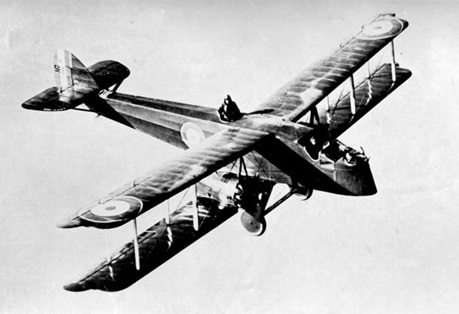
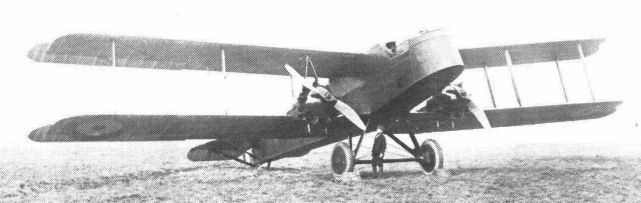
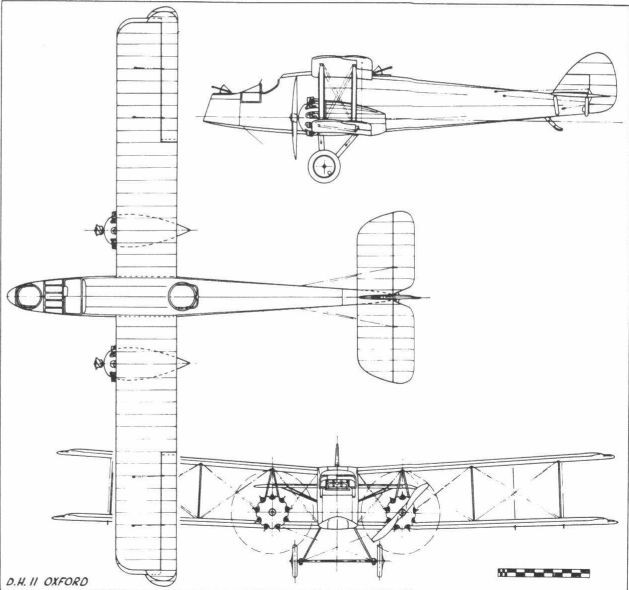
The DH.11 Oxford was designed by Geoffrey de Havilland for the Aircraft Manufacturing Company as a twin-engined day bomber to replace the Airco DH.10. It was designed (as required by the Specification) to use the ABC Dragonfly radial engine which promised to give excellent performance and had been ordered in large numbers to be the powerplant for most of the new types on order for the Royal Air Force.
Designs began early in 1918 when a contract was placed for three aircraft (Contract 35a/2150/C.2485) and by August the fuselage of the prototype, H5891, was well advanced in the Hendon factory. In September all work ceased because the Dragonfly engines were beset by problems and in November Siddeley Puma in-line, high compression engines were considered and the necessary engine bearer modifications were put in hand.
The D.H.11 had fabric covered, wooden airframes incorporating steel tubing for highly stressed or vulnerable members such as engine mountings, undercarriage and the empennage trailing edges. The type had horn balanced ailerons and the characteristic de Havilland rudder, and four degrees of dihedral on the upper mainplane compared with two degrees on the lower, gave the wings of the D.H.11 a diverging appearance and the fuselage filled the whole mainplane gap, making it possible to put the rear gunner on a raised floor in the mid upper position with a commanding field of fire in all upward directions.
A fuselage 6 ft. 0 in. deep and 4 ft. 0 in. wide enabled main fuel tanks of 170 gallons capacity to be slung from the top longerons of the centre fuselage with a walk way beneath. This gave the rear gunner access to the cockpit, in which the pilot sat on the starboard side, and thence to the front gunner. Entry to the aircraft was gained through a trap door between the spars of the lower wing which opened on to this catwalk. Armament consisted of a Scarff-ring-mounted Lewis gun fore and aft and approximately 1,000 lb. of bombs carried internally. Two 320 h.p. A.B.C. Dragonfly radial engines were housed in nacelles fixed directly to the lower mainplane but the eminently business-like and efficient divided undercarriage of the D.H.10 gave place to a narrow track.
By 1919 the machine, H5891, was ready and the mainplanes were being covered yet despite recurring magneto trouble it was decided to fit the Dragonflies after all. After the first few flights in January 1919 H5891 went back into the works for the engines to be repositioned but was short lived. Its last flight came when a connecting rod broke in one of the engines, which seized up just as the aircraft became airborne, but the pilot, F. T. Courtney, made a forced landing without damage.
Two further prototypes, Mk. IIs, H5892 and H5893, with Puma high compression engines, were cancelled in 1919, with no aircraft in the end being purchased to replace the DH.10. Serials later allotted to Sopwith Buffaloes.
Oxford Mk I Engines: 2 × ABC Dragonfly, 320 hp (239 kW) each Wingspan: 60 ft 2 in (18.34 m) Wing area: 719 ft² (66.8 m²) Length: 45 ft 2¾ in (13.79 m) Height: 13 ft 6 in (4.12 m) Empty weight: 4,105 lb (1,866 kg) Max. takeoff weight: 7,020 lb (3,191 kg) Maximum speed: 107 kn (123 mph, 198 km/h) Service ceiling: 14,500 ft (4,400 m) Power/mass: hp/lb (kW/kg) Climb to 10,000 ft: 13 min 45 sec Endurance: 3 hours Crew: three Armament: 2 × .303 in (7.7 mm) Lewis gun Bombload: 4 × 230 lb (104 kg) bombs carried internally
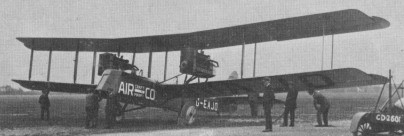
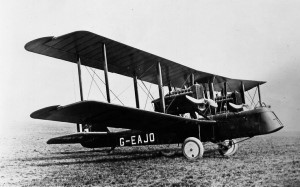
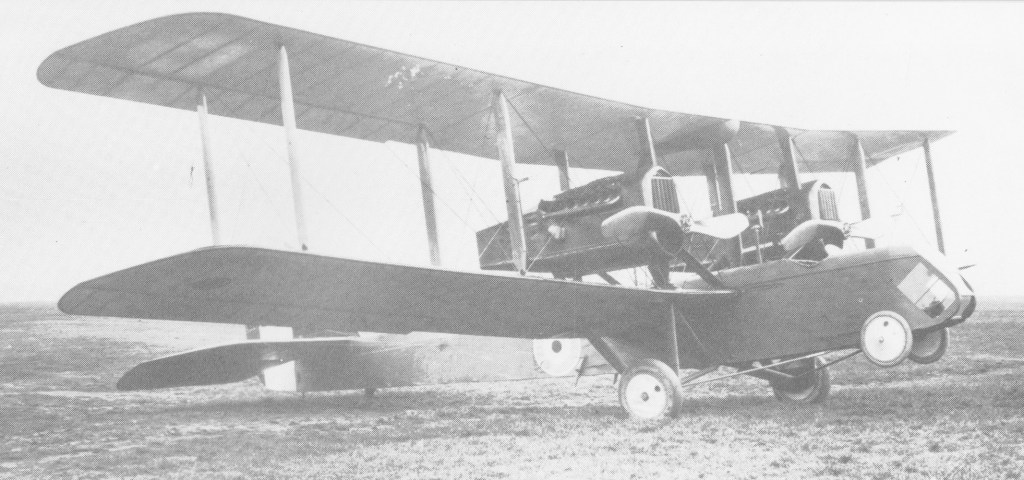
The successes being experienced by German bomber crews over London forced the War Office to think of using a medium bomber for retaliatory strikes. The unsuccessful DH.3 was one of the bombers that came to mind. Airco produced a design based on the DH.3, but in a larger version. The design was accepted and construction began in August 1917. Powered by two 230 hp B.H.P. water cooled engines, which were mounted between two mainplanes, the DH.10 retained the plywood-covered, box-like fuselage on the DH.3. It carried a crew of three with front and rear gunner cockpits, on which the guns were mounted on Scarff rings. It had dual controls fitted in the rear cockpit.
The first prototypes were give the name ‘Amiens’ by the Air Board, making them Amiens Mk.I and Mk.II. Flight tests and evaluations were quickly carried out, and orders for 1295 aircraft were placed with Airco as the main contractor and six other subcontractors; the Alliance Aeroplanevco, London; the Daimler Co Ltd, Coventry; the Siddeley-Deasey Motor Car Co Ltd, Coventry, National Aircraft Factory No.2, Stockport; Mann-Egerton Co Ltd, Norwich; and the Birmingham Carriage Co, Birmingham.
G-EAJO
The production lines started to gear up, but the war ended before they could get into mass production. Only eight were supplied to the RFC, but after the war the DH.10 saw a great deal of service as a mail carrier and, after some modifications, a passenger aircraft.
DH10 Mk.II
Airco DH.10 Engines: 2 x BHP, 200 hp Engines: 2 x Siddeley Puma, 230 hp Engines: 2 x Rolls-Royce Eagle VIII, 360 hp Engines: 2 x Rolls-Royce Eagle VIII, 375 hp Engines: 2 x Liberty 12, 396 hp Engines: 2 x Liberty 12, 405 hp
Production models Length: 39 ft 6 in / 12.0 m Height: 14 ft 6 in / 4.4 m Empty weight: 5600 lb / 2540 kg Loaded weight: 9000 lb / 4082 kg Max speed: 112 mph / 180 kph Ceiling: 16,500 ft / 5029 m Endurance: 3 – 5.5 hr Armament: 3 x .303 Vickers mg Bombload: 6 x 230 lb bombs
DH 10 prototype Wingspan: 62 ft 9 in / 19.13 m Length: 38 ft 10.25 in / 11.8 m Height: 14 ft 6 in / 4.4 m Empty weight: 5004 lb / 2270 kg Loaded weight: 6950 lb / 3152 kg Max speed: 100 mph / 160 kph Ceiling: 15,000 ft / 4572 m
DH 10 Mk.II Engines: 2 x RR Eagle VIII, 360 hp Wingspan: 65 ft 6 in / 19.9 m Length: 38 ft 10 in / 11.84 m Max speed: 109 mph / 175 kph Armament: 2 x Lewis .303 Bombload: 1200 lb / 554 kg
DH 10 A Mk III Amiens Engine: 2 x Liberty 12, 400 hp Length: 39.633 ft / 12.080 m Wingspan: 65 ft 6 in / 19.9 m Max take off weight: 9000.8 lb / 4082.0 kg Max speed: 131 mph Bomb load: 900 lb Endurance: 6 h Armament: 4x MG, 408kg Bomb. Seats: 3
The DH9 development was started in order to give the RFC a means of hitting back at the Germans, who had raided London in daylight in June and July 1917.
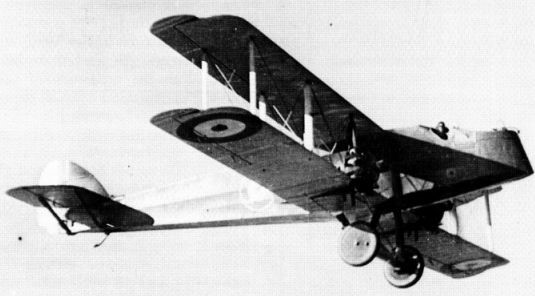
Based on the DH.4 two seat day bomber the result was the DH.9. The prototype Airco DH.9 was produced by modification of a DH.4, retaining the same wings, tail unit, and generally similar landing gear, but the fuselage was completely new, with a more streamlined nose, and the pilot’s cockpit directly above the lower wing trailing edge. In the DH.4 there had been a problem with communication between the pilot and observer because the two cockpits were too far apart, but in the DH.9 the cockpits were almost back-to-back, no longer separated by the main fuel tank as on the DH4. Fuel in the DH9 was in two tanks aft of the engine and one in the centre-section.
First flying in November 1917, the prototype was powered by a 172-kW (230-hp) B.H.P., built by the Galloway Engineering Company, and referred to sometimes as the Galloway Adriatic.
DH.9
Early testing began in late July 1917 and proceeded so well that existing contracts for 900 D.H.4s held by subcontractors were amended to cover production of the D.H.9. Some of these early production aircraft had a Siddeley built B.H.P. engine, but a new lightweight version of this engine, known as the Puma and developed by SiddeleyDeasy, was selected as the major production engine. Most D.H.9s were fitted with 230, 240 or 290 hp Siddeley Puma engines, although one small batch, built by Shorts, had 260 hp Fiat A 12s. Rated at 224kW (300 hp), it was expected to give the D.H.9 outstanding performance, but development problems meant that reliability could only be assured by de-rating output to 172kW (230 hp), and the performance of the new bomber was inferior to that of the D.H.4 which it was intended to replace. When the type was first introduced in April 1918, this resulted in serious losses by the squadrons in France.
Carrying a full military payload the aircraft could barely make 13,000 ft. The problem was highlighted on 31 July 1918 when ten DH.9s out of twelve on a bombing mission over Germany were lost, some to engine failure others shot down. During 848 sorties flown by Nos 99 and 104 Squadrons, RFC, 123 engine failures were recorded.
In ex¬cess of 3,200 were built in Britain by Airco and 12 sub-contractors, including Westland Aircraft. By the time the prototype flew, Trenchard had already asked for its cancellation, but production was already well advanced and there was no immediate substitute.
DH9A F1010
Deliveries of the D.H.9, to No 103 Squadron of the RFC, began in December 1917, and the first operational sorties (by No 6 Squadron) were carried out in France in the following March. Over the next few months their activity was stepped up quite considerably, but with operations affected by the lack of power from their Puma engines, or made abortive by repeated engine failures.
With the end of the war the D.H.9 soon faded from the RAF scene, eclipsed completely by the D.H.9A which replaced it. Developed from the DH.9, the DH.9A had a 375 hp Rolls-Royce Eagle VIII engine fitted at the behest of the Technical Department of the War Office. To accommodate this larger engine the mainplanes and ailerons were enlarged and the fuselage strengthened, but he undercarriage and tail section remained the as the DH.9. Harry Hawker carried out a number of the initial test flights.
DH.9A
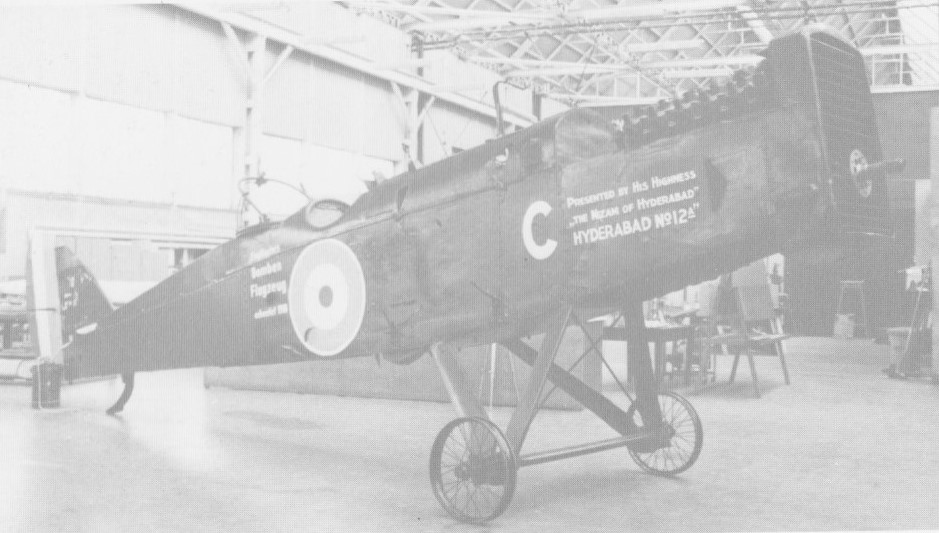
With the test completed, a number of the aircraft were assigned to No.110 Sqn, RAF, who used them to carry out bombing raids on Coblenz, Frankfurt and a number of other German manufacturing cities. One of the aircraft had been paid for by the Nizam of Hyderabad, commemorated by an inscription painted on the side of the aircraft.
Armament comprised a front-mounted, forward firing 0.303 in (7.7 mm) Vickers machine gun, with Constantinesco synchronizing gear, and a 0.303 in (7.7 mm) Lewis gun on a Scarff ring mounting in the rear cockpit. Normal bombload consisted of two 104 kg (230 lb) or four 51 kg (112 lb) bombs, which could be carried internally (though they seldom were) or externally, on fuselage or lower wing racks. Camera or W/T equipment was also installed.
DH.9A
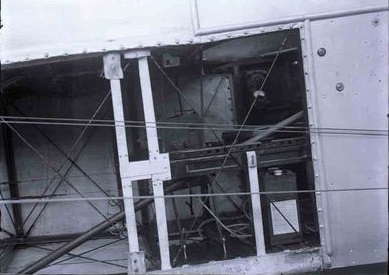
Irish Air Corp DH9 camera installation
To improve performance of the DH9, the Liberty 12 engines were ordered from the USA, and Airco requested the Westland Aircraft Works at Yeovil, Somerset, to redesign the D.H.9 to accept the Liberty engine. Westland combined the best features of both D.H.4 and D.H.9 with the US powerplant, strengthening the fuselage structure and introduced wings of increased span and chord, ailerons on all wings. Fuel was in two tanks aft of the engine and one centre section. Although nominally a conversion of the earlier aircraft, to take a more reliable American engine, the new DH9A was a complete redesign. The prototype Airco DH.9A, because no Liberty engines had been received, was flown initially with a 280-kW (375-hp) Eagle VIII engine.
By the middle of 1918, the converson to the Packhard Motor Company-built Liberty engine had been completed and the aircraft was sent to Martlesham Heath foe evaluaton, while at the same time the Americans were promising deliveries of the engine. Twelve of the engines were already in Britain, and tests with the Liberty-powered DH.9A had been extremely encouraging. A number of different sub-contractors had to be brought in because Airco were heavily committed to the design and development of the DH.10 day bomber. Among the sub-contractor were the Vulcan Motor and Engineering Co, the Westland Aircraft Works, Mann, Egerton Co,, the Whitehead Co, and F.W.Berwick. The first de¬liveries were made to the RAF during June 1918.
The deliveries of the Ameican Liberty engines started to come in, but in July 1918 they stopped abruptly after 1050 had been delivered. Winston Churchill, who was Minister for Munitions at the time, immediately contacted the US Under-Secretary for Aviation, Mr Ryan. Ryan informed Churchill that the US Navy had staked a priority claim on all the Liberty engines that were currently under construction. This was devastating news to Airco, as they now had to find a replacement engine rapidly. The one that sprang to mind was the Rolls-Royce Eagle VIII, which was currently under evaluation in a Westland-built DH.9A.
By the end of 1918 nearly nine-hundred had been built. Enquiries were also made of the 500 hp Galloway Atlantic engine that was currently under evaluation. Seventy-two of these engines were ordered in September 1918 with a possible increase to 1000, but only one was ever fitted into a DH.9A, which was re-designatd the DH.15.
DH 9A
Construction not only continued in Great Britain but the type went into unlicensed production in Russia for the Red Air Force.
An American production programme of USD 9s (the US designation of the Liberty-engined version) was planned but of the 14,000 ordered only four were completed. Following the installation of a 400 hp Liberty in a British testbed, 3000 Liberty engines were ordered from the USA to power the refined D.H.9A for the RAF. Only 1050 of these engines reached Britain in early 1918, from which 885 D.H.9As were powered before the end of the war. Apart from the powerplant, the chief differences from the D.H.9 were larger area wings (to offset the bigger and heavier American engine) and a redesigned forward fuselage; armament and bombload remained unchanged. Deliveries were made from June 1918, initially to No 110 Squadron, but only two squadrons in France and two in Russia had become fully operational with them before the Armistice. Mass production, by a dozen British manufacturers (chiefly de Havilland and Westland), continued after the war; deliveries continued until 1928, and the total built eventually reached nearly 2500. Others, with various engines, were built in Spain, the USSR and elsewhere.
Russian R.1
The D.H.9’s basic design was phased out of RAF service in 1931. Those of the SAAF continued in service until 1937. Its RAF replacement, the Westland Wapiti, was based on the same airframe.
War surplus D.H.9s served in Afghanistan, Australia, Belgium, Canada, Chile, Estonia, Greece, India, the Irish Free State, Latvia, the Netherlands, New Zealand, Poland and South Africa; and the type was built under licence by HispanoSuiza for service with the Spanish air force, a figure in excess of 500 being quoted as the production figure, and at least 25 still being in service when the Spanish Civil War started in July 1936. Others were built by SABCA in Belgium; and the Netherlands Army Aircraft Factory also assembled 10 new D.H.9s, built by the de Havilland Aircraft Company in 1923, and in 1934 these were each given a Wright Whirlwind engine of 347kW (465hp). Despite this sort of demand, Britain’s Aircraft Disposal Company still had large numbers of war surplus D.H.9s in stock in late 1930, and these were scrapped and burned during the following year.
Nine served with the RNZAF from 1923 to 1930.
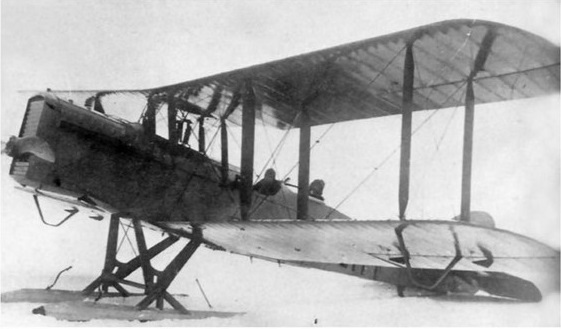
A DH9 specially prepared by the Canterbury Aviation Company for a Christchurch-Blenheim, New Zealand, mail service.
D.H.9s were also flown experimentally or as a result of conversion with engines that included the 186-kW (250-hp) Fiat A-12, 216-kW (290-hp) Siddeley Puma high-compression engine, 224-kW (300-hp) A.D.C. Nimbus and Hispano-Suiza 8Fg, 321-kW (430-hp) Napier Lion, and 324-kW (435-hp) Liberty 12A. Conversions carried out by the South African Air Force, with the 149-kW (200-hp) Wolseley Viper, 336-kW (450-hp) Bristol Jupiter VI and 358-kW (480-hp) Bristol Jupiter VIII, were known respectively by the names of Mantis, M’pala I and M’pala II. Air Transport and Travel launching a proving flight between Hendon and Le Bourget on 15 July 1919. Its de Havilland 9 carried only one passenger, Major Wilkinson, of the glass firm. Production, during and after the First World War, eventually reached more than 4000, by no fewer than 15 British manufacturers, of which 3204 were built before the end of 1918.
Variants: Airco D.H.9B: designation of aircraft converted for civil use, and carrying one passenger forward and one aft of the pilot Airco D.H.9C: designation of aircraft converted for civil use, and carrying one passenger forward and two aft of the pilot Airco D.H.9J: designation used for the SAAF M’pala I, and also for the D.H.9s modernised in the late 1920s for use by the de Havilland School of Flying. These latter aircraft had a strengthened forward fuselage structure; improved landing gear, aileron controls, and fuel system; introduced Handley Page leading-edge slots; and were powered by a 287-kW (385-hp) Armstrong Siddeley Jaguar III radial engine. de Havilland D.H.9AJ Stag: designation of single prototype with improved main landing gear and powerplant of one 347-kW (465-hp) Bristol Jupiter VI radial engine de Havilland D.H.9R: designation of a single racing version with sesquiplane wing, and powered by a 347-kW (465-hp) Napier Lion II inline engine Engineering Division USD-9A: designation of nine generally similar US-built aircraft, each having its forward-firing 7.62-mm (0.3-in) Browning machine-gun on the starboard (instead of port) side, and a modified rudder Engineering Division USD-9B: designation of one USD-9A following installation of a 313-kW (420-hp) Liberty 12A engine. R-1 – At least 2700 DH9As built in the Soviet Union.
DH.9 Engine: B.H.P, 200 hp Span: 42 ft 6 in Wing aera: 436 sq.ft Length: 30 ft 6 in Height: 10 ft Empty weight: 2203 lb Loaded weight: 3669 lb Wing loading: 8.4 lb/sq.ft Max speed: 111 mpg at 10,000 ft Service ceiling: 17,500 ft ROC: 500 fpm to 5400 ft Endurance: 4 hr 30 min Armament: 1 x Vickers mg, 1 or 2 x Lewis mg Bombload: 931 lb Crew: 2
DH.9 Engine: BHP, 230 hp Length: 30 ft 6 in / 9.29m Wingspan: 42 ft 4 in / 12.9 m Max speed: 116 mph / 187 kph Armament: 1 x Vicker .303 sync. Through airscrew, 1 x Lewis .303 for observer Bombload: 500 lb / 227 kg
DH9 Engine: Siddeley Puma, 230 hp / 172-kW Wingspan: 42 ft 4 in / 12.9 m Length: 30 ft 5 in / 9.2 m Height: 11 ft 3 in / 3.4 m Wing area: 40.32 sq.m / 434 sq ft Empty weight: 2230 lb / 1011 kg Loaded weight: 3325 lb / 1508 kg MTOW: 3669 lb Wing loading: 8.4 lb/sq.ft Fuel capacity: 70 Gal Max speed at 1980m (6,500ft): 104 mph / 167 kph Max speed: 111 mpg at 10,000 ft Climb to 1980m (6,500ft): 10 minutes 20 seconds Service ceiling: 4725m / 15,500ft Endurance: 4 hours 30 minutes Armament: one fixed forward-firing 7.7-mm (0.303-in) Vickers machine-gun and one or two 7.7-mm (0.303-in) Lewis guns on Scarff ring in aft cockpit, plus up to 209 kg (460 lb) of bombs. Crew: 2
Engine: Siddeley Puma, 290 hp Wingspan: 42 ft 4 in / 12.9 m Length: 30 ft 5 in / 9.2 m Height: 11 ft 3 in / 3.4 m Empty weight: 2230 lb / 1011 kg Loaded weight: 3325 lb / 1508 kg Max speed: 104 mph / 167 kph Ceiling: 15,500 ft / 4724 m Armament: 1 x .303 Vickers mg
Engine: Fiat A-12, 250 hp Wingspan: 42 ft 4 in / 12.9 m Length: 30 ft 0 in / 9.1 m Height: 11 ft 2 in / 3.3 m Empty weight: 2460 lb / 1115 kg Loaded weight: 3600 lb / 1632 kg Max speed: 117 mph / 188 kph Ceiling: 17,500 ft / 5334 m Armament: 1 x .303 Vickers mg
Engine: ADC Nimbus, 300 hp Wingspan: 42 ft 4 in / 12.9 m Armament: 1 x .303 Vickers mg
Engine: Hispano-Suiza 8Fb, 300 hp Wingspan: 42 ft 4 in / 12.9 m Armament: 1 x .303 Vickers mg
Engine: Napier Lion, 430 hp Wingspan: 42 ft 4 in / 12.9 m Length: 30 ft 9 in / 9.3 m Height: 11 ft 7 in / 3.5 m Empty weight: 2544 lb / 1153 kg Loaded weight: 3667 lb / 1663 kg Max speed: 138 mph / 222 kph Ceiling: 23,000 ft / 7010 m Armament: 1 x .303 Vickers mg
Engine: Liberty 12A, 435 hp Wingspan: 42 ft 4 in / 12.9 m Length: 30 ft 0 in / 9.1 m Height: 11 ft 2 in / 3.3 m Empty weight: 2460 lb / 1115 kg Loaded weight: 4645 lb / 2106 kg Max speed: 114 mph / 183 kph Ceiling: 17,500 ft / 5334 m Armament: 1 x .303 Vickers mg
Engine: Wright Whirlwing R-975, 465 hp Wingspan: 42 ft 4 in / 12.9 m Armament: 1 x .303 Vickers mg
Engine: Wolseley Viper, 200 hp Wingspan: 42 ft 4 in / 12.9 m Armament: 1 x .303 Vickers mg
Engine: Bristol Jupiter VI, 450 hp Wingspan: 42 ft 4 in / 12.9 m Armament: 1 x .303 Vickers mg
Engine: Bristol Jupiter VIII, 480 hp Wingspan: 42 ft 4 in / 12.9 m Armament: 1 x .303 Vickers mg
Airco D.H.9A Engine: one 298-kW (400-hp) Packard Liberty 12 Prop: 2-¬blade Wing span: 14.01 m / 45ft 11½in Length: 9.22m / 30ft 3in Height: 3.45m / 11 ft 4in Wing area: 45.22m / 486.7 sq.ft. Empty weight: 1270 kg / 2,800 lb Maximum take-off weight: 2107 kg / 4,645 lb Maximum level speed at sea level: 198 km/h / 123 mph Climb to 1980m (6,500ft): 8 minutes 55 seconds Service ceiling: 5105m / 16,750ft Endurance: 5 hours 15 minutes Armament: one fixed forward-firing 7.7-mm (0.303-in) Vickers machine-gun and one or two 7.7-mm (0.303-in) Lewis guns on Scarff ring in aft cockpit, plus up to 299 kg (660 lb) of bombs.
In the summer of 1911 British businessman George Holt Thomas acqured the manufacturing rights from the Maurice and Henry Farman Aircraft Company to build their aircraft. At the same time he negotiated the rights to build the French Le Rhone and Gnome engines. Within nine months he had created the Aircraft Manufacturing Co Ltd, based at Hendon, London, and combined it with his two other companies, the Aeroplane Supply Company and Airships Ltd, with a capital of £14,700.
In the summer of 1912 a ‘Military Trials’ was held and the Aircraft Manufacturing Co submitted the Maurice Farman 70 hp biplane. The aircraft performed reasonably well but did not get a contract to build for the RFC. The company was awarded a £100 consolation prize.
For the next two years Holt Thomas acted just as an agent for the Farmans, and the company became “Airco”. Holt Thomas was approached by Geoffrey de Havilland with the suggestion that they build their own aircraft. Holt Thomas offered him a job as a designer and to establish the firm’s own design department at a salary of £600 plus commission on every aircraft sold.
Based at Hendon, London, the company made several types of military aircraft, generally known as D.H. rather than Airco. These were the D.H.1 and 1A two-seat pushers; D.H.3 and 3A twin-engined pushers; D.H.4 two-seat tractor (representing, as a fast day-bomber, one of the greatest aeronautical advances of the First World War); D.H.5 single-seat tractor with backward stagger; D.H.6 tractor trainer; D.H.9, an extensively developed D.H.4; D.H.9A, an even greater advance; D.H.10 and 10A, built in pusher and tractor forms (notably tractor); D.H.11 twin-engined bomber; and D.H.14 and 15 single-engined bombers.
Early civil transport types were the D.H.16 and D.H.18. Other companies controlled by Airco built flying-boats, air engines and airships. After the war Holt Thomas founded Air Transport and Travel Ltd.
The Aircraft Manufacturing Co. was sold in 1919 to the B.S.A.-Daimler group who, disappointed at the failure of air transport in 1919-20, shut the firm down. Almost immediately de Havilland and C.C.Walker, financed largely by Holt Thomas, out of money which he got by selling B.S.A. shares which he received in payment for the A.M.C. Ltd, started de Havilland Aircraft Co. Ltd. Airco name was temporarily revived January 1958 for production of D.H.121 jet transport.
On 1 January 1929 George Holt Thomas, founder of Aircraft Manufacturing Company Ltd, died.
The Murray-Atlas is a 1920s eight cylinder fixed radial, air cooled two stroke aero engine. The cylinders are clamped between the two halves of the crankcase eliminating hold down bolts.
The pistons and cylinder heads can be scraped of carbon through the exhausts without dismantling the engine.
The Murray-Atlas supercharger has variable pressure of 1.5 to 10 /b/sq.in.
A starter and propeller hub were available at extra cost.
Rating: 120 hp at 1400 rpm Displacement: 646 cu.in Compression ratio: 6/1 Bore: 4 3/8 in Stroke: 5 3/8 in Diameter: 36 in Length: 26 in Weight: 260 lb Fuel consumption: not more than .065 lb/hp/hr Oil consumption: not more than .04 lb/hp/hr Lubrication: Force feed, 3 outlet pump; scavenger pump Ignition: Dual Scintilla Carburation: Zenith Spark plugs: 2 per cylinder Bosch Price: $2700
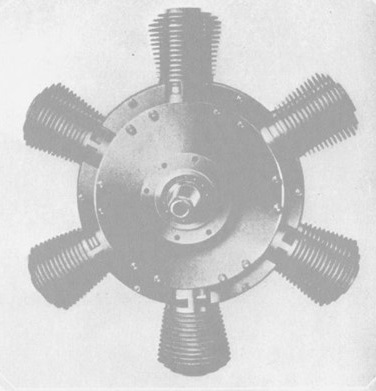
The Murray-Ajax is a 1920s six cylinder fixed radial, air cooled two stroke aero engine. The cylinders are clamped between the two halves of the crankcase eliminating hold down bolts.
The pistons and cylinder heads can be scraped of carbon through the exhausts without dismantling the engine.
The Murray-Ajax supercharger has variable pressure of 1.5 to 10 /b/sq.in.
A starter and propeller hub were available at extra cost.
Rating: 80 hp at 1400 rpm Displacement: 484 cu.in Compression ratio: 6-1 Bore: 4 3/8 in Stroke: 5 3/8 in Diameter: 36 in Length: 26 in Weight: 210 lb Fuel consumption: not more than .065 lb/hp/hr Oil consumption: not more than .04 lb/hp/hr Lubrication: Force feed, 3 outlet pump; scavenger pump Ignition: Dual Scintilla Carburation: Zenith Spark plugs: 2 per cylinder Bosch Price: $1800
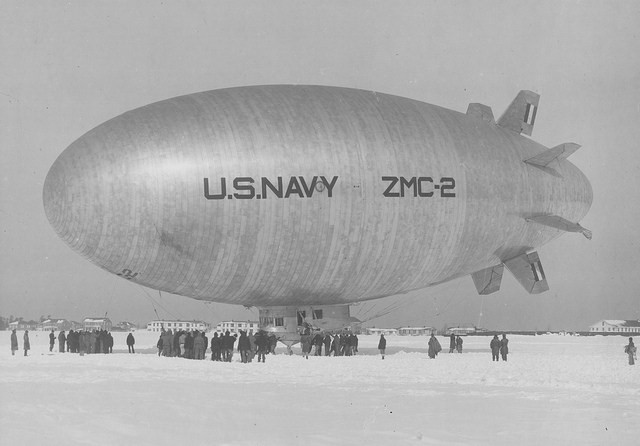
Built by the Aircraft Development Corporation of Detroit in 1929, less famous and successful was the ZMC-2, world’s only successfully-operated metal-skinned airship.
She was operated by the U.S. Navy until 1941. Nicknamed “The Tin Airship”, the ZMC-2 was constructed out of Alclad, an aluminum alloy clad with a very thin layer of pure aluminum. The Navy dismantled her after 752 flights (2265 hours of flight time).