Aichi D1A

Aichi Tokei Denki Kabushiki Kaisha, which was to become a significant aircraft design and construction company during World War II, had been established in Japan during 1899 as a manufacturer of electrical equipment and watches.

Aichi established a working relationship with Ernst Heinkel Flugzeugwerke in Germany and wishing to contend in early 1931 for an Imperial Japanese navy requirement for a two-seat carrier-based dive-bomber, requested Heinkel to design and build an aircraft to meet the navy’s specification. Required for operation with float or wheel landing gear, the resulting Heinkel He 50 prototype flew in the summer of 1931 with twin floats. A second version, with wheel landing gear, was supplied to Aichi under the export designation He 66.

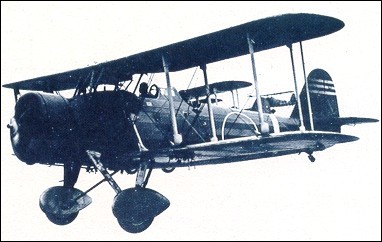
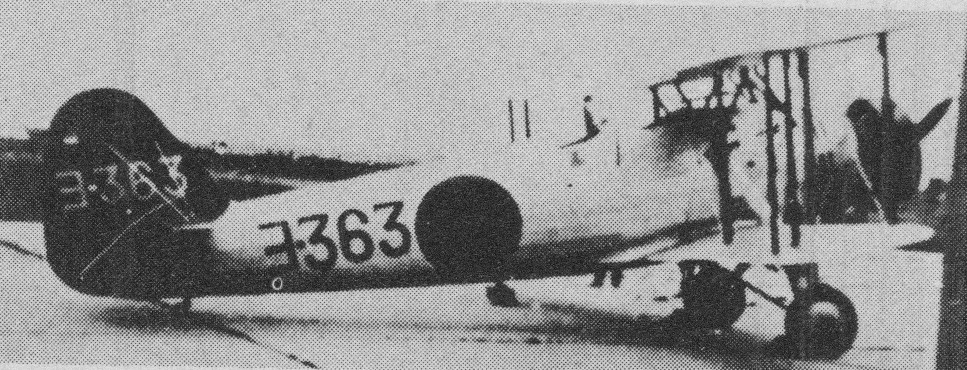
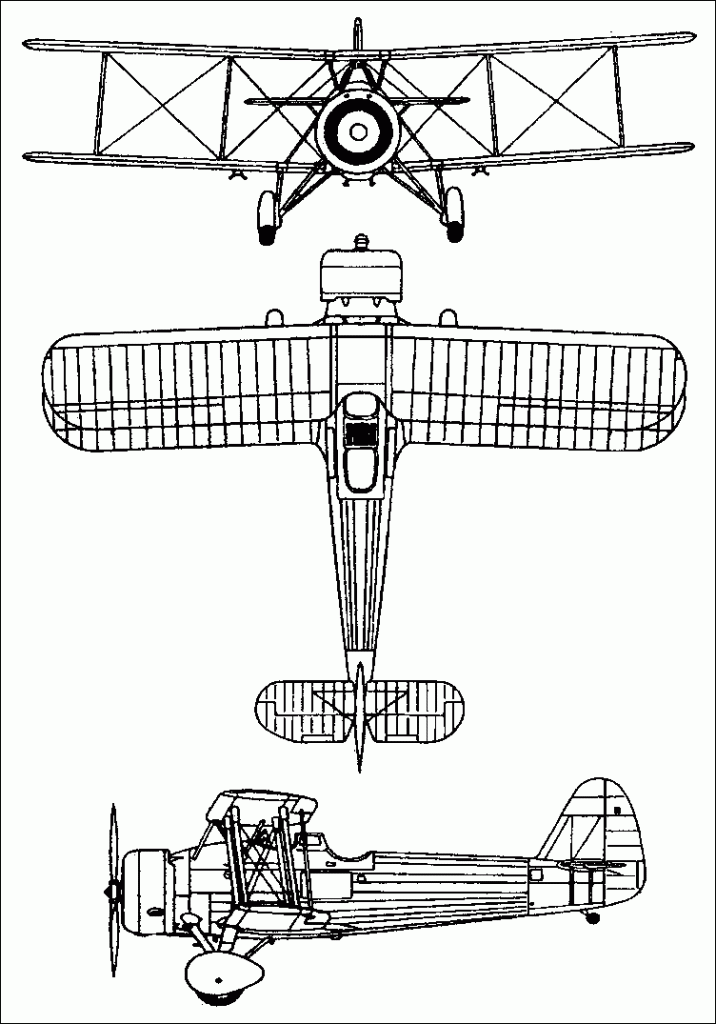
The He 66 was a two-bay biplane of metal construction with metal and fabric covering. The braced tail unit was conventional, and landing gear of fixed tailskid type. As supplied it was powered by a 365kW Siemens SAM-22B (Jupiter VI) radial engine. Modifications carried out by Aichi included strengthening of the landing gear, and installation of a 418kW/580 hp Nakajima Kotobuki 2 Kai 1 radial engine. In this form the Aichi Special Bomber was successful in trials against competing prototypes from Nakajima and Yokosuka, and was ordered into production as the Navy Type 94 Carrier Bomber (Aichi D1A1) in 1934. By 1937 162 production aircraft built, had the radial engine enclosed by a Townend ring, and other modifications included the introduction of slightly swept wings, and replacement of the tailskid by a non-castoring tailwheel. The last 44 had 433kW Kotobuki 3 engines.

Aichi’s design team under Goake created an improved D1A2 with 730¬hp Nakajima, Hikaru 1 engine in a full length NACA cowl, spats and improved windshields. Production of this version totalled 428.

Aichi D1A2

The first A2 flew late in 1936 and by 1940 Aichi had delivered no fewer than 428 as Type 96 carrier bombers. Most saw action in China, one unit dive bombing and sinking the US gunboat Panay in the Yangtze in 1937.
Only a small number of D1A1s remained in use with training units at the time of Japan’s attack on Pearl Harbor, on 7 December 1941. By December 1941 only 68 D1A2s were the serving in second-line units, and these were allocated the Allied codename ‘Susie’.
D1A1
Engine: Nakajima Kotobuki 2 Kai 19 cylinder radial 580 hp
Span: 11.4 m / 37 ft 4.75 in
Length: 9.3 m / 30 ft 6 in
Armament: two synchronized 7.7 mm (0.303 in) Type 92 machine guns, one 7.7 mm (0.303 in) Type 92 machine gun in the rear cockpit. 1 x 250 kg (551 lb) bomb under fuselage, 2 x 30 kg (66 lb) bombs under wings.

D1A2
Engine: 1 x Nakadjima “Hikari 1”, 545kW
Wingspan: 11.1 m / 36 ft 5 in
Length: 9.3 m / 30 ft 6 in
Height: 3.41 m / 11 ft 2 in
Wing area: 34.7 sq.m / 373.51 sq ft
Take-off weight: 2610 kg / 5754 lb
Empty weight: 1516 kg / 3342 lb
Max. speed: 310 km/h / 193 mph
Ceiling: 6800 m / 22300 ft
Range: 930 km / 578 miles
Crew: 2
Armament: 3 x 7.7mm machine-guns, 1 x 250-kg bomb, 2 x 30-kg bombs
Aichi E13A1 / Watanabe E13A

E13A1

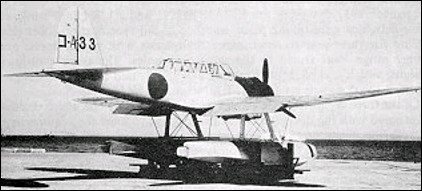
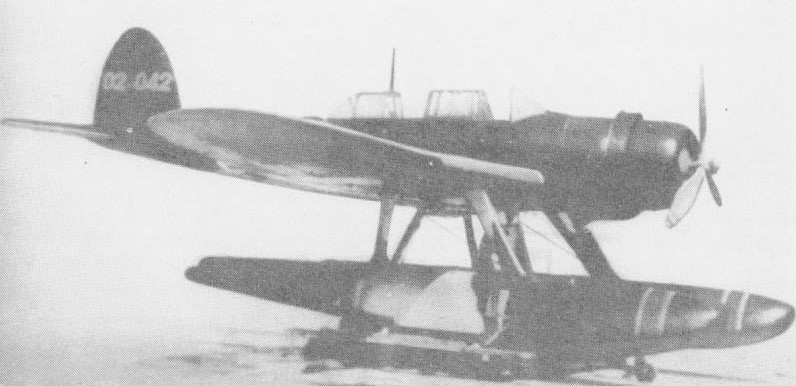
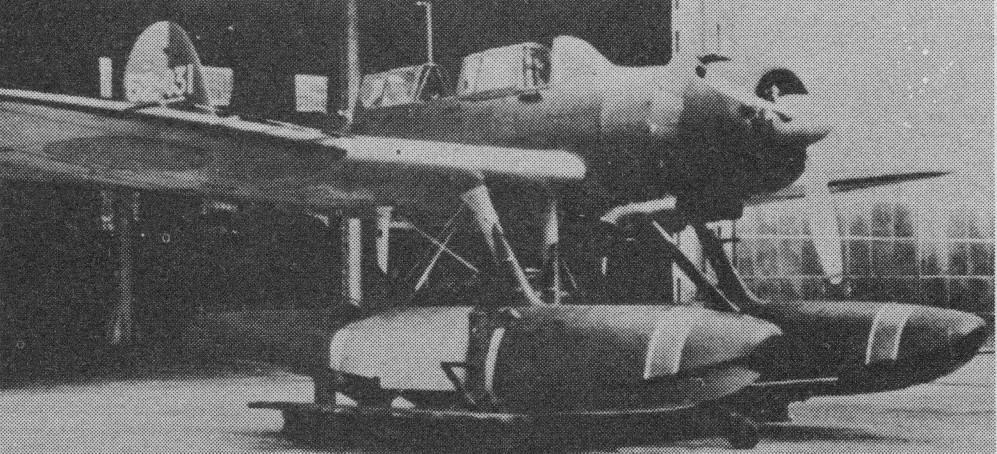
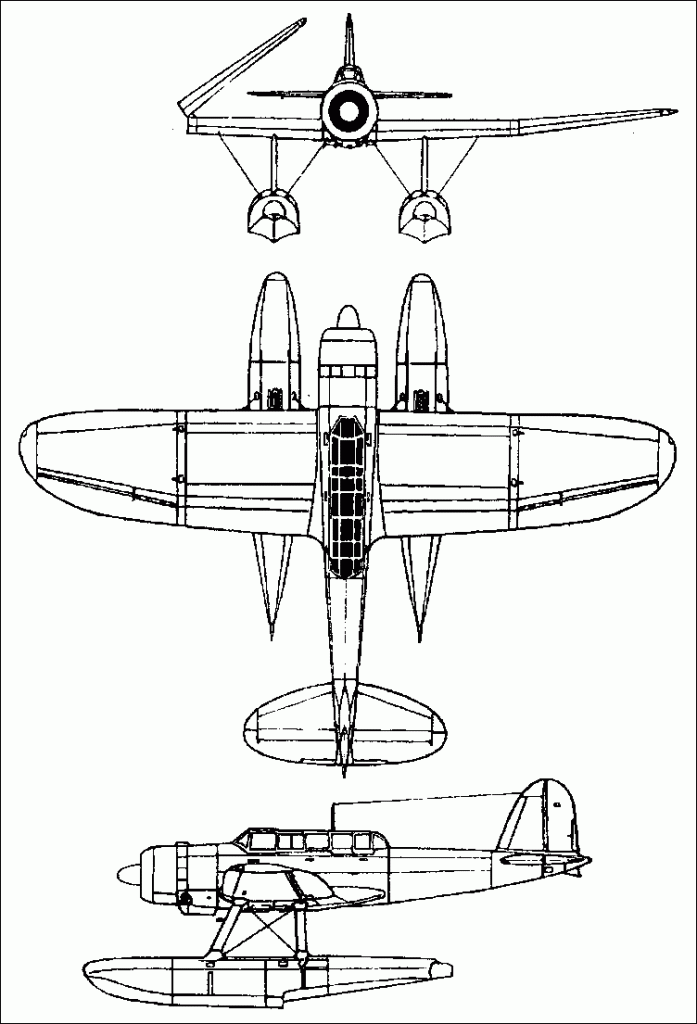
A naval staff specification issued to Aichi, Kawanishi and Nakajima in 1937 for a three-seat reconnaissance seaplane to replace the six-year-old Kawanishi E7K2 float biplane resulted in the Aichi E13A monoplane (of which 1,418 were produced). A prototype was completed late in 1938 and after competitive trials with the Kawanishi E13K in December 1940 was ordered into production as the Navy Type 0 Reconnaissance Seaplane Model 1.

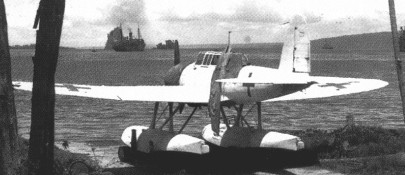
The E13A was a three-crew low-wing monoplane aircraft with pontoons fitted in place of traditional landing gear systems.

Japanese cruisers and seaplane tenders carried the first aircraft from 1941, carrying a single 250kg bomb. The E13 flew a series of raids on the Hankow-Canton railway and soon afterwards E13A1 floatplanes accompanied the Japanese 8th Cruiser Division for reconnaissance patrols during the strike against Pearl Harbour in December 1941.

Though limited in number at first, the E13A series made some initial carrier-based land-strikes and reconnaissance missions that promoted the use of this aircraft type. As such, the floatplane would be fielded regularly with future cruiser groups and mounted to catapults on Japanese battleships. Standard armament would consist of 1 x 20mm downward-firing cannon and a single 7.7mm machine gun in the rear cockpit. External stores were limited to a single 551lb bomb or depth charge as needed.

As production switched to Kyushu Hikoki KK at Zasshonokuma and accelerated, the seaplanes (codenamed ‘Jake’ by the Allies) were embarked in the battleships and cruisers of the Kantais (fleets), including the battleship Haruna and cruisers Chikuma and Tone of Vice Admiral Nagumo’s Carrier Striking Force at the Battle of Midway.

In all, it is estimated that by mid-1943 more than 250 E13A1s were at sea aboard Japanese ships.

The Aichi E13A would serve through to the end of the war, though limited by the power of the new generation of American carrier-based fighters. “Jakes would later be relegated to Kamikaze attacks. In the end, there were 1,418 production models.

Aichi E13A — Palau

First coded ‘June’ when it was thought to be a bomber, ‘Jake’ wasn’t identified as a reconnaissance aircraft until examples were captured. For a while both names were used but ‘Jake’ seemed easier to remember and became the sole code identification.

Gallery

Aichi E13A1a (Jake)
Engine: 1 x Mitsubishi Kinsei 43 14-cylinder radial, 1,080hp.
Length: 37.07ft (11.3m)
Wingspan: 47.57ft (14.50m)
Height: 15.42ft (4.70m)
Empty Weight: 5,825lbs (2,642kg)
Maximum Take-Off Weight: 8,818lbs (4,000kg)
Maximum Speed: 234mph (377kmh; 204kts)
Maximum Range: 1,298miles (2,089km)
Service Ceiling: 28,642ft (8,730m)
Armament:
1 x 20mm cannon (in downward-firing ventral position)
1 x 7.7mm machine gun (in rear cockpit position)
Maximum external bombload: 551 lbs.
Accommodation: 3
Hardpoints: 1

Aichi E11A

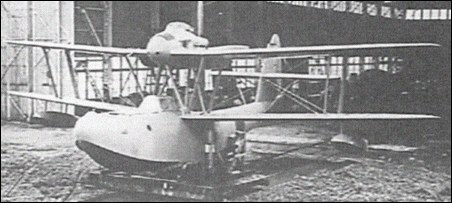
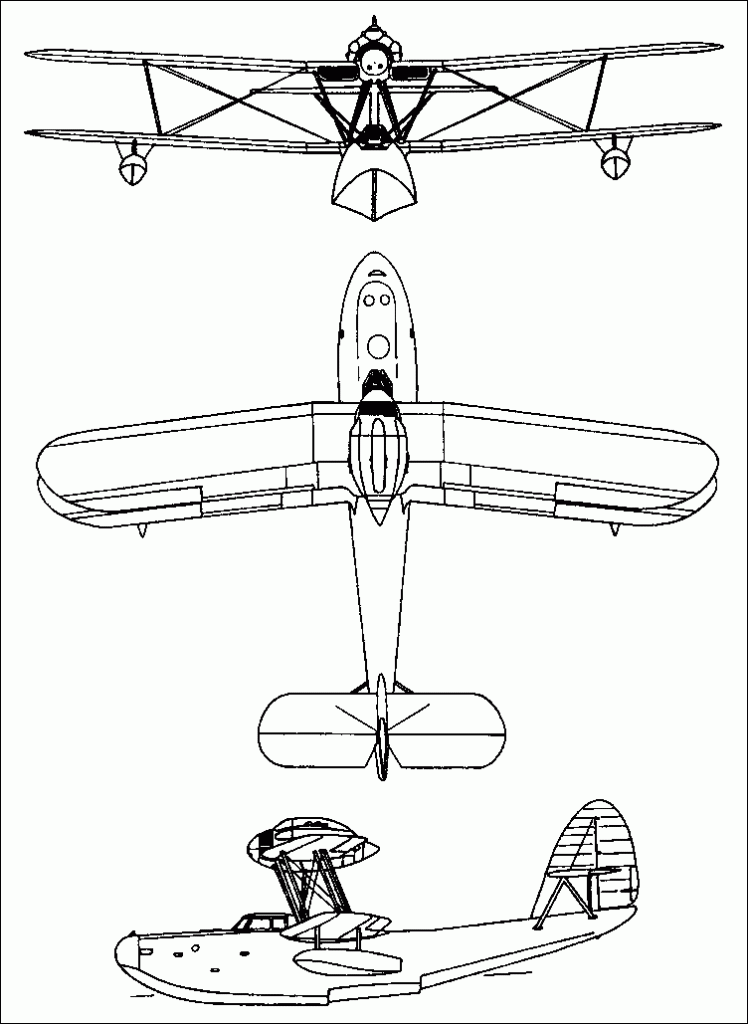
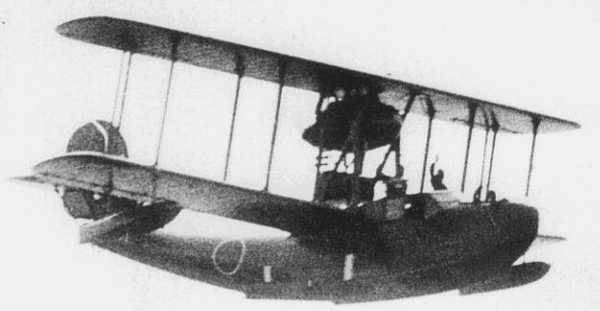
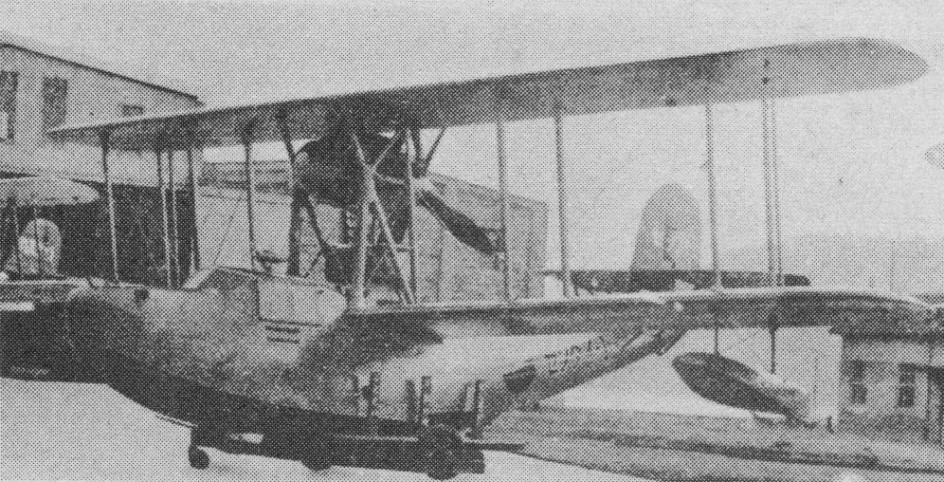
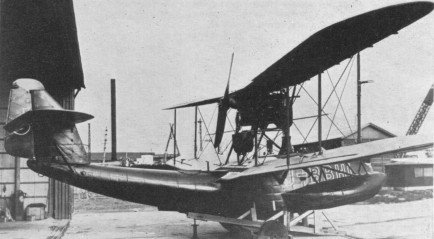
The E11A was planned to a 1936 requirement for a successor to the same company’s E10A as the noctur-nal spotter carried by Japanese battleships and cruis¬ers, and first flew in June 1937. The Aichi prototype was evaluated competitively against the Kawanishi El1K, and ordered into production during April 1938 with the full designation Navy Type 98 Night Recon¬naissance Seaplane, and the short designation E11A1 (reconnaissance seaplane, 11th in series, built by Aichi, 1st model). Including prototypes, production up to 1940 amounted to just 17 aircraft, and these saw limited operational service in the opening rounds of Japan’s Pacific campaign in the Second World War.
Of biplane configuration, the two-step hull carried a braced tail unit, with the tail-plane and elevator mounted almost halfway up the fin. Accommodation was provided for a crew of three, and there was an open bow position that could be used during on-water manoeuvres, or mounting a defensive machine gun. Balancer floats were mounted beneath each lower wing, close to the wingtip. The engine was a Hiro Type 91 Model 22 inline engine, mounted at the centre-section of the upper wing, and driving a pusher propeller with spinner.

E11A1
Engine: 1 x Hiro Type 91 Model 11 inline piston, 620-hp (462-kW)
Maximum speed: 135 mph (217 kph) at 7,875 ft (2,400 m)
Climb to 9,845 ft (3,000 m): 18 min 32 sec
Service ceiling: 14,520 ft (4,425 m)
Range: 1,209 miles (1,945 km)
Weight empty: 4,248 lb (1,927 kg)
Maximum take-off weight: 7,275 lb (3,300 kg)
Wing span: 47 ft 6.5 in (14.49 m)
Length: 35 ft 1.75 in (l0.7lm)
Height: 18ft 0.5 in (5.50m)
Armament: one 7.7-mm (0.303-in) machine-gun

Aichi E10A

In 1934, based on experience of testing the Experimental 6-Shi Night Reconnaissance Flying boat, the Imperial Japanese Navy drew up a specification for a new night reconnaissance aircraft, intended to shadow enemy fleets during the cover of darkness, with orders being placed with Aichi and with Kawanishi.

Aichi’s design, with the company designation AB-12, was a single-engined biplane flying boat of all-metal construction. Its two-bay wings folded rearwards to save space on board ship, while its crew of three were accommodated in an enclosed cabin. It was powered by a pusher water-cooled Aichi Type 91 engine, driving a four-blade wooden propeller.

The first prototype flew in December 1934, and when tested proved to have superior stability to the competing Kawanishi E10K, and so was ordered into production.

The AB-12 entered service in August 1936 with the Japanese Navy as the Type 96 Night Reconnaissance Seaplane, with the short designation E10A. The allied code name ‘Hank’ was assigned before its appearance or manufacturer was known.

Fifteen aircraft were built for the Imperial Japanese Navy serving from 1936, remaining in service until 1941, being phased out in 1941 before the Japanese attack on Pearl Harbour.

E10A
Powerplant: × Aichi Type 91 W-12, 370 kW (500 hp) to 485 kW (650 hp)
Propeller: 4-bladed wooden fixed-pitch pusher
Wingspan: 15.5 m (50 ft 10 in)
Wing area: 52.1 m2 (561 sq ft)
Length: 11.219 m (36 ft 10 in)
Height: 4.5 m (14 ft 9 in)
Empty weight: 2,100 kg (4,630 lb)
Gross weight: 3,300 kg (7,275 lb)
Wing loading: 63.2 kg/m2 (12.9 lb/sq ft)
Power/mass: 0.113 kW/kg (0.069 hp/lb)
Maximum speed: 206 km/h (128 mph, 111 kn) at sea level
Cruise speed: 106 km/h (66 mph, 57 kn) at 1,000 m (3,281 ft)
Range: 1,852 km (1,151 mi, 1,000 nmi)
Service ceiling: 4,120 m (13,520 ft)
Time 3,000 m (9,843 ft): 17 minutes 42 seconds
Guns: 1× 7.7 mm machine gun flexibly mounted in nose
Crew: 3

Aichi AB-2

The Aichi AC-1 was an experimental 330 hp nine-cylinder air-cooled radial engine. First run in 1929, it was used to power the newly designed Aichi AB-2, a catapult-launched reconnaissance seaplane.

The AB-2 with its AC-1 engine is noted for being the first shipboard reconnaissance seaplane and engine combination designed and manufactured entirely in Japan, without foreign assistance. This was a major turning point, not only for Aichi, but for all of the other Japanese aircraft and engine manufacturers, as they no longer need rely on foreign designs.

The engine proved to be a disappointment by not performing as expected. On one test flight, an exhaust fire spread to the airframe and the aircraft was lost, and, soon after, the project ended.

Costruzioni Aeronautiche Giovanni Agusta SpA.

The company was founded by Count Giovanni Agusta in 1923, who flew his first airplane in 1907 and several more were built before the First World War. The firm was revived in 1923, specialising in light aircraft. The MV Agusta motorcycle manufacturer began as an offshoot of the Agusta aviation company at the end of the Second World War as a means to save the jobs of employees of the Agusta firm.

In 1952 Agusta was granted a license to build Bell Model 47 helicopters, the first Agusta-built example flying in May 1954, and over 1,200 were built before production ended in mid-1970s. The company also produced Bell Iroquois models as Agusta-Bell 204B and 205, 212 and 206 JetRanger helicopters. In 1967, under Sikorsky license, production of SH-3D helicopters began, and in 1974 production of HH-3F (S-61R); production of final HH-3F Combat SAR version lasted into mid-1990s. Together with Elicotteri Meridionali, SIAI-Marchetti, and other Italian companies, Agusta became involved in production of the Boeing Vertol CH-47C Chinook. Other license-built helicopters include AB-412EP/Griffon/Maritime Patrol versions of the Bell 412EP and Griffon, AMD-500E version of the McDonnell Douglas MD 500E, and Agusta-Boeing 520N NOTAR helicopter.

The company also had ambitions to design and build its own helicopters. The Agusta A.101 and the Agusta A.106 can be considered the best of its earlier attempts. Others included the AB.102, A.103, A.104, and A.115. Agusta-designed helicopters include the twin-turboshaft A109 civil/military multipurpose type (flown August 1971), A 119 Koala single-turboshaft wide-body helicopter (first flown February 1995), and A129 Mangusta tandem two-seat attack helicopter (first flown September 1983) and its more-powerful International variant with five-blade main rotor as standard (first flown January 1995).

It also produced a small line of aero engines such as the GA.70 and GA.140.

Developed in the 1970s, the Agusta A109 has undoubtedly been the company’s biggest success. The A109 is a commercial and military twin turbine helicopter, of which the latest variants are still in production, hundreds having already been sold.

Agusta acquired 30% of SIAI-Marchetti in 1970, increased its stake to about 60% by 1973 and reached complete ownership in 1983.

In 1983 the Agusta A129 Mangusta anti-tank helicopter partook in its first official flight engagement. It was the first attack helicopter to be designed and produced in Western Europe. However, this helicopter has been a limited commercial success so far, seeing service with the Italian Army, and only now has a modernized variant being developed for the Turkish Army.

The 1980s saw the start of several collaborative projects for Agusta. In 1981 Agusta and Westland of Britain started the EH101 medium-lift naval helicopter project in order to satisfy the requirements of the Royal Navy and the Italian Navy. In 1985 the company started a collaborative programme with the aeronautic industries of Eurocopter Deutschland; Eurocopter, and Fokker in order to develop and produce the NHI NH90, a 9-ton twin engine multi-role medium helicopter in order to satisfy the requirements of their respective countries’ armed forces.

1990s projects include the Agusta A109 Power, an improved version of the A109 (1994) and the Agusta A119 Koala (1997), a single-engine design based on the A109.

Agusta became involved in a notorious Belgian bribery scandal when it was revealed that the company had paid the two Belgian socialist parties who were then (1988/1989) in the government to assist the company in getting the contract for attack helicopters for the Belgian army.

1995: 520 Via Giovanni Agusta, Cascina Costa di Samarate, Varese I-21017, Italy.

In 1998 Agusta formed a joint venture with Bell Helicopter Textron called the Bell/Agusta Aerospace Company. Its aim was to develop the Bell/Agusta AB139 helicopter and the Bell/Agusta BA609 tiltrotor aircraft. Bell later withdrew from the AB139 project, which is now known as the AgustaWestland AW139.

In July 2000 Finmeccanica and GKN plc agreed to merge their respective helicopter subsidiaries (Agusta and GKN-Westland Helicopters), forming AgustaWestland.

Ago Ao 192 Der Kurier

Light Utility Transport, Germany

Ago Ao 192 B Der Kurier
Engine: 2 x Argus As 10 E, 266 hp
Fuel capacity: 108 gal / 410 lt
Oil capacity: 10 gal / 38 lt
Length: 36.024 ft / 10.98 m
Height 11.942 ft / 3.64 m
Cabin area: 30.785 sq.ft / 2.860 sq.m
Cabin volume: 106 cu.ft / 3 cu.m
Freight hold area: 15.823 sqft / 1.47 sq.m
Undercarriage width: 10.105 ft / 3.08 m
Wheel Diameter (Main): 2.264 ft / 0.69 m
Wingspan: 44.423 ft / 13.54 m
Wing chord: 7.054 ft / 2.15 m
Wing chord root: 7.776 ft / 2.37 m
Wing chord tip: 2.559 ft / 0.78 m
Aspect ratio: 7.35
Wing trapezoid ratio: 3.04
V-Form Angle: 7.60
Wing Sweep Angle: 15.60
Wing area: 269.531 sqft / 25.04 sq.m
Area of elevons: 24.111 sqft / 2.24 sq.m
Flap area: 38.966 sqft / 3.62 sq.m
Area of vertical fin: 25.726 sqft / 2.39 sq.m
Rudder area: 10.549 sqft / 0.98 sq.m
Area of horizontal stabilizer: 31.646 sqft / 2.94 sq.m
Area of elevator: 55.758 sqft / 5.18 sq.m
Propeller Diameter: 7.546 ft / 2.3 m
Propeller blades: 2 Wood
Max take off weight: 6306.3 lb / 2860.0 kg
Weight empty: 4024.1 lb / 1825.0 kg
Max. payload weight: 2282.2 lb / 1035.0 kg
Max. weight carried: 2690.1 lb / 1220.0 kg
Max. speed: 178 kts / 330 km/h
Landing speed: 49 kts / 90 km/h
Cruising speed: 154 kts / 285 km/h
Take off distance: 902 ft / 275 m
Landing distance: 771 ft / 235 m
Initial climb rate: 1023.62 ft/min / 5.2 m/s
Climb rate: 826.77 ft/min / 4.2 m/s
Service ceiling: 17060 ft / 5200 m
Range: 594 nm / 1100 km
Endurance: 4 h
Crew: 1 Pilot, 1 Radio/navigator
Payload: 6 Passengers

Ago / Aerowerke Gustav Otto / Aeroplanbau G. Otto and Alberti

Ago / Aerowerke Gustav Otto / Aeroplanbau G. Otto and Alberti
Ago, the initials of Aerowerke Gustav Otto (founded 1912), was first applied in 1911 to products of Aeroplanbau G. Otto and Alberti.
Early products were modified biplane of Gustav Otto (German aviation pioneer, 1883-1926) and developments of Farman designs, but in 1912/13 a seaplane of original design was followed by other types. During 1915/16 Ago developed three pusher reconnaissance types: C.I, C.II and C.III with twin tails.
The C.IV was tractor biplane with sharply tapered wings; about 70 serviceed during 1917/18. Experimental types included seaplanes. The Ago name disappeared until late 1930s, but during the Second World War was again current for Ago 192 Kurier light twin-engined monoplane (built 1938).