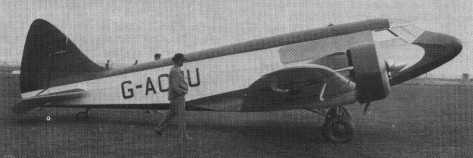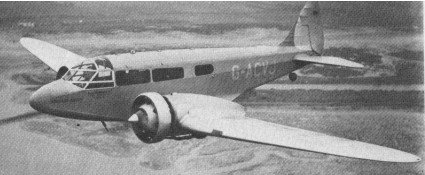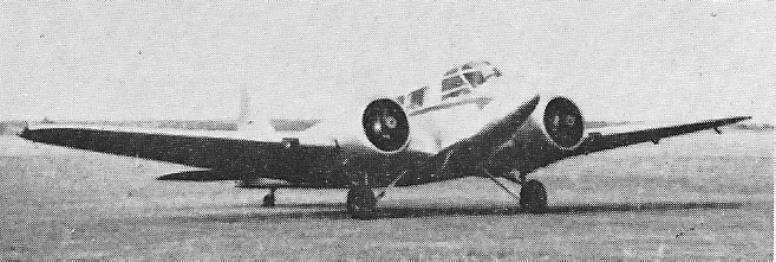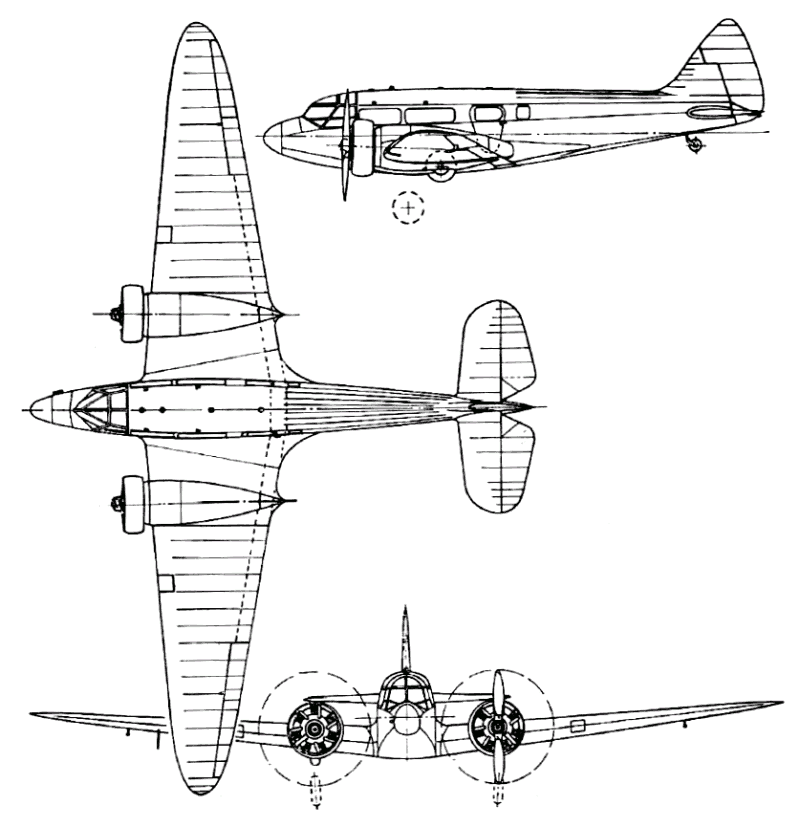
Airspeed AS.10 Oxford / AS.65 Consul

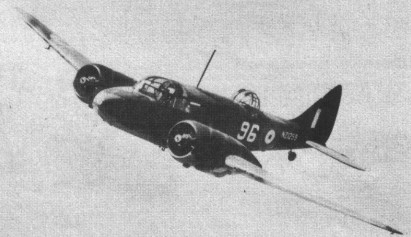
Oxford

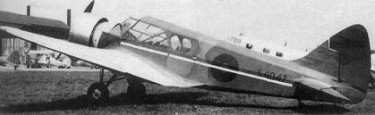
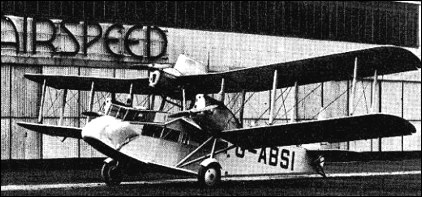
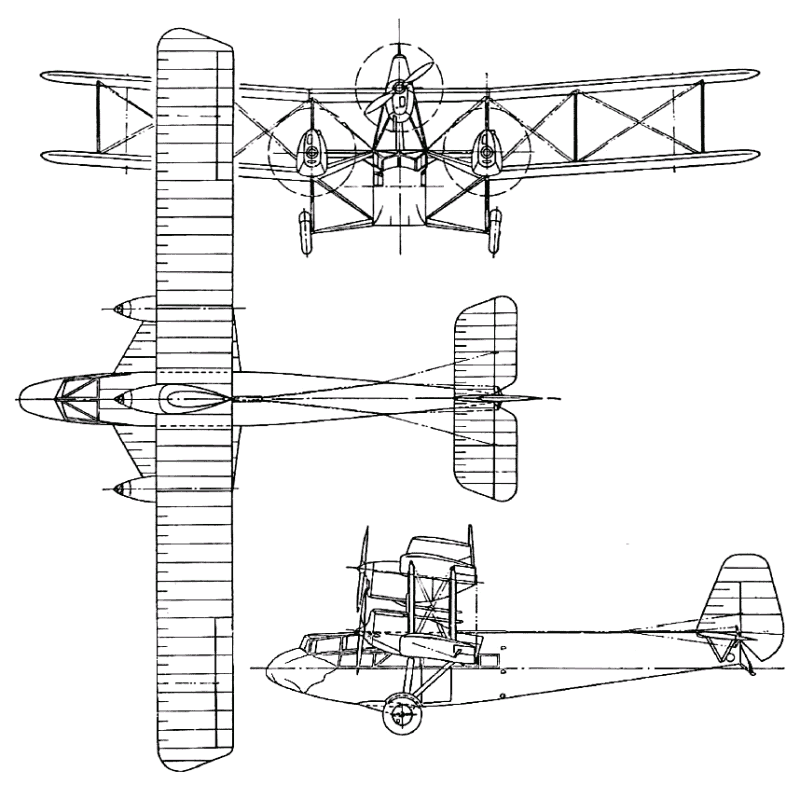
In 1936 Airspeed submited a proposal to meet Air Ministry Specification T.23/36, for a twin-engined trainer. Airspeed’s design for this was based on the AS.6 Envoy, which may have helped the Air Minis-try’s decision to order an initial quantity of 136 AS.l0s.

Airspeed AS.10 Oxford Article

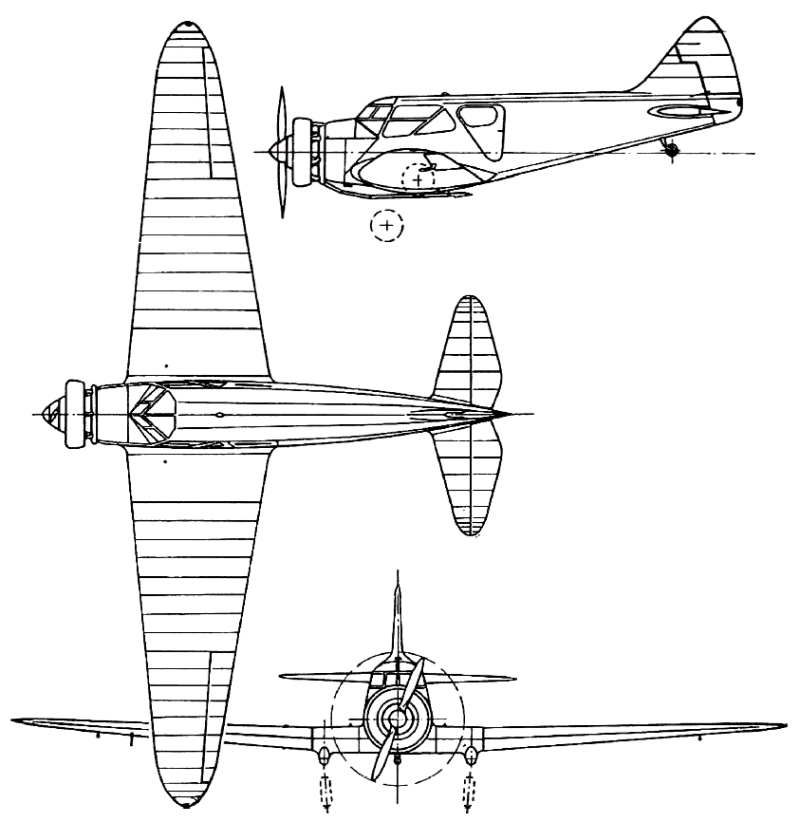
Sharing the AS.6 Envoy wooden construction, tailwheel type retractable landing gear and basic air¬frame, normal accommodation was for a crew of three at any one time, but in addition to seats for a pilot/pupil and co-pilot/instructor, there were positions for the training of an air-gunner, bomb-aimer, camera operator, navigator, and radio operator. Dual controls were standard, making the Oxford suitable for use as a twin-engined trainer; with the dual-control set removed from the co¬pilot’s position, a bomb aimer could take up a prone position and drop practice smoke bombs which were carried in the centre-section well; or the seat could be slid back and a chart table, hinged to the fuselage side, erected for use by a trainee navigator; an aft-facing seat behind the co-pilot position was available for a radio operator; and, in the Oxford 1, an Armstrong Whitworth dorsal gun turret was provided for an air-gunner’s training. The turret was removed from later versions and they were used mainly for pilot training. A hood was also available so that the Oxford could be used for instrument training.
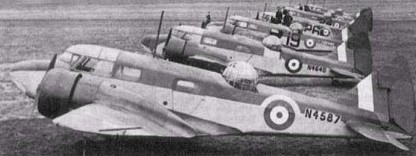
Oxford

The prototype AS.10 Oxford made its first flight on 19 June 1937, and deliveries began in November of that year, with four of the first six going to the RAFs Central Flying School, the other two to No.11 Flying Training School.

One example of a Mk II aircraft was fitted experimentally with two 186-kW (250-hp) de Havilland Gipsy Oueen inline engines. Odd variants included an early Oxford I equipped with special McLaren landing gear, the main units of which could be offset to cater for a reasonable degree of crosswind at both take-off and landing, and one with a tail unit which included twin endplate fins and rudders, especially installed for a series of spin recovery tests.

The outbreak of World War II created a demand for these trainers, not only for use by the RAF, but also by those nations which were involved in the Commonwealth Air Training Scheme. These included Australia (nearly 400 Oxfords), Canada (200), New Zealand (300), Rhodesia (10), and South Africa (700). Examples went also to the Free French air force and, under reverse Lend-Lease, a number were used by USAAF units in Europe. A number were equipped to serve as air ambulances. The Fleet Air Arm also had one training unit, No. 758 Instrument Flying Squadron, equipped with Oxfords from June 1942.

The demand for Oxfords was beyond Airspeed’s productive capacity, the company building a total of 4,411 at Portsmouth, Hants, and 550 at Christchurch, Hants. Other construction was by de Havilland at Hatfield (1,515), Percival Aircraft at Luton (1,360), and Standard Motors at Coventry (750), to give a total of 8,586. Airspeed built its last example in July 1945, and the Oxford remained in service with the RAF at No. 10 Advanced Flying Training School, Pershore, until 1954. Many were supplied after the war to the Dutch air force.
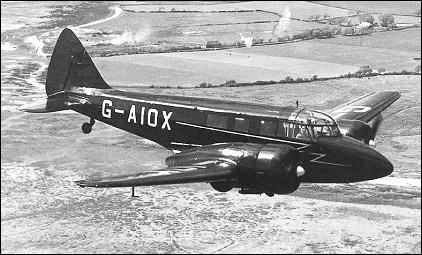
Consul

During 1946-1948 many were converted to Consul civil version status post-war as civilian six passenger aircraft. About 150 were sold worldwide, some conversions and some new builds.

Gallery

Mk I – Weapons trainer, usually fitted with a Armstrong Whitworth dorsal gun turret
Engines: 2 x Armstrong Siddeley Cheetah IX (335hp) or Cheetah X, 280-kW (375-hp).
Propellers: Fixed-pitch
Length: 34.48ft (10.51m)
Wingspan: 53.31ft (16.25m)
Height: 11.09ft (3.38m)
Maximum Speed: 186mph (300kmh; 162kts)
Cruise: 140 mph
Maximum Range: 932miles (1,500km)
Service Ceiling: 19,199ft (5,852m)
Armament: 1 x 7.7mm (0.303-in) Vickers K machine gun in dorsal turret
Bombload: 250lbs internal
Accommodation: 3
Empty Weight: 5,379lbs (2,440kg)
Maximum Take-Off Weight: 7,599lbs (3,447kg)

Mk II – Pilot, radio-operator and navigator trainer
Engines: 2 x Armstrong Siddeley Cheetah IX (335hp) or Cheetah X, 280-kW (375-hp)
Propellers: Fixed-pitch
Top speed: 185 mph
Cruise: 140 mph

Mk.II
Engine: 2 x Armstrong Siddeley Cheetah 10, 395 hp
Span: 43 ft 4 in
Length: 35 ft 4 in
Height: 10 ft 1.5 in
Wing area: 348 sq.ft
Empty weight: 6047 lb
Loaded weight: 8250 lb
Top speed: 185 mph
Max cruise: 156 mph
ROC: 1180 fpm
Max range: 900 mi

Mk III – Radio and navigation trainer
Engines: 2 x Armstrong Siddeley Cheetah XV 318-kW (425hp)
Propellers: Rotol constant-speed
Number built: 1

Mk IV – Testbed for the De Havilland Gipsyqueen IV (Gipsy-Six IIIS,
Turbocharged, 6 cylinder inline engine).

Mk V – Radio and navigation trainer
Engines: 2 x Pratt & Whitney R 985-AN6 Wasp Junior, 335kW (450-hp)
Propellers: Constant-speed
Wingspan: 16.26 m / 53 ft 4 in
Length: 10.52 m / 34 ft 6 in
Height: 3.38 m / 11 ft 1 in
Wing area: 32.33 sq.m / 348.00 sq ft
Max take-off weight: 3269 kg / 7207 lb
Empty weight: 2572 kg / 5670 lb
Wing load: 22.96 lb/sq.ft / 112.0 kg/sq.m
Max. speed at 1250m (4,l00ft): 325 km/h / 175 kts / 202 mph
Service ceiling: 6400 m / 21000 ft
Range: 1127 km / 609 nm / 700 miles
Seats: 3-4
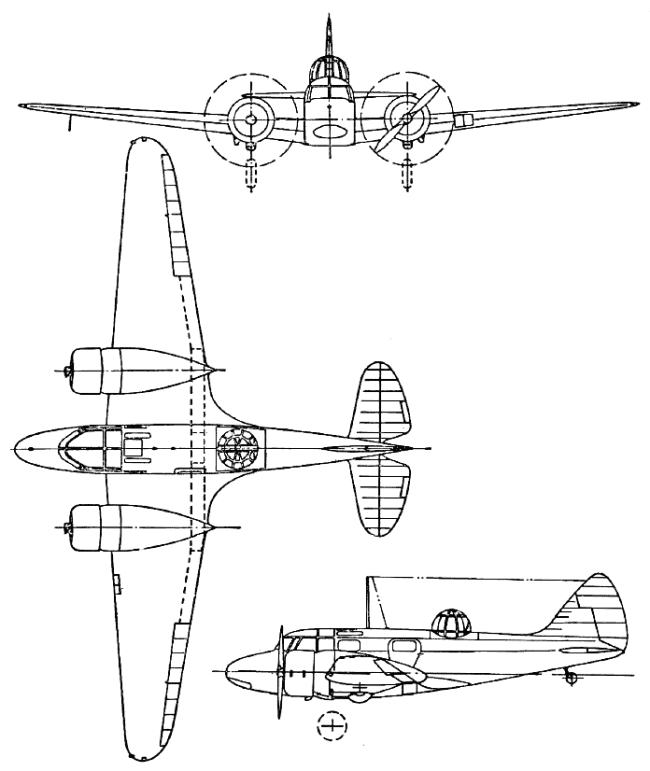
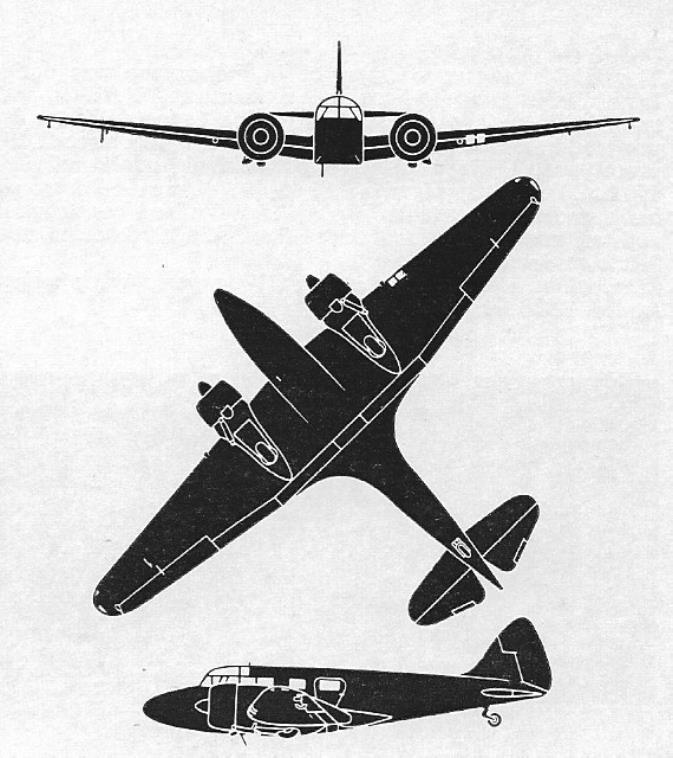
Oxford
Consul

Airspeed AS.8 Viceroy

In parallel with the design work on the Envoy, Tiltman was also working on the Cheetah engined machine for Stack. This required so many variations from the basic Envoy that it was designated the A.S.8 Viceroy.
A batch of six machines was laid down, the initial flight test of the prototype, G ACMT, being scheduled for April 1934. Maximum effort was made on the prototype, but modifications to the airframe and the complexity of building with different engines caused much delay. At Farnborough deep prejudice existed over cantilever wings, and they demanded a 25 per cent increase in the load factor. After four months negotiation, and Tiltman testing a complete wing to destruction proved this increase was unnecessary.
On June 26, 1934, FIt Lt C. H. S. Colman, Airspeed’s test pilot, flew ‘CMT for the first time. It handled extremely well with no snags, and was demonstrated at the Society of British Aircraft Constructors’ Show at Hendon on July 2.
The certification trials at Martlesham Heath were troubled, mainly with the Wolseley engines, in which two fuel pump spindles sheared. A failed gasket in the hydraulic system caused the machine to land with one undercarriage leg half down, with consequent damage and delay, and the fuel tanks developed leaks. The major problem, was that the machine was overweight, and its single engine performance was not satisfactory. It was felt that the new Wolseley IB engines would cure this defect. Generally, the test pilots were extremely impressed with the handling and performance of the Envoy, and a Certificate of Airworthiness was, issued on October 9, 1934.
All entries in the Australia Race had to be handed over to the Royal Aero Club scrutineers by October 14. The manufacturers of the Viceroy’s engines and automatic pilot failed to keep their delivery promises, and the machine did not fly until September 19. To add to Airspeed’s problems, the engine revs were low and the weight high. Its 315 hp Cheetah VI engines gave it a top speed of 210 m.p.h. (338 km/hr) at 7,000ft (2,135m). It cruised at 190 mph (306 km/hr) and, with a massive long range fuel tank in the cabin, had a range of 1,400 miles (2,253km).
To save time, a Martlesham test pilot flew to Portsmouth to carry out the C of A trials. The machine was completely satisfactory and displayed a top speed of 210 mph (338 km/hr).
The MacRobertson Race to Australia was in two sections, absolute speed and handicap with a maximum elapsed time. The Viceroy was so heavily handicapped as to have virtually no chance of success. Stack’s Viceroy was forced down at Abbeville in Northern France with electrical trouble. The weather was foul. He soon took off again for Marseilles, but returned almost immediately. During the evening of October 20 he left for Rome, reached Athens and withdrew from the race. At the end of 1935 Stack and Turner sued Airspeed for “the recission of a hire purchase agreement and repayment of £2,448 paid by them for the Viceroy.” They alleged that Airspeed had been negligent in failing to ensure that the aircraft was fully airworthy. The case was settled out of court, the plaintiffs withdrawing all their allegations and agreeing to return the Viceroy to the Company with a further payment of £1,850.

Airspeed AS.6 Envoy

AS.6 Envoy

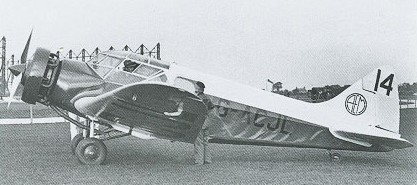
The design of the AS.6 Envoy, began in late 1933 as and Hessell Tiltman, the technical director and chief designer based it on the Courier and using as many common parts as possible and their new Javelin or the Wolseley A.R.9 engine. T. Neville Stack was finally content with a Cheetah-engined machine with a cruise speed of 180 mph and endurance of six hours.

Tiltman followed the same basic construction as the Courier. The airframe was of wooden construction, the fuselage was a semi monocoque structure in two sections, the front fuselage comprising the cockpit, cabin, toilet and luggage compartment and the rear fuselage carrying the tail unit. The doors and windows were built integrally with the sides and the stressed ply skin cut away before assembly. All the major fuselage sections were jig built with longerons of spruce and a skin of birch ply laid at an angle of 450. No diagonal bracing was needed, as the skin carried all the shear loads, bending loads being carried by the longitudinal members.
The fuselage shell comprised two sides, a bottom and a top panel, to form a light, rigid box. The top and bottom curvature was formed with formers and stringers covered in fabric. With accommodation for a pilot and eight passengers the Envoy had all control surfaces fabric-covered, and a retractable tailwheel type landing gear and a variable-incidence tailplane were fitted.

Three versions were produced. The Series 1 and 2 Envoys had a twin spar wing with Warren girder inter spar bracing. The leading edge was covered by 1mm ply, and the wing was fabric covered. It was stiff in torsion and was complicated to build. The Series I (17 examples built) was without trailing-edge flaps; the Series II (13 built) introduced hydraulically operated split flaps which extended from the aileron to wing root on the trailing edge of each wing, and also from wing root to wing root beneath the centre-section. With flaps down the stalling speed was reduced by 11 mph (177 kph). The Series III (19 built) was similar, but had a number of detail improvements. The Series 3 Envoy, introduced at the end of 1936, was built with a ply-covered wing, the two spars forming a torsion box to eliminate the Warren girder bracing and give a stronger and stiffer wing. The production time for the wing was reduced by 35 40 percent. The tail unit was a wooden structure, fabric covered. The undercarriage, operated by a hydraulic handpump, was geometrically and functionally similar to the Couriers.

A.S.6Jc Envoy III

In parallel with the design work on the Envoy, Tiltman was also working on the Cheetah engined machine for Stack. This required so many variations from the basic Envoy that it was decided to identify it as the A.S.8, to be known as Viceroy.

Soon after the 1934 SBAC Show at Hendon, Tiltman received from the Air Ministry an in¬vitation to tender for an Envoy con¬verted to a Coastal Patrol aircraft. Nothing more was heard of the project.

The prototype first flew on 26 June 1934 and 50 were built, including the pro¬totype, by Airspeed for British, Japanese, Czechoslovakian, and Chinese. South Africa acquired seven En¬voys in 1936: three of these were used by the SAAF and had an armament com¬prising a forward firing machine-gun and a dorsal gun turret. The four civil Envoys which made up the total, and which were for operation by South African Air¬ways, were capable of quick conversion for use in a military role. A small number were supplied to the RAF. A number were used in the Spanish Civil War. Mitsubishi also built a number under licence.

Engines fitted to Envoys included the Wolseley AR.9, Scorpio I or Aries III, Armstrong Siddeley Lynx IVC or Cheetah IX, Wright Whirlwind R.760 and Walter Castor II.

AS.6
Engine: 2 x Wolseley AR.9, 149-kW (200-hp)

AS.6A
Engine: 2 x Armstrong Siddeley Lynx IVC, 179-kW (240-hp)

AS.6D
Engine: 2 x Wright R-760-E2 Whirlwind 7, 261 -kW (350-hp)

AS.6E
Engine: 2 x Walter Castor II, 254-kW (340-hp)

AS.6G
Engine: 2 x Wolseley Scorpio I, 186-kW (250-hp)

AS.6H
Engine: 2 x Wolseley Aries III, 168-kW (225-hp)

AS.6J
Engine: 2 x Armstrong Siddeley Cheetah IX, 261-kW (350-hp)
Maximum speed at 2225m (7,300ft): 338 km/h / 183 kts / 210 mph
Cruising speed at 3050m (10,000ft): 290 km/h / 157 kts / 180mph
Service ceiling 6860m (22,500ft)
Range: 1046 km / 565 nm / 650 miles
Empty weight: 1840kg (4,057 lb)
Maximum take-off weight: 2858 kg (6,300 lbs)
Wing span: 15.95m (52ft 4in)
Length: 10.52m (34ft 6in)
Height: 2.9m (9ft 6in)
Wing area: 31.49 sq.m (339sq.ft)
Wing load: 18.66 lb/sq.ft / 91.0 kg/sq.m

A.S.6Jc Envoy III
Engines: 2 x Armstrong Siddeley Cheetah A.S.9, 375 hp
Span: 52 ft 4 in
Length: 34 ft 0 in
Height: 9 ft 6 in
Empty weight: 4340 lb
Loaded weight: 6600 lb
Max speed: 203 mph
Cruise: 170 mph
Range: 620 mi

AS.6JM/C
Engine: 2 x Armstrong Siddeley Cheetah IX, 261-kW (350-hp)
Take-off weight: 2960 kg / 6526 lb
Empty weight: 1920 kg / 4233 lb
Wingspan: 15.9 m / 52 ft 2 in
Length: 10.5 m / 34 ft 5 in
Height: 2.8 m / 9 ft 2 in
Wing area: 31.5 sq.m / 339.06 sq ft
Max. speed: 325 km/h / 202 mph
Cruise speed: 270 km/h / 168 mph
Ceiling: 6700 m / 22000 ft
Range: 990 km / 615 miles
Crew: 2
Passengers: 6

Airspeed AS.5 Courier

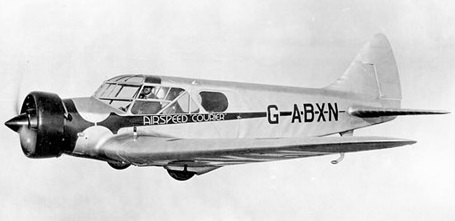
A light transport of conventional all-wood construction, with all control surfaces fabric-covered, of 1935. The first British aircraft with retractable undercarriage to go into production, a five-six-seat cantilever low-wing cabin monoplane.

First flown on 11 April 1933 (G-ABXN) from Portsmouth, four days later it crashed at Portsmouth, receiving minor damage. Repaired, it had another accident at RAF Martlesham Heath. It was used in aerial refuelling experiments by Sir Alan Cobham, using two Handley Page W10s as aerial tankers. The experiments led to an attempt of a non-stop flight to India that started at Portsmouth on 24 September 1934. It ended the same day when Cobham had to make a forced landing at Malta, due to a broken throttle; in the event the Courier was damaged. The aircraft was impressed into the RAF in June 1940, s/n X9427.

Sixteen were built with a total of 15 production aircraft.

Gallery

AS.5A
Engine: Armstrong Lynx IVC

AS.5B
Engine: Armstrong Siddeley Cheetah V, 301 hp
Length : 28.51 ft / 8.69 m
Wingspan : 47.014 ft / 14.33 m
Wing area : 250.048 sqft / 23.23 sq.m
Max take off weight : 3999.9 lbs / 1814.0 kg
Weight empty : 2328.5 lbs /1056.0 kg
Max. speed : 144 kts / 266 km/h
Cruising speed : 126 kts / 233 km/h
Service ceiling : 16995 ft / 5180 m
Wing load : 15.99 lb/sq.ft / 78.00 kg/sq.m
Range : 556 nm / 1030 km
Crew : 1

Airspeed AS.1 Tern

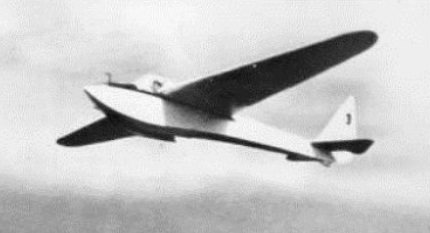
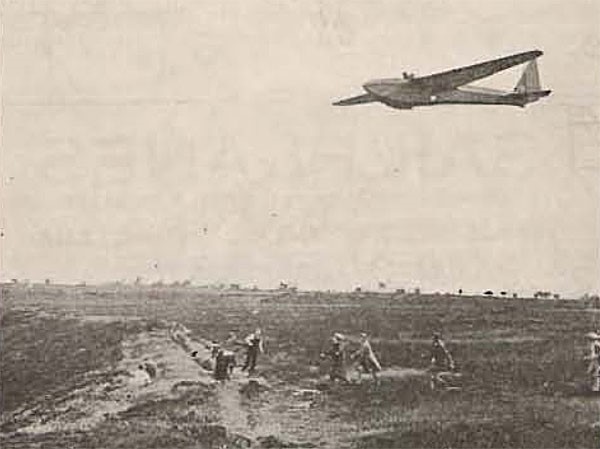
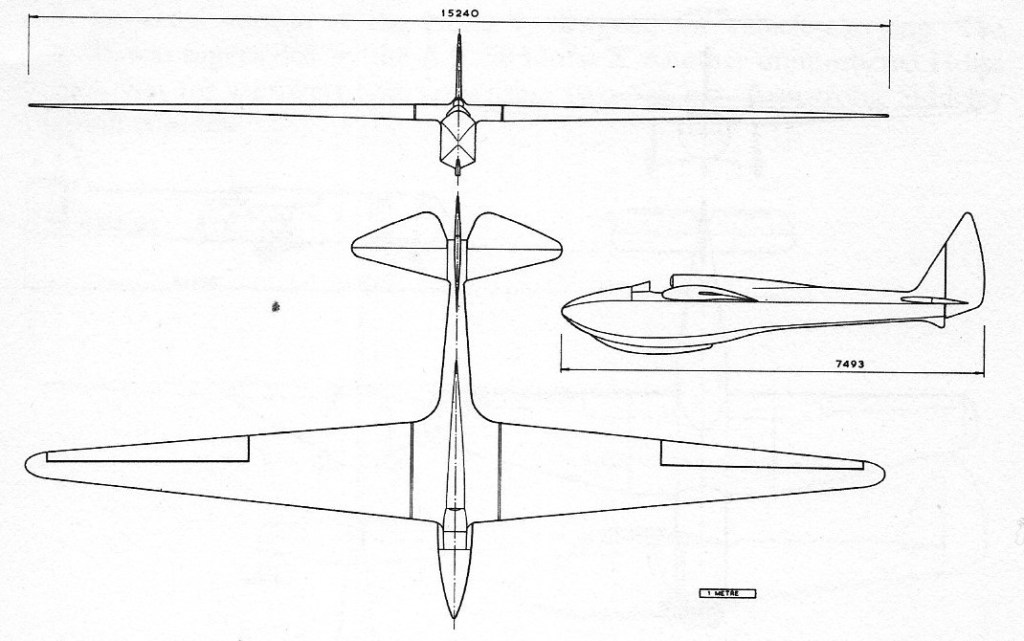
The Airspeed AS.1 Tern was designed by Hessell Tiltman & Nevil Shute Norway to gain records and publicity for the new Airspeed company, as well as to attract orders for new aircraft. Designed for hill- and cloud-soaring, the Tern was a wood-and-fabric cantilever monoplane. It was designed to be dismantled and was advertised for sale at £248. Two examples were built but only one, BGA0190, was originally assembled.

Airspeed AS.1 Tern Article

A single-seat sailplane of conventional spruce and ply construction, designed by A. Hessell Tiltman and Nevil Shute Norway.

The Tern was constructed of wood with a fabric-covered two-spar cantilevered tapered wing with no dihedral. A plywood leading edge was fitted but only as an aerodynamic fairing and not as primary structure. The trapezoidal-section fuselage had plywood lower sides and fabric-covered top decking as well as a cockpit in the leading edge of the centre-section.

The undercarriage was a main skid plus tail skid, with optional detachable wheels. No flaps or airbrakes were fitted.

The prototype first flew in August 1931, at Sherburn-in-Elmet, Yorkshire, and production models were priced at £248, ex-works.

On 24 August 1931 the Tern was flown by Carli Magersuppe from Stoupe Brow, Ravenscar to Scarborough to gain the first British distance record of 8.3 miles (13.4 km). The glider flew a total of 16 miles but only the straight-line distance counted towards the record.

The Tern had some success in establishing gliding records but only one was completed and parts for one more were produced. After languishing through the Second World War the Tern was re-built, using parts from both airframes, but did little flying.

Wingspan: 50 ft 0 in (15.24 m)
Wing area: 201 sq ft (18.7 m2)
Length: 24 ft 7 in (7.49 m)
Aspect ratio: 12.44
Empty weight: 223 lb (101 kg)
Gross weight: 415 lb (188.24 kg)
Maximum speed: 70 mph; 60 kn (112 km/h) (launch / tow)
Cruising speed: 40 mph; 35 kn (65 km/h)
Stall speed: 25 mph; 22 kn (40 km/h)
Lift-to-drag: 25 (theoretical)
Wing loading: 2.06 lb/sq ft (10.05 kg/m2)
Crew: 1

Airspeed

Following the collapse of the British airship programme after the crash of the R101 in France on 5 October 1930, two of the R100 design team based at Howden, near York, established a new company in York to produce light aircraft. They were A. Hessell Tiltman and Nevil Shute Norway and they named the ne company Airspeed Ltd. Tiltman and Norway spent much time seeking capital but with the small capital they had it was decided to build and fly an advanced sailplane to capture as many British gliding records as it could.

A factory was set up in an empty bus garage in Piccadilly, York, and the Tern sailplane was completed by August 1931. It was successful and captured all the available records of height and distance, flown by Carli Magersuppe, and the required capital began to flow into the company.

Airspeed then entered the light aircraft field, moved the factory to Portsmouth.

The Airspeed company was established in February 1931 in York to build the Ferry 3-engined low-performance biplane, designed specifically for short-range pleasure flying (“joy riding”). The prototype Ferry, built to Sir Alan Cobham’s specification, went on tour with his National Aviation Day Displays 1932 and 1933; joined by second example 1932. In 1933 two more Ferries (four only built) acquired by John Sword of Midland and Scottish Air Ferries Ltd.

CEO of the original Airspeed was novelist Neville Shute (real name of Neville Shute Norway), and by the end of 1933 Airspeed had built two Tern sailplanes, four Ferry short-range ten-seat airliners and five Couriers.
Airspeed Ltd moved to Portsmouth in 1934 following an adavantageous agreement for new, free premises in that town’s airport. The company Airspeed Ltd was established in 1934 at Portsmouth, Hants, in association with shipbuilding interests of Swan, Hunter and Wigham Richardson.

In 1940 a transport glider was designed to carry two pilots and 25 troops. This was put into production as the Horsa.

In June 1951, the final merger of Airspeed into de Havilland Enterprise was announced.

Airship Guarantee Company R-100

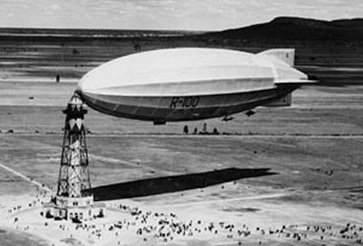
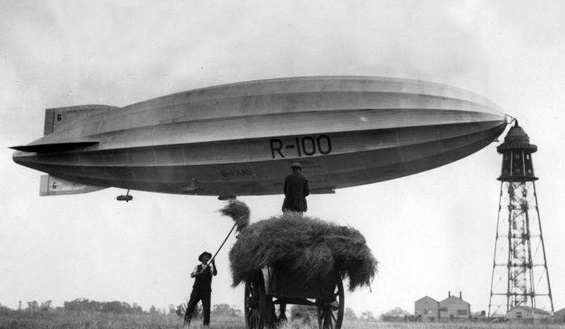
His Majesty’s Airship R100, built by the Airship Guarantee Company, a specially created subsidiary of the armaments firm Vickers-Armstrongs, led by Commander Dennis Burney, in 1929, first flew in November 1929. The R.100 left its shed at Howden and was moored at Cardington on 16 December 1929. It was powered by six 650 hp Rolls-Royce Condor engines.

On December 16, the R100 took off for commercial use on British Empire routes. In July 1930, the R100 made her Transatlantic flight, reaching the Canadian mooring mast at the airport in Saint-Hubert, Quebec in 78 hours having covered the great circle route of 3,300 mi (5,300 km) at an average speed of 42 mph (68 km/h).

The airship stayed at Montreal for 12 days and over 100,000 people visited the airship each day she was there. She also made a 24-hour passenger-carrying flight to Ottawa, Toronto, and Niagara Falls while in Canada. The R100 departed on her return flight on 13 August, reaching Cardington after a 57½ hour flight.

In October 1930 it was broken up for scrap.

Gallery

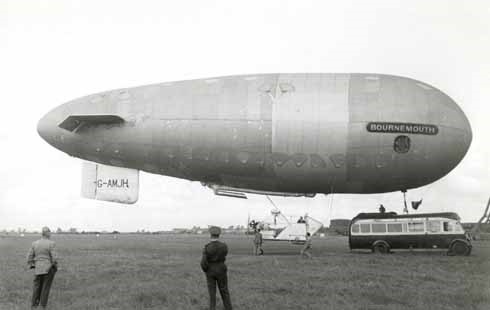
Airship Club Bournemouth

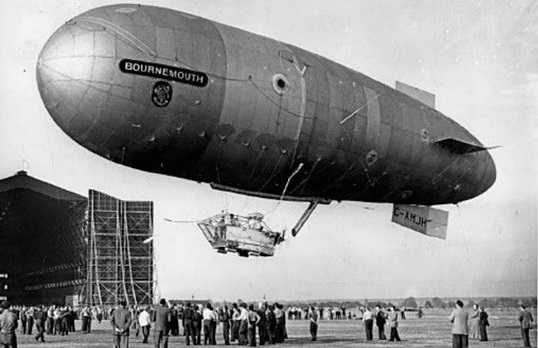
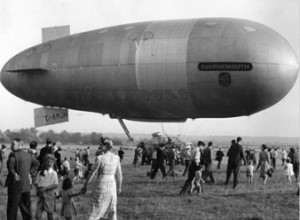
The “Bournemouth” was constructed by the Airship Club launched in 1951. As part of the club, Lord Ventry, Squadron Leader T.P. York-Moore and a small group of enthusiasts wanted to prove that airships could still return after the closure of the British Airship programme in 1932.

Plans were drawn up at Lord Ventry’s Poole home, Lindsay Hall. The little band founded the Airship Club of Great Britain, which they established at Wharncliffe Road, Boscombe. Their premises were formally opened early in 1951 by the Mayor of Bournemouth, Councillor Sydney Thompson. Numerous airship notables lent their support, including former Farnborough superintendent and engineer Major-General Sir John Capper, who had held the first British airship pilot’s licence ever issued. Past head of the Zeppelin company, Dr Hugo Eckener, also joined the club, together with several old airship hands.

The project was funded largely by private enthusiasm, however the Bournemout Corporation made a substantial grant from it’s “Festival of Britain” funds to assist with the completion of the craft and for it’s first flight. This is how the British south coast resort managed to have an airship named after it. The idea being that the completed ship would play a part in the local celebrations of the Festival of Britain year.

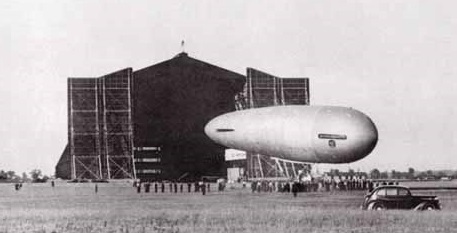
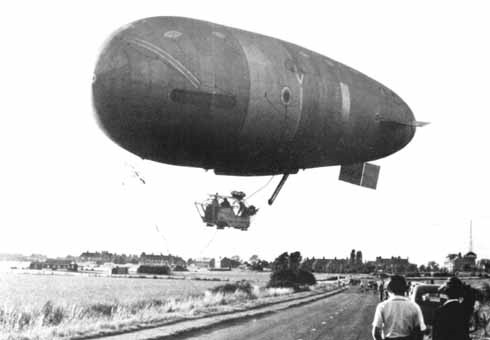
The first airship built in Britain since 1929, the Airship Club built their airship using a gas-bag converted from an old barrage balloon left over from the war. Acquired from the Air Ministry, it set them back £25. The finished airship’s length was just over a hundred feet. Hydrogen was used to inflate her gas-bag and provide lift; although helium was a far safer, non-inflammable gas, none was available. To power the craft through the skies a seventy horse-power Salmson engine from the 1930s was found, and with this it was hoped to achieve a flat-out speed of 35 mph. Suspended beneath the gas-bag by steel cables, the gondola in which pilot and passengers would travel was built from aircraft-gauge steel tube, with a covering of light alloy sheet and clear perspex. The engine was positioned at the rear, a small fuel tank sat on the roof, and four intrepid flyers could be carried.

Although the craft was constructed at Hurn Airport, her hangar there was not available long-term. Drawing on his experience, though, Lord Ventry assured a curious reporter from Flight Magazine that his airship could be safely picketed outside, ideally among trees to protect her from the wind. The plan for Bournemouth, as the craft had been christened, was that she be kept inflated and out-of-doors during all spells of operational activity – and for the flying Lord, this would be as often as possible. Assured by Lord Ventry that an airship is quite amenable to being tethered in the open, and that, with the aid of a protective screen of trees, a small non-rigid can safely ride out a 70 mph gale if properly picketed.

There was some confusion over who was actually allowed to pilot Bournemouth. The Ministry of Civil Aviation was clear on the qualifications for a full airship pilot’s licence, but unsure of the form a provisional licence should take. By 1950 trained airship flyers were very few; as things stood, just a handful of people would be permitted to take charge of Bournemouth, excluding most of the enthusiasts who had helped build her. Meanwhile the government’s Air Registration Board was pondering the safety requirements she should meet, and how to issue a Certificate of Airworthiness for an airship.

The ship was constructed at Cardington, and by mid-1951 the craft was complete, her engine tested in the Hurn workshop, the name and Bournemouth’s coat of arms painted on her gasbag. For flight trials, though, somewhere quieter than Hurn’s airspace was needed. Bournemouth was transported to an old hangar built especially for airships on an RAF base at Cardington in Bedfordshire. It was intended to bring her back to Bournemouth once tests were complete and various sites were considered as potential homes, among them King’s Park, where iron mooring stakes were set into the ground.

Red tape resolved, the airship received her Ministry registration, G-AMJH, which was painted on her fin. Two more helpers joined: engineers Arthur Bell and Joe Binks, both of whom had survived the 1930 R101 airship disaster. On 21 May, Empire Day, Bournemouth was inflated and it was hoped that the inaugural flight would be in time for Festival of Britain celebrations the following month. But the Salmson engine overheated and it was 19 July before a first flight was made.

Lord Ventry was unable to ascend that day. With three crewmen he climbed aboard, but the machine refused to rise from the ground – he was simply too heavy. He removed duffle-coat and jacket and emptied his pockets but there was no improvement. Very reluctantly the Lord vacated his gondola, replaced by a slimmer man. He joined a small group of her builders who watched as Bournemouth made a decorous circuit of Cardington’s perimeter and returned safely.

The third flight was not overly successful as the ship crash landed on the hanger roof when a guy rope snagged when coming in to land. With Thomas York-Moore in command, Bournemouth crashed into a field near Cardington after suffering engine overheating and steering failure.

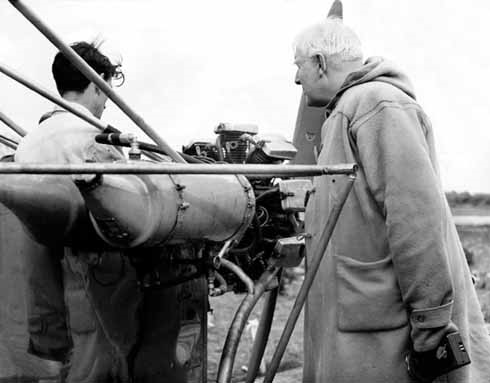
Lord Ventry examines Bournemouth’s Salmson engine

Having a gross lift 3,060lb and useful lift of 13,000lb, the Bournemouth managed three flights in 1951 and then put in for repairs and a chance for the improvements for stability following the crash landing. A further eight flights were managed in 1952. It was found that the first set of steering planes were too small and made her unstable and she had a top plane on the first two testing flights of in 1951, however this was removed. In 1952 a larger set of de Havilland planes were fitted and made the ship quiet controllable. Only eleven flights were made through lack of funds, the last flight made on 16th August 1952, Battle of Britain Day.

The first flight was shown in newsreels around the world and featured in many newspapers of the day. But Bournemouth’s flight had exposed tail-heaviness, together with steering problems. Following modifications, a second flight on 28 July was commanded by Thomas York-Moore. But again the engine grew too hot and to make matters worse, the steering-wheel mechanism failed. Bournemouth came down unexpectedly in a field near her hangar, but nobody was hurt. Adjusted once again, on 17 August she flew with Lord Ventry for the first time. After a 35-minute tour around the local area she returned to Cardington, although one crewman was hurt during her landing, which involved crashing onto the roof of the station’s gymnasium.

Following that episode Bournemouth was deflated. But repairs and more alterations were made and a Certificate of Airworthiness finally obtained. An ex-Bournemouth Royal Blue motor coach arrived, its job to provide a base for a mast to which the airship could moor.

Winter weather interrupted but from spring 1952 several more flights took place. Dogged by incidents, an autumn accident on the ground caused permanent damage to Bournemouth’s gas-bag, which had to be scrapped. By then the Airship Club’s funds were low, and it was decided to wind up the scheme.

Engine: Salmson, 60hp
Length: 108 ft
Diameter: 27 ft
Volume: 45,000 cu.ft

Airship Club

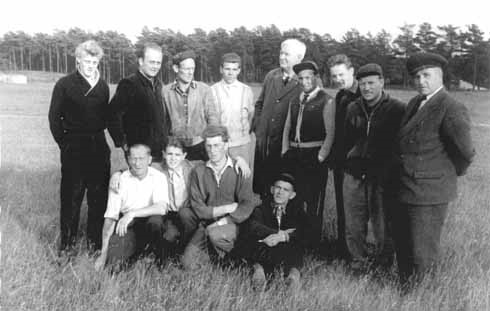
Arthur Eveleigh-de Moleyns, later the seventh Lord Ventry, had a passion for airships and balloons which endured throughout his long life. Born in Ireland in 1898, Lord Ventry was educated at Langton Matravers and later Wellington College, Berkshire. Having spied his first blimp while still at prep school, he made several railway excursions to Britain’s military airship base at Farnborough, Hampshire. There he managed to talk his way past the sentries to admire the huge craft within.

During World War 1 he fought with the Irish Guards but was wounded; while recovering at Branksome Gate Hospital near Poole, he visited Upton’s naval airship station as often as he could. Later he joined the Royal Air Force, commanding No.902 (County of London) Balloon Squadron. Becoming a certified balloonist, Lord Ventry flew frequently, although as he was nearly seventeen stone, the craft had to be reasonably substantial. Lord Ventry flew balloons at home and abroad, studied airship development assiduously, and helped the Air Ministry test its new blimps.

During World War 2, propelled onward by his absorption, Lord Ventry joined the Balloon Command and Intelligence organisation, organising tethered barrage balloons used to protect targets from German bombers. Post-war, he continued to campaign for the use of airships in submarine-spotting and naval convoy protection, long after most people had lost interest in the idea. But in 1950 he hired a hangar at Hurn Airport and, with a small group of supporters, set out to design and construct an airship of his own. Part of his wartime work had been assessing various types of observation and barrage balloons, and he believed that such a craft could be adapted to become a motorised airship.

Among his colleagues in the venture was retired RAF officer Squadron Leader Thomas York-Moore, who had commanded airship units and flown such craft back in World War 1. Other helpers included engineer Eric Eveleigh-Smith, pilot Alec Leith and one-time airship coxswain Fred Twinn.

Lord Ventry (centre) with a group of fellow airship enthusiasts

Plans were drawn up at Lord Ventry’s Poole home, Lindsay Hall. The little band founded the Airship Club of Great Britain, which they established at Wharncliffe Road, Boscombe. Their premises were formally opened early in 1951 by the Mayor of Bournemouth, Councillor Sydney Thompson. Numerous airship notables lent their support, including former Farnborough superintendent and engineer Major-General Sir John Capper, who had held the first British airship pilot’s licence ever issued. Past head of the Zeppelin company, Dr Hugo Eckener, also joined the club, together with several old airship hands.

Encouragement came from the Royal Aeronautical Society and the Air League of Great Britain. Bournemouth Corporation brought more tangible support, in the form of a substantial grant toward the airship made from the town’s Festival of Britain funding. Lord Ventry also contributed, while the government’s Ministry of Supply lent equipment and tools.

Lord Ventry retained his love of airships until the end of his years. He died in 1987 aged 88, leaving a collection of airship-related written material assembled over nearly a lifetime, much of which is carefully preserved by the Royal Aeronautical Society. Among the papers is a booklet he wrote in 1953 entitled The Small Airship, describing his own craft.

Of Bournemouth herself, it seems nothing remains.