The A-20 of 1929 was a two-seat twin-engined aircraft.
Inter-Wars
Albert T.E.1
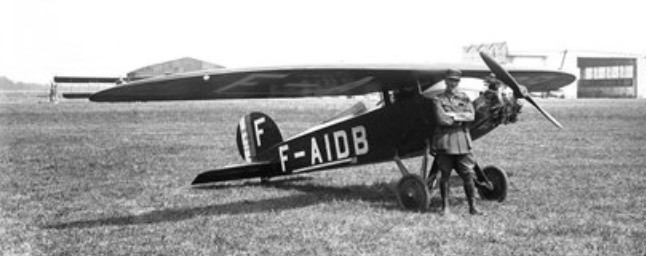
Albert built T.E.1 piloted by Thoret participated in the French Light Plane Competition, Orly, in September 1928. He is ranked fifth.
Five TE-1 were built, with a 40hp Salmson 9-Ad. Some Albert planes crashed due to wing flutter—still rather unknown at the time and particularly affecting cantilever wings insufficiently rigid in torsion.
Bellanca acquired the license and planned to build it in the USA as “Baby Columbia,” but apparently the project failed. At least one TE-1 demonstrator must have reached the USA.
The Albert TE-1 parasol monoplane is the subject of an 8-page 1926 report (perhaps a NACA paper, though the source is identified as “CASI”) available from NASA’s archives, entitled: “Albert TE-1 training airplane.” Their online report server summarizes the abstract as: “The TE-1 is designed for the economical training of pilots and is a single seat parasol cantilever monoplane. It is nearly entirely made of wood, using a 40 HP. air-cooled Salmson A.D. 9 engine, and weighs 255 kg empty.” The report Document ID is 19930089227 and Accession ID is 93R18517 and Report Number is NACA-AC-23. The NASA notes say related information is found in L’Aeronautique, April, 1926. . “December, 1926.”.; and in NACA Aircraft Circular 23.
Avions Albert / Albert Aeronautique
Formed 1926 as Avions Albert to build Albert (license Tellier- Duhamel) high-wing light monoplanes. Renamed Albert Aeronautique; in early 1930s built A-61 and A-70 two-seat monoplanes and A-140 racer for 1933 Coupe Deutsch de la Meurthe, though this latter machine was not completed in time. Construction was of wood. A-20 of 1929 was a two-seat twin-engined aircraft.
Avions Albert went bankrupt in 1935.
Albatros Werke DE
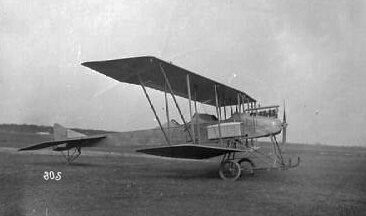
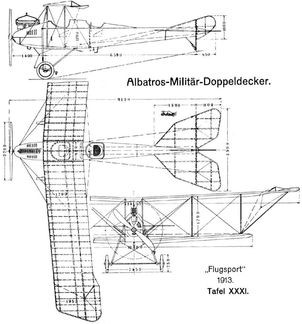
The 1913 Albatros DE of 1913 doppeleindecker type, quite likely a training machine, given the skids and the apparent comfort provided to the instructor in back. Its 6-cylinder engine was either a Daimler Mercedes D.I or D.II of 100 or 120 hp.
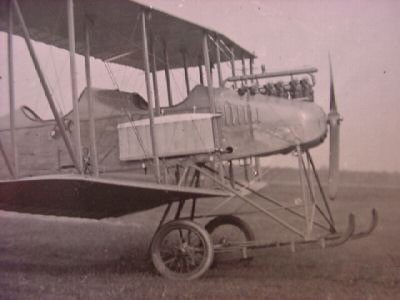
Very similar to the Albatros Uhu Schuldoppeldecker (training biplane) dating from 1913, described by Lange as having many of the same qualities.
Span: 47’3″
Length: 29’10”
Weight empty: 1389 lbs
Speed: 49 mph
Albatros Werke AL 101
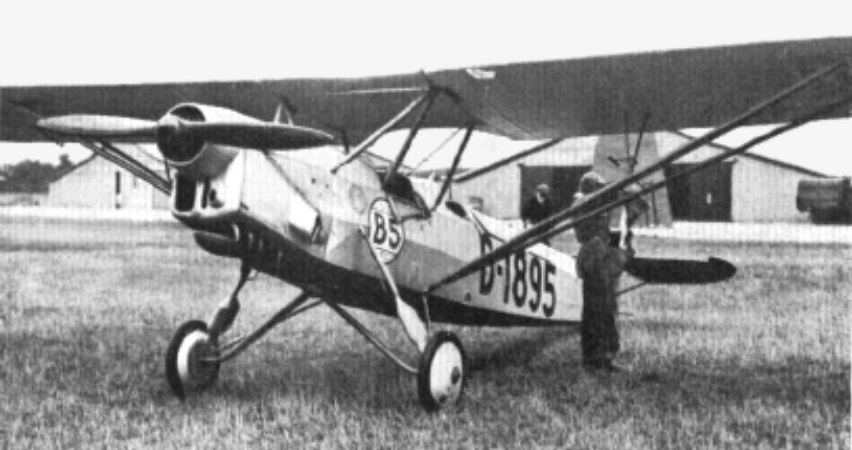
The Albatros Al 101 was a 1930s German trainer aircraft. It was a parasol-wing monoplane of conventional configuration, and seated the pilot and instructor in separate, open cockpits.
Albatros Werke L.76 Aeolus
A reconnaissance aircraft of 1927. Only six were built.
L 76
Engine : BMW VI 5, 592 hp
Length: 28.051 ft / 8.55 m
Height: 12.27 ft / 3.74 m
Wingspan : 41.864 ft / 12.76 m
Wing area : 299.239 sqft / 27.8 sq.m
Max take off weight : 5380.2 lbs / 2440.0 kg
Weight empty : 3561.1 lbs / 1615.0 kg
Max. speed : 127 kts / 235 km/h
Wing load : 18.04 lb/sq.ft / 88.0 kg/sq.m
Crew : 2
L.76a
Albatros Werke L.75 Ass
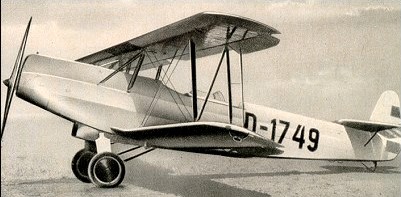
A two-seat advanced training biplane, of which 41 models were produced including the prototype. The models were: a,b,c,d,E,F,DSA and DSB.The engines varied with the prototype having a BMW IVa all other models featuring the BMW Va except for the b,F and DSB which used the Junkers L5. Performance for all models was reasonably similar.
Engine: 1 x BMW VA, 280kW
Take-off weight: 1835 kg / 4046 lb
Empty weight: 670 kg / 1477 lb
Wingspan: 12.5 m / 41 ft 0 in
Length: 10.0 m / 32 ft 10 in
Max. speed: 208 km/h / 129 mph
Cruise speed: 180 km/h / 112 mph
Ceiling: 5100 m / 16750 ft
Range w/max.fuel: 1950 km / 1212 miles
Crew: 2
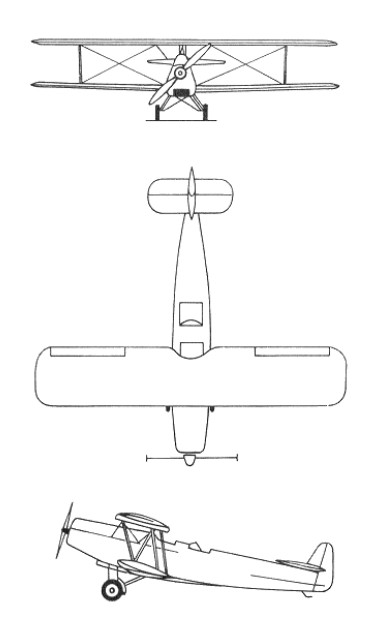
Albatros Werke L.73
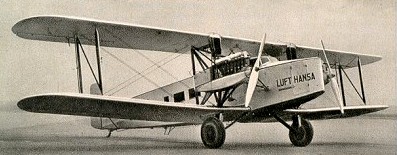
An eight-passenger biplane airliner of 1926, powered originally by two 179kW BMW Va engines, but subsequently fitted with 268kW BMW Vas. Four were built for Luft-Hansa, flying night sections of several domestic and international routes until the early 1930s. Two were later sold to Bulgaria
A luxurious aircraft for its time, the L73 featured reclining seats for all passengers.
Engine: 2 x BMW IV, 280kW
Wingspan: 19.7 m / 64 ft 8 in
Length: 14.6 m / 47 ft 11 in
Height: 4.7 m / 15 ft 5 in
Wing area: 92.0 sq.m / 990.28 sq ft
Take-off weight: 4600 kg / 10141 lb
Empty weight: 1690 kg / 3726 lb
Max. speed: 158 km/h / 98 mph
Cruise speed: 145 km/h / 90 mph
Ceiling: 3000 m / 9850 ft
Range w/max.fuel: 600 km / 373 miles
Crew: 2
Passengers: 8
Albatros Werke L.58
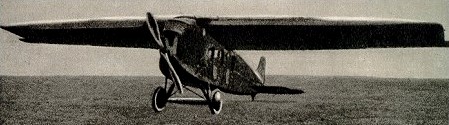
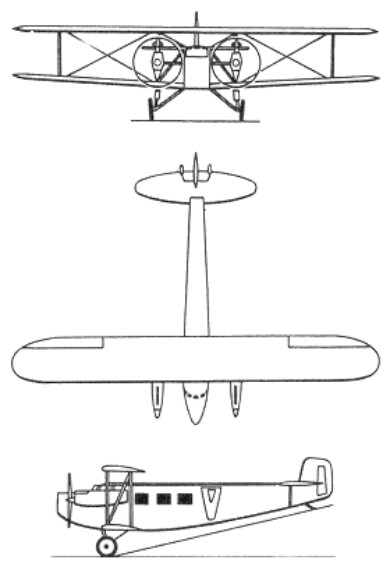
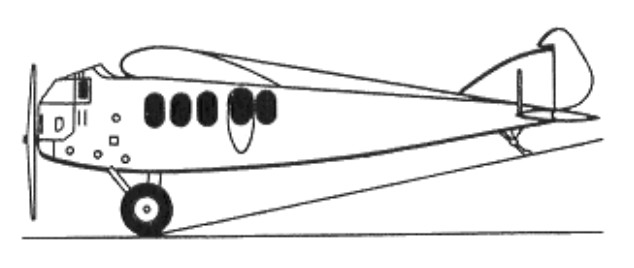
A high-wing monoplane airliner of 1923 built in two models. The earlier model carried 5 passengers and was powered by the Maybach engine.
The later model carried 6 passengers and was powered by a Rolls Royce Eagle VIII. This engine gave a lower wing loading a greater endurance of 5 hours, as opposed to 4 hours of the Maybach, and an improved range of 735km.
The L.58 was constructed of wood with three-ply covering. The enclosed cabin carried six passengers under the wing and the pilot was seated immediately forward of the wing leading edge in an open cockpit. Petrol and baggage were carried in the wings. Seven were built with two sold to the Soviet Union.
Engine: Maybach IV, 190kW
Take-off weight: 2250 kg / 4960 lb
Empty weight: 1370 kg / 3020 lb
Wingspan: 18.0 m / 59 ft 1 in
Length: 10.9 m / 35 ft 9 in
Height: 3.6 m / 11 ft 10 in
Wing area: 44.5 sq.m / 478.99 sq ft
Endurance: 4 hr
Max. speed: 160 km/h / 99 mph
Cruise speed: 140 km/h / 87 mph
Ceiling: 3000 m / 9850 ft
Range w/max.fuel: 450 km / 280 miles
Crew: 2
Passengers: 6
Engine: Rolls Royce Eagle VIII, 179kW
Wingspan: 18.0 m / 59 ft 1 in
Length: 10.9 m / 35 ft 9 in
Height: 3.6 m / 11 ft 10 in
Wing area: 44.5 sq.m / 478.99 sq ft
Endurance: 5 hr
Range: 735km
Crew: 2
Passengers: 5
Albatros Werke AG / Albatros Flugzeugwerke Gmbh / Pilot-Flugtechnische
Established late 1909 at Berlin-Johannisthal by Dr Walter Huth as Pilot-Flugtechnische. The name was only briefly retained. At Albatros first built biplanes and (under license) French Antoinette monoplanes, but from 1911 was building highly efficient biplanes and in 1912 turned attention also to marine aircraft. In 1912 and later Hellmuth Hirth and others broke several records on Albatros landplanes. Development benefited from participation of Ernst Heinkel who, in 1913/14, designed a large single-engined three-bay biplane, forerunner of numerous reconnaissance and multipurpose types. The C III of 1915 remained in service until early 1917 and was built by several other firms. Historic line of single-seat fighters began with D.I and D.II, in service 1916. D.III (1917) was a “vee-strutter”; and W.4 a single-seat fighter seaplane, less known than landplanes though 118 were delivered to the German Naval Air Service. The decline of Albatros land fighters was marked by the company building the Fokker D.VII in 1918. The first civil aircraft was a single-engined six-passenger L.58 high-wing cantilever monoplane of 1923; L.73 was twin-engined transport; L.75 was biplane trainer and L.79 a single-seat biplane with symmetrical wing-section specially developed for inverted flight. L.100 was low-wing monoplane; L.101 a parasol monoplane. One Albatros biplane was adapted for advanced research (water tanks for trim, cameras etc.). Aircraft manufacture ceased 1930 and the company merged with Focke-Wulf 1930/31.

