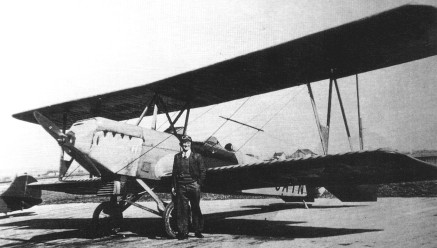
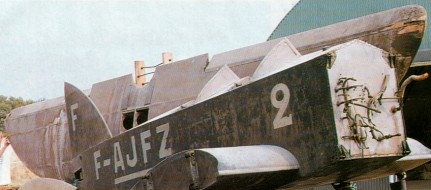
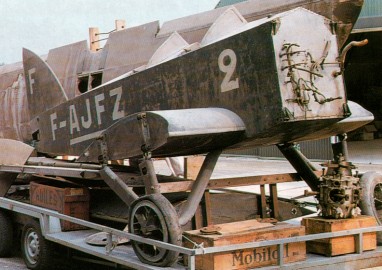
Heraclio Alfaro was a Spanish aviator who was knighted at the age of 18 by King Alfonso XIII of Spain for designing, building, and flying Spain’s first airplane. He developed a barrel engine for aircraft use which was later produced by the Indian Motorcycle Company as the Alfaro. It was a perfect example of the “put in everything” design, as it included a sleeve valve system based on a rotating cylinder head, a design that never entered production on any engine. It was later developed further for use in the Doman helicopter by Stephen duPont, son of the president of the Indian Motorcycle Company, who had been one of Alfaro’s students at MIT.
Aircraft Engine & Development Co Inc, Boston MA. USA
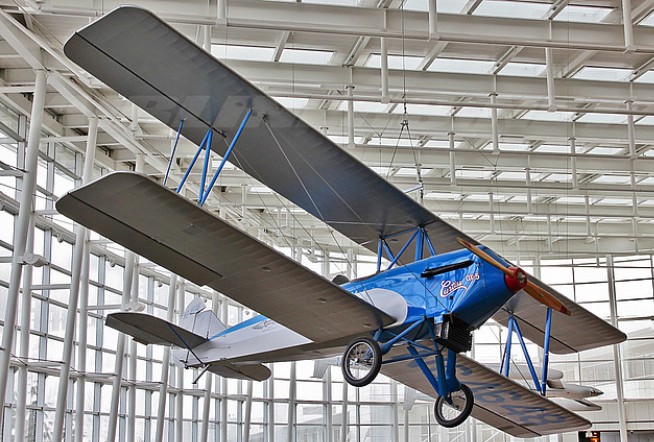
Designed by Daniel Noonan the Eaglerock was extensively redesigned as the A-1 by Al Mooney in 1926. The design had folding wings, and Warren-truss wing struts with no wire rigging, and based on surplus Longren components.
The name came about from an injured Golden Eagle cared for as a pet by factory employees, appended with “Rock,” honoring the nearby Rocky Mountains.
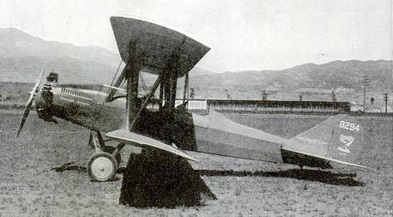
The 1925 Alexander Eaglerock had trouble get¬ting off the ground at Denver, where it was being built, because its wing area was too small. Mooney improved and lengthened the wing. He made the up¬per and lower wings exactly alike and left out the center section. So where the fuselage fitted into the bottom set, it gave them a longer span.
Eaglerock Combo-Wing
First flying on 19 September 1925, powered with a 100 hp Kinner engine the Eaglerock sold at $3907 flyaway factory. The craft was available with $1562.80 down and the balance in twenty semi-monthly installments of $128.94. Powered by a 150 hp Hisso A the flyaway price was $3230, or $1800.00 down and twenty semi-monthly installments of $107.25. Powered by a 165 hp Wright J-6 the flyaway price was $3397, or $2238.80 down and twenty semi-monthly installments of $182.71.
Eaglerock Kinner 100 hp
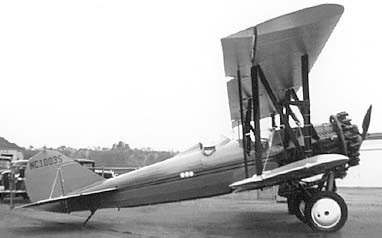
The second Eaglerock design, the 1926 Eaglerock A-1 or New Eaglerock, had 40’0″ lower wing.
Alexander Eaglerock A-1 NC10035
First flying on 7 January 1926, piloted by Capt Cordner, the A-1 sold for $6,500, or $2,250 less motor, receiving DoC approval (ATC 57) in 1928.
895 of all Eaglerocks were built 1927-32. Company records claim a total of about 450 Eaglerock models built by the end of 1928.
The 1931 Flyabout D-1 (ATC 439) was designed by Proctor Nichols as a two-place cabin monoplane, priced at $1,465. Four Flyabout D-1 were built; one unlicensed static test model, one prototype – NX447V, and two converted to D-2 – NC528Y and NC11061.
The Flyabout D-2 of 1931 featured a larger fin and rudder and was priced at $1,590.
The 1935 Aircraft Mechanics Flyabout D-2 (ATC 449) improved production model varied slightly in length and was priced at $1,450.
Seventeen D-2 were built of which two were converted from D-1.
1923: (Julian Don) Alexander Film Co 3385 So Broadway Englewood CO. USA
1924: Purchase of Longren Aircraft Co as Alexander Industries, and Alexander Flying School.
1925: Alexander Aircraft Co Formed August 1925 at Colorado Springs, Colorado, as division of Alexander Industries Inc. then of Denver.
1928: Colorado Springs CO.
Concentrated on Eaglerock three-seat civil biplane with Curtiss OX-5 engine. When supplies of this cheap engine exhausted (1928), redesigned aircraft for other engines. Eleven Eaglerock biplanes still registered in USA in 1960s. D-2 was two-seat strut-braced high-wing cabin monoplane. Low-wing Bullet series designated by firearm calibers (.22, .32, .45 etc.).
Company succumbed to US financial depression, but continued manufacture as Air Mechanics Inc., and in 1934 designed a five-seat low-wing monoplane.
1932: Aircraft operations into bankruptcy.
1934: Reorganized as Aircraft Mechanics Inc fdr: Proctor W Nichols, W F Theis 3200 N Nevada St Colorado Springs. USA
Air Mechanics Inc was a revival of Alexander Aircraft Company, partly by former employees. Conducted service department of Alexander products, and during the 1930s made D-1 and D-2 two-seater monoplanes of new design.
Allison Airplane Company, established in 1920 to build a small single-seat high-wing monoplane known as the Alco Junior Coupe. Powerplant was a single 40 hp Szekely 3- cylinder radial air-cooled engine.