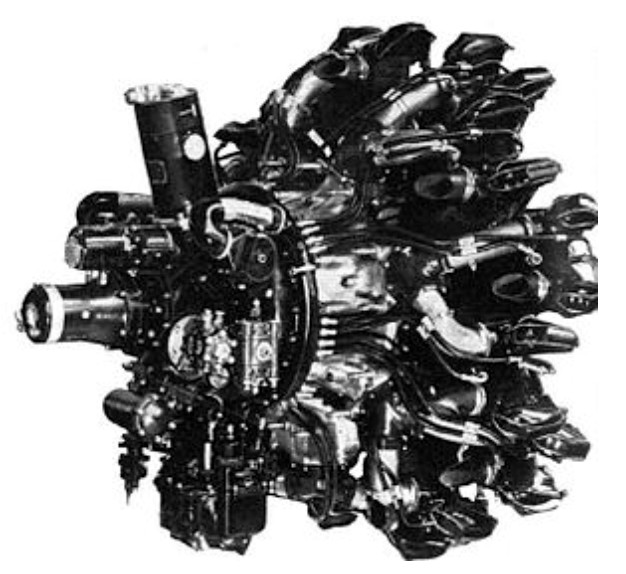
The Alvis Pelides was an unflown British air-cooled radial aero engine first developed in 1936. The Pelides Major was a projected but unbuilt development as were the Alcides, Alcides Major and the Maeonides Major, the Alvis aircraft engine range taking their names from Greek mythology.
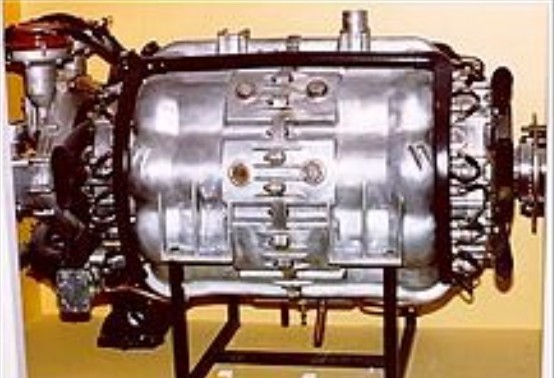
The Pelides was the first aero engine of Alvis design, the company had previously built the French Gnome-Rhône Mistral Major under license. With the two companies working closely together the 14 cylinder radial layout of this engine retained metric dimensions but substituted metric screw threads with British fasteners such as BSF and Whitworth. Material specifications were different as were the detail design of internal parts such as the crankpin. The Pelides passed a 50 hour Air Ministry type test in 1937 where it produced 1,065 hp (794 kW) but no aircraft application was found and only 15 engines were built. The onset of the Second World War caused the abandonment of any further development of the Pelides and its related designs.
Variants (projected): Pelides Major The Pelides Major was a projected but unbuilt version retaining the same dimensions as the Pelides but with improvements to the supercharger.
Alcides and Alcides Major The Alcides of 1937 was another projected medium supercharged two row radial engine but was planned to have 18 cylinders with a displacement of 3,314 cu in (54.24 L) and a power output of 1,300 hp (969 kW). Again the Alcides Major was an improved fully supercharged version.
Maeonides Major Also designed in 1937 was the unbuilt supercharged Maeonides Major, effectively a smaller version of the Pelides with a displacement of 1,158 cu in (19 L) and a power output of 650 hp (485 kW).
Specifications:
Pelides Type: 14-cylinder, 2 row, supercharged air-cooled radial piston engine. Bore: 5.75 inch (146 mm) Stroke: 6.5 inch (165 mm) Displacement: 2,359.8 cu in (38.7 L) Diameter: 52 in (1321 mm) Dry weight: 1,190 lb (540 kg) Valvetrain: Two pushrod-actuated poppet valves per cylinder with sodium-cooled exhaust valve. Supercharger: Single speed, single stage. Fuel system: Heated Zenith carburettor Fuel type: Petrol, 87 Octane Oil system: Dry sump Cooling system: Air-cooled. Power output: 1,000 hp (746 kW) at 2,400 rpm (rated power) Compression ratio: 5.5:1 Power-to-weight ratio: 0.84 hp/lb (1.4 kW/kg)
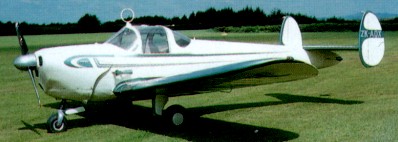
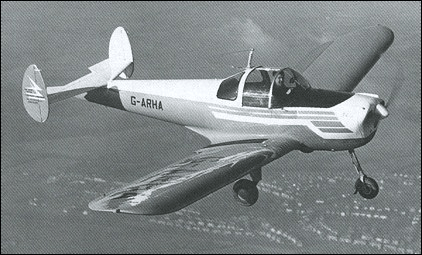
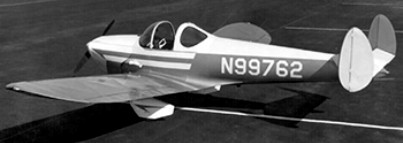
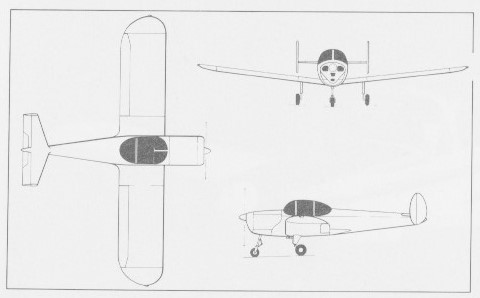
The Ercoupe originated from aeronautical engineer Fred Weick and industrialist Henry Berliner. Henry invited Fred to join his privately owned Engineering Research Corporation (ERCO) to build a commercial version of an earlier Weick design, the W-1A. The prototype first flew in 1937 as the model 310, and was constructed of metal, with the outer panels of the wings covered with doped fabric to lessen weight. The fuselage aft of the cockpit consisted of four sheets of aluminium that were riveted together on the flat, and wrapped around four bulkheads. The wing structure was equally simple with a single main spar located at 25 percent chord and a small false spar where the ailerons were attached. A sheet metal cover extended round the wing leading edge, back to the aft edge of the spar. This both increased the wings structural rigidity and ensured the crucial part of the aerofoil would maintain shape. Initial test flights revealed that the basic design was sound but the designers introduced numerous refinements to optimise the characteristics. Refinements were needed in the engine mounting, the up elevator limitation, the fin arrangement and the wing filleting. The production version was assigned ERCO job No 415C and had a 12 inch longer fuselage to increase longitudinal damping. The aeroplane went into production in 1940 and was available with rudder pedals or with a simplified control without rudder pedals. Equipment offered varied between models, ranging from no radio or gyro instruments to a reasonably complete fit on the later models. A series of flight tests to trial various fillets and other design features were carried out and in the end the outer portion of the wing did not stall at all, even at full aft elevator. This was due to three factors. Firstly, the wing root so definitely stalled that the spanwise lift distribution was broken down in the centre, and the outer wing panels acted somewhat in the manner of two separate low aspect-ratio airfoils and could go up to a higher angle of attack before stalling. Secondly, the pitching moment of the main wing changed as the centre portion stalled in such a way as to tend to decrease the wings total average angle of attack. Thirdly, the loss of lift in the centre of the wing reduced the downwash on the tail, thus reducing the effectiveness of the elevator. With all three factors at work, even full aft elevator was insufficient to cause the outer portions of the wing, which in this case comprised most of it, to stall. Lateral stability and control were therefore maintained throughout the entire range of speed and angle of attack, at least in power-off flight. With the 40hp engines these characteristics were maintained, however with the installation of the more powerful 65hp Continental engine modifications were required. The increased slipstream required a further limitation to the up elevator travel to obtain satisfactory power-on stalling characteristics, but then the tail could not be lowered as much as desired during take-off and landing. This problem was overcome by giving the leading edges of the wings a sharply pointed contour for a distance of a few inches adjacent to the fuselage. This caused the air passing over the wing root to break away earlier at high angles of attack even with full power on, thus returning the wings stall characteristics back to those of the earlier model. One of the more significant design changes during the flight testing stages was the replacement of the conventional single fin with twin fins and resulted from the two-control flight trials. The undercarriage is designed to allow the aeroplane to be landed crabbed, and the Ercoupe has no flaps. The US CAA (forerunner of the FAA) purchased the first four aircraft produced and gave them an exhaustive evaluation. A thorough comparison between two groups of trainees with no previous experience was carried out. One group trained in Ercoupes, the other in Piper Cubs. The results were striking, one of the Ercoupe students soloing after only two hours and fifteen minutes of dual instruction. The average time being four and a half hours. The CAA went on to reduce the time required to solo an Ercoupe from the usual eight to five.
Although the first production model of the Ercoupe was ready in 1940, the war blocked further development of the project until the postwar boom, when it looked as though the little company were off and running as it turned out nearly 5,000 aircraft during the first year of production. Production resumed in 1945 with models 414 E, F and G appearing between 1947 and 1949. Finally, in 1951, production ceased when the bottom dropped out. Forney Manufacturing Company acquired production rights for Engineering and Research Corporation’s Ercoupe 415 two-seat light aircraft in April 1955. The first production Forney F-1 Aircoupe flew on September 1956 and it was later offered as the Fornaire Execta, Explorer, and Expediter.
Fornair F-1A Aircoupe
The rights were sold in 1960 to the city of Carlsbad, New Mexico. Air Products took over production between 1960 and 1962, and then it passed to Alon Aircraft in 1964.
1946 Engineering & Research Ercoupe 415-C
Two ex-Beech employees formed Alon Inc and bought assets, jigs, tools and engineering of the Ercoupe and planned to deliver 30-50 planes in 1964 at $8000 each, with a 100 hp Continental engine.
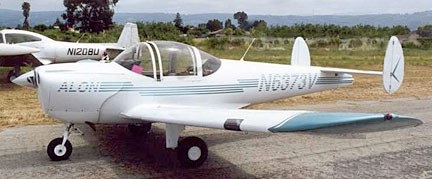
Alon called its airplane—still virtually unchanged from the original Ercoupe—the Aircoupe A-2. The Alon version did have rudder pedals and a modified landing gear, which on some models is a backward- bending, spring-steel gear leg rather than an oleo strut. The Alon A-2 also featured a blown sliding-bubble canopy instead of the lift-up type fitted on earlier models. Alon Aircoupes had attractive upholstery, and all flight gauges were shock-mounted on a floating subpanel in front of the pilot. Dual toe brakes were standard, operated by a bar running across and above the rudder pedals.
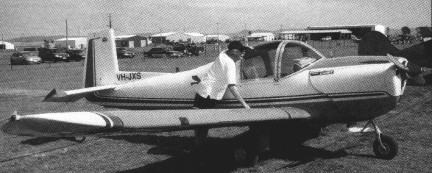
The 1964 A2 Aircoupe was a modernized continuance of Forney Aircoupe with conventional three-control system. 245 were built.
Alon A2 N6373V
Mooney Aircraft purchased the Aircoupe rights in 1968, changed the double tail to a single tail, and sold the airplane with as the Mooney Cadet. The A-2 Cadet and M.10 Cadet were produced until 1970, when Mooney sold out to Aerostar.
M.10 Cadet
In 1974 Univair Aircraft Corporation purchased the type certificates for the Ercoupe and all its successors from Mooney. They have since been manufacturing nearly all the airframe items necessary to keep any model ‘coupe’ airworthy. From a low point of round 2000 Ercoupes registered as airworthy in 1965, the number has recovered to round 2700 entering the nineties.
Experimental barrel engines for aircraft use were built and tested by Mr J.O. Almen of Seattle in the early 1920s, and by the mid-1920s the water-cooled Almen A-4 (18 cylinders, two groups of nine each horizontally opposed) had passed its United States Air Corps acceptance tests. It however never entered production, reportedly due to limited funds and the Air Corps’ growing emphasis on air-cooled radial engines. The A-4 had much smaller frontal area than water-cooled engines of comparable power output, and thereby offered better streamlining possibilities. It was rated at 425 horsepower (317 kW), and weighed only 749 pounds (340 kg), thus giving a power/weight ratio of better than 1:2, a considerable design achievement at the time.
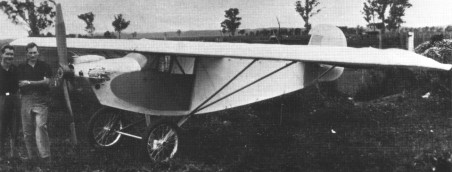
The Allison Airplane Company was established in 1920 to build a small single-seat high-wing monoplane known as the Alco Junior Coupe. Powerplant was a single 40 hp Szekely 3- cylinder radial air-cooled engine. The Alco Junior was a kitset aircraft circa 1929.
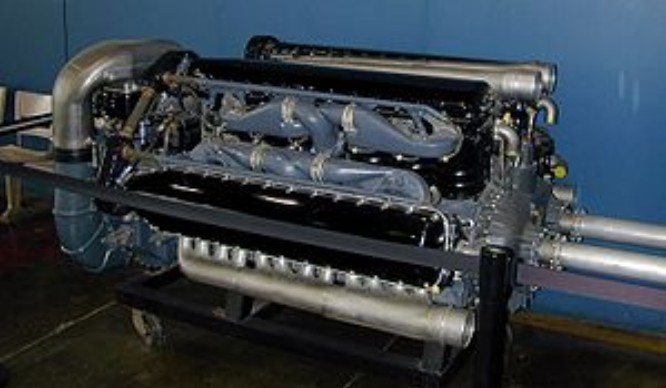
The Allison V-3420 was a large experimental W-configuration American piston aircraft engine, designed in 1937.
In 1937, at the behest of the United States Army Air Corps, the Allison Engine Company agreed to design and build a large-displacement high-power aircraft engine. The resulting liquid cooled V-3420 was essentially a pair of 12-cylinder Allison V-1710 in engines mated to a common crankcase with a 30° angle between the inner cylinder banks. The crankshafts of the two V-1710 engines were geared together to drive a common propeller shaft. Most V-3420 parts were interchangeable with those for V-1710-E and -F engines.
The V-3420 had a power-to-weight ratio of 1.6 kW/kg or 1 hp/lb, excellent for its time. It was envisioned as a powerful yet compact engine for several advanced Air Force projects of the day, including the Douglas XB-19, the Boeing XB-39 Superfortress, the Lockheed XP-58 Chain Lightning, and the General Motors P-75 Eagle. As none of these designs reached full-scale production, only about 150 V-3420s were built.
Variants: V-3420-A16R (-11)
V-3420-A16L (-13) left hand rotation of propeller, 1-stage supercharger with 1-stage turbo-charger and intercoler
V-3420-A18R (-17)
V-3420-A24 Supercharger ratio 7.2:1
V-3420-B (-23) Similar to the -A but with mechanically driven supercharger in two variable speed stages.
Specifications:
V-3420-A18R (-17)) Type: 24-cylinder turbosupercharged double-“Vee” liquid-cooled piston engine Bore: 5.5 in (139.7 mm) Stroke: 6 in (152.4 mm) Displacement: 3,420 in3 (56 L) Length: 97.7 in (2,482 mm) Width: 60.0 in (1,421 mm) Height: 38.7 in (863 mm) Dry weight: 2,655 lb (1,204 kg) Valvetrain: Single overhead camshaft per 6-cylinder block, two intake and two exhaust valves per cylinder, sodium-cooled exhaust valves. Supercharger: Single-speed one-stage gear-driven supercharger Turbocharger: General Electric turbocharger with intercooler Fuel system: Bendix-Stromberg PR-58B3 three-barrel injection-type downdraught with automatic mixture control. Fuel type: 100/130 Octane Oil system: Pressure fed at 60-70 psi (4.2 – 4.9 kg/m²) Cooling system: Liquid-cooled with a mixture of 70% water and 30% ethylene glycol, pressurized. Power output: Take-off 2,600 hp (1,940 kW) at 3,000 rpm at 46.0 inHg / +8.0Lb boost for 15 minutes Military 2,600 hp (1,940 kW) at 3,000 rpm at 25,000 ft (7,625 m) for 15 minutes Normal 2,100 hp (1,565 kW) at 2,600 rpm at 25,000 ft (7,625 m) maximum continuous power Max. Cruising 1,575 hp (1,175 kW) at 2,300 rpm at 25,000 ft (7,625 m) Specific power: 0.76 hp/cu in (34.6 kW/l) Compression ratio: 6.65:1 Specific fuel consumption: 0.41 lb/hp/hr (11 g/kW/hr) Oil consumption: 0.025 lb/hp/hr (138g/kW/hr) Power-to-weight ratio: 1.0 hp/lb (1.64 kW/kg)
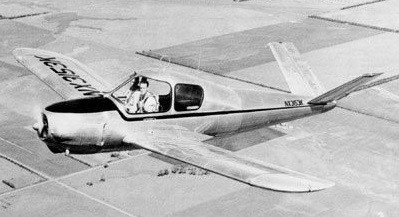
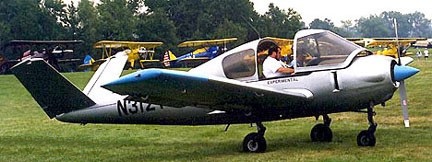
The A-2 was an original design by J A Phillips of the Allied Aircraft Corporation and the first prototype (NX3153K) first flew on 9 April 1948 under the power of a 145hp Continental C145-2 engine, piloted by Harry Ragland.
It was followed by a second prototype (which was destroyed in a hangar fire) and a third example was not completed and development was then shelved.
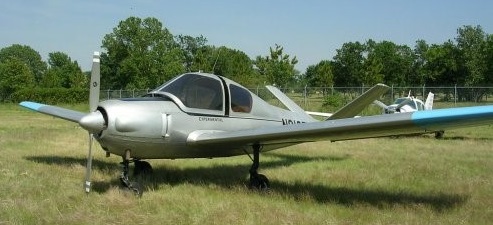
NX3153K was later extensively modified (possibly around 1970) by Mr. Thomas J. Ballentine who amongst others installed a 210hp Continental IO-360 and it was renamed as TJ-2 and registered N312TJ.
TJ-2
The aircraft is now in the collection of the Kansas Aviation Museum, Wichita, Kansas, and received it original designation back.
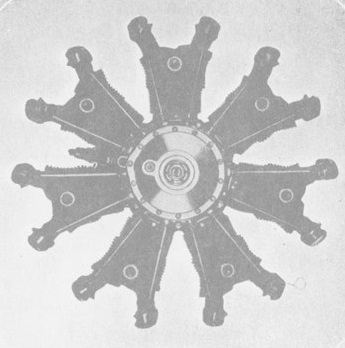
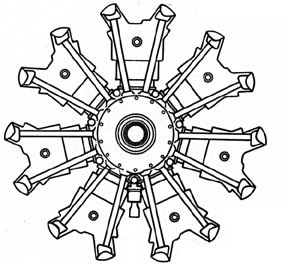
The Hess Warior aluminium alloy head is screwed and shrunk into the steel barrel, and bronze inserts and bushings, also shrunk in, take care of all points of wear such as valve seats, valve guides and spark plug bushings.
A two-piece crankshaft with the crank pin integral with the front half is used o transmit the power to the propeller. This construction permits the use of a one piece master rod. The articulating rods are of H section and machined all over.
The shaft is supported by two roller bearings and has a deep groove ball thrust bearing. Steel backed Babbitt bearings are used for the master rod and cam. The valve gear is entirely enclosed. All accessories are grouped at the rear of the engine.
Type: 7 cylinder, air cooled, fixed radial Rating: 115 hp at 11925 rpm Displacement: 447 cu.in Compression ratio: 5.2-1 Bore: 4.25 in Stroke: 4.5 in Diameter: 37 in Weight: 295 lb Fuel consumption: not more than .58 lb/hp/hr Oil consumption: not more than .025 lb/hp/hr Lubrication: Pressure and scavenger pumps Ignition: 2 Scintilla magneto Carburation: Holley Spark plugs: 2 per cylinder B.G. Price: $2,250 ATC 24
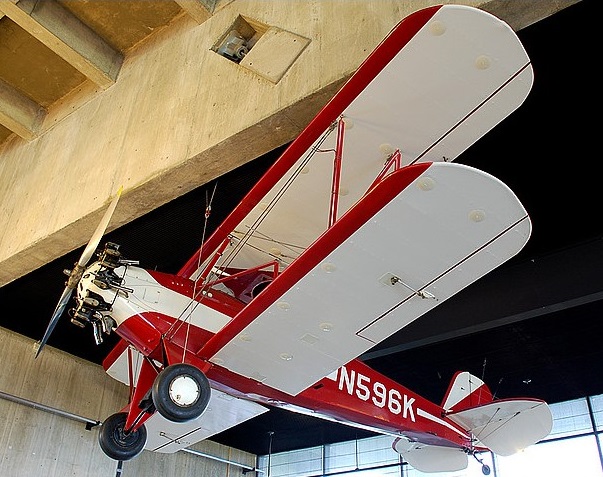
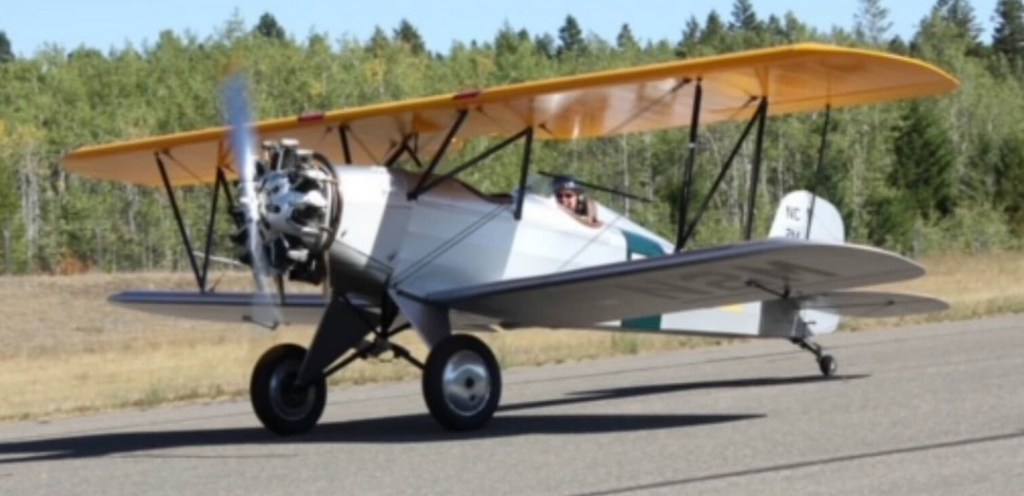
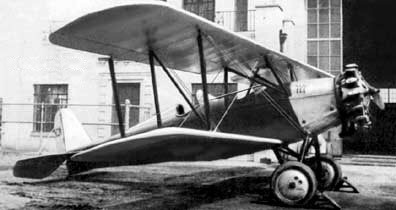
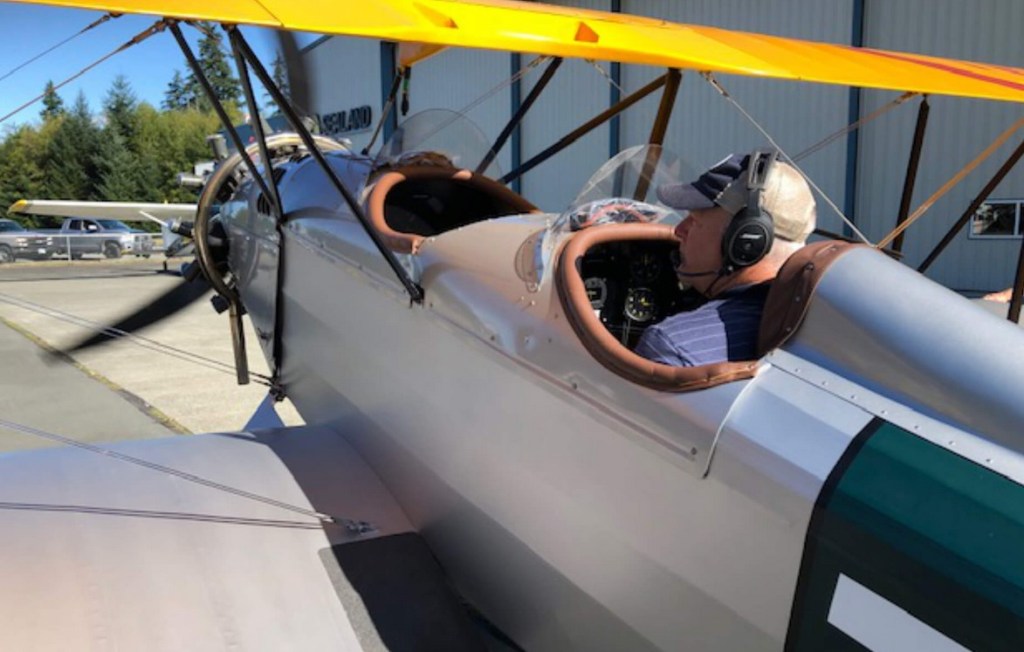
The Argo was a two-place open cockpit sport-trainer biplane seating two in tandem and was powered with the new 7-cylinder Hess “Warrior” engine. The type certificate number (ATC 178) for the Alliance Argo was issued in July of 1929 and it was manufactured by the Alliance Aircraft Corp. in Alliance, Ohio.
The prototype Argo was shown at the Detroit Air Show for 1929 and soon was in production. It was well received in flying circles all over the country, but the oncoming depression was hard felt at Alliance Aircraft. In all, some twenty of the Argo Sport-Trainer were built
After the prototype, N3601, 19 or 20 were manufactured (priced at $4,500) before the type became the Warrior line in 1930.
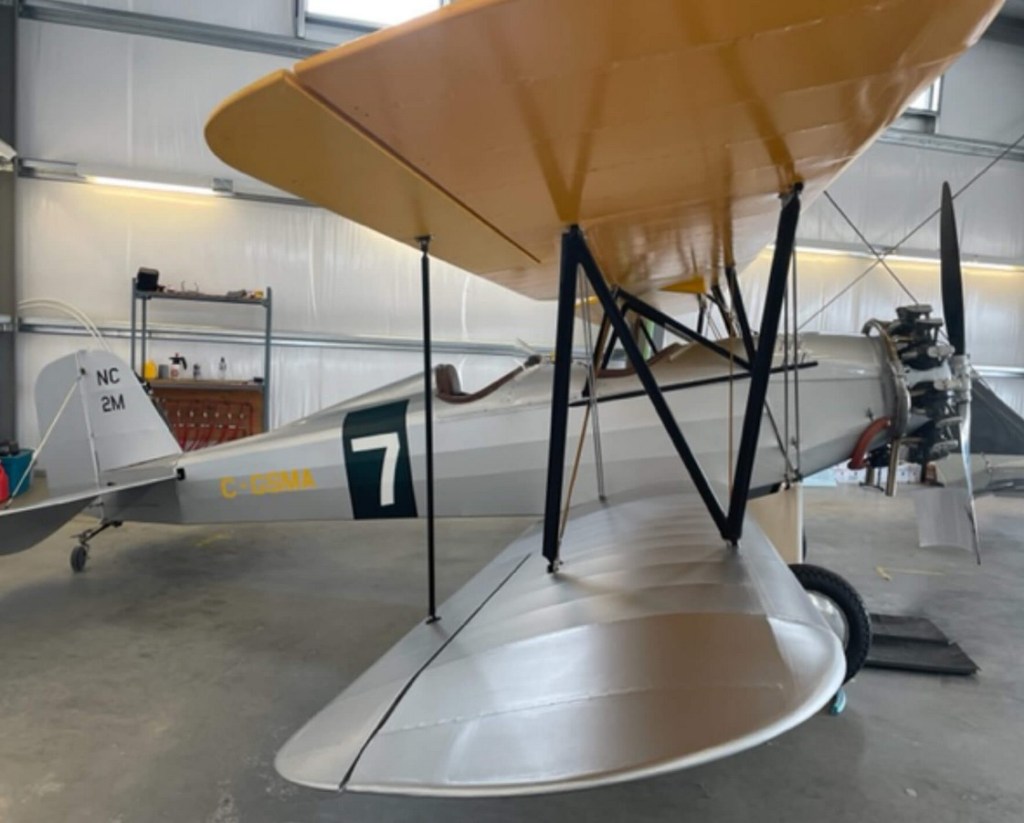
Alliance A-1 NC2M
By 2012, there were two survivors, with 1929 Argo N596K (cn 106) preserved at the Ohio History Center.