1926: Arrow Aircraft & Motors Corp Lincoln NB. USA In late 1920s made three models of two-seat sport or training biplane (the Arrow Sport and Arrow Sport Pursuit). Standard type of 1935 was Model F two-seat low-wing monoplane with Ford V-8 converted automobile engine, awarded contract by the Bureau of Air Commerce.
1936: Arrow Airplane & Motor Corp 4133 North 56 St Lincoln NB pres: Mark W Woods
1940: Bankruptcy, taken over by State Securities financial group.
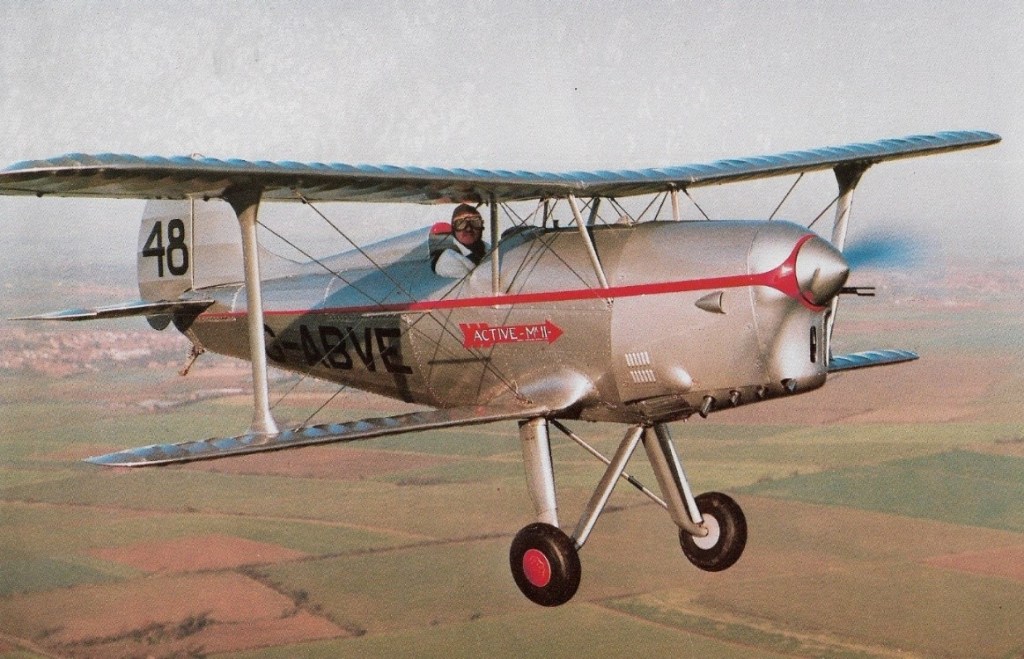
Designed by A.C. Thornton at Leeds, the Arrow Active I G-ABIX, a single-seat all metal biplane, was first flown in 1931. Powered by a 115 hp Cirrus Hermes IIB engine it had a top speed of 140 mph.
The second aircraft G-ABVE had a 120 hp Gipsy III engine and flew for the first time early in 1932. It was distinguished by a raised top wing and taller undercarriage. G-ABIX caught fire and was destroyed on 20 September 1935, the pilot parachuting to safety.
No other examples were built.
Active II Engine: 120 hp Gipsy III Wingspan: 24 ft AUW: 1325 lb 144 mph
UK Largely designed by A. C. Thornton (responsible for Blackburn Bluebird of 1924), the Arrow Active 1 of 1931 was a single-seat all-metal aerobatic biplane with military-training potential. Active 2 of 1932 was re-engined and had new center-section; but though company made aircraft components it built no airplanes in quantity.
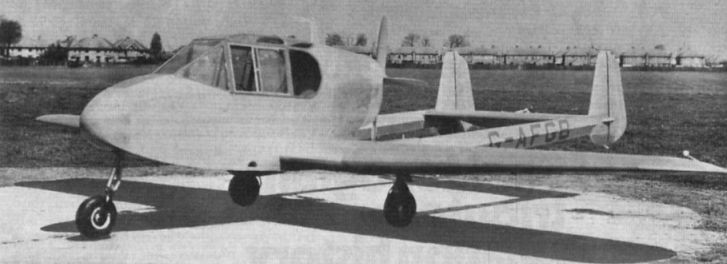
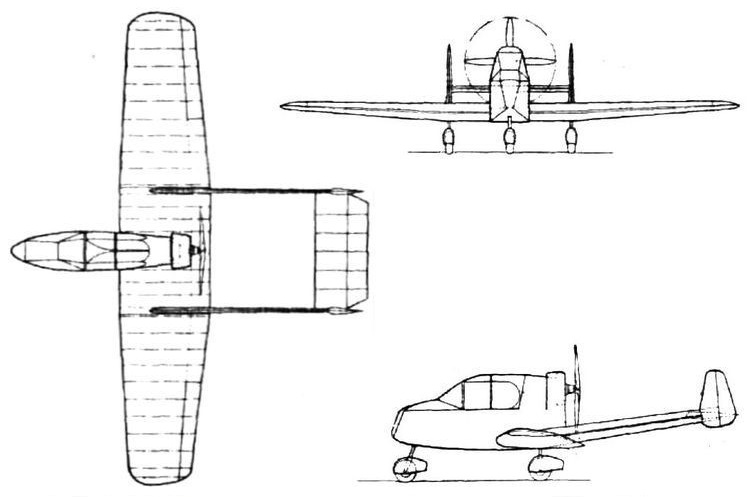
M.B.Arpin & Co of West Drayton, Britain, started the Arpin A-1, desiged by Morris Arpin, in 1937. A two-seat cabin monoplane powered by a pusher Salmson AD.9R, with MacLaren crosswind tricycle undercarriage.
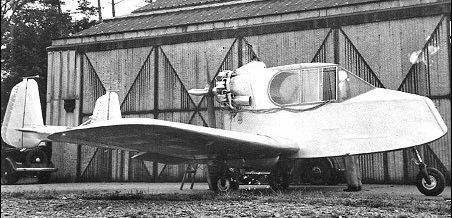
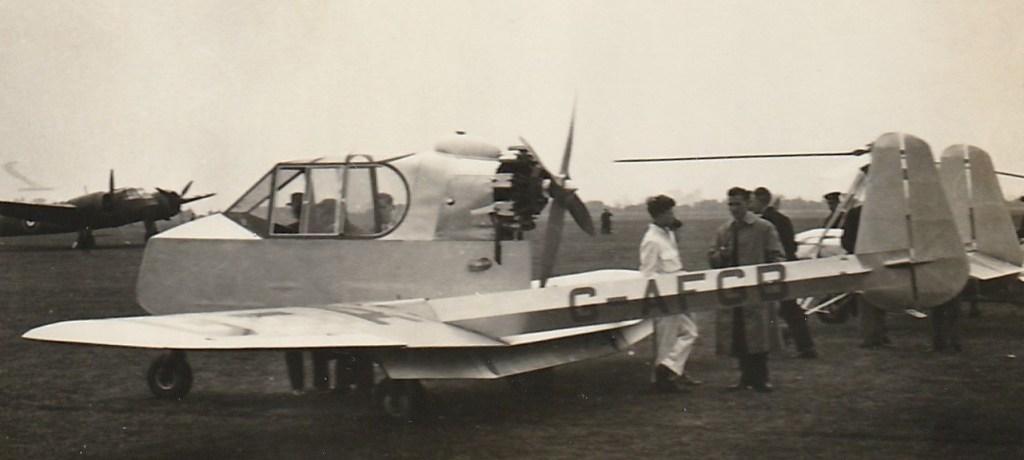
The Arpin A-1 was of wooden construction and plywood covered. The empennage was carried on a pair of diamond cross section booms mounted on the rear wing spar at the edge of the centre section. The fins were tall, with a slight extension below the boom and carrying unbalanced rudders. The booms were at wing height but the side by side two seat enclosed cabin sat on the wing with the uncowled 68 hp (51 kW) British Salmson AD.9R radial immediately behind, with its centre line well above the booms and tailplane. The pusher arrangement and a short nose provided good visibility from the cabin.
The Arpin had a fixed tricycle undercarriage at a time when most aircraft used the tailwheel configuration. It was the first British aircraft to be designed for tricycle landing gear. In 1938 a very unusual McClaren type was fitted, which allowed all three wheels to be turned parallel to each other but not to the aircraft, so that cross wind landings could be made with the aircraft pointing into wind. The front wheel could be left to caster or could be steered by the pilot.
Only one A-1 was built at the company works at Longford, London, registered G-AFGB cn.1, the only one built first flew at Hanworth Aerodrome on 7 May 1938.
It was converted to Mk.2 in 1939 with a Blackburn Cirrus Minor 1 engine for Army evaluation, delivered in December 1939 to the School of Army Co-operation at Old Sarum, but not adopted. The Cirrus Minor I raised the maximum speed to 115 mph (185 km/h).
The A-1 survived WW2 to be broken up in 1946.
Powerplant: 1 × British Salmson AD.9R, 68 hp (51 kW) Wingspan: 31 ft 6 in (9.61 m) Wing area: 165 sq ft (15.3 m2) Length: 23 ft 2 in (7.06 m) Height: 7 ft 1 in (2.13 m) Empty weight: 740 lb (336 kg) Gross weight: 1,261 lb (573 kg) Maximum speed: 108 mph (173 km/h, 94 kn) Cruise speed: 95 mph (153 km/h, 83 kn) Endurance: 5 hours Rate of climb: 600 ft/min (3.0 m/s) Crew: one, pilot Capacity: one passenger
At West Drayton, Middlesex, UK, built during 1937-1938 a two-seat pusher cabin monoplane, the A-1, with MacLaren crosswind tricycle undercarriage. Re-engined 1939 for Army evaluation, but not adopted.
Shortly after the war, Arnoux took up his work again. In 1919/1920, he constructed from components of war-time airplanes a tailless biplane ; it was motorized by a 130 hp rotary engine and had vertical rudder surfaces behind the pilot at both sides of the short nacelle. During 1922, a number of successful flights were made with this biplane. After modification to a single-rudder, it was demonstrated with success to the French aviation authorities, and the results of the tests were so promising that the “Société des Avions Simplex” firm was formed for the further development. The biplane was, however, destroyed in a crash in which the pilot, Fétu, sustained severe injuries.
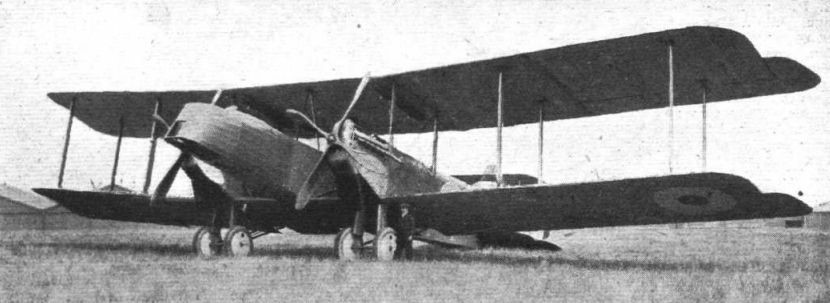
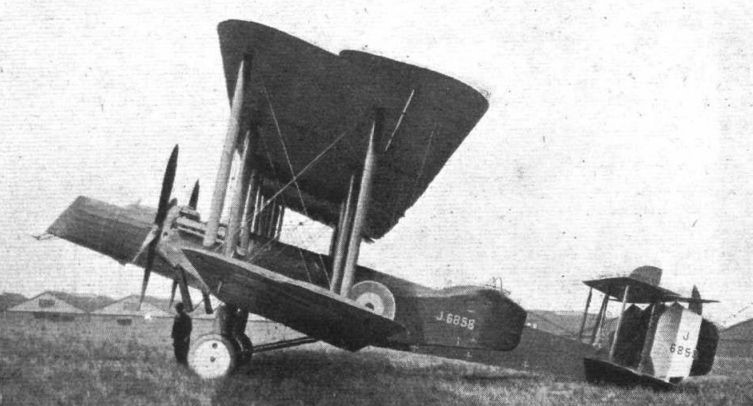
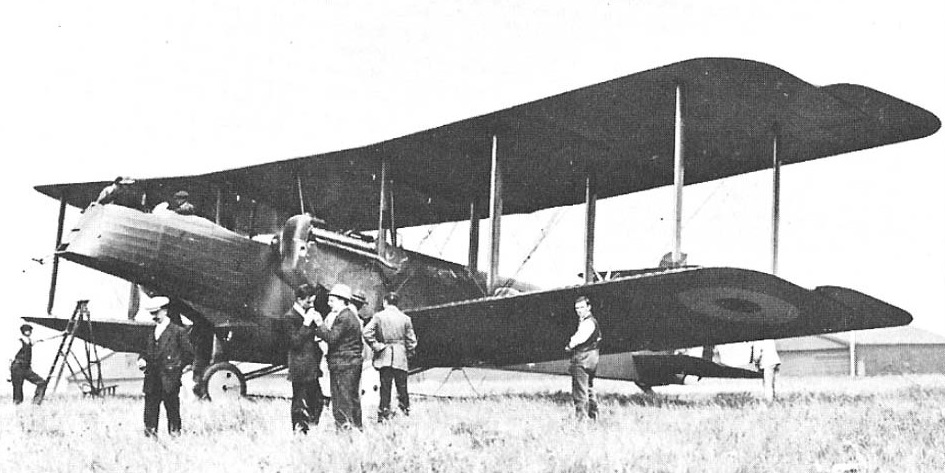
The Sinaia was the third and last aircraft design produced by the team led by John Lloyd and F.M.Green at Siddeley-Deasy before they were rebadged by merger as the Sir W. G. Armstrong Aircraft Company. By the time it flew on 25 June 1921 this change had taken effect. It was designed to meet an Air Ministry requirement for a day bomber.
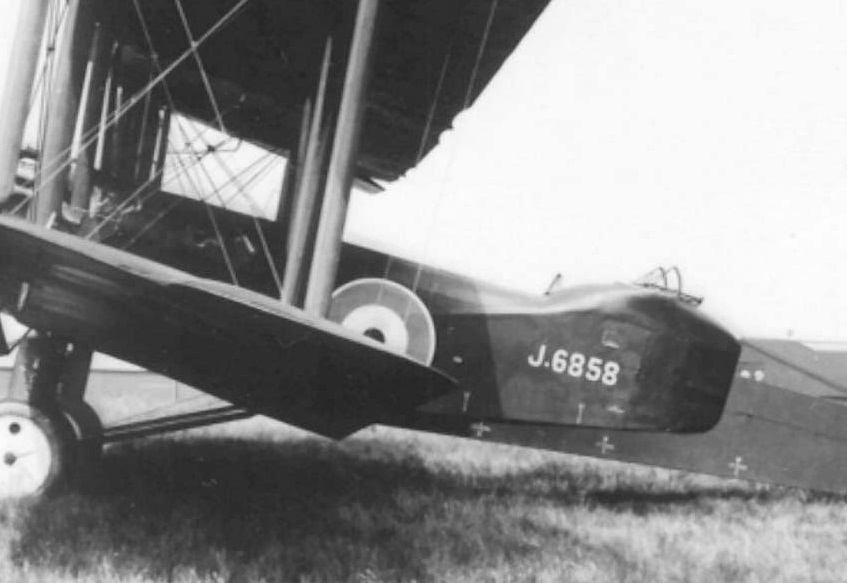
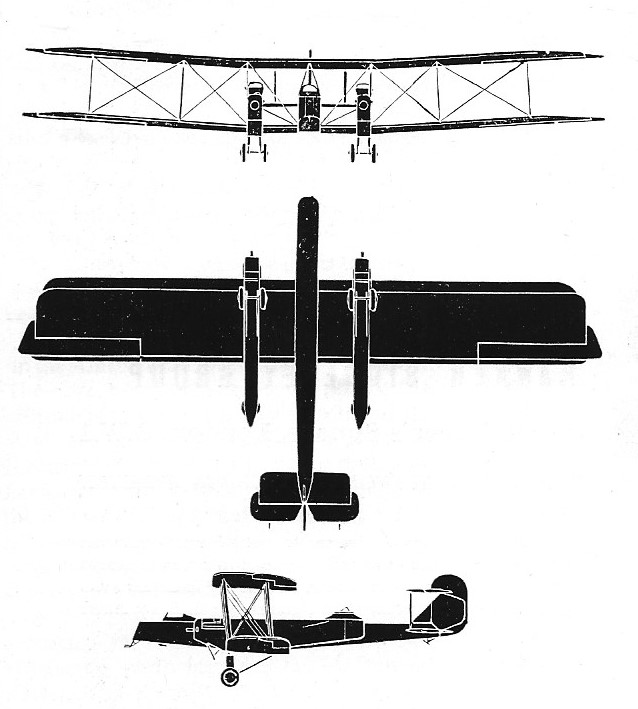
A large twin-engined biplane, its engines were in nacelles mounted on the top of the lower wings and these nacelles were extended rearwards and upwards. Each extension housed a gunner’s cockpit at its extremity, fitted with a gun ring. From these positions the gunners would have been able to defend both sides of the bomber independently.
The Sinaia was a three bay (with struts to the upper wings from the engine nacelles) biplane. The wings carried no stagger and were of equal span, though the lower wing was narrower. There were horn balanced ailerons on all wings. The empennage was of biplane configuration with a balanced elevator on the upper plane and containing three balanced rudders. The square section fuselage placed the pilot’s cockpit well forward of the engines and a third gunner’s position in the extreme, slanted nose. A two-wheeled main undercarriage unit was mounted under each engine.
The Sinaia was powered by two 500 hp Siddeley Tiger water-cooled engines, a new V-12 design produced by combining two straight-6 Siddeley Pumas onto a single crankshaft. This little-tested powerplant proved unreliable and frequent problems with it interrupted the flight trials of the Sinaia.
Two examples were ordered by the Air Ministry but only one, J6858, was completed. By October 1921 the airframe was showing signs of structural problems and the only Sinaia ever built was taken out of use.
Type 103 Sinaia Powerplant: 2 × Siddeley Tiger V-12, 500 hp (370 kW) each Wingspan: 86 ft 10 in (26.47 m) Wing area: 1,823 sq.ft (169.4 sq.m) Gross weight: 16,000 lb (7,260 kg) Crew: 4
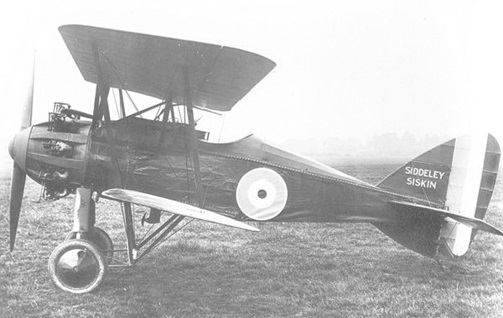
The prototype Liskin aircraft, the first to be entirely designed and constructed by the Company, was begun in 1919 and was built of wood and canvas.
It first flew from the old Radford Aerodrome at Coventry in 1920 and was shown to the public at the first R.A.F. Hendon display in that year.
Fitted with an A.B.C. Dragonfly air cooled engine, this prototype was the forerunner of a series of aircraft with graduated improvements in engines and general construction.
Engine: A.B.C. Dragonfly, 320 hp Span: 27 ft 6 in Wing Area: 247 sq.ft Fully loaded weight: 2,181 lb Registration: C 4541
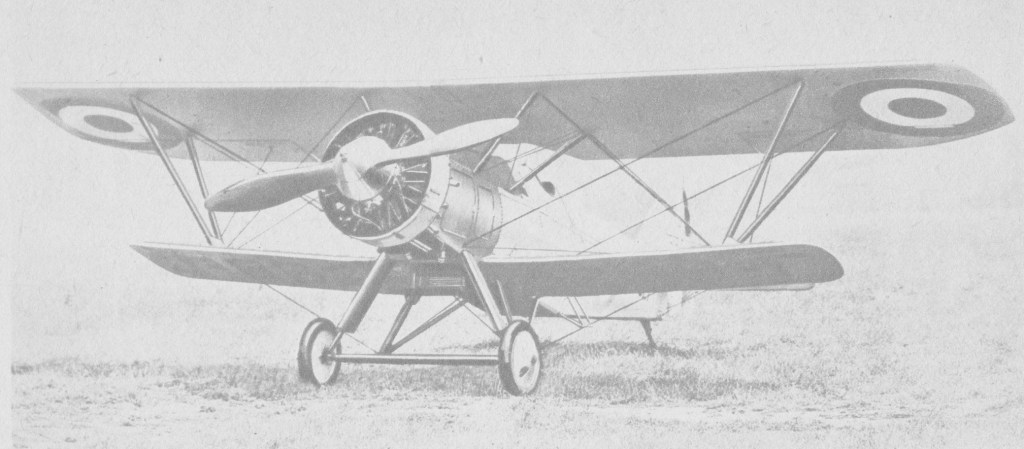
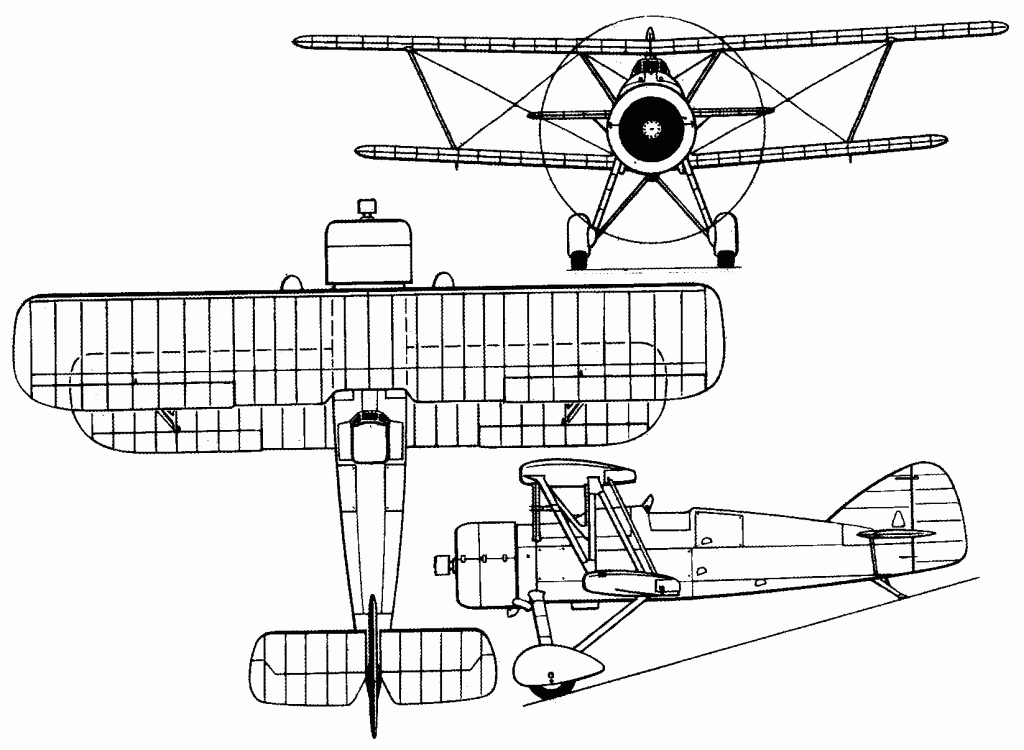
A development of the A.W.16, the A.W.35 Scimitar was powered by a Panther VII engine enclosed by a long-chord cowling and rated at 565hp at 3660m, and a maximum output of 605hp at 4115m. Armament was two 7.7mm Vickers Type E machine guns and provision was made for four 9kg bombs to be carried beneath the lower mainplane. Two prototypes of the Scimitar were flown in 1933, and these were followed by four production examples for the Norwegian Army Air Force which were delivered at the beginning of 1936. These were powered by the Panther XIA with a maximum rating of 730hp.
Engine: Panther XIA, 730hp Take-off weight: 1860 kg / 4101 lb Empty weight: 1276 kg / 2813 lb Wingspan: 10.06 m / 33 ft 0 in Length: 7.62 m / 25 ft 0 in Height: 3.53 m / 11 ft 7 in Wing area: 24.28 sq.m / 261.35 sq ft Max. speed: 343 km/h / 213 mph
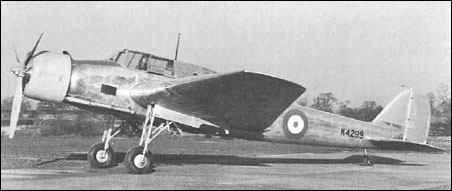
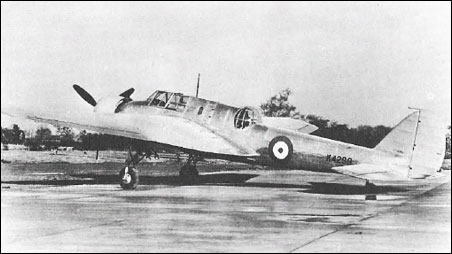
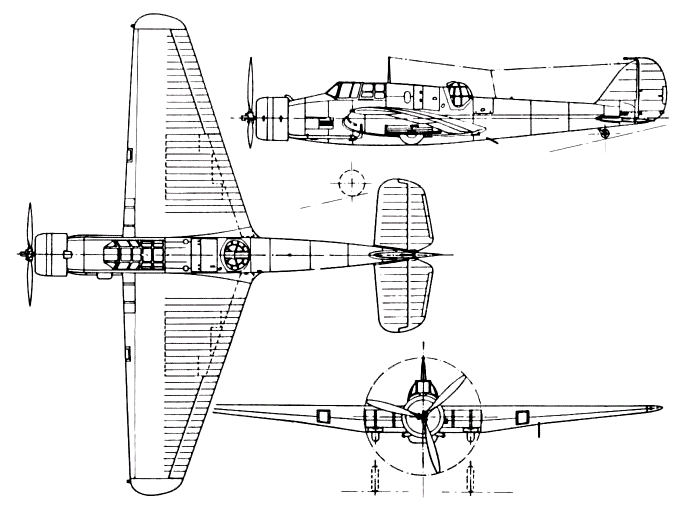
Engine: 1 x 920hp Tiger VIII Take-off weight: 4082 kg / 8999 lb Wingspan: 14.94 m / 49 ft 0 in Length: 13.36 m / 43 ft 10 in Height: 4.04 m / 13 ft 3 in Wing area: 42.55 sq.m / 458.00 sq ft Max. speed: 362 km/h / 225 mph Ceiling: 6400 m / 21000 ft Range: 1102 km / 685 miles