Built in 1924-1925 the T,2 light two-seat cabin monoplane,
largely of duralumin, with cantilever wing and low-drag undercarriage.
Inter-Wars
ACAZ / Ateliers de Constructions Aeronautiques Zeebrugge
Belgium
Ateliers de Constructions Aeronautiques Zeebrugge was formed after the First World War. Built in 1924-1925 the T,2 light two-seat cabin monoplane, largely of duralumin, with cantilever wing and low-drag undercarriage. Began construction of a two-seat fighter in 1926.
Asboth AH-4
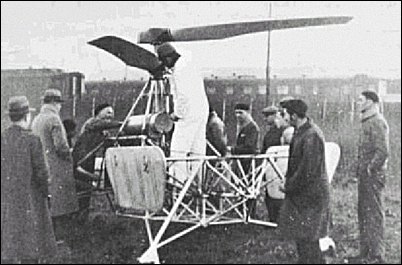
Hungarian engineer Oscar von Asboth, Director of the Austro-Hungarian State Propeller Factory, designed and tested four different helicopters.
He worked alongside von Karman, and in particular was responsible for the development work on the rotors for the Petroczy-von Karman helicopter, and between 1928 and 1931, now working in Budapest, von Asboth tested various contra-rotating co-axial two-bladed rotors only 4.35m in diameter.
Stability was achieved in the helicopters by the the air which the rotors directed on to six mobile surfaces round the horizontal hinges. These six ‘deflectors’ were operated by the pilot, using traditional aircraft controls.
The fourth model, known as AH 4, had, instead of a Le Rhone 110hp rotary, a Clerget 130hp engine, which drove not only the rotors but also a tractor propeller. This rotorcraft in flying condition weighed 410kg, and could climb at a rate of 2m/s. By mid-1930 the aircraft reportedly attained an altitude of 30m and covered 3.2km at about 19km/h.
About 1930 two missions, one British, the other French, went to Budapest to von Asboth. An expert in the British mission named Liptrot climbed to a height of 31m, and flew for a distance of 2800m. Von Asboth then completed his research particularly into his rotor system, the blades of which contained a movable part extending from the hub to the middle, and a fixed part from the middle to the tip of the blade. He then went to England, where the Blackburn Company became his licensee.
Arsenalul Aeronauticii
The first Romanian aircraft factory was Arsenalul Aeronauticii, founded on July 1, 1920 in Bucharest. Since 1921, some 120 examples of the Austro-Hungarian Brandenburg C.1 reconnaissance and light bomber aircraft, series 269, were manufactured there.
Arsenal VG.31 / VG.32 / VG.33
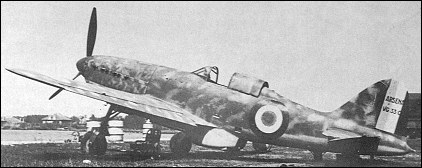
A derivative of the VG 30, the VG 31, differed by having the radiator bath moved aft to improve the C of G, and having a smaller wing of 12.00 sq.m. It was proposed to power this development with an 860hp Hispano-Suiza 12Y31 12- cylinder liquid-cooled engine, but the prototype was never assembled.
The VG 32 reverted to the original wing and was powered by a 1,040hp Allison V-1710- C15 engine, but the prototype was captured by German forces at Villacoublay two weeks before its scheduled maiden flight in 1940.
The first development of the basic design to fly was the VG 33, on 24 May 1939. A production contract for 220 examples was placed in September 1939, this contract eventually being increased to 1,000 machines, but only 19 had been completed by the Chantiers Aero-Maritimes de la Seine by the fall of France.
The VG 33 was armamed with one 20mm Hispano-Suiza 404 cannon and four 7.5mm MAC 1934 M39 machine guns, and was powered by an 860hp Hispano-Suiza 12Y31 engine.
VG.33
Engine: 860hp Hispano-Suiza 12Y31
Take-off weight: 2720 kg / 5997 lb
Empty weight: 1800 kg / 3968 lb
Wingspan: 10.80 m / 35 ft 5 in
Length: 8.55 m / 28 ft 1 in
Height: 3.35 m / 10 ft 12 in
Wing area: 14 sq.m / 150.69 sq ft
Max. speed: 558 km/h / 347 mph
Cruise speed: 487 km/h / 303 mph
Ceiling: 11000 m / 36100 ft
Range: 1200 km / 746 miles
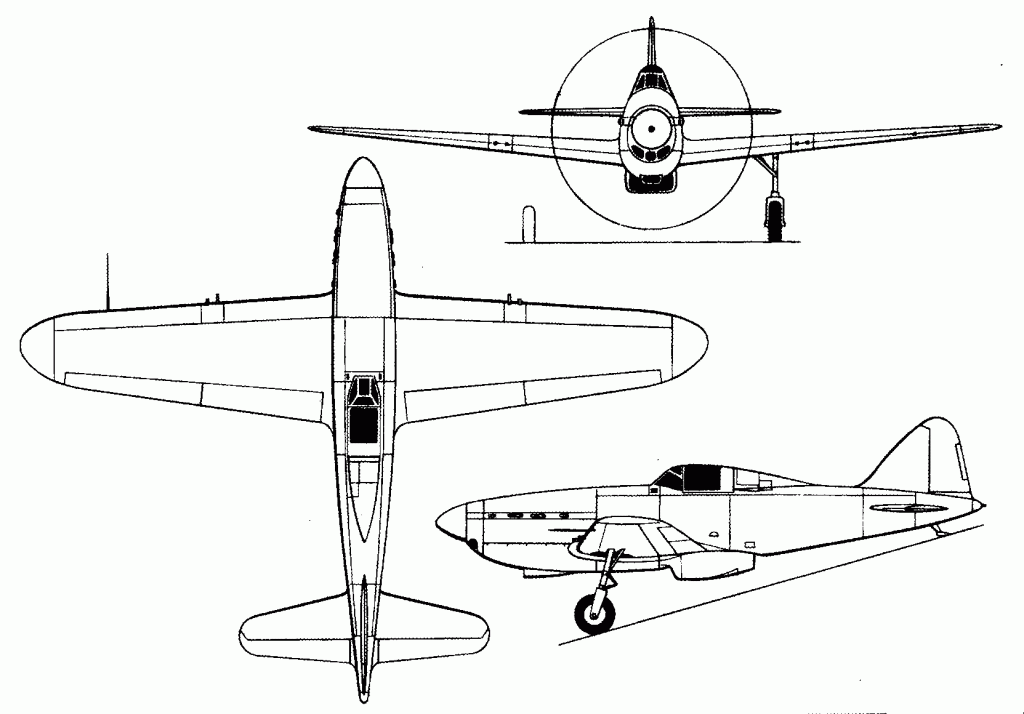
Arsenal VG.30
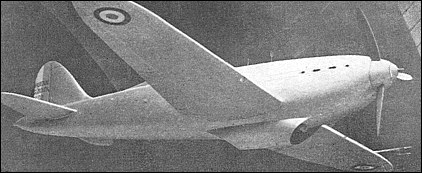
The VG 30 had a wooden stressed-skin construction and was intended to be powered by a Potez 12 Dc “flat-twelve” air-cooled engine of 610hp at 1000m and mounting a 20mm Hispano motor cannon.
Designed by Ingenieur-General Vernisse and Jean Galtier the VG 30 single-seat fighter was built by the Arsenal de l’Aeronautique and was evolved to compete with the Caudron C.713 to meet a lightweight interceptor requirement. A full-scale mock-up of the VG 30 was exhibited at the Exposition Internationale in Paris in the summer of 1936 but development was delayed by the non-availability of the Potez 12 Dc engine. The prototype was eventually flown at Villacoublay on 1 October 1938 with a 690hp Hispano- Suiza 12 Xcrs 12-cylinder liquid-cooled engine. The VG 30 proved faster than the Morane-Saulnier 406 and, in July 1939, allegedly attained 805km/h in a dive between 4000m and 2000m. Proposed armament comprised one 20mm Hispano- Suiza 404 cannon and four 7.5mm MAC machine guns. Development was abandoned in favour of the VG 33.
VG 30
Wingspan: 10.80 m / 35 ft 5 in
Length: 8.40 m / 27 ft 7 in
Height: 3.31 m / 10 ft 10 in
Wing area: 14.00 sq.m / 150.69 sq ft
Arsenal / SFECMAS / Societe Frangaise de Construction de Materiaux Speciaux
Established in 1936 in old Breguet factory at Villacoublay. Products were generally designated by initials of Vernisse (director) and Galtier (designer). VG 30 was lightweight fighter; VG 33 a more powerful development (200 ordered and many being assembled by June 1940). Arsenal-Delanne 10 was unorthodox tandem monoplane two-seater, flown 1941. Experimental work on fast and unorthodox aircraft resumed after war, when VB 10 fighter with tandem piston engines and contrarotating propellers was flown. VG 70 had German Junkers Jumo 004 turbojet; VG 90 was naval jet fighter; 5.501 a pilotless aircraft; 0.101 a research monoplane for testing aerofoil sections, spoilers, etc. After 1954 became SFECMAS (Societe Frangaise de Construction de Materiaux Speciaux).
Arsenal joined SNCAN in 1955.
Arrow V-8
The Arrow V-8 was a Ford auto-engine conversion. Water cooled and producing 82hp, it received ATC 151 and ATC 161.
Arrow Model F / Sport M
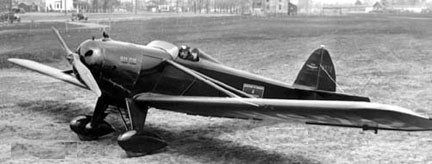
The 1934 Sport F prototype NC12581 was powered by a 82hp Arrow (dextrorotatory Ford V-8 conversion).

Seventeen production models were built in 1936 under ATC 601, and 87 under ATC 613 and 2-531 with a redesigned wing root and optional cockpit canopy in 1938, including one Sport M.
The original price was $1,500. Other motors used were Detroit Air Cat, Anzani, Genet, Kinner, and Velie.
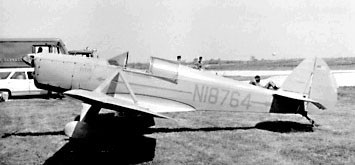
One Sport M prototype was built in 1938, NX/N18764, priced at $2,330, raised to $3,750. The series was discontinued.
Sport F
Wingspan: 36’7″
Length: 21’4″
Useful load: 503 lb
Max speed: 100 mph
Cruise: 90 mph
Stall: 45 mph
Range: 300 mi
Seats: 2
Sport M
Engine: 125hp Menasco C-4
Useful load: 603 lb
Max speed: 120 mph
Cruise: 105 mph
Stall: 48 mph
Range: 300 mi
Seats: 2
Arrow Sport / Sport Pursuit / Sport K

In late 1920s three models of two-seat sport or training biplane (the Arrow Sport and Arrow Sport Pursuit) were being made with steel-tube airframe and wooden wings. The wings were fully cantilever, but have interplane struts to comply with FAA regulations.
Designed by Swen Swanson in 1926, the two-seater had a side-by-side cockpit and no interplane struts. The wing was attached directly to the top of the fuselage, but cosmetic struts were later added to allay the concern of pilots.
The 1928 model offered 60hp Detroit Air Cat and Anzani engines.
About 100 of the Arrow A-2-160 Sport were built, powered by a 60 hp Le Blond engine. The original price was $3485.
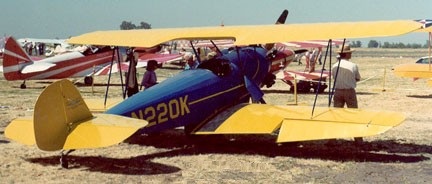
The only 1929 Sport Pursuit (ATC 2-110) built, N853H, was priced at $3,485 and renamed Sport K in 1935.
Sport
Engine: 35hp Anzani
Wingspan: 25’6″
Length: 19’3″
Seats: 2
Arrow A-2-160 Sport
Engine: 60 hp Le Blond
Prop: Hartzelll 6 ft 10 in / 12.08 m dia.
Wingspan: 25 ft 10 in / 7.87 m
Length: 19 ft 4 in / 5.89 m
Empty weight: 900 lb / 408 kg
Max weight: 1260 lb / 572 kg
Cruise: 75 mph
Seats: 2
Sport K
Engine: 100hp Kinner K-5
Wingspan: 25’10”
Length: 19’6″
Useful load: 596 lb
Max speed: 110 mph
Cruise: 95 mph
Stall: 35 mph
Seats: 2

