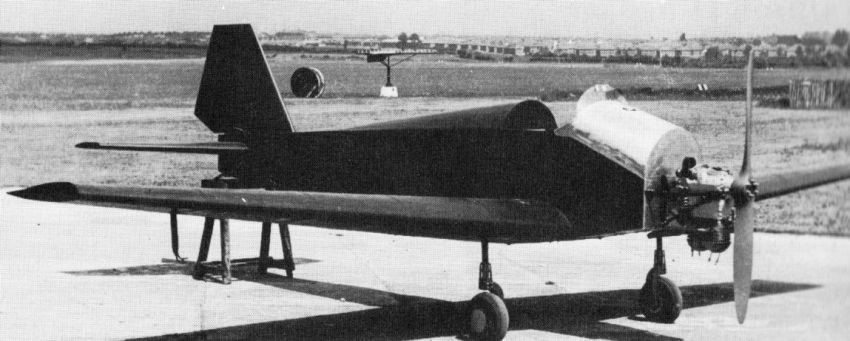
The Bartel BM-1 Maryla was a fighter aircraft design for the Polish military that did not advance beyond the design stage. It was designed in response to a Polish War Ministry competition in 1925 and was placed third, netting Bartel a zł 1,000 prize. Maryla was the name of Bartel’s wife. The design was a single-seat parasol-wing monoplane. A distinctive feature were Y-shaped struts joining wing with an undercarriage. It was not built.
Engine: 1 × Lorraine 12E Courlis or Hispano-Suiza 12 cylinder liquid-cooled 340 kW (450 hp) Wingspan: 11 m (36 ft 1 in) Wing area: 22 m2 (240 sq ft) Airfoil: Bartel 37/IIa Length: 7 m (23 ft 0 in) Height: 3 m (9 ft 10 in) Empty weight: 1,020 kg (2,249 lb) Gross weight: 1,500 kg (3,307 lb) Maximum speed: 285 km/h (177 mph; 154 kn) Crew: 1 Armament: 2 × fixed, forward-firing 7.7 mm (0.303 in) Vickers machine guns in the fuselage 2 × fixed, forward-firing 7.5 mm (0.295 in) Darne machine guns in wings
Ryszard Bartel was born in Sławniów village near Pilica on 22 March 1897. He was interested in aviation from his youth, and in 1911 he built his own gliders capable of short flights. In 1916, he enrolled in the Warsaw University of Technology, being one of three founders of the Aviation Section of that university’s Students’ Mechanical Club. In 1917, he completed a pilot course, and he joined the underground aviator organization (Warsaw was under German occupation at that time). In 1918, after Poland regained its independence, he volunteered for the Polish Air Force. He completed further military flying courses and he took part in the Polish-Soviet War, flying Breguet 14s in the 16th Reconnaissance Squadron and in the Central Lithuanian Air Squadron. He was demobilized in December 1920, and graduated from the Warsaw University of Technology in 1924 as an Engineer. He also took second place in the first Polish soaring competition in 1923.
In 1925, his design of the Bartel BM-1 Maryla fighter aircraft received an award in the first Polish contest for military aircraft, but the design was not built. In 1924-1926 he worked in France, supervising production of aircraft for Poland and he also undertook research on aerodynamics there. From 1926, he was a chief designer of the Samolot aircraft manufacturer in Poznań. He designed and built there a prototype of a trainer aircraft, the Bartel BM-2 (1926), then trainers Bartel BM-4 (1927) and Bartel BM-5 (1928), built in small series for the Polish Air Force (the BM-4 was Poland’s first domestic design that was put into production).
From 1930 he worked in the Aviation Department of the Polish War Ministry, then, from 1932 to 1937, in the PZL aircraft works in Warsaw, which had obtained several of the Samolot projects upon that company’s closure. His duties included overseeing aircraft production. During 1937-1939 he was a technical director for the Lubelska Wytwórnia Samolotów (LWS) works and supervised licensing some Polish designs to Romania and Turkey. During World War II he stayed in Poland and worked under the German occupation as a teacher in technical schools.
After Poland’s liberation in 1945, Bartel worked in the Polish Civil Aviation Department of Ministry of Communication, but in 1948, with the advent of Stalinism in Poland, the communist authorities removed him from work in aviation, along with many other pre-war experts. He worked among other places in the Polish Normalization Institute. From 1951 he was a professor at the Warsaw University of Technology. He retired in 1966. From the 1960s, his passion became the history of the Polish aviation industry. He was active in aviation associations such as the Polish Aero Club.
He received the Knight’s Cross of the Polonia Restituta and the Polish Cross of Merit (silver in 1927, gold in 1948). Bartel also held a Field Pilot Badge (1922).
Designed and built by F.S.Barnwell at Whitchurch in 1938, the Barnwell BSW Mk.1 was a single-seat, low wing monoplane of all wood construction, powered by a Scott Squirrel engine. The designation BSW standing for Barnwll (the constructor), Squirrel (the engine) and Whitchurch (the place).
Originally, Barnwell had meant to build the machine himself, but the vast activity of the Bristol Aeroplane Co. in connection with the R.A.F. expansion naturally meant an ever-increasing load of work on Barnwell’s shoulders, and he therefore decided to entrust the construction of the machine to a firm in Bristol.
First registered [C of R 8560] on 20.6.38 as G-AFID c/n 1 to Frank Sowter Barnwell, Alveston, near Bristol (aircraft based at Bristol (Whitchurch) Aerodrome, Bristol, Gloucestershire) it first flew on 17 July 1938.
It was written off on 2 August 1938. Shortly after taking off from Whitchurch, the engine, a Scott Squirrel, failed. Barnwell attempted to turn and return to the aerodrome. The machine stalled, crashed and killed Barnwell.
The 1931 1T was a two-place open-cockpit biplane, registered N10677 c/n 1000. First flown in September 1931, with a tail design that “prevented flat spins”.
The Barling NB-3, powered with a Velie 55 hp engine, was planned for student, transport, and passenger use. The NB-3 featured a worm type gear adjustable stabiliser. Cruise was 87 mph.
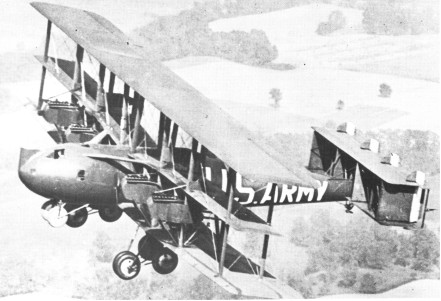
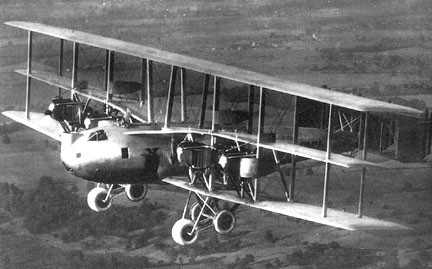
Designer Walter Barling went to America, where General ‘Billy’ Mitchell provided him with a $375,000 contract, let by Engineering Division, McCook Field, to build a bomber capable of carrying a 2268-kg / 5000-lb bombload for 12 hours at 160 kph (100 mph). Not surprisingly the Barling NBL-1 bore a strong resemblance to the Tarrant Tabor, though its triplane wings spanned 3.35 m (11 ft) less and its six 12-cylinder Liberty engines were all mounted on the same level, between the lower and middle wings. On 22 August 1923 from Wilbur Wright Field at Dayton, Ohio, whence it had been railroaded from the Witteman-Lewis Aircraft Company’s works in New Jersey where it was constructed.
As AS64215, Barling was aboard for that 20-minute maiden flight and later that year the Barling bomber flew to the Inter¬national Air Race at St Louis with Major General Mason Patrick, chief of the Army Air Service, as a passenger. It later carried a 2000-kg (4408-lb) load up to 2,050 m (6722 ft).
But with Billy Mitchell’s proposed bomb load the burly Barling could not top 160 kph (100 mph) and had a range of 275 km (170 miles) rather than the 1930 km (1200 miles) the general wanted. It flew around (slowly) for years, appearing as a curiosity at airshows, and was eventually broken up in 1928, save for its ten huge undercarriage wheels which are preserved at Wright-Patterson Air Force base from where the triplane made its first flight.
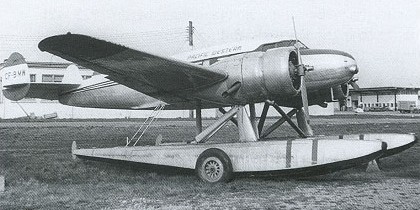
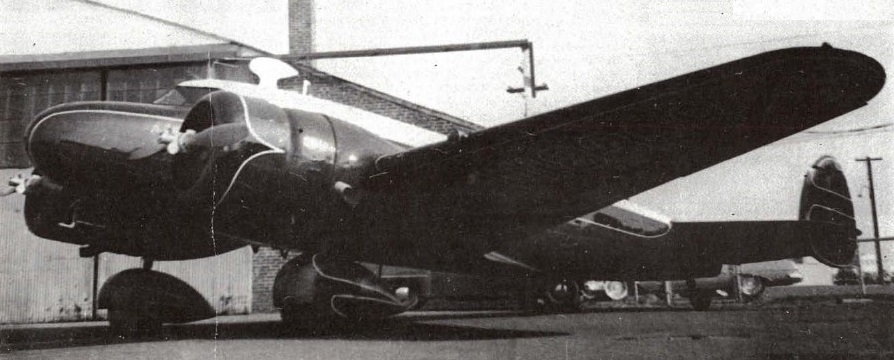
This aircraft was built in a small hanger at the Detroit City Airport, Michign, and operated in the Canadian north into the sixties. It was a flexable aircraft for the bush as it could operate on wheels, skis or floats. The pictured plane was Canadian registered and operated by Pacific Western Airlines.
Barkley-Grow NC18388 sn.1
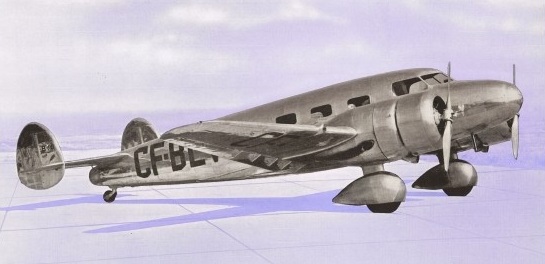
Barkley-Grow T8P-1 CF-BLV 1938
The design incorporated a multispar stressed-skin wing with two X-spars patented by A. S. Barkley (US patent #2,122,709 to Barkley in 1938) that eliminated the need for ribs or bulkheads in the wing.
The initial example made its first flight in April 1937, piloted by Frank Cordova.
After a series of demonstration flights, the prototype went to Canada where it was registered CF-BVE.
Canadian Car & Foundry obtained the world-wide distributing rights for all but the United States.
Only 11 T8P-1s were constructed. Canadian Car demonstrated the aircraft to the Department of Defence but apart from selling only one aircraft to the RCAF, no government orders were obtained. The RCAF preferred the Beech 18.
Receiving ATC 662 and priced at $37,500, those built include prototype NX18388=CF-BVE=NC18388, NC18470, NX26400=CF-BQM, NC26496=CF-BTX, YRAHA=OB-GGK, CF-BLV, CF-BMG, CF-BMV, CF-BMW, some on twin EDO floats.
As a robust aircraft, three T8P-1 survived into the late 1960s.
Through the purchase of Yukon Southen Air Transport, Mackenzie Air Service and Prairie Airways, CPAL acquired a total of six Barkley-Grows.
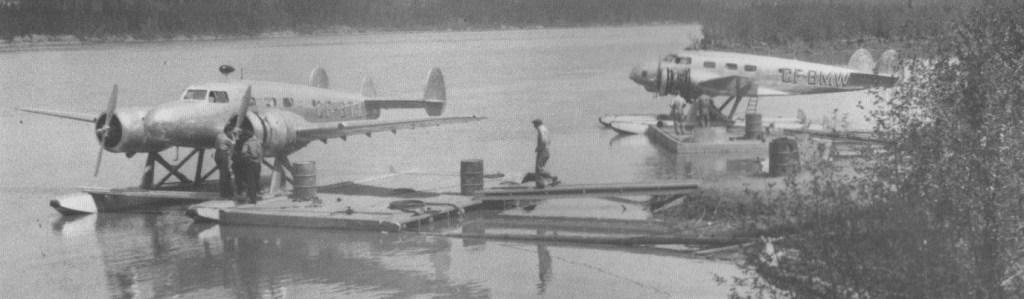
The prototype aircraft, CF-BVE, was sold in 1945 and BMG and BTX were written off. CF-BLV, BMV, BMW and BQM served until late 1949/early 1950 when replaced by more modern aircraft.
CF-BTX and CF-BMW
CF-BQM was being restored at the Aeo Space Museum in Calgary, Canada.
T8P-1 Engine: Pratt & Whitney Junior, 400 hp Wingspan: 50 ft 8 in Length: 36 ft 2 in Height: 9 ft 7.5 in Empty weight: 5880 lb Loaded weight: 8750 lb Max speed: 220 mph at 5000 ft Cruise: 185 mph at 10,000 ft ROC: 1400 fpm Cruise range: 1000 mi Crew: 2 Passengers: 8
Archibald Barkley had worked with the Wright brothers on their gliders prior to their first powered flight.
In 1931 Barkley had constructed an aircraft of his own design incorporating his patent multi-spar, stressed skinned wing with no ribs o bulkheads but of exceptional strength. This aircraft, except for the wings, was destroyed on its maiden flight.
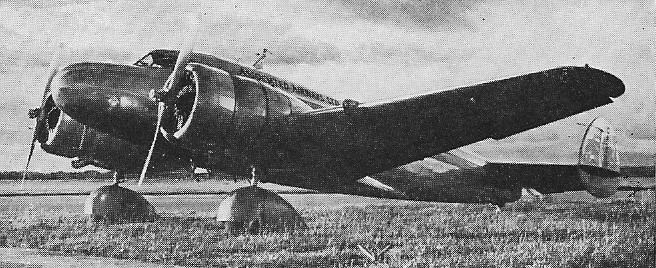
Established in 1935 to manufacture an eight-seat twin-engined light transport aircraft designated Barkley-Grow T8P-1. Similar in appearance to the Lockheed Electra, the design incorporated a multispar stressed-skin wing patented by A. S. Barkley that eliminated the need for ribs or bulkheads in the wing.
1937: (Archibald S) Barkley-(Harold B) Grow Aircraft Corp, 13210 French Rd, Detroit MI. USA
1940: Acquired by Aviation Mfg Corp (AVCO), absorbed into Vultee.
Increasing the wing area produces a noticeable increase in lift caused by the laws of aerodynamics. With more lift the crash speed becomes lower and therefore the aircraft can stay in the air with less “effort”. The increase in speed demands a decrease in the surface and therefore an increase in the load on each point of the wing.
Air combat aircraft seek to increase performance at the cost of greater driving power and a decrease in wing area, but even this type of aircraft is forced to carry out operations at low speeds such as approach and landing.
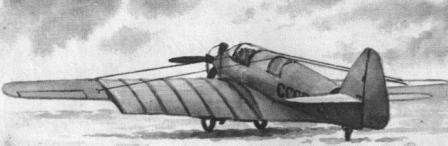
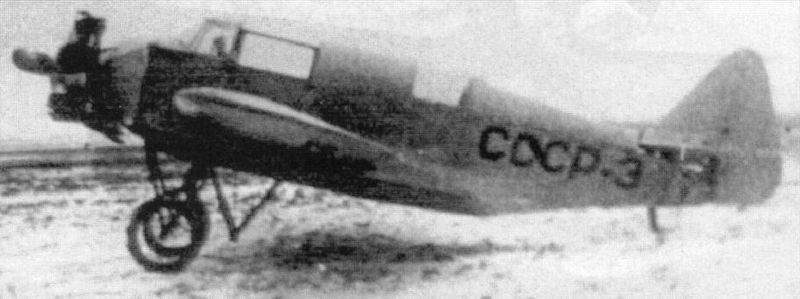
Aeronautical development has brought different solutions to this problem, among which the use of flaps and variable geometry in aviation stand out. In the 1930s in the USSR the aeronautical engineer Georgi Ivanovich Bakshayev proposed an interesting method to achieve the same effect. The practical implementation of his theory came to light in the form of the RK aircraft “Razdvizhnoe Krylo”, which was successfully tested in 1937.
The RK owes its name to the strange telescopic wing configuration (Razdvizhnoe Krylo – sliding wing), being also known as LIG-7 to indicate its development within the Leningrad Civil Aviation Fleet Institute. The main objective of this model was to obtain the smallest wing area for horizontal flight operations and its increase during takeoff and landing.
Designed as a conventional type two-seater monoplane with a 100 hp M-11 engine, this airplane was used as a test bed for a variable surface experimental wing. The RK was conceived as a low-wing monoplane aircraft braced by cables. This wing, made of wood, was characterized by having a wingspan of 11.3 meters, a constant chord (1.5 m) and a great aspect ratio, which allowed for improved performance during flight at cruising speed. With an M6 wing profile, the internal structure was designed on the basis of two wooden stringers. The covering was fabric. The wing featured bracing cables running from the top of the cabin and from a special cabin structure located in the ventral region.
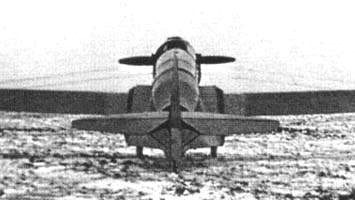
Rear view of the RK in configuration with the segments collected.
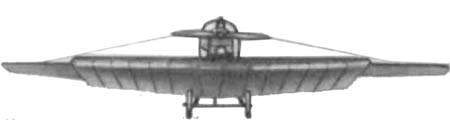
During takeoffs and landings, lift was increased by the extension of 6 telescopic sections, which increased the surface area of the wing to occupy two thirds of the wingspan, giving a total area of 23.85 sq.m. Each section, constructed of plywood, was 500mm wide with a 40mm overlap. The profile in this case was the TsAGI-846. The sections featured lightweight support ribs in the inner section constructed of pine and 2mm thick plywood overlay. The extension or retraction system was achieved by means of a steel cable that was operated manually from the cockpit. During the flight all sections were hidden inside the fuselage. The outer wing section with ailerons (one third of the wingspan) was not covered by the sections.
Front view of the RK in configuration with the segments extended.
The RK was ready for testing in 1937. The entire system worked well, with a retraction time of 20 to 30 seconds and extraction time of between 30 and 40 seconds. Retraction and extension were found to be easier in the air than on the ground.
The designers took overload and symmetry into account in the extraction / retraction process and this allowed for no negative effects during in-flight system testing. The center of gravity was established at 26% of the length.
The effect achieved during takeoff and landings was remarkable and the technology proved applicable. The speed did not increase considerably with the collected system, since it maintained a 20% resistance caused by the installation of the structure. Despite this, it was clear that the positive impact of this technology would be extremely useful on larger and faster aircraft, where resistance to wing advancement increases.
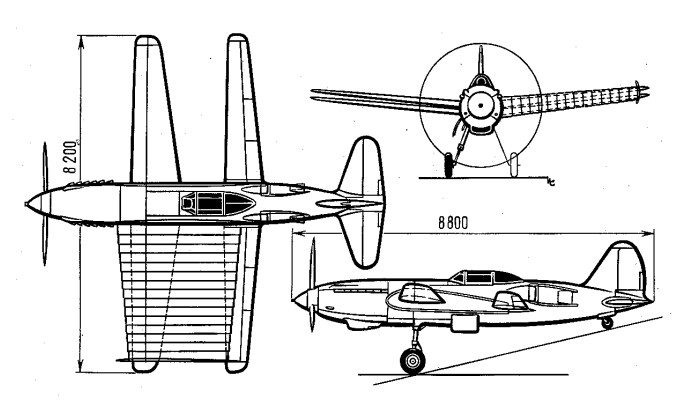
This advantage was of little use in civil aircraft. For this reason in 1938 Bakshayev proposed to develop an airplane to set speed records with this Klimov M-105 alar and power plant principle , but the project received no support, however an order was received to build a single-seater fighter using the Alar technology of the RK that was due to be ready for testing in 1940 and was known as Bakshayev RK-I (RK-800).
Engine: 1 x 100 hp M-11 piston engine Wingspan: 11.3m Length: 7.34 m Wingspan of extended sections: 6.27 m Wing area with retracted sections: 16.56 m² Wing area with extended sections: 23.85 m² Empty weight: 667kg Loaded weight: 897kg Wing load with sections retracted: 54.2 kg / m² Wing loading with extended sections: 37.6 kg / m² Power Load: 9.0kg / hp Fuel and oil weight: 70 kg Speed at sea level with sections retracted: 150 km / h Speed at sea level with extended sections: 144 km / h Landing speed with sections retracted: 100km / h Landing speed with extended sections: 75km / h Landing run with sections retracted: 210 m in 12 seconds Landing run with sections extended: 110m in 9 seconds Take-off run with sections retracted: 250m in 14 seconds Take-off run with sections extended: 135m in 9 seconds Range with sections retracted: 400 km Range with extended sections: 370 km Autonomy: 3.0 h Ceiling: 2900m Ascent time to 1000m: 7.5 minutes Ascent time to 2000m: 19.5 minutes Accommodation: 2