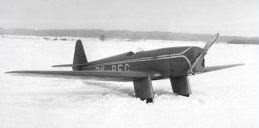
A 1936 aerobatic trainer
A 1936 aerobatic trainer
Aerobatics- and training aircraft, Czech Republic, 1936
Engine: Walter Major IV, 95 hp
Length: 23.163 ft / 7.06 m
Wingspan: 34.974 ft / 10.66 m
Wing area: 150.696 sqft / 14.0 sq.m
Max take off weight: 1808.1 lb / 820.0 kg
Weight empty: 1212.8 lb / 550.0 kg
Max. speed: 127 kts / 235 km/h
Cruising speed: 108 kts / 200 km/h
Service ceiling: 17060 ft / 5200 m
Wing load: 12.1 lb/sq.ft / 59.0 kg/sq.m
Range: 324 nm / 600 km
Crew: 2
Founded 1935 by P. Benes, well-known designer of light aircraft, in conjunction with the industrialist J. Mraz. Benes had been a founder of the Avia company, and subsequently chief designer of Ceskoslovenska-Kolben-Danek (CKD Praga). Producers of several different types of one and two-seat lightweight sporting aircraft.
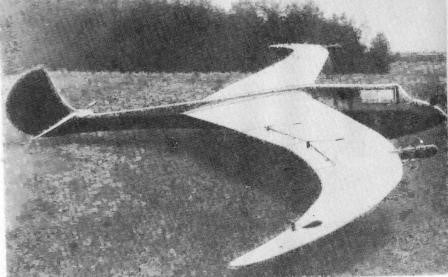
The Belyayev / Yemelyanov experimental sickle-wing glider (Russian: Беляев / Емельянов Планер с серповидным крылом) was developed at TsAGI in 1937 by VN Belyayev and VI Yemelyanov and never had a proper name, which is why it is known by its wing shape.
A new curved wing concept was tested on this glider, developed by Belyayev and tested on a Yemelyanov- built glider fuselage.
This glider was designed as a high-wing cantilever monoplane. The wing had a curved sickle shape, later be known as “Uprugoye Krylo” (elastic wing) or popularly as a “butterfly” wing. Long flaps were located on the trailing edge to improve the glider’s landing characteristics. The slim double-section ailerons were located along the entire span of the positive-taper section of the wing.
The elongated fuselage ended in a monoplane tail with stabilizers installed with a large angle of attack. The rudder featured a rounded trailing edge. The experimental glider was a two-seater with tandem enclosed cockpits.
This experimental model was completed in 1937 and during testing, when pulling out of a dive, the fore area was detached from the rest of the glider. The rupture occurred right by the second cabin, so that Alexandrov was suddenly in the air. Rastorguyev circled the falling cockpit several times before breaking free and launching himself into the void.
The pilot VL Rastorguyev and the experimenter VS Alexandrov, managed to save themselves by parachuting, but the glider was totally destroyed.
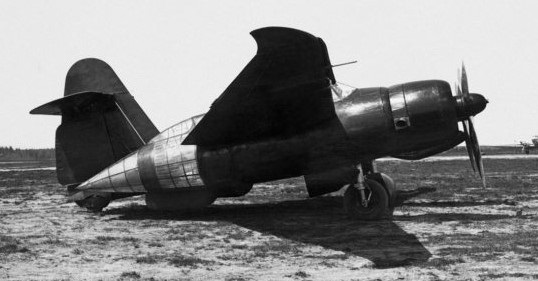
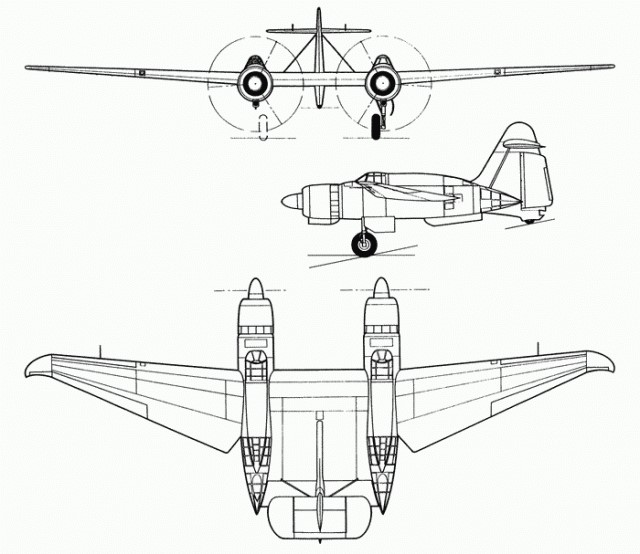
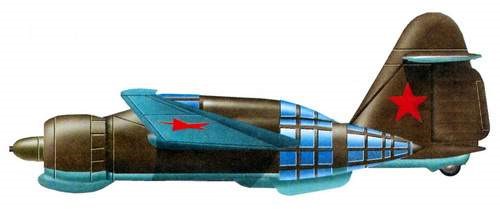
The idea for creating the Belyayev DB-LK (Russian Беляев ДБ-ЛК) came from Belyayev as a result of the successful results obtained with the BP-2 and BP-3 gliders. In 1938 Belyayev proposed a long-range bomber, converting an airliner project of designer Leonid l. Selyakov, The power design was done by PN Obrubov and DA Zatvan. The fundamental objective of the new design was to outperform the Ilyushin DB-3 bomber, which by that time had entered service with the VVS.
The requirements set for the new bomber included a maximum speed of 550 km / h at 7000 meters and a range of 4000 km with a bomb load of 1000 kg. At the beginning of 1938, the project was handed over to the aeronautical industry management for review, where its continuation was authorized.
The next step was the construction of a life-size wooden model. This time this step was justified with greater force. The originality of the construction required significant development, which had to be designed and tested on the model. In the spring of 1938, after lengthy discussions and a number of changes, the model was finally approved by the special commission of the VVS and the decision was made to authorize the construction.
The commissioner of defense of the USSR, Marshal K. Ye, was included in the evaluation commission. Voroshilov, who liked the design and decided to sponsor its construction. The group of engineers made up of Selyakov, Obrubov, Zatvan, Plejanov, Yerujimovich, Meyerson, Kartashkin, among others, got to the task, which began under the motto “Voroshilov Task” and was soon called DB-LK. of D alni B ombardirovshik – L etayuche K Rylo bomber or long range – flying wing.
Belyayev himself defined the scheme of his airplane as ” flying wing “, although in practice it does not fully correspond to this category
In the projection and preparation period, the aircraft had received the designation “Request 350” or “350”. For its construction in Factory No.156 a Construction Bureau was organized , which designated KB-4, would be under the direction of Belyayev and Selyakov. As substitutes, Obrubov and Zatvan were appointed.
Organizational changes in the industry in 1936 and the number of arrests of specialists and workers in 1937 had considerably weakened the factory and by 1938 there was a lack of new jobs. For this reason, the management of Factory No.156 welcomed the assignment of a new task.
The aircraft was constructed entirely metal, with duralumin coating on the fuselage and the leading edge of the wings and fabric on the control surfaces and the rest of the wing plane.
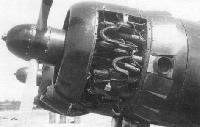
The new aircraft was conceived with a double fuselage structure formed by the lengthening of the driving nacelles, in which two 950 hp Tumansky M-87B radial engines were installed. Each moto-gondola ended in a cone with a widely glazed surface in which the defensive gunners of the rear hemisphere were located.
The fuselage had a semi-monocoque structure with three main frames and four spars. In the fuselage on the left the pilot and the shooter were located and in the right the navigator and the shooter-radio operator. The cockpit cover was positioned slightly to the left, to improve visibility on approach. The cockpits were located in a high position, just behind the engines.
The DB-LK was defined in the documents as a “nearly tailless type flying wing”. During the development of the project, great attention was paid to the “Belyayev” wing with inverted deflection at an angle of 5 ° 42 at the leading edge. The wing consoles had a double stringer structure and were originally conceived with a NASA 23012 profile. Each console tapered its chord towards the ends and ended in a backward curvature, where small ailerons were located. The aerodynamically compensated Frize main spoilers took up more than half the span of the console. Opposite these ailerons were self-operating slats, designed to ensure safety at critical flight angles. Large area flaps capable of 45º were located throughout the rest of the span. The ailerons could be directed downwards when extending the flaps, to increase the lift of the aircraft.
The centroplane, with a structure of 5 stringers, was designed using an S-profile of the GLASS D-1 type with a tapered front. Adjustable balance flap surfaces were installed along the entire length of the trailing edge, which were lowered during take-off and raised at an angle on landing. These surfaces were conceived with the aim of reducing the pressure on the steering bodies. In front of these flaps, on the intrados of the centerplane, there were aerodynamic brakes that worked in a synchronized way with the wing flaps.
This configuration allowed a fairly high wing loading, reaching 160 kg / m² and with it the designers wanted to achieve the breakdown of the flow in the centre plane rather than in the wing consoles for critical angle of attack manoeuvres.
The wind tunnel tests showed that these claims would not be met in practice, so the wingtips were soon modified. Finally, the TsAGI MV-6bis profile was defined for the centroplane and the Gettingen-387 profile in the wing consoles.
The centerplane ended in a large keel topped by the 2 m² horizontal stabilizer and the 0.86 m² elevator. At the bottom of this keel was located the fixed tail wheel, conveniently faired. Originally the stabilizer featured small vertical surfaces at the ends and a weight balance system, but these features were later removed.
The conventional-type landing gear featured 900 × 300 mm single-wheel main landing gear, which retracts rearwardly into the corresponding fuselage. The tail wheel was fixed and was conveniently faired by a structure that was part of the keel.
To the first frame of each fuselage, the powerplate made of welded steel tubes was fixed. Initially the use of two Tumansky M-88 engines of 1100 hp was conceived, but after the accident that caused the death of Valeri Pavlovich Chkalov, the use of this engine was for a certain time prohibited, so the designers had to be content with it. less powerful M-87B from the same manufacturer, capable of developing 950 hp at 4700 meters. The fuel system consisted of two protected tanks in each of the wing consoles, another two located at the base of the wings and seven more (5 large and two small) located in the center plane. The total capacity of the 13 tanks reached 3444 liters.
In the last frame, the glass movable section of the gunner’s cabin was fixed with a machine gun that could rotate 360º. A little further back was the glass cone with another machine gun located horizontally. In this way the defense of the rear hemisphere could be covered with four machine guns. Each of the shooters had to serve both machine guns.
Apart from this defensive armament, the DB-LK had two ShKAS machine guns located in the central region of the center plane. If necessary, these machine guns could be directed at an angle of +/- 10 °, by means of a remote control system. The bomber carried 4500 rounds for the 6 ShKAS machine guns.
Under normal conditions the bomber could carry 1000 kg of bombs in different configurations, from four 250 kg FAB-250s to 58 small caliber bombs. In overloaded configuration the DB-LK could carry two FAB-1000 or FAB-500 bombs on external supports under the center plane.
The construction of the prototype was started at Factory No.156 in Moscow from the publication on July 29, 1939 of Resolution No.248 of the Defense Committee. Although the aircraft had already received the designation DB-LK, the manufacturing designation “350” remained in use.
The first DB-LK was completed by September 1, 1939. The aircraft was soon handed over to the NII VVS in Shelkovo for the development of factory tests, which were assigned to engineer TT Samarin and test pilot MA Nyuxtikov. In November, the first runs began on the airfield.
It is noteworthy that at that time Soviet test pilots were sceptical of tailless aircraft designs and the arrival of the DB-LK at the NII VVS did not bring great interest. The testers disparagingly nicknamed the plane “kuritsa” (hen), a bird with wings unable to take flight.
At that time the expansion of the aerodrome was carried out. New areas were levelled, but in some places there were irregularities that were filled with wood. The first runs on the DB-LK were carried out by the head of the NII VVS, General Filin. In one of these tests, when reaching 240 km / h one of the undercarriage hit a stump hidden on the edge of the runway by snow. The plane fell onto the wing, damaging the propeller and tail wheel. The problem was soon resolved, but this incident contributed to the doubts of the pilots.
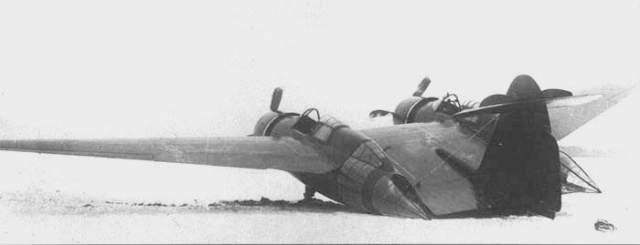
The aircraft was returned to the factory for repair and in the early 1940s, after reinforcing the undercarriage and making another series of minor modifications, the DB-LK was returned to the NII VVS.
The test pilot Nyuxtikov performed not only runs, but small jumps. During one of the take-off attempts, the flaps of the centroplane erroneously moved to the landing position and raised its nose. Those present at the tests panicked thinking the worst, but the aircraft soon lowered its nose on its own and settled gently on the ground after automatically activating the wing leading edge slats.
The prolongation of the tests without achieving the first flight began to make the Commissariat for the Aeronautical Industry (NKAP) impatient. Belyayev went to the substitute of commissioner AS Yakovlev requesting that the pilot be replaced. A week later a similar request came to the head of the NII VVS Filin from the head of the 11th address the NKAP Leontiev. However, no volunteer candidate appeared to fly the “chicken”.
A commission was created to evaluate how the tests should be carried out, but without waiting for it, the DB-LK with the pilot Nyuxtikov at the controls took off. This happened on March 8, 1940. Engineer TT Samarin was in the cockpit on the right. Another of the many tests was carried out and the plane had made two small “jumps”. During the execution of a third the DB-LK suddenly took flight. Fearing the behavior of the plane in the turn at low altitude, Nyuxtikov decided to take altitude and after stabilizing the plane, he made a smooth landing.
Before the snow melted, factory tests had been completed and a number of major defects corrected. The air intakes of the engines were lengthened to prevent them from filling up with snow during races on the track.
In April 1940 the DB-LK had its skis removed and wheels fitted. In this configuration it was delivered for the development of state tests.
The most difficult test of the DB-LK took place on May 1, 1945. In the traditional aerial demonstration over Red Square, which accompanied the festivities, the new aeronautical models were shown and the impression they made on the personalities gathered there (especially Stalin) could guarantee the future of the model.
The day before the parade the DB-LK was prepared with great care. The preparation was entrusted to Belyayev’s replacement, Obrubov, who at the last moment decided to modify the extension made to the air intakes, considering that in the absence of snow, they were meaningless and made the power plant ugly.
The following morning a squad of bombers prepared for takeoff for Red Square, kicking up huge clouds of dust. This dust accumulated in the air intakes of the DB-LK’s engines, which lost the force necessary for take-off. In what they managed to disassemble and wash the filters it took some time. By the time the DB-LK passed over the rostrum, Stalin had already withdrawn.
Delivered for state testing on the NII VVS in April 1940, the DB-LK would make its maiden flight on the 25th. Testing lasted for two months, until June 25th. The test program comprised 73 flights with a total duration of 45 hours in the air. During this period the plane was flown by several pilots apart from Nyuxtikov, among whom Filin, Jolopsiev, Kabanov, Stefanovski and Dudkin stood out. During the tests, two aerial combat drills were carried out with a Messerschmitt Bf-109E, bought from Germany.
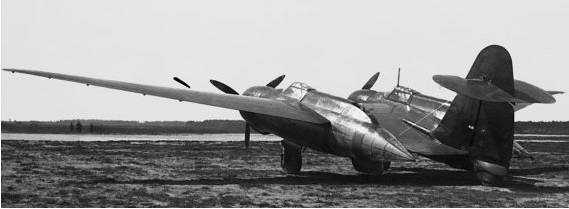
The pilots highlighted as positive the aircraft’s ability to fly with a single engine, even maintaining the climb in these conditions with a speed of 1.15 m / s. Single-engine turns were not difficult for either side. With the two engines the plane made turns without difficulty. The glide was smooth at speeds of 240 km / h and the landing was quite good, but the landing speed of 155 km / h was considered high.
As a result of tests, a large number of changes were made to the DB-LK. The rudder surface was increased from 4.27 m² to 4.8 m². The trim for the elevator, steering and ailerons has been decreased. The entire rear section of the centroplane was converted into an auxiliary elevator with an area of 0.58 m². The surface of the empennage was enlarged to 7 m². To guarantee the centering of the aircraft, weights of 280 kg were added to the hoods of each engine nacelle.
The tests carried out with the M-87B engines yielded a speed of 488 km / h, well below that requested, although higher than that of the most modern Soviet serial bomber at the time, the Ilyushin DB-3. The M-87 engines were inferior in power to the M-88 with which it was designed.
The take-off and landing speeds were considered to be too high. The tail took off with difficulty at speeds close to 100 km / h and about 180 km / h had to be achieved to achieve takeoff. The test pilot had noticed a tendency during takeoff to turn to the right.
The range during the tests could not be defined due to the regulations placed on the flying weight of the aircraft. The commission allowed DB-LK flights as long as a takeoff weight limit was maintained, citing trim problems, weak landers, high landing speeds and a long run.
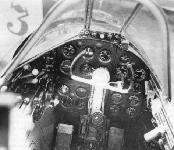
Another major complaint from the pilots was related to the cockpit configuration, which was considered narrow and uncomfortable, especially the navigator’s cockpit. Visibility to the front and down was considered unsatisfactory.
The gunner’s cabin was considered uncomfortable and did not allow service to the two machine guns. On the other hand, these cabins were filled with the exhaust gases from the engines, which made it almost impossible to stay in them without a gas mask.
Armament tests determined that the forward hemisphere was barely protected due to the poor firing angles of the machine guns and poor frontal visibility from the cockpits of the pilot and navigator. On the other hand, in the gunner positions, if the upper machine gun was used to defend frontal attacks, there was no way to keep the observation behind, which left the plane totally unprotected. The upper machine gun was annoying during the operation of the rear and when it was operated, the frontal hemisphere was totally neglected.
Under these conditions the aircraft could not complete the test cycle. The commission’s report highlighted shortcomings and recommended returning the aircraft to its builders in order to improve manoeuvrability, armament performance, and take-off and landing characteristics and to have it ready for a second round of testing, which was scheduled for October 15 as 1940.
In August 1940 Belyayev showed the list of modifications necessary to meet all the requirements set out by the military. The originally simple modifications had been greatly complicated. It was about:
Replace the M-87 engines with the 1500 hp M-81 engines, modifying the entire drivetrain and the front area of the fuselage.
Replace the wing landing flaps with louvered flaps and insert a new auxiliary wing slat.
Achieve the synchronized work of the flaps with the stabilizers.
Modify the landing gear to a tricycle configuration.
Modify the structures of the fire points.
At that time, the military made another request that radically modified the design. It was about converting the plane into a dive bomber with a central cockpit over the center plane. The Belyayev collective took the task seriously and the development of the modifications was carried out. As a result, the configuration of the new model, which received the internal factory designation “360” or “New DB-LK”, changed greatly from the base model.
The new cockpit in the center plane was presented as an aerodynamic nacelle. Four different variants were tested in the TsAGI’s T-2 wind tunnel. There were also tests of the take-off and landing systems. As a result, it was decided to install slats along the entire span of the leading edge of the centroplane. The gunners, one of whom would act as navigator, were located in the rear section of each of the fuselages with individual glass covers to improve 360º visibility.
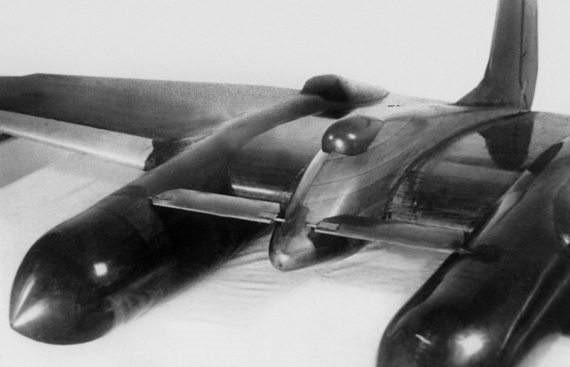
Work was carried out on the external system for fixing the pumps and the addition of aerodynamic brakes, mandatory to regulate speed during bites, as well as an automatic exit system for them.
Aerodynamic tests of the new model were carried out until the beginning of 1941. In the last variants analyzed, it was planned to install 2000 hp M-71 engines, which should allow reaching a speed of 590 km / h at 6000 meters of altitude. The flight weight with military bomb load increased to 10,600 kg and the calculated ceiling was 10,500 meters with a normal range of 1,500 km and 4,000 meters in autoloader.
A conceptual project with AM-37 linear motors was developed, which received the designation “380” in the KB-4 numbering.
On 20 September 1940 Victor Belyayev received the title of doctor of technical sciences. The possibility of transferring the KB-4 to Bykovo or Smolensk was analysed . Factory No.156 had been tasked with producing models “100” and “103” developed by specialists confined under the control of the NKVD, who worked in the factory itself. Under these conditions work on the new DB-LK model stopped.
At the end of 1940 the prototype of the DB-LK remained unattended at the NII VVS airfield. In August of that year the director of Factory No.156, AV Lyapidevski (one of the first Soviets to receive the title of Hero of the Soviet Union for the rescue of the crew of the steam “Chelyuskin”) proposed to deliver the specimen as an exponent static to the Bureau of New Technique of the TsAGI or the Moscow Aviation Institute. In October 1941, when German troops approached Moscow, the decision was made to move the plane to the deep rear, but it was not possible to find pilots capable of undertaking the task, so it was destroyed.
The fate of the DB-LK was determined by the novelty of its design. Despite not meeting the specifications that were established, it is necessary to emphasize that the DB-LK was 30 km / h faster than the fastest competitor in its category. In relation to the ceiling of flight and range, it surpassed the Túpolev SB and Ilyushin DB-3 bombers, which made up the “elite” of Soviet bombing aviation at the time.
Practice showed that the DB-LK scheme brought both advantages and shortcomings, but the former outweighed the latter. The flying wing scheme is more economical in terms of consumption and has a better weight gain ratio than the conventional scheme, but this would be demonstrated only many years later.
DB-LK
Engines: 2 x Tumansky M-87B 950 hp
Wingspan: 21.60 m
Wing area: 56.87 m²
Length: 9.78 m
Height: 3.65 m
Empty weight: 6004 kg
Normal takeoff weight: 9061 Kg
Maximum overloaded weight: 10672 kg
Wing loading: 203 kg / m²
Speed at sea level: 395 km / h
Maximum speed at 5100 m: 488 km / h
Cruising speed: 446 km / h
Landing speed: 150 – 155 km / h
Ascent speed: 370 m / min
Ascent time at 5000 m: 13.6 min
Practical ceiling: 8,500 m
Normal range with 1320 kg of fuel and 1000 kg of bombs: 1270 km
Maximum range with 2,500 kg of fuel and 1,000 kg of bombs: 2,900 km
Take-off run: 600 – 620 m
Landing roll: 550 – 600 m
Armament: 6 machine guns of 7.62 mm and 1000 kg of bombs
Accommodation: 4
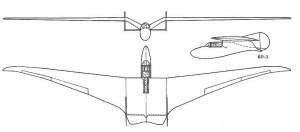
The Belyayev BP-3 (Russian: Беляев БП-3) glider of 1936 was developed by Victor Belyayev with forward-swept wing as a continuation of the BP-2 but in tandem configuration.
Success with the BP-2 led Belyayev to conceive of an improved model with larger dimensions and some changes. This two-seater capacity model appeared in 1935 as the BP-3 and had the wingspan increased to 20 meters.
The wing shape in the plane was generally similar to that of the previous BP-2, but in this case the wingspan had been significantly increased. Unlike the BP-2, the BP3 used a medium deployment wing with a gull-like curvature. This allowed to reduce the surface of the rudders and a more compact location of these. The hanging flaps located under the center plane disappeared.
The tail unit also received changes. Maintaining the double empennage structure, the horizontal plane on these was eliminated.
The BP-3 glider was designed as a two-seater and its crews were located in a closed cockpit.
The BP-3 was built in the TsAGI workshops and was flown for the first time on July 18, 1935. From the first flight, this aircraft presented excellent characteristics, with an aerodynamic quality that reached 33:1 glide, so it was decided to use it to establish a new record for gliding range.
The prototype was possibly followed by several copies built in the workshops of the Yeisk Naval Pilot School.
BP-3
Wingspan: 20 m
Length: 5.6 m
Height: 2.2 m
Wing area: 3.54 m²
Empty weight: 400 kg
Glide ratio: 33: 1
Seats: 2
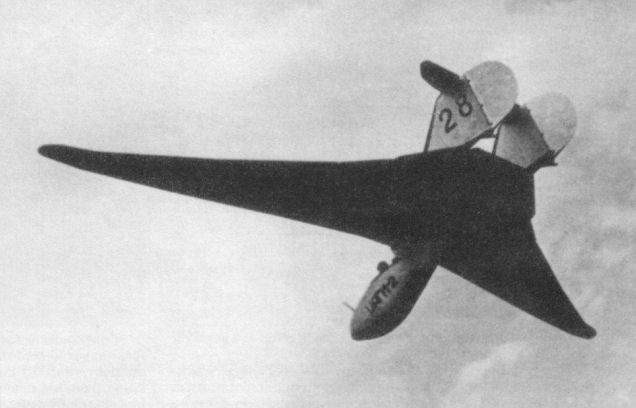
The Belyayev BP-2 (TsAGI-2) (Russian: БеляевБП-2 (ЦАГИ-2)), was an inverted arrow wing glider developed by Víctor Belyayev to test the effectiveness of this wing composition. Only one copy was produced.
In August 1933 Belyayev participated as a member of the TsAGI technical commission in the IX National Sailing Competitions held in Koktebel, Crimea. The main task of the commission was to check the technical condition of the gliders presented and to grant the authorization to fly. The commission considered that the best exponents were four glider models in a tailless configuration: the BICh-11, BICh-12 and BICh-13 from BI Cheranovski and the LAK-1 glider from a Leningrad flying club.
The presence at the Koktebel competitions prompted Belyayev to implement a conception idea for an airplane. The presence at the TsAGI of AA Sienkov, one of the pioneers of glider construction in the USSR, also played an important role in his decision.
In the TsAGI workshops during the winter of 1933 – 1934, these two specialists began on two new gliders: the BP-1 (TsAGI-1) from Sienkov and the BP-2 (TsAGI-2) from Belyayev. The name BP comes from the term B esxbosti P laner or paneer without glue.
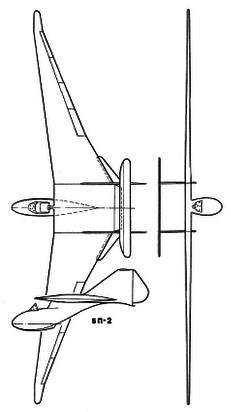
The BP-2 glider was conceived as a flying wing without horizontal tail planes, but with the presence of double keels with rudders.
The wing design was characterized by its large wingspan. The centroplane, designed with an M-6 profile, had a rectangular shape in the plane and the wing consoles with the G-387 profile were fixed to it. The wing, with an area of 18.5 m², presented a configuration with inverted sagging and noticeable stretching towards the ends; standing high above the fuselage. In conjunction with the wing configuration, the entire structure of the glider was conceived seeking the lowest weight and the best possible aerodynamics. The structure incorporated a single spar built in the shape of a box and located at 30% of the wing chord. Four-section ailerons were located on the wing’s trailing edge, designed to ensure the balance of the aircraft and its control. These ailerons covered 9% of the wing surface.
Hanging flaps were located on the trailing edge of the centerplane, designed with the aim of achieving glider balance in flight and improving longitudinal control. In addition to these flaps, two lateral flaps with a smaller area were located at the trailing edge and designed to modify the curvature of the wing profile at the base of the consoles.
The entire wing structure was built in wood and practically in its entirety was covered with plywood (only a small section in the central region of the wing was covered with fabric.
The landing gear consisted of a ski at the bottom of the nacelle and skids under the empennage.
The cockpit was located in the forward part of the centroplane, in front of the wing leading edge, ensuring the necessary centering. This gave the pilot excellent visibility, but in conjunction with the wing configuration impaired the longitudinal stability of the model. To correct this problem on both sides of the central wing area, two large area vertical surfaces topped by a small stabilizer with a large elevator were placed. Large rudders were located in the rear of both keels.
During the design process, an important investigative work was carried out in order to achieve the best wing shape. The configuration of the BP-2 was initially quite criticized in the TsAGI. Several specialists expressed doubts about the flight capabilities of the concept. It was decided to test the model in the wind tunnel. In the TsAGI there was also a 200-meter-long hydrochannel that had an electrically operated trolley for towing the models, which ran the entire length of it. It was decided to use this truck to tow the glider models, thereby quickly and effectively demonstrating that Belyayev’s design it was able to take off and stay in the air without difficulty.
Once finished, first flying in August 1934, the BP-2 was sent to Koktebel to participate in the X National Sailing Competitions, being flown by the pilot DA Koshits. The model demonstrated excellent flight stability and superb control. Pilot Koshits performed Nesterov’s “dead” loop on this glider.
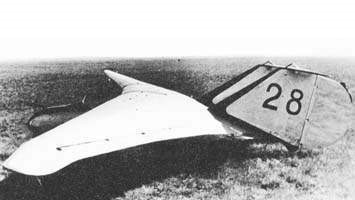
Pilots who had a chance to test it declared that the BP-2 had good flight characteristics and the ailerons were quite effective. It spun quite well. Landing speed was only 40 – 45 km / h. The only defect noted was the poor effectiveness of the rudders, which had to be complemented by the ailerons in flight to achieve the desired effect.
Despite its excellent design the BP-2 was only able to show a glide ratio close to 18 – 1. The main culprits for this limitation were the elevator located on the empennages and the flaps hanging under the centroplane.
After the tests the BP-2 returned to Moscow flying behind a Polikarpov R-5 towplane.
The experience gained with the BP-2 glider served as the basis for the development of the improved BP-3 and the DB-LK bomber.
BP-2
Wingspan: 14.8 m
Wing area: 18.4 m²
Aspect ratio: 11.9
Length: 5.08 m
Height: 2.40 m
Empty weight: 199 kg
Wing loading: 16.5 kg / m²
Minimum descent speed: 1.35 m / s
Stabilizers surface: 0.64 m²
Depth hole area: 1.42 m²
Keel surface: 2.76 m²
Rudder surface area: 1.08 m²
Spoiler area: 1.7 m²
In the 1930s on the way to increasing speed, a new phenomenon known as “Flutter” appeared. Many aeronautical researchers dedicated themselves to investigating this phenomenon and the ways to combat it. In the USSR, the research carried out in this field at the TsAGI by a group of specialists headed by Victor Belyayev had a special impact.
In the course of the research process, it was linked to the increase in wing resistance through the change of its shape, achieving a self-balancing state capable of counteracting the appearance of the “Flutter” throughout the range of increased speeds. To demonstrate this principle, engineers Victor Nikolayevich Belyayev and Victor Ivanovich Yujárin developed a new wing design at the TsAGI . The plan view depicted an open M with a slim profile and large wingspan.
To verify the effectiveness of this new “elastic” wing, the manufacturers, in addition to the tests in the wind tunnel, decided to build two experimental gliders that were successfully tested, allowing to collect valuable information on the way to design a high-speed aircraft with this wing plant.
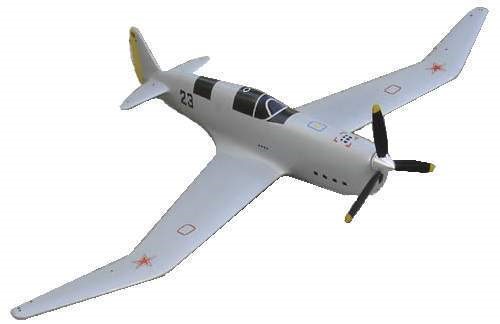
In 1938, Víctor Belyayev’s group designed an experimental aircraft that received the UK name according to the acronym of “U prugoye K rylo” or Elastic Wing with the new wing structure, which at the time was popularly known as “butterfly” type wing.
The UK design was compact enough to be able to use the lightweight 430 hp Renault Ro.1 12-cylinder engine. In 1936 a group of Soviet specialists had traveled to France to familiarize themselves with this technology and to buy several licenses for the production of Renault engines for the development of light aviation in the USSR. Among these engines was the Ro.1, which was to be produced at Factory No.26 in Ribinsk.
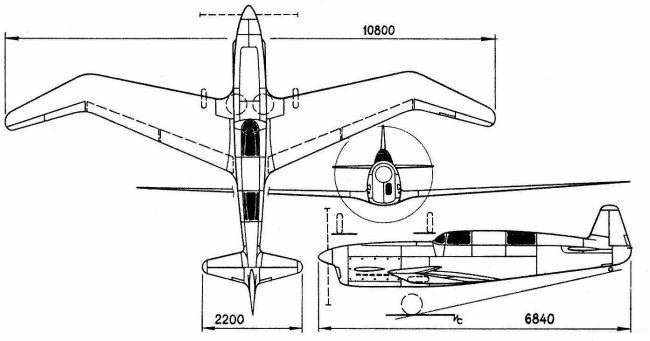
An 11 m² wingspan “butterfly” wing was attached to the fuselage, with a profile of variable thickness throughout the wingspan, 7.7% at the root and 5% at the ends, which was attached to the fuselage in low implantation. Long flaps were located on the trailing edge to improve takeoff and landing characteristics. The thin double-section ailerons were located along the entire span of the positive-taper section of the wing.
The UK was conceived to carry out all the high-school piloting maneuvers on it and was equipped with special recording equipment to measure the deformations of the wing and the impact on the stability of the aircraft in the different flight regimes. The structure was calculated to withstand overloads of 13 units.
The construction of both the wings and the fuselage was made of wood.
The landing gear was of the conventional retractable type, with a small tail wheel and the main landers that were collected into elliptical cavities located in the fusion zone of the fuselage and the wing root.
The cockpit was closed, with capacity for two crew members in tandem: the pilot and a specialist, destined to guarantee the correct registration of the instruments.
The fuel system included tanks located in the wing, in the negative sagging zone.
A single-seater version known as UK-1 was also conceived designed as a sports aircraft with the aim of setting a new speed record in land aircraft.
The excellent results obtained during the tests with the Belyayev gliders, as well as the excellent results that the project calculations yielded, led the TsAGI management to “think big”, so it was decided to close the development of the record-breaking aircraft and concentrate on designing a much more ambitious project: the DB-LK bomber, with an inverted swept wing similar to that used by gliders. This bomber was designed in 1938 and in its state tests, which lasted until 1941, it showed better performance than the Ilyushin DB-3M with the same power plant and bomb load.
Despite the reorientation of the project, the idea of building the single-engine model with an “elastic” wing was not rejected. At the request of the TsAGI the OKB for light constructions of the Kazan Aviation Institute (KAI) , under the direction of ZI Itskplich (who until 1939 worked on the OKB-301 dedicated to the study of Caudron models in the USSR under the direction of AA Dubrovin ) and later by GN Borobiov, two specimens were studied: the UK-1A with the “butterfly” wing and the UK-1B with a low wing of normal configuration. Both were two-seater and differed only in the wing, in order to be able to carry out comparative experiments.
Due to the fact that the Renault Ro-1 engine was never produced, it was decided to install the MV-6 engine (a copy of the 6-cylinder Renault Bengali 6 produced under license in the USSR) in both examples, which was characterized by having only half the projected power. This reality definitively removed the idea of being able to establish a new speed record, but despite this it was thought that, in parallel with the experimental tasks, the aircraft could be ideal for participating in different air competitions.
The first of two aircraft built at KAI was completed in 1940. In the spring of the following year it was handed over to the TsAGI for the development of the tests. With the beginning of the war these were not realized.
The second was never finished. Actual flight data was not preserved.
Engine: A 430 hp Renault Ro.1 12-cylinder engine
Wingspan: 10.8 m
Wing area: 11.0 sq.m
Length: 6.84 m
Tailplane wingspan: 2.2 m
Empty weight: 750 m
Takeoff weight: 1028 m
Speed at altitude: 510 km / h
Landing speed: 100 km / h
Ceiling: 11000 m
Range: 900 km
Accommodation: 2
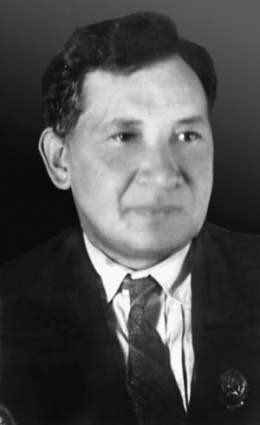
Victor Belyayev was born on March 28, 1886. Between 1920 and 1923 he studied at the Moscow Polytechnic Institute and the MGU. In 1920 he took his first steps in aeronautical construction by building a biplane glider following the NB Delone scheme, but with wheel landing gear.
He began his professional career in aviation in Leningrad in 1925, when he joined to work as an engineer at OMOS led by DP Grigorovich, specializing in issues related to the calculation of aircraft resistance.
In 1926, at the age of 30, he moved to TsAGI, led by AN Tupolev. In this institution he worked on the resistance calculations of the Túpolev ANT-6, ANT-7, ANT-9, ANT-14 and the gigantic ANT-20 planes.
Between 1926 and 1924 Belyayev developed the theory and methodology for the calculation of rectangular wings, which was widely used as a theoretical basis for the calculation of resistance in Soviet aeronautical development for models with straight wings or low sagging. When the Belyayev aeronautical construction resistance department was created in the TsAGI in 1931, he went on to direct a research group, a task that he knew how to combine with his aeronautical projection and construction activity.
Over the years, before aeronautical engineers, he presented the task of overcoming the dangerous effect called “Flutter” as a way to achieve the necessary increases in flight speeds. Belyayev studied the phenomenon and provided fundamental contributions to combat it. For the first time he proposed to use anti-flutter weights as a measure to increase the stability of flight surfaces.
At TsAGI, engineers VN Belyayev and VI Yujarin developed a new wing design capable of moving the center to face this phenomenon without losing the necessary structural strength. The plan view of this configuration resembled an expanded letter M with a slim profile and large wingspan.
The need to confirm the effectiveness of this wing solution led Belyayev back into the field of aircraft construction. In 1934 he designed the BP-2 glider (Besxbosti Planer – Paneador sin tail), also known as TsAGI-2, demonstrating a high level of originality by applying the scheme without tail and its wings with inverted wing tufting. The model was tested towed by a forklift in the TsAGI hydro- channel. The BP-2 participated with great success in the IX National Competitions, held in Koktebel in 1934, showing excellent results. At the end of the competitions he was airlifted to Moscow, towed by aPolikarpov R-5.
With its second design, the glider recordista BP-3 of 1935, Victor Belyayev reaffirm its success. This glider first flew on June 18, 1935 and was characterized by its excellent flight characteristics. It has been claimed that several specimens were built in the workshops of the Yeisk Naval Pilot School. Both gliders demonstrated the accuracy of Belyayev’s calculations and the effectiveness of his original scheme.
In 1935 and in response to a competition launched by the All-Russian Scientific and Technical-Engineering Society of Aviation (AviaVNITO) and the newspaper “Tras el volar” developed a project for a twin-engine transport plane known as AviaVNITO-3, which was characterized also for the originality in the technical solutions. This project won second place in the competition and was proposed for serial construction, but was ultimately not built.
In the late 1930s, Belyayev went on to lead an aeronautical design structure known as OKB-16, located at the No.156 Experimental Building Factory in Moscow. In this factory were established several OKB aircraft building, including those of SA Kochierigin, VV Shevchenko and the famous TsKB-29 of the NKVD.
Among the members of this group were PN Obrubov, LL Selyakov, EI Korzhenievski, DA Zatvan, BS Biekin and NY Leontiev. Most of the works of this group were characterized by the novelty of their designs, apart from traditional schemes.
In 1938, on their own initiative, Belyayev and his collective began the development of a bomber version based on the AviaVNITO-3. Known as DB-LK, this version was tested in 1940 showing better performance than the DB-3M bomber, which was already being built. serially. In this same period, the experimental UK aircraft with an elastic butterfly wing with a Renault engine of 430 hp, which was built at the KAI in 1941, and the EOI experimental fighter with an original double fuselage scheme were projected in this same period. This fighter began to be built in1940, but it was destroyed before the evacuation in October 1941, along with the plans and calculations.
With the start of the war bureau buildings Belyayev was dissolved and he was evacuated to Omsk, where he initially worked in the factory No.166 and later as head of the group of calculations in KB of VM Myasichev, the factory No .288. In 1944 Belyayev worked on calculations for the high-level reactive fighter Bartini R-114.
At the end of the war Victor Belyayev returned to TsAGI where he devoted himself to the study of resistance in aeronautical construction. For his contributions in the field of structural resistance and the theory of the “Flutter” in 1940 he was awarded the category of doctor of technical sciences and in 1949 he received the category of professor.
He died on 25 of July of 1953 at 68 years old.
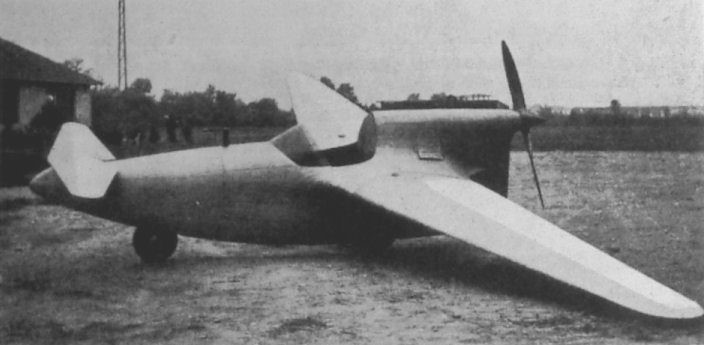
The Colibri was built in 1937 by Quinto Beltrame. It is plywood monocoque, with an 18 hp opposed-piston single cylinder air cooled two-stroke Beltrame engine, and three drive belts to the prop. The 450 cc engine produces 18 hp at 4200 RPM, with oil and fuel mixed.
The elevator is the only controllable surface: +12.5 degrees, – 2.5 degrees, 30 degrees lateral tilt each side.
Engine: Beltrame 450 cc, 18 hp
Wingspan: 6.06 m
Length: 3.55 m
Height: 1 m
Wing area: .5 sq m
Empty weight: 70 kg
Loaded weight: 160 kg
Stall speed: 60 km/h
Cruise speed: 140 km/h
Max speed: 160 km/h
Take off run: 125 m
Landing roll: 50 m
Range: 500 km

