Bernard AB.1 / AB.2 / AB.3 / AB.4

The Adolphe Bernard AB 1 two engine biplane medium bomber, built near the end of the First World War, was the first original design from the Adolphe Bernard factory, which had previously produced SPAD aircraft to government contracts. It was a twin engine biplane bomber, carrying 600 kg (1,323 lb) of bombs.

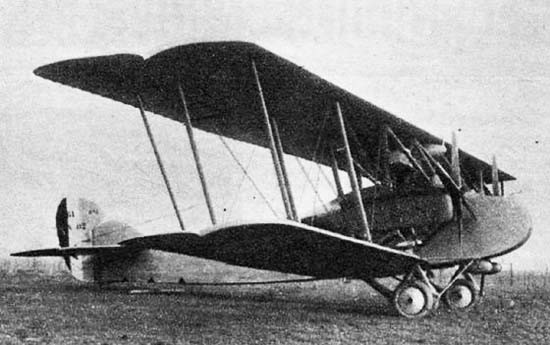
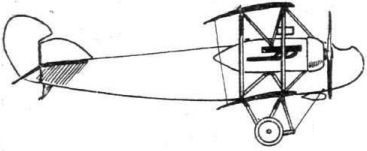
Designed by Louis Béchereau, the AB 1 was a wooden three bay biplane, without stagger but with greater span on the upper planes. Only the lower wings carried dihedral. The outer and mid interplane struts were outward leaning pairs but the inner bay was defined by a complex of struts supporting the engines midway between the wings. Head on, these appeared as a V based on the lower wing but had M and W arrangements seen side-on above and below the engine. The AB 1 used Hispano-Suiza V-8 piston engines, of which type there was a surplus after the Armistice. It had ailerons on both upper and lower wings, externally connected.

The fuselage of the AB 1 was flat-sided, with a narrowed but flat topped decking. There was a gunner’s position in the extreme nose fitted with a 7.7 mm machine gun on a TO 4 mounting. The fuselage tapered rearwards with the cantilever tailplane, which carried separate elevators, mounted on top. The fin carried a horn balanced rudder which extended down to the bottom of the fuselage, moving between the elevators.

Its main undercarriage had a wide track, with twin wheels on short axles mounted below each engine on inverted V struts, themselves further braced to the lower fuselage longerons.
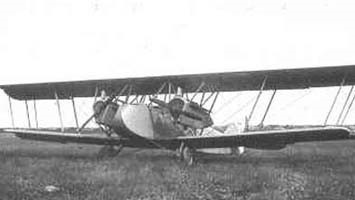
The first AB 1 was built in 1918 and flew in the late spring of that year and testing continued into early 1919. There were plans for a variant using more powerful Hispano-Suiza 8Ba engines, the AB 2, but this was not built. Post war, two civilian variants were started, the post-carrying AB 3 and the passenger only or passenger plus post AB 4. The AB 3, one of which was completed in 1920, could carry a useful load of 905 kg (1950 lb). The AB 4, which had the same engines as the proposed AB 2, carried a maximum of seven passengers. Its fuselage was on display at the 6th Paris Aero Show in December 1919, but it was not completed.

Ten AB 1s were produced after the Armistice but do not seem to have achieved squadron service.

Variants:

AB 1
The bomber version of 1918, as supplied to the Armée de l’Air. Eleven built.

AB 2
Proposed version with 200 hp (150 kW) Hispano-Suiza 8Ba engines. Not built.

AB 3
Post carrying civil version of AB 1, two Hispano 180 hp engines. One built 1920.

AB.3 M
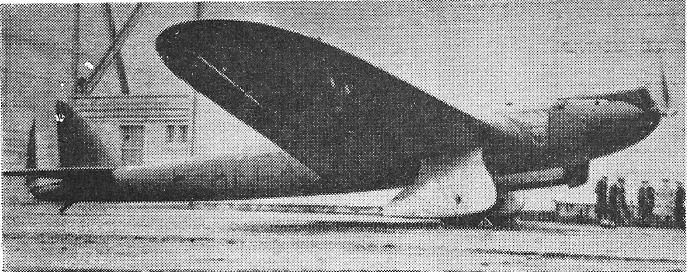
Large twin boom monoplane bomber with three Hispano 12 G engines, two tractor and one pusher. One example started but unfinished.

AB.3 T
Civilian transport derivative of the AB.3 M, with three tractor engines. Project only.

AB 4
Airliner/post carrier version of AB 3, two Hispano 200 hp. Maximum seven passengers, depending on postal load. One part built 1919.

Specifications:

AB.1
Engine: 2 × Hispano-Suiza 8 Ab, 130 kW (180 hp)
Propellers: 2-bladed (later 4)
Upper wingspan: 18.95 m (62 ft 2 in)
Length: 11.30 m (37 ft 1 in)
Height: 3.65 m (12 ft 0 in)
Wing area: 80.0 sq.m (861 sq ft)
Empty weight: 1,570 kg (3,461 lb)
Max takeoff weight: 2,859 kg (6,303 lb)
Maximum speed: 167 km/h (104 mph; 90 kn)
Cruising speed: 135 kph
Service ceiling: 4,900 m (16,076 ft)
Rate of climb: 2.1 m/s (410 ft/min) to 2,000 m (6,560 ft)
Armament: 7.7-mm machine gun
Bombload: 600 kg / 1,323 lb
Crew: 2
Bernard V.4

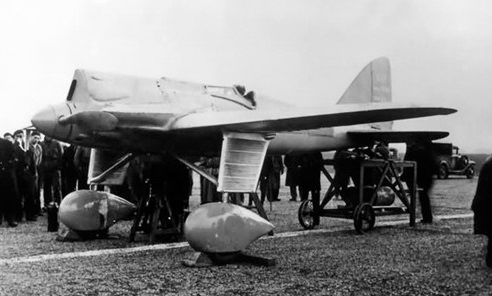
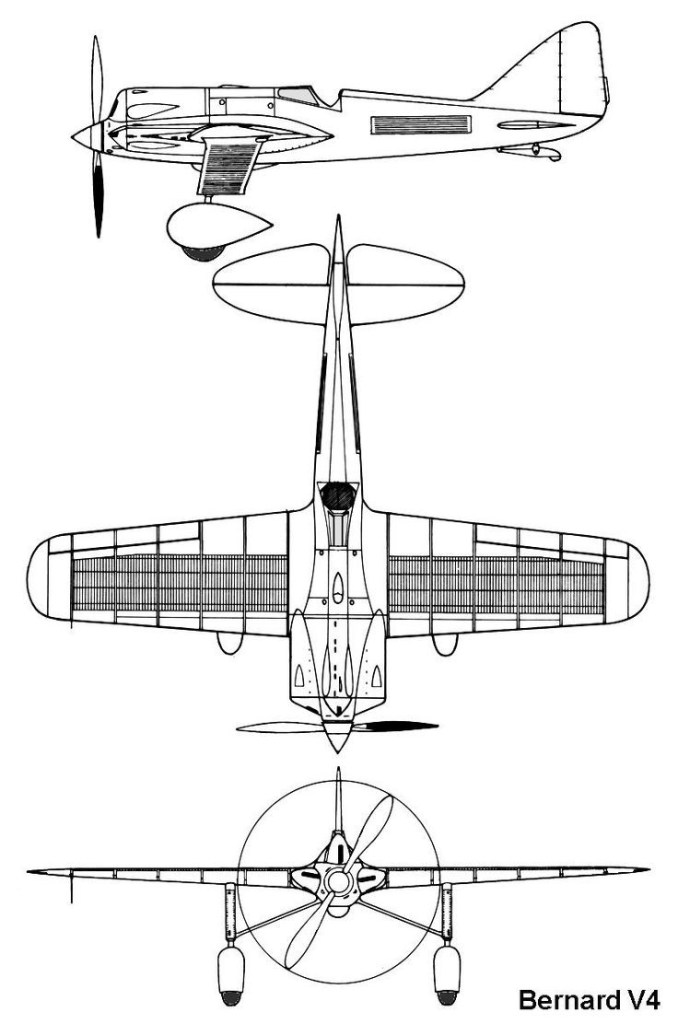
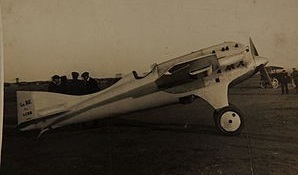
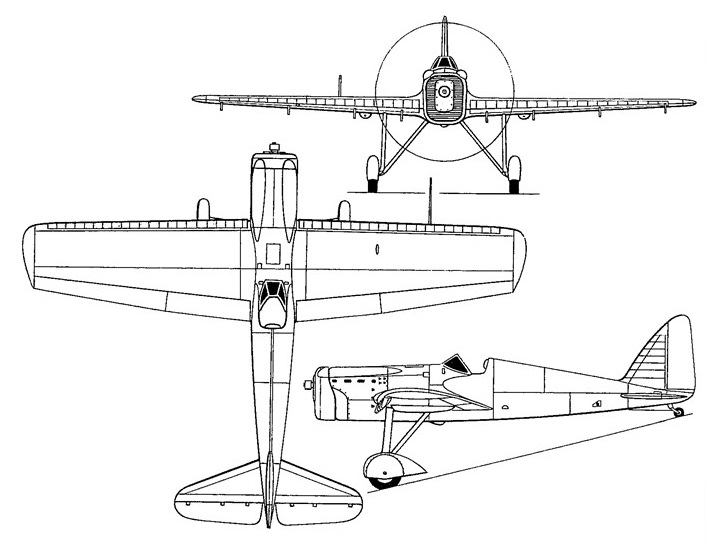
In 1933 the prototype H.S.120 seaplane racer (on pontoons) was converted into a racing landplane as the Bernard V.4 no.1 with a 1,125 hp (839 kW) Hispano-Suiza 18Sb engine and shorter span wings.

The V.4 had widely spaced main landing gear with streamlined wheel spats. It was moved to Istres in December 1933 to try and achieve a French Air Ministry prize for a French aircraft to beat the world speed record before January 1934. It was due to make an attempt to fly on 27 December 1933 but strong winds kept the aircraft grounded. Further attempts in February 1934 to fly were thwarted by engine problems and lack of government finance. The project was abandoned without the aircraft have flown.

Bernard V.1 / SIMB V.1

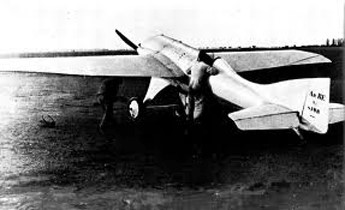
The Bernard SIMB V.1 (V = Vitesse) was a French single seat racing monoplane designed by Jean Hubert to compete for the 1924 Beaumont Cup requiring a 300 km (186 mi) flight round a 50 km (31 mi) circuit at Istres at an average speed of over 290 km/h (180 mph).

Alternatively known as the SIMB V.1: the Société Industrielle des Métaux et du Bois (SIMB), the V.1 had a cantilever shoulder wing of thin section, built around four spars with plywood and fabric covering. Straight edged beyond the centre section, it tapered only slightly to the oblique tips. The tailplane had curved, swept leading edges and carried split elevators with a cut-out for rudder movement. The fin was almost triangular, with a slightly convex leading edge; it carried a pointed rudder on a vertical hinge extending to the bottom of the fuselage.

The smooth, oval section fuselage was ply and fabric covered, tapering towards the tail. The pilot sat low down in a small open cockpit with narrow streamlined dorsal fairings in front and behind. His view forward was severely restricted by the central inline bank of four cylinders of the W-12 Lorraine-Dietrich 12E water-cooled piston engine. The engine was cooled by radiators in the wings, assisted for the first flight by a bank of radiators mounted between the undercarriage legs. These backward leaning legs were wide chord, faired cantilevers with large, unfaired wheels mounted on individual stub axles. The V.1’s conventional undercarriage was completed by a small tailskid.

The racer was completed in nine months and taken to Istres in May 1924 to prepare for the competition. Its first flight, piloted by Florentine Bonnet, ended in disaster. It was immediately apparent that the V.1 lacked longitudinal stability, oscillating uncontrollably in altitude; these oscillations persisted even as Bonnet reduced speed and attempted to land and the V.1 crashed at 200 km/h (125 mph), sliding on its back. Bonnet was fortunate to escape unhurt. The instability was ascribed to insufficient tailplane area combined with a far forward centre of gravity. With the race only a few days away, there was no time to repair the V.1 and development was abandoned.

Engine: 1 × Lorraine-Dietrich 12E W-12, 332 kW (445 hp)
Propeller: 2-bladed Levasseur (licence built Reed), metal, 2.45 m (8 ft 0 in) diameter
Wingspan: 10.50 m (34 ft 5 in)
Height: 2.50 m (8 ft 2 in)
Wing area: 15.50 sq.m (166.8 sq ft)
Empty weight: 900 kg (1,984 lb)
Gross weight: 1,050 kg (2,315 lb)
Maximum speed: 420 km/h (261 mph; 227 kn) estimated

Bernard / SIMB / Ferbois

Societe Industrielle des Metaux et du Bois
SIMB
Societe des Avions Bernard
Ferbois

Établissements Adolphe Bernard was established in 1917 and best known by name Bernard, Adolphe Bernard built SPADs from 1917, original designs materialising only after Armistice. By the end of the First World War the factory was produced under license 2486 airplanes SPAD XI, XIII and XVI.

Known originally as A. Bernard, company was founded in the latter years of the First World War. Its title was changed in 1919 to Societe Industrielle des Metaux et du Bois (SIMB). Société Industrielle des Métaux et du Bois (SIMB) was sometimes referred to as Ferbois. The latter company was wound up in 1926, but the Societe des Avions Bernard was established in late 1927 to manufacture the Bernard 190T, a ten-seat transport aircraft designed by SIMB.

From 1924 until 1927, the world absolute speed record had been held by Bonnett, a Frenchman, flying a Ferbois landplane at 278 mph.

A number of experimental aircraft were built before closure in 1935. The former Bernard design team was dispersed after 1935. Georges Bruner and Jean Galtier were briefly hired by Fouga, then Bruner worked for Gourdou and Galtier went to Arsenal. Roger Robert went to CAPRA, predecessor of Matra.

Berliner-Joyce XFJ-2

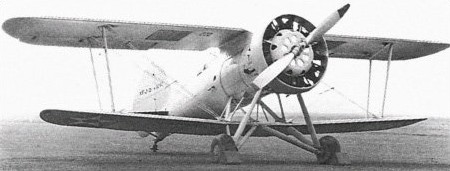
The XFJ-1 was returned to Berliner-Joyce for reconstruction in November 1930, during which the dihedral was eliminated from the upper wing, the vertical tail surfaces were enlarged and a 500hp R-1340D Wasp engine was installed, this being enclosed by a Townend ring and fitted with a spinner.
Redesignated XFJ-2, the fighter resumed its flight test programme at Anacosta on 22 May 1931. The XFJ-2 displayed no improvement in landing characteristics by comparison with the XFJ-1 and proved unstable, and after testing by the US Navy, was discarded as unsatisfactory.

Engine: 500hp R-1340D
Take-off weight: 1291 kg/2846 lb
Empty weight: 953 kg/2101 lb
Wingspan: 8.69 m/29 ft 6 in
Length: 6.28 m/21 ft 7 in
Height: 2.99 m/10 ft 10 in
Wing area: 16.59 sq.m/178.57 sq ft
Max. speed: 285 km/h/177 mph
Range: 837 km/520 miles