A 1936 twin-engine twelve passenger low wing monoplane airliner, built but never flown.
Inter-Wars
Blackburn Cirrus Major
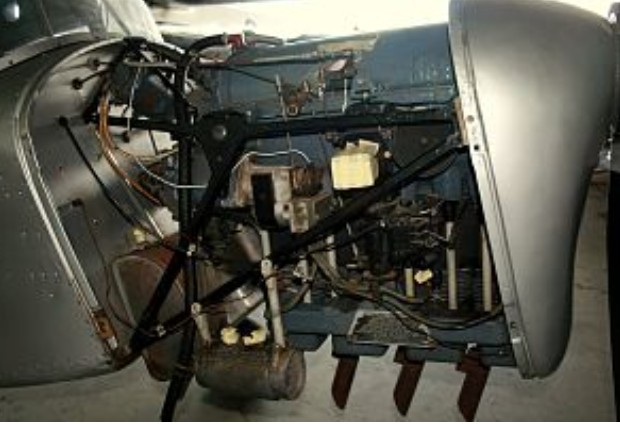
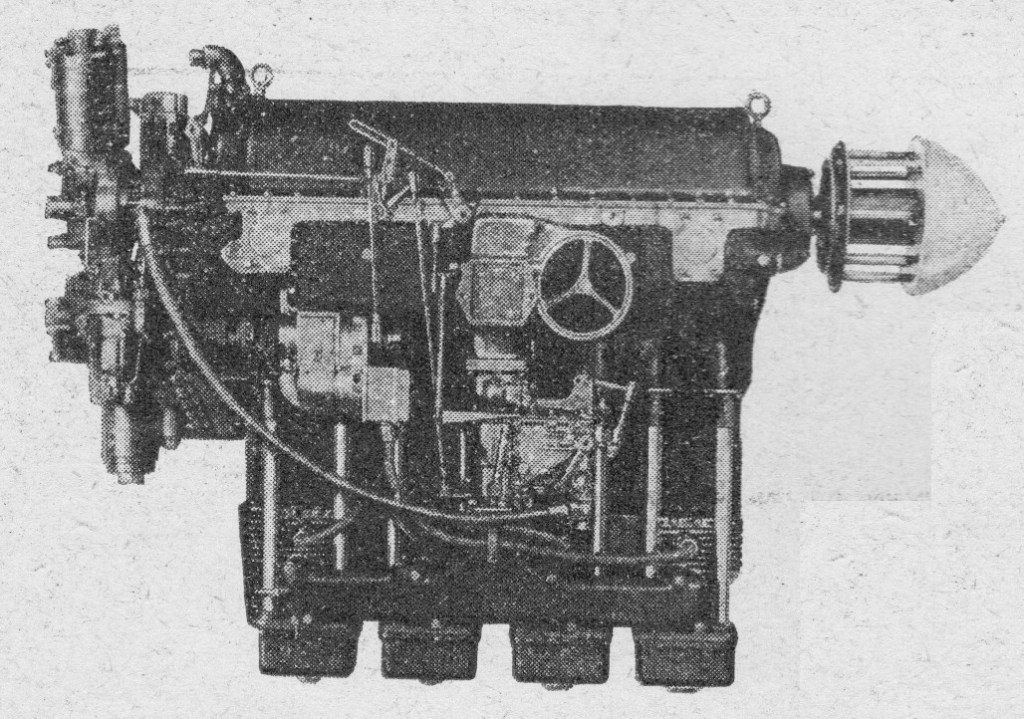
The Blackburn Cirrus Major started as a development of the original ADC Cirrus series of aircraft engines which progressed through a number of variants, each with slightly different displacement and power outputs. First run in 1936, the Cirrus series was later bought by Cirrus Aero-Engines (later known as the Cirrus-Hermes Engine Company) which produced the Cirrus Hermes I, II, III and IV, again each differing slightly in displacement and power.
In 1934 Cirrus was bought again by the Blackburn Aircraft company and later that year the Cirrus Minor was produced. In 1935 the Cirrus Major entered production. Approximately 700 were built.
Applications:
Auster Aiglet
Auster Autocar
Blackburn B-2
Chrislea Skyjeep
de Havilland DH.60 Moth
Fairey Primer
Foster Wikner Wicko
General Aircraft Cygnet
General Aircraft Owlet
HAL HT-2
Hendy 302
Miles Aerovan
Miles Aries
Miles Gemini
Miles Hawk Major
Miles Hawk Trainer
Miles Mercury
Miles Messenger
Portsmouth Aerocar Major
Simmonds Spartan
Stampe SV.4
Cirrus Major I
Type: Inline air-cooled inverted 4-cylinder
Bore: 4.72 in (120 mm)
Stroke: 5.51 in (140 mm)
Displacement: 385.64 cu in (6.31 L)
Length: 50 in (1270 mm)
Width: 17.5 in (444 mm)
Height: 30 in (762 mm)
Dry weight: 310 lb (141 kg)
Valvetrain: 1 inlet and 1 exhaust valve per cylinder
Fuel system: 1 Claudel-Hobson carburettor
Fuel type: 73 octane petrol
Cooling system: Air-cooled
Power output: 135 hp (101 kW) at 2,350 rpm
Compression ratio: 5.1:1
Power-to-weight ratio: 0.43 hp/lb (0.71 kW/kg)
Cirrus Major II
148 hp variant.
Cirrus Major III
Higher compression engine
Power output: 150 hp (116kW)
Blackburn Cirrus Minor
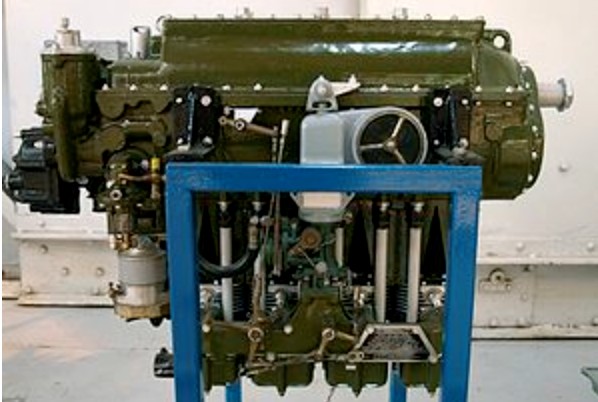
The Blackburn Cirrus Minor is a British four-cylinder, inverted, in-line air-cooled aero-engine that was designed and built by the Cirrus Engine Section of Blackburn Aircraft Limited in 1937.
The Cirrus Minor started as a development of the original Cirrus series of engines which progressed through a number of variants Cirrus I, II, & III. Each with slightly different displacement and power. Later Cirrus was bought by Hermes Engine Company and they produced the Cirrus Hermes I, II, III and IV. Again each differing slightly in displacement and power.
In 1934 Cirrus was bought again by the Blackburn Aircraft company and later that year the Cirrus Minor was produced and in 1935 the Blackburn Cirrus Major was produced.
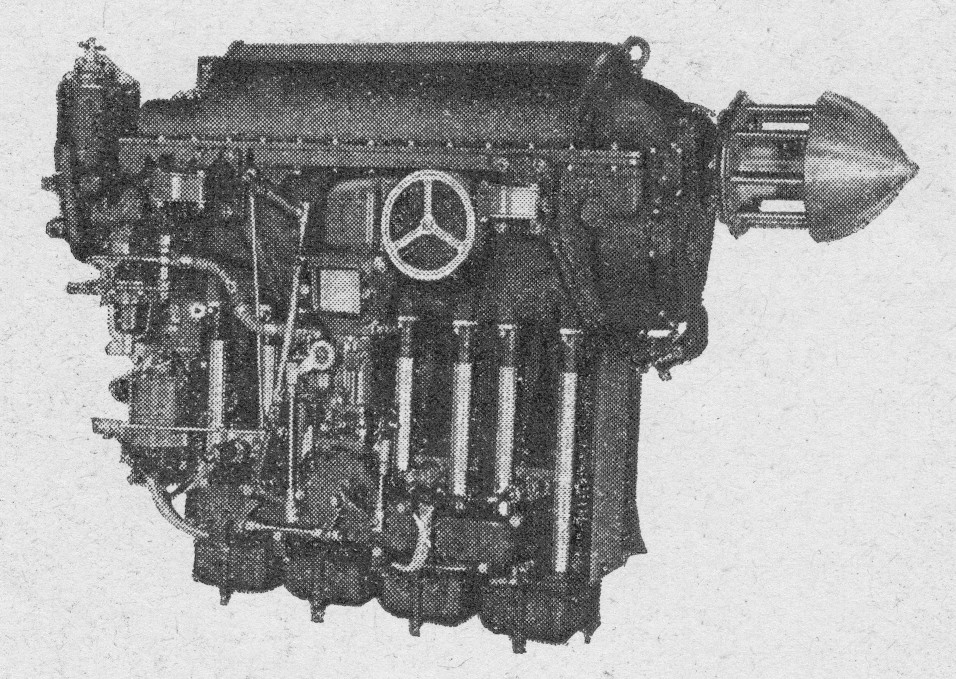
By 1949 the 100 hp Minor II was permitted to run 800 hrs before overhaul. An increase of 200 hours.
The Minor was known for excellent reliability, and had a major “win” when it was selected to power the RAF’s Taylorcraft Auster observation aircraft. The RAF’s version had several modifications, known as the Series I. Although externally identical, the Series II engine was redesigned to operate on 77 octane fuel, as opposed to the original’s 70, increasing power to 100 hp (75 kW).
Applications:
Arpin A-1 Mk.2
Auster J-1 Autocrat
Auster J-4
British Aircraft Swallow
Deekay Knight
General Aircraft Cagnet
Hillson Helvellyn
Marendaz Trainer
Miles M.68
Miles Gemini
SAI KZ III
Taylorcraft Auster I
Taylorcraft Plus C2
Taylorcraft Plus D
VEF I-12
Cirrus Minor I
Type: Inline air-cooled inverted 4-cylinder
Bore: 3.94 in (100 mm)
Stroke: 5.00 in (127 mm)
Displacement: 243 cu in (4 L)
Length: 39.9 in (1,013 mm)
Width: 17.9 in (455 mm)
Height: 25.6 in (650 mm)
Dry weight: 200 lb (91 kg)
Valvetrain: 1 inlet and 1 exhaust valve per cylinder
Fuel system: 1 Claudel carburettor
Fuel type: 70 octane
Cooling system: Air-cooled
Power output: 90 hp (67 kW) at 2,600 rpm
Compression ratio: 5.8:1
Power-to-weight ratio: 0.45 hp/lb (0.73 kW/kg)
Cirrus Minor II
Power output: 100 hp
Blackburn Cirrus Midget
The Blackburn Cirrus Midget was a British four-cylinder, inverted, in-line air-cooled aero engine designed and built in 1937 by the Cirrus Engine Section of Blackburn Aircraft Limited. Little is known of its development and use, its sole aircraft application is reported as the Chilton D.W.1 although it is possible that this did not transpire.
Cirrus Midget
Type: Inline air-cooled inverted 4-cylinder piston engine
Bore: 85 mm (3.35 in)
Stroke: 100 mm (3.94 in)
Displacement: 6.33 L (386.3 cu in)
Length: 33.6 in (853 mm)
Width: 14.18 in (360 mm)
Height: 21.65 in (550 mm)
Dry weight: 155 lb (70 kg)
Valvetrain: Overhead poppet valve, one inlet and one exhaust valve per cylinder
Fuel system: Single downdraught carburettor
Fuel type: 87 octane petrol
Cooling system: Air-cooled
Reduction gear: Direct drive, left hand tractor
Power output: 55 hp (41 kW) at 2,600 rpm (maximum power)
Specific power: 0.35 hp/cu in (6.5 kW/L)
Compression ratio: 6:1
Power-to-weight ratio: 0.35 hp/lb (0.58 kW/kg)
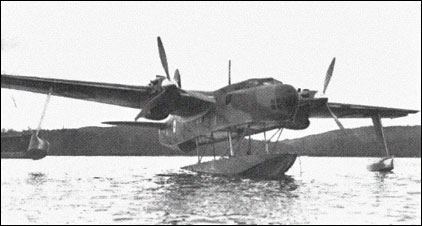
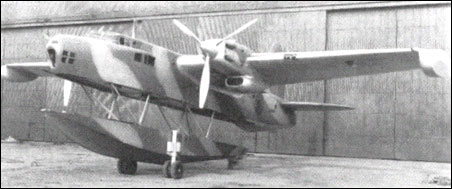
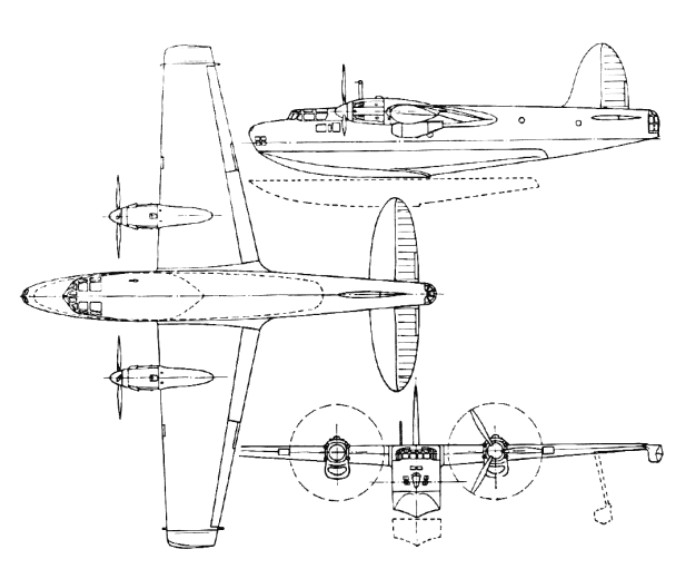
Blackburn B.20
Blackburn B.7
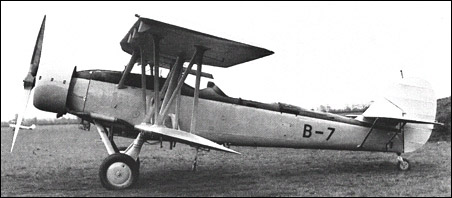
One prototype, first flown on 28 November 1934. No production.
Engine: 1 x 700hp Armstrong Siddeley Tiger IV
Wingspan: 14.02 m / 45 ft 12 in
Length: 10.80 m / 35 ft 5 in
Height: 3.89 m / 12 ft 9 in
Wing area: 774.63 sq.m / 8338.04 sq ft
Max. speed: 233 km/h / 145 mph
Ceiling: 3200 m / 10500 ft
Range: 765 km / 475 miles
Crew: 2-3
Armament: 2 x 7.7mm machine-guns, 1 x 450kg or 2 x 227kg bombs or a torpedo
Blackburn B.6 Shark
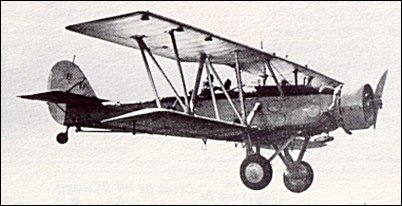
The Shark was a carrier-borne torpedo biplane with a buoyant metal-skinned fuselage and a 750hp Armstrong Siddeley Tiger IV two-row radial engine. Production for the Fleet Air Arm was undertaken between 1934 and 1937, with 238 Shark I, II and III (Pegasus radial engines) being built, many as seaplanes. Accommodation was provided for a crew of two and armament comprised one 680kg torpedo or equivalent bomb load, plus one forward-firing Vickers and one rear-mounted Vickers or Lewis machine-gun. Deck take-offs and landings were aided by the large camber-changing flaps fitted to the aircraft. Sharks served with Nos 820 and 821 Squadrons on board HMS Courageous, No 822 Squadron on board HMS Furious and No 705 (Catapult) Flight on the battleships HMS Repulse and Warspite. The type was also used at Air Gunnery Schools in the UK and Trinidad.
Six Sharks were also delivered to the Portuguese Navy in March 1936 and were based at Bom Succeso on the River Tagus, near Lisbon, where they operated for several years. Four aircraft were built for the Royal Canadian Air Force and 17 IIIs were built under licence by Boeing Aircraft of Canada during 1939-40, mainly for the RCAF.
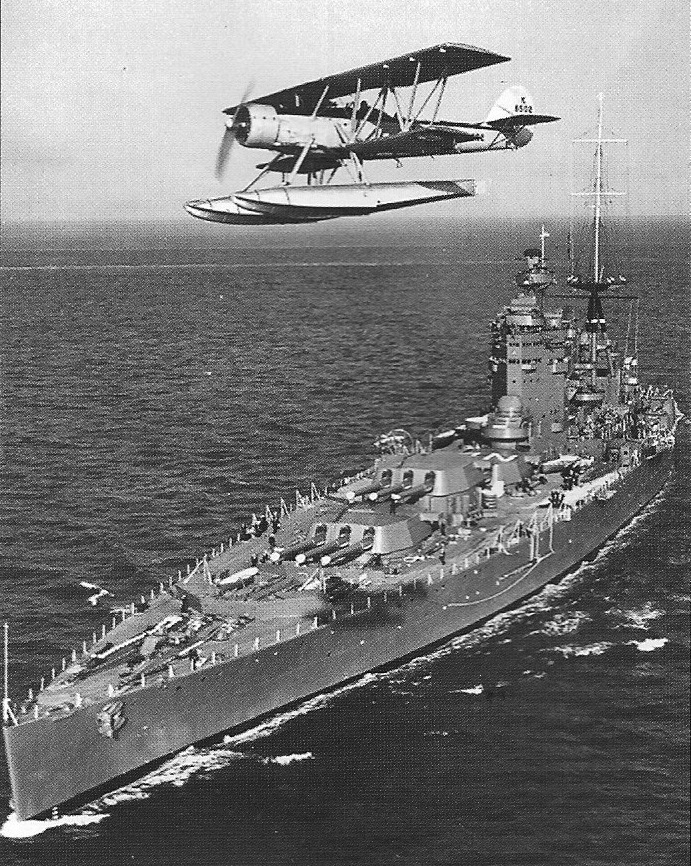
Blackburn B 6 Shark Mk.II
Engine: Armstrong Siddeley Tiger VI, 750 hp, 567kW
Length: 35 ft 3 in / 10.74 m
Height: 12 ft 1 in / 3.68 m
Wingspan: 45 ft 12 in / 14.02 m
Wing area: 489.009 sq.ft / 45.43 sq.m
Max take off weight: 8050.5 lb / 3651.0 kg
Weight empty: 4039.6 lb / 1832.0 kg
Max. speed: 130 kt / 241 km/h
Cruising speed: 103 kt / 190 km/h
Service ceiling: 15994 ft / 4875 m
Wing load: 16.4 lb/sq.ft / 80.0 kg/sq.m
Range: 543 nm / 1006 km
Crew: 2-3
Armament: 2x cal.303 MG (7,7mm), 680kg Torp.
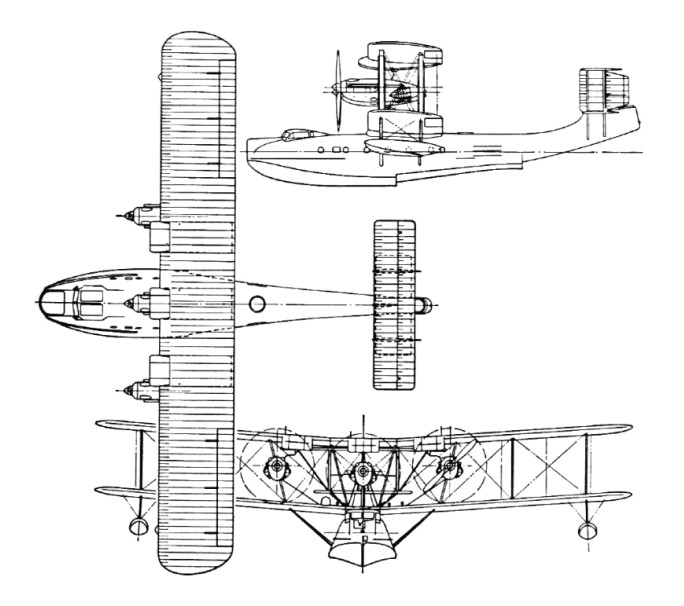
Blackburn R.B.3A Perth

The Blackburn R.B.3A Perth development of the Iris was to replace the earlier flying-boat in service with No. 209 Squadron at Plymouth. The Perth differed from the Iris V primarily in having an, enclosed cockpit, and a hull covered with corrosion-resistant material. An improvement in armament was the installation of a 37mm gun in the bow position for anti-shipping work, but there was also an alternative rail-mounted 7.7mm machine-gun, as on the Iris.
The Perth’s service introduction came in January 1934 when the second aircraft was delivered to Plymouth. At that time the first was still under test at Felixstowe, but by 31 May 1934 all three from the first contract had been delivered. A fourth Perth had been ordered subsequently and flew in April 1934, but this was retained at the MA&EE Felixstowe for experimental work.
Problems with the tail unit required the flying-boats to be modified at Brough, keeping them out of service for several months. The first Perth was lost in heavy seas during September 1935, and two of the remaining three were eventually struck off charge in 1936. The last aircraft survived a further two years at Felixstowe.
Engine: 3 x RR Buzzard IIMS, 615kW
Take-off weight: 14740 kg / 32496 lb
Empty weight: 9500 kg / 20944 lb
Wingspan: 29.6 m / 97 ft 1 in
Length: 21.3 m / 69 ft 11 in
Height: 8.1 m / 26 ft 7 in
Wing area: 233.3 sq.m / 2511.22 sq ft
Max. speed: 213 km/h / 132 mph
Cruise speed: 175 km/h / 109 mph
Ceiling: 3500 m / 11500 ft
Range w/max.fuel: 2780 km / 1727 miles
Range w/max.payload: 1600 km / 994 miles
Crew: 6
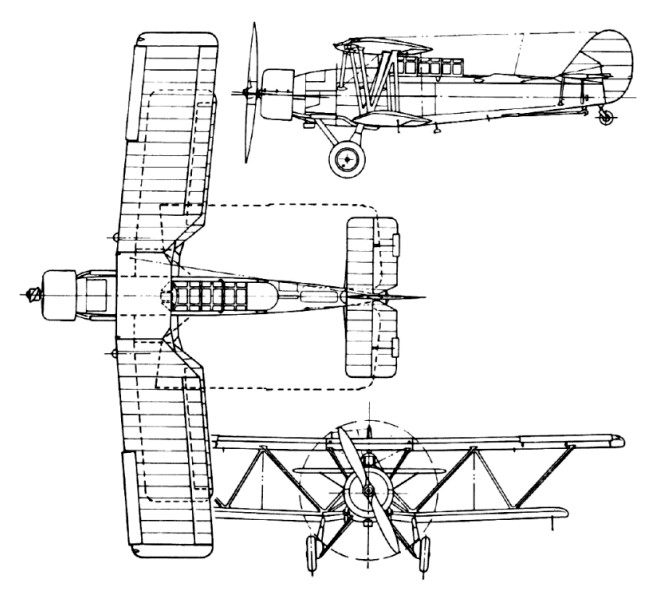
Blackburn B.5 Baffin
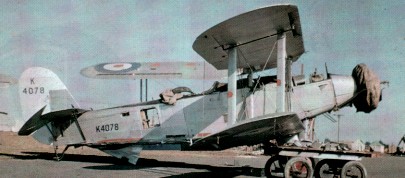
The Baffin was an improved version of the Ripon with a 421kW Bristol Pegasus radial engine in place of the water-cooled Napier Lion. Two prototypes and 33 production Baffins served with a single flight at Gosport for dummy deck-landing and torpedo practice and with Nos 810, 811 and 812 Squadrons on board the aircraft carriers HMS Courageous, Furious and Glorious respectively from 1934 until replaced by Sharks in 1936. One batch of 14 Baffins were shipped to Malta as reserve aircraft when the carriers exercised their squadrons in the Mediterranean.
More than 60 Ripons were re-worked and re-engined as Baffins during 1934-35. Twenty-nine surplus Fleet Air Arm aircraft were sold to the RNZAF during 1937-38 for the Wellington, Christchurch and Auckland Territorial GR Squadrons, which combined for wartime coastal patrols.
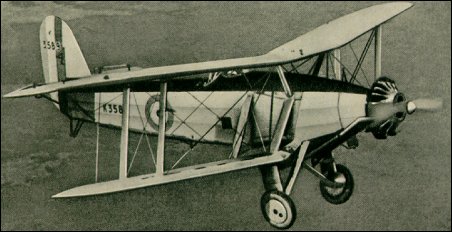
The Baffin was taken out of RAF service in 1937.
Engine: 1 x Bristol Pegasus IM-3, 405kW
Take-off weight: 3450 kg / 7606 lb
Empty weight: 1900 kg / 4189 lb
Wingspan: 13.9 m / 45 ft 7 in
Length: 11.6 m / 38 ft 1 in
Height: 4.1 m / 13 ft 5 in
Wing area: 63.4 sq.m / 682.43 sq ft
Max. speed: 218 km/h / 135 mph
Cruise speed: 160 km/h / 99 mph
Ceiling: 4500 m / 14750 ft
Range w/max.payload: 725 km / 451 miles
Engine: Bristol Pegasus II M-3, 580-660 hp.
Max speed: 136 mph.
Service ceiling: 15,000 ft.
Range: 450 miles.
Crew: 2
Armament: 2 mg + 2000 lb bombs.
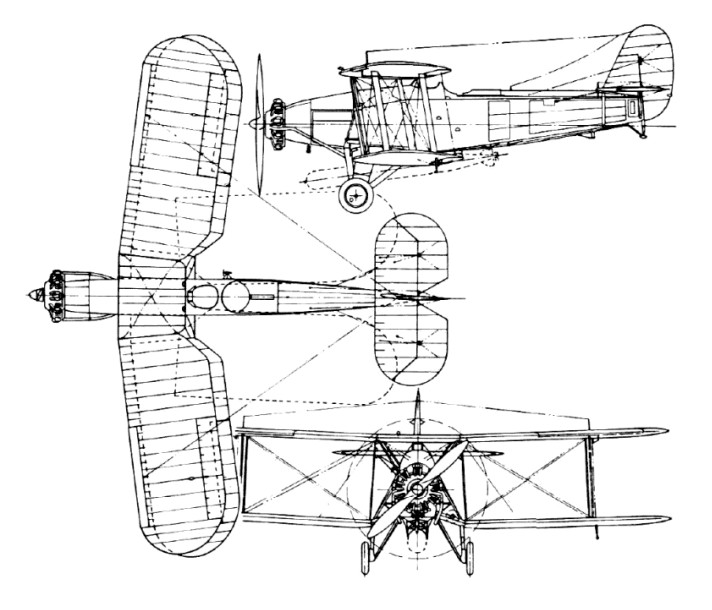
Blackburn C.A.15C Monoplane
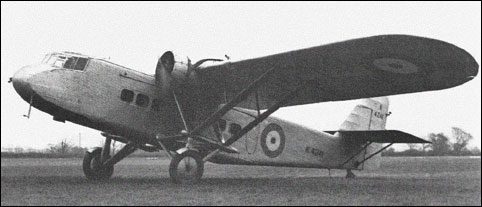
1932


