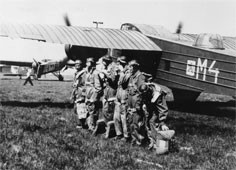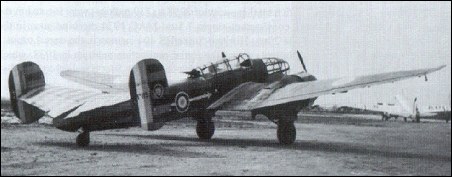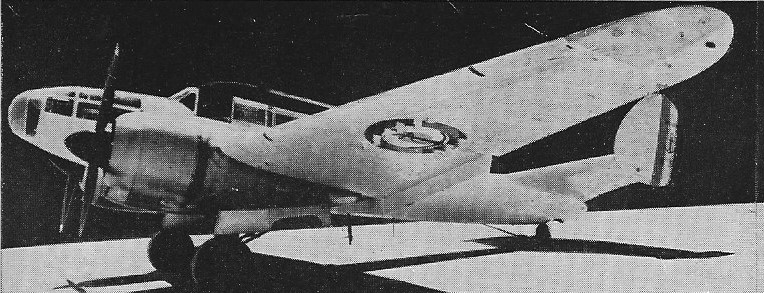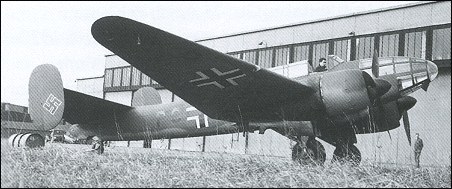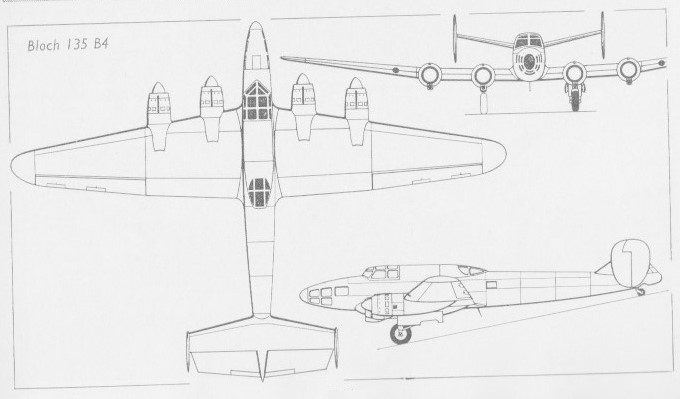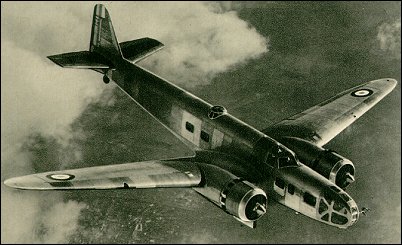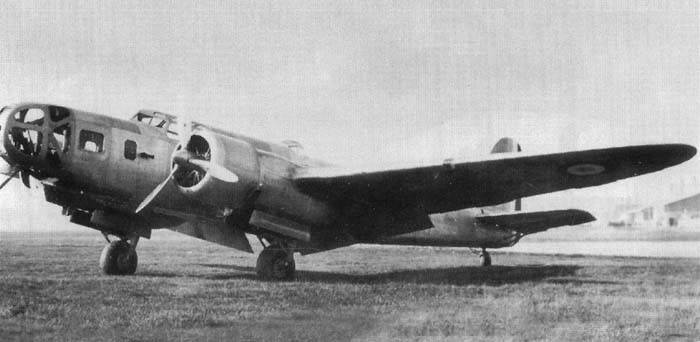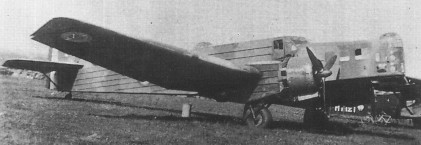
Bloch MB.210

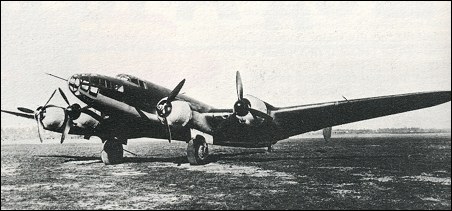
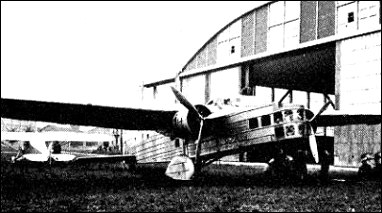
The Bloch MB.210.01 prototype flew for the first time in November 1934as a bomber developed from the MB.200 with cleaner lines, a new tail, smooth metal fuselage skinning, the wing dropped from the shoulder to the low-set position, and retractable landing gear in place of the original strut-braced and spatted fixed gear
A second prototype was designated Bloch 211 N°1 Verdun. Following tests, the production version was ordered as the Bloch 210. A cantilever low-wing monoplane which retained the angular lines of the high-wing Bloch 200, the Bloch 210 was powered by two 678kW Gnome-Rhone 14N engines and had a retractable landing gear, the main units of which retracted into the engine nacelles. Armament comprised single 7.5mm MAC machine-guns in a nose turret and semi-retractable dorsal and ventral positions. Maximum bomb load was 1,730kg.
The first production machine flew on 10 December 1935.
As part of its opposition to the Nationalist cause in the Spanish Civil War, France supplied 35 MB.210s to the Republicans. In March 1937 the arrival of these aircraft allowed many of the obsolescent Breguet Bre.19s to be phased out of service with Grupo num 22, which received a mixed complement of Potez Po.540s and MB.210s. Though useful by the standards of the civil war, there was little that these bombers could achieve against the Nationalists’ steadily growing air superiority, and none survived to fall into Nationalist hands at the end of the war.

A total of 283 were eventually built for the Armee de l’Air, with which they served in the BN5 (five-crew night bomber) category. Final deliveries to the air force were made in February 1939, by which time the aircraft was obsolete.
By September 1939 238 Bloch 210s served with French bomber Groupes, employed on limited night operations including leaflet raids. However all were withdrawn from first-line service by June 1940. Twenty-four Bloch 210s had also been exported to Romania in 1938. Ex-Vichy aircraft were supplied by the Germans to Bulgaria in 1942.

MB.210Bn.5
five-seat night heavy bomber.
Engines: 2 x Gnome-Rhone 14N-10/11, 679kW (910 hp).
Span: 22.80m (74ft 9.75 in).
Length: 18.8m (6l ft 8.25in).
Max T/O weight: 10200 kg (22,487 lb).
Max speed: 200 mph at 11,480 ft.
Operational range: 1,056 miles.
Armament: 3 x 7.7-mm (0.303-in) mg plus provision for up to 1975 kg (4,354 lb) of bombs carried internal

Bloch MB.200 / Aero MB.200 / Avia MB.200

When, in 1932, the French air ministry circulated its specification for a five-seat night bomber, there were eight proposals from five companies. Both Bloch and Farman were successful on this occasion, although the resulting production aircraft were completed in differing bomber categories.
The MB.200 was finalised as a four-seat bomber, with a cantilever high-wing monoplane of all-metal construction, and non-retractable tail-wheel type landing gear. The prototype Bloch M.B.200.01 had two 567kW Gnome-Rhone 14Krsd radial engines, and was first flown in July 1933. Subsequent flight testing resulted in an initial order for 25 aircraft, placed on 1 January 1934, despite the maximum speed of the prototype 18 per cent below estimate.
When the production M.B.200 began to enter service towards the end of the year, it was found to be both reliable and viceless, and though production aircraft had more powerful Gnome-Rhone engines, still slow. 208 were eventually supplied to the Armee de I’Air, built by Bloch (4), Breguet (19), Hanriot (45), Loire (19), Potez (111) and SNCASO(10).
At the beginning of World War II seven front-line bomber groupes were still equipped with these obsolete aircraft, but at the time of the German offensive all had been relegated to a training role. The type had also been built under licence in Czechoslovakia by Aero and Avia, and these were seized by the Germans, serving as crew trainers and for general duties, as were those which had been captured in France. Many were passed on to German satellites.

Aero built 44 Bloch 200 heavy bombers as the MB.200, and Avia licence built 70 machines powered by two 700 Walter K-14 engines.

Engine: 2 x Gnome-Rhone 14Kirs/Kjrs radial piston engines, 649kW
Take-off weight: 7280 kg / 16050 lb
Loaded weight: 4463 kg / 9839 lb
Wingspan: 22.45 m / 73 ft 8 in
Length: 16 m / 52 ft 6 in
Height: 3.9 m / 12 ft 10 in
Wing area: 67 sq.m / 721.18 sq ft
Max. speed: 285 km/h / 177 mph
Ceiling: 8000 m / 26250 ft
Range: 1000 km / 621 miles

Aero MB-200
Engines: two 800 Walter K-14
Propellers: three-blade metal
Wingspan: 22.45 m
Length: 16 m
Empty weight: 4474 kg
Maximum speed: 205 km.p.h
Climb to 4000 m: 15 min
Service ceiling: 6000 m
Armament: five machine guns in three turrets
Bombload : 1500 kg
Undercarriage: fixed
Crew: 4 -5

Bloch MB.170 / MB.174 / MB.175

MB.174

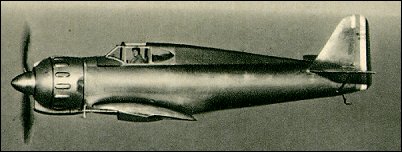
The design originated in 1936 with the MB-170.01 two-seat fighter, which flew for the first time on 15 February 1938 with two 708-kW (950-hp) Gnome-Rhone 14N-6/7 radials and an underfuselage cupola intended for defensive armament or reconnaissance equipment, but the undercarriage collapsed on landing a month later. On 30 July the three-seat MB-170-02 was air-tested. The M.B.170.02 second prototype was configured as a pure bomber without the cupola but with an extensively glazed nose and larger vertical surfaces for improved directional stability.

Several operational variants were proposed, but the only types to enter service in World War II were the M.B.174 reconnaissance and attack bomber, and the M.B.175 light bomber.

Further development led to the Bloch 174.01, which flew on 5 January 1939 and series production at three SNCASO factories was ordered the following month. The M.B.174 prototype had 768-kW (1,030-hp) 14N-20/21 engines and revised accommodation, leading to the definitive model with more power and a number of refinements.

The MB-174 was a low-wing monoplane with two 850kW Gnome-Rhone 14N-48/49 radial engines in close-fitting cowlings. It had twin fins and rudders of oval form. The nose was extensively glazed, and pilot and dorsal gunner were accommodated under a raised glazed canopy. Defensive armament comprised two fixed forward-firing wing machine-guns, twin guns on a flexible mounting at the rear of the crew canopy and three further guns ventrally mounted to fire to the rear. All machine-guns were of the 7.5mm MAC 1934 type.

56 Bloch 174 A3 reconnaissance aircraft had been completed by the time of the June 1940 capitulation.

MB.175

The MB-174 was developed into the MB-175 B3 bomber, with an enlarged bomb bay capable of carrying a maximum of 600kg of bombs, requiring a new centre section.

Only 20 had been accepted when the Germans took over deliveries, using 56 MB-175s as trainers. The French Navy took delivery of a post-war MB-175T torpedo-bomber version, 79 being built.

MB.175

Gallery

M.B.174.01
Prototype.
Engines: 2 x Gnome-Rhone 14N-6/7 radial, 708-kW (950-hp).

M.B.174
Reconnaissance and attack bomber.
Seats: 3.
Span: 17.9m (58ft 8.75 in)
Length: 12.25m (40ft 2.25in).
Engines: 2xGnome-Rhone 14N-48/49, 820kW (1,100 hp).
Armament: 7×7.5-mm (0.295-in) MAC machine-guns plus provision for up to 400kg (8812 lb) bombs internal
MTOW: 7160 kg (15,784 lb).
Max speed: 329 mph at 17,060 ft.
Operational range: 802 miles with max bombload.

MB.175
Engines: 2 x 2 x 1000 hp Gnome-Rhone 14N-48/49
Wingspan: 58 ft 11 in
Wing area: 456.6 sq.ft
Length: 40 ft 9.25 in
Height: 10 ft
Empty weight: 19,361 lb
Loaded weight: 18,959 lb
Max speed: 335 mph
Cruise: 317 mph
Range: 2050 mi
Armament: 3 x 20mm cannon
Bombload: 8 x rocket and 1 x torpedo

M.B.175.A3
Light bomber.
Take-off weight: 7160 kg / 15785 lb
Wingspan: 17.92 m / 58 ft 10 in
Length: 12.23 m / 40 ft 1 in
Max. speed: 530 km/h / 329 mph
Range: 2000 km / 1243 miles

MB.175

Bloch MB.162

Another derivative of the Bloch 160 was identified initially as the Bloch M.B.162.
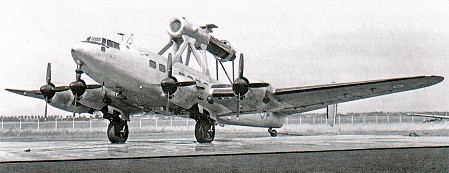
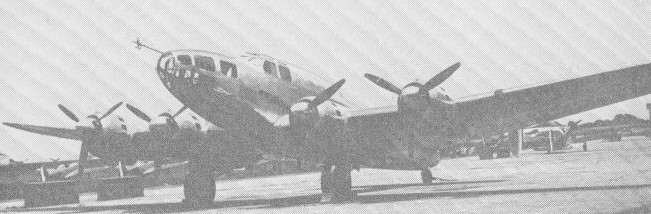
Preliminary design was initiated, and a mock-up to full-scale was built and exhibited at the Salon de I’Aeronautique held in Paris during November 1938. Considerable interest was created by this ‘large’ bomber, only slightly smaller than the B-17, and it was decided to build a prototype. Because production priority had been given to the commercial MB.161, the construction of the bomber was held up until the spring of 1940, flying for the first time on 1 June 1940.
Of cantilever low-wing monoplane configuration, the MB.162 B.5 was of all-metal construction, had a tailplane with marked dihedral and twin endplate fins and rudders, retractable tailwheel type landing gear, and two engines mounted in nacelles at the leading-edge of each wing.
Flown from Villacoublay to Bordeaux-Merignac, the MB.162 was captured by the Germans. Its test programme was completed during 1942 under the supervision of the German Focke-Wulf company, subsequently entering service with the Luftwaffe for long-range clandestine operations.

Engine: 4 x Gnome-Rhone 14N-48/49 radial piston engines, 820kW
Take-off weight: 19000 kg / 41888 lb
Empty weight: 11865 kg / 26158 lb
Wingspan: 28.1 m / 92 ft 2 in
Length: 21.9 m / 71 ft 10 in
Height: 3.75 m / 12 ft 4 in
Wing area: 109 sq.m / 1173.27 sq ft
Max. speed: 550 km/h / 342 mph
Range: 2400 km / 1491 miles
Armament: 2 x 20mm cannon, 2 x 7.5mm machine-guns, 3600kg of bombs

Bloch MB.161 / Sud-Est SE.161 Languedoc

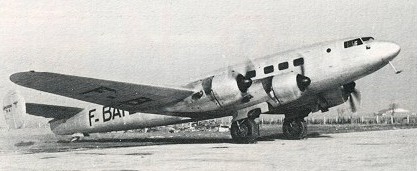
Following absorption of Bloch into the nationalised aviation industry as a component of SNCASO in 1936, the design team which had been brought together by Avions Marcel Bloch was involved with a derivative of the earlier but unused 12-passenger Bloch M.B.160. The resulting Bloch M.B.161.01 prototype (F-ARTV) was flown for the first time during September 1939, and a satisfactory result of early tests brought an order from Air France. It was to be almost seven years before the first was delivered. This was due primarily to delaying tactics of the French industry, anxious to ensure that none of the 20 ordered by Germany in 1942 should be delivered. Consequently, it was not until 17 September 1945 that the redesignated SE.161.1 was flown for the first time. Its configuration was that of a cantilever mid-wing monoplane of all-metal construction, having a high-mounted tail-plane with endplate fins and rudders, retractable tailwheel landing gear, and power provided by four 858kW Gnome-Rhone 14N-44/45 radial engines in wing leading-edge nacelles. Standard accommodation was provided for a crew of four and 33 passengers, but in 1951 Air France converted some of its SE.161s to a high-density seating arrangement for a maximum of 44 passengers.
Bloch 161.1s, by then named Languedoc, entered regular service on Air France’s Paris-Algiers route on 28 May 1946, and on the Paris-Oran-Casablanca and Paris-Marseilles routes in June and July respectively. By October most had been withdrawn because, in addition to problems with their landing gear, they were unsuitable for winter operation. When they re-entered service from March 1947, they had been re-engined with Pratt & Whitney R-1830s, de-icing equipment, cabin heating and other modifications. They had also acquired the changed designation SE.161.P7.
When production ended a total of 100 Languedocs had been built and, despite landing gear problems that persisted for almost four years, they saw extensive service, not only with Air France but also with the French air force and navy.
Five SNCASE SE 161 Languedoc Polish Airlines Polskie Linie Lotinicze (LOT) bought July 1947 to her European network. Belly landings of LOT’s Languedocs under the flights from Warsaw to Paris or Belgrade, Bucharest was the reason for the arrest of LOT managment and trial. The management was convicted and sentenced to death penalties as the general director Mr.Wojciech Zielinski, and Mr.Whitehead. Five LOT’s Languedocs grounded December 1948, were officially scrapped 1950 under Soviet supervision.

Engines: 4 x 895kW Gnome-Rhone 14N 68/69 14-cylinder radial engines
Take-off weight: 22940 kg / 50574 lb
Wingspan: 29.38 m / 96 ft 5 in
Length: 24.25 m / 79 ft 7 in
Height: 5.57 m / 18 ft 3 in
Max. speed: 405 km/h / 252 mph
Ceiling: 7200 m / 23600 ft
Range: 1000 km / 621 miles
Crew: 5
Passengers: 33

Bloch 160

In 1936 Air Afrique had requested a short-range plane for the colonial service and Bloch had designed the Model 160. This was a low-wing aircraft with four 690-hp Hispano-Suiza engines to carry 12 passengers. It did not go into production, although the prototype flew in 1937 and set two speed records.

Engines: 4 x Hispano-Suiza, 690-hp.
Pax cap: 12.

Bloch MB.150 / 151 / 152 / 153 / 154 / 155

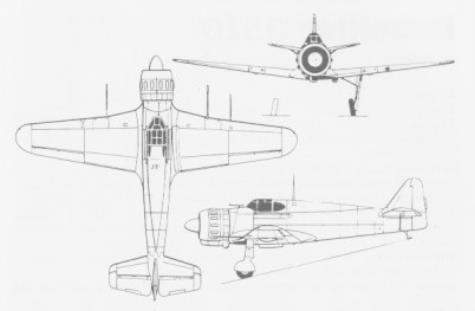
In July 1936 the M.B.150.01 prototype failed even to take-off. Redesign, abandoned for a period, was subsequently re-started and a first flight was successfully completed on 29 September 1937. The prototype had been revised with a larger wing and a 701-kW (940-hp) Gnome-Phone l4No radial.

Trials confirmed that the revised prototype was a promising fighter, and span and power were again increased.
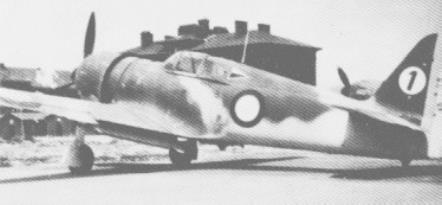
Bloch had become part of a nationalised group by this time, and from this SNCASO was ordered the M.B.151 in the form of 140 aircraft including 25 pre-production machines. The airframe was redesigned for mass-production, and the first aeroplane flew on 18 August 1938 with the 14N-11 engine.

While testing and further production were taking place, the improved MB-152.01 with a 14N-25 engine, in place of the MB-151’s less powerful 14N-35, was tested. The imminence of war led to additional orders, based on optimistic MB-152 performance figures (reached with inaccurate measuring instruments).

The first MB-151 delivered was not accepted by the Armee de l’Air until March 1939, and was regarded as unsuitable for combat. Even after modifications, Armee de l’Air MB-151 were utilised only for training.

MB.152

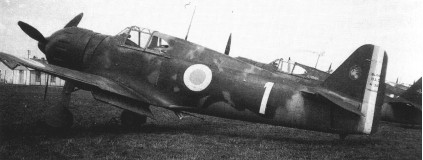
The designers had also been working on an improved version, the M.B.152 with more power and revised armament, first flying in December 1938. The Bloch 152 C1 cantilever low-wing monoplane was one of the standard Armee de l’Air fighters during the Battle of France in May-June 1940, but was comparatively unsuccessful.

The 745.2kWGnome-Rhone 14N-25 radial engine powering most Bloch 152 was insufficiently powerful to give good performance; a number had the improved 14N-49 engine and Chauviere 371 variable-pitch propeller, which rendered them more effective. It was clear, however, that the Bloch fighters (while robustly built and stable in flight) lacked manoeuvrability. Nevertheless Bloch-equipped units were credited with 146 confirmed and 34 probable victories by the time of the June 1940 Armistice.

MB.152

The first fighter Groupe to equip with the MB-152 was GC I/1 at Etampes-Mondesir in July 1939. The type was subsequently withdrawn for modification and when war broke out no Bloch fighters were in escadrille service. Re-equipment got under way at the end of 1939 and by the time of the German Blitzkrieg on 10 May 1940, 140 MB-151 and 363 MB-152 had been taken on charge by the French. Some of the former were to see service with navy fighter escadrilles. By the time of the Armistice the number of MB-152 accepted had risen to 482, plus one MB-153 (with Pratt & Whitney Twin Wasp radial) and nine MB-155. The MB.155 first flew on 3 December 1939 and the MB.157 in March 1942

Nineteen more MB-155 were completed by the Vichy French. They differed from the MB-152 in detail and had increased fuel capacity. Externally the main change was in the adoption of a smooth engine cowling. The Vichy regime was allowed to retain six (out of nine) MB-152-equipped Groupes after June 1940, but only 215 MB-152 and MB-155 were on charge when the air arm was dissolved by the Germans in November 1942.

MB.155

Twenty MB-152 were sent to Romania and others (plus some MB-155) ended their careers as Luftwaffe trainers. Nine MB-151 of a Greek export order were delivered to that country in 1940, but there is no record of their operational use.

Production totalled 483, but most of these were inoperative in France during1940 for lack of propellers.

MB.152
Engine: 1 x Gnome-Rhone 14N21, 735kW
Take-off weight: 2693 kg / 5937 lb
Empty weight: 2103 kg / 4636 lb
Wingspan: 10.5 m / 34 ft 5 in
Length: 9.1 m / 29 ft 10 in
Height: 3.0 m / 9 ft 10 in
Wing area: 17.3 sq.m / 186.22 sq ft
Max. speed: 482 km/h / 300 mph
Cruise speed: 440 km/h / 273 mph
Ceiling: 10000 m / 32800 ft
Range: 580 km / 360 miles
Crew: 1
Armament: 2 x 20mm machine-guns, 2 x 7.5mm machine-guns

MB.152
Engine: l x Gnome-Rhone 14N-25 or N-49, 805 or 820kW (1,080 or 1,100 hp).
Span: 10.55m (34ft 7.25 in).
Length: 9.1 m (29ft 10.25 in).
Max T/O weight: 2680 kg (5,908 lb).
Max speed: 320 mph at 13,125ft.
Operational range: 373 miles.
Armament: 2×20-mm Hispano¬Suiza cannon and 2x or 4×7.5-mm (0.295-in) MAC machine-guns.

MB.152
Engine: l x Gnome-Rhone 14N-25, 805 kW / 1,080 hp
Span: 10.55m (34ft 7.25 in).
Length: 9.1 m (29ft 10.25 in).
Height: 3.98 m / 13 ft 0 in
Empty weight: 2020 kg / 4453 lb
Max T/O weight: 2680 kg (5,908 lb).
Max speed: 520 kph / 320 mph at 13,125ft.
Time to 6000 m / 16,400 ft: 6 min
Service ceiling: 10,000 m / 32,800 ft
Operational range: 600 km / 373 miles.
Armament: 2×20-mm HispanoSuiza 404 cannon (60 rds) and 2x or 4×7.5-mm (0.295-in) MAC 1934 machine-guns (500 ds each)

Bloch 134

A four seat medium bomber.

Bloch 134 B4
Engines: 2 x Gnome-Rhone 14N 48/49, 1140 hp TO pwr, 1035 hp at 15,750 ft
Wingspan: 70 ft 5.25 in
Wing area: 661.98 sq.ft
Length: 52 ft 9 in
Empty weight: 14,312 lb
Loaded weight: 21,662 lb
Max speed: 323 mph at 16,400 ft
Range at 275 mph with 567.5 Imp Gal: 1678 miles
Range at 275 mph with 445 Imp Gal: 1243 miles
Armament: 1 x fixed forward firing 7.5mm MAC 1934 mg (500rds), 1 x 20mm Hispano 404 cannon (120rds) dorsal turret, 1 x 7.5mm MAC 1934 mg (800rds) ventral trap
Bombload – with 445 Imp.Gal fuel: 96 x 22 lb, 24 x 110 lb, 8 x 220 lb, or 6 x 440 lb bombs
Bombload – with 567.5 Imp.Gal fuel: 64 x 22 lb, 16 x 110 lb, 8 x 220 lb, or 4 x 440 lb bombs

Bloch MB.130 / MB.131 / MB.133

The Bloch MB.130 and its derivatives were a series of French monoplane reconnaissance bombers developed during the 1930s. The MB.130 was developed in response to the August 1933 French Aviation Ministry request for a reconnaissance and tactical bomber.

The low-wing Bloch 130 was a smaller version of the Bloch 210, but with a fixed and trousered undercarriage. The Bloch 130.01 Guynemer prototype first flew on 29 June 1934. Despite very ordinary performance, soon entered production, 40 machines being ordered in October 1935. An improved version, the MB.131 was first flown on 16 August 1936, but still needed more work to overcome its deficiencies. The radically revised second prototype which flew on 5 May 1937 eventually formed the basis for series production, with aircraft being manufactured by SNCASO, the nationalised company that had absorbed Bloch and Blériot.

As with the Potez 540, given the role that the aircraft was expected to fill, the evaluation was cursory and simply confirmed that the aircraft was completely unsuited to the intended role and should not be considered further.

A total redesign led to the Bloch 131, with a glazed nose and tall single fin and rudder, and powered by two 708kW Gnome-Rhone 14N radial engines. A retractable undercarriage was fitted. Armament comprised 7.5mm machine-guns in nose, dorsal turret and ventral positions.

The single Bloch 133, with a new twin fin and rudder tailplane, was later converted to a standard Bloch 131.

One hundred and thirty-nine production Bloch 131 were built for the Armee de l’Air in the RB4 category as four-crew machines intended for bombing and reconnaissance. The first six aircraft were delivered by June 1938, the rest by September 1939. Entering service in June 1938, the MB.131 went on to equip seven reconnaissance Groupes, six in metropolitan France and one in North Africa. Upon the outbreak of the war, the metropolitan Groupes suffered heavy losses in attempts at daylight reconnaissance of Germany’s western borders. From October 1939 they were restricted to flying night missions, though they still suffered heavy losses even then, and for training. The max bomb load in various combinations was 800kg. By May 1940, all metropolitan units had been converted to Potez 63.11 aircraft, with only the African groupe retaining them for front-line duty.

Following France’s capitulation, the Vichy regime used surviving Bloch 131s for target-towing. 21 planes were reported captured by the Luftwaffe in inoperable condition, but photographic evidence suggests at least a few flew for the Nazis.

Bloch MB.131
Engine: 2 x Gnome-Rhône 14N-10/11, 610kW(950 hp)
Take-Off Weight: 6500 kg / 14330 lb
Wingspan: 20.0 m / 65 ft 7 in
Length: 17.9 m / 58 ft 9 in
Wing Area: 52.0 sq.m / 559.72 sq ft
Max. Speed: 400 km/h / 249 mph
Cruise Speed: 350 km/h / 217 mph
Service ceiling: 23,785 ft
Range: 2000 km / 1243 miles
Crew: 5
Armament: 3 × 7.5 mm (.295 in) MAC 1934 machine guns
Bombload: 4 × 200 kg (440 lb) or 6 × 100 kg (220 lb) or 8 × 50 kg (110 lb) or 64 × 10 kg (22 lb) bombs

Bloch M.B.131