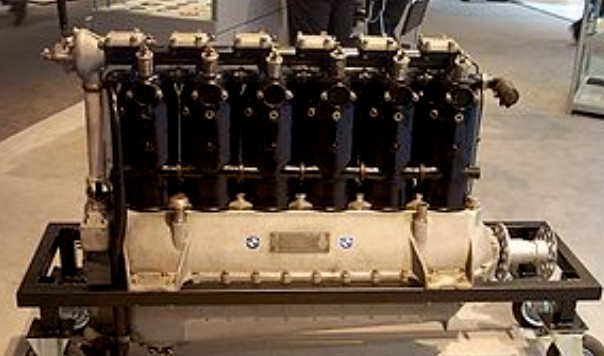
The BMW V was a water-cooled V-12 Aircraft engine built in Germany in the 1920s. Effectively two BMW III engines sharing a common crankshaft, power was in the 270 kW – 310 kW (360 hp – 420 hp) range.
Applications: Albatros L 73
Specifications: Bore: 150 mm (5.9 in) Stroke: 180 mm (7.1 in) Displacement: 38.2 L (2,330 cu in)
The BMW IV was a six-cylinder, water-cooled inline aircraft engine built in Germany in the 1920s. Power was in the 180 kW (250 hp) range. The IV was also produced under license by Junkers as the L2 which spawned the L5.
On June 17, 1919, the pioneering aviator Franz Zeno Diemer sets the airplane altitude record with a 32,000 ft (9760 m) flight. It was a significant technical and competitive accomplishment for the day. This historic flight was achieved only through the BMW IIIa engine, from which the BMW IV was based. Diemer stated at the time, “I could have gone much higher, but I didn’t have enough oxygen.”
Applications: Arado SC I Albatros L 72 Junkers A 35 Junkers F 13
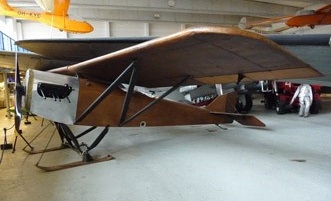
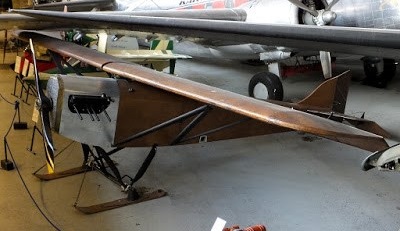
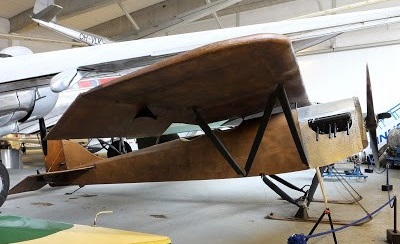
This two-seat monoplane designed and built by Attle R. Blomqvist and Emil Nyberg is the second oldest homebuilt aircraft in Finland. The first flight in 1926. It was damaged in a forced landing in 1927, after which was put in storage.
Donated to the Finnish Aviation Museum by engineer A. R. Blomqvist in 1983, restored by the members of the Aviation Museum Society in 1991 – 1994.
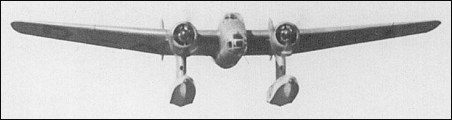
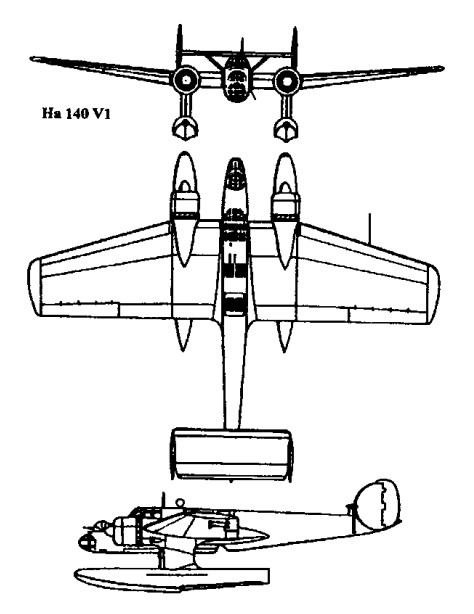
A twin-engined torpedo-bomber floatplane, based on the Ha.139 long-range mailplane, the Ha.140 was first flown on 30 September1937, and competed with the He-115. According to some sources the Luftwaffe actually preferred the Ha 140, but Blohm & Voss did not have the production capacity to meet the orders. Others claim that the aircraft had unacceptable handling. Only four were built.
Engines: 2 x BMW 132K, 830 hp Propellers: 3 blade metal variable pitch Wing span: 22,00 m Length: 16,74 m Height: 3,50 m Empty weight: 6300 kg MTOW: 9227 kg Power loading: 5,558 Kg/hp Max speed: 333 Kmh Range: 2000 km
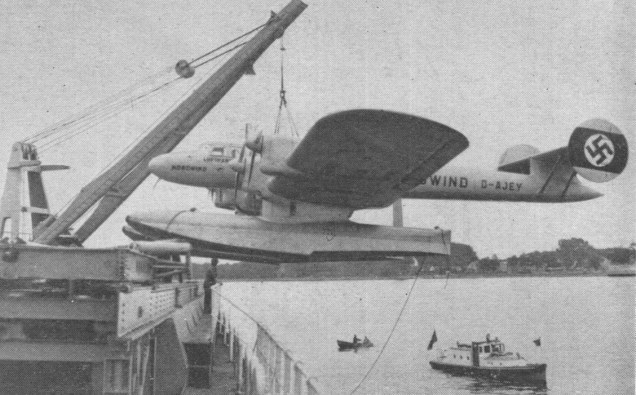
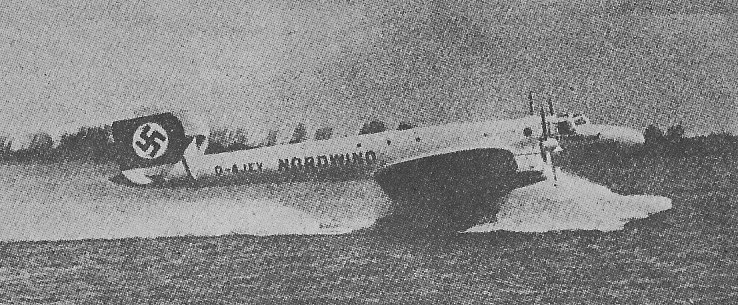
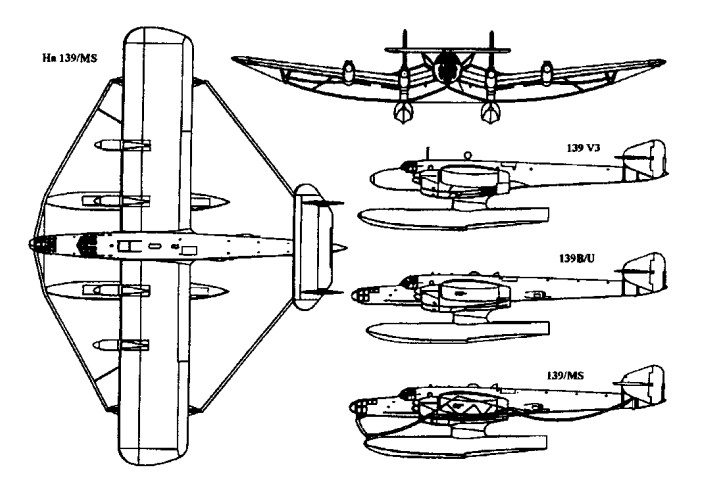
First flown in Autumn 1936, two Ha 139 – the Nordmeer and Nordwind – were delivered to Deutsche Luft Hansa in 1937. In the summer and autumn of that year they made 14 experimental transatlantic flights between Horta (Azores) and New York, operating from depot ships. In the spring of 1938 Nordwind went into service on the regular South Atlantic mail service between Bathurst (Gambia) and Natal (Brazil). Up to the end of June 1939 the seaplanes had successfully completed 100 transatlantic flights: 40 across the North Atlantic and 60 across the South Atlantic.
For the 26 transatlantic flights of 1938 between the Azores and New York an improved and larger type of Ha 139, the Ha 139B Nordstern, was delivered.
The Ha 139 type was also used to a limited extent during World War II as a reconnaissance, mine-laying and ambulance aircraft. Power was provided by four 447kW Junkers Jumo 205G engines.
Engines: 4 x Junkers Jumo 205 C diesel, 600 hp Propellers: 3 metal blades variable pitch Wing span: 27,00 m Length: 19,50 m Height: 4,80 m Wing area: 117 sq.m Empty weight: 10360 kg MTOW: 17500 kg Wing loading:: 149,572 kg/sq.m Power loading: 7,291 Kg/hp Max speed: 315 Kmh Cruise speed: 260 Kmh Ceiling: 3500 m Range: 5300 km Armament: 4 x MT MG 17, 7,92 mm
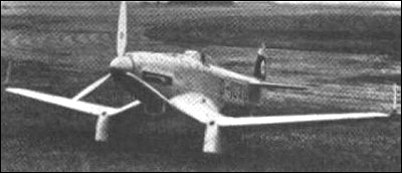
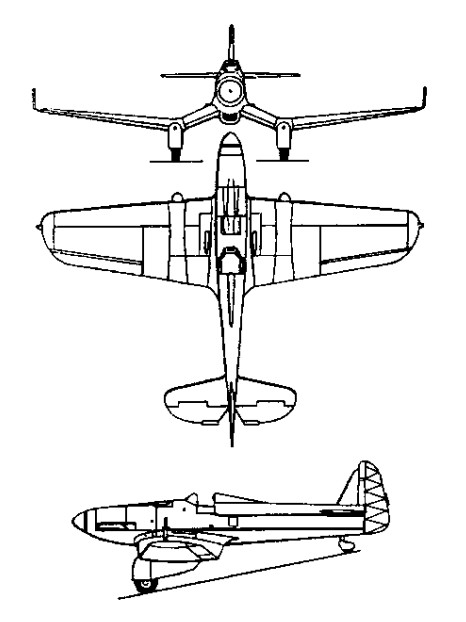
The Ha.137 was a close-support aircraft and dive bomber, an inverted gull-wing monoplane with fixed landing gear derived from the Ki-5. First flown in April 1935, there were 6 aircraft built, the last of which, V6, was written off after crashing in July 1937. The first two models V1 and V2 (D-IXAX and D-IBGI) were powered by the Pratt and Whitney Hornet, licence produced as BMW 132 engines. The third prototype (D-IZIQ) produced used a Rolls Royce Kestrel. It became apparent that the radial engine of the first two prototypes was not suited to the dive-bomber role because of the severely restricted forward view and the Jumo 210A engine was selected to be the definitive power plant. In 1936 three further prototypes were built: V4 (D-IFOE), V5 (D-IUXU), and the ill fated V6 (D-IDTE). These were to be Ha137B, the previous 3 being the Ha137A. The Luftwaffe selected the Junkers Ju-87 and with the cancellation of the project no further work was taken. A single-engined, single-seat, open cockpit dive bomber of entirely metal construction.
Ha.137A V1 & V2 Engine: BMW 132, 720 hp Propeller: Metal three-bladed, variable pitch Wingspan: 11,15 m Length: 9,46 m Height: 2,80 m Wingarea: 23,50 sq.m Empty weight: 1814 kg MTOW: 2415 kg Wingloading: 102,765 Kg/sq.m Power loading: 3,354 Kg/hp Max speed: 330 km/h Cruise speed: 290 km/h Ceiling: 7000 m Range: 580 km Armament: 2 x 7,92mm MG 17 mg, 2 x MG 17 or 2 x 20 mm MG FF, 4 x 50 kg bombs
Ha.137A V3 Engine: Rolls-Royce Kextrel IV 650 hp Propeller: metal three-bladed variable pitch
Ha.137B V4, V5 & V6 Engine: Junkers Jumo 210A, 650 hp Propeller: metal three-bladed variable pitch
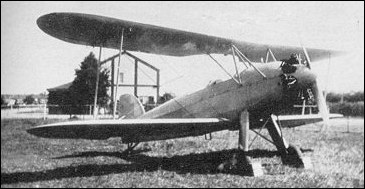
A small biplane trainer, a mixed-construction aircraft that was rejected by the Luftwaffe.
Powered by a Siemens Sh14, Hamburger Fluzeugbau produced 6 of these aircraft all used by the Fleigerubungsstelle, the last of which,D-EKME, was still flying at the end of 1940.
Blohm und Voss was a shipbuilding concern, based on the Elbe at Hamburg. Its aircraft division, Hamburger Flugzeugbau GmbH, turned to construction of maritime aircraft in the early 1930s. In 1937 Hamburger Flugzeugbau adopted the title of the parent company. Successful designs of Dr Ing Richard Vogt initiated under the Ha designation continued in production becoming designated, for example, Bv 138 instead of Ha 138. True Blohm und Voss developments included the Bv 222 Viking, the largest flying boat to attain operational status in the Second World War, and the even larger Bv 238, evolved too late to enter production before the war’s end. The only prototype Bv 238 was destroyed by air attack four days before VE-day.
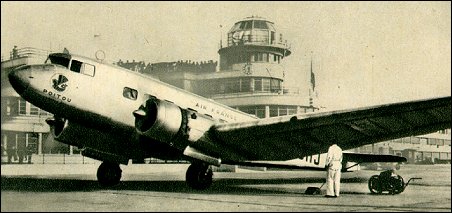
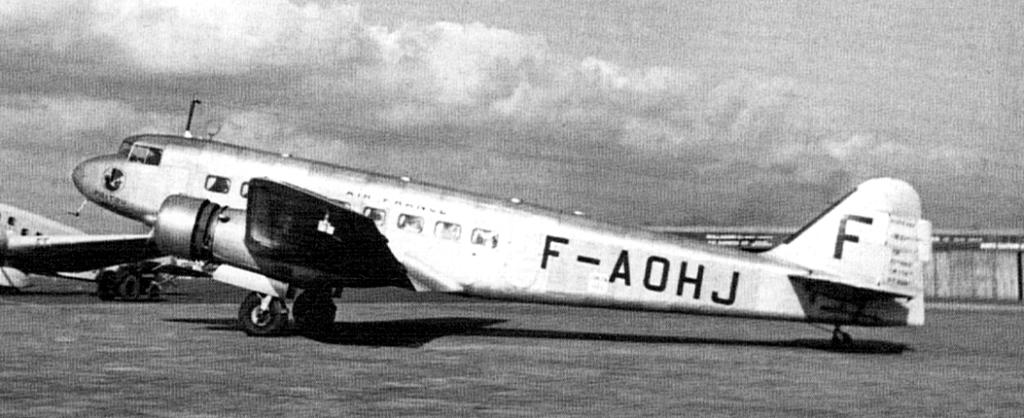
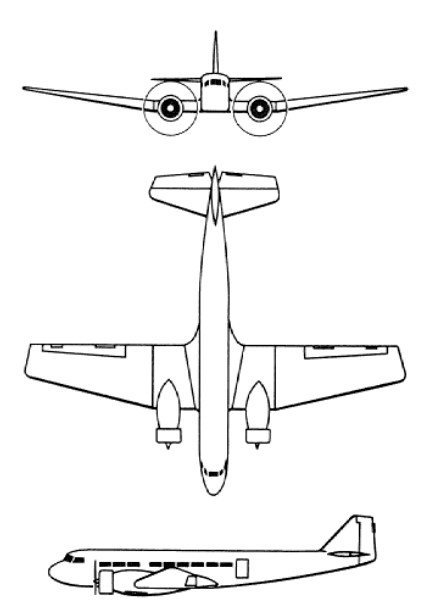
An all-metal cantilever low-wing monoplane, powered by two Gnome-Rhone radial engines and fitted with retractable landing gear, the Bloch M.B.220 was produced in only limited quantities. The prototype flew in December 1935, followed by 16 production aircraft. Normal crew comprised four, and there was comfortable accommodation for 16 passengers, with eight seats on each side of a central cabin aisle. By mid-1938 10 M.B.220s had been delivered, and the type was utilised fully on Air France’s European routes. The first service by the type on the Paris-London route was flown by the fifth aircraft (Aunis, F-AOHE) on 27 March 1938, with the scheduled time for the flight cut to 1 hour 15 minutes.
Croyden 1939
During World War II most M.B.220s were mobilised initially for service with Armee de I’Air military transport units. Later, examples of the M.B.220 operated under German, Free French and Vichy French colours in Europe, North Africa and the Middle East. At least five examples survived the war, being modified as M.B.221s with Wright Cyclone R-1820-97 engines. They flew short-range Air France European routes, but by 1949 four had been sold off to SANA (Societe Auxiliaire de Navigation Aerienne), and within about a year all had been withdrawn from service.
MB.220 Engines: 2 x Gnome-Rhone 14NO, 655kW Take-off weight: 9160 kg / 20194 lb Empty weight: 6410 kg / 14132 lb Wingspan: 22.2 m / 72 ft 10 in Length: 19.3 m / 63 ft 4 in Wing area: 72.0 sq.m / 775.00 sq ft Max. speed: 343 km/h / 213 mph Cruise speed: 295 km/h / 183 mph Ceiling: 7000 m / 22950 ft Range: 1400 km / 870 miles Crew: 3 Passengers: 16