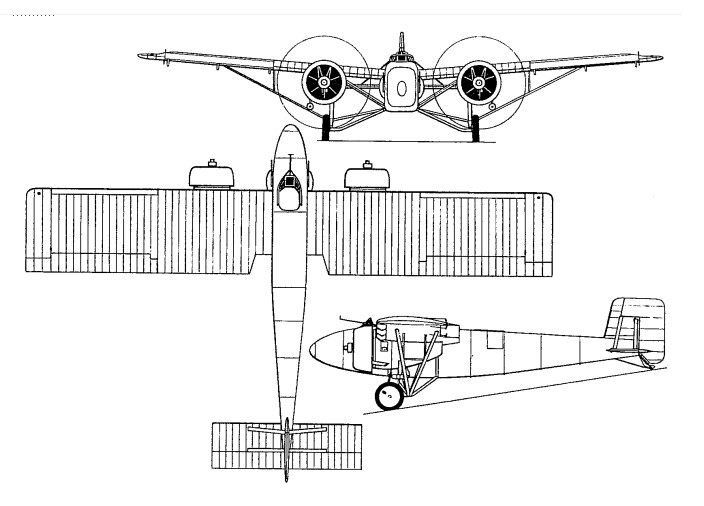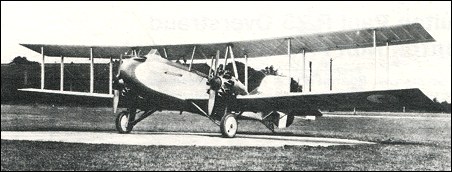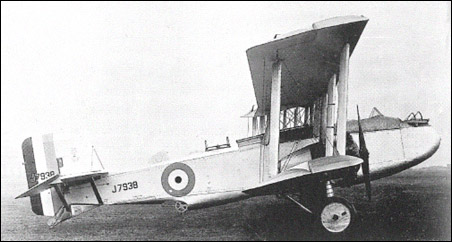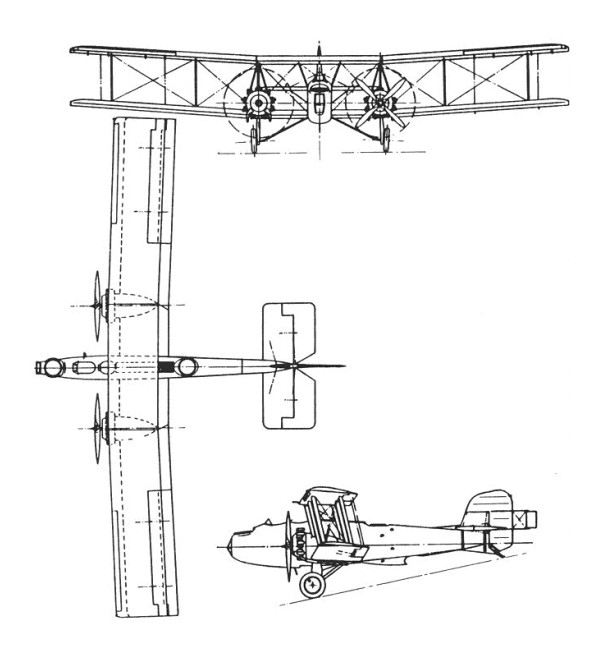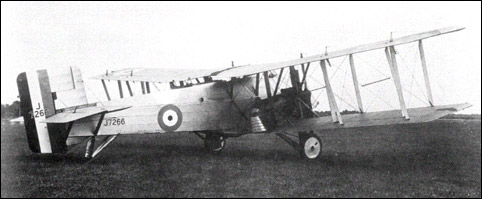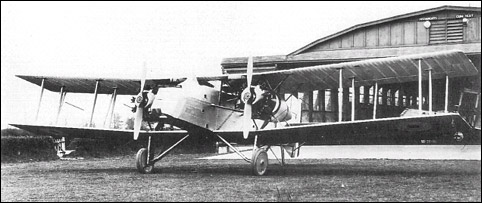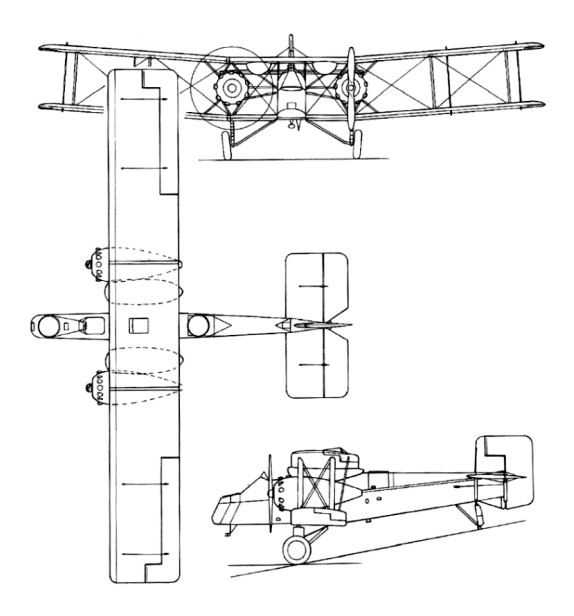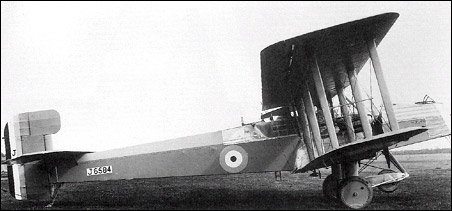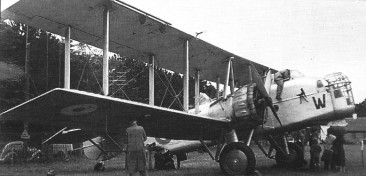
Boulton Paul P75 Overstrand

After months of investigation from 13 August 1932, Boulton & Paul came up with a completely enclosed cylindrical turret with a hemispherical top, housing a single Lewis gun mounted with the barrel protruding through a narrow slot. Rotation of the turret was by means of compressed air, and the gunner could elevate his gun to around 70 degrees through a 360 degree horizontal field of fire.

The turret tested on an Overstrand was one of the two new prototypes completely redesigned by BPA, but built by SAMM with Browning guns. There was never a 4-gun Darne turret. The SAMM prototype of the Darne layout was a two gun test ring only.

By June 1933, a mock-up which incorporated also hydraulic balancing of the seat and gun had been officially inspected and accepted for installation in the Sidestrand. Having afforded such protection to the nose gunner, it was decided that the same treatment should be offered to the pilot by providing a fully enclosed cockpit. Furthermore, the aircraft was re-engined with Bristol Pegasus engines; due to all these improvements, what was supposed to be the Sidestrand Mk V was renamed ‘Overstrand’.

Three Sidestrand Mk IIIs were converted to Sidestrand Mk V configuration but were then renamed Overstrand.
The first Sidestrand conversion Overstrand flew in 1933 with a 414-kW (555-hp) Pegasus 1M3 engine in a low-drag Townend ring cowling, an enclosed and heated cockpit, a shielded dorsal position, an autopilot and a fully enclosed nose turret.

The only production variant was the Overstrand Mk I, and 24 of this model were produced to replace the Sidestrands of No. 101 Squadron at Bicester from December 1934. Four Overstrands were also allocated to No. 144 Squadron.

The production Overstrand that entered service with No 101 Squadron from 1934 became the RAF’s first bomber with a power-operated enclosed gun-turret, which overcame the problems associated with firing movable machine-guns at high speed.

A total of 24 Overstrands were built, each powered by two 432kW Bristol Pegasus II M3 radial engines. These remained in service as bombers until 1937, then becoming gunnery trainers up to 1941. From 1937, the Overstrand was replaced by the Bristol Blenheim.
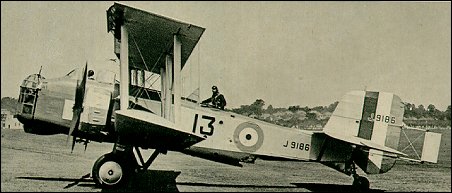
Overstrand Mk I
Powerplant: 2 x Bristol Pegasus IIM3, 432kW (580 hp)
Span: 21.95m (72ft).
Wing area: 91.04 sq.m / 979.95 sq ft
Length: 14.02m (46ft).
Height: 4.72 m / 15 ft 6 in
Max T/O weight: 5443 kg (12,000 lb)
Empty weight: 3600 kg / 7937 lb
Max speed: 153 mph at 6,500 ft
Ceiling: 6860 m / 22500 ft
Operational range: 545 miles.
Armament: 3 x 7.7-mm (0.303-in) machine-guns plus 726 kg (1,600 lb) bombs
Crew : 5
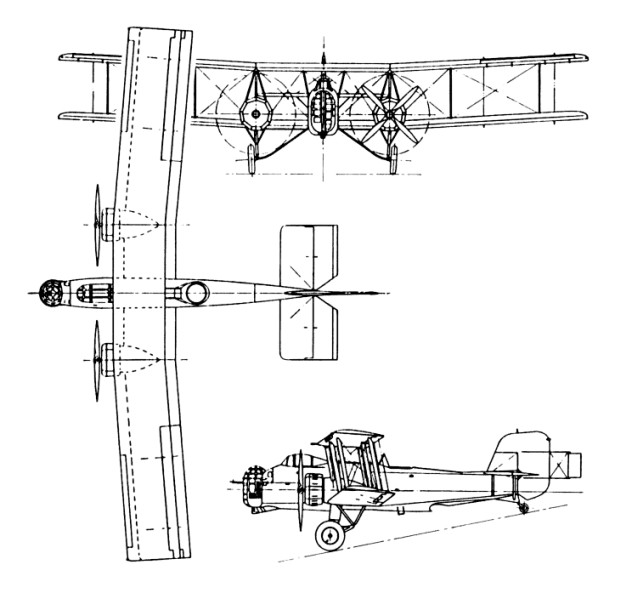
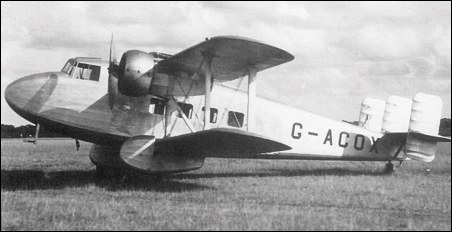
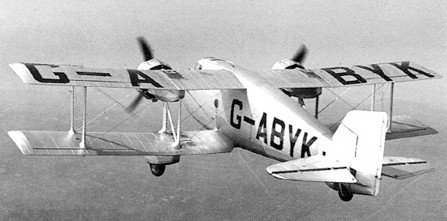
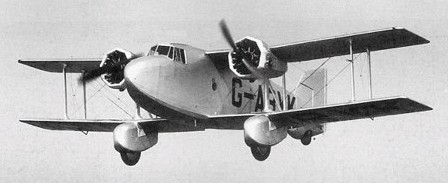
Boulton Paul P71A Mailplane

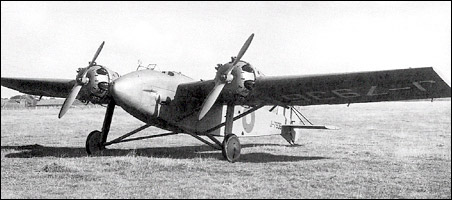
Development from the P.64, the Boulton & Paul P.71A was lighter, slimmer and longer. The P.71A had 365kW Armstrong Siddeley Jaguar VIAs, in place of the 414kW Bristol Pegasus engines of the P.64 and two aircraft were delivered to Imperial Airways at Croydon in February 1935.
The airline had lost interest in mail-carrying possibilities and the two aircraft, named Boadicea and Britomart, were converted for passenger carrying with 13 seats, which were easily removable if the aircraft were required for use as light freighters.

The P.71As were both lost within 19 months of delivery. The first of them was damaged beyond repair in a landing accident at Brussels in October 1935. The second disappeared over the English Channel in September 1936.

P.71A
Engines: 2 x Armstrong Siddeley Jaguar VIA radial, 365kW
Take-off weight: 4309 kg / 9500 lb
Empty weight: 2767 kg / 6100 lb
Wingspan: 16.46 m / 54 ft 0 in
Length: 13.46 m / 44 ft 2 in
Height: 4.62 m / 15 ft 2 in
Wing area: 66.75 sq.m / 718.49 sq ft
Max. speed: 314 km/h / 195 mph
Cruise speed: 267 km/h / 166 mph
Range: 966 km / 600 miles

Boulton Paul P64 Mailplane

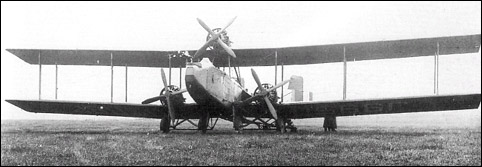
In 1933 Boulton & Paul built a twin-engine all-metal biplane under a contract awarded by Imperial Airways for a mailplane capable of carrying a 454kg payload over a 1609km range at reasonable speed. First flown at the company’s airfield at Mousehold, Norwich, in March 1933, it lasted barely seven months before being destroyed in an unexplained fatal crash during trials at Martlesham Heath in October.

It was considered expensive and unsatisfactory, and developed into the P71A Mailplane.

Engine: 2 x 555hp Bristol Pegasus I.M.2
Take-off weight: 5115 kg / 11277 lb
Empty weight: 3182 kg / 7015 lb
Wingspan: 16.46 m / 54 ft 0 in
Length: 12.95 m / 42 ft 6 in
Height: 3.96 m / 12 ft 12 in
Wing area: 70.23 sq.m / 755.95 sq ft
Max. speed: 298 km/h / 185 mph
Ceiling: 6858 m / 22500 ft
Range: 1610 km / 1000 miles

Boulton Paul P41 Phoenix

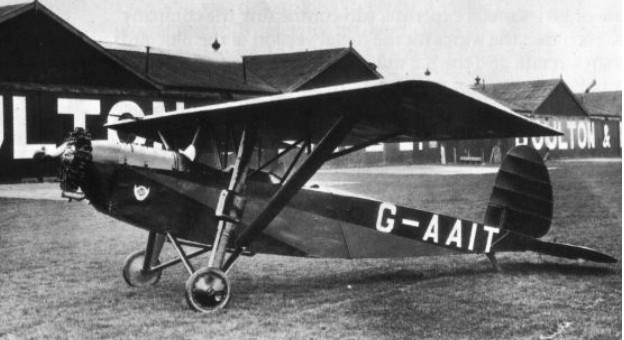
Boulton & Paul made two ventures into the light aircraft market, the first in 1919 with the P.9, then ten years later with the P.41 Phoenix. Realising that the de Havilland Moth and its competitors like the Blackburn B-2 controlled much of the two seat market, they set out to design a machine which was not in direct competition but lower in both capital and running costs. Their strategy was to build an all wood aerodynamic prototype first (their last ever wood framed aircraft and the first since the P.9), then to transfer the flying surfaces etc. to a metal fuselage.

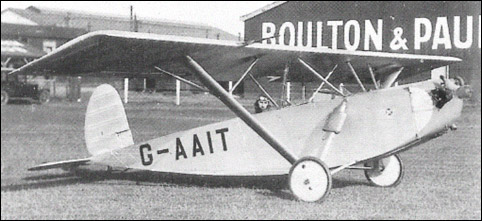
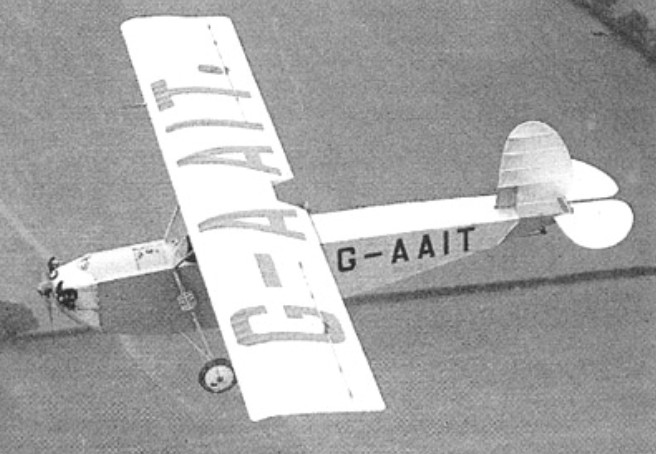
Designed by William Higley Sayers, the wood framed Phoenix I was a small parasol winged monoplane. The foldable wing had a constant chord and square ends in standard Boulton & Paul fashion. It was mounted on a pair of substantial streamlined struts from the lower fuselage longerons to the front wing spar. These main struts each carried a pair of short, slimmer members from near the wing to the front and rear spars. Further complicated strutting joined the upper fuselage to the wing centre section: a pair diverged gently from ahead of the forward cockpit to the front spar, another strut joined that spar on the starboard side to the port upper longeron between the cockpits and yet another joined the rear spar to the fuselage in the opposite direction behind the rear cockpit. The aircraft was normally flown from the rear cockpit at the trailing edge of the wing, with a cut-out to improve visibility. The forward cockpit was under the wing.

The nose mounted opposed twin-cylinder ABC Scorpion was air cooled with exposed cylinder heads. It produced 40 hp (30 kW). Behind it, the fuselage was of simple square cross section, flat on sides and top with a curved underside. The main wheels were mounted rubber sprung main legs attached to the upper fuselage and on axles linked to the lower fuselage. On the ground, with its legs compressed the Phoenix sat with its belly close to the ground. The empennage was unusual in two ways. Both rudder and tailplane were all moving, with no fixed surfaces, and all three surfaces were interchangeable to lower the costs of spare stocks. Nineteen years later, Boulton Paul used the same cost saving design approach with the Balliol. The elevators were mounted at the extreme end of the fuselage, the rudder with its trailing edge level with the elevators’ hinge.

The sole Phoenix 1, registered G-AAIT was exhibited at the International Aeronautical Exhibition at Olympia in July 1929, for sale at £375. It flew for the first time on 11 July 1929, with C.A. Rea, Boulton & Paul’s first full-time test pilot at the controls. It was then tested by many different pilots, many quite recently qualified and the sort of people Boulton & Paul saw as likely buyers. The Phoenix was well received, judged to be easy to handle in the air and on the ground and to land. There were a few criticisms: lateral control was rather sluggish; the upward and forward view was blocked by the parasol wing. Most of all, the testers were not convinced that the ABC engine would be reliable enough to fly cross country with confidence.

Boulton & Paul were encouraged by the responses to go ahead with a production version, the Phoenix II. This used the same flight surfaces but had a spot welded steel fuselage frame. When covered this had much the same shape as the earlier wooden one apart from the nose, where a 40 hp (30 kW) uncowled nine-cylinder Salmson radial replaced the ABC. There were changes to the minor struts including those at the centre section, with the struts ahead of the cockpits gone; but the most obvious alteration was to the undercarriage. The main wheels were now on wing mounted vertical legs, each on a stub axle that had a pair of vee struts to the lower fuselage; the revised aircraft sat higher above the ground. The Phoenix II, still registered as G-AAIT made its first flight on 12 June 1930 and this was followed by another period of amateur testing. Despite its low price the Phoenix failed to attract buyers aiming below the Moth and no further machines were built. G-AAIT remained in use as Rea’s personal hack until the end of 1935.

Phoenix II
Engine: 1 × Salmson AD.9 9-cylinder radial, 40 hp (30 kW)
Wingspan: 30 ft 0 in (9.14 m)
Empty weight: 646 lb (293 kg)
Gross weight: 1,089 lb (494 kg)
Maximum speed: at sea level 86 mph (138 km/h)
Rate of climb: initial 470 ft/min (2.39 m/s)
Crew: 1
Capacity: 1 passenger

Boulton Paul P33 Partridge

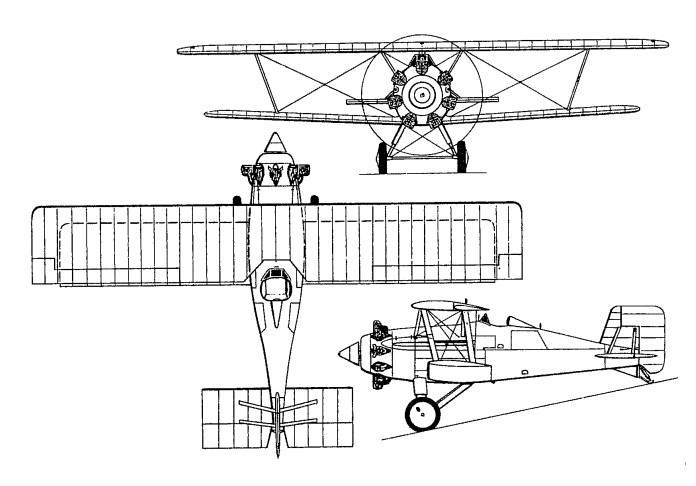
Evolved as a private venture to meet the requirements of Specification F.9/26, eventually satisfied by the Bristol Bulldog, the Partridge, designed by J D North, was of all-metal construction and its structure was made up in part of components already standardised for the P.29 Sidestrand bomber. Flown for the first time in 1928 with a 440hp Bristol Jupiter VII nine-cylinder radial (which it was intended to replace with the Mercury II in the unrealised Partridge III), it carried the standard armament of two 7.7mm Vickers machine guns in lateral fuselage bulges. The Partridge was initially flown with ailerons on the top wing only, but similar control surfaces were later introduced on the lower wing also. Only one prototype was built.
It was entered in the F9/26 competition at Martlesham Heath against the officially sponsored Armstrong Whitworth Starling, Boulton-Paul Partridge, Gloster Goldfinch and Hawker Hawfinch, won by the Bulldog.

Engine: 440hp Bristol Jupiter VII
Take-off weight: 1405 kg / 3098 lb
Empty weight: 917 kg / 2022 lb
Wingspan: 10.67 m / 35 ft 0 in
Length: 7.03 m / 23 ft 1 in
Wing area: 28.89 sq.m / 310.97 sq ft
Max. speed: 269 km/h / 167 mph

Boulton Paul P31 Bittern

The Bittern, designed to meet the requirements of Specification 27/24 for a night fighter, was one of the earliest single-seat twin-engined fighter monoplanes and was intended as a bomber formation interceptor. Powered by two 230hp Armstrong Siddeley Lynx seven-cylinder radials, the first of two Bittern prototypes was flown in 1927, with shoulder-mounted wings carrying mid-set uncowled engines. Armament was two fixed forward-firing 7.7mm Vickers guns in the sides of the forward fuselage.
The second prototype differed with a redesigned wing of constant chord and thickness, overall span being increased by approximately 1.52m and the leading edge carrying Handley Page slots. Six pairs of V-type struts braced the outer wings to the engine nacelles and fuselage. Townend cowling rings were fitted to the engines which were lowered on the wings. In place of the fixed Vickers, two Lewis guns of similar calibre were mounted in barbettes on the fuselage sides forward and below the wing leading edge. These enabled the weapons to be elevated between 0° and 45°. Interconnected with a ring sight attached to an elevating hoop pivoted at the cockpit sides, the guns had no traverse, but their arrangement enabled bombers to be attacked from below. Although advanced in concept, the Bittern was seriously underpowered, with inadequate performance and its development was abandoned.

Engines: 2 x 230hp Armstrong Siddeley Lynx
Take-off weight: 2041 kg / 4500 lb
Wingspan: 12.5 m / 41 ft 0 in
Length: 9.75 m / 31 ft 12 in
Max. speed: 233 km/h / 145 mph

Boulton Paul P29 Sidestrand

Boulton Paul developed the Sidestrand to meet Specification 9/24 for a three/four-seat medium day bomber.
The first of two Boulton & Paul P.29 Sidestrand Mk I prototypes flew in 1926, and the company received an order for 18 production aircraft.
Deliveries to the newly re-formed No. 101 Squadron at Bircham Newton began during April 1928, the first batch of six aircraft being of the Sidestrand Mk II version with ungeared Bristol Jupiter VI engines. These were followed by nine of the Sidestrand Mk III versions with geared Jupiter VIIIFs, and the final three production aircraft were replacement Mk IIs.

With well-balanced, powerful controls including a servo-actuated rudder, the aeroplane was designed for Napier Lion inline engines, but always flew with Jupiter radials.
Three Sidestrand Mk IIIs were converted to Sidestrand Mk V configuration but were then renamed Overstrand.
The first RAF twin-engined bomber to enter service since World War I, the Sidestrand was replaced by the Overstrand in December 1934.

Sidestrand Mk III
Engine: 2 x Bristol Jupiter VIIIF, 343kW (460 hp)
Span: 21.92m (71 ft 11 in)
Length: 14.02m (46ft)
Height: 4.52 m / 14 ft 10 in
Wing area: 91.04 sqm / 979.95 sq ft
Max T/O weight: 4627kg (10,200 lb)
Empty weight: 2726 kg / 6010 lb
Max speed: 225 km/h / 140 mph at 10,000ft
Ceiling: 7315 m / 24000 ft
Operational range: 500 miles / 432 nm / 800 km
Armament: 3 x 7.7-mm (0.303-in) machine-guns, 476 kg (1,050 lb) bombs
Crew: 4