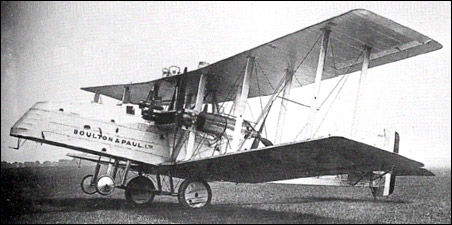
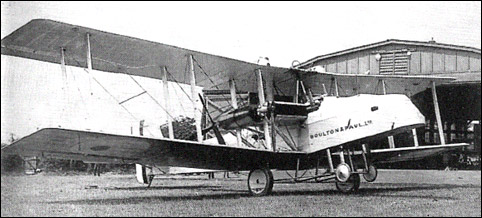
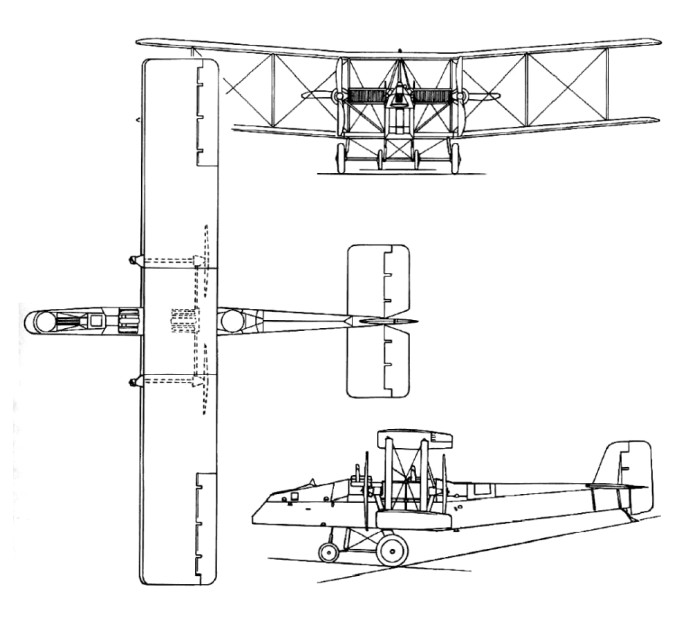
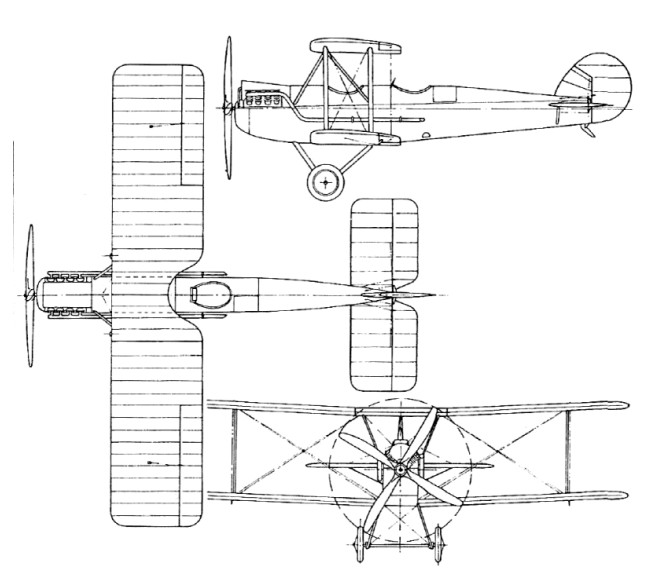
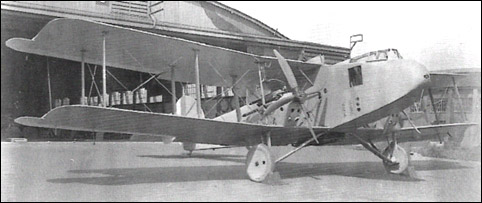
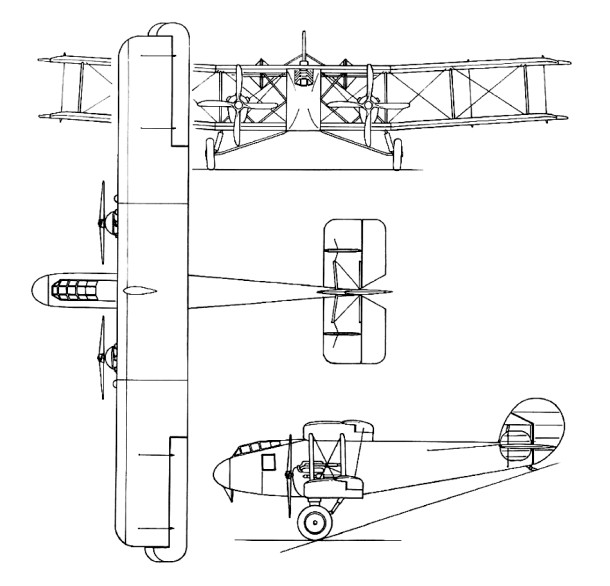
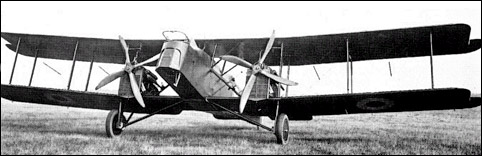
Engine: 2 x 450hp Napier Lion Take-off weight: 4994 kg / 11010 lb Empty weight: 3596 kg / 7928 lb Wingspan: 21.34 m / 70 ft 0 in Length: 16.26 m / 53 ft 4 in Wing area: 111.86 sqm / 1204.05 sq ft Max. speed: 187 km/h / 116 mph Ceiling: 4877 m / 16000 ft
Engine: 1 x 90hp RAF 1a Take-off weight: 804 kg / 1773 lb Empty weight: 565 kg / 1246 lb Wingspan: 8.38 m / 27 ft 6 in Length: 7.62 m / 25 ft 0 in Height: 3.05 m / 10 ft 0 in Wing area: 30.01 sqm / 323.02 sq ft Max. speed: 167 km/h / 104 mph Ceiling: 4267 m / 14000 ft Range: 483 km / 300 miles
Engine: 2 x 450hp Napier Lion Take-off weight: 3578 kg / 7888 lb Empty weight: 2347 kg / 5174 lb Wingspan: 18.39 m / 60 ft 4 in Length: 12.19 m / 39 ft 12 in Height: 3.76 m / 12 ft 4 in Wing area: 71.54 sqm / 770.05 sq ft Max. speed: 240 km/h / 149 mph Ceiling: 7620 m / 25000 ft
P.7 Mark II Engine” 2 x 230hp Bently B.R.2 rotary engines Take-off weight: 2872 kg / 6332 lb Empty weight: 1734 kg / 3823 lb Wingspan: 17.48 m / 57 ft 4 in Length: 11.28 m / 37 ft 0 in Height: 3.66 m / 12 ft 0 in Wing area: 68.56 sqm / 737.97 sq ft Armament: 2 x 7.7mm machine-guns, 4 x 100kg bombs Crew: 3
Engine: 1 x 90hp RAF 1a Take-off weight: 783 kg / 1726 lb Empty weight: 499 kg / 1100 lb Wingspan: 7.62 m / 25 ft 0 in Length: 5.79 m / 18 ft 12 in Height: 2.44 m / 8 ft 0 in Wing area: 21.83 sqm / 234.98 sq ft Max. speed: 166 km/h / 103 mph
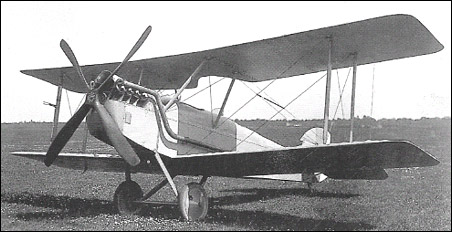
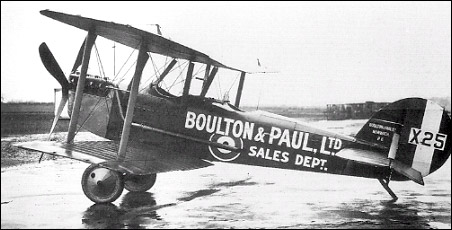
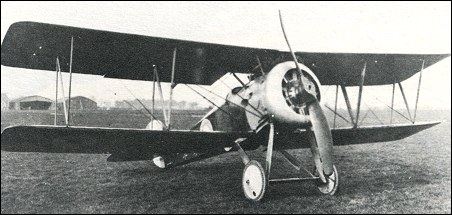
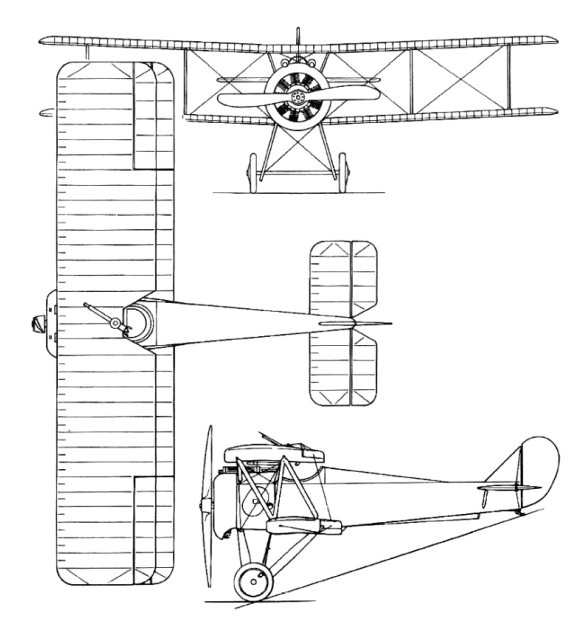
Boulton & Paul had manufactured wooden buildings at its Norwich factory, and during World War I built aircraft under sub-contract. Among the types produced were the FE.2b and Camel, and the Bobolink was the result of a design competition to find a Camel replacement. Boulton & Paul’s first aeroplane, the P.3 Bobolink designed by John D. North, was built only in prototype form. The winner of the competition was the Sopwith Snipe, and the Boulton & Paul aircraft did not enter production. Three serial numbers were allocated for the prototypes, but records suggest that only one was built. A Bobolink feature made it possible for the pilot to jettison its main fuel tanks in the event of an in-flight fire.
Engine: 1 x Bentley B.R.2 rotary piston engine, 172kW Take-off weight: 904 kg / 1993 lb Empty weight: 556 kg / 1226 lb Wingspan: 8.84 m / 29 ft 0 in Length: 6.10 m / 20 ft 0 in Height: 2.54 m / 8 ft 4 in Wing area: 24.71 sqm / 265.98 sq ft Max. speed: 201 km/h / 125 mph
Established as a building constructor in Norwich, Norfolk, turned to subcontract construction of aircraft in First World War, including RAF F.E.2d, Sopwith 1/2-Strutter and Sopwith Camel. Known originally as Aircraft Department of Boulton & Paul Ltd. As the war neared its end, the company decided to continue in aircraft industry and the aircraft division of Boulton & Paul was incorporated as an independent company, Boulton Paul Aircraft in 1934. First original design P.3 single-seat biplane fighter which did not enter production. Designed and built P.6 research aircraft, which provided much data for later P.9. P.7 Bourges twin-engined fighter-bomber built at the end of 1918, followed later by similar Bugle. Neither entered RAF service. Continued to build small numbers of civil aircraft during inter-war years. Sidestrand 3/4-seat medium bomber entered RAF service with one squadron in April 1928. Replaced by improved Overstrands, with power-operated gun turret, in 1934. When production ended, in 1936, company re-established at Wolverhampton, Staffs. Name of Boulton Paul Aircraft Ltd. adopted 1934. Designed and built P.82 Defiant for RAF, prototype first flew 11 August 1937; two-seat fighter with power-operated gun turret was entirely new concept and enjoyed initial operational success. Production ended 1943 after more than 1,000 built. Designed P.108 Balliol three-seat advanced trainer for RAF, 162 built subsequently as two-seat Balliol T.2, of which 30 built under subcontract by Blackburn Aircraft Ltd. Built P.111 and P.120 for research into behavior of delta wing at transonic speeds. In 1961 the company became part of the Dowty Group.
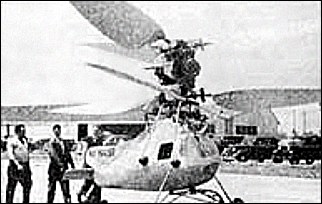
De Bothezat who, after abandoning his first helicopter in 1923, had created a firm for the design and manufacturing of industrial fans, returned in 1937 to the helicopter: he created then the Helicopter Corporation of America and built a coaxial helicopter. A single-seat close-cockpit helicopter with 85hp radial engine and two coaxial rotors, the machine was completed by De Bothezat’s colleagues after he passed away in 1939. Testing was entrusted to a Russian ace of World War I Captain Sergievsky.
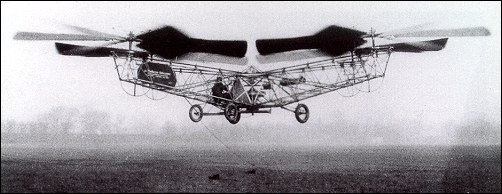
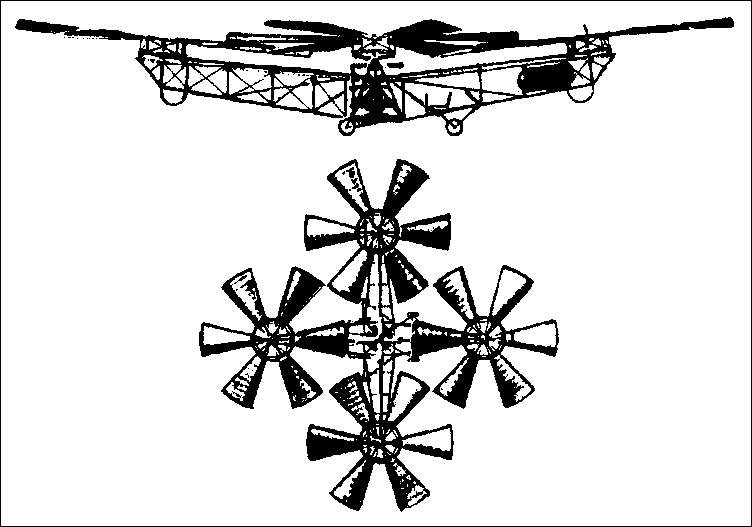
In January 1921, the US Army Air Corps awarded a $20,000 contract to Dr. George de Bothezat and Ivan Jerome to develop a vertical flight machine at Dayton. The 1678kg “X”-shaped structure supported an 8.1m diameter six-blade rotor at each end of the 9m arms. At the ends of the lateral arms, two small propellers with variable pitch were used for thrusting and yaw control. A small lifting rotor was also mounted above the 180hp Le Rhone radial engine (which it also cooled) at the junction of the frames, but was later removed as unnecessary. Each rotor had individual collective pitch control to produce differential thrust through vehicle inclination for translation. The aircraft weighed 1610 kg at take-off and made its first flight in October 1922. The engine was soon upgraded to a 220hp Bentley BR-2 rotary. About 100 flights were made by the end of 1923 at what would eventually be known as Wright Field near Dayton, Ohio. On 18th December 1922 during a test by the Technical Section at McCook Field (now known as Wright Field), the aircraft rose 1.8 metres from the ground and remained airborne for 1 minute 42 seconds. On 19th January 1923 it lifted two persons to a height of 1.2 metres, and on 17th April 1923 it lifted not only the pilot but also four people hanging on to the framework. Although the contract called for a 100m hover, the highest it ever reached was about 5m. After expending $200,000, de Bothezat demonstrated that his vehicle could be quite stable and that the practical helicopter was theoretically possible. It was, however, underpowered, unresponsive, mechanically complex and susceptible to reliability problems. Pilot workload was too high during hover to attempt lateral motion. Development ended in 1923.
Bothezat helicopter Engine: 1 x Le Rhone radial 135kW, 180hp / Bentley BR-2 rotary, 220hp Rotor diameter: 8.08m Length and width: 19.8m Height: 3.05m Take-off weight: 1700kg