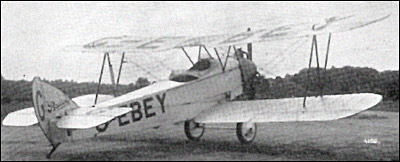
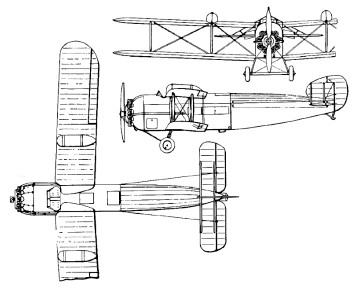
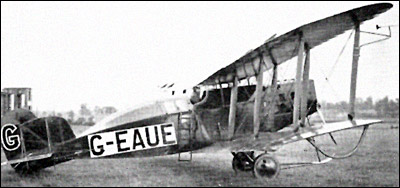
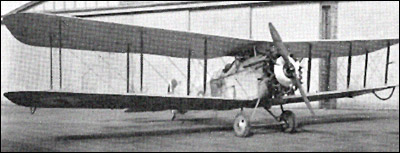
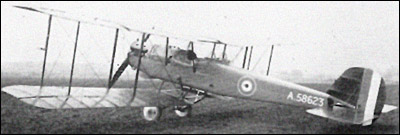
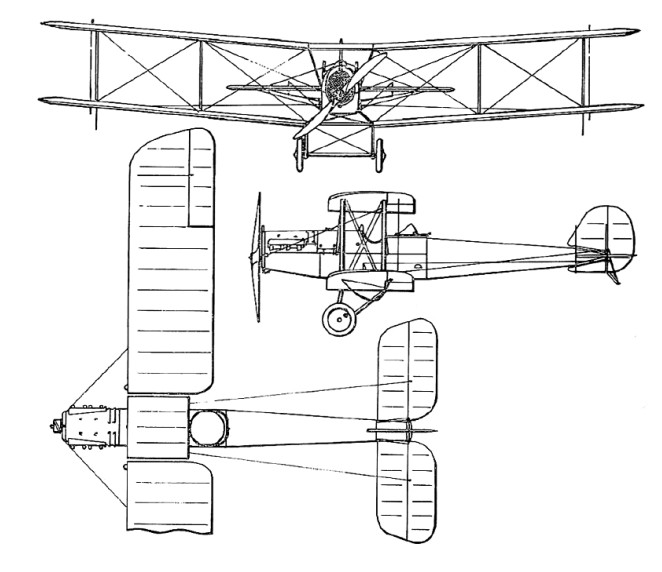
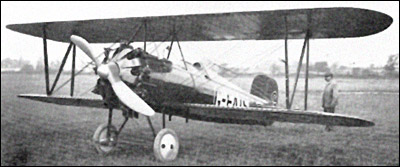
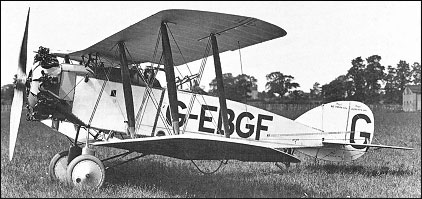
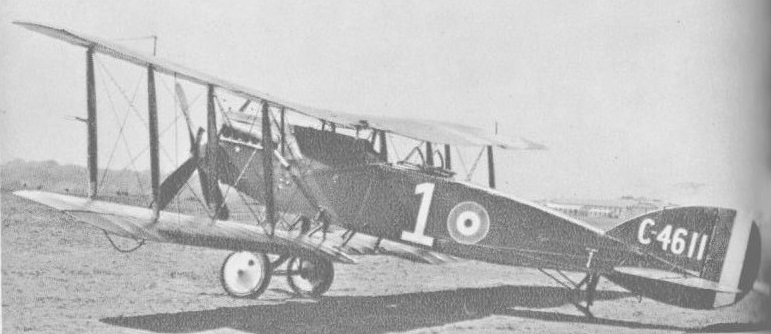
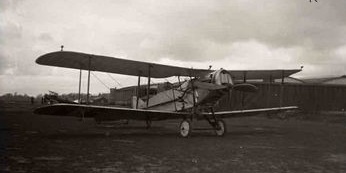
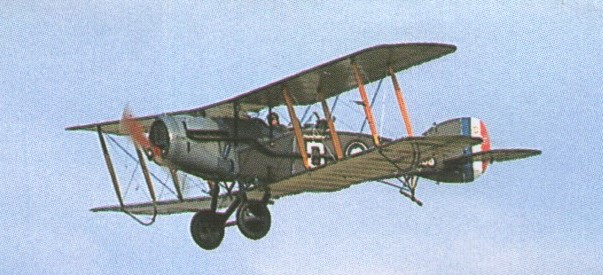
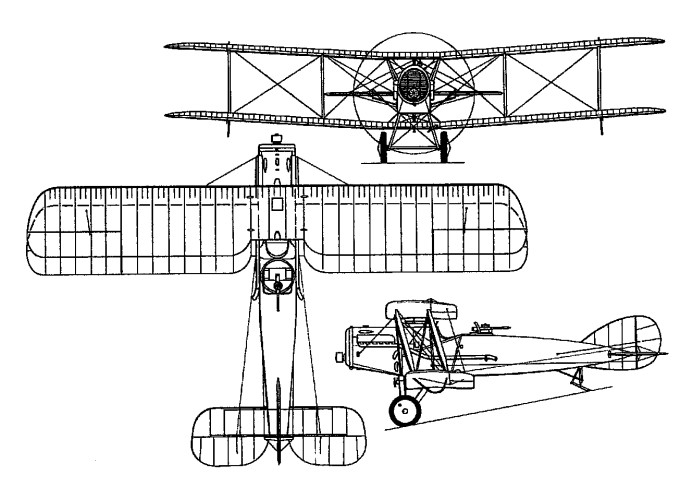
The Bristol Tourer was originally a conversion of the Bristol F.2b Fighter built for and flown by the RAF in World War I. At the end of the war a number were converted in the UK as low-cost commercial airliners, fitted with a 134 kw (180 hp) Wolseley Viper, 179 kw (240 hp) Siddeley Puma, or 224 kw (300 hp) Hispano Suiza engine. Four distinct conversions were built, all flown from the front seat, varying in type of accommodation provided for the passengers, ie an enclosed cabin or open cockpit. Bristol type-numbers 27, 28, 29 and 47 were allotted to the series in 1923.
The first conversion was flown in 1919 and another was shown at the Paris Salon in December of that year. Two were sold in the USA and two others were fitted with floats. Two went to Spain and eight to Australia.
Replica: Air Charter Bristol F.2b Tourers
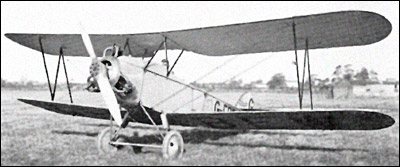
Bristol Tourer 2-seater Engine: 1 x 230hp Siddeley Puma Take-off weight: 1271 kg / 2802 lb Empty weight: 772 kg / 1702 lb Wingspan: 12.01 m / 39 ft 5 in Length: 7.95 m / 26 ft 1 in Height: 3.05 m / 10 ft 0 in Wing area: 37.81 sq.m / 406.98 sq ft Max. speed: 193 km/h / 120 mph Ceiling: 6706 m / 22000 ft
Bristol Taxiplane Engine: 1 x 120hp Bristol Lucifer Take-off weight: 835 kg / 1841 lb Empty weight: 549 kg / 1210 lb Wingspan: 9.47 m / 31 ft 1 in Length: 7.09 m / 23 ft 3 in Height: 2.69 m / 8 ft 10 in Wing area: 26.38 sq.m / 283.95 sq ft Max. speed: 145 km/h / 90 mph
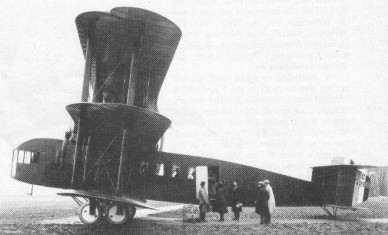
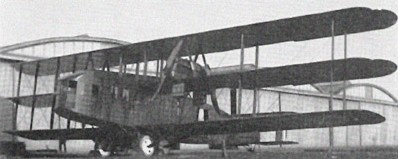
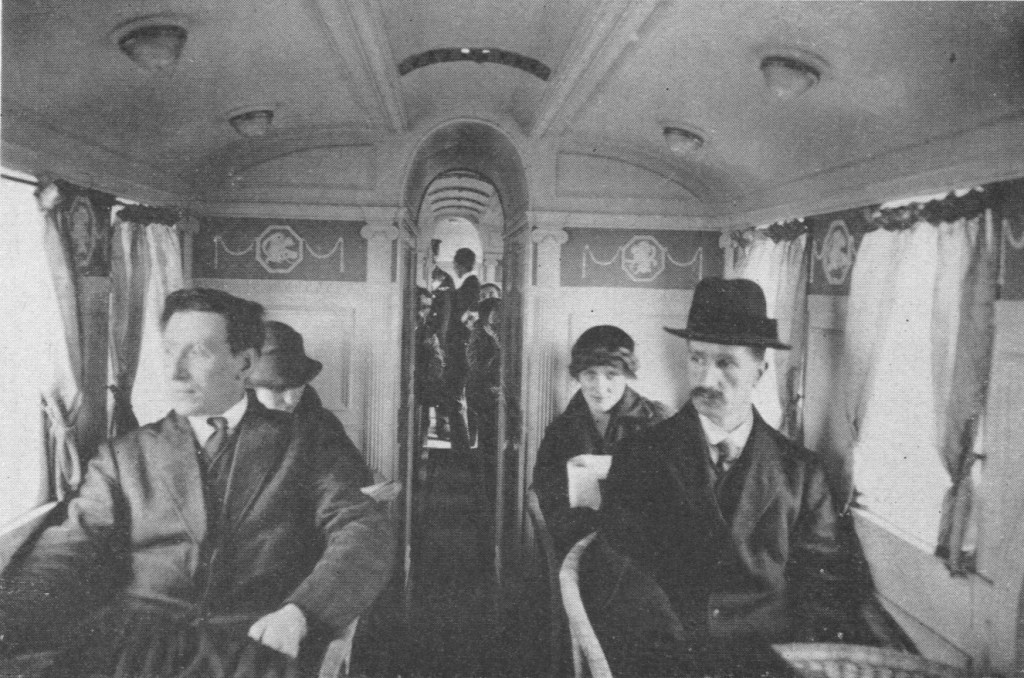
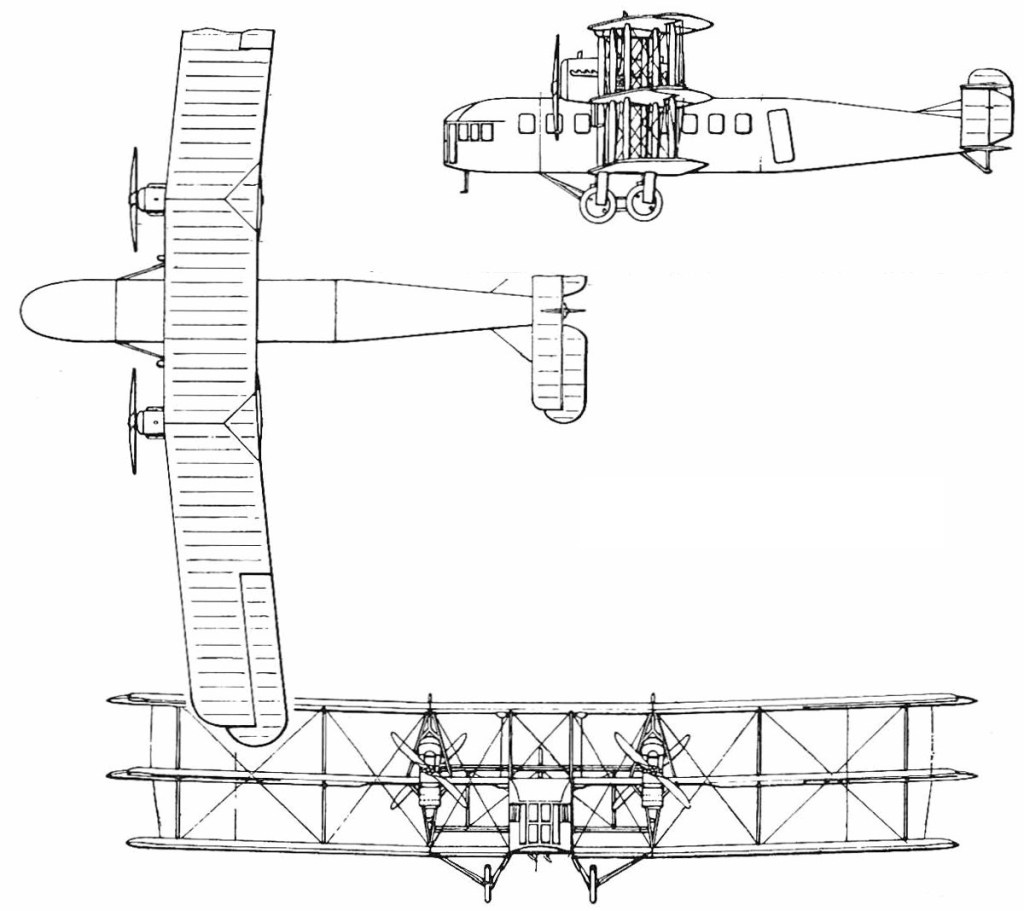
An unsuccessful contender for a 1917 large bomber requirement, the Bristol Braemar triplane formed the basis of the Pullman, an equally unwanted airliner with a large cabin and enclosed cockpit. The Pullman’s crew distrusted this feature and took to carrying axes with which to hack their way out in an emergency.
Bristol Pullman Engine: 4 x 400hp Liberty 12 inline piston engines Take-off weight: 8059 kg / 17767 lb Empty weight: 4994 kg / 11010 lb Wingspan: 24.89 m / 81 ft 8 in Length: 15.85 m / 52 ft 0 in Height: 6.10 m / 20 ft 0 in Wing area: 176.98 sq.m / 1905.00 sq ft Max. speed: 217 km/h / 135 mph Ceiling: 4572 m / 15000 ft Crew: 2 Passengers: 14
The Bristol Ten-seater and Bristol Brandon were British single-engine biplane transport aircraft built by the Bristol Aeroplane Company in the early 1920s. Only three were built, two of which were used as civil transports and one of which (the Bristol Brandon) served with the Royal Air Force.
Early in 1921, the British government provided subsidies for approved airlines, so Bristol’s management authorised Barnwell to proceed with a design for a single-engined transport aircraft. It was intended to be powered by a Bristol Jupiter engine, but this had not yet been type approved, so the initial prototype was fitted with a Napier Lion.
The Lion-engined prototype, the Bristol Type 62, or Bristol Ten-seater, with the registration G-EAWY first flew on 21 June 1921. The Ten-seater was a large, two bay biplane, with a cabin for nine passengers and a forward cockpit for the single pilot. The Type 62 had its Certificate of Airworthiness issued on 14 February 1922 and was transferred to Instone Air Line for service on its London to Paris route, carrying passengers and cargo. It was later transferred to Handley Page Transport Ltd.
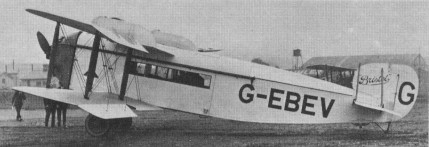
The second aircraft, the Bristol Type 75 was powered by the preferred Jupiter engine, which was mounted behind a fireproof bulkhead, with the entire engine installation capable of being swung open like a gate to allow easy access to the rear of the engine. The Type 75 was designed to accommodate eight passengers and two crew. This aircraft, registered G-EBEV, first flew in July 1922.
The Type 75 received its Certificate of Airworthiness on 16 July 1924. By this time, Instone Air Lines had merged with the other three subsidised British airlines to form Imperial Airways. Imperial had a policy of using only multi-engine aircraft for passenger flights, so the Type 75 was converted into a freighter to carry 1,800 lb (820 kg) of cargo, operating the London – Cologne route from 22 July 1924 until 1926. A second Type 75 was not completed, and was broken up for spares in 1923.
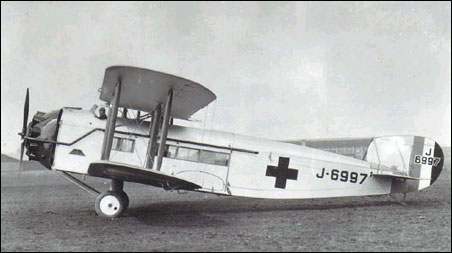
A third aircraft, the Bristol Type 79 was ordered by the Air Council to be equipped as a troop-carrier and air ambulance for the Royal Air Force. It was fitted with wings of greater chord, and had accommodation for three stretchers and an attendant or two stretchers and four sitting patients. The Type 79 first flew on 19 March 1924 and was delivered to the RAF, as the Bristol Brandon, in 1925. It was overweight at full load and did not go into overseas service, being used as an ambulance at RAF Halton together with the Avro Andover.
B.79 Brandon
Variants
Bristol Type 62 Ten-seater Engine: 450 hp (340 kW) Napier Lion
Bristol Type 75 Engine: Bristol Jupiter IV 9, 425 hp (317 kW) Wingspan: 56 ft 0 in (17.07 m) Length: 40 ft 6 in (12.35 m) Height: 11 ft 0 in (3.35 m) Wing area: 700 sq.ft (65.1 sq.m) Empty weight: 4,000 lb (1,818 kg) Max takeoff weight: 6,755 lb (3,070 kg) Service ceiling: 8,500 ft (2,600 m) Wing loading: 9.65 lb/sq.ft (47.2 kg/sq.m) Endurance: 5 hours 30 min Maximum speed: 96 knots (110 mph, 177 km/h) Crew: 2 Capacity: Eight passengers or 1,800 lb (820 kg)
Bristol Type 79 Brandon Engine: 425 hp Bristol Jupiter IV Take-off weight: 3223 kg / 7106 lb Empty weight: 1984 kg / 4374 lb Wingspan: 16.48 m / 54 ft 1 in Length: 12.88 m / 42 ft 3 in Height: 4.37 m / 14 ft 4 in Wing area: 82.68 sq.m /889.96 sq ft Max. Speed: 185 km/h / 115 mph Ceiling: 2591 m / 8500 ft Crew: 2 Passengers: 8
Rules of a competition released in July 1919 emphasised safety in terms of a short takeoff and slow landing speed as well as useful load and economy, and Bristol decided that a modification of the Tourer was their best hope.
The single passenger was enclosed in a cabin immediately behind the pilot’s open cockpit, with a raised roof and windows in the decking where the second seat in the Tourer had been. The fuselage was deepened by dropping the lower longerons and floor to the lower wing spar. Ahead of the pilot, the fuselage bays were built from steel rather than wood spars. The single-axle main undercarriage carried wheels with disc brakes; there was a central skid to prevent nosing over and fenders under the wing tips. The tail skid was steerable and sprung. The Seely was a three-bay biplane with greater wing area than the Tourer, with ailerons on both upper and lower wings. The rudder was horn balanced and the fin area generous. For the competition, it was powered by a water-cooled upright in-line 240 hp (180 kW) Siddeley Puma with a large nose radiator behind the wooden two-blade propeller. There were only two other aircraft in the competition, held at RAF Martlesham Heath in August 1920, the Westland Limousine and the Sopwith Antelope. Westland was the winner of the competition and Bristol retained the Seely on general duties until 1923, when it was converted into a test bed for Jupiter development, being purchased by the Air Ministry for use with the Royal Aircraft Establishment. It was fitted with a 435 hp (324 kW) Jupiter III nine-cylinder radial engine driving a steel two-bladed Leitner-Watts propeller. The Jupiter had an exhaust-driven supercharger to enhance high-altitude performance, raising the Seely’s service ceiling from 18,000 ft (5,490 m) with the Puma to 24,000 ft (8,230 m). At these altitudes, the enclosed cabin provided the observer with relief from the elements.
Engine: Siddeley Puma, 240 hp (180 kW) Gross weight: 3,000 lb (1,360 kg) Empty weight: 908 kg / 2002 lb Wingspan: 14.40 m / 47 ft 3 in Length: 8.99 m / 29 ft 6 in Height: 3.66 m / 12 ft 0 in Wing area: 52.58 sq.m / 565.97 sq ft Max. Speed at sea level: 177 km/h / 110 mph Ceiling: 5486 m / 18000 ft Seats: 2
In 1919, Frank Barnwell crashed the MR1 – the first all-metal airframe produced by Bristol and a development of the F2B – into a tree at Farnborough, successfully decapitating the tree and writing the airframe off in the process.
Engine: 1 x 140hp Hispano-Suiza Take-off weight: 1276 kg / 2813 lb Empty weight: 772 kg / 1702 lb Wingspan: 12.85 m / 42 ft 2 in Length: 8.23 m / 27 ft 0 in Height: 3.12 m / 10 ft 3 in Wing area: 42.55 sq.m / 458.00 sq ft Max. speed: 177 km/h / 110 mph
Bristol Bullet Engine: 1 x 450hp Bristol Jupiter II Take-off weight: 1044 kg / 2302 lb Empty weight: 817 kg / 1801 lb Wingspan: 9.50 m / 31 ft 2 in Length: 7.34 m / 24 ft 1 in Height: 2.95 m / 9 ft 8 in Wing area: 27.41 sq.m / 295.04 sq ft Max. Speed: 250 km/h / 155 mph Endurance: 2 hr 30 min Crew: 1
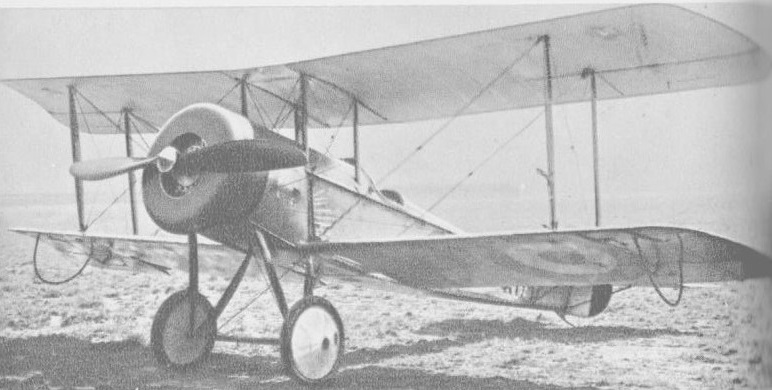
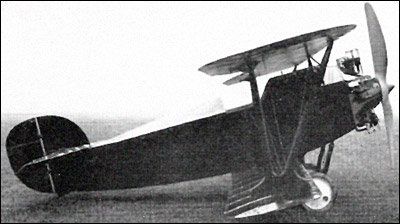
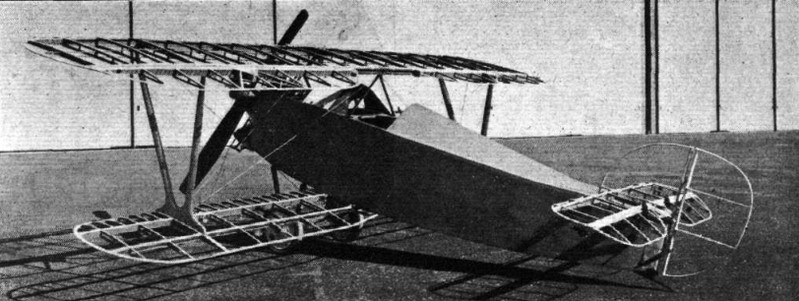
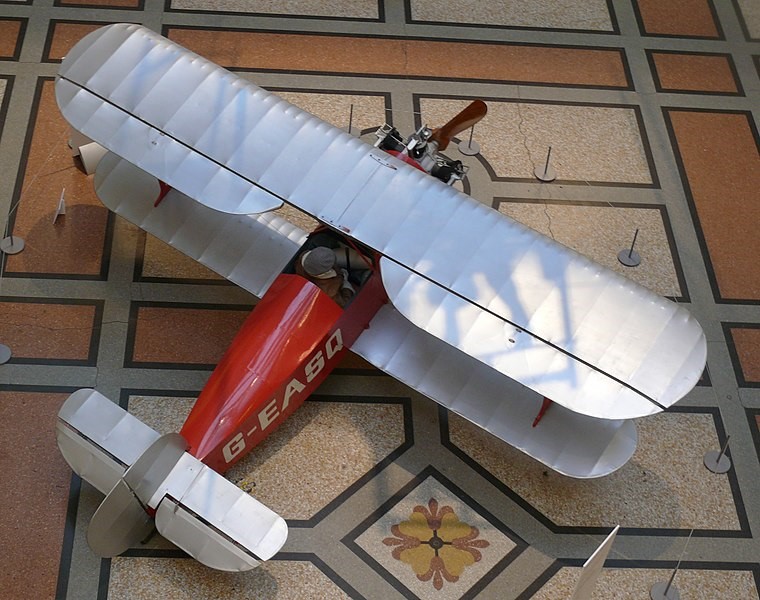
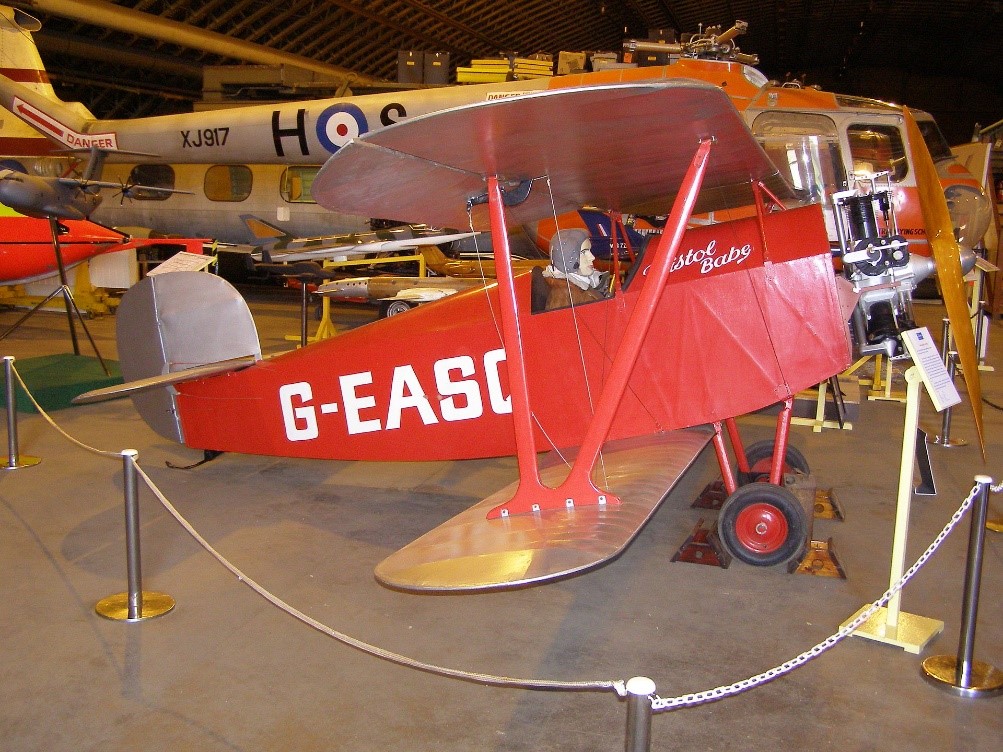
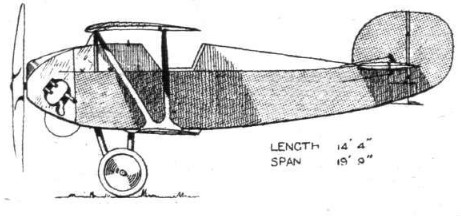
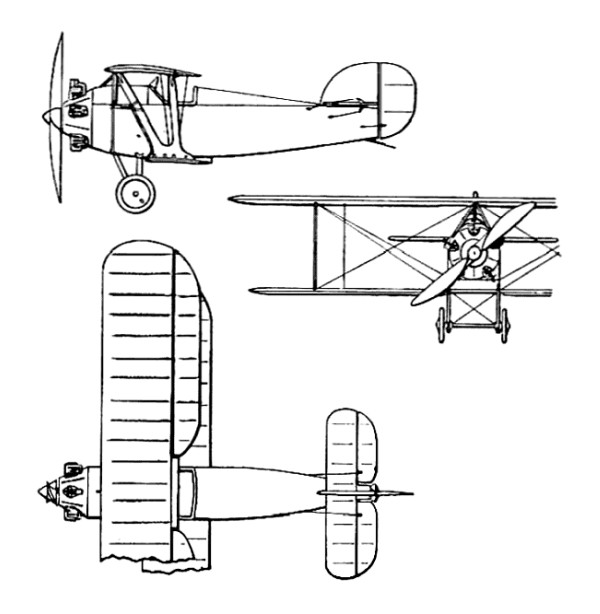
The Bristol Babe was the creation of Frank Barnwell, Bristol’s chief designer. It was aimed at the private owner flyer and was a small single-engined single-seat biplane with unswept staggered single-bay wings of unequal span. Full-span ailerons were fitted on the top wing only. The fuselage was plywood-skinned, with fabric covering it for protection. The cockpit was below the upper wing trailing edge with rounded decking aft to the tail. The fin and rudder were generous and rounded, the undercarriage a conventional single-axle plus tailskid arrangement.
The original intention was to use the 60 hp (50 kW) ABC Gadfly radial, but in April 1919 ABC pulled out of aero-engine manufacture. A possible alternative was the 40 hp (30 kW) flat-twin Siddeley Ounce currently being developed, so a third Babe was begun as a testbed. In the meantime, Barnwell resurrected a 1911 Viale 35 hp five-cylinder radial engine of 45 hp (34 kW) that had been installed in an Avro Type F and which had been put into storage following a crash. This engine ran satisfactorily for up to half an hour, after which it tended to overheat. This was installed in the second Babe which made its first flight on 28 November 1919. The pilot, Cyril Uwins reported that it was an easy aircraft for an experienced pilot but rather unstable for a novice.
Though it was useful for testing, the old Viale was not reliable enough for sale, so following discussions at the Paris Aero Show in November 1919, two seven-cylinder 60 hp (50 kW) Le Rhône Type 7B2 rotary engines were ordered for the first two Babes. The third Babe appeared at this show with an incomplete Ounce engine.
Replica
The second Babe built was referred to as the Babe I when it had the Viale engine and then as the Babe III with the Le Rhône engine. The Le Rhône-powered first machine was the other Babe III. The Ounce-powered third machine, designated Babe II, never flew, but the two Babe IIIs did and were registered over the winter of 1919-20.
The first Babe underwent a drastic modification in May 1920 when it received a thick cantilever monoplane wing. Safety concerns prevented its testing and by February 1921 both aircraft were off the Civil Register. The Viale engine is now in the Science Museum, London. In the retrospective allocation of Bristol type numbers made in 1923, the Babe I was labelled Type 30, the Babe IIs as Type 46 and the unflown Babe III the Type 46A.
Replica
Engine: 1 x 45hp Viale Wingspan: 5.99 m / 19 ft 8 in Wing area: 10.03 sq.m / 107.96 sq ft Length: 4.55 m / 14 ft 11 in Height: 1.75 m / 5 ft 9 in Take-off weight: 310 kg / 683 lb Empty weight: 209 kg / 461 lb Max. Speed: 137 km/h / 85 mph Ceiling: 3048 m / 10000 ft Crew: 1
Babe III Powerplant: 1 × Le Rhône Type 7B2, 60 hp (45 kW) Wingspan: 19 ft 8 in (6.00 m) Wing area: 108 sq ft (10.0 m2) Length: 14 ft 11 in (4.55 m) Height: 5 ft 9 in (1.75 m) Empty weight: 460 lb (209 kg) Gross weight: 840 lb (381 kg) Maximum speed: 107 mph (172 km/h, 93 kn) Service ceiling: 15,000 ft (4,570 m) Crew: one
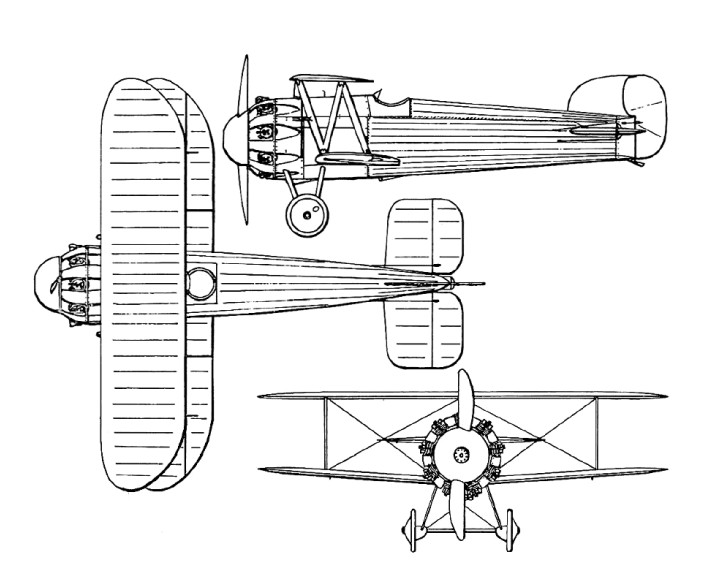
The Jupiter Fighter was essentially an adaptation of the F.2B airframe to take a 425hp Bristol Jupiter IV engine and an oleo-type undercarriage. Three conversions were completed, the first of these flying in June 1923. One of the three Jupiter Fighters was purchased by the Swedish government and entered service with Flygkompaniet in May 1924. The first Jupiter Fighter had crashed on 23 November 1923 as a result of an engine seizure at high altitude, and, in September 1924, the third example was converted as a dual-control trainer.
Engine: 425hp Bristol Jupiter IV Take-off weight: 1397 kg / 3080 lb Empty weight: 993 kg / 2189 lb Wingspan: 11.96 m / 39 ft 3 in Length: 7.62 m / 25 ft 0 in Height: 2.89 m / 9 ft 6 in Wing area: 37.62 sq.m / 404.94 sq ft Max. speed: 216 km/h / 134 mph
In March 1916 the design was begun of a 120 hp Beardmore powered tractor replacement for the B.E. pusher scouts. The type was designated R.2A and was intended to be armed with one wing mounted Lewis machine gun and another for the observer on a Scarff ring. At the same time a similar design using the 150 hp Hispano Suiza was produced, but lack of power from the Beardmore caused the designer, Captain Frank Barnwell, to produce a new design using the new 190 hp Rolls Royce Falcon and with the designation F.2A. This was an unequal span two bay biplane with its fuselage, tapered to the rear mounted mid way between the wings. Two prototypes were completed by the early autumn of 1916, one with the Rolls-Royce Falcon engine (A3303), the other with the 150 hp Hispano Suiza. Prototype A3303 was first flown at Filton on 9 September 1916, and after successful trials a first batch of 50 Rolls Royce powered production F.2As was ordered with a synchronized Vickers machine gun mounted in the top of the engine cowling in addition to the Scarff mounted Lewis, entering service with No.48 squadron in February 1917.
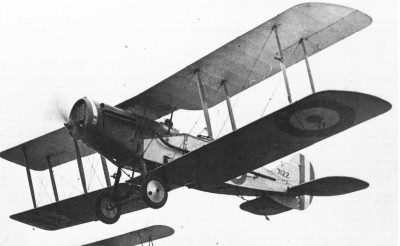
Meanwhile the second, Hispano Suiza powered, prototype had been modified to improve the pilot’s view and given a larger fuel tank, increased ammunition stowage and a modified lower wing affording a small increase in gross area. New horizontal tail surfaces of greater span and increased aspect ratio were introduced. Further production machines were ordered with the 190 hp Rolls-Royce Falcon I and the designation F.2B; after the first 150 the 220 hp Falcon II was substituted for a further 50, and production was intended to continue with the 275 hp Falcon III. F.2B deliveries began on 13 April 1917, and the success of this type led to the decision to re-equip all RFC fighter-reconnaissance squadrons with F.2Bs. By the autumn of 1917 production of the aircraft was outstripping that of the engine, and the 200 hp Hispano Suiza was substituted in the aircraft intended for reconnaissance squadrons, but this proved unreli¬able and was replaced by the 200 hp Sunbeam Arab in a modified nose. Some later F.2Bs were fitted with the 220 hp Siddeley Puma and a number of subcontractors were given contracts to produce the F.2B, 3050 being completed by the end of 1918.
Production continued until September 1919, by which time a total number of 4,747 had been completed, 3,126 of these by the parent company, the last to the RNZAF. Of the final batch, 153 were delivered with the 200hp Sunbeam Arab engine and 18 with the 230hp Siddeley Puma. When the RAF was re-established on a peacetime footing, the F.2B was adopted as standard for the army co-operation role and reinstated in production for this task as the Mk II, others being refurbished to similar standards. Fifty structurally revised aircraft delivered in 1926 were designated as Mk IIIs, all surviving aircraft of this mark being converted in 1928 as dual control Mk IVs for a final total of 3,576. It was finally withdrawn from RAF service in 1932.
Bristol F.2B Mk IV
The greatest number of F.2Bs used the Falcon engines, however, and it was these fighter/reconnaissance machines which won the Bristol Fighter its reputation though only after some severe early setbacks. The first F.2A unit to arrive in France was 48 Squadron, RFC, in March 1917, and their first patrol ended in disaster. On April 5 six of their fighters were attacked by Manfred von Richthofen’s Jasta 11 and four were shot down. Further combat failures followed before it was realized that the fault lay in the tactics, not in the aircraft. Previous fighting scouts had the observer’s gun as their primary if not only armament, but the F.2As synchronized Vickers was a much more potent combat weapon, and once the pilot’s learned to aim the whole aircraft at the target the Fighter never looked back. F.2Bs of 48 Squadron accounted for 148 enemy aircraft by the time of the Armistice. As well as mounting offensive scouting patrols, F.2Bs were used as bomber escorts and bomber intercepters and on, ground attack missions, for which they could carry up to 12.9 kg (20 lb) fragmentation bombs. Because of their success their introduction to reconnaissance squadrons was delayed almost until the end of the war.
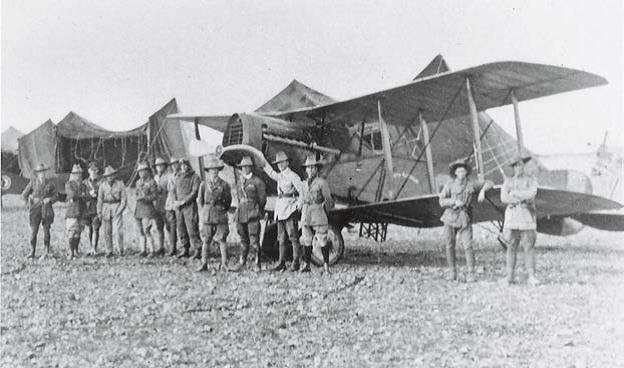
Bristol Fighters also served with distinction in Italy, while in Palestine they equipped 1 Squadron of the Australian Flying Corps. Ross Smith of 1 AFC scored the majority of his victories with the F2B. Numbers were also used by Home Defence squadrons. 3,101 were produced through the end of WW 1.
Personnel of 1 AFC with one of their Bristol Fighters in 1918
In July 1917 the Bristol Fighter was adopted by the British War Office as the standard model for all fighter-reconnaissance squadrons. This led to a greater demand for the aircraft than the British and Colonial Aeroplane Company could handle, so production was undertaken by several other companies. As production of the aircraft increased Rolls-Royce found they could not keep up with the demand for Falcon engines, so several alternative powerplants were tried before the 200 hp Sunbeam Arab was chosen. Although Bristol Fighters fitted with this engine tended to be somewhat underpowered, such was the demand for the aircraft that several hundred were delivered to the Royal Flying Corps.
It proved so successful that it equipped 14 RFC squadrons and remained in RAF service until 1932. After the First World War the F.2B became the standard RAF army cooperation aircraft, serving with the RAF until 1932 in Germany, the Middle East and India. Small numbers were supplied to Belgium, Greece, the Republic of Ireland, New Zea¬land, Norway and Spain, and SABCA in Belgium built 40, with 300 hp Hispano Suiza engines, under licence in 1925. In 1927 a Mexican purchasing commission placed contracts in the UK for 10 new Hispano-Suiza engined Bristol Fighters.
The Bristol Fighter saw service in New Zealand when a pair of First World War standard aircraft (H1557 and H1558) arrived in August 1919. A further five (6856-6859, and 7120) arrived in 1825 and 1926, and together they formed the backbone of the New Zealand Permanent Air Force and later the Royal New Zealand Air Force. Operating as Army co-operation, advanced trainers and aerial survey aircraft, they were used extensively, and for a time in the 1920s and early 1930s they were the only armed aircraft in the country. By the time the surviving four aircraft were withdrawn in 1936 (two had been destroyed in fatal crashes and one was withdrawn in 1930 because of its ago) they were the last Bristol Fighters in service anywhere in the world.
Production of the Bristol Fighter continued until 1919, by which time approximately 4469 had been built. In a modified form and known as the Mark IIIa, it continued in service in RAF Army Co-operation Squadrons until 1932.
Bristol Fighter (Type 14) F2B Fighter Mk II serial 22 served Baldonnel from 4 Nov 1925 to July 1935.
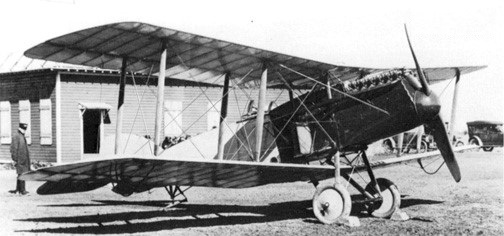
The US Army had become interested in the type when the United States entered the First World War in 1917, and a contract for 1,000 planes placed with Fisher Body Corp was cancelled and reassigned to Curtiss, to be powered by the 400hp Liberty 12. The Liberty proved too heavy for the airframe and was responsible for a series of crashes. McCook Field experiments on the pattern plane supplied by RAF (A7207) showed that its Hispano-Suiza was the ideal match, so the contract was cancelled in July 1918 after 26 planes (AS34232/34257) had been built as O-1. Most of those were rebuilt with a monocoque plywood fuselage and refitted with 300hp Wright-Hisso H, others experimentally with 280hp Liberty 8, and all redesignated as B-1.
Curtiss USAO-1
Further production as B-1 was then handed over to Dayton-Wright. Two prototypes of another modified F.2B design were produced as the B 3 and B 4 (later XB 1 and XB 2), and 40 production aircraft with the designation XB-1A, powered by 300 hp Wright engines and armed with twin Browning machine guns, were built by Dayton-Wright as night observation aircraft.
Bristol F2A Engine: 190 hp Falcon I. Span: 11.96 m (39 ft 3 in). Length: 7.85 m (25 ft 9 in). Gross weight: 1210 kg (2670 lb). Maximum speed: 177 km/h (110 mph).
F2B Fighter Engine: Rolls Royce Falcon III, 275 hp Wingspan: 39 ft 3 in / 11.99 m Wing area: 37.68 sq.m / 405.58 sq ft Wing chord: 5 ft. 6 in. Length: 25 ft 10 in / 7.87 m Height: 9 ft 9 in / 2.97 m Empty weight: 875 kg / 1929 lb Max take off weight: 2593.1 lb / 1176.0 kg Fuel capacity: 45 gal Max. speed: 110 kts / 203 km/h / 125 mph at SL Service ceiling: 10827 ft / 3300 m Absolute ceiling: 21,500 ft Range: 252 nm / 467 km Rate-of-Climb: 869ft/min (265m/min) Climb to 6500 ft: 6.5 min Endurance: 3 hours. Crew: 2 Armament: 1x MG 7,7mm Vickers, 1 or 2 x MG 7,7mm Lewis Bombload: 12 x 20 lb / 240 lb. (110 kg.)
F2B Engine: Sunbeam Arab, 200 hp Empty weight: 1733 lb Loaded weight: 2630 lb Wing area: 406 sq.ft Wing loading: 6.4 lb/sq.ft Armament: 1 x Vickers mg, 1 or 2 Lewis mg Crew: 2
F2B Engine: Hispano-Suiza, 200 hp Span: 39 ft 3 in Length: 24 ft 9 in Height: 9 t 6 in Empty weight: 1733 lb Loaded weight: 2630 lb Wing area: 406 sq.ft Wing loading: 6.4 lb/sq.ft Armament: 1 x Vickers mg, 1 or 2 Lewis mg Crew: 2 Climb to 6500 ft: 8.7 min