Bristol / British & Colonial Aeroplane Company Ltd

In 1910 Sir George White, the wealthy owner of the Bristol Tramways Company, formed the Bristol and Colonial Aeroplane Company Ltd. With head offices in Bristol and a factory at nearby Filton, the aircraft produced by the company were generally known as ‘Bristols’.

Bristol Article

Founded at Bristol, Somerset, in February 1910 as British & Colonial Aeroplane Company Ltd, a factory was set up in two sheds in the village of Filton in south Gloucestershire, just north of Bristol. Sir George White was a wealthy Bristol businessman and his company was registered on 19 February 1910 with a capital of £25,000.
First began construction of a number of biplanes under license from Societe Zodiac, but these were not completed because the sample aircraft bought from France could not be induced to take to the air.

First aircraft produced were Bristol biplanes, usually known as the Boxkite, which initially were little more than copies of the Henry Farman biplane. The first of these, the Boxkite, was based on a Henri Farman design. The Boxkite made its debut at the Third International Aero Exhibition in 1911 and went on to become the first commercially produced aircraft in Britain with two per week rolling out of the factory. It was sold to the British and Russian military as well as being exported throughout the British Empire.

Flying schools established at Larkhill, on Salisbury Plain, and at Brooklands, Surrey, 1911. February 1911 Deutsche Bristol-Werke established at Halberstadt, Germany, to operate a flying school and build Bristol airplanes; arrangement canceled June 23,1914.

First military aircraft were monoplanes designed by Henri Coanda; No. 105 shared third place with a Deperdussin in the Military Aeroplane Competition of 1912. Bristol Scout, or “Baby Biplane”, evolved by Frank Barnwell 1914. The two-seat Bristol Fighter entered service in 1917 and became regarded as the best general-purpose combat aircraft of the First World War.
During the final year of the war the company produced 2,000 aeroplanes from its own factories. By the Armistice the payroll had risen from 200 in August 1914 to 3,000 and the original tram sheds were now part of a factory with eight acres of floor space.
Following the acquisition of the Cosmos Engineering Company in 1920, the Bristol Company was also a major builder of aero engines.
Renamed the Bristol Aeroplane Company on 9 February 1920. Problems of readjustment and survival were intensified by the general world wide economic depression that succeeded the brief postwar boom. Diversification was one of the expedients adopted to keep the nucleus of the skilled workfiorce in being at Filton. Aircraft manufacture was augmented by produc¬tion of bus and coach bodies and later of motor car bodies.
Between the wars Bristol Bulldog biplanes had equipped nine RAF Squadrons by 1932 and were most widely used fighter until 1936.
In 1935, Bristol’s directors, realising that the company’s capital resources were inadequate, resolved on 15 June to re organise the firm as a public limited liability company with a share capital of £1.2million.
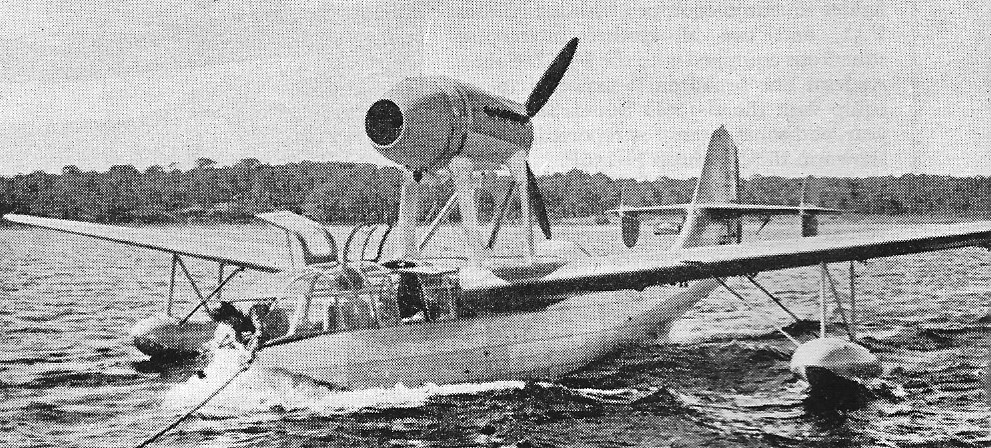
Bristol Type 138A of 1936 captured world altitude record in September, 1936, then regained it from Italy in June 1937 with an altitude of 16,440m. Bristol Type 142, built as executive aircraft for Lord Rothermere, became the military Blenheim, an important light bomber in the early Second World War period. Beaufighter, first flown July 1939, became RAF’s first nightfighter, subsequently an important antishipping aircraft armed with rockets, torpedoes, and bombs.
Designed and built prototype of eight-engined 100- passenger Brabazon I, first flew September 4, 1949; scrapped 1953 for financial/political/technical reasons. Type 170 Freighter first flown December 2, 1945 and 213 built subsequently.
Turboprop powered Britannia first flew August 16, 1952, made the first non-stop airliner flight London, Vancouver (8,208km), June 29, 1957, and first North Atlantic passenger service to be flown by a turbine-powered airliner on December 19 of the same year.
A helicopter department was set up in 1945 as part of the aircraft division at Filton. Austrian born Raoul Hafner headed a research and development team which produced the Type 171 Sycamore. Subsequently entering service with RAF as its first British-designed helicopter in 1952.

1955

In January 1956 the Bristol Aeroplane Company had reorganised into three wholly owned companies; Bristol Aircraft Ltd, Bristol Aero-Engines Ltd, and Bristol Cars Ltd.

September 1957

Four years later Bristol Aircraft Ltd joined with Vickers Ltd and English Electric to become the British Aircraft Corporation.

In 1960 Westland Aircraft took over the Bristol Helicopter Department.

In 1960 Bristol Aircraft Ltd joined with Vickers Ltd and English Electric to become the British Aircraft Corporation.

Bristol Aero Engines (formerly Bristol Engine Company) merged with Armstrong Siddeley Motors in 1959 to form Bristol Siddeley Engines Limited (BSEL) which in turn was taken over by Rolls-Royce in 1966.
Research and development ot the tandem-rotor helicopters resulted in Type 192 Belvedere which entered service with the RAF, in 1961.

On 28 December 1963 the separate companies merged their identities and Bristol Aircraft Ltd became the Filton Division of BAC. Four years later the Bristol title was lost from the engine side when Bristol Siddeley Engines Ltd became the Bristol Engine Division of Rolls Royce Ltd. The nationalisation of the aircraft industry in 1977 resulted in the formation of British Aerospace (BAe) and the works at Filton became part of the Weybridge Bristol Division of BAe Aircraft Group while the BAC Guided Weapons Division at Fillon became part of the Stevenage Bristol Divi¬sion of the BAe Dynamics Group.

Bristol Aero Engines (formerly Bristol Engine Company) merged with Armstrong Siddeley Motors in 1959 to form Bristol Siddeley Engines Limited (BSEL) which in turn was taken over by Rolls-Royce in 1966.

Briegleb BG-6

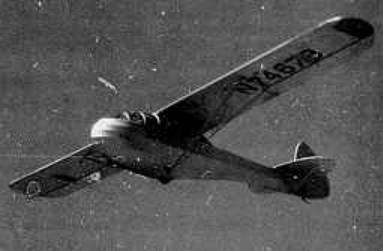
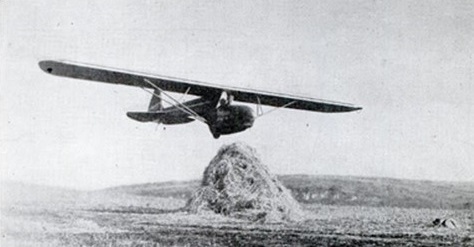
Designed by William G. Briegleb, the BG-6 was introduced in 1939 and produced in both complete and kit form. The structure was 2-Strut-braced, 2-spar, constant chord, wood/fabric wings, and metal/fabric tail; steel-tube/fabric fuselage.
It has no devices for glidepath control. A few factory-built ships were used as training gliders in World Was II.

The BG 6 being type certificated in 1941.

Mr Briegleb’s firm re-introduced construction of the BG 6 and BG 7 as a plans-only service to homebuilders, and by the beginning of 1978 59 sets of BG 6 plans and 29 sets of the BG 7 had been sold.

Wing span: 9.86m / 32.35ft
Wing area: 10.91sq.m / 117.5sq.ft
Empty Weight: 107kg / 235lb
Payload: 86kg / 190lb
Gross Weight: 193kg / 425lb
Wing Load: 17.69kg/sq.m / 3.63lb/sq.ft
L/DMax: 16.5 64 kph/ 35 k/ 40 mph
MinSink: 0.91 m/s / 3.0 fps / 1.78 kt
Aspect ratio: 8.9
Airfoil: NACA 4412
No. of Seats: 1
No. Built: 76

Briegleb / Sailplane Corporation of America

One of the USA’s pioneer sailplane designers, William G. Briegleb built and flew his first glider in 1928, and later formed the Sailplane Corporation of America to market gliders of his own design. Just before World War 2 he produced the BG 6 and BG 7 strut-braced high wing designs with fabric-covered steel fuselages,; a few of these were used by the USAAF for training as well as by private owners and clubs. Recently Mr Briegleb’s firm re-introduced construction of the BG 6 and BG 7 as a plans-only service to homebuilders, and by the beginning of 1978 59 sets of BG 6 plans and 29 sets of the BG 7 had been sold.

Brewster 229 / 339 Buffalo / F2A

Brewster Buffalo Article

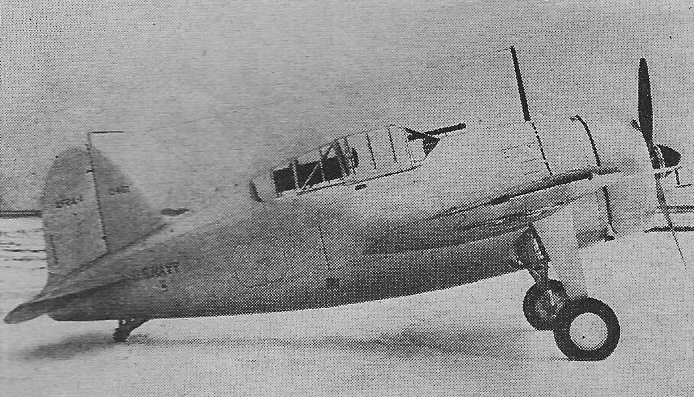
The prototype of this single-seat all-metal fighter flew for the first time in December 1937.

1938 XF2A-1

The first production version was the F2A-1 powered by a 700.4kW Wright R-1820-34 radial engine which went into service with the US Navy in 1939. From the initial order of 54, only 11 were actually accepted into service with US forces. The eleven were operated by the US Navy on board USS Saratoga and 44 were exported to Finland. The F2A-1 was the US Navy’s first monoplane fighter.

These were followed by 43 894kW R-1820-40-engined F2A-2 and 108 F2A-3 for the US Navy. Addition of armour plate on the F2A-2 version reduced any performance advantage the basic Buffalo may have had over Japanese fighters.

A contract was placed by the RAF in 1939 for 170 Brewster Model 339’s (called Buffalos) to be operated as a land fighter. Meanwhile a few fighters had reached Belgium and others were in service in the Netherlands East Indies and with the RAF.

Finland bought 44 Brewster 239 from USA 1939-1940. Basically 43 Brewsters were on sale (US Navy order was 54 and only 11 was delivered). But Finland bought 44 and 38 came from US Navy order and six from Belgium order. Since Belgium has ordered Brewster 339, the factory had to make rather big modification to front fuselage.

After the Russian invasion of Finland in 1940, slowly reinforcements began to arrive for the Finnish air force. The first to come were 5 Gloster Gladiators, 12 Hurricanes, 17 Lysanders and 24 Blenheims, all from Britain. After that, 76 Morane-Saulnier and Koolhoven F.K. fighters arrived from France. Italy sent 17 Fiat fighters, Sweden 12 Gloster Gladiators, and the USA 44 Brewster Buffalo, of which however only 5 reached Finland in time. Even the Union of South Africa sent 25 Gloster Gladiators. Pilots and ground personnel from a number of countries also volunteered to assist them.

Apart from the Finnish fighters which fought well against the Russians, F2A were used almost exclusively against the Japanese and in all cases met superior aircraft. Heavy British losses in the Far East led to their withdrawal and US Navy action during the Battle of Midway was equally unsuccessful as 13 out of the 19 available Buffalos were lost to enemy fire.

In an attempt to improve performance against the Japanese Zero, the .50 in mgs were replaced by .303s and the number of rounds reduced to 350. The fuel was restricted to 80 gallons.

A total of more than 500 F2A were built.

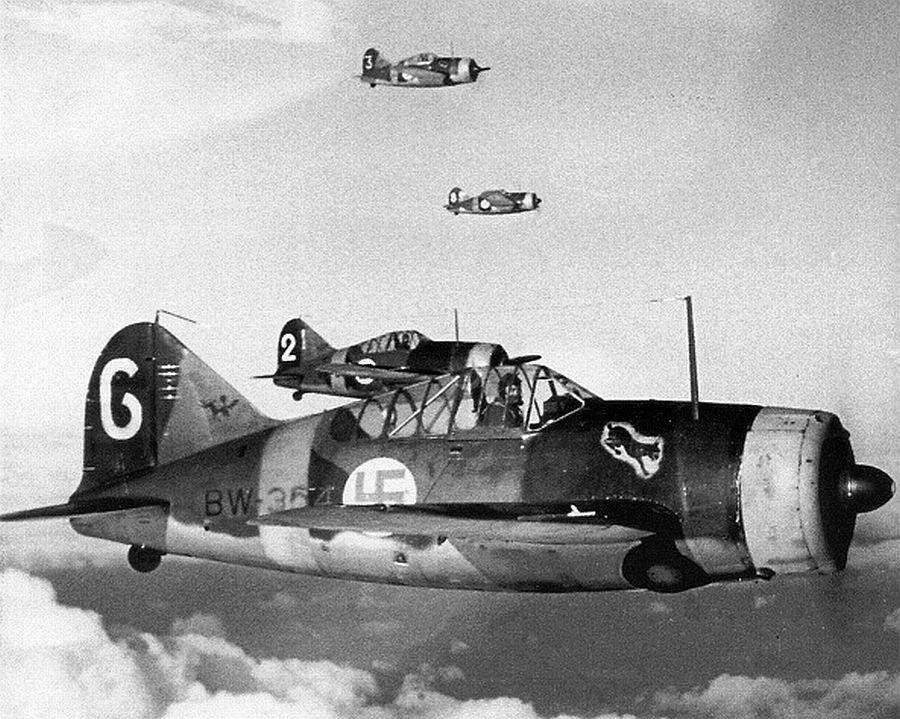
In 1939, following requests by the Finnish Embassy in Washington, D.C., a total of forty-four U.S. Brewster F2A-1 “Buffalo” aircraft that were originally intended for the U.S. Navy were diverted at the behest of the U.S. State Department to Finland for use by the Finnish Air Force (FAF) and designated by Brewster as the Model B-239E. They were flown at first during the Winter War of 1939-40 between the Soviet Union and Finland. There they were never referred to as the “Buffalo” by the FAF, but merely “Brewster” or by nicknames such as “Sky Pearl” and “Pearl of the Northern Skies” and “Butt-Walter” (or “Pylly-Walter”) and “American Hardware” (American metal) and “Flying Beer Bottle,” and they received FAF serial numbers BW-351 though BW-394 (“BW” aircraft).

Brewster B-239s over Lake Tikshozero, 1942.

The Finns liked the Buffalo enough to design a version called the Humu (‘Reckless’) with a wooden wing and a Russian engine. It proved unsatisfactory in trials and only a single example was built.

The one Brewster 239 (F2A-1) is in The Aviation Museum of Central Finland in Tikkakoski, Finland. There is also the prototype of VL Humu which is the clone of F2A-1 or 239.

Gallery

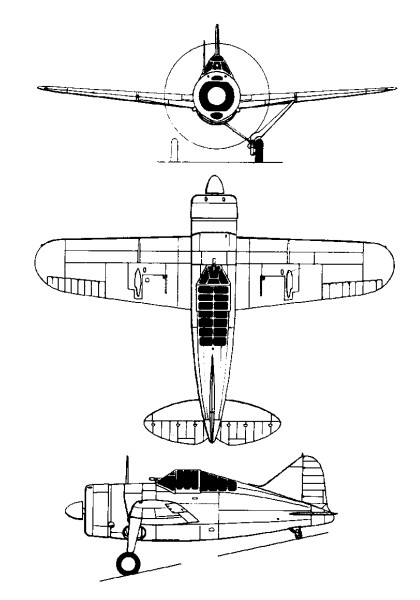
Brewster F 2 A Buffalo
Carrier based fighter aircraft 1938
Length: 26.345 ft / 8.03 m
Height: 12.073 ft / 3.68 m
Wingspan: 35.007 ft / 10.67 m
Wing area: 208.929 sqft / 19.41 sq.m
Max take off weight: 7159.6 lb / 3247.0 kg
Weight empty: 4731.9 lb / 2146.0 kg
Max. speed: 279 kts / 517 km/h
Cruising speed: 224 kts / 415 km/h
Service ceiling: 33202 ft / 10120 m
Wing load: 34.24 lbs/sq.ft / 167.00 kg/sq.m
Range: 839 nm / 1553 km
Engine: Wright R 1820-40 Cyclone, 1184 hp
Crew: 1
Armament: 4x cal.50 MG (12,7mm), 2x 45kg Bomb.

F2A-2
Engine: 1100 hp Wright R-1820-40 (G-205A) Cyclone
Wingspan: 35 ft / 10.67 m
Length: 26 ft 4 in / 8 m
Height: 12 ft 1 in / 3.7 m
Empty weight: 4630 lb / 2100 kg
Loaded weight: 7055 lb / 3200 kg
Max speed: 300 mph / 483 km
ROC: 3070 fpm / 935 m/min
Service ceiling: 30,500 ft 9300 m
Range: 650-950 mi / 1045-1530 km
Armament: 4 x mg, 0.30 in, 0.303 in, or 0.50 in

Brewster F2A-3 Buffalo
Length: 26 ft 4 in (8.03m)
Wingspan: 35 ft 0 in (10.67m)
Height: 12 ft 1 in (3.68m)
Wing area: 19.41 sq.m / 208.93 sq ft
Maximum Speed: 321mph (517kmh; 279kts)
Cruise speed: 415 km/h / 258 mph
Maximum Range: 965miles (1,553km)
Rate-of-Climb: 3,070ft/min (936m/min)
Service Ceiling: 33,202ft (10,120m)
Armament:4 x 12.7mm machine guns, 2 x 45-kg bombs
Accommodation: 1
Empty Weight: 4,731lbs (2,146kg)
Maximum Take-Off Weight: 7,158lbs (3,247kg)
Engine: 1 x Wright R-1820-40 cyclone radial piston , 895kW

Brewster Aeronautical Corp

Founded in the mid-1930s, the first product of this company was a two-seat scout/bomber for the U.S. Navy designated SBA. When this aircraft entered production in 1937-1938 the company had inadequate productive capacity and 30 were built by the Naval Aircraft Factory as SBNs. The F2A Buffalo which followed was the first monoplane fighter to serve with the USN, and was also used by the armed forces of Belgium, Britain, Finland, and Netherlands East Indies. The later SB2A Buccaneer, though built in quantity, proved totally unsuitable for frontline service.
Manufacturing rights of the Fleet trainers were sold in 1939 to Brewster Aeronautical Corp.

Brennan 1924 helicopter

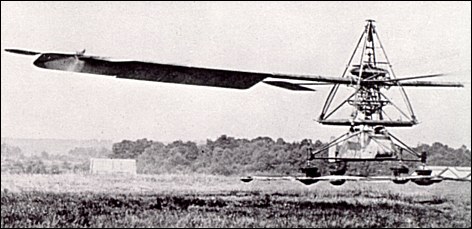
In Great Britain, serious efforts to build a full scale rotary wing machine began in 1916, although design work on the Brennan Helicopter was initiated by Louis Brennan in 1884. At the Royal Air Establishment in Farnborough, England, Louis Brennan conducted experiments on the propeller-driven rotor concept from 1919 to 1926.
The 1360kg empty weight machine used a single 18m rotor. Propellers at the rotor tips produced torqueless rotation and were powered by a 230 hp / 170kW Bentley BR-2 driving transmission shafts that ran down the length of the rotor blades. Compressed air was used to control the rotor pitch angle, through cyclic control.
On 22 December 1921, indoor tethered lift tests were carried out with the assistant engineer, Robert Graham, as pilot.
Outdoor tethered flights took place on 16 May 1924. A year later the Brennan Helicopter was making short flights of 18-27m at heights up to 1.5m. Power was sufficient to lift four “passengers” when tethered, but stability and control were still very poor. Over 80 take-offs were made, but the maximum altitude was only 2.4m and maximum distance only about 183m. On 2 October 1925, during the seventh small flight, the machine lurched at a height of about 1m and the rotors struck the ground, ending the tests.
At this critical time in the helicopter’s development Juan de la Cierva arrived in England with his promising “autogiro” and official interest in the Brennan Helicopter rapidly faded. Finally, in March 1926 funding ceased, and Louis Brennan, at the age of 74, moved on to other inventions.

Breguet 730 / 731 Bellatrix

Type 731 Bellatrix

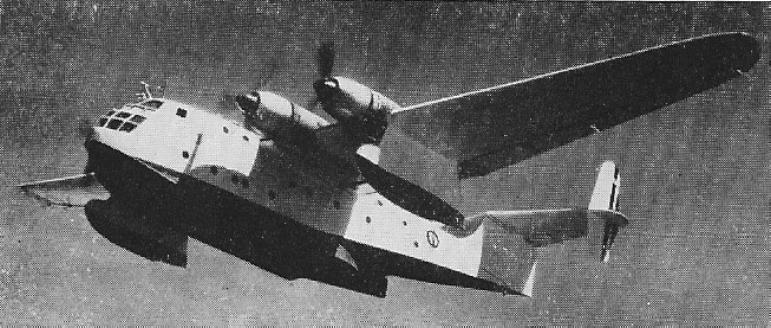
Designed before the war as a military patrol flying boat, the Type 731 Bellatrix was test flown at the Berre naval air base in unoccupied France in 1942, the prototype Type 730 having been flown just before World War 2.

The Type 731 differed from the pre-war Type 730 in having re-designed crew accommodation, modified floats, and a strengthened hull. The Type 731 escaped destruction and, after the war, it was re-engined with four 1480 hp Gnome-Rhone 14R radials and was used by the French Naval Air Service.

Only one Type 731 Bellatrix was completed.

Engines: our 1480 hp Gnome-Rhone 14R
Wingspan: 132 ft 5 in
Wing area: 1851 sq.ft
Length: 79 ft 11 in
Height: 26 ft 10 in
Empty weight: 41,226 lb
Loaded weight: 77,161 lb
Max speed: 239 mph at 8,530 ft
Cruise: 186 mph