In the 1920s and 30s Bristol was closely associated with attempts on the world altitude record. During the ten years spanning 1928 1938 the record changed hands nine times and on six of these occasions the aircraft was powered by Bristol engines.
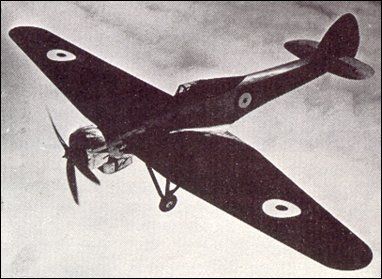
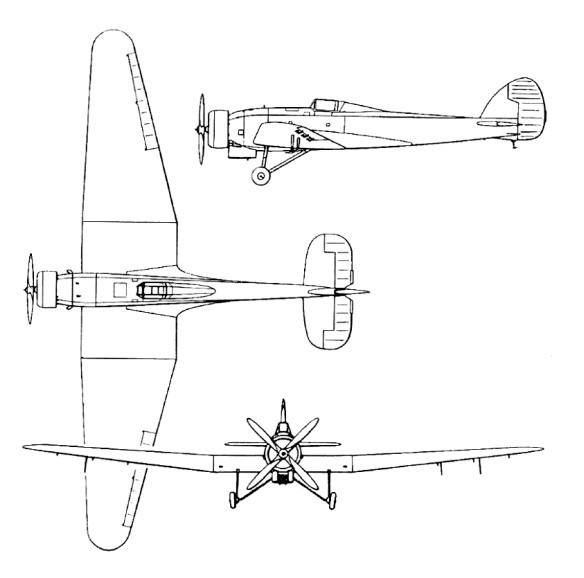
The Air Ministry ordered the Type 138 as a high altitude research aircraft to specification 2/34, calling for an aircraft capable of reaching 50,000ft.
Twice, in 1936 and 1937, the special Bristol Type 138 high altitude monoplane captured the record for Britain with heights of 49,967ft (15,230m) and 53,937ft (16,640m) (June 1937). It didn’t last as 18 months later this was broken by a Caproni 161bis which reached 56,000ft.
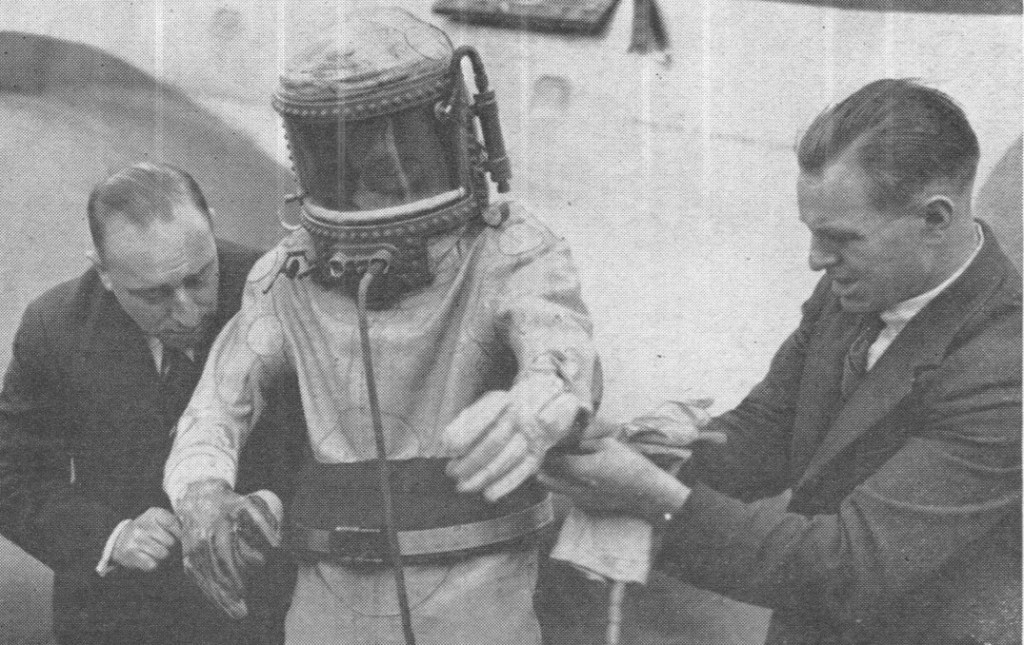
The 138A, powered by a 372.6kW Bristol Pegasus P.E.6S radial engine and flown by Sqn Ldr F. R. D. Swain, achieved a height record of 15.223m on 28 September 1936. On 30 June 1937 it raised the record to 16.440m/52,937 ft at the hands of Flt Lt M. J. Adam. The flight lasting 2 hr 15 min.
Flt.Lt. M.J. Adams after the 53,937 ft altitude record
Bristol 138A Engine: 1 x 500hp Bristol Pegasus P.E.6S Take-off weight: 2411 kg / 5315 lb Empty weight: 1994 kg / 4396 lb Wingspan: 20.12 m / 66 ft 0 in Length: 13.41 m / 43 ft 12 in Height: 3.12 m / 10 ft 3 in Wing area: 52.77 sq.m / 568.01 sq ft Max. speed: 198 km/h / 123 mph Ceiling: 16459 m / 54000 ft
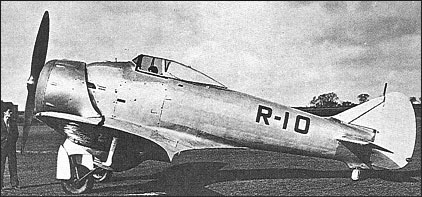
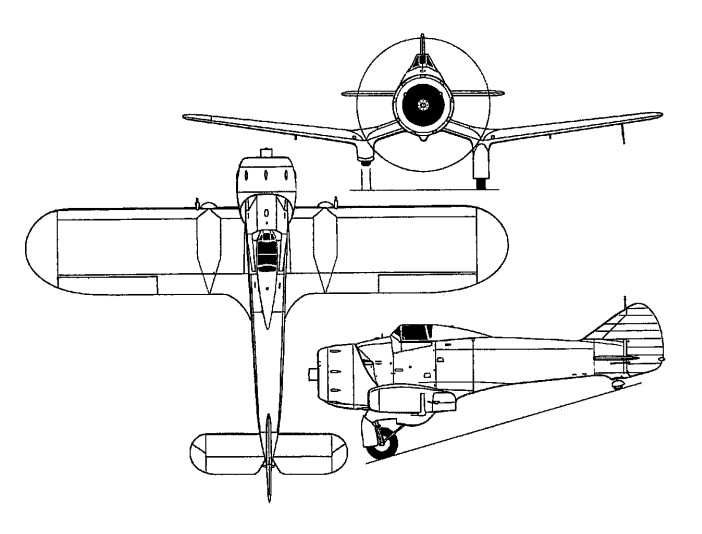
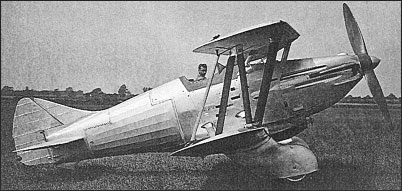
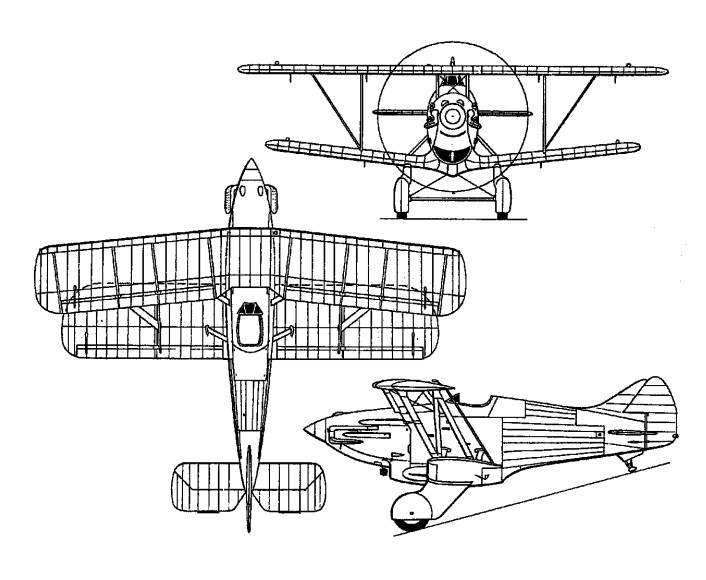
Another private venture design for the F.7/30 competition, the Type 133 single-seat fighter featured a forward fuselage of girder-type construction, a monocoque rear fuselage and Alclad stressed skinning. Powered by a Bristol Mercury VIS.2 rated at 620hp for take-off and carrying an armament of two synchronised 7.7mm Vickers guns in the fuselage and a Lewis gun of similar calibre mounted above each mainwheel housing, the Type 133 flew for the first time on 8 June 1934. After completing a considerable amount of flying, on 8 March 1935 the prototype got into a flat spin and the engine stopped, the pilot baling out and the aircraft being destroyed. No further development was undertaken.
Engine: Bristol Mercury VIS.2, 620hp Take-off weight: 2149 kg / 4738 lb Empty weight: 1053 kg / 2321 lb Wingspan: 11.89 m / 39 ft 0 in Length: 8.53 m / 27 ft 12 in Height: 2.97 m / 9 ft 9 in Wing area: 22.95 sq.m / 247.03 sq ft Max. speed: 418 km/h / 260 mph Armament: 2 x 7.7mm Vickers guns, 1 x Lewis gun
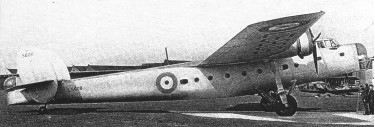
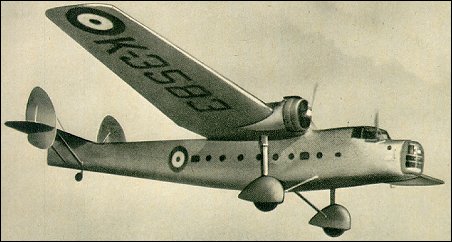
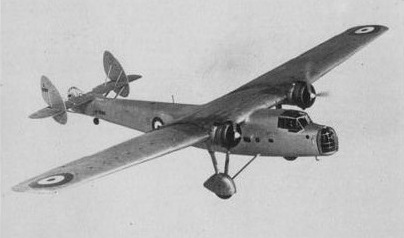
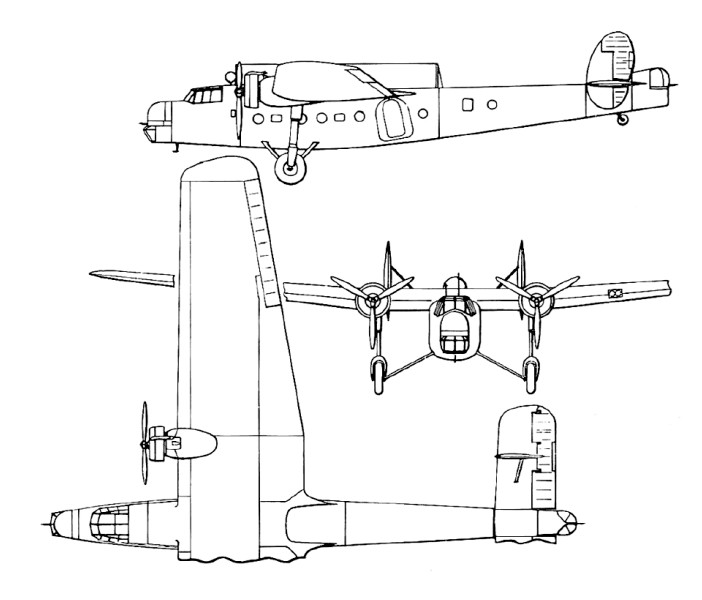
Designed to a specification calling for a 24-troop personnel transport that could double as a bomber, the Bombay was a high-wing monoplane with a fixed landing gear. Power was provided by two 753kW Bristol Pegasus XXII radial engines mounted on the leading edges of the high monoplane wings. Defensive armament comprised Lewis guns in nose and tail positions. A notable feature was a very strong wing of multi-spar steel strip construction.
The prototype first flew on 23 June 1935 with Pegasus X radials driving fixed-pitch propellers and Bombay construction was transferred to Short & Harland in Northern Ireland and the first of 50 Bombay Mk I production aircraft flew in March 1939 with variable-pitch propellers.
Some were used to ferry supplies to France between the autumn of 1939 and the spring of 1940, but the type was operated mainly by four Middle Eastern squadrons primarily as a transport, though some night raids against Benghazi were flown in 1940. A number were also employed temporarily as night bombers against Benghasi, Libya, in September 1940.
The Type 123 was built as a private venture to meet the requirements of Specification F.7/30, a 695hp Rolls- Royce Goshawk III steam-cooled engine being provided by the Air Ministry. Of high-tensile steel construction with fabric-covered wings, rear fuselage and tail assembly, the Type 123 carried an armament of four fuselage-mounted 7.7mm Vickers machine guns, and was first flown on 12 June 1934, having been delayed by difficulties with the engine cooling system. Subsequently the Type 123 was found to suffer from lateral instability at high speed and further development was abandoned.
Engine: 695hp Rolls- Royce Goshawk III steam-cooled Take-off weight: 2149 kg / 4738 lb Empty weight: 1497 kg / 3300 lb Wingspan: 9.02 m / 29 ft 7 in Length: 7.67 m / 25 ft 2 in Height: 2.89 m / 9 ft 6 in Wing area: 23.04 sq.m / 248.00 sq ft Max. speed: 378 km/h / 235 mph
One prototype, first flown on 29 January 1932. No production.
Engine: 1 x 600hp Bristol Mercury V Take-off weight: 2361 kg / 5205 lb Empty weight: 1649 kg / 3635 lb Wingspan: 12.40 m / 40 ft 8 in Length: 10.36 m / 33 ft 12 in Height: 3.66 m / 12 ft 0 in Wing area: 34.93 sq.m / 375.98 sq ft Max. Speed: 279 km/h / 173 mph Ceiling: 7772 m / 25500 ft Crew: 2 Armament: 2 x 7.7mm machine-guns, 4 x 100kg bombs
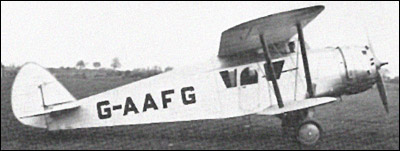
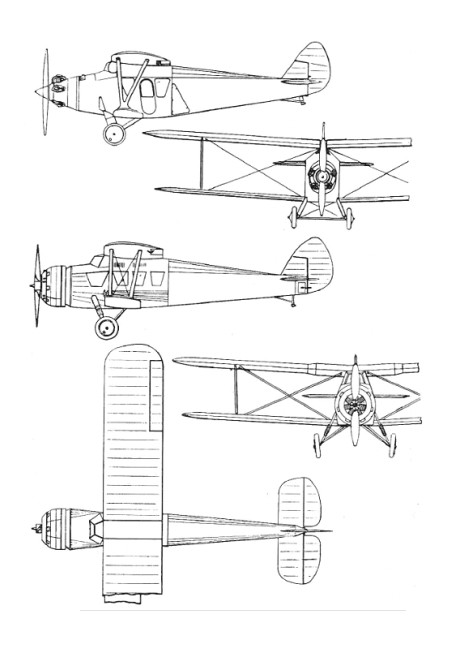
Bristol 110A Engine: 1 x 220hp Bristol Titan Take-off weight: 1979 kg / 4363 lb Empty weight: 1058 kg / 2333 lb Wingspan: 12.34 m / 40 ft 6 in Length: 10.21 m / 33 ft 6 in Height: 3.10 m / 10 ft 2 in Wing area: 36.14 sq.m / 389.01 sq ft Max. Speed: 201 km/h / 125 mph Crew: 1 Passengers: 4
Engine: 1 x 480hp Bristol Jupiter VIII Take-off weight: 4449 kg / 9808 lb Empty weight: 2088 kg / 4603 lb Wingspan: 15.60 m / 51 ft 2 in Length: 11.51 m / 37 ft 9 in Height: 4.27 m / 14 ft 0 in Wing area: 65.03 sq.m / 699.98 sq ft Max. speed: 145 km/h / 90 mph Range: 5313 km / 3301 miles
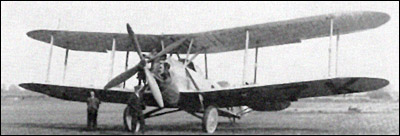
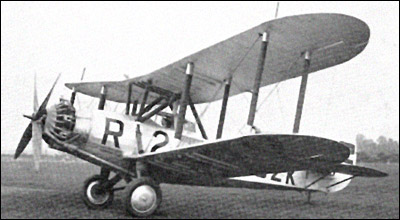
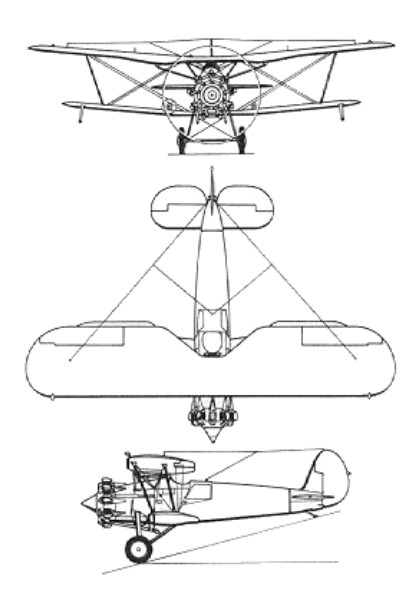
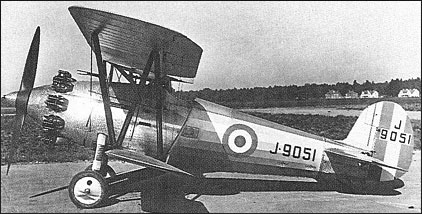
In 1926, the British Air Ministry issued F.9/26 specification for a radial-piston engine fighter design that could operate during the day or night, armed with twin Vickers-type machine guns, and capable of engaging the top enemy bombers of the day. Bristol responded with the Bulldog I as a private venture, designed by Frank Barnwell, which was used as a developmental model to ultimately become the Bulldog II.
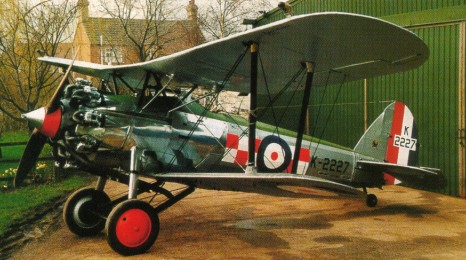
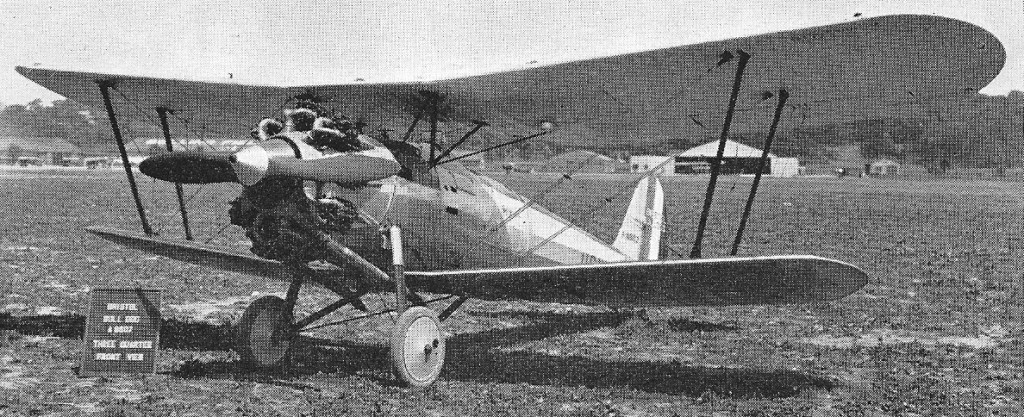
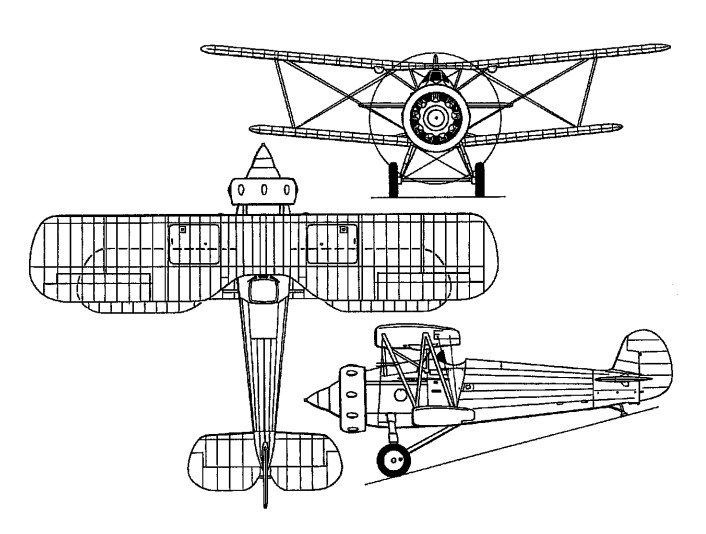
The Bristol Jupiter engine, which in the initial production Bulldog II was a 328kW Jupiter VII, was mounted in a streamlined nose with its cylinders projecting uncowled but with streamlined fairings and cooling baffles. The propeller had two wooden blades. Features included Frise ailerons on the large upper wing and an adjustable trimming tailplane.
The Bulldog II had an all-metal fuselage with a fabric skin covering. The biplane wings were equal span with single bays and a single pair of parallel support struts. Armament consisted of 2 x 7.7mm Vickers machine guns with their breeches accessible to the pilot, synchronized to fire through the spinning propeller via an interrupter gear. Four 9 kg bombs could be carried under the small lower wing.
The undercarriage was fixed with a tail skid and both were designed to operate from grass runways. The pilot sat behind and underneath the upper wing in an open cockpit, with an oxygen supply for high altitudes and a short-wave two-way radio. Optional armament included 4 x 20lb bombs under the wings.
From the first flight on 17 May 1927, it was entered in the F9/26 competition at Martlesham Heath against the officially sponsored Armstrong Whitworth Starling, Boulton-Paul Partridge, Gloster Goldfinch and Hawker Hawfinch. The Bulldog was well liked by the RAF test pilots and could be dived to terminal velocity without damage to its robust steel structure. The only criticism involved the spin recovery which was overcome with a longer fuselage, larger fin and rudder.
Because of the closeness of the competition between the Bulldog and the Hawfinch the British Government ordered a single Bulldog II for further trials. The Bulldog II had a longer rear fuselage to overcome the spin deficiency of the prototype. First flown on January 21, 1928, the Bulldog II was tested against the Hawfinch at Martlesham, but the competition proved so close that a final decision was reserved until service pilots could assess both types. Eventually the decision was based on the ease of maintenance and here the Bulldog, with its single bay wings as against the twin bay wings of the Hawfinch, won. This Mk II prototype modification made cross wind landings and taxiing more difficult.
Nine Bulldogs were ordered, deliveries to 3 Squadron RAF, starting on May 8, 1929.
The first batch comprised 25 aircraft, of which 23 went to RAF fighter squadrons beginning with No 3 in 1929. Altogether 92 Bulldog II were built, one of which was retained for trials with Mercury engines in more advanced forms of cowling. Seventeen went to Latvia, eight to the RAAF, two to the US Navy, two to Siam, 12 to Estonia, three to Sweden and one to Chile.
US Navy A8607 at Anacostia 3 June 1930
In 1930 the two Bulldogs were purchased for evaluation by the US Navy, at the same time as one was supplied to the Imperial Japanese Navy. Both USN Bulldog IIAs, powered by Bristol Jupiter VIIF engines, were shipped in crates from Filton via Avonmouth Docks. The US Navy makings were applied on reassembly, the Bulldogs being supplied directly from the production line. The first, c/n 7358, left England on 10 October 1929, but developed aileron flutter and wing rib failure during the prescribed terminal velocity diving sequence. The Second. c/n 7398 left England on 24 February 1930, had revised aileron mass balance and strengthened wing ribs.
The Bulldog II entered RAF service in June of 1929 and effectively replaced the aging Gloster Gamecock and Armstrong Whitworth Siskin fighters then in frontline use. It was successively upgraded, the Bulldog IVA with the Bristol Mercury VIS 2 engine being the last version to be built in quantity.
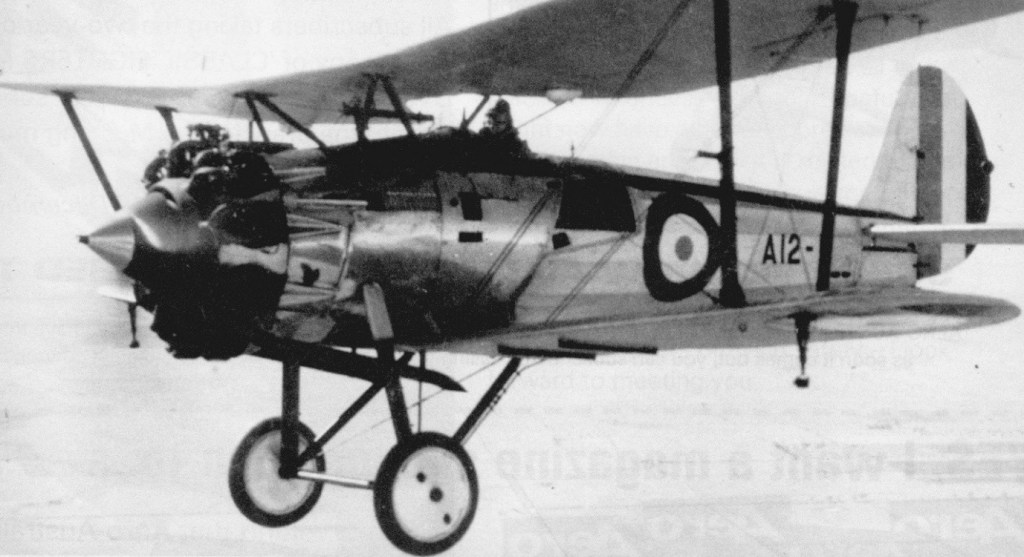
A civil demonstrator flown in June 1930 was stressed for greater gross weight and led to the main production version, the Bulldog IIA, the usual engine of which was the 365kW Jupiter VIIF with forged cylinder heads. By November 1933 Bristol had built 262 of this model, of which eight went to Sweden and 253 to the RAF. Four more, called Bristol 105D, were supplied to Denmark with Madsen guns and other changes. Two improved and much faster aircraft with the Mercury engine and Townend ring cowl were designated Bulldog IIIA, leading to the strengthened four-aileron Bulldog IVA, with a 477kW Mercury VIS2 and full-length cowl. This was beaten by the Gladiator for RAF orders, but 17 were built for Finland in the first two months of 1935. The Australian Air Board approved the purchase of the six Bulldogs on Januany 17, 1929, at an estimated cost of £34,700. In May it was noted that Order No.244 was “held up in London owing to argument between Air Ministry, our Liaison Officer and the Bristol Company in regard to price.” The RAAF had previously used a two scat SE.5a to introduce pilots to single seat fighters and was interested in increasing the order by adding a two seat Bulldog. The Liaison Officer had to advise that the type was not being constructed for preliminary instruction for single seat fighters, two seat Armstrong Whitworth Siskins were standardised for this purpose. It was now evident that funds for the eight were available and as it was thought that a better price per unit could be obtained for a larger number, Order No.277 was raised to cover two additional Bulldogs. These aircraft were identical to the RAF Bulldog II except for the choice of engine and supplied under Air Ministry Contracts No.901228/29 for aircraft, and 934691/29 for engines respectively. “As supplied to the Royal Air Force (the Bulldog) is fitted with a Jupiter Mk VII (supercharged) engine for speed at heights above 10,000ft, but as operations at these heights are not called for in our case, as the ‘Bulldog’ with Mk VI is faster than with the Mk VII below 8,000ft,” the RAAF ordered the Bulldog with the Jupiter VI engine. The eight Australian Bulldogs (Bristol construction sequence numbers 7389 7396) were allocated the serials A12 1 to A12 8. The price quoted for each was £3,750. They arrived in Melbourne, Victoria, aboard the SS Fordsdale on March 14, 1930. Assembly took place at 1 Air Depot, Laverton, and the first was flight tested by F/Lt F R W Scherger on May 1.
RAAF Bulldog
RAAF Bulldogs entered service in 1930. Equipping No 1 Sqn at Point Cook, five of the eight were lost in crashes. One of these resulted in the first recorded RAAF pilot successfully bailing out, after an attempted outside loop caused a structural problem.
The Bulldog was constructed of ribbon steel worked up into suitable corrugated sections. The process was not in operation in Australia and major spares were necessarily obtained from overseas, but items “such as tanks, metal fittings and small parts… [were] obtained locally.” The upper wings were of greater span and chord than the lower wings. All fuel was carried in two gravity tanks recessed into the upper wings. The undercarriage featured oleo dampened rubber in compression legs which were attached to the top longerons. Two Vickers guns were mounted on each side of the cockpit. Provision was made for a wireless transmitter receiver to be carried in a compartment just behind the cockpit. The last Bulldog was an all-stainless-steel Mk IIA for the Air Ministry.
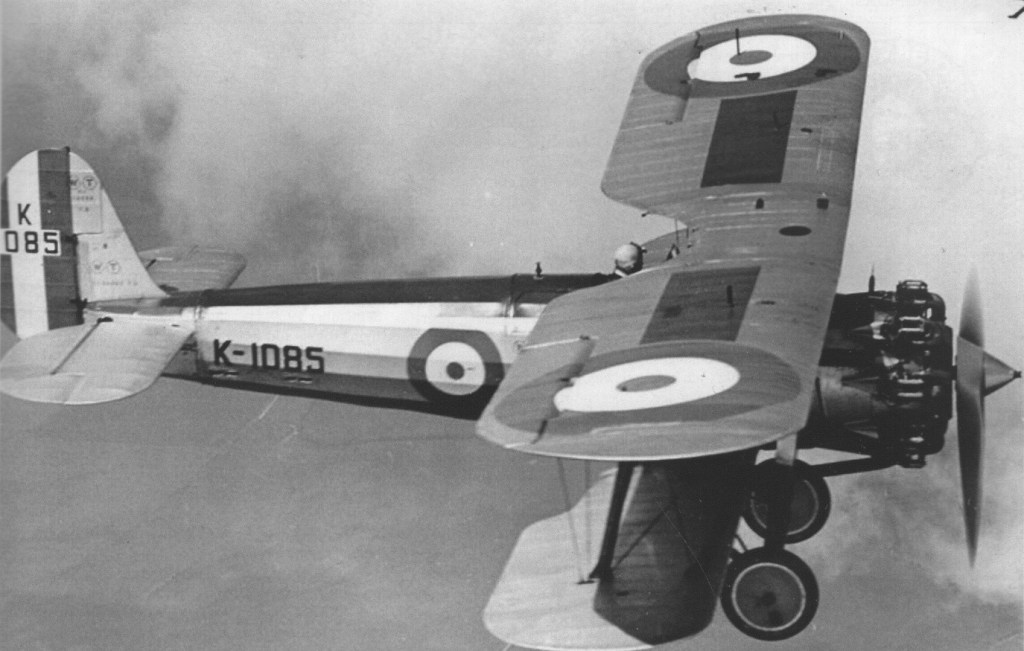
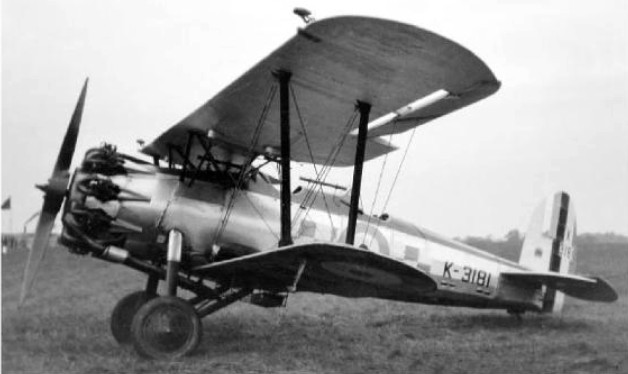
Bulldog II’s would never saw combat in British service but foreign users of the type did. Finnish pilots used Bulldogs against Soviet invaders in World War 2. Other foreign operators included Spain. In 1931 a Mk IIA had been rebuilt into a dual-control advanced trainer. In December 1932 a modified trainer, called Bulldog TM (Training Machine), went into production as a standard type for the RAF. By December 1934 no fewer than 60 had been delivered. They were designed so that by fitting different rear fuselages, and adding guns (for which provision was made), they became fighters. Bulldogs remained in full RAF service until 1937, and until 1940 with Baltic air forces.
Bulldog TM 23 June 1934 – TM3181, 450 hp Bristol Jupiter VI
Some 443 examples were produced from 1928 until 1935 including a total of 293 Bulldogs built for the RAF. The Bristol Bulldog was replaced in RAF service by the Gloster Gauntlet.
Nakajima of Japan produced two examples of the Bulldog as the J.S.S.F.
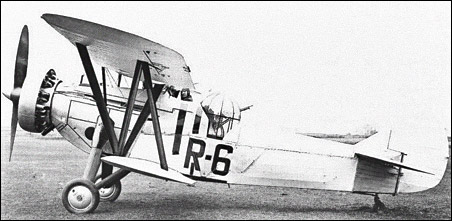
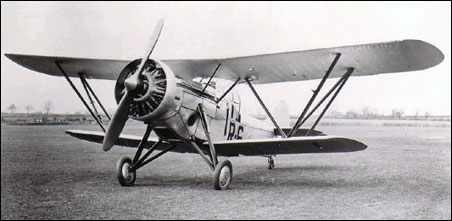
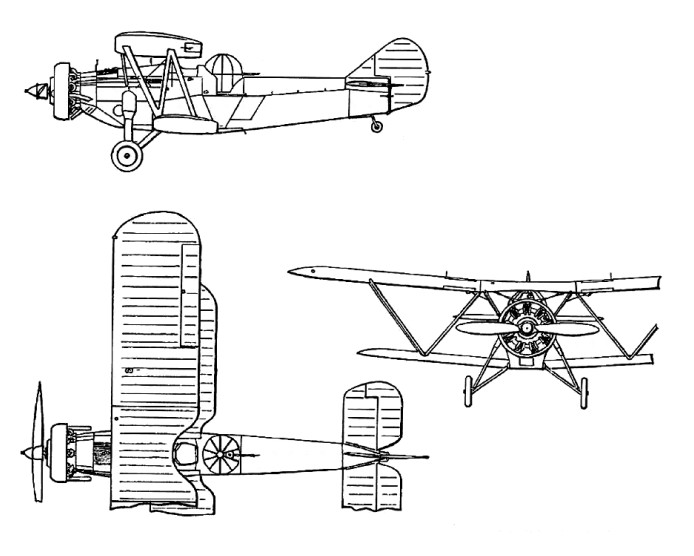
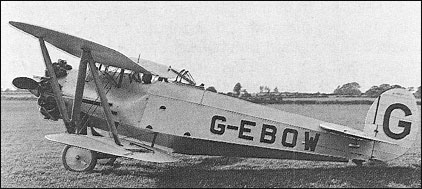
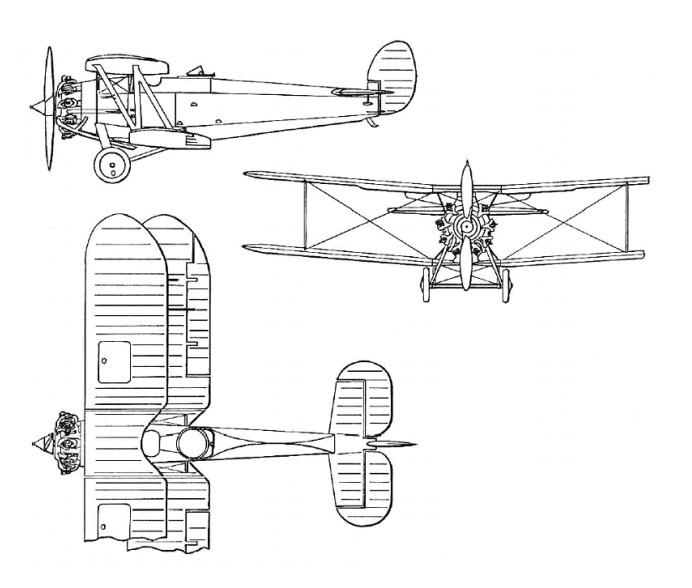
Of similar construction to the parallel Type 105 Bulldog, the Bullpup was ordered in prototype form to participate in the F.20/27 interceptor contest. It was first flown on 28 April 1928 with a Jupiter VI engine in place of the 480hp Bristol Mercury IIA for which it was intended. With the Mercury IIA, it was evaluated at Martlesham in the spring of 1929. Smaller and faster than the Bulldog, and possessing superior handling characteristics to those of its stablemate, it was nevertheless deemed to afford an insufficient advance to warrant production, and the sole prototype was utilised as an engine test-bed until 1935 when it was scrapped.
Engine: Jupiter VI Take-off weight: 1293 kg / 2851 lb Empty weight: 866 kg / 1909 lb Wingspan: 9.14 m / 29 ft 12 in Length: 7.16 m / 23 ft 6 in Height: 2.87 m / 9 ft 5 in Wing area: 21.37 sq.m / 230.02 sq ft Max. speed: 306 km/h / 190 mph
Designed as a private venture, the Type 101 two-seat fighter was powered by a 450hp Bristol Jupiter VI nine cylinder radial. The fuselage was a ply-covered spruce structure and the wings of steel with fabric skinning. Armament comprised two synchronised 7.7mm Vickers guns and a Scarff-mounted Lewis gun. The Type 101, which was first flown on 27 July 1927, offered a relatively high performance, but was rejected by the Air Ministry because of its use of wood. As no other customers presented themselves, the prototype served in the test bed role.
Engine: 450hp Bristol Jupiter VI nine cylinder radial Take-off weight: 1606 kg / 3541 lb Empty weight: 953 kg / 2101 lb Wingspan: 10.23 m / 33 ft 7 in Length: 8.33 m / 27 ft 4 in Height: 2.89 m / 9 ft 6 in Wing area: 33.44 sq.m / 359.94 sq ft Max. speed: 257 km/h / 160 mph Armament: 2 x 7.7mm Vickers, 1 x Lewis gun