Bristol Titan / Gnome-Rhône 5K Titan

Bristol Titan

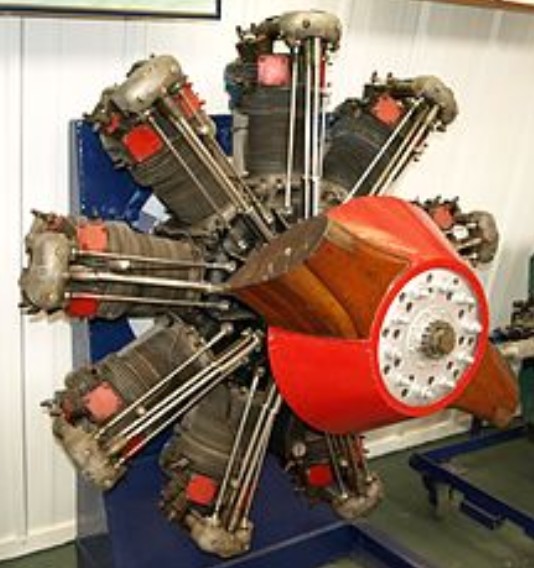
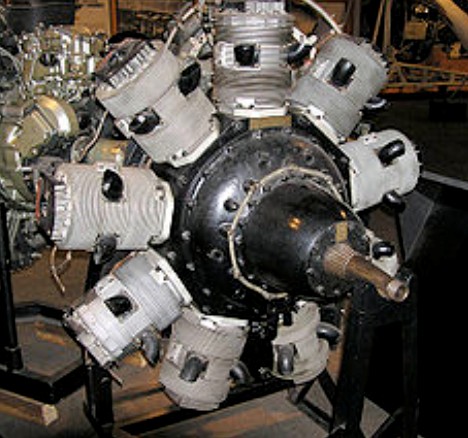
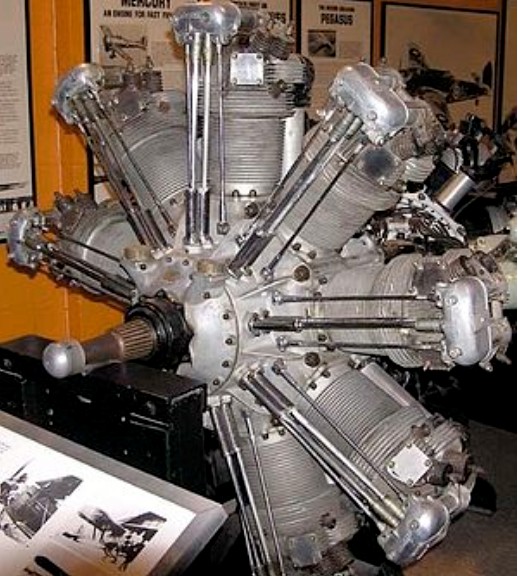
The Bristol Titan was a British five-cylinder air-cooled radial engine, designed byRoy Fedden and built by the Bristol Aeroplane Company in the late 1920s. The engine was designed as a five-cylinder radial to use as many parts of the Bristol Jupiter as possible, cylinders, pistons, articulated connecting rods, crankshaft and other minor parts were interchangeable with the Jupiter. It had the same size cylinders as the earlier Bristol Mercury engine, 5.75 in x 6.5 in (844 cu in/13.8 L) and produced between 200-240 hp.

The major significance of the Titan was that it was licensed to Gnome-Rhône and became the pattern for the Gnome-Rhône 5B and 5K. In 1927 Gnome-Rhône was looking for ways out of its license agreement with Bristol for the Jupiter engine of 1920 and began to produce the Gnome-Rhône 5B and 5K without royalties. Later versions of the Bristol Titan also used a Farman style reduction gear produced by Gnome-Rhône.

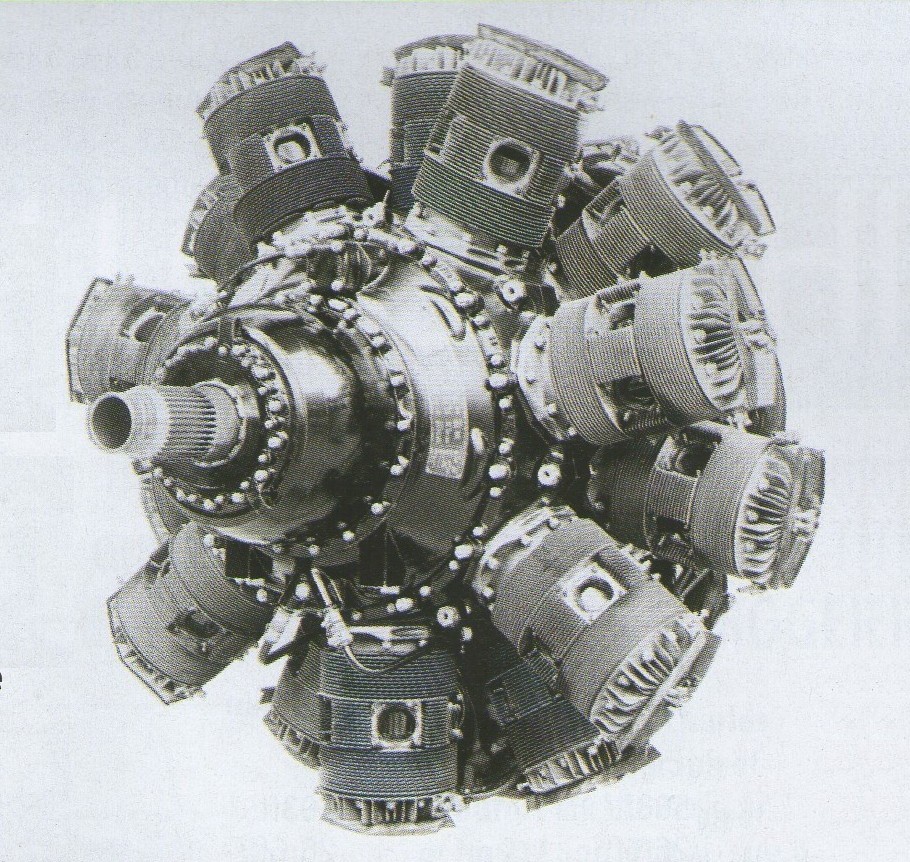
Gnome-Rhône was not satisfied with simply producing Bristol designs under license, and started a major design effort based around the mechanicals of the Titan engine. The results were introduced in 1927 as the K-series, spanning the 260 hp (190 kW) Gnome-Rhône 5K Titan, the 7-cylinder 370 hp (270 kW) the Gnome-Rhône 7K Titan Major, and the 9-cylinder 550 hp (405 kW) Gnome-Rhône 9K Mistral. With the introduction of the K-series, Gnome-Rhône finally ended royalty payments to Bristol, the Gnome-Rhône 5K was built in much greater numbers than the original Bristol Titan. By 1930 they had delivered 6,000 Jupiters, Mistrals and Titans, making them the largest engine company in France.

Variants:

Titan I
(1928) – 205 hp.

Titan IIF
Modified valve gear.

Titan IV or Titan II (Special)
(1928) – 205 hp, 0.5:1 reduction gear from Bristol Jupiter.

Gnome-Rhône 5K Titan
licence-built Titan II, 230 hp

Gnome-Rhône 7K Titan major
enlarged 7-cyl Titan with many detail improvements, produced by Gnome-Rhône without licence.

Applications:
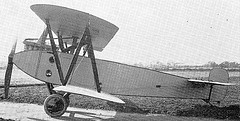
Avro 504N
Bristol Primary Trainer
Bristol Type 110A

Specifications:

Titan I
Type: Five cylinder air-cooled radial engine.
Bore: 5.75 in (146 mm)
Stroke: 6.5 in (165 mm)
Displacement: 844 in³ (13.8 L)
Diameter: 48.4 in (1229.3 mm)
Dry weight: 500 lb (227 kg)
Valvetrain: Overhead valve, 4 valves per cylinder
Cooling system: Air-cooled
Reduction gear: None, direct drive, left hand tractor
Power output: 210 hp (157 kW) at 1,800 rpm
Specific power: 0.25 hp/in³ (11.4 kW/L)
Compression ratio: 5:1
Power-to-weight ratio: 0.42 hp/lb (0.7 kW/kg)

Bristol Jupiter / Orion / Gnome-Rhône 9 Jupiter / Cosmos Jupiter / Brazil Straker Jupiter I / Siemens-Halske Sh20 / Sh21 / Nakajima Ha-1 Kotobuki / PZL Bristol Jupiter / Weiss – Bristol Jupiter VI / Walter Jupiter

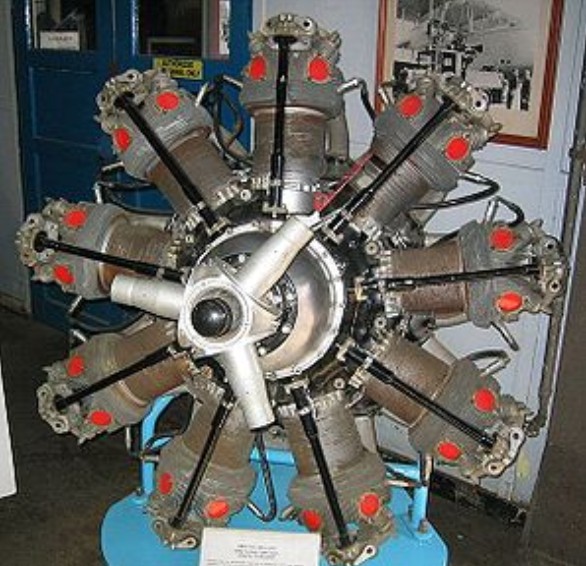
The Jupiter was designed during World War I by Roy Fedden of Cosmos Engineering as the Cosmos Jupiter. During the rapid downscaling of military spending after the war, Cosmos became bankrupt in 1920, and was eventually purchased by the Bristol Aeroplane Company on the strengths of the Jupiter design and the encouragement of the Air Ministry. First run on 29 October 1918 the engine matured into one of the most reliable on the market. It was the first air-cooled engine to pass the Air Ministry full-throttle test, the first to be equipped with automatic boost control, and the first to be fitted to airliners.

The Jupiter was fairly standard nine-cylinder single-row piston radial engine in design, but featured four valves per cylinder, which was uncommon at the time. The cylinders were machined from steel forgings, and the cast cylinder heads were later replaced with aluminium alloy following studies by the RAE. In 1927, a change was made to move to a forged head design due to the rejection rate of the castings. The Jupiter VII introduced a mechanically driven supercharger to the design, and the Jupiter VIII was the first to be fitted with reduction gear.

In 1925, Fedden started designing a replacement for the Jupiter. Using a shorter stroke to increase the rpm, and including a supercharger for added power, resulted in the Bristol Mercury of 1927. Applying the same techniques to the original Jupiter-sized engine in 1927 resulted in the Bristol Pegasus. Neither engine would fully replace the Jupiter for a few years.

A 1926 turbo-supercharged version of the Jupiter known as the Orion suffered development problems and only a small number were produced. Metallurgy problems with this turbo-supercharged engine caused the project to be abandoned after only nine engines had been built.

The Jupiter saw widespread use in licensed versions, with fourteen countries eventually producing the engine. In France, Gnome-Rhone produced a version known as the Gnome-Rhône 9 Jupiter which was used in several local civilian designs, as well as achieving some export success. Siemens-Halske took out a license in Germany and produced several versions of increasing power, eventually resulting in the Bramo 323 Fafnir, which saw use in wartime models.

In Japan, the Jupiter was license-built from 1924 by Nakajima, forming the basis of their own subsequent radial aero-engine design, the Nakajima Ha-1 Kotobuki. It was produced in Poland as the PZL Bristol Jupiter, in Italy as the Alfa Romeo 126-RC35,[6] and in Czechoslovakia by Walter Engines. The most produced version was in the Soviet Union, where their Shvetsov M-22 version powered the famous Polikarpov I-16 which was built in the thousands. Production started in 1918 and ceased in 1930 after more than 7100 were built.

The Jupiter is probably best known for powering the Handley Page HP.42 Hannibal airliners, which flew the London-Paris route in the 1930s. Other civilian uses included the de Havilland Giant Moth and Hercules, the Junkers G 31, and the Dornier Do X flying boat which used twelve engines.
Military uses included the parent company’s Bristol Bulldog, as well as the Gloster Gamecock and Boulton Paul Sidestrand. It was also found in prototypes from Japan to Sweden.

By 1929 the Bristol Jupiter had flown in 262 different aircraft types, it was noted in the French press at that year’s Paris Air Show that the Jupiter and its license-built versions were powering 80% of the aircraft on display.

Variants:

Brazil Straker Jupiter I
(1918) 400 hp. Two built.

Cosmos Jupiter II
(1918) 400 hp. One built.

Bristol Jupiter II
(1923) 400 hp.

Bristol Jupiter III
(1923) 400 hp.

Bristol Jupiter IV
(1926) 430 hp. Variable valve timing, Bristol Triplex carburettor.

Bristol Jupiter V
(1925) 480 hp.

Bristol Jupiter VI
(1927) 520 hp. Produced in both high (6.3:1) and low (5.3:1) compression ratios.

Bristol Jupiter VIA
(1927) 440 hp. Civil version of Jupiter VI.

Bristol Jupiter VIFH
(1932) 440 hp. Equipped with gas starter motor.

Bristol Jupiter VIFL
(1932) 440 hp. Compression ratio 5.15:1.

Bristol Jupiter VIFM
(1932) 440 hp. Compression ratio 5.3:1.

Bristol Jupiter VIFS
(1932) 400 hp. Compression ratio 6.3:1.

Bristol Jupiter VII
(1928) 375 hp. Compression ratio 5.3:1, fully supercharged. Built by Gnome-Rhone as the 9ASB.

Bristol Jupiter VIIF
(1929) 480 hp. Compression ratio 5.3:1. Forged cylinder heads.

Bristol Jupiter VIIF.P
(1930) 480 hp. ‘P’ for pressure feed lubrication to wrist-pins.

Bristol Jupiter VIII
(1929) 440 hp. Jupiter VI but compression ratio increased to 6.3:1.

Bristol Jupiter VIIIF
(1929) 460 hp. Jupiter VIII with forged cylinder heads and lowered compression ratio (5.8:1).

Bristol Jupiter VIIIF.P
(1929) 460 hp. As Jupiter VIII with pressure feed lubrication (TBO at this stage in development was only 150 hours due to multiple failures).

Bristol Jupiter IX
480 hp. Compression ratio 5.3:1.

Bristol Jupiter IXF
550 hp. Compression ratio 5.3:1. Forged cylinder heads.

Bristol Jupiter X
470 hp. Compression ratio 5.3:1.

Bristol Jupiter XF
540 hp. Compression ratio 5.3:1. Forged cylinder heads.

Bristol Jupiter XFA
483 hp. Compression ratio 5.3:1.

Bristol Jupiter XFAM
580 hp.

Bristol Jupiter XFBM
580 hp.

Bristol Jupiter XFS
Fully supercharged.

Bristol Jupiter XI
Compression ratio 5.15:1.

Bristol Jupiter XIF
500 hp. Compression ratio 5.15:1.

Bristol Jupiter XIFA
480 hp. As Jupiter XIF with 0.656:1 reduction ratio

Bristol Jupiter XIF.P
525 hp. As Jupiter XIF with pressure feed lubrication.

Bristol Orion I
(1926) Jupiter III, turbo-supercharged, abandoned programme.

Siemens-Halske Sh20, Sh21 and Sh22
Siemens-Halske took out a license in Germany and produced several versions of increasing power, eventually resulting in the Bramo 323 Fafnir, which saw use in wartime models.

Nakajima Ha-1 Kotobuki
In Japan, the Jupiter was license-built from 1924 by Nakajima.

PZL Bristol Jupiter
Polish production.

Alfa Romeo Jupiter
Italian licence production, 420 hp (310 kW).

Alfa 126 R.C.35
Alfa Romeo developed variant

Walter Jupiter
Licence production in Czechoslovakia by Walter Engines

Weiss – Bristol Jupiter VI

Applications:

Cosmos Jupiter:
Bristol Badger
Bristol Bullet
Sopwith Schneider
Westland Limousine

Bristol Jupiter:
Aero A.32
Airco DH.9
Arado Ar 64
Avia BH-25
Bernard 190
Blériot-SPAD 51
Blériot-SPAD S.56
Boulton & Paul Bugle
Boulton Paul P.32
Boulton Paul Partridge
Boulton Paul Sidestrand
Blackburn Beagle
Blackburn Nile
Blackburn Ripon
Bristol Badger
Bristol Badminton
Bristol Bagshot
Bristol Beaver
Bristol Bloodhound
Bristol Boarhound
Bristol Brandon
Bristol Bulldog
Bristol Bullfinch
Bristol Jupiter Fighter
Bristol Seely
Bristol Type 72
Bristol Type 75
Bristol Type 76
Bristol Type 89
Bristol Type 92
Bristol Type 118
de Havilland Dingo
de Havilland DH.72
de Havilland DH.50
de Havilland Dormouse
de Havilland Hercules
de Havilland Hound
de Havilland Giant Moth
de Havilland Survey
Dornier Do 11
Dornier Do J
Dornier Do X
Fairey IIIF
Fairey Ferret
Fairey Flycatcher
Fairey Hendon
Fokker C.V
Fokker F.VIIA
Fokker F.VIII
Fokker F.IX
Gloster Gambet
Gloster Gamecock
Gloster Gnatsnapper
Gloster Goldfinch
Gloster Goring
Gloster Grebe
Gloster Mars
Gloster Survey
Gourdou-Leseurre LGL.32
Handley Page Clive
Handley Page Hampstead
Handley Page Hare
Handley Page Hinaidi
Handley Page HP.12
Handley Page H.P.42
Hawker Duiker
Hawker Harrier
Hawker Hart
Hawker Hawfinch
Hawker Hedgehog
Hawker Heron
Hawker Woodcock
Junkers F.13
Junkers G 31
Junkers W 34
Parnall Plover
PZL P.7
Saunders Medina
Saunders Severn
Short Calcutta
Short Chamois
Short Gurnard
Short Kent
Short Rangoon
Short Scylla
Short Springbok
Short S.6 Sturgeon
Short Valetta
Supermarine Seagull
Supermarine Solent
Supermarine Southampton
Svenska Aero Jaktfalken
Tupolev I-4
Vickers F.21/26
Vickers F.29/27
Vickers Jockey
Vickers Type 143
Vickers Type 150
Vickers Valiant
Vickers Vellore
Vickers Vellox
Vickers Vespa
Vickers Viastra
Vickers Victoria
Vickers Vildebeest
Vickers Vimy
Vickers Vimy Trainer
Vickers Wibault Scout
Westland Interceptor
Westland Wapiti
Westland Westbury
Westland Witch
Westland-Houston PV.3

Gnome-Rhône Jupiter:
Bernard SIMB AB 12
Blanchard BB-1
Fizir F1M-Jupiter
Latécoère 6

Shvetsov M-22:
Kalinin K-5
Polikarpov I-5
Polikarpov I-15
Polikarpov I-16
Tupolev I-4

Specifications:

Jupiter XFA
Type: Nine-cylinder, naturally aspirated, air-cooled radial engine
Bore: 5.75 in (146 mm)
Stroke: 7.5 in (190 mm)
Displacement: 1,753 in³ (28.7 L)
Diameter: 54.5 in (1,384 mm)
Dry weight: 995 lb (451 kg)
Valvetrain: Overhead poppet valve, four valves per cylinder, two intake and two exhaust
Supercharger: Single speed, single stage
Fuel type: 73-77 Octane petrol
Cooling system: Air-cooled
Power output:
550 hp (414 kW) at 2,200 rpm at 11,000 ft (3,350 m) – maximum power limited to five minutes operation.
525 hp (391 kW) at 2,000 rpm – maximum continuous power at 11,000 ft (3,350 m)
483 hp (360 kW) at 2,000 rpm – takeoff power
Specific power: 0.31 hp/in³ (14.4 kW/L)
Compression ratio: 5.3:1
Power-to-weight ratio: 0.55 hp/lb (0.92 kW/kg)
Bristol Hydra / Double Octagon

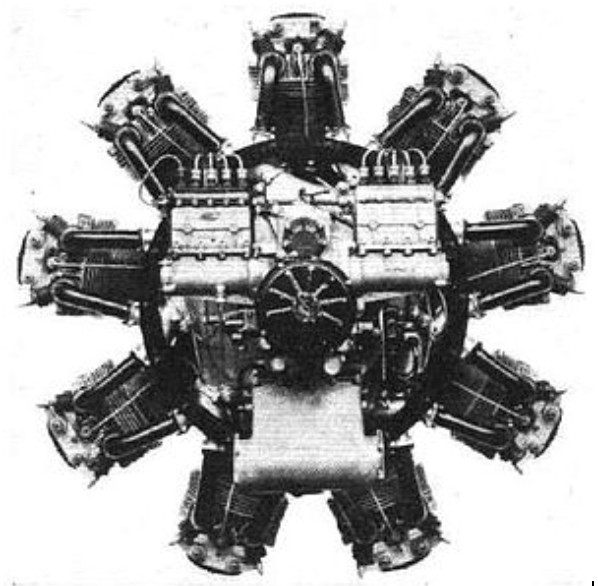
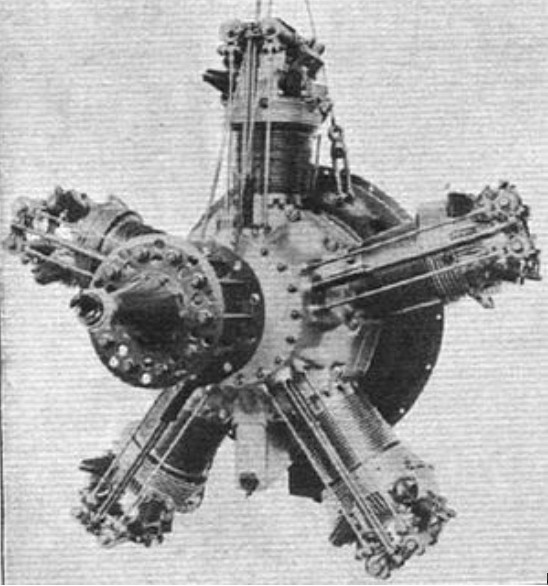
It appears the Hydra (also known as the Double Octagon) was built as a “backup” design in case the newer sleeve valve engines being designed by Roy Fedden at the same time proved unworkable. Design of the Hydra was led by Frank Owner, who built an experimental V-4 design to test a new twin overhead cam design, a first for Bristol engines which normally used pushrods and rockers. When the V-4 ran successfully, it seems they used four such engines connected to a common crankcase to produce the Hydra.

The cams were operated by rotating shafts leading from the crankshaft at the back of the engine to the top of each cylinder row. The shaft was directly geared to one of the two camshafts, using another driven shaft to transmit power to the second camshaft on the “other side” of the cylinder heads. The arrangement was somewhat complex, but no more so than a pushrod-based system. A side-effect of the use of the overhead cams was that the cylinders were “in-line”, whereas radials typically rotated the second bank of cylinders in relation to the first in order to expose them more fully to the airflow for cooling.

The Hydra had only two valves per cylinder limiting volumetric efficiency. It is generally difficult to properly arrange pushrods for four valve operation in a multi-row radial engine, some of the rods would have to exit the crankcase between the cylinders where there is little room or spare strength. This difficulty was one of the reasons that led to Fedden’s work on the sleeve valve. This is not so much of a problem on an in-line design, and is one of the reasons in-lines of the era were able to compete in performance terms with the generally much simpler radials. The use of the overhead cams on the Hydra avoided this problem as well.

Only two Hydra’s were built. First run in 1931, one was test flown on the Hawker Harrier, and suffered severe vibration at critical RPMs. In the end, Fedden was able to develop the sleeve valve into a superb series of engines, and the Hydra is almost forgotten.

Hydra
Type: 16 cylinder, twin row, air cooled radial engine.
Bore: 5.0 in (127 mm)
Stroke: 5.0 in (127 mm)
Displacement: 1,570 cu in (25.7 L)
Length: 57 in (1448 mm)
Diameter: 46.5 in (1181 mm)
Dry weight: 1,500 lb (680 kg)
Designer: Roy Fedden
Valvetrain: Double overhead camshaft
Supercharger: Medium supercharged
Fuel type: DTD 134 petrol
Cooling system: Air cooled
Reduction gear: Epicyclic geared, reduction ratio 0.424:1, left hand tractor
Power output: 850 hp at 3,000 rpm
Compression ratio: 6:1
Power-to-weight ratio: 0.56 hp/lb

Bristol Badger X

In 1919 Frank Barnwell took the flying surfaces from a Badger – a proposed development of the F2B fighter – and made up a cheap slab-sided fuselage for experimental work. The whole thing cost £250 to build and was known as the Badger X, (and unofficially as Barnwell’s weekender).

It became the first aircraft to appear on the UK civil register as G-EABU on 30 May, by which time Barnwell had turned it over on the golf course adjacent to the Filton airfield. He was left unharmed but angry, hanging from the straps, and he got even angrier when someone released his straps before getting hold of him, and he landed on his head!

Bristol Lucifer / Cosmos Lucifer

The Bristol Lucifer was a British three-cylinder, air-cooled, radial engine for aircraft, first run in 1919. Built in the UK in the 1920s by the Bristol Aeroplane Company, it produced 100 horsepower (75 kW).

The Lucifer was originally a Cosmos Engineering engine, Cosmos being taken over by Bristol in 1920.

Applications:
Albatros L 69
Avro 504
Boulton Paul P.10
Bristol M.1
Bristol Primary Trainer
Handley Page Hamlet
NVI F.K.29
Parnall Peto

Lucifer 1
Type: 3-cylinder air-cooled single-row radial engine
Bore: 5.75 in (146 mm)
Stroke: 6.25 in (159 mm)
Displacement: 487 in³ (8.0 L)
Diameter: 48 in (1219 mm)
Dry weight: 324 lb (147 kg)
Valvetrain: Four valves per cylinder, poppet valve
Fuel type: Petrol
Cooling system: Air-cooled
Power output: 100 hp (75 kW)
Compression ratio: 4.8:1
Power-to-weight ratio: 0.3 hp/lb

Bristol Phoenix

The Phoenix was an experimental version of the Bristol Aeroplane Company’s Pegasus engine, adapted to run on the diesel cycle. Only a few were built between 1928 and 1932, although samples fitted to a Westland Wapiti held the altitude record for diesel-powered aircraft at 27,453 ft (8,368 m) from 11 May 1934 until World War II. The primary advantage of the Phoenix was better fuel efficiency at cruise, by up to 35%.

Variants:
Phoenix I: – Diesel version of the Pegasus IF, 380 hp.
Phoenix IIM: – Medium supercharged diesel version of Pegasus IM, 470 hp.

Specifications:

Phoenix I
Type: 9-cylinder air-cooled Diesel radial engine
Bore: 5.75 in (146 mm)
Stroke: 7.5 in (190 mm)
Displacement: 1,753 in³ (28.7 l)
Length: 43.75 in (1,111 mm)
Diameter: 55.25 in (1,403 mm)
Dry weight: 1,067 lb (484 kg)
Valvetrain: Overhead valve, two intake and two exhaust valves per cylinder, pushrod-actuated.
Fuel type: Diesel
Cooling system: Air-cooled
Power output: 380 hp (283 kW) at 2,000 rpm at sea level
Specific power: 0.22 hp/in³ (9.9 kW/L)
Compression ratio: 14:1
Power-to-weight ratio: 0.36 hp/lb (0.6 kW/kg)

Bristol Perseus

In late 1925 and early 1926, the RAE published a series of papers by Harry Ricardo on the sleeve valve principle. The main advantages over the traditional poppet valves was better volumetric efficiency, and the ability to operate at higher rotational speeds. This allowed a smaller engine to produce the same power as a larger one, leading to better fuel efficiency and compact design, particularly in multi-row radial engines. Roy Fedden, Bristol’s primary engine designer, became interested in the concept and by 1927 he had constructed a working two-cylinder V as a testbed, with the idea of developing it into a V-12. However several problems cropped up on the design, notably that the sleeves tended to burst during the power stroke and strip their driving gears. This led to a long series of tests and materials changes and upgrades that required six years and an estimated 2 million pounds to cure; however, by 1933 the problems had been worked out, and the Perseus went on to become the first sleeve valve aero-engine in the world to be put into large quantity production.

The result was a Bristol Mercury-sized engine adapted to the sleeve valve system, the Perseus nine-cylinder, single-row, air-cooled radial, and its smaller cousin, the Bristol Aquila. The first production versions of the Perseus were rated at 580 horsepower (433 kW), the same as the same-year model Mercury, which shows that the sleeve system was being underutilised. However this was quickly uprated as improvements were introduced, and by 1936 the Perseus was delivering 810 hp (604 kW), eventually topping out at 930 hp (690 kW) in 1939, while the Perseus 100 with an increased capacity of 1,635 cu in (26.8 L) produced 1,200 hp (890 kW) at 2,700 rpm at 4,250 ft (1,296 m). This far outperformed even the most-developed versions of the Mercury.

The Perseus saw limited use in the civilian field, notably on the Short Empire flying-boats, but was more common in the then-expanding military field where it was found on the Westland Lysander, Vickers Vildebeest, Blackburn Botha, Skua and Roc bombers.

The main contribution of the Perseus is that its mechanicals were used as the basic piston and cylinder for the “twinned” versions, the tremendously successful Hercules and Centaurus. It was in these designs that the advantages of the sleeve valve were finally put to good use, and by war’s end the Centaurus was one of the most powerful engines in the world.

Applications:
Blackburn Botha
Blackburn Roc
Blackburn Skua
Bristol Bulldog
Bristol Type 148
Cunliffe-Owen Flying Wing
de Havilland Flamingo
de Havilland Hertfordshire
Gloster Goring
Hawker Hart
Saro A.33
Short Empire
Short Scylla
Vickers Vellox
Vickers Vildebeest Mk.IV
Westland Lysander Mk.II

Specifications:

Perseus XII
Type: Nine-cylinder single-row supercharged air-cooled radial engine
Bore: 5.75 in (146 mm)
Stroke: 6.5 in (165 mm)
Displacement: 1,520 in³ (24.9 L)
Length: 49 in (1,245 mm)
Diameter: 55.3 in (1,405 mm)
Dry weight: 1,025 lb (465 kg)
Valvetrain: Sleeve valve
Supercharger: Single-speed centrifugal type supercharger
Fuel system: Claudel-Hobson carburettor
Fuel type: 87 Octane petrol
Cooling system: Air-cooled
Reduction gear: 0.5:1 turning a de Havilland variable pitch propeller
Power output:
830 hp (619 kW) at 2,650 rpm for takeoff
905 hp (675 kW) at 2,750 rpm at 6,500 ft (1,980 m)
Specific power: 0.59 hp/in³ (26.75 kW/l)
Compression ratio: 6.75:1
Specific fuel consumption: 0.43 lb/(hp·h) (261 g/(kW·h))
Oil consumption: 0.28 oz/(hp·h) (11 g/(kW·h))
Power-to-weight ratio: 0.88 hp/lb (1.45 kW/kg)

Bristol Taurus

Bristol had originally intended to use the Aquila and Perseus as two of its major product lines in the 1930s, but the rapid increase in size and speed of aircraft in the 1930s demanded much larger engines than either of these. The mechanicals from both of these designs were then put into two-row configurations to develop much larger engines, the Aquila becoming the Taurus, and the Perseus becoming the Hercules.

The Taurus was a 14-cylinder two-row radial sleeve valve design, resulting in an extraordinarily uncluttered exterior and very low mechanical noise. It offered high power with a relatively low weight, starting from 1,015 hp (760 kW) in the earliest versions. It was also compact, with a diameter of 46 inches (1170 mm) which made it attractive to fighter designers. Unfortunately, the engine has also been described as “notoriously troublesome”, with protracted development and a slow growth in rated power. After several years of development, power had been increased from 1,015 hp (760 kW) to only 1,130 hp (840 kW). As the most important applications of this engine were in aircraft that flew at low altitude, engine development efforts focussed on low-altitude performance.

Bristol Taurus 11 14-Cylinder sleeve-valve double bank air-cooled radial engine of 1938 provided 1,065 h.p. at 5,000ft, and was fitted to the Beaufort Mk 1 as well as the Fairey Battle and Fairey Albacore.

The first Taurus engines were delivered just before World War II began and found some use primarily in the Fairey Albacore and Bristol’s own Beaufort torpedo bomber. Starting from April 1940, it was suggested to replace the Taurus engines of the latter by the famous Pratt & Whitney R-1830 Twin Wasp, but this change was postponed to the autumn of 1941 while attempts were made to cure the reliability problems of the Taurus, and later had to be temporarily reversed because of shortages of Twin Wasp engines. The Twin Wasp was, however, strongly preferred, especially for overseas postings, because of its much greater reliability. In later models of the Taurus engine the reliability problems were mostly cured by a change in the cylinder manufacturing process, although the engine kept a poor reputation, and in the Albacore the Taurus engine was retained until the end of that aircraft’s production in 1943.

There were no other operational applications of the Taurus engine, because its initial reliability problems discouraged the development of Taurus-powered aircraft, and because later-war combat aircraft demanded more powerful engines. Its production lines were closed down in favour of the Hercules engine.

Variants

Taurus II
1940 1,060 hp.

Taurus III
935 hp.

Taurus VI
985 hp.

Taurus XII
1940 985 hp. Supercharger ratio decreased, impeller diameter increased.

Taurus XVI
1940 985 hp.

Taurus XX
Trials engine only, one built.

Applications
Bristol Type 148
Bristol Beaufort
Fairey Albacore
Fairey Battle testbed only
Gloster F.9/37

Specifications

Taurus II
Type: 14-cylinder, two-row, supercharged, air-cooled radial engine with dual ignition
Bore: 5 in (127 mm)
Stroke: 5.625 in (143 mm)
Displacement: 1,550 in³ (25.4 L)
Length: 49.2 in (1,250 mm)
Diameter: 46.25 in (1,175 mm)
Dry weight: 1,301 lb (590 kg)
Valvetrain: Sleeve valve
Supercharger: Single-speed centrifugal type supercharger
Fuel system: Claudel-Hobson carburettor
Fuel type: 87 Octane petrol
Cooling system: Air-cooled
Reduction gear: Farman epicyclic gearing, 0.444:1
Power output:
996 hp (743 kW) at 3,225 rpm for takeoff
1,050 hp (783 kW) at 3,225 rpm at 5,000 ft (1,520 m)
Specific power: 0.68 hp/in³ (30.83 kW/l)
Compression ratio: 7.2:1
Specific fuel consumption: 0.43 lb/(hp·h) (261 g/(kW·h))
Power-to-weight ratio: 0.81 hp/lb (1.33 kW/kg)

Bristol Pegasus (radial) / Walter Engines Pegas

The nine-cylinder, single-row, air-cooled radial Pegasus was designed by Sir Roy Fedden as the follow-on to the Bristol Aeroplane Company’s Bristol Jupiter, following lessons learned in the Mercury effort. The Mercury was a small engine that produced about as much power as the Jupiter, through a combination of supercharging that improved the “charge”, and various changes to improve the operating RPM. Power of a piston engine can be calculated by multiplying the charge per cylinder by the number of cycles per second; the Mercury improved both and thereby produced more power for a given size. The primary advantage was a much improved power-to-weight ratio due to better volumetric efficiency.

The Pegasus was the same size, displacement and general steel/aluminium construction as the Jupiter, but other improvements allowed the maximum engine speed to be increased from 1,950 to 2,600 rpm for take-off power. This improved performance considerably from the Jupiter’s 580 hp (430 kW), to the first Pegasus II with 635 hp (474 kW), to 690 hp (515 kW) in the first production model Pegasus III, and eventually to the late-model Pegasus XXII with 1,010 hp (750 kW) thanks to the two-speed supercharger (introduced on the Pegasus XVIII) and 100-octane fuel. This gave rise to the claim “one pound per horsepower” reflecting the excellent power-to-weight ratio.

Some notable users of the Pegasus were the Fairey Swordfish, Vickers Wellington, and Short Sunderland. It was also used on the Anbo 41, Bristol Bombay, Saro London, Short Empire, Vickers Wellesley and the Westland Wallace.

Like the Jupiter before it, the Pegasus was also licensed by the PZL company in Poland. It was used on the PZL.23 Karaś and PZL.37 Łoś bombers. In Italy Alfa Romeo built both the Jupiter (126-RC35) and the Pegasus under licence, with the engine based on the Pegasus designated as the Alfa Romeo 126-RC34 with the civil version as the 126-RC10. In Czechoslovakia it was built by Walter Engines and was known as the Pegas.

Approximately 32,000 Pegasus engines were built. The Pegasus set three height records: in 1932, 1936 and 1937. It was used for the first flight over Mount Everest, and in 1938 set the world’s long-distance record.

The Pegasus was produced in many variants, early prototype engines were unsupercharged but the majority used a geared supercharger, either single-speed or two-speed. Variant differences included compression ratios, propeller reduction gear ratios and accessories.

Applications:
ANBO IV
Blackburn Baffin
Blackburn Ripon
Blackburn Shark
Boulton Paul Mailplane
Boulton Paul Overstrand
Boulton Paul Sidestrand
Bristol Bombay
Bristol Type 118
Bristol Type 120
Bristol Type 138
Douglas DC-2
Fairey TSR I
Fairey Seal
Fairey Swordfish
Fokker C.X
Fokker D.XXI-5
Gloster Goring
Handley Page H.P.43
Handley Page H.P.47
Handley Page H.P.51
Handley Page Hampden
Handley Page H.P.54 Harrow
Hawker Audax
Hawker Hart
Hawker Osprey
Junkers Ju 52
Junkers Ju 86K-4
Koolhoven FK.52
Letov Š-328
LWS-6 Żubr
PZL.23 Karaś
PZL.37 Łoś
Saro London
Savoia-Marchetti SM.95
Short Mayo Composite
Short Sandringham
Short Sunderland
Short Empire
Short Syrinx
Supermarine Stranraer
Supermarine Walrus
Vickers Type 253
Vickers Valentia
Vickers Vanox
Vickers Vellox
Vickers Vespa
Vickers Viastra X
Vickers Victoria
Vickers Vildebeest
Vickers Vincent
Vickers Virginia
Vickers Wellington
Vickers Wellesley
Westland Wallace
Westland Wapiti
Westland PV.7
Westland-Houston PV-3

Specifications:

Pegasus XVIII
Type: 9-cylinder, single-row, supercharged, air-cooled radial engine
Bore: 5.75 in (146 mm)
Stroke: 7.5 in (190 mm)
Displacement: 1,753 in³ (28.7 L)
Length: 61 in (1,549 mm)
Diameter: 55.3 in (1,405 mm)
Dry weight: 1,111 lb (504 kg)
Valvetrain: Four pushrod-actuated valves per cylinder – two intake and two sodium-filled exhaust
Supercharger: Two-speed centrifugal type supercharger
Fuel system: Claudel-Hobson carburettor
Fuel type: 100 Octane petrol
Oil system: Dry sump with one combination pressure/scavenge pump
Cooling system: Air-cooled
Reduction gear: Farman epicyclic gearing, 0.5:1
Propeller: Rotol three-blade with variable pitch
Power output:
965 hp (720 kW) at 2,475 rpm for takeoff at sea level
835 hp (623 kW) at 2,250 rpm at 8,500 ft (2,590 m), maximum continuous climb power
965 hp (720 kW) at 2,600 rpm at 13,000 ft (3,960 m), maximum power (emergency combat – 5 minutes only)
Specific power: 0.55

Bristol Neptune

The Bristol Neptune was a seven-cylinder air-cooled radial engine developed in 1930. It had the same size cylinders as the earlier Mercury and Titan engines, 5.75 in (146 mm) x 6.5 in (165 mm) which gave a displacement of 1,182 cu in (19.3 L) and produced a maximum of 320 horsepower (239 kW). The Neptune was effectively a seven-cylinder version of the Titan.

Applications:
Bristol Type 110

Specifications:

Neptune I
Type: 7-cylinder air-cooled radial engine.
Bore: 5.75 in (146 mm)
Stroke: 6.5 in (165 mm)
Displacement: 1,182 cu in (19.3 L)
Diameter: 48.4 in (1229.3 mm)
Dry weight: 630 lb (286 kg)
Designer: Roy Fedden
Valvetrain: Overhead valve, Four valves per cylinder
Fuel type: 73-77 octane petrol
Cooling system: Air-cooled
Reduction gear: Direct drive, left hand tractor
Power output: 295 hp (220 kW) at 1,700 rpm (rated power), 320 hp (239 kW) at 1,870 rpm at sea level
Compression ratio: 5:1
Power-to-weight ratio: 0.5 hp/lb (0.83 kW/kg)