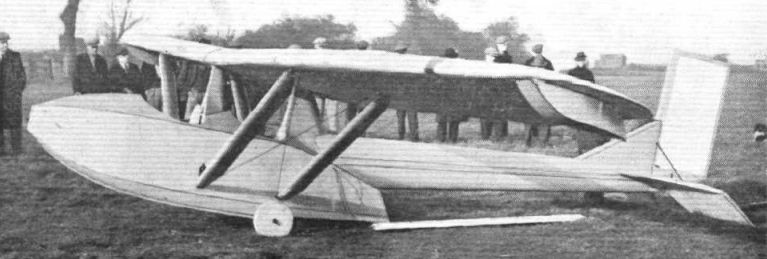
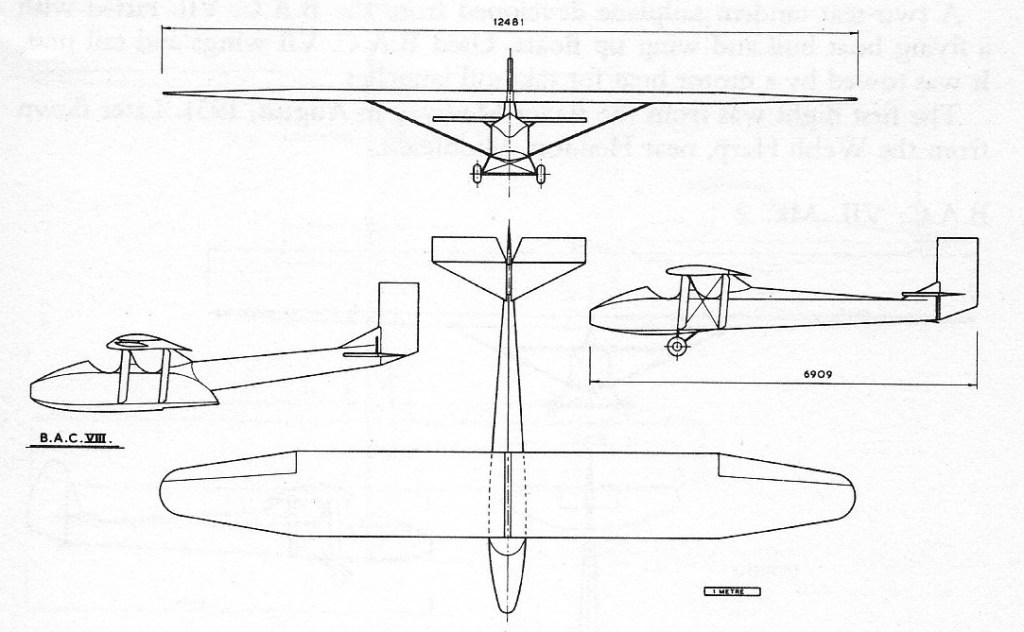
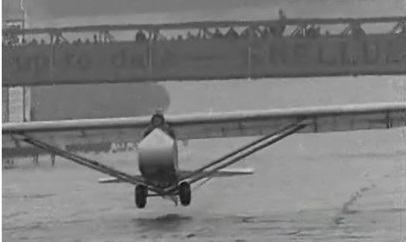
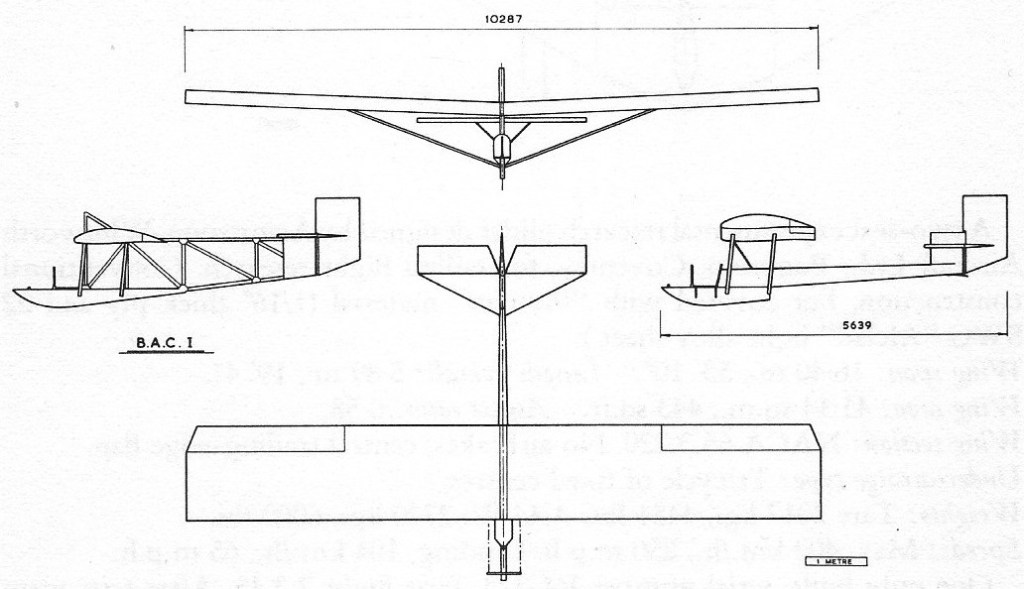
The 1932 B.A.C. VIII was a two-seat flying boat glider using B.A.C. VII wings and tail. Nicknamed the “Bat-Boat” after similar craft described in a short story by Rudyard Kipling, it was tested in August 1931 by being towed behind a speed-boat on the River Medway at Rochester. On 7 December that year it was demonstrated from the Welsh Harp reservoir at Hendon.
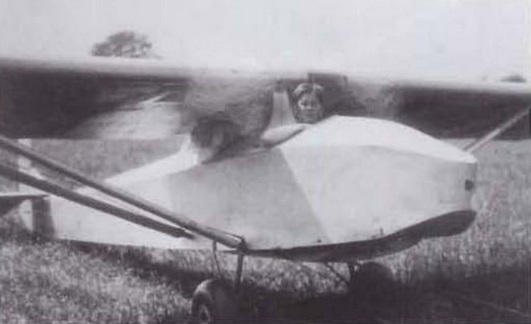
Eric Collins in a BAC 7 in which he flew the first cross counties in Britain in 1933
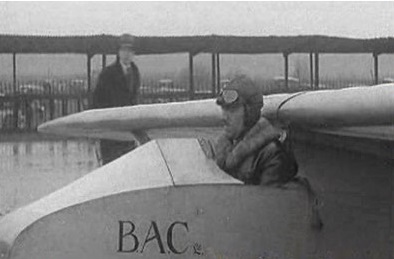
On 12 April 1931 the first two-seat B.A.C. VII flew, still using the 40 ft 10in span wings of the B.A.C. IV and VI, but with a new fuselage and an aircraft-type twin-wheel undercarriage for aero- or auto-towing. No flaps or air brakes were fitted.
A B.A.C. VII glider was modified by C.H. Lowe-Wylde to a single seater with an engine fitted on top of the wing in 1932.
Ten B.A.C.VII were built, in 1931, followed by one B.A.C.VII Mk.2 prototype in 1932.
A B.A.C. VII sponsored by novelist Barbara Cartland was intended to compete for the Daily Mail cross-channel competition prize, but in trials, flown by Edward Mole and towed by DH.60 Moth G-AAPA of National Flying Services, the combination was unable to get above 6,000 ft, insufficient height for a crossing, so instead a towed flight was made from Maidstone to Reading on 20 June 1931.
The RAF Pageant held at Hendon on 25 June 1932 included a display by three B.A.C. VII gliders. At the British Gliding Association meeting at Huish/Pewsey Hill, G E Collins – the BGA instructor, made the first thermal-soaring flights in the UK, with a cross-country flight of 6 miles in a B.A.C. VII on 3 July 1933. Some B.A.C. VIIs were sold as kits, including one built in Palestine, and a replica was built by Michael Maufe in the 1980s, using the wings from a Drone.
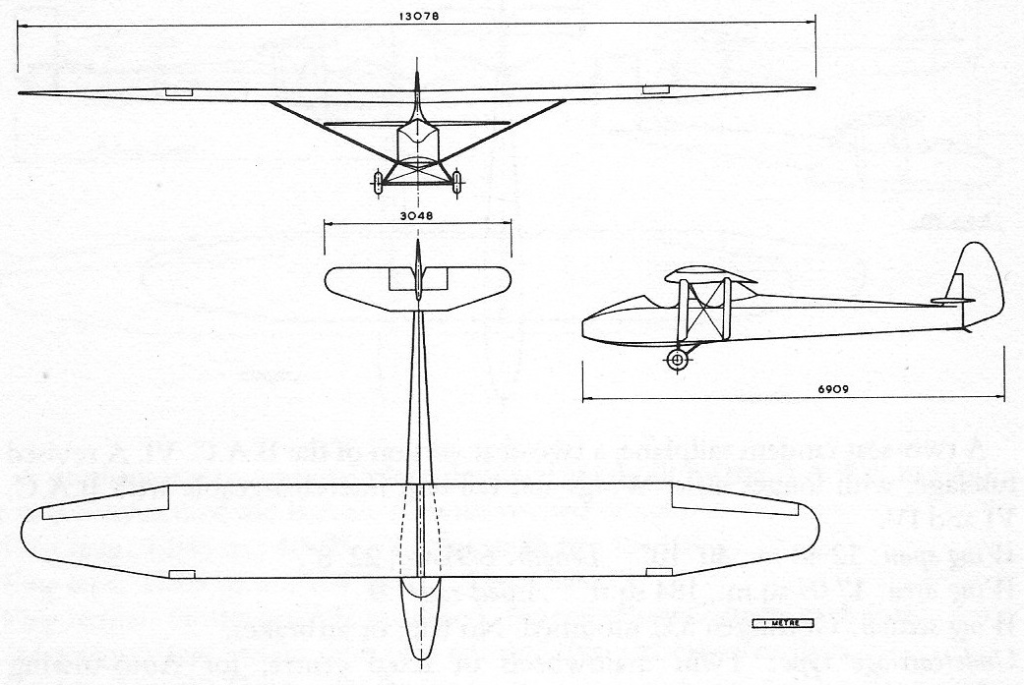
Photographs of the prototype B.A.C. VII Mk.2 appeared in “Sailplane and Glider” in 1932 showing parts under construction. A two-seater it featured longer span wings, with slight dihedral, revised cantilever all-moving tailplane, and wheel brakes were fitted, No flaps but small spoilers were fitted to the leading edges of the wings.
It is not known if the B.A.C. VII Mk.2 was completed and flown.
The B.A.C.VII were developed into the Planette, Drone, Super Drone, and Drone de Luxe.
Variation: B.A.C. Planette
B.A.C. VII Wingspan: 12.48 m / 40 ft 10 in Length: 6.91 m / 22 ft 8 in Wing area: 17.09 sq.m / 184 sq.ft Aspect ratio: 9 Wing section: Gottengen 532 modified Seats: 2 Price 1932: £150
B.A.C. VII Mk.2 Wingspan: 13.08 m / 42 ft 11 in Length: 6.91 m / 22 ft 8 in Wing area: 19.02 sq.m / 194 sq.ft Aspect ratio: 9.5 Empty weight: 136.08 lb / 300 lb Seats: 2
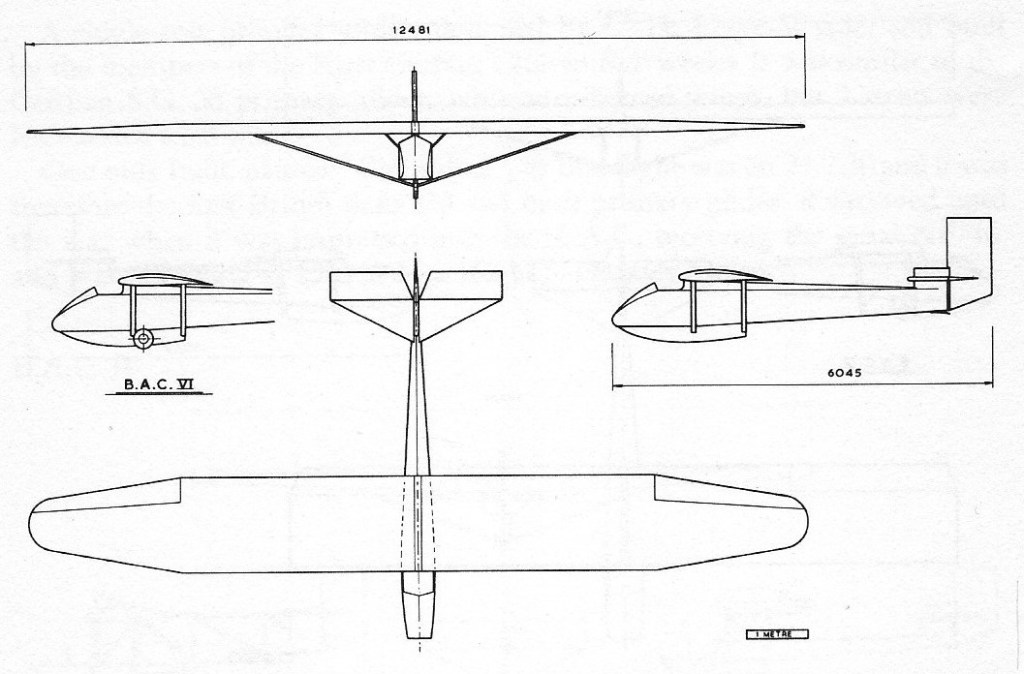
When the B.A.C. IV was fitted with wheels, it was known as the 1930 B.A.C. VI. One was built, and soared by Wolf Hirth at Balsdean on 1 April 1931 for 2hrs 13min. The Taunton & West Somerset Gliding Club was presented with a B.A.C. VI by their president, Lt. Col. Hamilton Gault, M.P., which was first demonstrated for the club by Mr Lowe-Wylde on 9 July 1931.
The 1931 BAC 6 single-seat glider was developed into the BAC 7 two-seater.
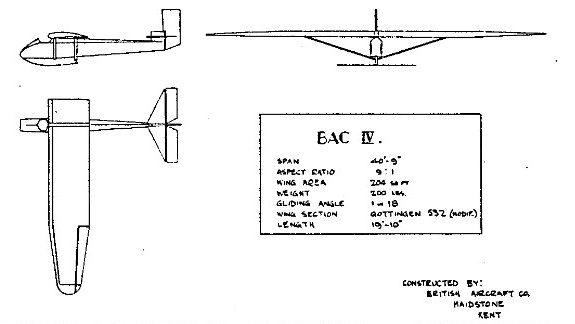
An improved version of the B.A.C. III appearing in April 1931 was the B.A.C. IV with longer, tapered wings. Only one being built.
One was sold to Mr C M C Turner of the Channel Gliding Club. For an intended channel crossing. it was towed to 10,000 ft by Sqn Ldr Probyn in his Westland Widgeon G-EBRQ on 18 June 1931, but this was not high enough for the planned flight.
When fitted with wheels the B.A.C. IV was re-designated B.A.C. VI.
Wing span: 12.48 m / 40 ft 9 in Length: 6.05 m / 19 ft 10 in Wing area: 17.09 sq.m / 184 sq.ft Aspect ratio: 9 Wing section: Gottingen 532 modified Empty weight: 90.72 kg / 200 lb Max L/D: 18
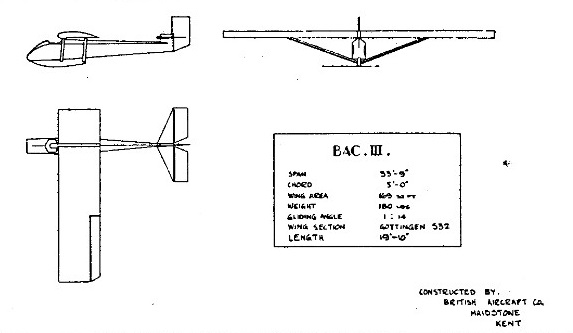
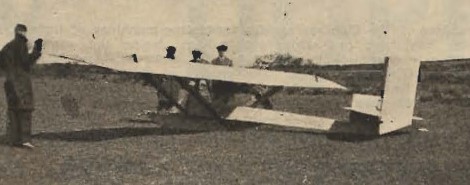
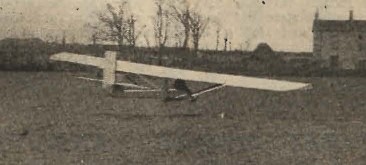
The single-seat B.A.C. III consisted of the wings and tail from the B.A.C. II combined with a fuselage enclosing the pilot. The undercarriage was a main skid. No flaps or air brakes were fitted.
The wings were strut braced with two on each side.
First flying at Lenham on 12 October 1930, two went to the Glasgow and Accrington gliding clubs, while three further clubs had their B.A.C. II primaries delivered along with alternative B.A.C. III fuselages, so they could be flown in either configuration.
The 1930 B.A.C. V was simply a B.A.C. III equipped with a pair of wheels for auto-towing. One was built for the Border Gliding Club, while the Preston & District club converted their B.A.C. III for towing off the beach at Middleton Sands, Heysham. This aircraft crashed there fatally on 15 May 1932.
Wingspan: 10.28 m / 33 ft 9 in Length: 6.05 m / 19 ft 10 in Wing area: 15.7 sq.m / 169 sq.ft Aspect ratio: 6.75 Wing section: Gottingen 532 Empty weight: 81.65 kg / 180 lb Max L/D: 14
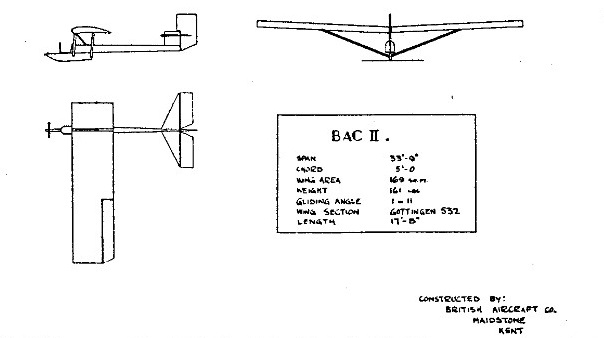
The 1930 B.A.C. II was also a primary, but instead of an open girder-type frame, it had a box spar fuselage, with a strut braced wing.
The undercarriage was a main skid only, and no air brakes or flaps were fitted.
This first flew at Lenham, Kent, on 21 September 1930 and about fifteen were sold, including one in Jamaica. Lowe-Wylde would deliver the gliders personally and demonstrate them at the club’s site (and if necessary. take the pieces home for repair the same day).
Wingspan: 10.28 m / 33 ft 9 in Length: 5.64 m / 18 ft 6 in Wing area: 15.7 sq.m / 169 sq.ft Aspect ratio: 6.75 Wing section: Gottingen 532 Tare weight: 73.03 kg / 161 lb Max L/D: 11
The first true B.A.C. aircraft was the one seat 1930 B.A.C. I primary glider. Designed by C.H. Lowe-Wylde and built by members of the Kent Gliding Club, it was similar to the German S.G.38, with wire braced wings, but two struts were later added each side.
One only was built, named Columbus, and its first flight was on 23 February 1930. It survived until the war when it was impressed into the RAF, serial NF746, and was still flying in 1953 at No. 162 G.S. Hamsey Green.
Born in 1901 at Newcastle-upon-Tyne, C.H. Lowe-Wylde built his first glider at the age of 14. On 3 January 1930 he founded the Kent Gliding Club, then designed the first British Primary glider, the B.A.C.1, which was thwn built bu members of the Kent Club.
The British Aircraft Company (1935) Ltd was founded by C.H. Lowe-Wylde in 1930, the company set up a factory in a disused brewery in Lower Stone Street, Maidstone, Kent, UK.
The British Aircraft Company (1935) Ltd. built a series of eight glider types in the early 1930s. In 1932 one was fitted with landing gear and a Douglas motorcycle engine driving a pusher propeller. A small number were produced before designer and company owner C. H. Lowe Wylde was killed while flying the initial conversion on 13 May 1933. Company taken over by Austrian pilot Robert Kronfeld, becoming Kronfeld Ltd.
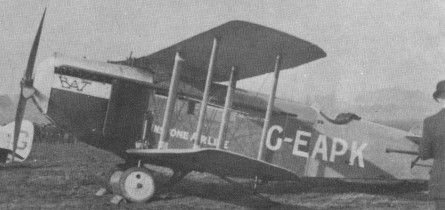
The smallest of designs from Frederick Koolhoven when he worked for the British Aerial Transport Company was the F.K.28 Crow.
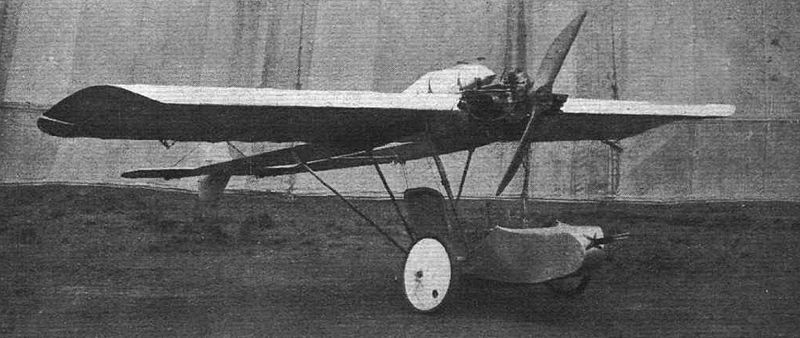
The B.A.T. Crow monoplane was built in 1919. It was very small and light. Its tail surfaces were carried by two slim booms. An ABC Gnat 2-cylinder horizontally-opposed engine – together with fuel and oil tanks – was mounted in a pusher configuration on the wing centre section. The pilot’s seat was set between the landing gear suspended below the wing. It was designed to be dismantled for road-transport with the removal of twelve bolts. It was displayed at the First Air Traffic Exhibition in Amsterdam, but it did not fly until some time later. It only flew once and proved to be underpowered. It was scrapped in 1920.
Powerplant: 1 × ABC Gnat, 40 hp (30 kW) Propeller: 2-bladed fixed-pitch Wingspan: 15 ft 0 in (4.57 m) Length: 14 ft 0 in (4.27 m) Height: 4 ft 6 in (1.37 m) Empty weight: 220 lb (100 kg) Gross weight: 400 lb (181 kg) Maximum speed: 75 mph (121 km/h, 65 kn) Range: 150 mi (240 km, 130 nmi) Endurance: 2 hours Crew: 1