Broburn Sailplanes Wanderlust

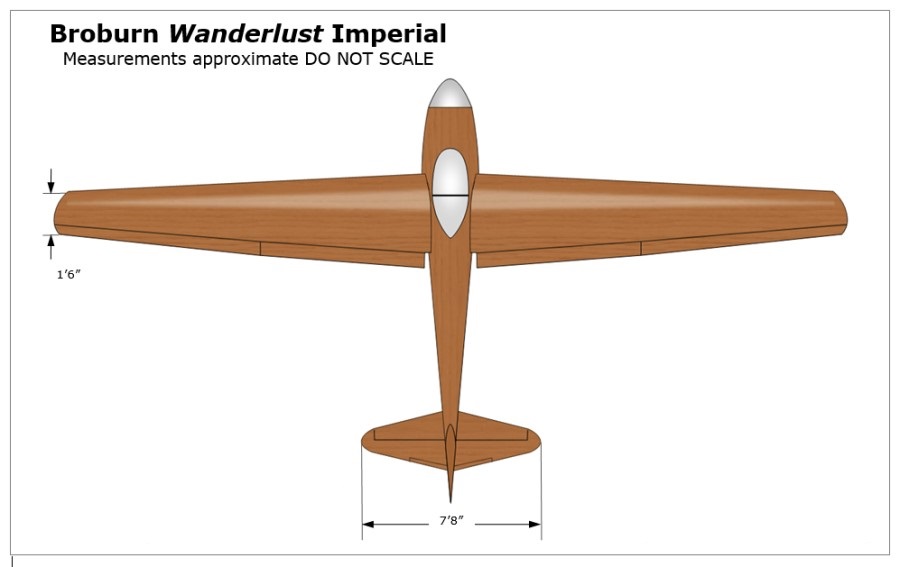
The Broburn Wanderlust was a small, wooden, single-seat glider designed in the United Kingdomand built by T. E. Brown and K. W. Radburn (as Broburn Sailplanes Ltd, Woodley), two employees of Miles Aircraft, immediately after World War II.

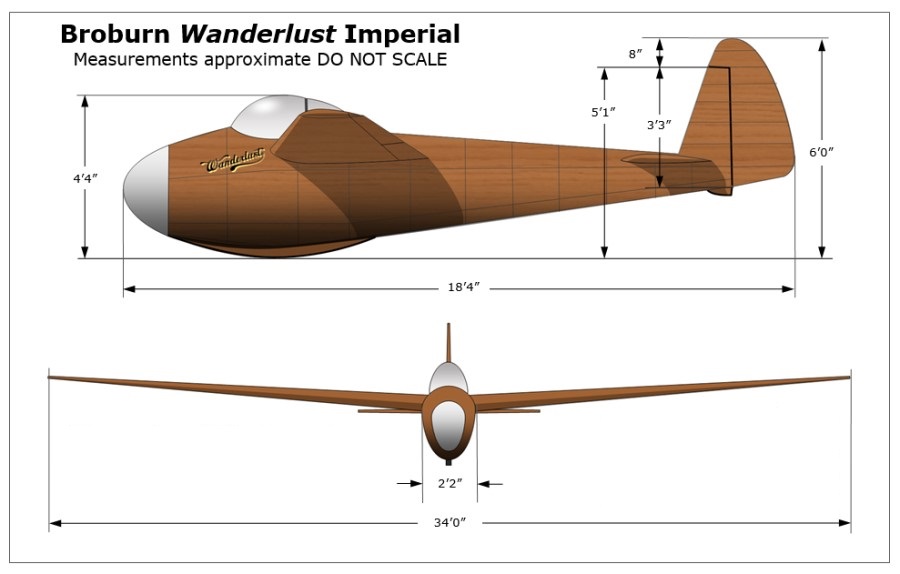
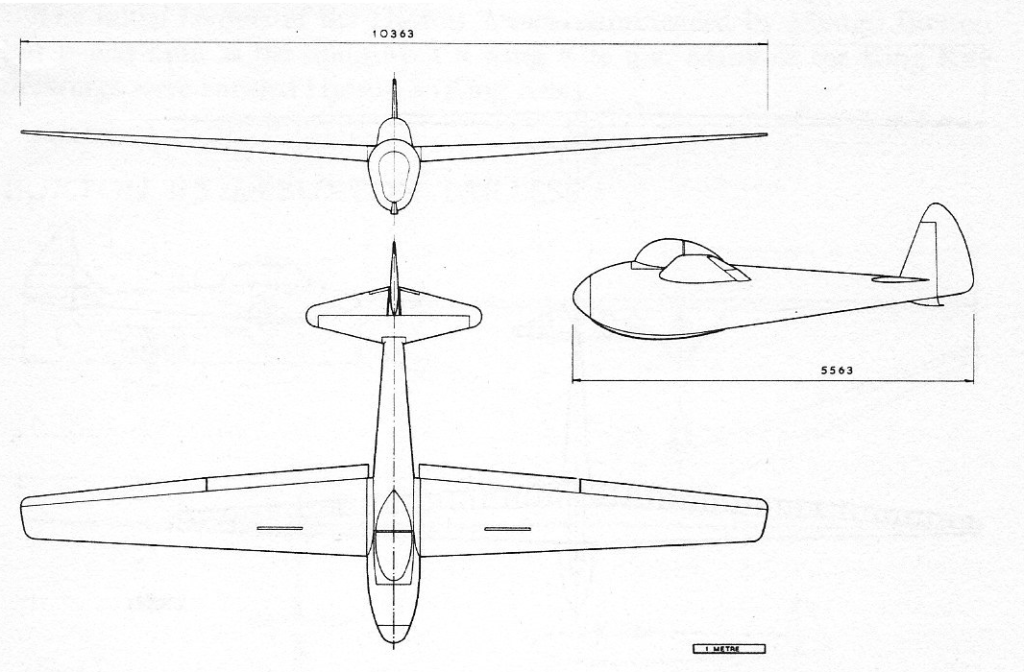
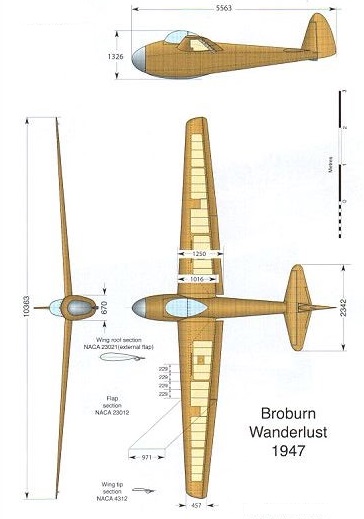
It was a single-seat, all-wood, shoulder-wing aircraft, with a short span for a glider of 34 ft (10 m) though with an aspect ratio of over 15. The wing of the Wanderlust was built around a single spar, which with plywood skin around the leading edge formed a torsion box. Behind the spar the wing was fabric covered. There was 4° of dihedral and 2° of washout. The trailing edge was spanned with aerofoil section flaps, split into two equal sections. Inboard, these acted as simple flaps; outboard, additionally, as drooping ailerons. The two NACA airfoil sections used in the wing were chosen because they have centres of pressure that vary little with the angle of incidence, which increases when the flaps are deployed. The Wanderlust also had upper surface spoilers hinged on the wing spar at about quarter span.
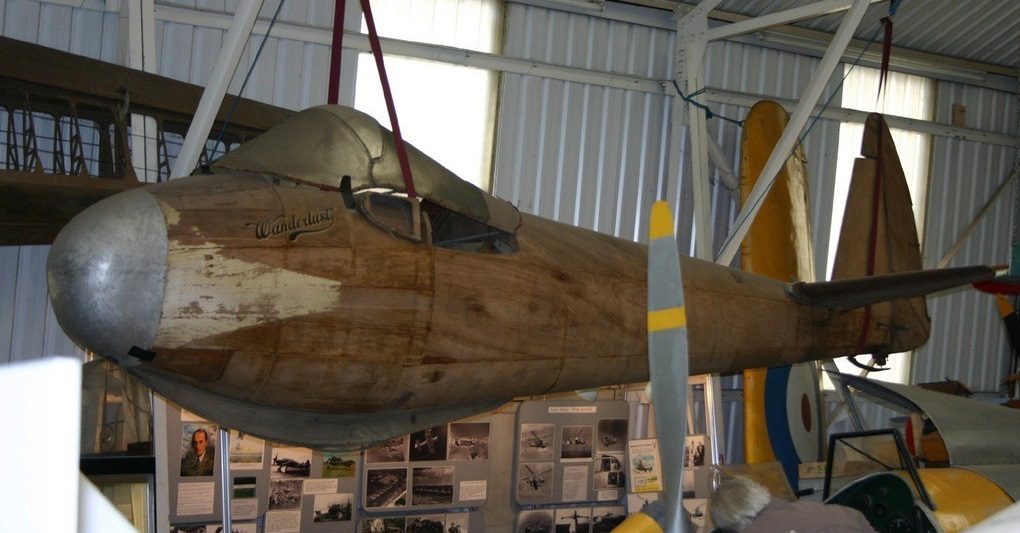
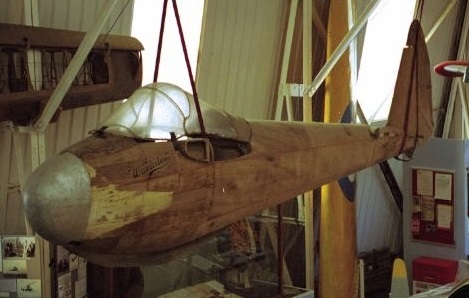
The rest of the Wanderlust was plywood skinned, with a cockpit which could be open or enclosed in a bubble Perspex hood. The pilot’s head is raised well above the wings and fuselage under a hood. A seat type parachute is provided, with a radio as possible additional equipment. The fuselage tapered aft, with the tailplane mounted on top and the small fin behind it. The elevators, with individual trim tabs, moved either side of the fin and the rudder was hinged behind their trailing edges. Both elevators and rudder were horn balanced. The Wanderlust landed on a pneumatically-mounted central skid. A cut motorcycle inner tube encased in canvas provides an inflatable shock absorber.
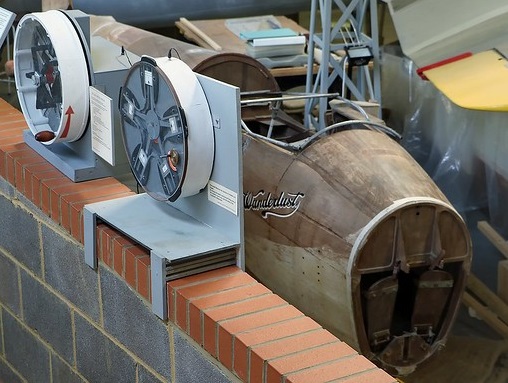
Despite hopes of marketing the Wanderlust in finished and in kit form, only one was made. This was first flown in 1947, in the hands of Miles Aircraft’s Chief Test Pilot, Hugh Rendall, and flown by many pilots including Lorne Welch. It was in at store at RAE Farnborough about 1970. In 1993, having been in storage at Farnborough for some years, it was bought back to Woodley for restoration in the Museum of Berkshire Aviation by its owner Pat Pottinger and one of its original creators Ken Radburn.

Wingspan: 34 ft 0 in (10.36 m)
Wing area: 75.0 sq ft (6.97 m2)
Length: 18 ft 3 in (5.56 m)
Height: 4 ft 0 in (1.22 m) tail down
Aspect ratio: 15.4
Airfoil: NACA 23021 at root, NACA 4312 at tip
Empty weight: 250 lb (113 kg)
Gross weight: 450 lb (204 kg)
Wing loading: 4.5 lb/sq ft (22 kg/ sq,m)
Cruise speed / optimum glide: 36 mph (58 km/h, 31 kn)
Stall speed: 32 mph (52 km/h, 28 kn)
Maximum glide ratio: 1:25
Rate of sink: 390 ft/min (1.98 m/s) minimum, at 95 mph (153 km/h)
Crew: 1
British Aircraft Manufacturing Eagle

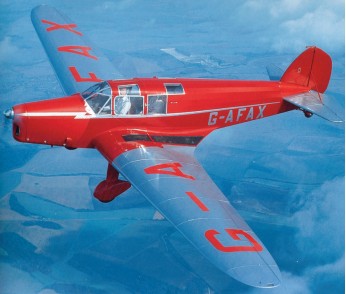
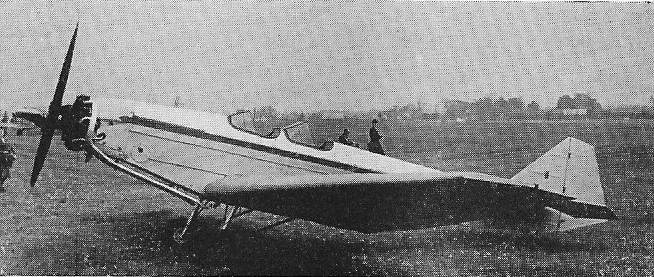
A version of the Klemm KI 32 redesigned in England by G H Handasyde was built in the UK by the British Klemm Aeroplane Co (later renamed British Aircraft Manufacturing Co) under the name Eagle; this was powered by a 130 hp de Havilland Gipsy Major engine. The BA Eagle II was produced with both fixed and retractable undercarriages and normally powered by a 130 hp de Havilland Gipsy Major engine. The cabin seated three, two on a bench seat at the rear.

BA Eagle II

Forty-two Eagles were built at Hanworth Aerodrome, Middlesex, to 1937.

British-Klemm BKA Eagle 1
Engine: de Havilland DH Gipsy Major, 130 hp
Max level speed: 148 mph
Cruise speed: 130 mph
Absolute ceiling: 16,000 ft
Range: 650 miles
Seats: 3
Price 1934: £1250

BA Eagle II
Engine: 130 hp de Havilland Gipsy Major
Wingspan: 39 ft 3 in
Length: 26 ft
Height: 6 ft 9 in
Empty weight: 1450 lb
Loaded weight: 2400 lb
Max speed: 148 mph
Cruise: 130 mph
ROC: 700 fpm
Range: 650 mi
Seats: 3

British Aircraft Manufacturing Swallow

Swallow 2

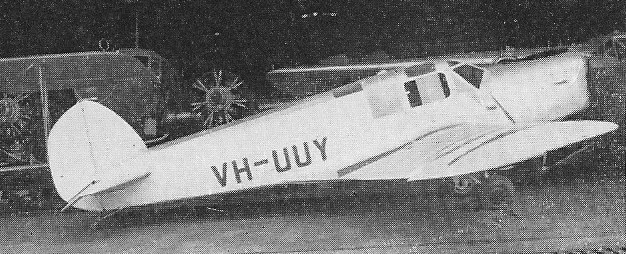
The Swallow design sterns directly from the German Klemm monoplanes first flown in 1927. Their popularity spread to Britain and thirty were sold there by 1933. They were comfortable and safe, if slow, aircraft, and the demand prompted Major E. F. Stephen of S. T. Lea Ltd, who had the selling rights, to produce a strengthened version with Salmson or Pobjoy engines.

British Aircraft Manufacturing Swallow Article

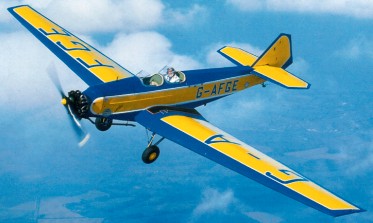
He formed the British Klemm Aeroplane Company Limited at Hanworth in 1953 and by the end of that year the prototype, G-ACMK, powered by the Salmson A.D.9 radial, had flown. This and the following 27 aircraft were known as B.K. Swallows. In 1935, the year the company changed its name to the British Aircraft Manufacturing Co, a new version appeared. It closely resembled the B.K. Swallow but was more angular in appearance, with all the curves straightened in the wings, rudder, tailplane and fuselage top decking. Most of these B.A. Swallow 2s were powered by Pobjoy Cataract engines and G-AFGE was the 71st and last Pobjoy Swallow built.

A further version, the Cirrus engined Swallow 2, was produced in large numbers prior to WW2.

Late production Cirrus Minor powered G-AEMW was fitted with a cockpit canopy.

The Swallow 2 of 1937 was the last of the Pobjoy-engined aircraft.

Swallow II
Engine: Cirrus Minor.

British-Klemm L25C-1A Swallow
Wingspan: 42 ft 8.5 in
Length: 27 ft
Height: 7 ft
Engine: Pobjoy Cataract II, 85 hp
Empty weight: 990 lb
Loaded weight: 1500 lb
Max speed: 104 mph
Cruise speed: 90 mph
ROC: 800 fpm
Absolute ceiling: 17,000 ft
Range: 420 miles
Price 1934: £695

British Aircraft Manufacturing Co. (BA)

In the mid-1930s Major E. F. Stephen formed at Hanworth, Middlesex, a company originally titled British Klemm Aeroplane Company Ltd. to build under license the German Klemm L.25 two-seat lightweight sporting aircraft under the name B. K. Swallow. Also built six B.K.1 Eagle 1 three-seat cabin monoplanes, similar to Klemm L.32 but redesigned by G. A. Handasyde. A total of 22 B.A. Eagle 2s was subsequently built.
The British-built version, known as the BK (British Klemm) Swallow, first flew in 1933. The firm changed its name to The British Aircraft Manufacturing Co Ltd in 1935.

British Aircraft Co B.A.C. IX

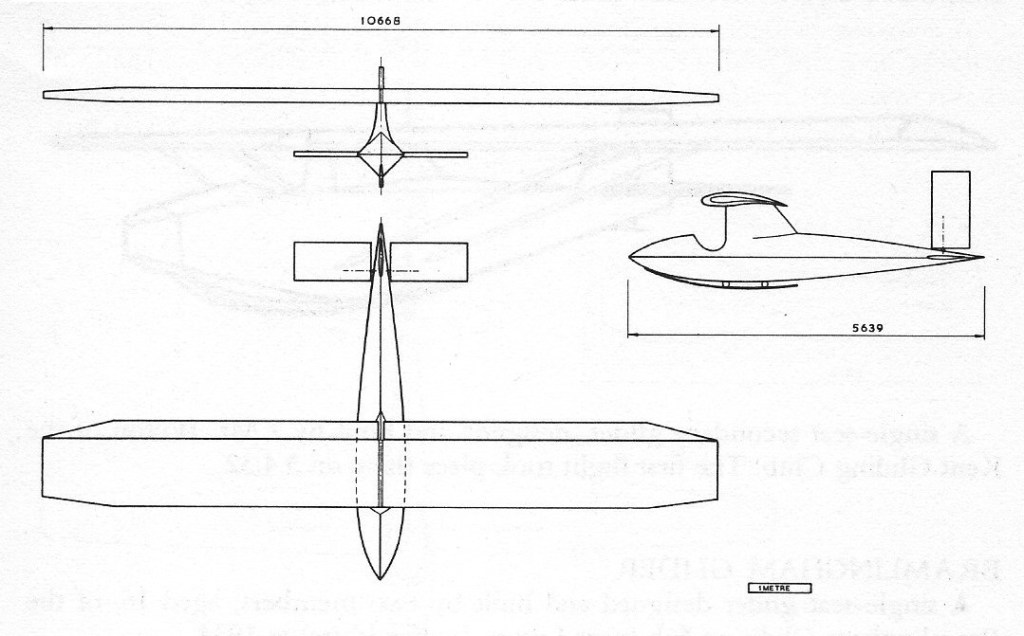
The last of Lowe-Wylde’s glider designs was the 1931 B.A.C. IX, a lightweight sailplane designed for possible home building. One only was built, first flown at Balsdean on 4 Oct 1931. The Kent Gliding Club were hoping to acquire it in 1933, but nothing more is known.

Of conventional wooden construction, the tailplanes and rudders were interchangeable and the cantilever wings had full-span ailerons. No airbrakes or flaps were fitted.

The undercarriage was a main skid and tail skids.

Wingspan: 10.69 m / 35 ft 0 in
Length: 5.64 m / 18 ft 6 in
Wing area: 13.94 m / 150 sq.ft
Aspect ratio: 8.1
Empty weight: 95.26 kg / 210 lb
Wing loading: 12.0 kg/sq.m / 2.45 lb/sq.ft