Brown Special Monoplane Racer

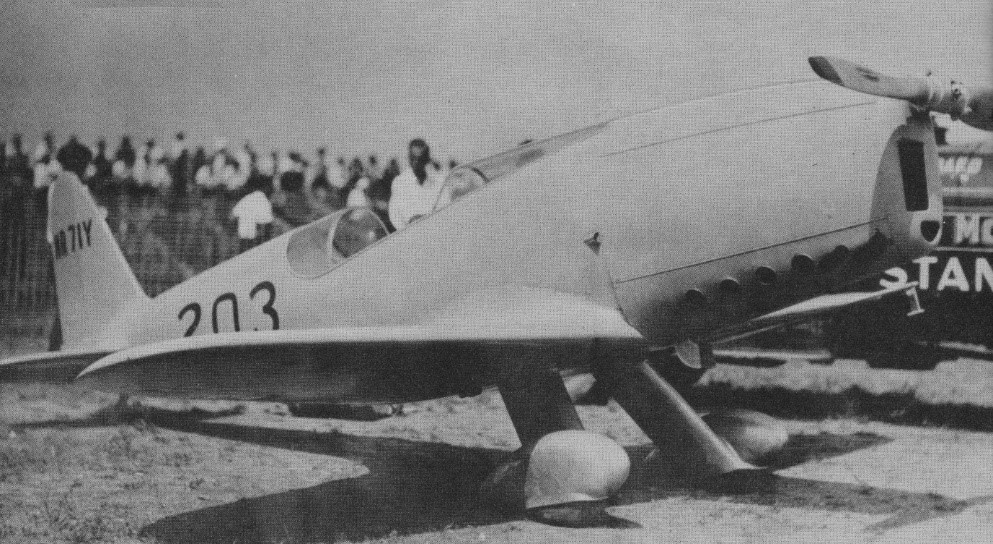
Alden Brown incorporated some novel features in his Racer NR71Y #203. The cockpit enclosure had no break or reversal in the fuselage contour. Top of the transparent enclosure was faired into the body lines and the fuselage forward of the cockpit was cut down at an angle of about 10 degrees with the fuselage centreline. Vision forward was poor during ground operations and still marginal in the air.

The Brown had been designed for a retractable undercarriage but time did not permit its installation, so it was fitted with cantilever struts and completely enclosed wheels. It was painted a light blue.

Alden Brown’s plane suffered a mishap on its first take-off at the Nationals. Roy Minor was at the controls. The close fitted wheel pants filled with mud and locked the wheels, causing the ship yo rear up enough to damage the cowl and propeller. As it came to rest the gear also collapsed so the ship was out of competition for the balance of the races.

Lee Shoenhair was the pilot in 1933. During the early part of the year he and Alden experimented with a retractable gear but were unable to get it to function properly so they reverted to the original gear. Lee was careful about use of the wheel pants and when in question on a slightly muddy or rough field these were not used. The aircraft appeared as often in 1933 without wheel pants as it did with them. She now wore the Gilmore Oil insignia and a dorsal tail fin with a small headrest above the glassed-in cockpit enclosure. This improved lateral stability and increased the pilot’s vision. The racer placed fourth in the 1000 cubic inch displacement free-for-all at the Nationals. During this race Lee experienced super-charger trouble with the engine and achieved only 137.52 mph. This was the last year the Alden Brown Racer appeared at the races. After that its whereabouts are unknown.

Model 203’s wing span was 18-19 feet and its length about the same.
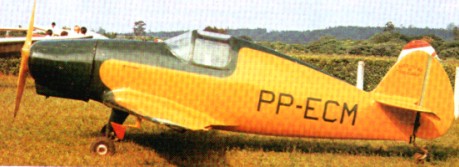
Brotero Bichino / IPT IPT-0

Designed as a private venture in the late ‘thirties, the Bichino subsequently served as a test-bed for the IPT (Instituto de Pesquisas Tecnológicas or Technological Research Institute) of the São Paulo State University. Four examples were built. In 1938, the IPT’s Aviation Research Department was, by a fair margin, the most important aviation research centre working in Brazil and had completed a long series of studies of the use of native Brazilian woods in aircraft. A special technique had been developed for producing in industrial quantities a new kind of plywood for aircraft using Brazilian pine, and studies had been made of freijo, a Brazilian hardwood 20 per cent stronger and heavier than spruce. One of the principal researchers at the IPT was Frederico Abranches Brotero, who was also a gifted aircraft designer. In company with Orthon Hoover, an American who had come to Brazil as a demonstration pilot for Curtiss in 1911 and had decided to stay, Brotero set about putting freijo and the new plywood to the test in a light aircraft. Work on Brotero’s tiny wooden aeroplane, designed around a 60 hp Walter Mikron engine, began late in 1939 in a workshop of the São Paulo Polytechnic School under IPT supervision and it was transferred to Rio Claro city aero club for completion and first flight. The latter was effected in 1940. The Little Bug was of all wood construction, the cantilever low-wing being a two-spar structure with a Clark Y aerofoil; the spars were of paumarfim, ribs of freijo and covering of Brazilian pine plywood. Ailerons were fabric covered; fixed letter-box slots were incorporated ahead of the ailerons and split flaps extended along each trailing edge from aileron to fuselage. The wooden monocoque fuselage structure had guapuruvu longerons and freijo reinforcements with plywood construction. Tail unit construction was of freijo with fabric covering for the elevators and rudder; there was a controllable trim-tab in the starboard elevator. The fixed landing gear had rubber-in-compression shock absorbers and a steel tail skid. Phenolic resin was used to bond the wooden components. The open cockpit was just wide enough for a pilot of average build, but was comfortable and afforded good visibility. In 1943, the Bichino prototype (PP-THH) was purchased by the IPT to be used as a flying test bed and three more examples were put in hand, with some structural redesign to reduce weight and improve performance. The three new Bichinos had 65 hp, 75 hp and 85 hp Continental engines respectively. By this time, IPT had completed other prototypes designated the IPT- 1, IPT-2 and IPT-3, and the Bichino was consequently given the designation IPT-0, the three new examples becoming the IPT-0-A, -B and -C respectively. The fourth and last was completed in 1947 and proved to be the best performer and most pleasant to fly

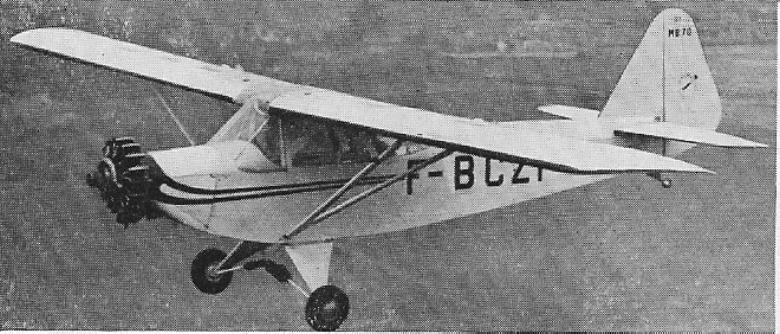
Brochet MB.70 / MB.71 / MB.72

MB.70

Derived from the MB.50 Pipistrelle and MB.60 Barbastrelle, the two-seat cabin MB.70 was built to meet the requirements of the Service de l’Aviation Legere et Sportive.

It obtained its Certificat de Navigabilite in July 1950.

Prototypes of three versions were built, differing only in the type of engine installed.

MB.70
Engine: Salmson 9ADB, 45 hp
Wing span: 33 ft 11 in
Seats: 2

MB.71
Engine: Minie 4 DC32, 75 hp
Wing span: 33 ft 11 in
Length: 21 ft 4 in
Height: 8 ft 2 in
Empty weight: 765 lb
Loaded weight: 1212 lb
Max speed: 101 mph
Cruise: 89 mph
ROC: 787 fpm
Seats: 2

MB.72
Engine: Continental A65, 65 hp
Wing span: 33 ft 11 in
Seats: 2

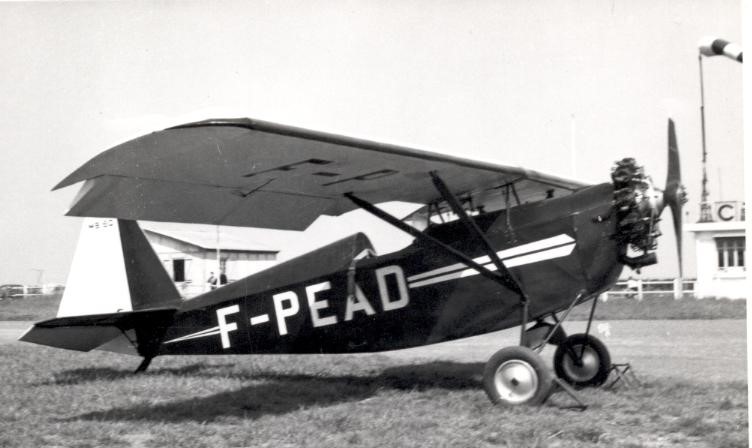
Brochet MB.50 Pipistrelle

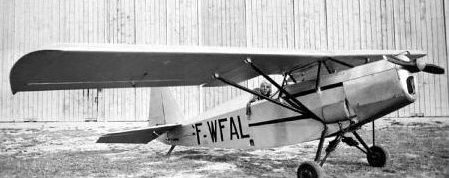
Brochet MB.50 Pipistrelle at Chavenay airfield near Paris in May 1957

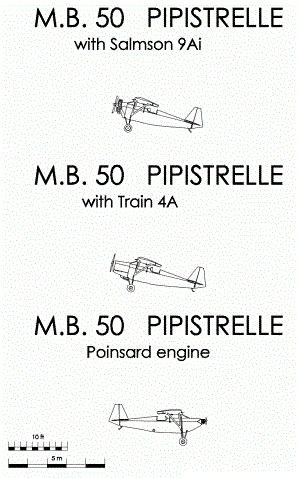
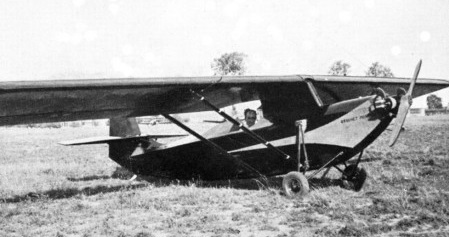
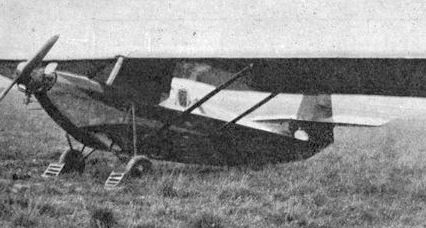
The first postwar design of Maurice Brochet was the MB.50 Pipistrelle (“Bat”) of 1947, which first flew that year. It is a single-seat open-cockpit ultra-light aircraft with a pylon-mounted high wing, wooden fuselage frame and fabric covering. The design was kept simple with the amateur-built market, using factory working drawings, in mind.

The first MB.50 was built in 1947 by Maurice Brochet and was powered by a Salmson 9ADb 45 h.p. radial engine. The subsequent Pipistrelles were all built by amateur constructors. In 1965, six were active, three powered by the Salmson, two by the Beaussier 4Bm O2 of 45 h.p. and one fitted with a Zlín Persy II.

Pipistrelle F-PEBZ was still active in 2005. Another was held in the collection of Ailes Ancienne Toulouse, near Toulouse Blagnac International Airport, during 2006.

Engine: 1 × Salmson 9ADb, 30 kW (45 hp)
Wingspan: 8.00 m (26 ft 3 in)
Length: 5.80 m (16 ft 0 in)
Empty weight: 240 kg (529 lb)
Gross weight: 351 kg (772 lb)
Maximum speed: 140 km/h (87 mph)
Cruising speed: 115 km/h (72 mph)
Crew: One pilot

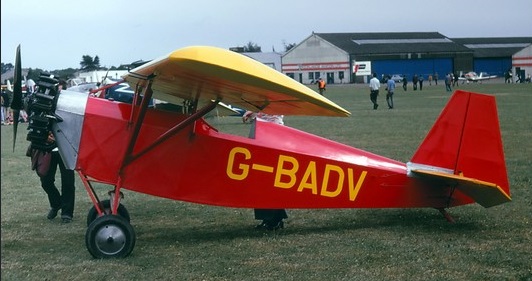
Brochet MB-30  

Derived from the MB-20, the 1934 Brochet MB-30, called the “Little Pike”, was basically the MB-20 with a tractor engine.

The type 20 took a different configuration although the aerodynamic set remains identical. The MB.30 was a parasol-wing monoplane of all-wooden construction.

Designed by Maurice Brochet, the single-seat sports aircraft first flew on 11 September 1934.

Brochet built three MB.30 in 1934 before opening the factory.

Engine: 1 × Poinsard 25hp, 19 kW (25 hp)
Wingspan: 10.0 m (32 ft 10 in)
Wing area: 13.5 m2 (145 sq ft)
Length: 6.0 m (19 ft 8 in)
Empty weight: 190 kg (419 lb)
Gross weight: 300 kg (661 lb)
Maximum speed: 105 km/h (65 mph, 57 kn)

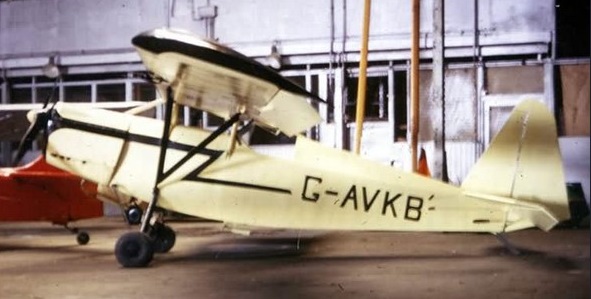
Brochet MB-20 / Avia 50 MP

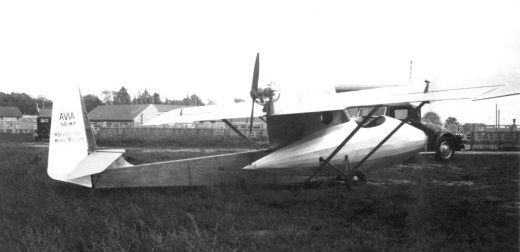
The Avia 50 MP (ex MB-20), built by Maurice Brochet in Neauphle-le-Château

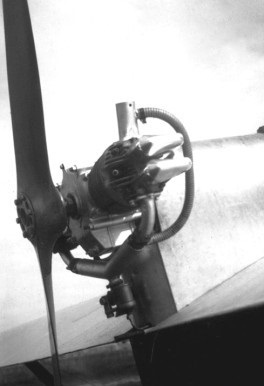
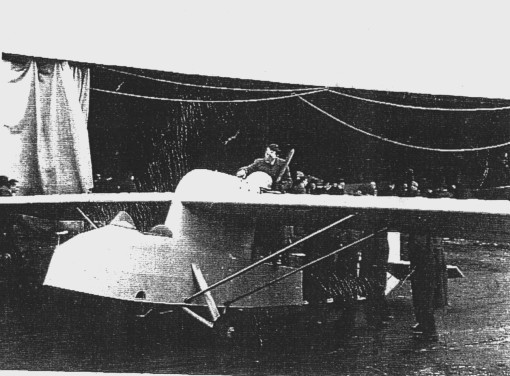
Maurice Brochet, former coachbuilder, recovered in 1931 a wreck of an Avia XVa. In his workshop at Neauphle-le-Château, he built a new fuselage with a central pylon on which he fixed a 25 horsepower Poinsard engine. The engine weighs only 35 kg. A single seater, the wing is high and guyed by two masts on each side.

Poinsot 25 CV

Even before the end of the construction, Brochet had designated his future motorglider MB-20. The aircraft was announced by Les Ailes in May 1933.

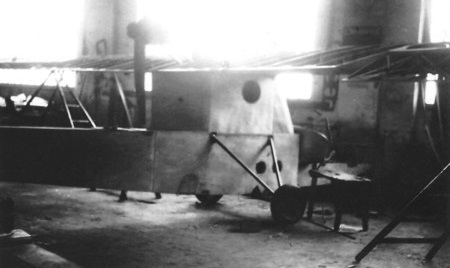
MB-20 under construction

A Jarlaud and Massenet visited Maurice Brochet, while the aircraft was still under construction. Attracted by the
project, they bought the machine for 15,000 francs on behalf of the Aero-Club of Paris, and sign with Brochet a serial construction protocol. An engineer, Jarlaud modifies it to use the maximum of Avia parts.

After discussion, it was agreed that the device will be called “Avia-50”, however, this organization, represented by both visitors, were to bear the cost of testing the machine.

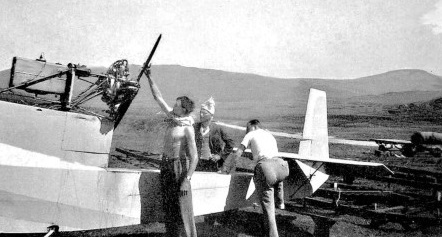
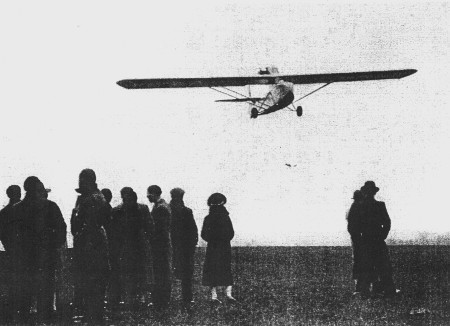
The first flight was on the morning of May 17, 1934, at Toussus-Paris, piloted by Eric Nessler. It started with three small hops at 7 or 8 meters high, soon followed by a real flight at 150 meters for ten minutes.

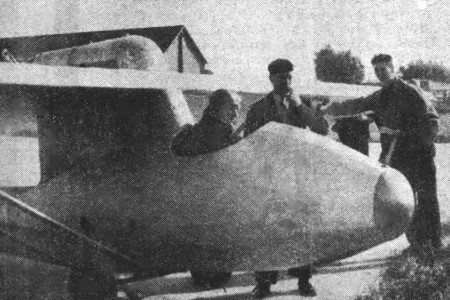
Eric Nessler at the helm of Avia 50 # 1 (ex MB-20,). At his side (with the beret) Maurice Brochet

After the flights of Eric Nessler, Albert Monville flew the motor-glider. After his flight, his impressions were as follows:
“It’s really a glider, which is flying as such, and not an airplane. Glider pilots will be comfortable aboard this aircraft; they will soon be familiar with them. “

Georges Abrial then tested the machine after Albert Monville.

The propeller, poorly adapted, rotated too fast and a new propeller was prepared.

The aircraft was tested in the wind tunnel at Lille, January 5, 9 and 11, 1935, completed by a test of June 25 of the same year, without the wheels, totaling 3:30 hours of tesing.

An Avia 50 is built in 1934 by the “Aeronautical Constructions Letord et Cie” in Meudon. It has a fuselage redesigned. This motorglider was exhibited at the AéCDS show at the 1934 fair.

Avia 50 n ° 2. This copy was not built by Brochet

Les Ets Louis, in Pantin, built at least one Avia 50.

At the beginning of 1936, the AVIA lent its Avia 40 MP to the C.A.U. (Club Aéronautique Universitaire) for the training of its trainees B or C. It was present at the Vincennes meeting on May 23, 1937, piloted by Clamamus.

Avia 50 MP

The AVIA 50 MP was flown to Banne d’Ordanche and used for training. It was crashed by Emile Manduech during one of these courses. During late 1936 at Banne Ordanche, this aircraft was crashed by André Costa, following a loss of speed. The fuselage was broken, but the driver unscathed.

Bonnet in Bordeaux, Joly in Beaune, Leroy in Evreux, Botali in Paris and Brochet de Neauphle le Château, built the first motor-glider “Avia 50”.

Engine: 25 hp Poinsard
Wingspan: 11,90 m
Length: 6,72 m
Height: 2,10 m
Take off run: 10 sec
Speed: 100 kph
Range: 300 km