Notable for distinctive streamlining and designed by Marcel Riffard in 1932. His C363 took second place in the 1933 Coupe Deutsch race, and developed versions took first three places in 1934 and 1935, and the first two places in 1936.
Inter-Wars
Caudron C.340 / C.344 / C.345 Junior Phalène
The 1933 Caudron C.340 Micro Phalène series were a reduced-scale Phalène light aircraft. Of wooden construction with fabric covering, five were built.
C.340
Folding wings
Engine: 30 hp Chaise 4D motorcycle engine
C.344 Junior Phalène
C.340 re-engined with 1 x 40 hp Chaise 4E 2-cyl.
First flight: 29 April 1933
Wingspan: 9.20 m
Length: 5.55 m
Wing area: 13.80 m²
Empty weight: 270 kg
Total weight: 375 kg
Maximum speed: 135 km / h
Seats: 1
One built
C.345
Phalène Junior, revised struts
Engine: 40 hp Train 4E
One built
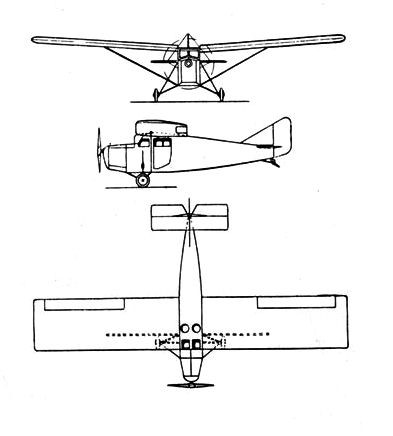
Caudron C.270 / C.271 / C.272 / C.273 / C.274 / C.275 / C.276 / C.277 Luciole
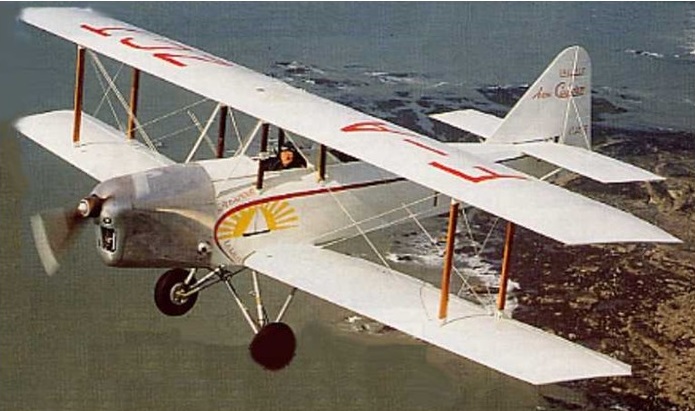
Designed by Paul Deville, the Caudron C.270 Luciole (“Firefly”) was a sporting, touring and trainer aircraft derived from the C.230.
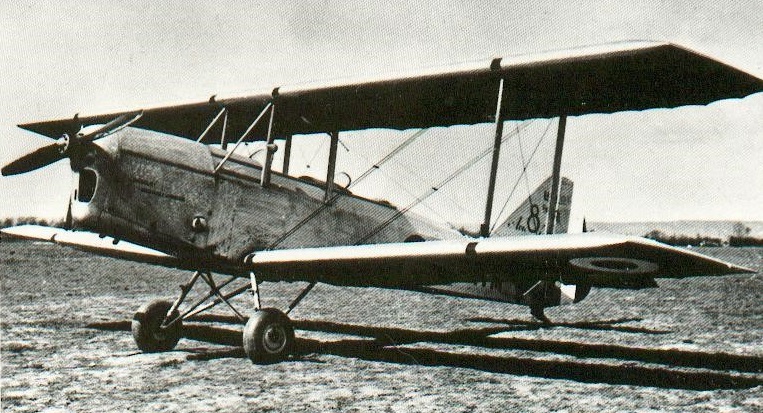
It was a conventional biplane with single-bay, unstaggered wings of equal span. The pilot and a single passenger sat in tandem open cockpits. It featured a fabric-covered fuselage in place of the C.230’s wooden one, and other refinements including revised control surfaces and undercarriage, and an improved and simplified wing-folding mechanism.
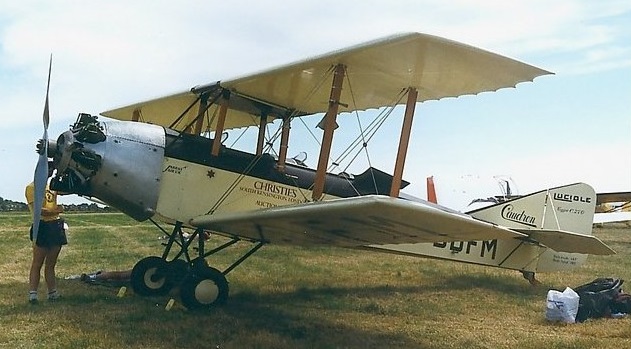
Over 700 were built in the decade leading up to World War II. Of these, 296 were purchased by the French government for its pilot training programme, the Aviation Populaire. Some were operated by the Spanish Republican Air Force. Many examples saw wartime service as liaison aircraft, and those surviving the conflict saw postwar use as glider tugs in the Ecole de l’Air.
Variants:
C.270 – first production version with Salmson 7Ac radial engine (82 built)
C.270/1 – version with Salmson 7Ac2 engine
C.271 – version with Lorraine 5Pc engine (1 built)
C.271/2 – version with Lorraine 5Pb engine
C.272 – version with Renault 4Pb inline engine (52 built)
C.272/2 – version with Renault 4Pci engine and taller, more pointed tail fin (22 built)
C.272/3 – version with Renault 4Pdi engine and wheel brakes (15 built)
C.272/4 – version with Renault 4Pei engine and wheel brakes (21 built)
C.272/5 – version with Renault 4Pgi engine(80 built)
C.273 – version with Michel 4A-14 engine (14 built)
C.274 – version with Chaise 4Ba engine for 1932 Paris Salon de l’Aéronautique (1 built)
C.275 – main production version derived from C.272/5 but without wing folding (433 built)
C.276 – version with de Havilland Gipsy III engine
C.276H – version with Hirth HM 504A-2 engine (2 re-engined from C.276)
C.277 – similar to C.272/4 with non-folding wings (9 built)
C.272R – C.275 re-engined with Renault 4Po3 after the war (1 converted)
C.278 – version with new undercarriage and Salmson 9Nc engine to compete in Challenge 1932 (1 built)
Specifications:
C.272
Engine: 1 × Renault 4Pb, 71 kW (95 hp)
Length: 7.67 m (25 ft 2 in)
Wingspan: 9.90 m (32 ft 5 in)
Height: 2.76 m (9 ft 1 in)
Wing area: 24.0 m2 (258 ft2)
Empty weight: 516 kg (1,138 lb)
Gross weight: 780 kg (1,720 lb)
Maximum speed: 158 km/h (98 mph)
Range: 500 km (311 miles)
Service ceiling: 4,000 m (13,120 ft)
Crew: One pilot
Capacity: 1 passenger
C.277 Luciole
Engine: Renault 4 Pei, 140 hp
Wing span: 32 ft 5.5 in
Wing area: 248.2 sq.ft
Length: 25 ft 2 in
Height: 9 ft
Empty weight: 1067 lb
Loaded weight: 1848 lb
Max speed: 107 mph / 93 mph at 3280 ft
Range: 388 mi
Caudron C.230 / C.232 / C.233 / C.235

Designed by Paul Deville, the Caudron C.230 was a two-seat light biplane with equal-span unstaggered single-bay wings. The upper wing centre-section was braced to the fuselage by four short vertical steel-tube struts; the outer panels, which could be folded, had a pair of vertical spruce inter-plane struts on each side. Ailerons were fitted on the lower wing only. The wooden fuselage structure was fabric-covered, and the cantilever tailplane had a wood frame and was plywood-covered. Each main unit of the wide-track fixed landing gear incorporated a vertical compression leg. The pilot and a single passenger sat in tandem open cockpits.
The prototype Caudron C.230 made its maiden flight in November 1930, piloted by Raymond Delmotte.
The C.230 was powered by a 71kW Salmson radial engine and 15 were built, to be followed by a number of variants.
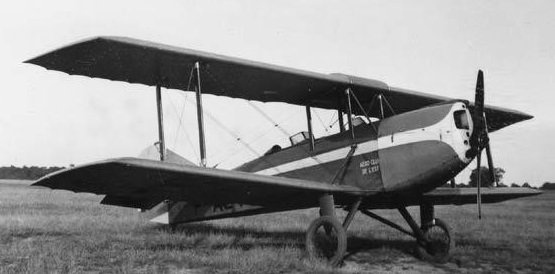
C.232 is identical to the C.230 except for the Renault engine which replaces the Salmson radial.
The C.232 is a biplane with a 95 hp Renault engine, mainly of wood construction, folding wings, and a steel tube undercarriage. An 85 lt fuel tank is mounted in the top centre section.
The C.232 was introduced into Britain by B.N Aircraft Ltd of Heston Air Park.

Variants:
C.230
first production version with Salmson 7Ac radial engine (15 built)
C.232
50 built, powered by a Renault 4Pb inline engine in place of the Salmson radial of the same horsepower; the fuselage had plywood covering.
C.232/2
Three built; same as C.232 but with wheel brakes.
C.232/4
Seven built. Identical to C.232/2 except improved equipment.
C.233
A single prototype powered by the unsuccessful Michel AM-16 engine. Later fitted with Salmson engine becoming a C.230
C.235
One airframe fitted with a German Argus As 8R 75kW inline for French Air Ministry tests of this engine.
Specifications:
C.232
Engine: Renault 4Pb, 71 kW / 95 hp
Wingspan: 11.00 m / 36 ft 1 in
Wing area: 24.0 m2 / 258.33 ft2
Length: 7.87 m / 25 ft 10 in
Gross weight: 780 kg / 1715 lb
Empty weight: 420 kg / 926 lb
Fuel capacity: 85 lt / 18.75 Imp.Gal
Luggage capacity: 50 kg / 110 lb
Max. Speed: 165 km/h / 103 mph
Top speed: 150 km / 93 mph
Cruise speed: 130 kph / 81 mph
Ceiling: 4300 m / 13,100 ft
Time to 4300 m / 13,100 ft: 1 hr
Range: 500 km / 310 miles
Endurance: 4 hr
Seats: 2
Caudron C.190 / C.191 / C.192 / C.193
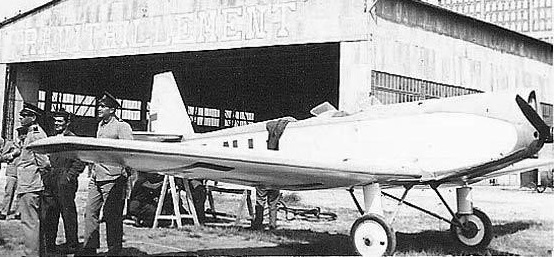
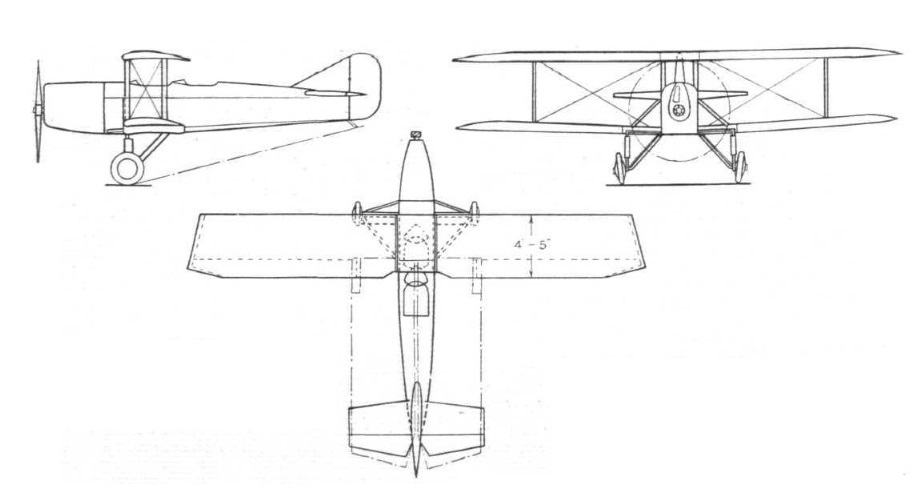
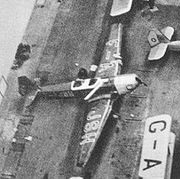
The Caudron C.190 was a French two-seat low-wing single-engine sports plane, built by Caudron in the late 1920s. First flown in 1929, the only variant of the C.190 family (C.190/191/192/193) to be built in series was the C.193.
Information in publications is vague, but at least six C.193s were produced (reg. F-AJHG, F-AJOB, F-AJSG, F-AJSH, F-AJSI, F-AJSJ) and one Salmson-powered C.192 (F-AJHF). One aircraft, C.193 F-AJSI, was sold to Great Britain in 1930 and registered as G-ABFX, but returned to France in 1931 to be registered as F-ALLJ.
In 1929, aircraft F-AJHF and F-AJHG participated in the Challenge 1929 international touring plane contest, and one of them completed it in 28th place, flown by Raymond Delmotte.
In 1930, three C.193s participated in the Challenge 1930 international touring plane contest (F-AJSG, F-AJSH, F-AJSI), Maurice Finat completing it in 17th place and François Arrachart in 24th place.
Variants:
C.190 – first variant, with 80 hp (58.8 kW) Renault straight engine
C.191 – variant with 95 hp (69.8 kW) Salmson 7AC radial engine
C.192 – variant with 95 hp (69.8 kW) Salmson 7AC radial engine
C.193 – series variant, with 98 hp (72 kW) Renault 4Pb straight engine
Variation:
Odier & Bessiere Clino-giro
Specifications:
C.193
Engine: 1 × Renault 4Pb, 72 kW (97 hp)
Length: 7.48 m (24 ft 6 in)
Wingspan: 11.5 m (37 ft 9 in)
Height: 2.5 m (8 ft 2 in)
Wing area: 13.6 m2 (146 sq ft)
Empty weight: 440 kg (970 lb)
Gross weight: 760 kg (1,676 lb)
Maximum speed: 185 km/h (115 mph; 100 kn)
Cruising speed: 160 km/h (99 mph; 86 kn)
Range: 600 km (373 mi; 324 nmi)
Service ceiling: 4,500 m (14,764 ft)
Caudron C.59 / C.320
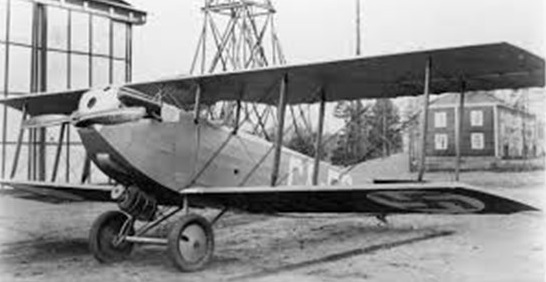
The Caudron C.59 was a French, two-seat biplane with a single engine and a canvas-covered fuselage. The French aircraft manufacturer Caudron made this aircraft between 1922 and 1924. It was suitable for several purposes.
Training aircraft intermediate preparation Caudron C.59 was developed with the assistance of Paul Deville René Talpina, the aircraft has a wooden frame and fabric covering. The ailerons were present only on the upper wing. The student was placed in an open cockpit under the central section of the upper wing, and instructor cabin was directly behind him under the back edge of the wing. The aircraft had dual controls standard.
The prototype flew in August 1921 and after extensive testing was ordered in large quantities for the French Air Force in seven contracts. More than 1,000 aircraft were manufactured and supplied to the French army and remained in service for 15 years.
A large batch of 32 was sold to Turkey. The aircraft arrived at their destination within 1924 to 1926 and were numbered 801-832. The main base was stationed Eskisehir Hava Okulu, where they were widely used until 1936. Then, they gradually began to be replaced by German Gotha Go.145. By the time they complete the withdrawal of the Air Force in 1937, only 7 machines remained in operation. They were handed over to the TNC (Turkish Aviation League), where they remained until 1941.
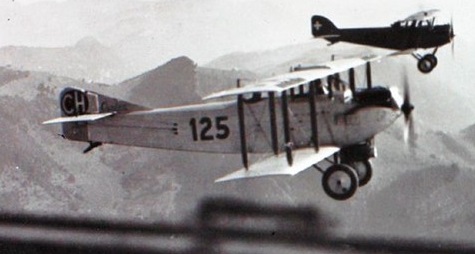
The Finnish Air Force purchased three Caudron C.59s from France in 1923. The aircraft first carried the air force designation codes 2E3-2E5 and from 1927 on CA-48 – CA-50. The manufacturing numbers of the aircraft were 5407–5409. The aircraft were equipped with landing gear, but there were at least one aircraft (2E3) was fitted with floats. The aircraft were accepted into service on March 8, 1923 and the last one was taken out of service in 1931.
The Caudron C.59 was also used in Bulgaria, China, and in the Spanish Civil War.
There was also a C.59/2 version, which was equipped with a 230 hp (170 kW) Lorraine 7Ma Mizar engine and had a wide track undercarriage.
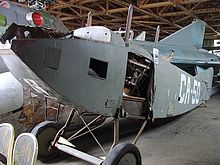
More than 1,800 Caudron C.59s were manufactured.
Variants
C.59
Original design.
59/2
Fitted with 230 hp (170 kW) Lorraine 7Ma Mizar radial engine.
C.320
c.1932, Original C.59s but refitted with 250 hp (190 kW) Renault 9A 9-cylinder radial engine. Some later returned to their original Hispano engines.
Operators:
Argentine Air Force
Brazilian Air Force
Bulgarian Air Force
Republic of China Air Force
French Air Force
French Navy
Finnish Air Force
Portuguese Air Force
Romanian Air Force
Spanish Republican Air Force
Spanish Air Force
Turkish Air Force
Venezuelan Air Force
Engine: 1 × Hispano-Suiza 8Ab, 134 kW (180 hp)
Wingspan: 10.24 m (33 ft 7 in)
Wing area: 26.00 sq.m
Length: 7.80 m (25 ft 7 in)
Height: 2.90 m
Empty weight: 700 kg (1,543 lb)
Gross weight: 988 kg (2,178 lb)
Maximum speed: 170 km/h (106 mph)
Endurance: 3 hr 30 min
Cruising speed: 138 km / h
Practical range: 500 km
Practical ceiling: 5500 m
Crew: 2
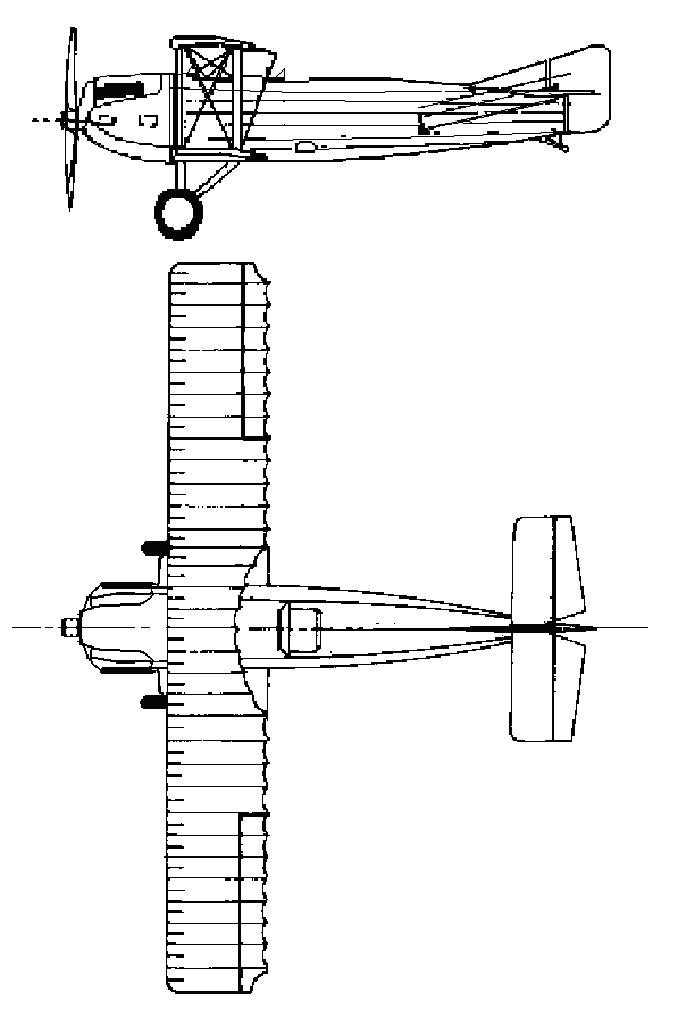
Caudron C.27 /C.125 / C.127 / C.128
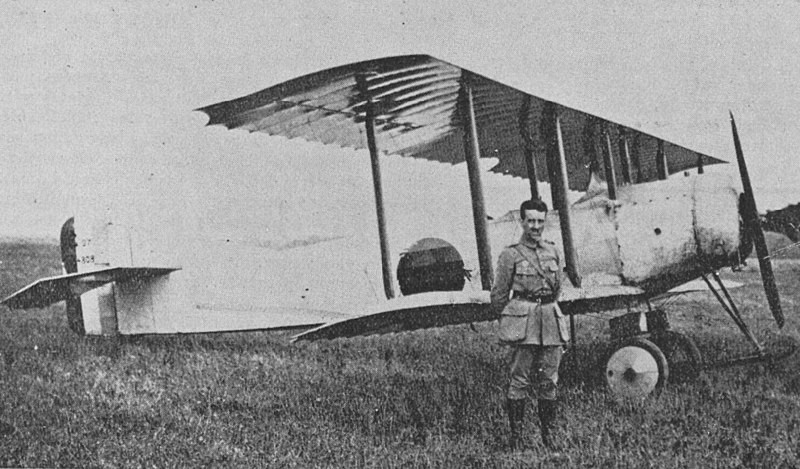
The Caudron C.27 was a French biplane, a two-seat basic trainer designed by Paul Deville which first flew in early 1922.
It was a two bay biplane, without stagger or significant dihedral. It had rectangular plan wings, each built around two wooden spars and fabric covered. These were braced with parallel interplane struts, assisted by piano-wire bracing. There were simple parallel cabane struts between the upper wing centre section and the upper fuselage longerons. Ailerons were fitted only to the upper wing.
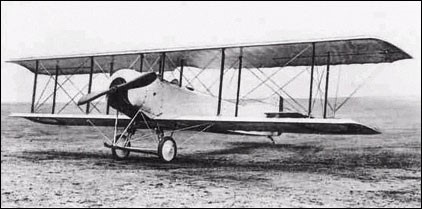
The C.27 was powered by an 80 hp (60 kW) Le Rhône 9C nine cylinder air-cooled rotary engine, driving a two blade propeller and with a cowling which surrounded its upper three-quarters. Behind the engine the fuselage had a cross-braced beam structure. The open cockpits were in tandem between the wings, the pupil’s slightly forward of mid-chord and the instructor’s close behind under the trailing edge, which had a rounded cut-out to improve his vision. At the rear a long, shallow triangular fin carried a straight edged balanced rudder which reached down to the keel. The tailplane was mounted on top of the fuselage and the elevators were cut away centrally to allow rudder movement. The C.27 had a fixed tail skid undercarriage with its wheels on a single axle supported by two pairs of V-struts from the lower fuselage. The forward members of these were originally double with a shock absorber in their upper parts, together with an elaborately wire braced central skid to prevent nose-overs, but the skid was soon abandoned and the double struts replaced by single ones.
The exact date of the first flight, piloted by Boulard, is not known but the aircraft was flown publicly at Orly at the end of June 1922. It was piloted by Thoret, who particularly impressed onlookers with a polished aerobatic performance, the last part with his engine off. Two years later a C.27 piloted by Patin won the 1924 Zenith Cup, a trophy based on fuel consumption and load carrying ability, and Adrienne Bolland set a women’s record in another C.27 when she completed 212 consecutive loops.
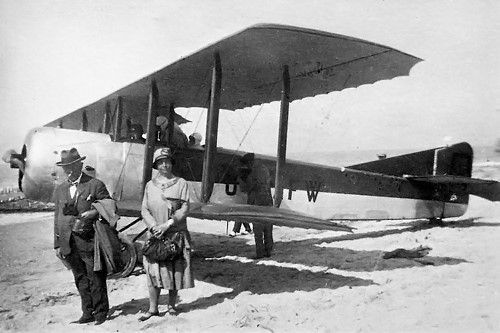
At least one C.27 flew with a 80 hp (60 kW) Anzani engine. The name C.27 was used to at least mid-1924 but at the Paris Salon L’Aérophile noted that the designation had changed to C.127. From 1925 several were fitted with 130 hp (97 kW) Clerget 9B nine cylinder rotary engines and designated C.125.
The C.128 was again very similar but powered by a 120 hp (89 kW) Salmson 9AC, a nine-cylinder, air cooled radial engine. This had a smaller diameter than the rotaries and was mounted in a tapered nose with its cylinders exposed. There was a 14% increase in empty weight from the C.127 and a slight increase in span and area. At least five were built or converted. Some were three seaters, with a third cockpit a little further aft.
A C.128 came second in the 1926 Zenith Cup and in September 1927 one carried five people to win a competition at a rally in Auvergne. In September 1927 a C.128 won a prize by carrying five people. In September 1928 pilots Mauler and Baud, with cameraman Cohendy set out on a flight, made in stages of about 350–400 km (220–250 mi) from Paris to the Cape of Good Hope via the West African coast. The flight was organised by Le Peit Paisien newspaper and by Paramount films, for whom Cohendy recorded their journey their journey. It was the first flight from France to the Cape. They then flew back to Paris after a round trip of about 35,000 km (22,000 mi).
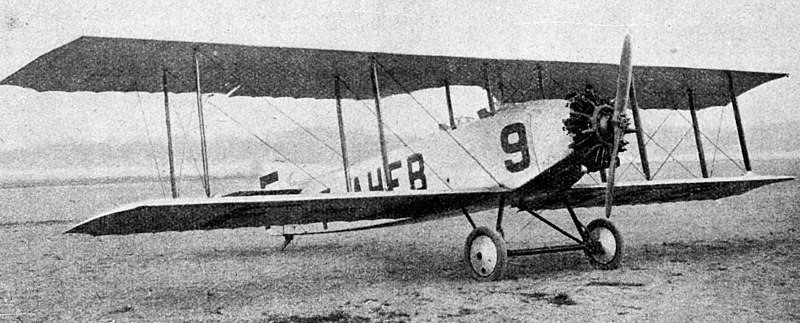
In 1930 a modified C.128, ordered by the Société Pour le Développement de l’Aviation (Society for the development of aviation) and designated C.128/2 was equipped to allow an acrobat to hang on a trapeze under the aircraft and also to permit wing-walking.
At least twenty-one C.27, C.125, C.127 and C.128 aircraft appeared on the French civil register.
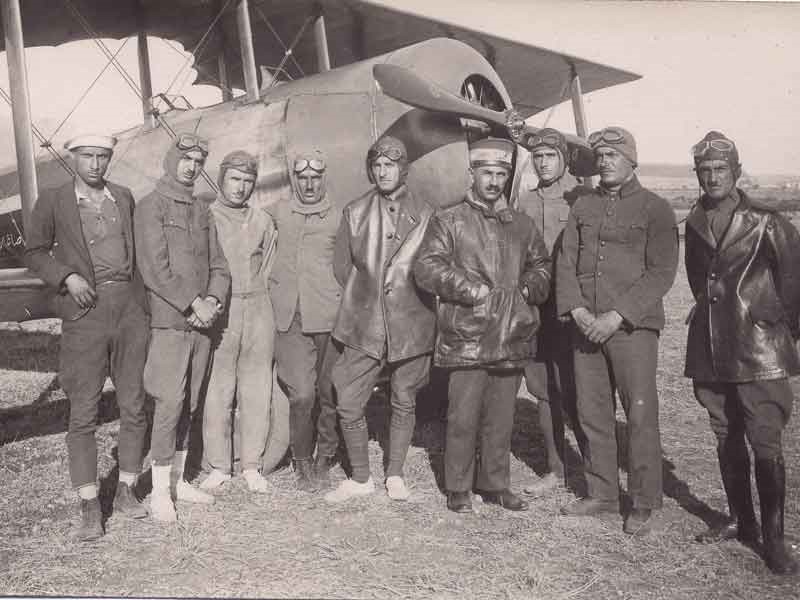
The first Jugoslav sports aircraft was a Caudron C27, property Aero klub Naša Krila Beograd (Aero club Our Wing Belgrade) in Skopje (today capital of Macedonia).
Variants:
C.27
Engine: 80 hp (60 kW) Le Rhône 9C or 70–80 hp (52–60 kW) Anzani
C.125
As C.27/127
Engine: 130 hp (97 kW) Clerget 9B
C.127
Engine: 80 hp (60 kW) Le Rhône 9C
Propeller: 2-blade
Wingspan: 12.00 m (39 ft 4 in)
Wing area: 34.50 m2 (371.4 sq ft)
Length: 8.30 m (27 ft 3 in)
Height: 2.83 m (9 ft 3 in)
Empty weight: 510 kg (1,124 lb)
Gross weight: 794 kg (1,750 lb)
Fuel capacity: 107 kg (236 lb)
Wing loading: 23.0 kg/m2 (4.7 lb/sq ft)
Maximum speed: 132 km/h (82 mph, 71 kn)
Stall speed: 50 km/h (31 mph, 27 kn)
Service ceiling: 4,000 m (13,000 ft)
Crew: Two
C.128
As C.27/127
Engine: 120 hp (89 kW) Salmson 9AC
Seats: 2 or 3
Caudron C 23 / P.23
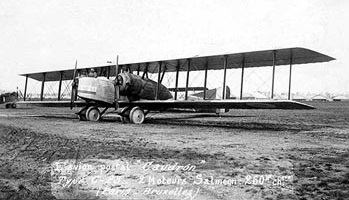
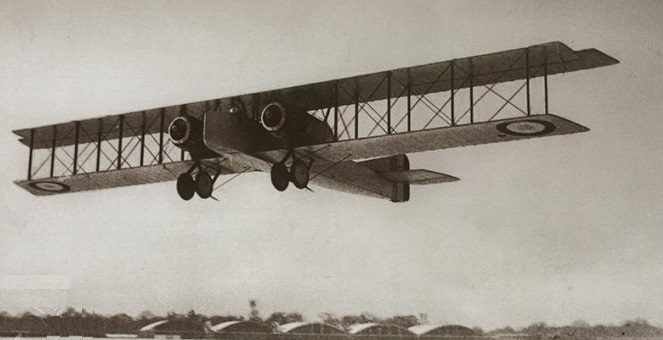
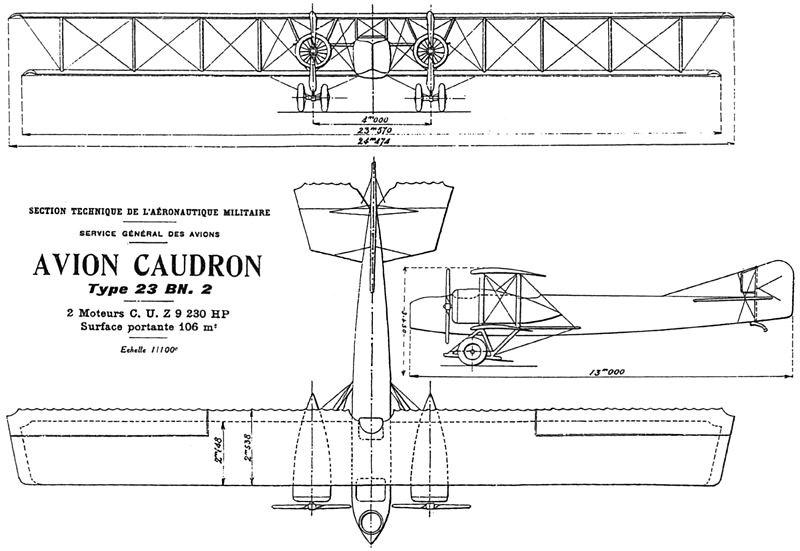
The P.23 was designed by Paul Deville to be a night bomber able to reach Berlin with a 600 kg (1,323 lb) bomb load. The French BN2 military category indicated a two seat night bomber but the P.23 had a crew of three. It had a much in common with the Caudron C.22 but was almost 50% larger in span, requiring an extra bay and more powerful engines. It was a large five bay biplane, with fabric covered, constant chord, unswept wings with angled tips. The upper wing, which carried the ailerons, had a slightly greater (4%) span and a smaller chord. There was no stagger, so the sets of parallel interplane struts were vertical; flying wires braced each bay. Pairs of V-form engine bearing struts, which supported the two cowled 194 kW (260 hp) Salmson 9Z nine cylinder water-cooled radial engines just above the lower wing, defined the inner two bays.
The P.23 had a flat sided fuselage. There was a gunner’s position in the nose, equipped with twin Lewis guns. A roomy open cockpit was positioned under the wing leading edge, with a separate gunner’s cockpit behind it under a large, rounded trailing edge cut-out. This was fitted with another pair of Lewis guns and a further gun firing downwards through a trapdoor in the floor. A low, broad fin carried a broad balanced rudder which extended down to the keel. The tailplane, angular in plan and of very low aspect ratio, was mounted on top of the fuselage and its elevators had a cut-out for rudder movement.
The bomber had a fixed tailskid undercarriage, with mainwheels in pairs . Their axles were mounted on longitudinal bars attached to the wing under the engines by N-form struts.
The Caudron C.23 first flew in February 1919, piloted by Jules Védrines. Higher power engines, the 447 kW (600 hp) Salmson 18Z or the 224 kW (300 hp) Hispano-Suiza 8Fb, were considered in April 1918 but the Salmson was not yet fully developed and trials of the Hispano led nowhere.
The P.23 received orders for a total of 1000 under the designation C.23BN.2, but by the time of the Armistice in November 1918 fifty-four C.23s had been delivered and its serial production canceled. Some served with the 22nd squadron, stationed in Lyuksoyle, until their replacement by the more powerful Farman Goliath in February 1920.
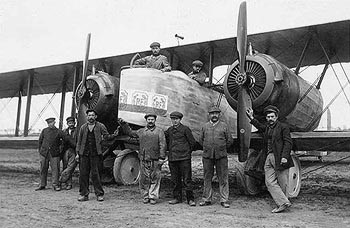
Very soon after the war some C.23s not used by the French Air Force were modified to carry twelve passengers in an open cockpit formed by an opening between the cockpit and mid-upper gunner’s position. On 10 February 1919 one made the first passenger flight between Paris and Brussels, carrying five passengers tightly packed together in an open cockpit. One C.23, designated C.23 bis, was modified to carry fifteen passengers internally, flying between Paris and London.
Védrines and his engineer Guillian were killed in a C.23 when an engine failed whilst trying to establish a route from Paris to Rome.
Variants:
C.23 BN2
Bomber
C.23
12 seat transport
C.23 bis
15 seat cabin transport
Specifications:
C.23 BN2
Engines: 2 × Salmson 9Z 9-cylinder, 190 kW (260 hp)
Propellers: 2-bladed
Upper wingspan: 24.50 m (80 ft 5 in)
Lower wingspan: 23.57 m (77 ft 4 in)
Wing area: 107 sq.m (1,150 sq ft)
Length: 13.00 m (42 ft 8 in)
Height: 3.40 m (11 ft 2 in)
Empty weight: 2,341 kg (5,161 lb)
Gross weight: 4,170 kg (9,193 lb)
Fuel capacity: 980 lt (216 imp gal; 259 US gal) and 132 l (29 imp gal; 35 US gal)
Maximum speed: 143 km/h (89 mph; 77 kn) at sea level
Cruising speed: 122 kph
Stall speed: 82.2 km/h (51 mph; 44 kn)
Endurance: 6.75 hr
Service ceiling: 3,500 m (11,483 ft)
Time to altitude: 41 min to 4,000 m (13,123 ft)
Crew: Three
Armament: two 7.7-mm machine gun Lewis
Bombload: 600 kg (1,323 lb)
Caudron R.11 / R.12 / R.14
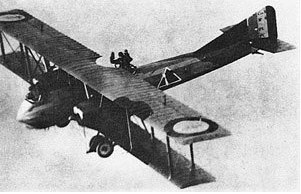
Designed by Paul Deville, the Caudron R.11 (mis-identified in Jane’s 1919 as the Caudron R.II) was initially intended as a reconnaissance aircraft for the French Air Force, but went on to serve the role of fighter escort instead. Its design was similar to the Caudron R.4, but with a more pointed nose, two bracing bays outboard the engines rather than three, no nose-wheel, and a much larger tail. The engines were housed in streamlined nacelles just above the lower wing. The wings were of equal span with three bays and parallel struts. The wing spars had a steel tube and ribs of timber and plywood. The ailerons were only on the upper wing. The rudder horn was fitted with a weight compensation. Cable control from the steering column and pedals were fitted. The R.11 was powered by two 220 horsepower Hispano-Suiza engines housed in streamlined nacelles, and featured a large-area tail structure and two large fixed landing gear. In the first ten series machines Hispano-Suiza engines were installed 8Bda (210 hp). In the production process R.11 used different versions of the engine Hispano-Suiza, and the aircraft structure, and systems were constantly amended.
The fuel system allowed both motors to use any fuel tank. Fuel tanks placed at the rear of the engine nacelles, could be dropped in flight if on a fire.
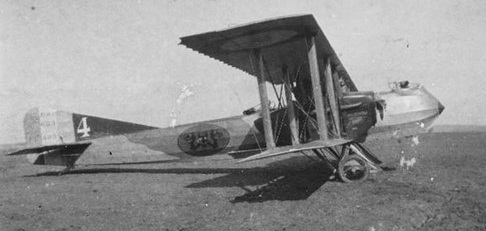
Armament was 5 x 7.7mm Lewis type machine guns in various positions and the bombload was just 265 pounds of external stores. The crew of three were all positioned in the fuselage with the pilot between the top and bottom wing assemblies in three individual open-air cockpits, a rear gunner behind him and a bow gunner in the extreme forward of the aircraft. Installed in the rear gunner cab were redundant aircraft controls.
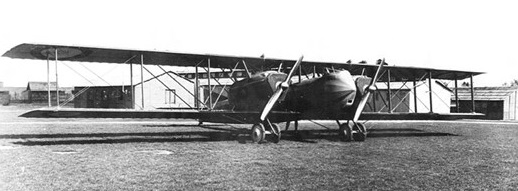
First flying in May 1917, the French army ordered 1000 R.11s. Production began in 1917, however, due to lack of engines, which mainly went to fighters, the production of unfolded very slowly, and the first aircraft were completed late in that year. Two were handed over to the RFC for trials. In February 1918 the first Escadrille (squadron) R.26 was equipped. By April 1918 a total of 20 had been completed.
By early July 1918, eight French bomber squadrons were equipped. The last escadrille to form before the Armistice (and abrupt end of production) was R.246, at which point 370 planes had been completed.
The R.11 served with the R.46, R.239, R.240, R.241, R.242 and R.246 French Escadrilles. It holds the distinction of becoming the last French production aircraft of World War 1, also forming the final French squadron (R.246) of the war, and served until July 1922.
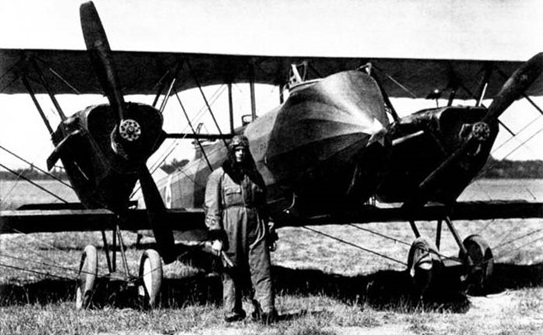
The most famous at the front were the R.11 A3 – plane escort bombers, with mostly Breguet 14 weapons which could be up to 5 machine guns. These aircraft usually had the best school graduate gunners, and one of them, Sergeant Vitalis, shot down eight German aircraft.
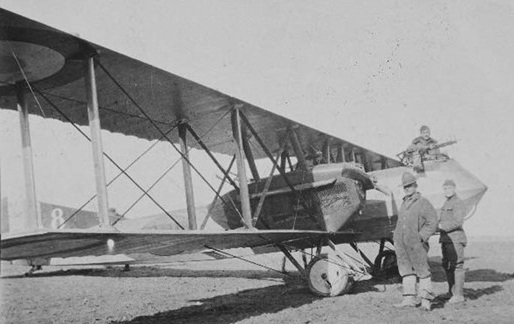
Some were operated by the American Expeditionary Force.
The Caudron R.12 was an experimental version of the R.11, with larger Hispano-Suiza 8Fb 300 hp engines. Development ended when the Caudron R.14 variant appeared in August 1918. The R.14 had great speed and powerful armament installed: 37-mm “Hochkiss” gun and a Lewis machine gun, but it was heavy and clumsy and unsuccessful arrangement of the cockpit gave a bad review.
Caudron R.11
Engines: 2 x Hispano-Suiza 8Ba, 160 kW (210 hp)
Propellers: 2-bladed wooden fixed pitch
Upper wingspan: 17.92 m (58 ft 10 in)
Lower wingspan: 16.9 m (55 ft 5 in)
Wing area: 54.25 sq.m (583.9 sq ft)
Length: 36 ft 11 in / 11.25 m
Height: Height: 2.7 m (8 ft 10 in)
Empty Weight: 3,135lbs (1,422kg)
Maximum Take-Off Weight: 4,773lbs (2,165kg)
Fuel capacity: 220 l (48 imp gal; 58 US gal)
Maximum Speed SL: 114mph (183kmh; 99kts)
Maximum speed 5,000 m (16,000 ft): 167.3 km/h (90.3 kn; 104.0 mph)
Service Ceiling: 19,521 ft (5,950m)
Time to 2,000 m / 6,600 ft: 8 min 6 sec
Time to 3,000 m / 9,800 ft: 14 min 18 sec
Time to 5,000 m / 16,000 ft: 39 min
Endurance: 3 hours
Armament: 5 x 7.7mm / 0.30 in Lewis machine guns
Accommodation: 3
Hardpoints: 4
Bombload: 265lb external
Caudron R.11
Engines: 2 x Hispano-Suiza 8Bba, 215 hp
Wingspan: 17.92 m
Wing area: 54.25 sq.m
Length: 16.97 m
Height: 2.80 m
Empty weight: 1422 kg
Normal takeoff weight: 2167 kg
Maximum speed: 183 km / h
Cruising speed: 165 km / h
Endurance: 3 hr
Maximum rate of climb: 250 m / min
Practical ceiling: 5950 m
Caudron R.11A3
Long-range reconnaissance, differed from the base model, the lack of bomb armament, built in series.
Caudron R.11BN 3
Night bomber, with the same engines as a small series.
Caudron R.11B3
Bomber, serial machine. By the end of the war was to be built 145 copies of R.11, but the front has got only 49, two more cars were handed over to the American Expeditionary Corps. The machine was built after the war.
Caudron R.12
Version R.11 of 1918 installed engines Hispano-Suiza 8Fb 300 hp
Caudron R.14
R.11 enlarged version of the model. The prototype was presented in August 1918. The aircraft was equipped with engines Hispano-Suiza 8Fb, which originally was supposed to be installed on R.12 model. The armed 37-mm gun Hotchkiss machine guns supplemented Lewis.
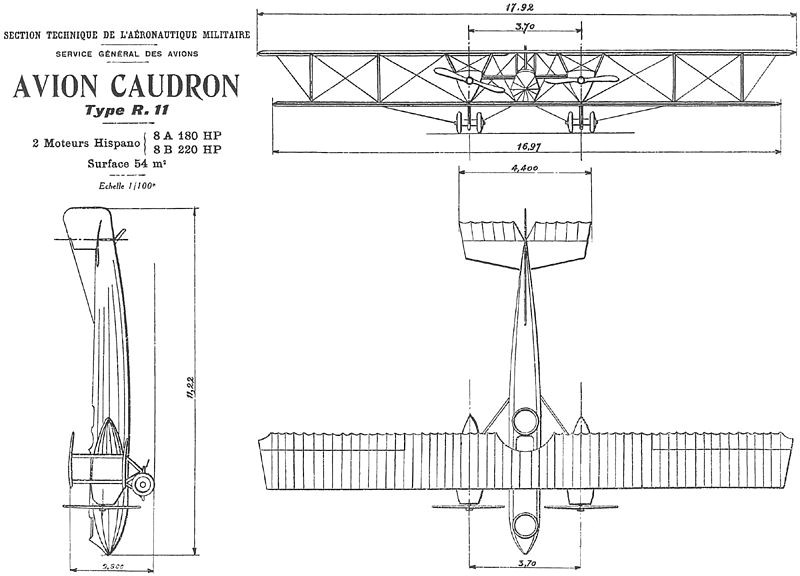
Caudron / Societe Anonyme des Avions Caudron / Societe Caudron-Renault / Ateliers Aeronautiques d’lssyles-Moulineaux
Gaston and Rene Caudron established an airplane factory as Caudron Freres at Romiotte (Seine) in 1910. Initial flight of the first of a series of highly successful biplanes (G.I, II, and III) was in February 1911. The G.III was considered extremely reliable and used widely as a trainer in the First World War. A single-seat monoplane trainer was produced in 1912. G.IIIAs were built for military use in 1914 and used extensively by France, U.K., Belgium, Russia, and Italy as two-seat reconnaissance/ artillery observation aircraft. Several hundred were built, mostly in France, but also by British Caudron and in Italy. The series continued with the G.IV (1915), several military variants, and also in that year the prototype R.4 three-seat bomber appeared. The R.II with five Lewis machine guns was produced a few months before the Armistice was declared.
The company had moved to Issy-les-Moulineaux (Seine) by 1919, and postwar products included the C 23 (and/or C 232) two-seat biplane, which inaugurated French commercial air services on February 10, 1919 with a flight from Paris to Brussels, the C 61 three-engined six/eight passenger biplane, a three-engined seven-seat development of C 61, the C 183, a further modernisation of two previous aircraft of which one only was built, in 1925.
The company, known as Societe Anonyme des Avions Caudron, ran into financial difficulties and was reorganized as Societe Caudron-Renault. Next became notable for distinctive streamlined aircraft from its designer Marcel Riffard, who joined in 1932. His C363 took second place in the 1933 Coupe Deutsch race, and developed versions took first three places in 1934 and 1935, and the first two places in 1936. Derivatives of these included the Rafale series of single- and two-seat sporting/racing aircraft of the late 1930s. Fifteen C 690Ms were built as advanced trainers for the Armee de I’Air. The series ended with the C 720. These were followed by the single-seat C 580 and C 680, C 600 Aiglon series, C 620/C 630 Simoun four-seat cabin monoplane, C 640 Typhon series, the C 670 ground-attack prototype, and the single-seat C 860, built in 1938 for an attempt (never made) on 1936 Paris-Tokyo flight record established by a Simoun. About 1,700 examples of C 440 (later AA.1) Goeland, twin-engined six-passenger transport were built in about ten years. Two series of light fighters were developed from the Coupe Deutsch racers. Following the C 710 and C 713 prototypes, the four-gun C 714 entered service. Improved variants of the CR 760 and 770 were under development when France collapsed. The factories built aircraft for Germany during the Occupation. Later nationalised as Ateliers Aeronautiques d’lssyles-Moulineaux, and incorporated into SNCAN in late 1947.

