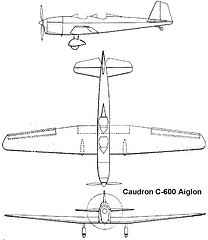
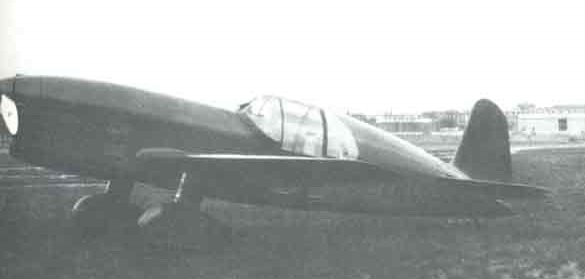
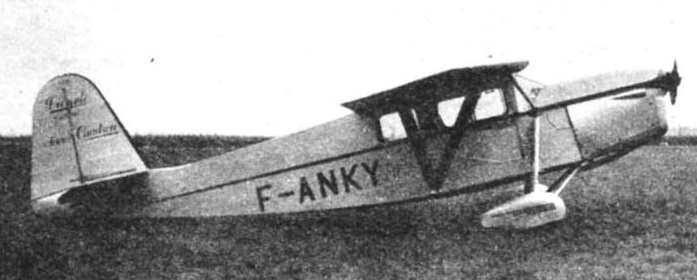
Caudron C.600 Aiglon / C.601 Aiglon

C.601

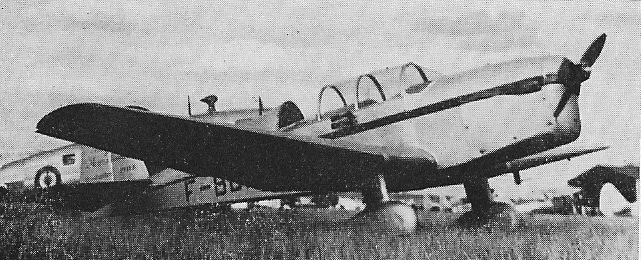
First produced in 1935, the Aiglon was built in two versions; the C.600 powered by a 100 hp Renault 4 Pgi, and the C.601 powered by a 140 hp Renault 4 Pei.

A tandem two-seat light monoplane of wooden construction with stressed plywood skin.

C.600
Engine: Renault 4 Pgi, 100 hp

C.601
Engine: Renault 4 Pei, 140 hp
Wingspan: 37 ft 4 in
Length: 24 ft 11 in
Height: 6 ft 7 in
Wing area: 156 sq.ft
Empty weight: 1276 lb
Loaded weight: 1936 lb
Max speed: 140 mph
Cruise: 124 mph
Landing speed: 34 mph
Service ceiling: 19,680 ft
Range: 335 mi

Caudron C.600 Aiglon 3V

Caudron C.570

A bomber/transport aircraft, this large cantilever monoplane of 1935 did not go into production. Powered by two 800 hp 18-cylinder Renault engines, it had a crew of four and could carry either 15 troops or an equivalent bombload.

Engines: two 800 hp 18-cylinder Renault
Span: 28.96 m (95 ft 0 in)
Length: 19.3 m (63 ft 6 in)
Gross weight: 10 070 kg (22 200 1b)
Crew: four
Capacity: 15 troops or equivalent
Maximum speed: 270 km/h (168 mph)

Caudron C.530 Rafale

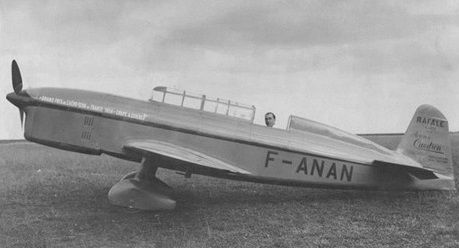
The Caudron C.530 Rafale (Gust of wind) was a French two-seat competition aircraft. The Rafale’s two seats were in tandem, one over the wing and the other just behind the trailing edge, under a long (about a third of the fuselage length), narrow multi-framed canopy with a blunt, vertical windscreen and sliding access.

The Rafale was intended as a competition aircraft and in 1934 it was very successful. On 8 July, Rafales took the first three places in the Angers 12-hour event and later that month filled the top six Esders Cup positions. Late in August, one won the Zénith Cup with a flight over the prescribed 1,578 km (981 mi) course at 240 km/h (149.1 mph).

Only seven were built.

Caudron C.510 Pelican

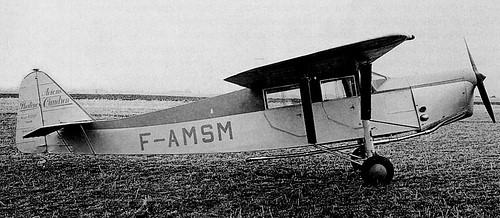
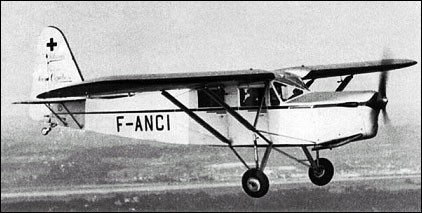
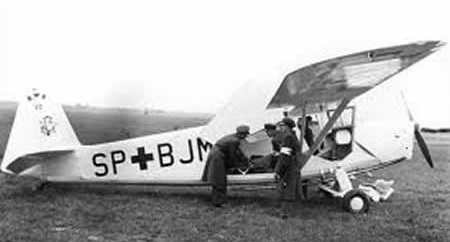
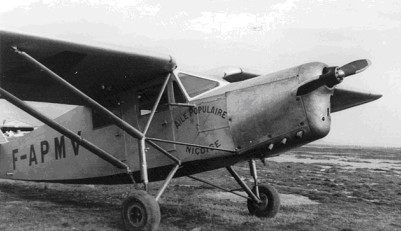
The Caudron C.510 Pélican was a 1930s French air ambulance or touring monoplane. Designed and built by Caudron and based on the earlier Caudron C.282/8.

To create room for a stretcher and attendant the earlier Caudron C.282/8 design was modified with a lengthened fuselage, an improved wing and tailplane design. A single-engined high-wing monoplane, the Pélican had a conventional landing gear. As a touring aircraft the Pélican could carry three passengers. First flying in 1934, a total of 62 were built as both air ambulances and tourers.

The C.510 was operated in the Belgian Congo by Force Publique, and by the French Air Force.

Gallery

Specifications:

Ambulance
Engine: 1 × Renault 4Pei Bengali Junior, 100 kW (140 hp)
Wingspan: 11.82 m (38 ft 9 in)
Wing area: 23.75 m2 (255.6 sq ft)
Length: 8.52 m (27 ft 11 in)
Height: 2.25 m
Empty weight: 626 kg (1,380 lb)
Max takeoff weight: 1,140 kg (2,513 lb)
Maximum speed: 185 km/h (115 mph; 100 kn)
Cruising speed: 165 km/h (103 mph; 89 kn)
Stall: 43.47 mph
Range: 1,000 km (621 mi; 540 nmi)
Service ceiling: 4000 m
Crew: 1
Capacity: 2 (Stretcher and attendant)
Caudron C.480 Frégate

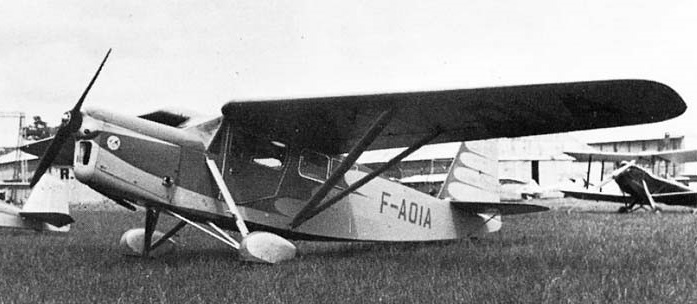
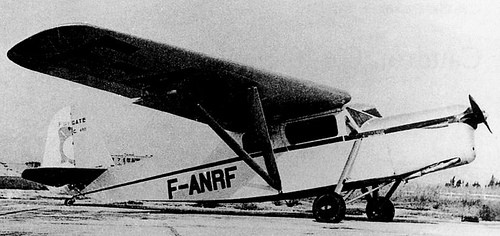
The Caudron C.480 Frégate was a French three-seat touring monoplane designed by Maurice Devlieger and built by Société des avions Caudron.

Based on the earlier Caudron C.280 the Frégate was a high-wing braced monoplane with an enclosed cabin for the pilot with two side-by-seats behind for passengers. Powered by a front-mounted 140 hp (104 kW) Renault 4Pei inline piston engine it had a tailwheel landing gear. First flown in 1935, the company built 27 Frégates, in 1939, 20 were requisitioned into service with the French Air Force for liaison work.

Engine: 1 × Renault 4Pei, 100 kW (140 hp)
Length: 8.18 m (26 ft 10 in)
Wingspan: 11.90 m (39 ft 1 in)
Height: 2.12 m (6 ft 11 in)
Wing area: 20.00 m2 (215.3 sq ft)
Empty weight: 600 kg (1,323 lb) equipped
Max takeoff weight: 1,050 kg (2,315 lb)
Maximum speed: 210 km/h (130 mph; 113 kn)
Cruising speed: 185 km/h (115 mph; 100 kn)
Range: 850 km (528 mi; 459 nmi)
Service ceiling: 4,500 m (14,764 ft)
Crew: 1
Capacity: 2

Caudron C.460

The Caudron was designed in 1934 by Marcel Riffard of France, during the Golden Age of air racing. Riffard designed six variations of the Caudron.

It raced all over the world, often finishing in the top three, at least in Europe. American races, on the other hand, were dominated by American airplanes and pilots. That changed in 1936 when the C.460 was brought to Los Angeles to compete in the National Air Race.

The C.460 participated the 1936 National Air Races held in Los Angeles. Flown by Michel Detroyat, the Caudron racer won the Thompson Trophy as well as every other race it participated in that year.

The original Caudron C.460 crashed in a lake during an attempt to set a speed record and it’s still there.

Replica:

AeroCraftsman Caudron C.460

Caudron C.440 Goëland / C.444 Goeland / C.445 / C.449 / AA.1

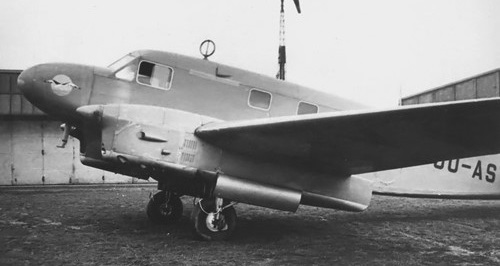
Caudron C-444 Goeland OO-ASY (c/n 7271/8)

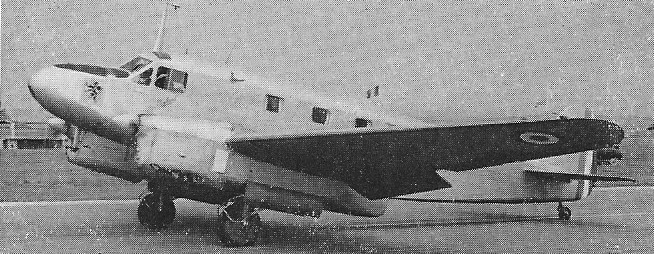
Originally produced in 1934 as the C.440, The Goeland was produced throughout the occupation of France by Caudron-Renault for both Vichy Government and the Luftwaffe. After the liberation of France and the incorporation of the Caudron factory into the SNCA du Nord, production of the Goeland was continued as the C.445-3 and C.449-1 versions. A total of 325 post-war machines being built.

C.449-1

About 1,700 examples of C 440 (later AA.1) Goeland, twin-engined six-passenger transport were built in about ten years.

Caudron C.440 Article

Gallery

C.440

C.445-3
Engines: 2 x Renault 6Q-10 or 6Q-11, 220 hp
Passenger capacity: 6

C.449-1
Engines: 2 x Renault 6Q-20 or 6Q-21, 220 hp
Wingspan: 57 ft 7 in
Wing area: 430 sq.ft
Length: 44 f 9 in
Height: 15 ft 9 in
Empty weight: 6005 lb
Loaded weight: 8140 lb
Max speed: 191 mph
Cruise: 163 mph
Service ceiling: 21,320 ft
Range: 350 mi
Passenger capacity: 6