Consolidated TW-8 / PT-1 Trusty

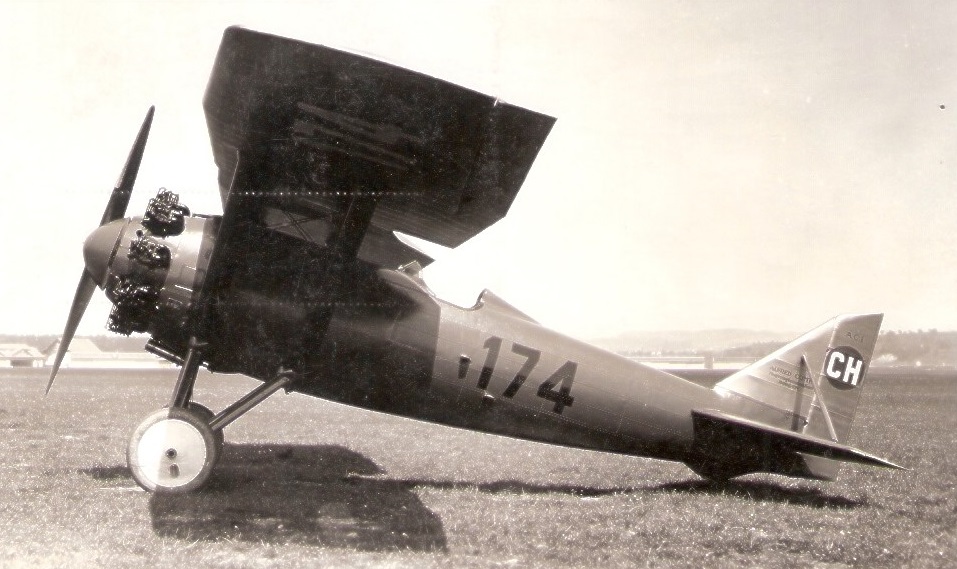
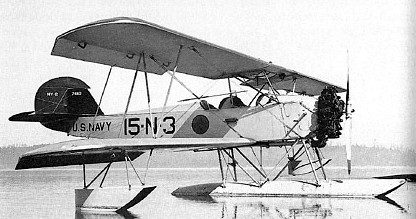
Improvements to the Dayton-Wright Company TW-3 design continued and included the removal of the engine cowling (for improved forward cockpit visibility) and a redesigned fuselage in a slimmer form with tandem instructor/student seating (this model being known as the “Camel” for the visible bump appearing between the two seating areas). The Camel was evaluated under the (unofficial) designation TW-8 and accepted into service as the PT-1 with 221 being delivered beginning 1924 and replacing the TW-3’s in service. The PT-1 represented the first aircraft purchase of the Army Air Service since the closing shots of World War One.
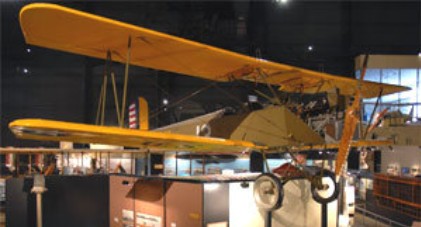
The PT-1 was a biplane aircraft with a simple two-wheel undercarriage, an engine mounted at the front of the design, a traditional tail section and twin side-by-side seating for instructor and student. The aircraft featured a choice of a Clerget or Le Rhone engines. The PT 1 basic trainer included innovations like a fuselage framework from welded chrome molybdenum steel. Because of it was so sturdy and dependable, it was nicknamed “Trusty”.

The PT-1 would eventually be replaced itself by the Consolidated PT-3 from 1928 onwards.

Hollywood’s Paul Mantz owned PT-1E A.C.26-233 two-seater which appeared in the film ‘One Man Mutiny’.
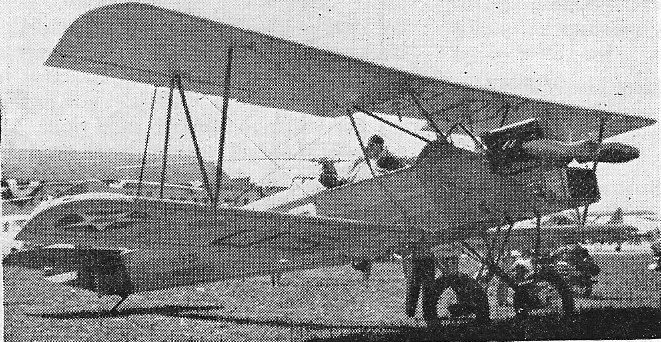
PT-1E A.C.26-233

Consolidated PT-1 Trusty
Engine: 1 x Wright-Hispano E 8-cylinder water-cooled Vee, 180hp.
Length: 27.76ft (8.46m)
Width: 34.45ft (10.50m)
Height: 9.84ft (3.00m)
Empty Weight: 1,806lbs (819kg)
Maximum Take-Off Weight: 2,577lbs (1,169kg)
Maximum Speed: 92mph (148kmh; 80kts)
Cruising speed: 68 kt / 126 km/h
Maximum Range: 350miles (563km)
Rate-of-Climb: 690ft/min (210m/min)
Service Ceiling: 13,448ft (4,099m; 2.5miles)
Accommodation: 2

PT-1E
Engine: Wright V-720, 180 hp
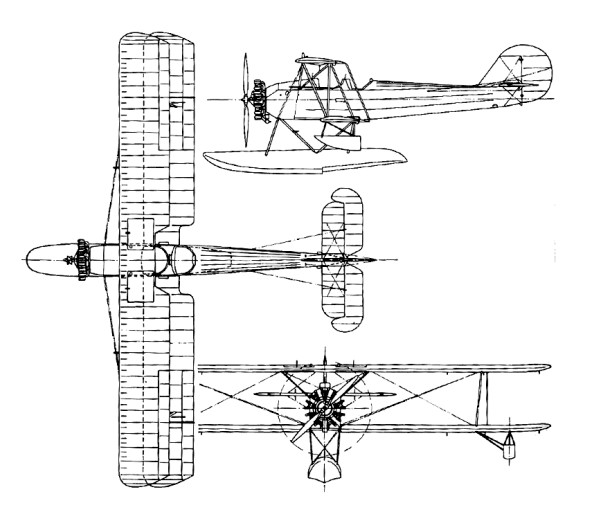
Consolidated TW-3

The Dayton-Wright Company TA-3 (designated with an “A” for its air-cooled engine operation) was delivered by request with an uprated Le Rhone engine of 110 horsepower. Still further evaluation models were ordered, this time with the requested Wright-Hispano I V-8, 150 horsepower engine of increased power (designated TW-3 with the “W” standing for its water-cooled engine process) finally culminating in an official order by the USAAS.
Production rights for the trainer were secured by the newly-created Consolidated Aircraft Company (established by Reuben Fleet of the Gallaudet firm) as General Motors was reviewing their commitment to aircraft production in a post-war world and would eventually shut down operations at Dayton-Wright altogether. The TW-3 was delivered by 1923 and became the first notable variant of the “Trusty” production line.

Consolidated Aircraft Corp

Gallaudet Airplane Corp was dissolved 1923 and factory acquired by Consolidated Aircraft Corporation with Reuben H.Fleet.
Original factory was quickly outgrown by the company formed May 29,1923 and moved to Buffalo, NY, in 1924, leasing part of a wartime Curtiss factory. In the 1920s and 1930s produced small numbers of civil types, but main output was military and between 1924-1932 included more than 770 PT-1 /311 and NY primary training biplanes for the USAAC and Navy, plus a small batch of similar 0- 17s for observation duties.
The creation of the civil Model 14 “Husky”trainer led to the creation of the Fleet Aircraft Division in 1929.
Thomas Morse Aircraft acquired 1929. In the 1930s Consolidated specialized in marine aircraft, P2Y twin-engined patrol flying-boats being built 1931-1933; followed by P-30 single-seat fighter monoplanes for the Army in 1933-1935.
In autumn 1935 company moved to San Diego, California, gaining a harbor for testing its maritime designs, which continued with the P3Y/PBY Catalina family. During a ten-year production life 2,400 Catalinas were built by Consolidated and hundreds more by other companies. Production of PB2Y Coronados began in 1939. In 1940 Hall Aluminium Co acquired. Company began a five-year program of building more than 11,000 B-24/C- 87/PB4Y/RY Liberator and Privateer bomber, transport, and patrol aircraft for the U.S. Services and the RAF. Liberator production was also undertaken by Ford, Douglas, and North American. Final wartime product was the TBY Sea Wolf. A 34 percent controlling interest in Consolidated acquired December 1941 by Vultee Aircraft Inc., and management links from then led to merger of the two companies on March 17,1943 as Consolidated Vultee Aircraft Corporation.
Amalgamation from March 17,1943 of Consolidated Aircraft Corporation and Vultee Aircraft Inc., whose wartime production programs are listed under these separate headings. By the end of Second World War Consolidated Vultee was largest aircraft manufacturing organization in the U.S.A., with factories at San Diego and Vultee Field, California; Fort Worth, Texas; Nashville, Tennessee; Wayne, Michigan; New Orleans, Louisiana; Miami, Florida; and Allentown, Pennsylvania; plus modification centers at Tucson, Arizona; Elizabeth City, North Carolina; and Louisville, Kentucky.
Late-war/early post-war programs included B-32 Dominator long-range bomber, L-13 liaison/observation aircraft and multi-engined B-36 intercontinental bomber. The company entered the commercial field with first flight, in summer 1946, of twin-engined Model 110, from which later stemmed well-known 240/340/440 Metropolitan series of medium-sized shorthaul airliners. Various noteworthy military prototypes included the XB-46 jet bomber, XP-81 single-seat mixed-power escort fighter, XF-92 rocket-powered interceptor, XA-41 close-support aircraft, and XF2Y Sea Dart hydro-ski fighter. A small number of R3Y Tradewind four-engined transport flying-boats Were built for the U.S. Navy. In the early 1950s Consolidated Vultee began calling its products “Convair” types, and on April 30,1954 it became the Convair Division of General Dynamics Corporation, which was then the major shareholder.

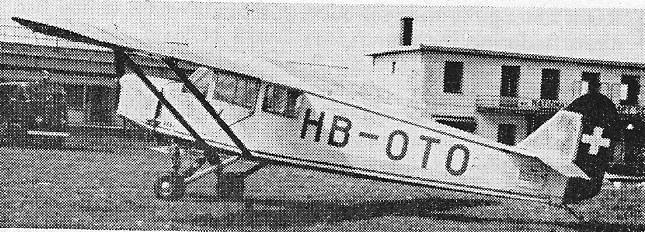
Comte A.C.12 Moskito

The A.C.12 Moskito cabin monoplane was first produced by Alfred Comte in 1931, and ten were built with the 95 hp Argus As 8, 120 hp de Havilland Gipsy III, or 100 hp Armstrong Siddeley Genet Major.

The Moskito provides accommodation for three. The wings are wooden, fuselage welded steel-tube, and tail assembly with plywood and fabric covering.

Engine: 95 hp Argus As 8
Wing span: 38 ft 2 in
Wing area: 171 sq.ft
Length: 24 ft 7 in
Height: 7 ft 5 in
Empty weight: 1100 lb
Loaded weight: 1980 lb
Max speed: 112 mph
Cruise: 96 mph
Time to 3280 ft: 6 min
Ceiling: 16,400 ft

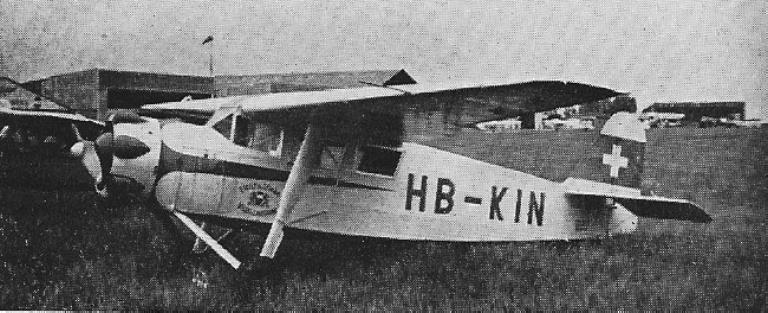
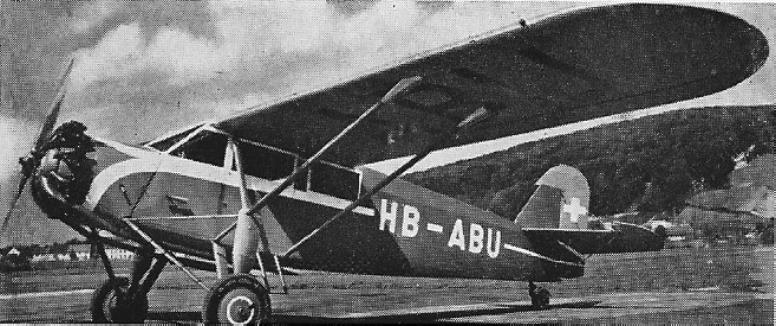
Comte A.C.8

Produced in 1930 by Alfred Comte (Schweizerisch Flugzeugfabrik) of Zurich, the A.C.8 six-seat cabin monoplane is powered by a 300 hp Wright J-6 radial. Only three examples of the A.C.8 were built, of mixed construction, the wing being spruce and plywood and the fuselage a welded steel-tube structure. Dual controls were fitted and the cabin seats the pilot and five passengers.

Engine: 300 hp Wright J-6
Wing span: 47 ft 6 in
Wing area: 301.3 sq.ft
Length: 30 ft 2 in
Height: 9 ft 6 in
Empty weight: 3453 lb
Loaded weight: 3850 lb
Max speed: 133 mph
Cruise: 109 mph
Time to 3280ft: 4.8 min
Service ceiling: 16,400 ft
Range: 560 mi

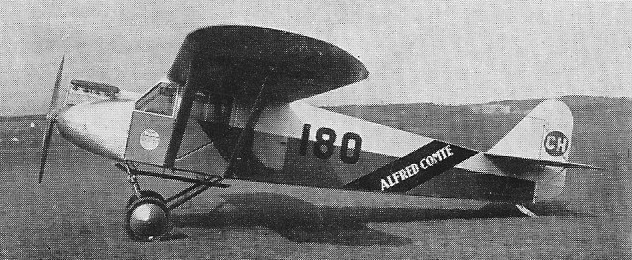
Comte AC-4 Gentleman

The three-seat AC4 Gentleman, designed by Alfred Comte, was the first aircraft that has been build commercially in Switzerland. The A.C.4 Gentleman is a two-seat cabin monoplane of mixed construction.

The prototype was being flown in 1928, and the AC-4 was in production 1928-1930.

Six of the first version, powered by 90 hp Cirus III engines were produced from 1928.

A second series was produced in 1930 powered by 110 hp Cirrus Hermes or 140 hp Genet Major engines.

One machine, owned by Swissair, was re-engined with an Armstrong-Siddeley Genet Major radial.

Engine: Cirrus Hermes III A.D.C., 138 hp
Wingspan: 40.354 ft / 12.3 m
Wing area: 215.28 sq.ft / 20.0 sq.m
Length: 26.575 ft / 8.1 m
Height: 9.186 ft / 2.8 m
Max take off weight: 1764.0 lb / 800.0 kg
Weight empty: 1102.5 lb / 500.0 kg
Max. weight carried: 661.5 lb / 300.0 kg
Max. speed: 92 kts / 170 km/h
Initial climb rate: 590.55 ft/min / 3.0 m/s
Service ceiling: 13123 ft / 4000 m
Wing load: 8.20 lb/sq.ft / 40.0 kg/sq.m
Range: 378 nm / 700 km
Endurance: 6 h
Crew: 2+1

Comte AC-3

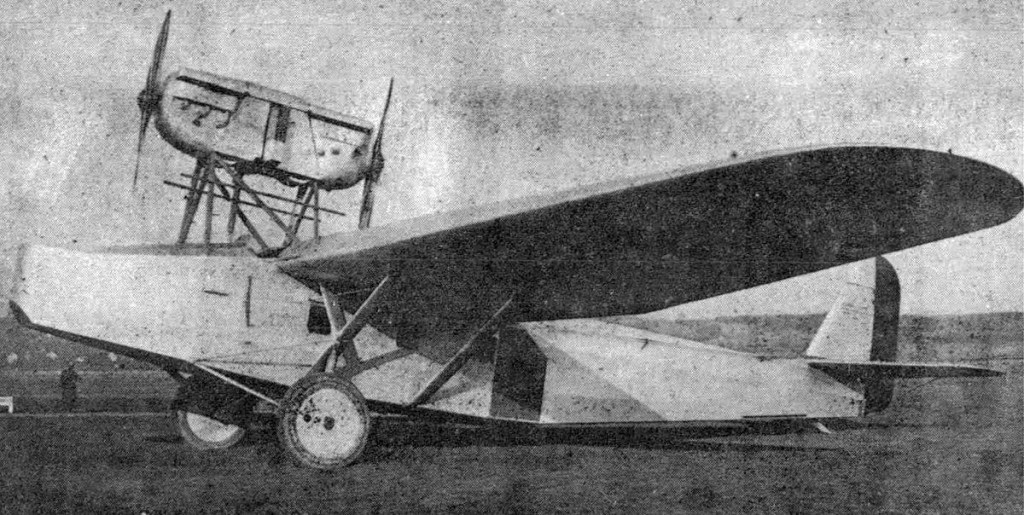
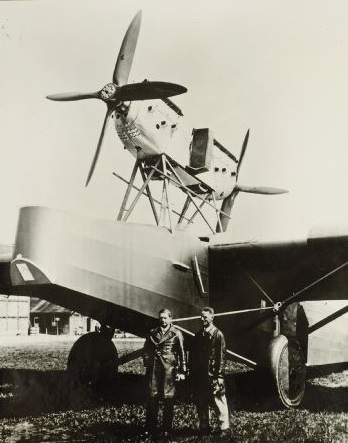
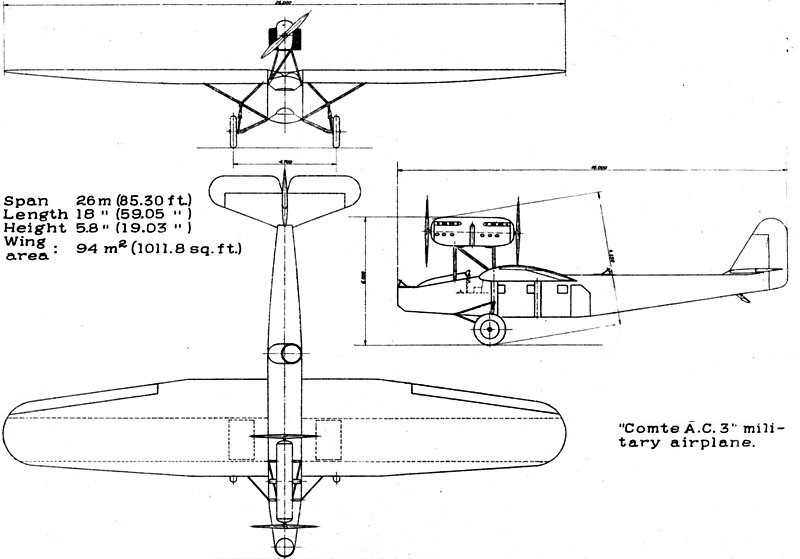
In November 1928, as a response to increasing tensions and clashes between troops in the Gran Chaco border region between Bolivia and Paraguay, Bolivia placed an order with Alfred Comte, the owner of a small Swiss aircraft manufacturer for three long-range bomber-transport aircraft, using funds collected by popular subscription.

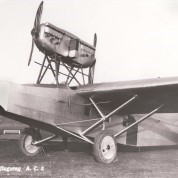
The AC-3 was a high-wing semi-cantilever monoplane of mixed construction. It was fabric covered with a conventional tail unit. It had three open cockpits, one in the nose for a gunner or observer, one forward of the wing for a pilot, and one on the upper rear fuselage for a rear gunner. An unconventional engine layout had two 447 kW (600 hp) Hispano-Suiza inline piston engines in tandem supported on eight struts above the fuselage. The installation had to be high enough to allow clearance for the two (one pusher, one tractor) propellers above the fuselage. A hatch in the port side allowed cargo or troops to be carried in the main cabin.

The new aircraft was too large to be built in Comte’s existing factory, (the AC-3 was the largest aircraft ever to be developed and built in Switzerland) and forced Comte to build a new hangar just for the AC-3. It made its maiden flight from Dübendorf airfield on 22 February 1930. The aircraft failed to meet its expected top speed, and as a result it was refitted with four-bladed propellers instead of the original two-bladed items. A collapse in the price of tin resulted in severe financial problems in Bolivia, and the military junta ruling Bolivia cancelled the order for the three Comte bombers, with only the first example being built, which was dismantled in 1935.

Engines: 2 × Hispano-Suiza, 447 kW (600 hp) each
Wingspan: 26 m (85 ft 3 in)
Wing area: 95 m2 (1,022 ft2)
Length: 18 m (59 ft 0¾ in)
Height: 6 m (19 ft 8¼ in)
Empty weight: 4000 kg (8,818 lb)
Gross weight: 6500 kg (14,330 lb)
Maximum speed: 210 km/h (130 mph)
Range: 1500 km (932 miles)
Service ceiling: 5300 m (17,390 ft)
Crew: 3

Comte

Switzerland
Flugzeugbau A. Comte built in early/middle 1920s a few German types (e.g. Sablatnig) under license at Hargen, near Zurich. First own-design was AC-1 fighter prototype of 1927; followed by AC-3 twin-engined bomber. Best known for series of small high-wing cabin monoplanes such as three-seat AC-4 Gentleman, built 1928-1930.